
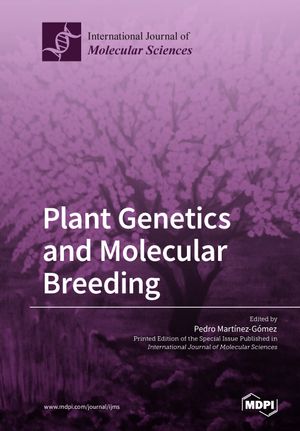
Plant Genetics and Molecular Breeding
The development of new plant varieties is a long and tedious process involving the generation of large seedling populations for the selection of the best individuals. While the ability of breeders to generate large populations is almost unlimited, the selection of these seedlings is the main factor limiting the generation of new cultivars. Molecular studies for the development of marker-assisted selection (MAS) strategies are particularly useful when the evaluation of the character is expensive, time-consuming, or with long juvenile periods. The papers published in the Special Issue “Plant Genetics and Molecular Breeding” report highly novel results and testable new models for the integrative analysis of genetic (phenotyping and transmission of agronomic characters), physiology (flowering, ripening, organ development), genomic (DNA regions responsible for the different agronomic characters), transcriptomic (gene expression analysis of the characters), proteomic (proteins and enzymes involved in the expression of the characters), metabolomic (secondary metabolites), and epigenetic (DNA methylation and histone modifications) approaches for the development of new MAS strategies. These molecular approaches together with an increasingly accurate phenotyping will facilitate the breeding of new climate-resilient varieties resistant to abiotic and biotic stress, with suitable productivity and quality, to extend the adaptation and viability of the current varieties.
| Publication Language | English |
|---|---|
| Publication Access Type | Freemium |
| Publication Author | Pedro Martínez-Gómez |
| Publisher | MDPI |
| Publication Year | 2023 |
| Publication Type | eBooks |
| ISBN/ISSN | 9780000000000 |
| Publication Category | Open Access Books |
Kindly Register and Login to Shri Guru Nanak Dev Digital Library. Only Registered Users can Access the Content of Shri Guru Nanak Dev Digital Library.
You must be logged in to post a review.


Reviews
There are no reviews yet.