
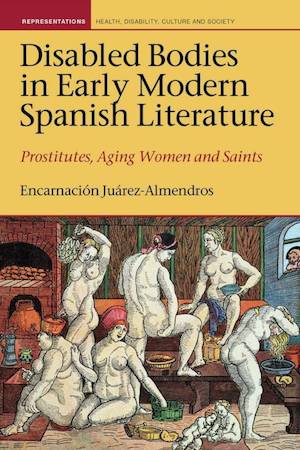

Disabled Bodies in Early Modern Spanish Literature: Prostitutes, Aging Women and Saints
Disabled Bodies in Early Modern Spanish Literature examines the concepts and role of women in selected Spanish discourses and literary texts from the late fifteenth to seventeenth centuries from the perspective of feminist disability theories. It explores a wide range of Spanish medical, regulatory and moral discourses, illustrating how such texts inherit, reproduce and propagate an amalgam of Western traditional concepts of female embodiment. It goes on to examine concrete representations of deviant female characters, focusing on the figures of syphilitic prostitutes and physically decayed aged women in literary texts such as Celestina, Lozana andaluza and selected works by Cervantes and Quevedo. Finally, an analysis of the personal testimony of Teresa de Avila, a nun suffering neurological disorders, complements the discussion of early modern women’s disability.
| Publication Language | English |
|---|---|
| Publication Access Type | Freemium |
| Publication Author | Encarnación Juárez-Almendros |
| Publisher | Liverpool University Press |
| Publication Year | 2023 |
| Publication Type | eBooks |
| ISBN/ISSN | 9780000000000 |
| Publication Category | Open Access Books |
Kindly Register and Login to Shri Guru Nanak Dev Digital Library. Only Registered Users can Access the Content of Shri Guru Nanak Dev Digital Library.
You must be logged in to post a review.


Reviews
There are no reviews yet.