
Open Access Books

Hair Colour for Hairstylists:: Level 2
This manual serves as a guide for apprentices with the desire to stretch beyond their foundational colour knowledge and skills so as to reach a higher level of competency. This text will walk the stylist step-by-step through many current and advanced techniques used in the industry today.

Ethics in Law Enforcement
In this book, you will examine the moral and ethical issues that exist within law enforcement. This book will also familiarize you with the basic history, principles, and theories of ethics. These concepts will then be applied to the major components of the criminal justice system: policing, the courts, and corrections. Discussion will focus on personal values, individual responsibility, decision making, discretion, and the structure of accountability. Specific topics covered will include core values, codes of conduct, ethical dilemmas, organizational consequences, liability, and the importance of critical thinking. By the end of this book, you will be able to distinguish and critically debate contemporary ethical issues in law enforcement.

Basic Motor Control
This readily accessible online resource was developed for anyone who has interest in, or works with, AC motors and their associated motor control equipment. Whether you are an electrical apprentice learning about the subject in school or a seasoned journeyperson installing equipment in the field, you will find it easy to navigate through the descriptive text, original diagrams, and explanatory videos to find the exact information you are looking for.

Basic HVAC
This readily accessible online introductory resource was developed for anyone who has interest in, or works with, HVAC controls and equipment. Designed for electrical and HVAC apprentices learning about the subject in school, you will find the descriptive text and original diagrams easy to navigate through, while the question bank will help students review the subject matter covered in each section.

Barbering Techniques for Hairstylists
This manual serves as a guide for apprentices who desire to grow beyond their foundational haircutting knowledge and skills, and expand their knowledge to include more advanced barbering services, such as beard and moustache design, and straight razor shaves.
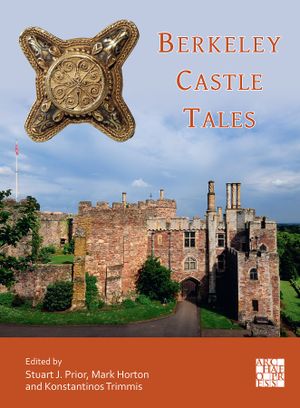
Berkeley Castle Tales
Berkeley Castle Tales presents the outcomes of the 15-year-long University of Bristol excavations and landscape research at the Berkeley Castle estate in South Gloucestershire. The project, which in 2016 won the prestigious Current Archaeology award for the Archaeology Project of the Year, aimed at writing, through material culture and extensive archival and geophysical research, the narrative behind the construction of Berkeley Castle, the corresponding town, and the area of the Severn valley that overlooks the borders with Wales. By combining the results of archaeological fieldwork with information contained in the castle’s impressive collection of 20,000 historical documents, the project adds greatly to our knowledge and understanding of the early medieval period and the subsequent changes in landscape and society that occurred with the coming of the Normans, with the erection of a castle on the former minster site. Throughout the publication the advances that the Berkeley Castle project offered to archaeological practice, to excavation and geophysics methodology, and to the community and public archaeology are evident, since the editors intend the volume to be a milestone not only for the study of a castle landscape but also for archaeological method and practice.
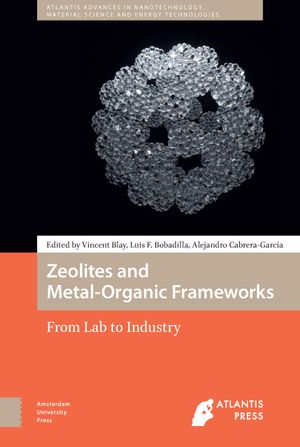
Zeolites and Metal-Organic Frameworks: From Lab to Industry
Zeolites are natural or synthetic materials with porous chemical structures that are valuable due to their absorptive and catalytic qualities. Metal-Organic Frameworks (MOFs) are manmade organometallic polymers with similar porous structures. This introductory book, with contributions from top-class researchers from all around the world, examines these materials and explains the different synthetic routes available to prepare zeolites and MOFs. The book also highlights how the substances are similar yet different and how they are used by science and industry in situations ranging from fueling cars to producing drugs.

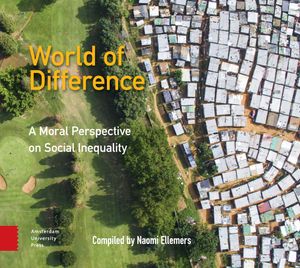
World of Difference
Public debates tend to see social inequality as resulting from individual decisions people make, for instance with respect to their education or lifestyle. Solutions are often sought in supporting individuals to make better choices. This neglects the importance of social groups and communities in determining individual outcomes. A moral perspective on social inequality questions the fairness of insisting on individual responsibilities, when members of some groups systematically receive fewer opportunities than others. The essays in this book have been prepared by experts from different disciplines, ranging from philosophy to engineering, and from economics to epidemiology. On the basis of recent scientific insights, World of Difference examines how group memberships impact on individual outcomes in four key domains: health, education and work, migration, and the environment. This offers a new moral perspective on social inequality, which policy makers tend to neglect.
Working for Policy
There are now many people involved in ‘making policy’, but there is not a great deal written about how they do it. Most of the books on policy tend to refer obliquely, if at all, to the actual practice of policy work, and offer little guidance to policy workers or students of policy. ‘Policy work’ seems to be something that you learn on the job. This book addresses directly the nature of policy work. It blends academic and experiential knowledge of the policy process in describing, analysing and evaluating what modern policy workers do in particular situations, and why is that the appropriate thing to do, how it contributes to the policy process, what impact it has, and what can we learn from this about the skills and knowledge required for policy work in complex modern societies.
The Work of Authorship
Technological and economic concerns have long been the drivers of debate about copyright. But diverse disciplines in the humanities – including literary studies, aesthetics, film studies, and the philosophy of art – have a great deal to offer if we wish to establish a more nuanced and useful conception of copyright and authorship. This volume brings together scholars from a range of disciplines to explore the challenges inherent in translating aesthetics and creativity studies to concepts of copyright, especially as longstanding approaches are troubled by the rise of the digital.

Women’s Rights?
This volume explores the concept of Japanese reproductive rights and liberties in light of recent developments in disability studies. Masae Kato asks important questions about what constitutes personhood and how, in the twenty-first century, we come to understand eugenic abortion and other bioethical arguments. Tracing the origin and influence of the concept of a “right,” the author places the term in local social and historical contexts in order to determine that it still carries overtones of Anglo-American philosophy, rather than universal truth. Digging deeply into Japanese debates on selective abortion, Women’s Right? discusses how this charged term can be both de-Westernized and de-masculinized, especially in its appropriations by the Japanese women’s movement and disability scholars.
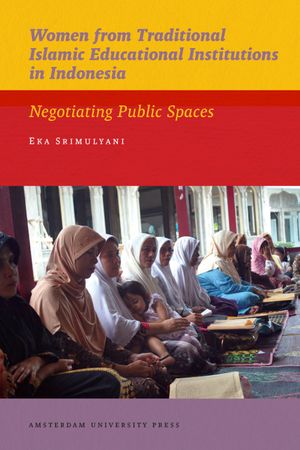
Women from Traditional Islamic Educational Institutions in Indonesia
Until currently there have been no specific publications, particularly in English, on women in traditional Islamic educational institutions in Indonesia, known as pesantren, which played a significant role in shaping the gender issues in the Indonesian Muslim community. This informative and insightful book contributes to two booming fields in Indonesian studies: the study of Islam and the study of Muslim women. It also adds a new perspective to the English-language literature on Muslim women outside the Middle-Eastern or Sub-Indian continent communities context, which used to dominate the scholarly discussion or publication in this field.
The Wise Merchant
On 9 January 1632, at the inauguration of the Amsterdam Illustrious School – the predecessor of the city’s university – Caspar Barlaeus delivered a speech that has continued to arouse the curiosity of researchers and the general public alike: *Mercator sapiens*. This famous oration on the wise merchant is now considered a key text of the Dutch Golden Age. At the same time it is surrounded by misunderstandings regarding Barlaeus himself, the nascent Illustrious School and Amsterdam’s merchant culture. This volume presents the first English translation and the first critical edition of the *Mercator sapiens*, preceded by an introduction providing historical context and a fresh interpretation of this intriguing text.
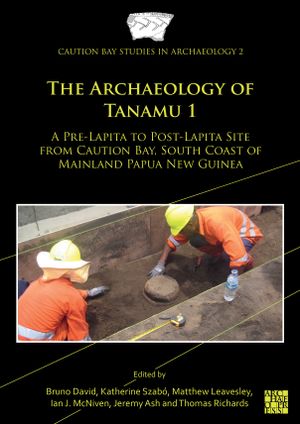
The Archaeology of Tanamu 1: A Pre-Lapita to Post-Lapita Site from Caution Bay, South Coast of Mainland Papua New Guinea
Presenting results from Tanamu 1, the first site to be published in detail in the Caution Bay Studies in Archaeology series. Yielding well-provenanced and finely dated assemblages of ceramics, faunal remains, and stone and shell artefacts, these remarkable sites extend the range of the Lapita cultural complex to the south coast of Papua New Guinea.
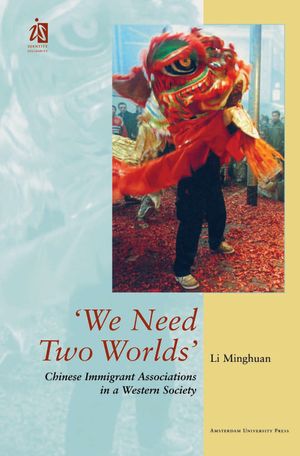
‘We Need Two Worlds’
A highly informative report on Chinese immigrants in the Netherlands, We Need Two Worlds is a clear and well-structured dissertation which presents a considerable amount of new material to existing knowledge of Chinese associations and their role in the Netherlands. The situation in Amsterdam is comparable to Chinese societies in other major cities, e.g. New York and London. This comprehensive study will help Western students, academics, civil servants, politicians and journalists who have an interest in Chinese culture to gain a better understanding of the significance of their associations. It also illustrates how Chinese immigrants live together and operate within a western society.
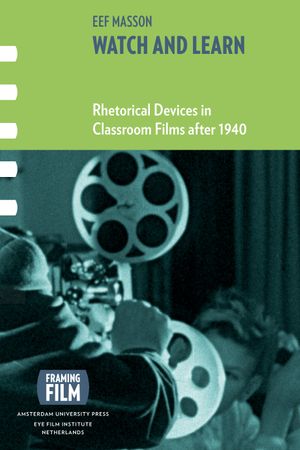
Watch and Learn
Since the late 1990s, there has been a marked increase in academic interest in what are sometimes called ‘utility films’, intended for purposes of information, training, teaching or advertising. Although such research was long overdue, the current academic output tends to be restricted in scope, paying little attention to the films’ textual features: the means they deploy in defending their informational, educational or commercial arguments. In the absence of such studies, the image survives of very ‘formulaic’ genres. This book seeks to modify this picture, and suggests a methodology that helps to foreground the films’ rhetorical diversity. Taking her departure from a historic collection of Dutch classroom films, Masson proposes an approach that considers an audio-visual text as part of a so-called dispositif: the set-up of technology, text and viewing situation that is relevant to the specific corpus under scrutiny.

War of Words
Between 1899 and 1902 the Dutch public was captivated by the war raging in South Africa between the Boer republics and the British Empire. Dutch popular opinion was on the side of the Boers: these descendants of the seventeenth-century Dutch settlers were perceived as kinsmen, the most tangible result of which was a flood of propaganda material intended as a counterweight to the British coverage of the war. The author creates a fascinating account of the Dutch pro-Boer movement from its origins in the 1880s to its persistent continuation well into the twentieth century. Kuitenbrouwer offers fascinating insights into the rise of organisations that tried to improve the ties between the Netherlands and South Africa and in that capacity became important links in the international network that distributed propaganda for the Boers. He also demonstrates the persistence of that stereotypes of the Boers and the British in Dutch propaganda materials had lasting effects on nation building both in the Netherlands and South Africa of the period.
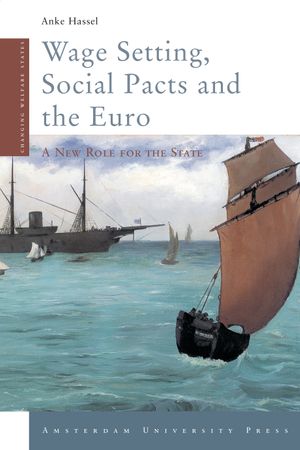
Wage Setting, Social Pacts and the Euro
Globalization, financial liberalization and neo-liberal economic policy thinking have been seen as contributors to the demise of social partnership in Western Europe. Recent examples of the re-emergence of social pacts have challenged these assumptions. The book offers a theoretical understanding of the challenges that increasing monetary integration posed for existing modes of adjustment in the political economies of EU member states, and explains why many governments have chosen to negotiate with trade unions over economic adjustment.
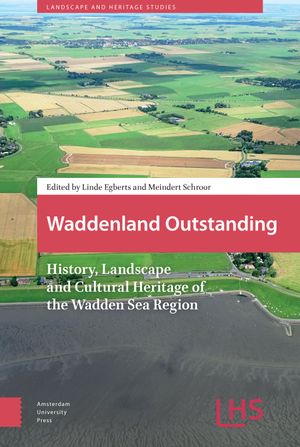
Waddenland Outstanding: History, Landscape and Cultural Heritage of the Wadden Sea Region
The Wadden Sea Region is comprised of the embanked coastal marshes and islands in the Wadden Sea near Denmark, Germany, and the Netherlands, and this area retains an exceptional common history in all its aspects: archaeologically, economically, socially, and culturally. Its settlement history of more than two thousand years is unrivalled and still mirrored in the landscape and even though it has never constituted a political unity, it still shares a landscape and cultural heritage. For example, the approaches to water management and associated societal organisation developed in the region during the last millennium have set significant world standards, values which were recognised by UNESCO in inscribing the Wadden Sea on its World Heritage List. This book encompasses the contributions presented at the scientific symposium of prominent scientists who gathered in 2016 in Husum, Germany, a landmark event in sharing knowledge on the common history, landscape, cultural heritage of the Wadden Sea Region.
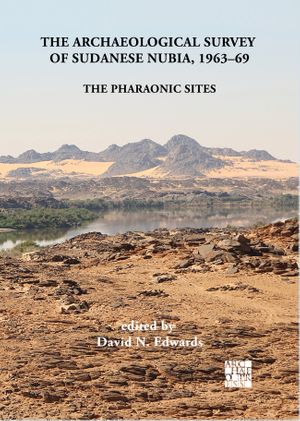
The Archaeological Survey of Sudanese Nubia, 1963-69: The Pharaonic Sites
Of the Nubian Archaeological Campaigns responding to the construction of the Aswan High Dam, the survey and excavations carried out within Sudanese Nubia represent the most substantial achievement of the larger enterprise. Many components of the larger project of the UNESCO – Sudan Antiquities Service Survey have been published, in addition to the reports of a number of other major projects assigned separate concessions within the region. However, the results of one major element, the Archaeological Survey of Sudanese Nubia (ASSN) between the Second Cataract and the Dal Cataract remain largely unpublished. This volume, focusing on the pharaonic sites, is the first of a series which aims to bring to publication the records of the ASSN. These records represent a major body of data relating to a region largely now lost to flooding. This is also a region of very considerable importance for understanding the archaeology and history of Nubia more generally, not least in relation to the still often poorly understood relationships between Lower Nubia to the north and the surviving areas of Middle and Upper Nubia, to the south. The ASSN project fieldwork was undertaken over six years between 1963 and 1969, investigating c.130km of the river valley between Gemai, at the south end of the Second Cataract, and Dal.
Visualizing the Street: New Practices of Documenting, Navigating and Imagining the City
From user generated images of street protests in Istanbul and Hong Kong, to professional architectural renderings of future streets, to GPS-tracked walks in London and Amsterdam, and the visualisation of Sydney’s urban change via social media, this collection of essays analyses new practices of how we visualise the street. Today, new technologies allow everyone who carries a smartphone to play an increasingly significant role in the production, editing, and circulation of images and such a technological development has constructed new imaginaries of the street and has had a significant impact on the ways in which contemporary streets are understood, documented, navigated, mediated, and visualised. Visualizing the Street investigates the social and cultural significance of these new developments at the intersection of visual culture and urban space. The interdisciplinary essays provide new concepts, theories, and research methods that combine close analyses of street images with the study of the practices of their production, circulation, and ultimate consumption.
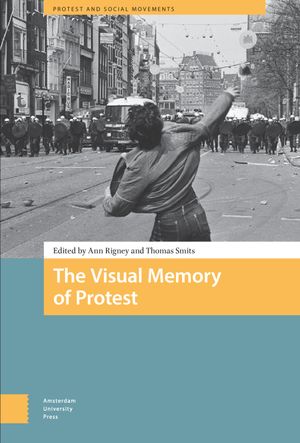
The Visual Memory of Protest
Social movements are not only remembered in personal experience, but also through cultural carriers that shape how later movements see themselves and are seen by others. The present collection zooms in on the role of photography in this memory-activism nexus. How do iconographic conventions shape images of protest? Why do some images keep movements in the public eye, while others are quickly forgotten? What role do images play in linking different protests, movements, and generations of activists? Have the affordances of digital media made it easier for activists to use images in their memory politics, or has the digital production and massive online exchange of images made it harder to identify and remember a movement via a single powerful image? Bringing together experts in visual culture, cultural memory, social movements, and digital humanities, this collection presents new empirical, theoretical, and methodological insights into the visual memory of protest.

Visser ’t Hooft, 1900-1985: Living for the Unity of the Church
God’s diplomat, the pope of the ecumenical movement, but also an acerbic theologian and a difficult person: this is how journalists characterised Willem Adolf Visser ‘t Hooft (1900-1985). He was one of the best-known Dutch theologians outside the Netherlands and he left his mark on the world church. Even at an early age he made profound efforts in support of international ecumenical youth and student organisations (Dutch Student Christian Movement, YMCA and World Student Christian Federation). He led the World Council of Churches during its formative stages (from 1938), and after its formal establishment in 1948 became its first general secretary, serving until 1966. To Visser ‘t Hooft, the unity of the church was both an article of faith and of a pragmatic organisation of church influence in a disunited world.
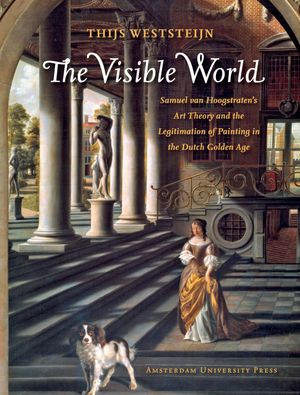
The Visible World
How did painters and their public speak about art in Rembrandt’s age? This book about the writings of the painter-poet Samuel van Hoogstraten, one of Rembrandt’s pupils, examines a wide variety of themes from painting practice and theory from the Dutch Golden Age. It addresses the contested issue of ‘Dutch realism’ and its hidden symbolism, as well as Rembrandt’s concern with representing emotions in order to involve the spectator. Diverse aspects of imitation and illusion come to the fore, such as the theory behind sketchy or ‘rough’ brushwork and the active role played by the viewer’s imagination. Taking as its starting point discussions in Rembrandt’s studio, this unique study provides an ambitious overview of Dutch artists’ ideas on painting.
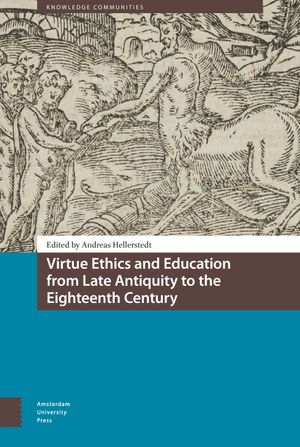
Virtue Ethics and Education from Late Antiquity to the Eighteenth Century
This book argues that premodern societies were characterized by the quest for “virtue.” The concept of virtue, complicated and much fought-over, permeated society, encouraging wisdom, courage, and justice, while simultaneously legitimizing social hierarchies based on sex and nationality. By examining pedagogical texts, rituals, performances, and images, this book illuminates the evolution of virtue through time, helping readers understand the guiding principles of historical action.
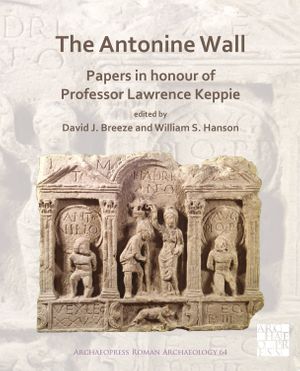
The Antonine Wall: Papers in Honour of Professor Lawrence Keppie
The Antonine Wall, the Roman frontier in Scotland, was the most northerly frontier of the Roman Empire for a generation from AD 142. It is a World Heritage Site and Scotland’s largest ancient monument. Today, it cuts across the densely populated central belt between Forth and Clyde. In this volume, nearly 40 archaeologists, historians and heritage managers present their researches on the Antonine Wall in recognition of the work of Lawrence Keppie, formerly Professor of Roman History and Archaeology at the Hunterian Museum, Glasgow University, who spent much of his academic career recording and studying the Wall. The 32 papers cover a wide variety of aspects, embracing the environmental and prehistoric background to the Wall, its structure, planning and construction, military deployment on its line, associated artefacts and inscriptions, the logistics of its supply, as well as new insights into the study of its history. Due attention is paid to the people of the Wall, not just the officers and soldiers, but their womenfolk and children. Important aspects of the book are new developments in the recording, interpretation and presentation of the Antonine Wall to today’s visitors. Considerable use is also made of modern scientific techniques, from pollen, soil and spectrographic analysis to geophysical survey and airborne laser scanning. In short, the papers embody present-day cutting edge research on, and summarise the most up-to-date understanding of, Rome’s shortest-lived frontier. The editors, Professors Bill Hanson and David Breeze, who themselves contribute several papers to the volume, have both excavated sites on, and written books about, the Antonine Wall.
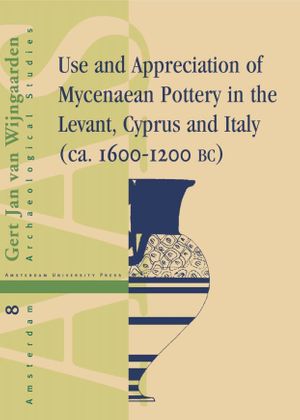
Use and Appreciation of Mycenaean Pottery in the Levant, Cyprus and Italy
Pottery made in the aegean during the Late Bronze Age has been found widely distributed in many parts of the Mediterranean. At some four hundred sites outside Greece, Mycenaean dinner and storage vessels, as well as some figurines have been discovered. As such, this class of archaeological artifacts constitutes one of the main sources by which to study Mycenaean trade and interregional contact. However, the role of pottery in international exchange during this period is not properly understood. That role depended on the patterns of consumption in the societies importing Mycenaean pottery. In this book, such patterns of consumption are investigated for the three areas with the largest amounts of Mycenaean pots: the Levant, Cyprus and Italy. For each of these areas, three sites have been selected for a detailed analysis of the cultural contexts of Mycenaean pots on a local level. Variations and similarities between these sites form the basis for a discussion of the cultural significance of this class of material in the region as a whole. The variations in the cultural significance of Mycenaean pottery in these areas show that the meaning of archaeological artifacts depends on the contexts in which they were used, discarded and rediscovered.
a Usable Collection: Essays in Honour of Jaap Kloosterman On Collecting Social History
Established in 1935, the International Institute of Social History (IISH) is one of the world’s leading research institutes focused on social history and holds one of the richest collections in the field. This volume brings together thirty-five essays in honor of the IISH’s longtime director Jaap Kloosterman, who built the institute into a world leader in the field.

Urban Europe: Fifty Tales of the City
In Urban Europe, urban researchers and practitioners based in Amsterdam tell the story of the European city, sharing their knowledge of and insights into urban dynamics in short, thought-provoking pieces. Their essays were collected on the occasion of the adoption of the Pact of Amsterdam with an Urban Agenda for the European Union during the Dutch Presidency of the Council in 2016. The fifty essays gathered in this volume present perspectives from diverse academic disciplines in the humanities and the social sciences. The authors — including the Mayor of Amsterdam, urban activists, civil servants and academic observers — cover a wide range of topical issues, inviting and encouraging us to rethink citizenship, connectivity, innovation, sustainability and representation as well as the role of cities in administrative and political networks. With the Urban Agenda for the European Union, EU Member States have acknowledged the potential of cities to address the societal challenges of the 21st century. This is part of a larger, global trend. These are all good reasons to learn more about urban dynamics and to understand the challenges that cities have faced in the past and that they currently face. Often but not necessarily taking Amsterdam as an example, the essays in this volume will help you grasp the complexity of urban.