
Open Access Books
Dictionary of World Biography: Fifth Edition
Jones, Barry Owen (1932– ). Australian politician, writer and lawyer, born in Geelong. Educated at Melbourne University, he was a public servant, high school teacher, television and radio performer, university lecturer and lawyer before serving as a Labor MP in the Victorian Parliament 1972–77 and the Australian House of Representatives 1977–98. He took a leading role in reviving the Australian film industry, abolishing the death penalty in Australia, and was the first politician to raise public awareness of global warming, the ‘post-industrial’ society, the IT revolution, biotechnology, the rise of ‘the Third Age’ and the need to preserve Antarctica as a wilderness. In the Hawke Government, he was Minister for Science 1983–90, Prices and Consumer Affairs 1987, Small Business 1987–90 and Customs 1988–90. He became a member of the Executive Board of UNESCO, Paris 1991–95 and National President of the Australian Labor Party 1992–2000, 2005–06. He was Deputy Chairman of the Constitutional Convention 1998. His books include Decades of Decision 1860– (1965), Joseph II (1968), Age of Apocalypse (1975), and he edited The Penalty is Death (1968). Sleepers, Wake!: Technology and the Future of Work was published by Oxford University Press in 1982, became a bestseller and has been translated into Chinese, Japanese, Korean, Swedish and braille. The fourth edition was published in 1995. Knowledge Courage Leadership, a collection of speeches and essays, appeared in 2016.
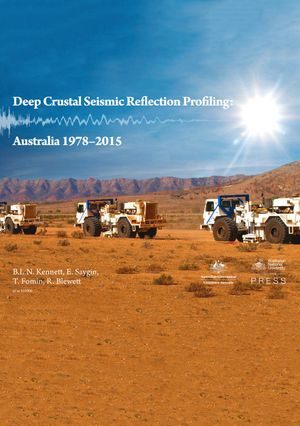
Deep Crustal Seismic Reflection Profiling: Australia 1978–2015
Deep Crustal Seismic Reflection Profiling: Australia 1978–2015 presents the full suite of reflection profiles penetrating the whole crust carried in Australia by Geoscience Australia and various partners. The set of reflection data comprises over 16,000 km of coverage across the whole continent, and provides an insight into the variations in crustal architecture in the varied geological domains. Each reflection profile is presented at approximately true scale with up to 220 km of profile per page and overlap between pages. Each reflection section is accompanied by a geological strip map showing the configuration of the line superimposed on 1:1M geology. The compilation includes a suite of large-scale reflection transects groups of 1,000 km or more that link across major geological provinces, and an extensive bibliography of reports and relevant publications.
Critical Perspectives on the Scholarship of Assessment and Learning in Law: Volume 1: England
“The Assessment in Legal Education book series offers perspectives on assessment in legal education across a range of Common Law jurisdictions. Each volume in the series provides: Information on assessment practices and cultures within a jurisdiction. A sample of innovative assessment practices and designs in a jurisdiction. Insights into how assessment can be used effectively across different areas of law, different stages of legal education and the implications for regulation of legal education assessment. Appreciation of the multidisciplinary and interdisciplinary research bases that are emerging in the field of legal education assessment generally. Analyses and suggestions of how assessment innovations may be transferred from one jurisdiction to another. The series will be useful for those seeking a summary of the assessment issues facing academics, students, regulators, lawyers and others in the jurisdictions under analysis. The exemplars of assessment contained in each volume may also be valuable in assisting cross-jurisdictional fertilisation of ideas and practices. This first volume focuses on assessment in law schools in England. It begins with an introduction to some recent trends in the culture and practice of legal education assessment. The first chapter focuses on the general regulatory context of assessment and learning in that jurisdiction, while the remainder of the book offers useful exemplars and expert critical discussion of assessment theories and practices. The series is based in the PEARL Centre (Profession, Education and Regulation in Law), in The Australian National University’s College of Law. “
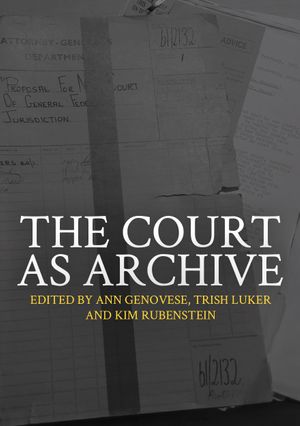
The Court as Archive
“Until the late 20th century, ‘an archive’ generally meant a repository for documents, as well as the generic name for the wide range of documents the repository might hold. An archive could be visited, and then also searched, to discover past actions or lives that had meaning for the present. While historians and historiographers have long understood the contests that archives contain and represent, the very idea of ‘the archive’ has, over the last 40 years, become the subject and object of widening and intensified consideration. This consideration has been intellectual (from scholars in a wide range of disciplines) and public (from communities and individuals whose stories are held captive, or sometimes hidden or excluded from official archives), as well as institutional. It has involved scrutiny and critique of official archives’ limitations and practices, as well as symbolic, affective and theoretical expansion and heightened expectation of what ‘the archive’ is or should be. The very language of ‘the archive’ now carries freight as administrative practice, normative value, metaphor, description and aspiration in different ways than it did in the 20th century. This collection offers a unique contribution to these reinvigorated and sometimes new conversations about what an archive might be, what it can do as a consequence, and to whom it bears custodial responsibilities. In particular, this collection addresses what it means for contemporary Australian superior courts of record to not only have constitutional and procedural duties to documents as a matter of law, but also to acknowledge obligations to care for those materials in a way that understands their public meaning and public value for the Australian people, in the past, in the present and for the future.”
The Coombs: A House of Memories
The Coombs Building at The Australian National University is a Canberra icon. Named after one of Australia’s greatest administrators and public intellectuals—‘Nugget’ Herbert Cole Coombs—for more than forty years the building has housed two of the University’s four foundational Schools: the Research School of Pacific and Asian Studies and the Research School of Social Sciences. This volume of recollections is about the former. It looks at life in the building through the prism of personal experience and happenstance. Part memoir, part biography, and part celebration, this book is about the people of Coombs, past and present. Through evocative and lucid reflections, present and former denizens of the building share their passions and predilections, quietly savour their accomplishments and recall the failings and foibles of the past with a kindly tolerance.
Contested Terrain: Reconceptualising Security in the Pacific
Contested Terrain provides a cutting-edge, comprehensive and innovative approach to critically analysing the multidimensional and contested nature of security narratives, justified by different ideological, political, cultural and economic rationales. This is important in a complex and ever-changing situation involving a dynamic interplay between local, regional and global factors. Security narratives are constructed in multiple ways and are used to frame our responses to the challenges and threats to our sense of safety, wellbeing, identity and survival but how the narratives are constructed is a matter of intellectual and political contestation. Using three case studies from the Pacific (Fiji, Tonga and Solomon Islands), Contested Terrain shows the different security challenges facing each country, which result from their unique historical, political and socio-cultural circumstances. Contrary to the view that the Pacific is a generic entity with common security issues, this book argues for more localised and nuanced approaches to security framing and analysis.

Piezoelectric Electromechanical Transducers for Underwater Sound, Parts III & IV
The book presents a broad-scope analysis of piezoelectric electromechanical transducers and the related aspects of practical transducer design for underwater applications. It uses an energy method for analyzing transducer problems that provides the physical insight important for the understanding of electromechanical devices. Application of the method is first illustrated with transducer examples that can be modeled as systems with a single degree of freedom, (such as spheres, short cylinders, bars and flexural disks and plates made of piezoelectric ceramics). Thereupon, transducers are modeled as devices with multiple degrees of freedom. In all these cases, results of modeling are presented in the form of equivalent electromechanical circuits convenient for the calculation of the transducers’ operational characteristics. Special focus is made on the effects of coupled vibrations in mechanical systems on transducer performance. The book also provides extensive coverage of acoustic radiation including acoustic interaction between the transducers. The book is inherently multidisciplinary. It provides essential background regarding the vibration of elastic passive and piezoelectric bodies, piezoelectricity, acoustic radiation, and transducer characterization. Scientists and engineers working in the field of electroacoustics and those involved in education in the field will find this material useful not only for underwater acoustics, but also for electromechanics, energy conversion and medical ultrasonics.
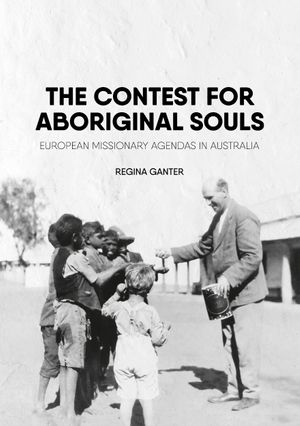
The Contest for Aboriginal Souls: European missionary agendas in Australia
“This book covers the missionary activity in Australia conducted by non-English speaking missionaries from Catholic and Protestant mission societies from its beginnings to the end of the mission era. It looks through the eyes of the missionaries and their helpers, as well as incorporating Indigenous perspectives and offering a balanced assessment of missionary endeavour in Australia, attuned to the controversies that surround mission history. It means neither to condemn nor praise, but rather to understand the various responses of Indigenous communities, the intentions of missionaries, the agendas of the mission societies and the many tensions besetting the mission endeavour. It explores a common commitment to the supernatural and the role of intermediaries like local diplomats and evangelists from the Pacific Islands and Philippines, and emphasises the strong role played by non-English speakers in the transcultural Australian mission effort. This book is a companion to the website German Missionaries in Australia – A web-directory of intercultural encounters. The web-directory provides detailed accounts of Australian missions staffed with German speakers. The book reads laterally across the different missions and produces a completely different type of knowledge about missions. The book and its accompanying website are based on a decade of research ranging across mission archives with foreign-language sources that have not previously been accessed for a historiography of Australian missions. ‘A remarkable intellectual achievement, compelling reading.’ — Dr Niel Gunson ‘The range of knowledge on display here is very impressive indeed.’ — Professor Peter Monteath”

Confronting Fiji Futures
Fiji, post-independence, has seen several governments, two military coups and, amidst sweeping social, economic and political changes, the presence of divisive identity politics in its journey towards a united, collective Fiji community. This republished edition of Confronting Fiji Futures takes in these landmark events and eventualities, and aims at a forward-looking assessment of the realities facing Fiji in the present and the future. It focuses on the period of the coups up to and including the 1999 general elections, when an explicitly multiethnic party won government in a surprise landslide result. This book is the result of a collaborative research project based at the Institute of Social Studies, The Hague, in the Netherlands — an institution with a long tradition of collaborative teaching, research and advisory services in the South Pacific region. It aims to present a range of relevant issues from a number of vantage points. It has brought together a strong diversity of authors led by A. Haroon Akram-Lodhi, including John Cameron, Ganesh Chand, Martin Doornbos, Yash Ghai, Holger Korth, Sunil Kumar, Biman Prasad, Jacqueline Leckie, Satendra Prasad, Steve Ratuva, Robbie Robertson, Ardeshir Sepehri and William Sutherland.
Competing for Influence: The Role of the Public Service in Better Government in Australia
“Amidst growing dissatisfaction with the state of government performance and an erosion of trust in our political class, Competing for Influence asks: what sort of public service do we want in Australia? Drawing on his experience in both the public and private sectors – and citing academic research across the fields of public sector management, industrial organisation, and corporate strategy – Barry Ferguson argues the case for the careful selection and application of private sector management concepts to the public service, both for their ability to strengthen the public service and inform public policy. These include competitive advantage, competitive positioning, horizontal strategy and organisational design, and innovation as an all-encompassing organisational adjustment mechanism to a changeable environment. But these are not presented as a silver bullet, and Ferguson addresses other approaches to reform, including the need to rebuild the Public Sector Act, the need to reconsider the interface between political and administrative arms of government (and determine what is in the ‘public interest’), and the need for greater independence for the public service within a clarified role. This approach, and its implications for public sector reform, is contrasted with the straitjacket of path dependency that presently constricts the field.”
The Chinese Economic Transformation: Views from Young Economists
“The Chinese Economic Transformation, the 19th volume in the China Update book series, provides an opportunity for young economists to share their views on various issues relating to the Chinese economic transformation. More than half of the contributors to this book are female scholars. Some of the contributors are rising stars in the studies of the Chinese economy and economic transition, and some only recently received their PhDs and are on their way to establishing themselves in the field of China studies. But they have one thing in common: to passionately observe, study and research what is going on in the Chinese economic transformation during the reform period; and, by so doing, make contributions to the policy debates on, and general understanding of, the Chinese economy. The chapters in this volume include an in-depth probe into challenges in capital and credit allocation due to financial friction and policy distortions; investigating the causes of growth slow-down in China and suitable policy responses; the evolution of the household registration system and its impact on off-farm employment and the integration of rural and urban labour markets; the growth, scale and characteristics of nonstandard employment; the development of rural e-commerce and its economic impact; innovation performance of listed enterprises in China; financial services liberalisation and its impact on firms’ performance; financing support schemes for small and medium-sized enterprises (SMEs) and the effect on banks’ credit allocation to SMEs; the potential costs of US–China trade conflict and ways to mitigate them; gender income gap in China’s labour market; causes of blockage of Chinese overseas direct investment and strategies to reduce the probability of encountering obstacles; and the role of state capital in the iron ore boom in Australia. The great variety of topics in this year’s Update allows readers to understand the current shape of the Chinese economy and to think deeply about policies and necessary reforms for future growth and development.”
China’s New Sources of Economic Growth: Vol. 1: Reform, Resources and Climate Change
China’s change to a new model of growth, now called the ‘new normal’, was always going to be hard. Events over the past year show how hard it is. The attempts to moderate the extremes of high investment and low consumption, the correction of overcapacity in the heavy industries that were the mainstays of the old model of growth, the hauling in of the immense debt hangover from the fiscal and monetary expansion that pulled China out of the Great Crash of 2008 would all have been hard at any time. They are harder when changes in economic policy and structure coincide with stagnation in global trade and rising protectionist sentiment in developed countries, extraordinarily rapid demographic change and recognition of the urgency of easing the environmental damage from the old model. China’s economy has slowed and there are worries that the authorities will not be able to contain the slowdown within preferred limits. This year’s Update explores the challenge of the slowdown in growth and the change in economic structure. Leading experts on China’s economy and environment review change within China’s new model of growth, and its interaction with ageing, environmental pressure, new patterns of urbanisation, and debt problems at different levels of government. It illuminates some new developments in China’s economy, including the transformational potential of internet banking, and the dynamics of financial market instability. China’s economic development since 1978 is full of exciting change, and this year’s China Update is again the way to know it as it is happening
China’s 40 Years of Reform and Development: 1978–2018
The year 2018 marks 40 years of reform and development in China (1978–2018). This commemorative book assembles some of the world’s most prominent scholars on the Chinese economy to reflect on what has been achieved as a result of the economic reform programs, and to draw out the key lessons that have been learned by the model of growth and development in China over the preceding four decades. This book explores what has happened in the transformation of the Chinese economy in the past 40 years for China itself, as well as for the rest of the world, and discusses the implications of what will happen next in the context of China’s new reform agenda. Focusing on the long-term development strategy amid various old and new challenges that face the economy, this book sets the scene for what the world can expect in China’s fifth decade of reform and development. A key feature of this book is its comprehensive coverage of the key issues involved in China’s economic reform and development. Included are discussions of China’s 40 years of reform and development in a global perspective; the political economy of economic transformation; the progress of marketisation and changes in market-compatible institutions; the reform program for state-owned enterprises; the financial sector and fiscal system reform, and its foreign exchange system reform; the progress and challenges in economic rebalancing; and the continuing process of China’s global integration. This book further documents and analyses the development experiences including China’s large scale of migration and urbanisation, the demographic structural changes, the private sector development, income distribution, land reform and regional development, agricultural development, and energy and climate change policies.
Cascades of Violence: War, Crime and Peacebuilding Across South Asia
War and crime are cascade phenomena. War cascades across space and time to more war; crime to more crime; crime cascades to war; and war to crime. As a result, war and crime become complex phenomena. That does not mean we cannot understand how to prevent crime and war simultaneously. This book shows, for example, how a cascade analysis leads to an understanding of how refugee camps are nodes of both targeted attack and targeted recruitment into violence. Hence, humanitarian prevention also must target such nodes of risk. This book shows how nonviolence and nondomination can also be made to cascade, shunting cascades of violence into reverse. Complexity theory implies a conclusion that the pursuit of strategies for preventing crime and war is less important than understanding meta strategies. These are meta strategies for how to sequence and escalate many redundant prevention strategies. These themes were explored across seven South Asian societies during eight years of fieldwork.
Carl Strehlow’s 1909 Comparative Heritage Dictionary: An Aranda, German, Loritja and Dieri to English Dictionary with Introductory Essays
Carl Strehlow’s comparative dictionary manuscript is a unique item of Australian cultural heritage; it is a large collection of circa 7,600 Aranda, 6,800 Loritja (Luritja) and 1,200 Dieri to German entries compiled at the beginning of the twentieth century at the Hermannsburg Mission in central Australia. It is an integral part of Strehlow’s ethnographic work on Aboriginal cultures that his German editor Baron Moritz von Leonhardi published as Die Aranda- und Loritja-Stämme in Zentral-Australien (Strehlow 1907–1920) in Frankfurt. Strehlow and his editor had planned to publish a language study that included this comparative dictionary, but it remained unpublished until now due to a number of complicated historical and personal circumstances of the main characters involved with the dictionary. Strehlow’s linguistic work is historically and anthropologically significant because it probably represents the largest and most comprehensive wordlist of Indigenous languages compiled in Australia during the early stages of contact. It is an important primary source for Luritja and Aranda speakers. Both languages are spoken in homes and taught in schools in central Australia. The reasons for presenting this work as a heritage dictionary—that is, as an exact transcription of the original form of the handwritten manuscript—are to follow the Western Aranda people’s wishes and to maintain its historical authenticity, which will prove to be of great use to both Indigenous people and scholars interested in language.
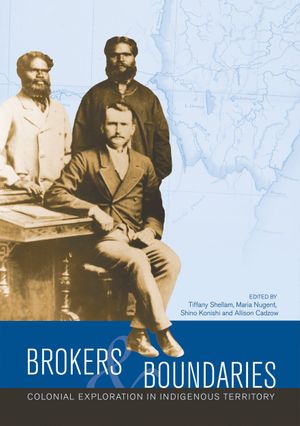
Brokers and boundaries: Colonial exploration in indigenous territory
Colonial exploration continues, all too often, to be rendered as heroic narratives of solitary, intrepid explorers and adventurers. This edited collection contributes to scholarship that is challenging that persistent mythology. With a focus on Indigenous brokers, such as guides, assistants and mediators, it highlights the ways in which nineteenth-century exploration in Australia and New Guinea was a collective and socially complex enterprise. Many of the authors provide biographically rich studies that carefully examine and speculate about Indigenous brokers’ motivations, commitments and desires. All of the chapters in the collection are attentive to the specific local circumstances as well as broader colonial contexts in which exploration and encounters occurred. This collection breaks new ground in its emphasis on Indigenous agency and Indigenous–explorer interactions. It will be of value to historians and others for a very long time. Professor Ann Curthoys, University of Sydney. In bringing together this group of authors, the editors have brought to histories of colonialism the individuality of these intermediaries, whose lives intersected colonial exploration in Australia and New Guinea. Dr Jude Philp, Macleay Museum.
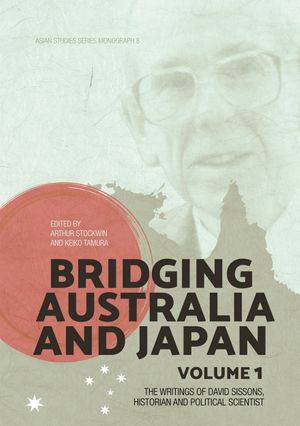
Bridging Australia and Japan: Volume 1: The writings of David Sissons, historian and political scientist
This book represents volume one of the writings of David Sissons, who for most of his career pioneered research on the history of relations between Australia and Japan. Much of what he wrote remained unpublished at the time of his death in 2006, and so the editors have included a selection of his hitherto unpublished work along with some of his published writings. Breaking Japanese Diplomatic Codes, edited by Desmond Ball and Keiko Tamura, was published in 2013 and forms a part of the series that reproduces many of Sissons’ writings. In the current volume, the topics covered are wide. They range from contacts between the two countries as far back as the early 19th century, Japanese pearl divers in northern Australia, Japanese prostitutes in Australia, the wool trade, the notorious ‘trade diversion episode’ of 1936, and a study of the Japan historian James Murdoch. Sissons was an extraordinarily meticulous researcher, leaving no stone unturned in his search for accuracy and completeness of understanding, and should be considered one of Australia’s major historians. His writings deal with not only diplomatic negotiations and decision-making, but also the lives of ordinary and often nameless people and their engagements with their host society. His warm humanity in recording ordinary people’s lives as well as his balanced examination of historical incidents and issues from both Australian and Japanese perspectives are a hallmark of his scholarship.
Piezoelectric Electromechanical Transducers for Underwater Sound, Part II: Subsystems of the Electroacoustic Transducers
The book presents a broad-scope analysis of piezoelectric electromechanical transducers and the related aspects of practical transducer design for underwater applications. It uses an energy method for analyzing transducer problems that provides the physical insight important for the understanding of electromechanical devices. Application of the method is first illustrated with transducer examples that can be modeled as systems with a single degree of freedom, (such as spheres, short cylinders, bars and flexural disks and plates made of piezoelectric ceramics). Thereupon, transducers are modeled as devices with multiple degrees of freedom. In all these cases, results of modeling are presented in the form of equivalent electromechanical circuits convenient for the calculation of the transducers’ operational characteristics. Special focus is made on the effects of coupled vibrations in mechanical systems on transducer performance. The book also provides extensive coverage of acoustic radiation including acoustic interaction between the transducers. The book is inherently multidisciplinary. It provides essential background regarding the vibration of elastic passive and piezoelectric bodies, piezoelectricity, acoustic radiation, and transducer characterization. Scientists and engineers working in the field of electroacoustics and those involved in education in the field will find this material useful not only for underwater acoustics, but also for electromechanics, energy conversion and medical ultrasonics. Part II contains general information on vibration of mechanical systems, electromechanical conversion in the deformed piezoceramic bodies, and acoustic radiation that can be used independently for treatment transducers of different type.
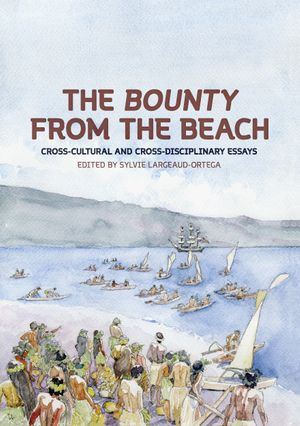
The Bounty from the Beach: Cross-Cultural and Cross-Disciplinary Essays
“The Bounty from the Beach is a collection of cross-disciplinary essays, capitalising on a widely shared fascination for the Bounty story in order to draw scholarly attention to Oceania. It aims to reorient the Bounty focus away from the West, where most Bountynarratives and studies have emerged, to the Pacific, where most of the original events unfolded. It investigates the Bounty heritage from the standpoint of the beach, Greg Dening’s metaphor for culture contact and conflict in the Pacific Islands: this liminal place that transforms Islanders and voyagers, islands and ships, each time it is crossed. It analyses the way newcomers create new islands, and how these changes may occasionally impact the world. This volume examines the ‘little people’, to use another of Dening’s expressions, who stand ‘on both sides of the beach’: they are Polynesian or European or, as beaches are crossed and remade, no longer one without the other, but bound together in processes of change. Among these people are Bounty sailors, beachcombers, Pitcairners and indigenous Pacific Islanders of the past and the present. This collection also explores the works of some renowned Western writers and actors who, turning mutineers after their own fashion and in their own times, themselves crossed the beach and attempted to illuminate the ‘little people’ involved in the Bounty narratives. These prominent writers and actors put the spotlight on characters who were silenced on account of race, class or geographical distance from the dominant centres of power. Inspired by Dening’s empowering voice, our purpose is to fill that silence. Just as it criss-crosses the ocean, progressing with the ship through time and space, The Bounty from the Beach ranges far and wide across disciplines, methodologies and scholarly styles. Its multidisciplinary course contributes to illuminate the multiple ways in which the Bounty heritage embraces diverse horizons. It throws light on the colonial discourse that undertook to stifle Pacific Islander agency, and the neocolonial policies that have been applied to Oceania, and still are: hegemonic moves that have led to global environmental, nuclear and ecological hazards. As a whole, the collection contends that what unfolds in this vast ocean matters: the stakes are high for the whole human community.”
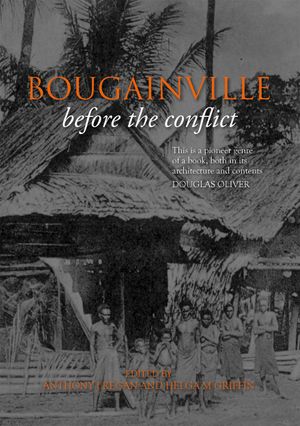
Bougainville before the conflict
One of the most beautiful island groups of the Pacific, Bougainville has a remarkable history. Tragically, it is as the site of devastating civil conflict that Bougainville is perhaps best known. In exploring the rich environmental, cultural and social heritage of Bougainville before the conflict, this collection provides an insight into the long-term causes of the crisis. In doing so, it surveys such topics as Bougainville’s prehistory and traditional cultures, the impact of German and Australian colonialism, the attempts by disparate local cultures to find a common identity, the assertion of political autonomy in the face of coercion to integrate with Papua New Guinea, and contemporary efforts to resolve conflict and plan a viable future. A landmark collaboration between expert commentators on Bougainville and Bougainvilleans themselves, this volume provides a comprehensive picture for those seeking to understand Bougainville’s history and future directions. Bougainville before the conflict was published in association with the State, Society and Governance in Melanesia Project, which is supported by The Australian National University and the Commonwealth of Australia.
Black, White and Gold: Goldmining in Papua New Guinea 1878–1930
Australian goldminers were among the first white men to have sustained contact with Papua New Guineans. Some Papua New Guineans welcomed them, worked for them, traded with them and learnt their skills and soon were mining on their own account. Others met them with hostility, either by direct confrontation or by stealthy ambush. Many of the indigenous people and some miners were killed. The miners were dependent on the local people for labourers, guides, producers of food and women. Some women lived willingly in the miners’ camps, a few were legally married, and some were raped. Working conditions for Papua New Guineans on the claims were mixed; some being well treated by the miners, others being poorly housed and fed, ill-treated, and subject to devastating epidemics. Conditions were rough, not only for them but for the diggers too. This book, republished in its original format, shows the differences in the experience of various Papua New Guinean communities which encountered the miners and tries to explain these differences. It is a graphic description of what happens when people from vastly different cultures meet. The author has drawn on documentary sources and interviews with the local people to produce, for the first time, a lively history.
The Bionarrative: The story of life and hope for the future
This book is for the general reader interested in the human place in nature and the future of civilisation. It is based on the biohistorical approach to the study of human situations. This approach recognises human culture as a new and extremely important force in the biosphere. The book discusses the evolution of life and the essential ecological processes on which all life, including human civilisation, depend. It describes the conditions of life and ecology of humans in the four ecological phases in human history, with emphasis on the impacts of human culture on biological systems. It explains how, as cultures evolved, they often came to embrace not only factual information of good practical value, but also assumptions that are sheer nonsense, sometimes leading to activities that caused unnecessary human distress or damage to local ecosystems. These are examples of cultural maladaptation. There have been countless instances of cultural maladaptation in human history. The days of the fourth ecological phase of human history, the Exponential Phase, are numbered. Cultural maladaptations are now on a massive scale, and business as usual will inevitably lead to the ecological collapse of civilisation. The only hope for the survival of civilisation lies in radical changes in the worldviews and priorities of the prevailing cultures of the world, leading to a fifth ecological phase — a phase in which human society is truly sensitive to, in tune with and respectful of the processes of life. This is called a biosensitive society. The book concludes with discussion on the essential characteristics of a biosensitive society and on the means by which the necessary cultural transformation might come about.
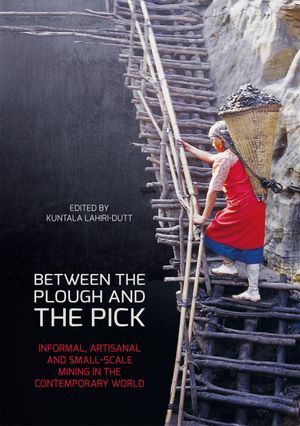
Between the Plough and the Pick: Informal, artisanal and small-scale mining in the contemporary world
“Between the Plough and the Pick deepens our understanding of informal, artisanal and small-scale mining, popularly known as ASM. The book engages with wider scholarly conceptualisations of contemporary global social, agrarian and political changes, whilst underlining the roles that local social‑political-historical contexts play in shaping mineral extractive processes and practices. It shows that the people who are engaged in these mining practices are often the poorest and most exploited labourers—erstwhile peasants caught in the vortex of global change, who perform the most insecure and dangerous tasks. Although these people are located at the margins of mainstream economic life, they collectively produce enormous amounts of diverse material commodities and find a livelihood (and often a pathway out of oppressive poverty). The contributions to this book bring these people to the forefront of debates on resource politics. The contributors are international scholars and practitioners who explore the complexities in the histories, in labour and production practices, the forces driving such mining, the creative agency and capacities of these miners, as well as the human and environmental costs of ASM. They show how these informal, artisanal and small‑scale miners are inextricably engaged with, or bound to, global commodity values, are intimately involved in the production of new extractive territories and rural economies, and how their labour reshapes agrarian communities and landscapes of resource access and control. This book drives home the understanding that, collectively, this social and economic milieu redefines our conceptualisation of resource politics, mineral‑dependent livelihoods, extractive geographies of resources and commodities, and their multiple meanings.”
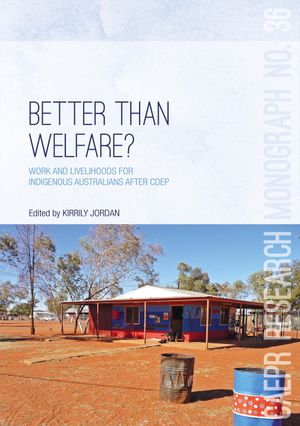
Better Than Welfare?: Work and livelihoods for Indigenous Australians after CDEP
The end of the very long-standing Community Development Employment Projects (CDEP) scheme in 2015 marked a critical juncture in Australian Indigenous policy history. For more than 30 years, CDEP had been among the biggest and most influential programs in the Indigenous affairs portfolio, employing many thousands of Aboriginal and Torres Strait Islander people. More recently, it had also become a focus of intense political contestation that culminated in its ultimate demise. This book examines the consequences of its closure for Indigenous people, communities and organisations. The end of CDEP is first situated in its broader historical and political context: the debates over notions of ‘self-determination’ versus ‘mainstreaming’ and the enduring influence of concerns about ‘passive welfare’ and ‘mutual obligation’. In this way, the focus on CDEP highlights more general trends in Indigenous policymaking, and questions whether the dominant government approach is on the right track. Each chapter takes a different disciplinary approach to this question, variously focusing on the consequences of change for community and economic development, individual work habits and employment outcomes, and institutional capacity within the Indigenous sector. Across the case studies examined, the chapters suggest that the end of CDEP has heralded the emergence of a greater reliance on welfare rather than the increased employment outcomes the government had anticipated. Concluding that CDEP was ‘better than welfare’ in many ways, the book offers encouragement to policymakers to ensure that future reforms generate livelihood options for Aboriginal and Torres Strait Islander Australians that are, in turn, better than CDEP.
Bayesian Methods for Statistical Analysis
Bayesian methods for statistical analysis is a book on statistical methods for analysing a wide variety of data. The book consists of 12 chapters, starting with basic concepts and covering numerous topics, including Bayesian estimation, decision theory, prediction, hypothesis testing, hierarchical models, Markov chain Monte Carlo methods, finite population inference, biased sampling and nonignorable nonresponse. The book contains many exercises, all with worked solutions, including complete computer code. It is suitable for self-study or a semester-long course, with three hours of lectures and one tutorial per week for 13 weeks.
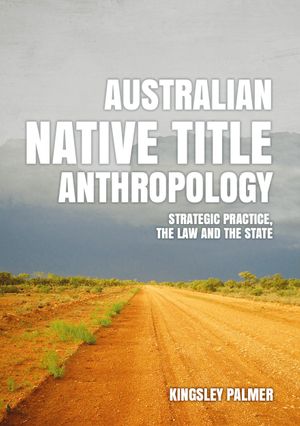
Australian Native Title Anthropology: Strategic practice, the law and the state
“The Australian Federal Native Title Act 1993 marked a revolution in the recognition of the rights of Australia’s Indigenous peoples. The legislation established a means whereby Indigenous Australians could make application to the Federal Court for the recognition of their rights to traditional country. The fiction that Australia was terra nullius (or ‘void country’), which had prevailed since European settlement, was overturned. The ensuing legal cases, mediated resolutions and agreements made within the terms of the Native Title Act quickly proved the importance of having sound, scholarly and well-researched anthropology conducted with claimants so that the fundamentals of the claims made could be properly established. In turn, this meant that those opposing the claims would also benefit from anthropological expertise. This is a book about the practical aspects of anthropology that are relevant to the exercise of the discipline within the native title context. The engagement of anthropology with legal process, determined by federal legislation, raises significant practical as well as ethical issues that are explored in this book. It will be of interest to all involved in the native title process, including anthropologists and other researchers, lawyers and judges, as well as those who manage the claim process. It will also be relevant to all who seek to explore the role of anthropology in relation to Indigenous rights, legislation and the state.”
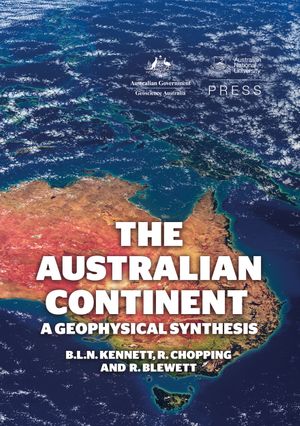
The Australian Continent: A Geophysical Synthesis
The Australian Continent: A Geophysical Synthesis is designed to provide a summary of the character of the Australian continent through the extensive information available at the continental scale, as a contribution to the understanding of Australia’s lithospheric architecture and its evolution.The results build on the extensive databases assembled at Geoscience Australia, particularly for potential fields, supplemented by the full range of seismological information, mostly from The Australian National University. To aid in cross comparison of results from different disciplines, information is presented with a common projection and scales.
Australian Clinical Legal Education: Designing and operating a best practice clinical program in an Australian law school
Clinical legal education (CLE) is potentially the major disruptor of traditional law schools’ core functions. Good CLE challenges many central clichés of conventional learning in law—everything from case book method to the 50-minute lecture. And it can challenge a contemporary overemphasis on screen-based learning, particularly when those screens only provide information and require no interaction. Australian Clinical Legal Education comes out of a thorough research program and offers the essential guidebook for anyone seeking to design and redesign accountable legal education; that is, education that does not just transform the learner, but also inculcates in future lawyers a compassion for and service of those whom the law ought to serve. Established law teachers will come to grips with the power of clinical method. Law students struggling with overly dry conceptual content will experience the connections between skills, the law and real life. Regulators will look again at law curricula and ask law deans ‘when’?
Piezoelectric Electromechanical Transducers for Underwater Sound, Part I: Introduction to Energy Method of Treating the Transducers
The book is the most comprehensive coverage of piezoelectric acoustic transducers and all the related aspects of practical transducer designing for underwater applications in the field. It uses a physics-based energy method for analyzing transducer problems. This gives great physical insight into the understanding of the electromechanical devices. The great benefit of the energy method is that the multidisciplinary subject of electro-mechano-acoustics can be presented in parts and the solutions to the problems (electrical, electro-piezo, mechanical, and radiation) are combined using equivalent electrical circuit network theory. The energy and equivalent electromechanical circuit method at first is illustrated with transducer examples that can be modeled as a single degree of freedom system (such as spheres, short cylinders and flexural beams and plates). Then transducers are modeled as multiple degrees of freedom devices and the results are presented using multi contour electromechanical circuits. Special focus is made on the effects of coupled vibrations on the transducer performance. The Book gives also extensive coverage of acoustic radiation including acoustic interaction between the transducers. It provides practical results that are directly useful for the transducers modeling. While there have been many studies of acoustic radiation of various shapes, non-previous presented the results in terms of such practical utility.
Alternative countrysides: Anthropological approaches to rural Western Europe today
A fresh anthropological look at a central but neglected topic: the profound changes in rural life throughout Western Europe today. As locals leave for jobs in cities they are replaced by neo-hippies, lifestyle-seekers, eco-activists, and labour migrants from beyond the EU.
With detailed ethnographic examples, contributors analyse new modes of living rurally and emerging forms of social organisation. As incomers’ dreams come up against residents’ realities, they detail the clashes and the cooperations between old and new residents. They make us rethink the rural/urban divide, investigate regionalists’ politicisation of rural life and heritage, and reveal how locals use EU monies to prop up or challenge existing hierarchies. They expose the consequences of and reactions to grand EU-restructuring policies, which at times threaten to turn the countryside into a manicured playground for escapee urbanites.
This book will appeal to anyone seriously interested in the realities of rural life.