
Open Access Books
Developing New Products and Services
Developing New Products and Services by Sanders is an outstanding contribution to market research. The book focuses on the upfront activities and ideas for new product and service development. A central theme of Developing New Products and Services is that there is, or should be, a constant struggle going on in every organization, business and system between delivering feature-rich versions of products and services using extravagant engineering and delivering low-cost versions of products and services using frugal engineering. Students will come away with this notion and how to manifest it as a contributing employee at any company. A number of powerful concepts and tools are presented so your students can better understand how to facilitate new product development. For example, three templates are featured that facilitate new product and service development. The F.A.D. (features, attributes and design) template is used to identify the features and attributes that can be used for product and service differentiation. The Ten–Ten planning process contains two templates: an Organizational and Industry Analysis template and the Business Plan Overview template. These two templates coupled with the F.A.D. template can be used to develop a full-blown business plan.In addition, Developing New Products and Services includes the following topics: entrepreneurship, technology and product life cycles, product and service versioning, product line optimization, creativity, lock-in real options, business valuation and project management.E valuate Developing New Products and Services by Sanders for your marketing courses today.

Deutsch im Blick
This textbook of classroom activities and homework accompanies Deutsch im Blick, http://coerll.utexas.edu/dib/, the web-based German program developed and in use at the University of Texas since 2004, and its companion site, Grimm Grammar (2000) http://coerll.utexas.edu/gg/. These are open access sites, free and open multimedia resources, which require neither password nor fees. Deutsch im Blick, used increasingly by students, teachers and institutions throughout the world, includes 307 videos (American students in Germany, native German interviews, vocabulary and culture presentation videos) recorded vocabulary lists, phonetic lessons, online grammar lessons (600 pages) with self-correcting exercises and audio dialogues, online grammar tools and diagnostic grammar tests.
Design Discourse: Composing and Revising Programs in Professional and Technical Writing, Perspectives on Writing
Design Discourse: Composing and Revising Programs in Professional and Technical Writing, edited by David Franke, Alex Reid and Anthony DiRenzo, addresses the complexities of developing professional and technical writing programs. The essays in the collection offer reflections on efforts to bridge two cultures — what the editors characterize as the “art and science of writing” — often by addressing explicitly the tensions between them. Design Discourse offers insights into the high-stakes decisions made by program designers as they seek to “function at the intersection of the practical and the abstract, the human and the technical.”

Democracy in Brief
“Democracy in Brief” touches on topics such as rights and responsibilities of citizens, free and fair elections, the rule of law, the role of a written constitution, separation of powers, a free media, the role of parties and interest groups, military-civilian relations and democratic culture.

The Delft Sand, Clay and Rock Cutting Model
Sand, clay and rock have to be excavated for a variety of purposes, such as dredging, trenching, mining (including deep sea mining), drilling, tunnel boring and many other applications. Many excavations take place on dry land, but they are also frequently required in completely saturated conditions, and the methods necessary to accomplish them consequently vary widely.This book provides an overview of cutting theories. It begins with a generic model, valid for all types of soil (sand, clay and rock), and continues with the specifics of dry sand, water-saturated sand, clay, atmospheric rock and hyperbaric rock. Small blade angles and large blade angles are discussed for each soil type, and for each case considered the equations/model for cutting forces, power and specific energy are given.With models verified by laboratory research, principally from the Delft University of Technology, and data from other recognized sources, this book will prove an invaluable reference for anybody whose work involves major excavations of any kind.
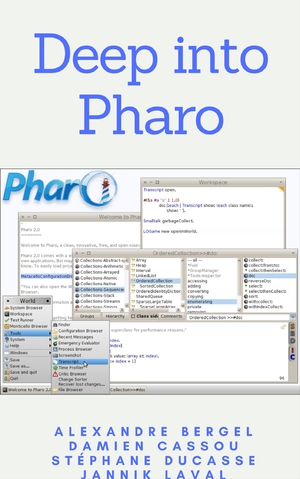
Deep into Pharo
Pharo is a clean, innovative, open-source, live-programming environment. Deep into Pharo is the second volume of a series of books covering Pharo. Whereas the first volume is intended for newcomers, this second volume covers deeper topics. You will learn about Pharo frameworks and libraries such as Glamour, PetitParser, Roassal, FileSystem, Regex and Socket. You will explore the language with chapters on exceptions, blocks, small integers and floats. You will discover tools such as profilers, Metacello and Gofer.
CESEE Bank Lending Survey – Spring 2022
“The CESEE Bank Lending Survey is a unique instrument developed in the context of the Vienna Initiative to monitor cross-border banking activities and deleveraging in Central, Eastern and South-Eastern Europe. It serves to better understand the determinants/constraints influencing credit growth in the region and to gain forward-looking insights into the strategies of cross-border banks and market expectations regarding local financial conditions. This report presents the results of the EIB CESEE Bank Lending survey at the regional and single country levels.”
Critical Expressivism: Theory and Practice in the Composition Classroom, Perspectives on Writing
Critical Expressivism is an ambitious attempt to re-appropriate intellectual territory that has more often been charted by its detractors than by its proponents. Indeed, as Peter Elbow observes in his contribution to this volume, “As far as I can tell, the term ‘expressivist’ was coined and used only by people who wanted a word for people they disapproved of and wanted to discredit.” The editors and contributors to this collection invite readers to join them in a new conversation, one informed by “a belief that the term expressivism continues to have a vitally important function in our field.”
Criminal Law
Welcome to Criminal Law, your guide to a fascinating yet challenging topic. This engaging and interactive textbook will enhance your ability to be successful in academics or a career in criminal justice.Criminal Law uses a two-step process to augment learning, called the applied approach. First, after building a strong foundation from scratch, Criminal Law introduces you to crimes and defenses that have been broken down into separate components. It is so much easier to memorize and comprehend the subject matter when it is simplified this way. However, becoming proficient in the law takes more than just memorization. You must be trained to take the laws you have studied and apply them to various fact patterns. Most students are expected to do this automatically, but application must be seen, experienced and practiced before it comes naturally. Thus, the second step of the applied approach is reviewing examples of the application of law to facts after dissecting and analyzing each legal concept. Some of the examples come from cases, and some are purely fictional. All the examples are memorable, even quirky, so they will stick in your mind and be available when you need them the most (like during an exam). After a few chapters, you will notice that you no longer obsess over an explanation that doesn’t completely make sense the first time you read it—you will just skip to the example. The examples clarify the principles for you, lightening the workload significantly.
Creative Clinical Teaching in the Health Professions
This peer reviewed eBook is a must-read for nurses and other health professionals who strive to teach with creativity and excellence in clinical settings. Each chapter presents current evidence informed educational practice knowledge. Each topic is also presented with text boxes describing “Creative Strategies” that clinical teachers from across Canada have successfully implemented. For those who are interested in background knowledge, the authors provided a comprehensive literature base. And, for those interested mainly in “what to do,” the text box summaries offer step-by-step directions for creative, challenging activities that both new and experienced instructors can begin using immediately.
Create or Perish: The Case for Inventions and Patents
The American patent system needs no apologists. Though it may not be entirely suited in all respects to our current problems and needs, and though sometimes it may have been misused, its record of achievement in the progress of our country is indelibly written on the pages of history. Its current service, despite the fact that it is not being fully utilized in the second half of the century, seems to me equally indisputable; though some critics without firsthand experience in this field may not agree. Those critics are free to write their own books. I have undertaken to write mine as a champion of the philosophy that today, as much as ever, incentives that make a person fight to be an individual promote the welfare the whole state. In my lectures, many of which have been included in this book, I frankly paint a picture, particularly for engineers and applied scientists, that is based on this philosophy and thus supports patents.
Corporate Governance
Corporate Governance by de Kluyver is a primer on corporate governance. It is designed to help students understand corporate governance by looking at the subject from both a macro- and micro-perspective. Historical data and examples including the recent scandals that have torn the fabric of capitalism pave a pathway to the principal challenges facing today’s corporate boards, and how to successfully manage them. Topics Include: Clear coverage on why proper corporate governance has become a moral imperative and how to corporations achieve it. Discussions on recent governance reforms in the United States. Outlines of the roles that each individual in the corporate governance process must take on and how to effectively execute on those roles. Exploration on the future of corporate governance in the epilogueTake some time to review Corporate Governance by de Kluyver to see if it is a good fit for your strategy courses.
A Coriolis Tutorial
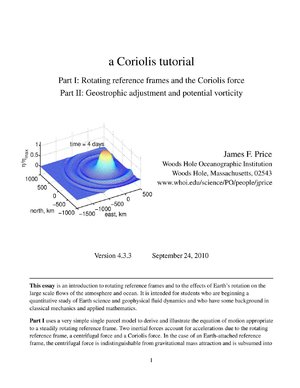
This essay is an introduction to rotating reference frames and to the effects of Earth’s rotation on thelarge scale flows of the atmosphere and ocean. It is intended for students who are beginning aquantitative study of Earth science and geophysical fluid dynamics and who have some background inclassical mechanics and applied mathematics.

Copy(write): Intellectual Property in the Writing Classroom, Perspectives on Writing
The editors of Copy(write): Intellectual Property in the Writing Classroom bring together stories, theories and research that can further inform the ways in which we situate and address intellectual property issues in our writing classrooms. The essays in the collection identify and describe a wide range of pedagogical strategies, consider theories, present research, explore approaches and offer both cautionary tales and local and contextual successes that can further inform the ways in which we situate and address intellectual property issues in our teaching.
Conversa Brasileira
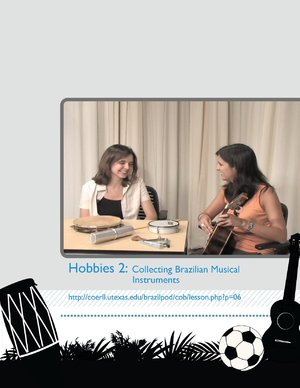
Conversa Brasileira is an online open-access site that contains a series of 35 video scenarios in which Brazilians talk about their daily activities, including everything from hobbies to shopping and from traffic jams to soccer games. These materials are designed to help intermediate- and advanced-level learners of Portuguese to analyze the way that Brazilians really talk and improve in their own proficiency and fluency. This textbook provides a hardcopy of all of the online materials, including the dialog transcriptions, English translations and lesson notes that link to the original website.
Contribute a Verse: A Guide to First Year Composition
In response to the Affordable Learning Georgia initiative, Dr. Tanya Bennett and 10 colleagues from the University of North Georgia have written Contribute a Verse: A Guide to First Year Composition. This peer reviewed textbook, published by the University of North Georgia Press, combines a composition rhetoric manual with grammar and documentation instruction and resources, components that can be flexibly arranged to fit instructors’ classroom plans. It includes a standard rhetoric instruction, information and practice for Standard English Grammar, and guidelines for the four most common documentation styles. Its reader compiles essays compiled for English 1101, focused for thematic discussion and selected for use in rhetorical analysis. The textbook also includes a glossary of pertinent terms and ancillary instructor resources.Its contents include Reading Critically/Engaging the Material; Rhetorical Situations; Effective Argument; Introductions and Conclusions; Logic of Assertion, Evidence, and Interpretation; Documentation; Visual Rhetoric; Multi-Modality; Inter-disciplinary Writing and Grammar.
Contract Doctrine, Theory and Practice: Volume 3
This is Volume Three in a three volume series written for Contracts Law. Its former title is “Collaborative Teaching Materials for Contracts.” The first semester of law school is mostly about learning to speak a new legal language (but emphatically not “legalese”), to formulate and evaluate legal arguments, to become comfortable with the distinctive style of legal analysis. We could teach these skills using almost any legal topic. But we begin the first-year curriculum with subjects that pervade the entire field of law. Contract principles have a long history and they form a significant part of the way that lawyers think about many legal problems. As you will discover when you study insurance law, employment law, family law, and dozens of other practice areas, your knowledge of contract doctrine and theory will be invaluable.
Business resilience in the pandemic and beyond: Adaptation, innovation, financing and climate action from Eastern Europe to Central Asia
COVID-19 set new challenges for the economies in Eastern Europe and Central Asia. Strong policy and fiscal support allowed businesses to stay afloat, with firms making long strides in innovation and in becoming global suppliers. This report examines the pandemic’s business impact, trade and innovation, green economy and the financial gaps in this region. The report’s analysis is based on the EBRD-EIB-WBG Enterprise Survey 2019, covering over 28 000 registered firms, and the first round of the COVID-19 Follow-up Enterprise Surveys, with over 16 000 firms.
Culture, Technology and the Image: Techniques of Engaging with Visual Culture
“
Culture, Technology and the Image explores the technologies deployed when images are archived, accessed and distributed. The chapters discuss the ways in which habits and techniques used in learning and communicating knowledge about images are affected by technological developments. The volume discusses a wide range of issues, including access and participation; research, pedagogy and teaching; curation and documentation; circulation and re-use; and conservation and preservation.
The book illustrates how knowledge about images is intertwined with the methods that are used to store, retrieve and analyse those images and the information associated with them. Focusing on the implications of technology for processes and practices brings into view the permeable nature of boundaries between such disciplines as art history, media studies, museum studies and archiving. As such, this text will appeal to a broad academic audience, including art historians interested in the digital; media studies scholars; digital humanities scholars interested in expanding beyond textual scholarship; as well as new students in any of these fields.
“
Contract Doctrine, Theory and Practice: Volume 2
This is Volume Two in a three-volume series written for Contracts Law. Its original title was “Collaborative Teaching Materials for Contracts.”The first semester of law school is mostly about learning to speak a new legal language (but emphatically not “legalese”), to formulate and evaluate legal arguments, to become comfortable with the distinctive style of legal analysis. We could teach these skills using almost any legal topic. But we begin the first-year curriculum with subjects that pervade the entire field of law. Contract principles have a long history and they form a significant part of the way that lawyers think about many legal problems. As you will discover when you study insurance law, employment law, family law and dozens of other practice areas, your knowledge of contract doctrine and theory will be invaluable.
Contract Doctrine, Theory and Practice: Volume 1
This is the first in a series of Contracts casebooks. It was originally titled “Collaborative Teaching Materials for Contracts.”The first semester of law school is mostly about learning to speak a new legal language (but emphatically not “legalese”), to formulate and evaluate legal arguments, to become comfortable with the distinctive style of legal analysis. We could teach these skills using almost any legal topic. But we begin the first-year curriculum with subjects that pervade the entire field of law. Contract principles have a long history and they form a significant part of the way that lawyers think about many legal problems. As you will discover when you study insurance law, employment law, family law and dozens of other practice areas, your knowledge of contract doctrine and theory will be invaluable.
Continuum Electromechanics
First published in 1981 by M.I.T. Press, Continuum Electromechanics, courtesy of M.I.T. Press and used with permission, provides a solid foundation in electromagnetics, particularly conversion of energy between electrical and mechanical forms. Topics include: electrodynamic laws, electromagnetic forces, electromechanical kinematics, charge migration, convection, relaxation, magnetic diffusion and induction interactions, laws and approximations of fluid mechanics, static equilibrium, electromechanical flows, thermal and molecular diffusion and streaming interactions. The applications covered include transducers, rotating machines, Van de Graaff machines, image processing, induction machines, levitation of liquid metals, shaping of interfaces in plastics and glass processing, orientation of ferrofluid seals, cryogenic fluids, liquid crystal displays, thunderstorm electrification, fusion machines, magnetic pumping of liquid metals, magnetohydrodynamic power generation, inductive and dielectric heating, electrophoretic particle motion, electrokinetic and electrocapillary interactions in biological systems and electron beams.
Contemporary Calculus
Calculus is the mathematics of change, and almost everything in our world ischanging.Calculus is among the most important and useful developments of human thought, and,even though it is over 300 years old, it is still considered the beginning and cornerstoneof modern mathematics. It is a wonderful and beautiful and useful set of ideas andtechniquesYou will see the fundamental ideas of this course over and over again in future courses inmathematics, the sciences (physical, biological and social) as well as in economics,engineering and others.But calculus is an intellectual step up from your previous mathematics courses. Many ofthe ideas are more carefully defined, and they have both a functional and a graphicalmeaning Some of the algorithms are more complicated, and in many cases you will needto decide on the appropriate algorithm to use. And there is a huge variety of applications,too many to be able to discuss each one in class in detail.

Concepts of Biology: First Canadian Edition
In this survey text, directed at those not majoring in biology, we dispel the assumption that a little learning is a dangerous thing. We hope that by skimming the surface of a very deep subject, biology, we may inspire you to drink more deeply and make more informed choices relating to your health, the environment, politics and the greatest subject that are all of us are entwined in, life itself.

Concepts of Biology
Concepts of Biology is designed for the introductory biology course for non-majors taught at most two- and four-year colleges. The scope, sequence and level of the program are designed to match typical course syllabi in the market. Concepts of Biology includes interesting applications, features a rich art program and conveys the major themes of biology. OpenStax College has compiled many resources for faculty and students, from faculty-only content to interactive homework and study guides.
Concept Development Studies in Chemistry
“Concept Development Studies in Chemistry” is an on-line textbook for an Introductory General Chemistry course. Each module develops a central concept in Chemistry from experimental observations and inductive reasoning. This approach complements an interactive or active learning teaching approach.
Computer-Aided Exercises in Civil Procedure, 7th Edition
The sixth edition, first published as an ebook, and this seventh edition carry forward the philosophy and structure of the earlier editions. This book is not a comprehensive treatise on the subject of civil procedure, yet it provides a mixture of expository text, cases and self-testing questions in nearly all of the major areas of the subject. In order to maximize accessibility, flexibility and compatibility of the book, the authors have chosen CALI’s eLangdell Press to publish and distribute the sixth edition (as chapters) and this revised seventh (as a complete book) electronically with a Creative Commons license. Publishing a law textbook electronically with far fewer restrictions than most commercial books and using a somewhat new, boutique outfit such as eLangdell Press is an unconventional choice, to say the least. But the authors share the eLangdell vision of more flexible teaching materials for professors and more cost-effective books for students. Professors may now edit and remix this work to match their teaching without worry of copyright infringement. Students may now adopt this book, read it using any number of software or devices, and even print it — all for free. The book’s authors, like its publishers, believe that this new book model represents an important and long overdue step forward in the way law school books are published. All the exercises have been substantially revised for this edition. The individual exercises also are reorganized and expanded so that they follow a more standardized pattern: expository text on the topic area, work-book questions, and introduction to the related online CALI lessons. This book, and the accompanying interactive exercises known as CALI Lessons available online through the Center for Computer-Assisted Legal Instruction (CALI) at www.cali.org, are intended to provide a challenging educational experience. For each exercise, students should read the text in this book and answer the questions before accessing the rest of the exercise online. Professors choosing to assign only some of the exercises — or students looking for additional work only in certain areas of the subject — may especially want to consider these exercises and lessons:Exercise Two: Jurisdiction (Jurisdiction and Venue and Jurisdiction Over the Person);Exercise Three: Pleading a Complaint;Exercise Five: Motions to Dismiss and Waiver under Federal Rule 12;Exercise Six: Joinder and Supplemental Jurisdiction (An Exercise in Civil Procedure, Review of Joinder Concepts, Joinder of Claims and Parties, and An Interpleader Primer);Exercise Eight: Summary Judgment; andExercise Eleven: Preclusion.Additionally, Exercise One: Holding and Dicta in the Context of a Diversity Case is an excellent introduction to legal method.
Computer Networking: Principles, Protocols and Practice, Release 0.25
This open textbook aims to fill the gap between the open-source implementations and the open-source network specifications by providing a detailed but pedagogical description of the key principles that guide the operation of the Internet. The book is released under a creative commons license. Such an open-source license is motivated by two reasons. The first is that we hope that this will allow many students to use the book to learn computer networks. The second is that I hope that other teachers will reuse, adapt and improve it. Time will tell if it is possible to build a community of contributors to improve and develop the book further. As a starting point, the first release contains all the material for a one-semester first upper undergraduate or a graduate networking course.

A Computational Introduction to Number Theory and Algebra: Version Two
All of the mathematics required beyond basic calculus is developed “from scratch.” Moreover, the book generally alternates between “theory” and “applications”: one or two chapters on a particular set of purely mathematical concepts are followed by one or two chapters on algorithms and applications; the mathematics provides the theoretical underpinnings for the applications, while the applications both motivate and illustrate the mathematics. Of course, this dichotomy between theory and applications is not perfectly maintained: the chapters that focus mainly on applications include the development of some of the mathematics that is specific to a particular application, and very occasionally, some of the chapters that focus mainly on mathematics include a discussion of related algorithmic ideas as well.The mathematical material covered includes the basics of number theory (including unique factorization, congruences, the distribution of primes and quadratic reciprocity) and of abstract algebra (including groups, rings, fields and vector spaces). It also includes an introduction to discrete probability theory—this material is needed to properly treat the topics of probabilistic algorithms and cryptographic applications. The treatment of all these topics is more or less standard, except that the text only deals with commutative structures (i.e., abelian groups and commutative rings with unity) — this is all that is really needed for the purposes of this text, and the theory of these structures is much simpler and more transparent than that of more general, non-commutative structures.There are a few sections that are marked with a “(?),” indicating that the material covered in that section is a bit technical, and is not needed else- where.There are many examples in the text, which form an integral part of the book, and should not be skipped.There are a number of exercises in the text that serve to reinforce, as well as to develop important applications and generalizations of, the material presented in the text.Some exercises are underlined. These develop important (but usually simple) facts, and should be viewed as an integral part of the book. It is highly recommended that the reader work these exercises, or at the very least, read and understand their statements.In solving exercises, the reader is free to use any previously stated results in the text, including those in previous exercises. However, except where otherwise noted, any result in a section marked with a “(?),” or in §5.5, need not and should not be used outside the section in which it appears.There is a very brief “Preliminaries” chapter, which fixes a bit of notation and recalls a few standard facts. This should be skimmed over by the reader.There is an appendix that contains a few useful facts; where such a fact is used in the text, there is a reference such as “see §An,” which refers to the item labeled “An” in the appendix.

Banking in Jordan: Financing corporates and SMEs in the era of COVID-19: Evidence from the EIB Bank Lending Survey
Using newly collected data from the EIB Bank Lending Survey, carried out by the EIB with support from the Central Bank of Jordan, this report focuses on cyclical and structural aspects of corporate and SME lending, and investigates the actions of Jordanian banks taken during COVID-19. The impact of the pandemic on credit supply has been relatively contained, but Covid-19 has been a game-changer for various aspects of banking, including operational activities, with strong push towards greater digitalization. On the other hand, climate risk is not yet a concern for the majority of the surveyed banks, due partly to the lack of data and resources.