
Open Access Books
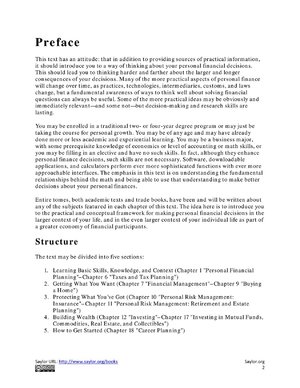
Personal Finance
Personal Finance by Rachel Siegel and Carol Yacht is a comprehensive Personal Finance text which includes a wide range of pedagogical aids to keep students engaged and instructors on track. This book is arranged by learning objectives. The headings, summaries, reviews and problems all link together via the learning objectives. This helps instructors to teach what they want, and to assign the problems that correspond to the learning objectives covered in class. Personal Finance includes personal finance planning problems with links to solutions, and personal application exercises, with links to their associated worksheet(s) or spreadsheet(s). In addition, the text boasts a large number of links to videos, podcasts, experts’ tips or blogs and magazine articles to illustrate the practical applications for concepts covered in the text. Rachel would love to hear from you. If you have questions about teaching with her book, comments about teaching Personal Finance, or just feedback, feel free to email her at rachelsiegelcfa@hughes.net. This textbook has been used in classes at: Miami University.
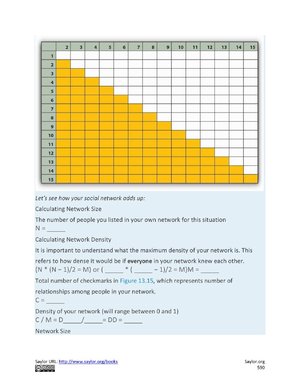
Organizational Behavior
Two leading researchers in Management, Talya Bauer and Berrin Erdogan, bring you a new Organizational Behavior textbook that bridges the gap between theory and practice with a distinct ”experiential“ approach.On average, a worker in the U.S.A. will change jobs 10 times in 20 years. In order to succeed in this type of career situation, individuals need to be armed with the tools necessary to be life-long learners. To that end, this book is not be about giving students all the answers to every situation they may encounter when they start their first job or as they continue up the career ladder. Instead, this book gives students the vocabulary, framework and critical thinking skills necessary to diagnose situations, ask tough questions, evaluate the answers received and to act in an effective and ethical manner regardless of situational characteristics. Often, students taking O.B. either do not understand how important knowledge of O.B. can be to their professional careers, or they do understand and they want to put that knowledge into practice. Organizational Behavior by Bauer and Erdogan takes a more experiential angle to the material to meet both of those needs. The experiential approach can be incorporated in the classroom primarily through the ”O.B. Toolbox.“ This feature brings life to the concepts and allows students to not only see how the O.B. theories unfold, but to practice them, as well. This textbook has been used in classes at: Adelphi University, Bates Technical College, California State University Northridge, Central Connecticut State University, Claremont Graduate University, Clemson University, College of William and Mary, Long Island University, Pacific University, Portland State University, Rensselaer Polytechnic Institute, Rensselaer Polytechnic Institute, Rochester Institute of Technology, Seattle Pacific University, SUNY-New Paltz, Texas Tech, University of Massachusetts-Amherst, University of Mississippi, University of South Dakota, University of Tennessee at Chattanooga, University of Texas at Austin, University of Texas at San Antonio, University of West Georgia, Wayne State University.

Organizational Behavior
This OpenStax resource aligns to introductory courses in Organizational Behavior. The text presents the theory, concepts, and applications with particular emphasis on the impact that individuals and groups can have on organizational performance and culture. An array of recurring features engages students in entrepreneurial thinking, managing change, using tools/technology, and responsible management.

The state of local infrastructure investment in Europe EIB Municipalities Survey 2022-2023
The EIB's 2022-2023 Municipality Survey covers 744 municipalities across the European Union, and gathers unique data on past and planned investments, as well as the obstacles municipalities face and their progress on the digital and green transitions.
One notable finding from the 2022 survey is that a lack of funding continues to pose a significant deterrent for municipalities when it comes to planning investment, alongside lengthy and uncertain regulatory processes. However, when it comes to implementing their investment plans, municipalities cite a shortage of skilled labour and supply chain bottlenecks as the two main constraints. The survey reveals that a significant majority of municipalities report difficulties in securing experts with environmental and climate skills, as well as technical and engineering expertise. These challenges pose significant obstacles to the execution of their investment plans.
Meanwhile, more than six in ten municipalities express dissatisfaction with their investments in climate mitigation and adaptation over the past three years, while 40% report dissatisfaction with their investments in digital infrastructure. Looking forward to the next three years, climate change mitigation, adaptation, and digital infrastructure will therefore play a key role in municipalities’ investment plans. Addressing the shortage of skills will be crucial in achieving these plans.

Organic Chemistry With a Biological Emphasis: Chapters 9 to 17
A free, open-access organic chemistry textbook (volumes one and two) in which the main focus is on relevance to biology and medicine. This is a PDF version of a wiki project called Chemwiki at the University of California, Davis. There are also supplementary materials, such as PowerPoint slides and a solutions manual available for this textbook at the Chemwiki website.

Organic Chemistry With a Biological Emphasis: Chapters One to Eight
A free, open-access organic chemistry textbook (volumes one and two) in which the main focus is on relevance to biology and medicine. This is a PDF version of a wiki project called Chemwiki at the University of California, Davis. There are also supplementary materials, such as PowerPoint slides and a solutions manual available for this textbook at the Chemwiki website.
Operational Amplifiers: Theory and Practice
Feedback control is an important technique that is used in many modern electronic and electromechanical systems. The successful inclusion of this technique improves performance, reliability and cost effectiveness of many designs. In this series of lectures we introduce the analytical concepts that underlie classical feedback system design. The application of these concepts is illustrated by a variety of experiments and demonstration systems. The diversity of the demonstration systems reinforces the value of the analytic methods.
OpenIntro Statistics, 3rd Edition
As the authors write in the preface, “Data is messy, and statistical tools are imperfect. But, when you understand the strengths and weaknesses of these tools, you can use them to learn about the real world.” This book is full of examples and exercises on topics of current interest pulled from the popular media and published research.In addition to the exercises at the end of each chapter, a novel feature is the incorporation of in-chapter exercises, meant to be done immediately, with answers below in the footnotes.Chapter SummariesIntroduction to data. Data structures, variables, summaries, graphics, and basic data collection techniques.Probability. The basic principles of probability. An understanding of this chapter is not required for the main content in Chapters 3-8.Distributions of random variables. Introduction to the normal model and other key distributions.Foundations for inference. General ideas for statistical inference in the context of estimating the population mean.Inference for numerical data. Inference for one or two sample means using the normal model and t distribution, and also comparisons of many means using ANOVA.Inference for categorical data. Inference for proportions using the normal and chi-square distributions, as well as simulation and randomization techniques.Introduction to linear regression. An introduction to regression with two variables. Most of this chapter could be covered after Chapter 1.Multiple and logistic regression. An introduction to multiple regression and logistic regression for an accelerated course.
OpenIntro Statistics, 2nd Edition
OpenIntro Statistics strives to be a complete introductory textbook of the highest caliber. Its core derives from the classic notions of statistics education and is extended by recent innovations. The textbook meets high quality standards and has been used at Princeton, Vanderbilt, UMass Amherst, and many other schools. We look forward to expanding the reach of the project and working with teachers from all colleges and schools. The chapters of this book are as follows:Introduction to data. Data structures, variables, summaries, graphics, and basic data collection techniques.Probability (special topic). The basic principles of probability. An understanding of this chapter is not required for the main content in Chapters 3-8.Distributions of random variables. Introduction to the normal model and other key distributions.Foundations for inference. General ideas for statistical inference in the context of estimating the population mean.Inference for numerical data. Inference for one or two sample means using the normal model and t distribution, and also comparisons of many means using ANOVA.Inference for categorical data. Inference for proportions using the normal and chi-square distributions, as well as simulation and randomization techniques.Introduction to linear regression. An introduction to regression with two variables. Most of this chapter could be covered after Chapter 1.Multiple and logistic regression. An introduction to multiple regression and logistic regression for an accelerated course.OpenIntro Statistics was written to allow exibility in choosing and ordering course topics. The material is divided into two pieces: main text and special topics. The main text has been structured to bring statistical inference and modeling closer to the front of a course. Special topics, labeled in the table of contents and in section titles, may be added to a course as they arise naturally in the curriculum.
The Open Logic Text: Open Logic Project
The Open Logic Text is an open-source, collaborative textbook of formal meta-logic and formal methods, starting at an intermediate level (i.e. — after an introductory formal logic course). Though aimed at a non-mathematical audience (in particular, students of philosophy and computer science), it is rigorous.The Open Logic Text is a collaborative project and is under active development. Coverage of some topics currently included may not yet be complete, and many sections still require substantial revision. We plan to expand the text to cover more topics in the future. We also plan to add features to the text, such as a glossary, a list of further reading, historical notes, pictures, better explanations, sections explaining the relevance of results to philosophy, computer science and mathematics and more problems and examples. If you find an error, or have a suggestion, please let the project team know.The project operates in the spirit of open source. Not only is the text freely available, we provide the LaTeX source under the Creative Commons Attribution license, which gives anyone the right to download, use, modify, re-arrange, convert and re-distribute our work, as long as they give appropriate credit.
Open Data Structures (in Java)
There are plenty of books that teach introductory data structures. Some of them are very good. Most of them cost money, and the vast majority of computer science undergraduate students will shell out at least some cash on a data structures book.
Open Data Structures: An Introduction
Offered as an introduction to the field of data structures and algorithms, Open Data Structures covers the implementation and analysis of data structures for sequences (lists), queues, priority queues, unordered dictionaries, ordered dictionaries and graphs. Focusing on a mathematically rigorous approach that is fast, practical and efficient, Morin clearly and briskly presents instruction along with source code. Analyzed and implemented in Java, the data structures presented in the book include stacks, queues, deques and lists implemented as arrays and linked-lists; space-efficient implementations of lists; skip lists; hash tables and hash codes; binary search trees including treaps, scapegoat trees and red-black trees; integer searching structures including binary tries, x-fast tries and y-fast tries; heaps, including implicit binary heaps and randomized meldable heaps; graphs, including adjacency matrix and adjacency list representations and B-trees. A modern treatment of an essential computer science topic, Open Data Structures is a measured balance between classical topics and state-of-the art structures that will serve the needs of all undergraduate students or self-directed learners.
Online Statistics Education: A Multimedia Course of Study
This is a collaborative effort led by David Lane of Rice University. The core material is an interactive textbook that is best used over the Internet to take advantage of the embedded questions created in JavaScript. The PDF version that can be downloaded simply shows the answers in a different font following the questions.An attractive feature of Online Statistics is the suite of case studies making use of the actual data from published studies in the scientific literature and popular media. The data sets for the case studies are provided as Excel files. The website also provides some computational tools running in the browser for the statistical calculations needed for the analysis of the case studies, although instructors may prefer to use free software such as R or software already available at their institutions.Also part of the course is a set of 31 simulations illustrating key concepts such as the meaning of a 95% confidence interval. Some are written in JavaScript and run without difficulty, but others are written in Java and may present a problem because of the security concerns surrounding Java applets running in browsers.
The Oedipus Cycle
This work is presented as part of eLangdell Press’ Law and Literature Collection. It was selected based on a review of syllabi in this discipline.”The law and literature movement focuses on the interdisciplinary connection between law and literature. This field has roots in two major developments in the intellectual history of law—first, the growing doubt about whether law in isolation is a source of value and meaning, or whether it must be plugged into a large cultural or philosophical or social-science context to give it value and meaning; and, second, the growing focus on the mutability of meaning in all texts, whether literary or legal. Those who work in the field stress one or the other of two complementary perspectives: law in literature (understanding enduring issues as they are explored in great literary texts) and law as literature (understanding legal texts by reference to methods of literary interpretation, analysis, and critique).This movement has broad and potentially far reaching implications with regards to future teaching methods, scholarship, and interpretations of legal texts. Combining literature’s ability to provide unique insight into the human condition through text with the legal framework that regulates those human experiences in reality gives a democratic judiciary a new and dynamic approach to reaching the aims of providing a just and moral society. It is necessary, in practical thought and discussion about the use of legal rhetoric, to understand text’s role in defining human experience.”

Resilience and renewal in Europe: Investment Report 2022/2023
This unique insight into the corporate investment landscape in the European Union examines companies' finance needs and the constraints they face. The 2022 edition delves into the aftermath of the economic shock produced by the COVID-19 crisis and the readiness of firms to cope with the new massive shocks that are testing corporate resilience. The report assesses how response and recovery programmes put in place by the European Union and by national governments have helped firms, but also shows how firm perceptions of investment conditions are overshadowed again by recent events. In addition, the EIBIS EU overview presents firm reactions to outstanding structural transformation needs and more specifically the extent to which European firms are addressing the need to make their businesses more green and digital. It also highlights how European firms counter sudden shocks, for example by assessing their responsiveness to international trade disruptions. The survey is based on interviews with 12 000 companies across the 27 European Union countries, and it includes a benchmark sample from the United States. This overview provides the aggregated results for the European Union. “
Nutrition and Labelling for the Canadian Baker
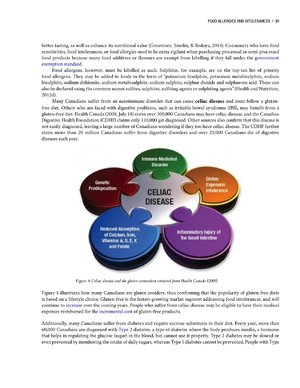
This book is intended to give students a basic understanding of nutritional information and labeling in the baking industry. In particular, there is a focus on Canadian regulations regarding labeling and merchandising of baked goods, as well as baking for customers with special diets, allergies, and intolerances. Nutrition and Labeling for the Canadian Baker is one of a series of Culinary Arts books developed to support the training of students and apprentices in British Columbia’s food service and hospitality industry. Although created with the Professional Cook and Baker programs in mind, these have been designed as a modular series, and therefore can be used to support a wide variety of programs that offer training in food service skills.

Nursing Care at the End of Life: What Every Clinician Should Know
Nursing Care at the End of Life: What Every Clinician Should Know should be an essential component of basic educational preparation for the professional registered nurse student. Recent studies show that only one in four nurses feel confident in caring for dying patients and their families and less than two percent of overall content in nursing textbooks is related to end-of-life care, despite the tremendous growth in palliative and end-of-life care programs across the country. The purpose of this textbook is to provide an in-depth look at death and dying in this country, including the vital role of the nurse in assisting patients and families along the journey towards the end of life. There is an emphasis throughout the book on the simple, yet understated value of effective interpersonal communication between the patient and clinician. The text provides a basic foundation of understanding death and dying, including a brief historical examination of some main conceptual models associated with how patients cope with impending loss. An overview of illness trajectories and models of care, such as hospice and palliative care are discussed. Lastly, the latest evidence-based approaches for pain and symptom management, ethical concerns, cultural considerations, care at the time of death and grief/bereavement are examined. The goal of this text is to foster the necessary skills for nurses to provide compassionate care to individuals who are nearing the end of life and their families. Every chapter contains a “What You Should Know” section which highlights and reinforces foundational concepts.
Notes on Diffy Qs: Differential Equations for Engineers
A one semester first course on differential equations, aimed at engineering students. Prerequisite for the course is the basic calculus sequence. This free online book (e-book in webspeak) should be usable as a stand-alone textbook or as a companion to a course using another book such as Edwards and Penney, Differential Equations and Boundary Value Problems: Computing and Modeling or Boyce and DiPrima, Elementary Differential Equations and Boundary Value Problems (section correspondence to these two is given). I developed and used these notes to teach Math 286/285 at the University of Illinois at Urbana-Champaign Sample Dirichlet problem solution (one is a 4-day-a-week, the other a 3-day-a-week semester-long course). I have also taught Math 20D at University of California, San Diego with these notes (a 3-day-a-week quarter-long course). There is enough material to run a 2-quarter course, and even perhaps a two semester course depending on lecturer speed.

The N.G.O. Handbook
Have you ever seen a problem and wanted to do something about it? Of course you have. The schools, police, government welfare offices, churches and families aren’t handling it. Others share your concerns and want to do something. That’s why you would start a nongovernmental organization, or N.G.O. This handbook will guide you through the steps of starting and operating an N.G.O.

Natural Resources Biometrics
Natural Resources Biometrics begins with a review of descriptive statistics, estimation and hypothesis testing. The following chapters cover one- and two-way analysis of variance (A.N.O.V.A.), including multiple comparison methods and interaction assessment, with a strong emphasis on application and interpretation. Simple and multiple linear regressions in a natural resource setting are covered in the next chapters, focusing on correlation, model fitting, residual analysis and confidence and prediction intervals. The final chapters cover growth and yield models, volume and biomass equations, site index curves, competition indices, importance values and measures of species diversity, association and community similarity.

Native Peoples of North America
Native Peoples of North America is intended to be an introductory text about the Native peoples of North America (primarily the United States and Canada) presented from an anthropological perspective. As such, the text is organized around anthropological concepts such as language, kinship, marriage and family life, political and economic organization, food getting, spiritual and religious practices and the arts. Prehistoric, historic and contemporary information is presented. Each chapter begins with an example from the oral tradition that reflects the theme of the chapter.
Nationalism, Self-Determination and Secession
What makes a nation, and what makes peoples strive for nationhood? This unit will provide you with an introduction to studying political ideas by looking at how people who see themselves as nations challenge the existing order to assert their right to a state of their own. After studying this unit you should be able to: grasp the concepts of nation, nationalism and self-determination; have a better understanding of the role they play in current political disputes; think about the problem of how to take democratic decisions about secession; relate political theory to political practice more rigorously; take a more informed and active part in debates about national and international politics.
Music and the Child
Children are inherently musical. They respond to music and learn through music. Music expresses children’s identity and heritage, teaches them to belong to a culture and develops their cognitive well-being and inner self worth. As professional instructors, childcare workers or students looking forward to a career working with children, we should continuously search for ways to tap into children’s natural reservoir of enthusiasm for singing, moving and experimenting with instruments. But how, you might ask? What music is appropriate for the children I’m working with? How can music help inspire a well-rounded child? How do I reach and teach children musically? Most importantly perhaps, how can I incorporate music into a curriculum that marginalizes the arts?This book explores a holistic, artistic and integrated approach to understanding the developmental connections between music and children. This book guides professionals to work through music, harnessing the processes that underlie music learning and outlining developmentally appropriate methods to understand the role of music in children’s lives through play, games, creativity and movement. Additionally, the book explores ways of applying music-making to benefit the whole child, i.e., socially, emotionally, physically, cognitively and linguistically.
Multiple-Input Describing Functions and Nonlinear System Design
The practicing control engineer should find the book valuable as a complete reference work in the subject area. If his background in mathematics is not sufficient to enable him to follow the theoretical development of ~ h a ~ t e rc.o1mfort- ably, he can omit that chapter and will still find a complete presentation in every chapter except Chapters Seven and Eight, based on the physically motivated concept of harmonic analysis of the nonlinearity output. Chapter Seven, which includes random processes at the nonlinearity input, requires a statistical approach. But this too reduces to a rather simple matter in the very important class of problems involving static single-valued nonlinearities. Chapter Eight treats transient responses by related forms of quasi-linearization which are developed completely within that chapter. Thus it is hoped that every control engineer will find the principal ideas presented in a manner which is meaningful and appealing to him.

Motion Mountain: The Adventure of Physics Vol.2: Relativity and Cosmology
This book is written for anybody who is curious about nature and motion. Curiosity about how people, animals, things, images and empty space move leads to many adventures. This volume presents the best of them in the domains of relativity and cosmology. In the study of motion — physics — special and general relativity form two important building blocks. Special relativity is the exploration of the energy speed limit c. General relativity is the exploration of the force limit c4/4G. The text shows that in both domains, all equations follow from these two limit values. This simple, intuitive and unusual way of learning relativity should reward the curiosity of every reader — whether student or professional. The present volume is the second of a six-volume overview of physics that arose from a threefold aim that I have pursued since 1990: to present motion in a way that is simple, up to date and captivating. In order to be simple, the text focuses on concepts, while keeping mathematics to the necessary minimum. Understanding the concepts of physics is given precedence over using formulae in calculations. The whole text is within the reach of an undergraduate.In order to be up to date, the text is enriched by the many gems — both theoretical and empirical — that are scattered throughout the scientific literature.In order to be captivating, the text tries to startle the reader as much as possible. Reading a book on general physics should be like going to a magic show. We watch, we are astonished, we do not believe our eyes, we think, and finally we understand the trick. When we look at nature, we often have the same experience. Indeed, every page presents at least one surprise or provocation for the reader to think about. Numerous interesting challenges are proposed. The motto of the text, die Menschen stärken, die Sachen klären, a famous statement by Hartmut von Hentig on pedagogy, translates as: “To fortify people, to clarify things.” Clarifying things — and adhering only to the truth — requires courage, as changing the habits of thought produces fear, often hidden by anger. But by overcoming our fears we grow in strength. And we experience intense and beautiful emotions. All great adventures in life allow this, and exploring motion is one of them. Enjoy it!

Measuring impacts – The experience of the EIB-GDN programme
Measuring, understanding and communicating the EIB’s development impact is a key strategic priority for the European Investment Bank (EIB). In partnership with the Global Development Network the EIB started the Programme in Applied Development Finance in 2017, to deepen understanding of results and impact of operations under the Impact Financing Envelope (IFE) for Africa Caribbean and the Pacific (ACP), as well as enhancing capacity for impact assessment in ACP countries and within EIB. The research was carried out in three twelve-month cycles, by talented researchers from ACP countries. Each spent a year on a “deep dive” study of an IFE project, trained, guided and mentored by GDN, the EIB and expert advisors (EAs). The programme used academic research techniques to study the development impact of ongoing private-sector investments, built and used capacity for evaluative research in developing countries, and boosted accountability and development effectiveness. This book discusses lessons learnt and opportunities for future work of this three-year partnership.
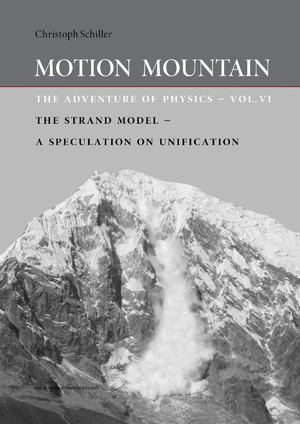
Motion Mountain: The Adventure of Physics Vol. 6: The Strand Model – A Speculation on Unification
This book is written for anybody who is intensely curious about nature and motion. Have you ever asked: Why do people, animals, things, images and empty space move? The answer leads to many adventures, and this book presents one of the best of them: the search for a precise, unified and final description of all motion.The wish to describe all motion is a large endeavour. Fortunately, this large endeavour can be structured in the simple diagram shown in Figure One. The final and unified description of motion, the topic of this book, corresponds to the highest point in the diagram. Searching for this final and unified description is an old quest. In the following, I briefly summarize its history and then present an intriguing, though speculative solution to the riddle.The search for the final, unified description of motion is a story of many surprises. For example, 20th-century research has shown that there is a smallest distance in nature. Research has also shown that matter cannot be distinguished from empty space at those small distances. A last surprise dates from this century: particles and space are best described as made of strands, instead of little spheres or points. The present text explains how to reach these unexpected conclusions. In particular, quantum field theory, the standard model of particle physics, general relativity and cosmology are shown to follow from strands. The three gauge interactions, the three particle generations and the three dimensions of space turn out to be due to strands. In fact, all the open questions of 20th-century physics about the foundations of motion, all the millennium issues, can be solved with the help of strands.The strand model, as presented in this text, is an unexpected result from a threefold aim that I have pursued since 1990, in the five previous volumes of this series: to present the basics of motion in a way that is up to date, captivating and simple. In retrospect, the aim for maximum simplicity has been central in deducing this speculation. While the previous volumes introduced, in an entertaining way, the established parts of physics, this volume presents, in the same entertaining and playful way, a speculation about unification. Nothing in this volume is established knowledge — yet. The text is the original presentation of the topic.The search for a final theory is one of the great adventures of life: it leads to the limits of thought. The search overthrows our thinking habits about nature. A change in thinking habits can produce fear, often hidden by anger. But by overcoming our fears we gain strength and serenity. Changing thinking habits thus requires courage, but it also produces intense and beautiful emotions. Enjoy them!

Motion Mountain: The Adventure of Physics Vol. 5: Motion Inside Matter – Pleasure, Technology and Stars
This book is written for anybody who is curious about nature and motion. Curiosity about how bodies, images and empty space move leads to many adventures. This volume presents the best adventures about the motion inside people, inside animals, and inside any other type of matter — from the largest stars to the smallest nuclei.Motion inside bodies — dead or alive — is described by quantum theory. Quantum theory describes all motion with the quantum of action h, the smallest change observed in nature. Building on this basic idea, the text first shows how to describe life, death and pleasure. Then, the text explains the observations of chemistry, materials science, astrophysics and particle physics. In the structure of physics, these topics correspond to the three ‘quantum’ points in Figure One. The story of motion inside living and non-living matter, from the coldest gases to the hottest stars, is told here in a way that is simple, up to date and captivating. In order to be simple, the text focuses on concepts, while keeping mathematics to the necessary minimum. Understanding the concepts of physics is given precedence over using formulae in calculations. The whole text is within the reach of an undergraduate. In order to be up to date, the text is enriched by the many gems — both theoretical and empirical — that are scattered throughout the scientific literature. In order to be captivating, the text tries to startle the reader as much as possible. Reading a book on physics should be like going to a magic show. We watch, we are astonished, we do not believe our eyes, we think and finally we understand the trick. When we look at nature, we often have the same experience. Indeed, every page presents at least one surprise that makes the reader think. Also numerous interesting challenges are proposed. The motto of the text, die Menschen stärken, die Sachen klären, a famous statement by Hartmut von Hentig on pedagogy, translates as: “To fortify people, to clarify things.” Clarifying things — and adhering only to the truth — requires courage, as changing the habits of thought produces fear, often hidden by anger. But by overcoming our fears we grow in strength. And we experience intense and beautiful emotions. All great adventures in life allow this, and exploring motion is one of them. Enjoy it!

Motion Mountain: The Adventure of Physics Vol. 4: The Quantum of Change
This book is written for anybody who is curious about nature and motion. Have you ever asked: Why do people, animals, things, images and space move? The answer leads to many adventures; this volume presents those due to the discovery that there is a smallest change value in nature. This smallest change value, the quantum of action, leads to what is called quantum physics. In the structure of modern physics, quantum physics covers three points; this volume covers the introduction to the point in the lower right: the foundations of quantum theory.The present introduction to quantum physics arose from a threefold aim I have pursued since 1990: to present the basics of motion in a way that is simple, up to date and captivating. In order to be simple, the text focuses on concepts, while keeping mathematics to the necessary minimum. Understanding the concepts of physics is given precedence over using formulae in calculations. The whole text is within the reach of an undergraduate. In order to be up to date, the text is enriched by the many gems — both theoretical and empirical — that are scattered throughout the scientific literature. In order to be captivating, the text tries to startle the reader as much as possible. Reading a book on general physics should be like going to a magic show. We watch, we are astonished, we do not believe our eyes, we think and finally we understand the trick. When we look at nature, we often have the same experience. Indeed, every page presents at least one surprise or provocation for the reader to think about. Numerous interesting challenges are proposed. The motto of the text, die Menschen stärken, die Sachen klären, a famous statement by Hartmut von Hentig on pedagogy, translates as: “To fortify people, to clarify things.” Clarifying things — and adhering only to the truth — requires courage, as changing the habits of thought produces fear, often hidden by anger. But by overcoming our fears we grow in strength. And we experience intense and beautiful emotions. All great adventures in life allow this, and exploring motion is one of them. Enjoy it!

Motion Mountain: The Adventure of Physics Vol. 3: Light, Charges and Brains
This book is written for anybody who is curious about nature and motion. Curiosity about how people, animals, things, images and space move leads to many adventures. This volume presents the adventures one encounters when exploring everything electric. The story ranges from the weighing of electric current to the use of magnetic fields to heal bone fractures and up to the understanding of the human brain.In the structure of physics, shown in Figure One, motion due to electricity is the most fascinating aspect of the starting point at the bottom. Indeed, almost everything around us is due to electric processes. The present introduction to electricity, magnetism, light and the brain is the third of a six-volume overview of physics that arose from a threefold aim that I have pursued since 1990: to present motion in a way that is simple, up to date and captivating.In order to be simple, the text focuses on concepts, while keeping mathematics to the necessary minimum. Understanding the concepts of physics is given precedence over using formulae in calculations. The whole text is within the reach of an undergraduate. In order to be up to date, the text is enriched by the many gems — both theoretical and empirical — that are scattered throughout the scientific literature.In order to be captivating, the text tries to startle the reader as much as possible. Reading a book on general physics should be like going to a magic show. We watch, we are astonished, we do not believe our eyes, we think and finally we understand the trick. When we look at nature, we often have the same experience. Indeed, every page presents at least one surprise or provocation for the reader to think about. Numerous interesting challenges are proposed. The motto of the text, die Menschen stärken, die Sachen klären, a famous statement by Hartmut von Hentig on pedagogy, translates as: “To fortify people, to clarify things.” Clarifying things — and adhering only to the truth — requires courage, as changing the habits of thought produces fear, often hidden by anger. But by overcoming our fears we grow in strength. And we experience intense and beautiful emotions. All great adventures in life allow this, and exploring motion is one of them. Enjoy it!