
Open Access Books
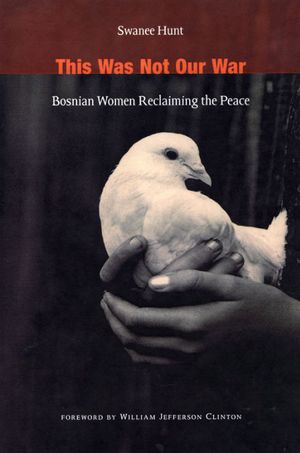
This Was Not Our War: Bosnian Women Reclaiming the Peace
“Replacing tyranny with justice, healing deep scars, exchanging hatred for hope . . . the women in This Was Not Our War teach us how.”—William Jefferson Clinton
This Was Not Our War shares amazing first-person accounts of twenty-six Bosnian women who are reconstructing their society following years of devastating warfare. A university student working to resettle refugees, a paramedic who founded a veterans’ aid group, a fashion designer running two nonprofit organizations, a government minister and professor who survived Auschwitz—these women are advocates, politicians, farmers, journalists, students, doctors, businesswomen, engineers, wives, and mothers. They are from all parts of Bosnia and represent the full range of ethnic traditions and mixed heritages. Their ages spread across sixty years, and their wealth ranges from expensive jewels to a few chickens. For all their differences, they have this much in common: all survived the war with enough emotional strength to work toward rebuilding their country. Swanee Hunt met these women through her diplomatic and humanitarian work in the 1990s. Over the course of seven years, she conducted multiple interviews with each one. In presenting those interviews here, Hunt provides a narrative framework that connects the women’s stories, allowing them to speak to one another.
The women describe what it was like living in a vibrant multicultural community that suddenly imploded in an onslaught of violence. They relate the chaos; the atrocities, including the rapes of many neighbors and friends; the hurried decisions whether to stay or flee; the extraordinary efforts to care for children and elderly parents and to find food and clean drinking water. Reflecting on the causes of the war, they vehemently reject the idea that age-old ethnic hatreds made the war inevitable. The women share their reactions to the Dayton Accords, the end of hostilities, and international relief efforts. While they are candid about the difficulties they face, they are committed to rebuilding Bosnia based on ideals of truth, justice, and a common humanity encompassing those of all faiths and ethnicities. Their wisdom is instructive, their courage and fortitude inspirational.

Rancière’s Sentiments
In Rancière’s Sentiments Davide Panagia explores Jacques Rancière’s aesthetics of politics as it informs his radical democratic theory of participation. Attending to diverse practices of everyday living and doing—of form, style, and scenography—in Rancière’s writings, Panagia characterizes Rancière as a sentimental thinker for whom the aesthetic is indistinguishable from the political. Rather than providing prescriptions for political judgment and action, Rancière focuses on how sensibilities and perceptions constitute dynamic relations between persons and the worlds they create. Panagia traces this approach by examining Rancière’s modernist sensibilities, his theory of radical mediation, the influence of Gustave Flaubert on Rancière’s literary voice, and how Rancière juxtaposes seemingly incompatible objects and phenomena to create moments of sensorial disorientation. The power of Rancière’s work, Panagia demonstrates, lies in its ability to leave readers with a disjunctive sensibility of the world and what political thinking is and can be.
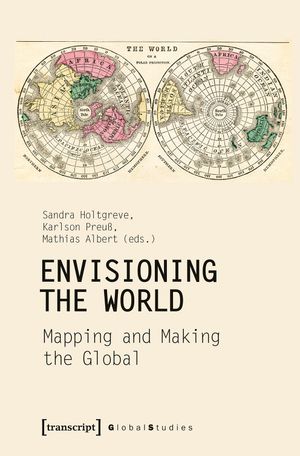
Envisioning the World: Mapping and Making the Global
The »global« is permanently made and remade by how it is envisioned in political projects, in language, and in literature. Through a range of case studies, this book shows how practices of referring to the world actually constitute the global in its many facets. It aims to provide a sense in readers of how the global is not something »out there«, but that it is embedded in a wide range of the seemingly »everyday«. The contributions appeal to a readership from a background in Sociology, History, Political Science, Literary Studies, and Social Work.
Entanglements of the Maghreb: Cultural and Political Aspects of a Region in Motion
The impulse for the recent transformations in the Arab world came from the Maghreb. Research on the region has been on the rise since, yet much remains to be done when it comes to interdisciplinary comparative research. The Maghreb is a heterogeneous region that deserves thorough investigation. This volume focuses on Entanglements as a cross-field and cross-lingual concept to generate a new approach to the region and its inner interdependencies as well as exchanges with other regions. Eminent researchers conceptualize Entanglements through the description of various thematic fields and actors in motion, addressing culture, politics, social affairs, and economics.
Ending Slavery: Hierarchy, Dependency and Gender in Central Mauritania
»Ending Slavery« offers insights into the »how« of practices of slavery that persist in parts of Mauritania up to the present day. It brings to the light the gendered structures of Moorish slavery, and examines their impact on strategies and tactics designed to bring this institution to an end. Underlying this study is empirical data gathered during two periods of field research in rural central Mauritania. The analysis of life histories of slaves and freed slaves, but also of tributaries and free Moors plays a key role in the book.
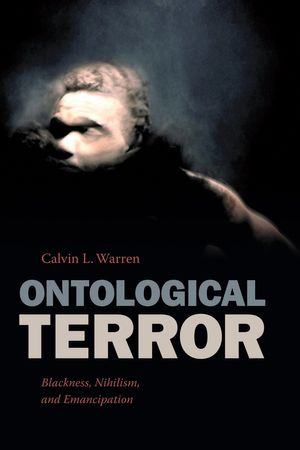
Ontological Terror: Blackness, Nihilism and Emancipation
In Ontological Terror Calvin L. Warren intervenes in Afro-pessimism, Heideggerian metaphysics, and black humanist philosophy by positing that the “Negro question” is intimately imbricated with questions of Being. Warren uses the figure of the antebellum free black as a philosophical paradigm for thinking through the tensions between blackness and Being. He illustrates how blacks embody a metaphysical nothing. This nothingness serves as a destabilizing presence and force as well as that which whiteness defines itself against. Thus, the function of blackness as giving form to nothing presents a terrifying problem for whites: they need blacks to affirm their existence, even as they despise the nothingness they represent. By pointing out how all humanism is based on investing blackness with nonbeing—a logic which reproduces antiblack violence and precludes any realization of equality, justice, and recognition for blacks—Warren urges the removal of the human from its metaphysical pedestal and the exploration of ways of existing that are not predicated on a grounding in being.

Ecopoetic Place-Making: Nature and Mobility in Contemporary American Poetry
American ecopoetries of migration explore the conflicted relationships of mobile subjects to the nonhuman world and thus offer valuable environmental insight for our current age of mass mobility and global ecological crisis. In Ecopoetic Place-Making, Judith Rauscher analyzes the works of five contemporary American poets of migration, drawing from ecocriticism and mobility studies. The poets discussed in her study challenge exclusionary notions of place-attachment and engage in ecopoetic place-making from different perspectives of mobility, testifying to the potential of poetry as a means of conceptualizing alternative environmental imaginaries for our contemporary world on the move.

Durable Economies: Organizing the Material Foundations of Society
Leaking water infrastructures, heritage tourism, investments in artworks, failing electronics: Durability lies at the heart of a wide range of seemingly unrelated phenomena. In today’s economies, which rest on ever-larger stocks of infrastructures, buildings, machinery and household goods, durable things are both a hugely significant source of wealth and a constant source of struggle. The contributors argue that a deeper engagement with durability is essential for reaching an understanding of how economies work; and for envisaging alternative economies built on principles of environmental stewardship and social justice. Placing durability at the core of economic analysis, this volume explores the work and tensions involved in the production and valuation of durability to outline a new agenda for more sustainable economies.

The News at the Ends of the Earth
From Sir John Franklin’s doomed 1845 search for the Northwest Passage to early twentieth-century sprints to the South Pole, polar expeditions produced an extravagant archive of documents that are as varied as they are engaging. As the polar ice sheets melt, fragments of this archive are newly emergent. In The News at the Ends of the Earth Hester Blum examines the rich, offbeat collection of printed ephemera created by polar explorers. Ranging from ship newspapers and messages left in bottles to menus and playbills, polar writing reveals the seamen wrestling with questions of time, space, community, and the environment. Whether chronicling weather patterns or satirically reporting on penguin mischief, this writing provided expedition members with a set of practices to help them survive the perpetual darkness and harshness of polar winters. The extreme climates these explorers experienced is continuous with climate change today. Polar exploration writing, Blum contends, offers strategies for confronting and reckoning with the extreme environment of the present.

Drawing and Experiencing Architecture: The Evolving Significance of City’s Inhabitants in the 20th Century
How were the concepts of the observer and user in architecture and urban planning transformed throughout the 20th and 21st centuries? Marianna Charitonidou explores how the mutations of the means of representation in architecture and urban planning relate to the significance of city’s inhabitants. She investigates Le Corbusier and Ludwig Mies van der Rohe’s fascination with perspective, Team Ten’s interest in the humanisation of architecture and urbanism, Constantinos Doxiadis and Adriano Olivetti’s role in reshaping the relationship between politics and urban planning during the postwar years, Giancarlo De Carlo’s architecture of participation, Aldo Rossi’s design methods, Denise Scott Brown’s active socioplactics and Bernard Tschumi’s conception praxis.

Doing Identity in Luxembourg: Subjective Appropriations – Institutional Attributions – Socio-Cultural Milieus
Luxembourg – international financial center, European administrative center, destination country for immigration? This empirical study provides insights about a society that has hitherto largely eluded scientific investigation and observes the processes of identity construction in globalised conditions.The interdisciplinary team of authors exposes the processes of subjective appropriations and institutional attributions at work in the fields of languages, spaces, perceptions of self and others as well as everyday cultures, and identifies for the first time socio-cultural milieus in the Grand Duchy. The findings of the three-year research project uncover the ambivalences and dynamics of a multicultural and multilingual society.

Doing Diversity in Museums and Heritage: A Berlin Ethnography
How do participatory museum projects with forced migrants impact both the museum and the participants? What happens during these projects and what is left of them afterwards? Based on interviews with museum practitioners, facilitators and project participants, Susanne Boersma brings together unique insights into museum work with forced migrants. Her study of participatory projects in Germany, the Netherlands and the UK reveals museums’ limiting infrastructures, the shortcomings of their ethical frameworks, and the problems of addressing forced migrants as ‘communities’. Outlining the diverging objectives, experiences and outcomes of participatory projects, she suggests how these might be united in practice.

Making Light: Haydn, Musical Camp, and the Long Shadow of German Idealism
In Making Light Raymond Knapp traces the musical legacy of German Idealism as it led to the declining prestige of composers such as Haydn while influencing the development of American popular music in the nineteenth century. Knapp identifies in Haydn and in early popular American musical cultures such as minstrelsy and operetta a strain of high camp—a mode of engagement that relishes both the superficial and serious aspects of an aesthetic experience—that runs antithetical to German Idealism’s musical paradigms. By considering the disservice done to Haydn by German Idealism alongside the emergence of musical camp in American popular music, Knapp outlines a common ground: a humanistically based aesthetic of shared pleasure that points to ways in which camp receptive modes might rejuvenate the original appeal of Haydn’s music that has mostly eluded audiences. In so doing, Knapp remaps the historiographical modes and systems of critical evaluation that dominate musicology while troubling the divide between serious and popular music.

Disability in Different Cultures: Reflections on Local Concepts
How are disability and rehabilitation conceived of in different cultures? How can these concepts be made accessible?Studies from the fields of sociology, ethnology and educational science address these questions, whilst contributors from rehabilitation projects in development cooperation and from self-help movements highlight culturally different perceptions of disability. A distinctive feature of this reader is the dialogue it creates by bringing together scientific praxis and practical work.

Dimensions of Locality: Muslim Saints, their Place and Space (Yearbook of the Sociology of Islam No. 8)
As a world religion Islam is based on a highly abstract and absolute notion of the transcendent, which its followers establish and celebrate – in a seemingly contradictory fashion – at very specific sites: Mecca, Medina, Jerusalem, and the vast and complex landscapes of mosques and Muslim saints’ shrines around the world. Sacred locality has thus become a paradigm for the relationship between the human and the transcendent, a model for urban planning, regional networks, imaginary spaces, and spiritual hierarchies alike. This importance of saintly places has, however, become increasingly complicated and troubled by reformist currents within Islam, on the one hand, and the emergence of modern archeology and anthropology, on the other. While they have often tended to posit ‘the local’ in opposition to ‘the universal’, in this volume islamologists, anthropologists, and sociologists offer new ways of thinking about the local, the place, and the conceptual landscapes and spaces of saints. In this, its eighth volume, the Yearbook for the Sociology of Islam looks at different sites and regions around the Muslim world (notably Burkina Faso, Egypt, Ethiopia, and Southeast Asia) not as ‘localized’ versions of a universal Islam, but as constitutive of one particular outlook of the universalizing order of a world religion.

A Future History of Water
Based on fieldwork among state officials, NGOs, politicians, and activists in Costa Rica and Brazil, A Future History of Water traces the unspectacular work necessary to make water access a human right and a human right something different from a commodity. Andrea Ballestero shows how these ephemeral distinctions are made through four technolegal devices—formula, index, list and pact. She argues that what is at stake in these devices is not the making of a distinct future but what counts as the future in the first place. A Future History of Water is an ethnographically rich and conceptually charged journey into ant-filled water meters, fantastical water taxonomies, promises captured on slips of paper, and statistical maneuvers that dissolve the human of human rights. Ultimately, Ballestero demonstrates what happens when instead of trying to fix its meaning, we make water’s changing form the precondition of our analyses.

The Fixer: Visa Lottery Chronicles
In the West African nation of Togo, applying for the U.S. Diversity Visa Lottery is a national obsession, with hundreds of thousands of Togolese entering each year. From the street frenzy of the lottery sign-up period and the scramble to raise money for the embassy interview to the gamesmanship of those adding spouses and dependents to their dossiers, the application process is complicated, expensive, and unpredictable. In The Fixer Charles Piot follows Kodjo Nicolas Batema, a Togolese visa broker—known as a “fixer”—as he shepherds his clients through the application and interview process. Relaying the experiences of the fixer, his clients, and embassy officials, Piot captures the ever-evolving cat-and-mouse game between the embassy and the hopeful Togolese as well as the disappointments and successes of lottery winners in the United States. These detailed and compelling stories uniquely illustrate the desire and savviness of migrants as they work to find what they hope will be a better life.

Digital Tools in Media Studies: Analysis and Research. An Overview
Digital tools are increasingly used in media studies, opening up new perspectives for research and analysis, while creating new problems at the same time. In this volume, international media scholars and computer scientists present their projects, varying from powerful film-historical databases to automatic video analysis software, discussing their application of digital tools and reporting on their results. This book is the first publication of its kind and a helpful guide to both media scholars and computer scientists who intend to use digital tools in their research, providing information on applications, standards, and problems.

Energopolitics: Wind and Power in the Anthropocene
Between 2009 and 2013 Cymene Howe and Dominic Boyer conducted fieldwork in Mexico’s Isthmus of Tehuantepec to examine the political, social, and ecological dimensions of moving from fossil fuels to wind power. Their work manifested itself as a new ethnographic form: the duograph—a combination of two single-authored books that draw on shared fieldsites, archives, and encounters that can be productively read together, yet can also stand alone in their analytic ambitions.
In his volume, Energopolitics, Boyer examines the politics of wind power and how it is shaped by myriad factors, from the legacies of settler colonialism and indigenous resistance to state bureaucracy and corporate investment. Drawing on interviews with activists, campesinos, engineers, bureaucrats, politicians, and bankers, Boyer outlines the fundamental impact of energy and fuel on political power. Boyer also demonstrates how large conceptual frameworks cannot adequately explain the fraught and uniquely complicated conditions on the isthmus, illustrating the need to resist narratives of anthropocenic universalism and to attend to local particularities.

Irish Literature Since 1990: Diverse Voices
This volume explores the meaning of republicanism in contemporary Ireland. While this has often been identified simply with nationalism, the book examines the connections, comparisons and contrasts between Irish republicanism and other strands of republican politics: the ideology and practice of official French republicanism, the broader European and American civic republican tradition and the contemporary revival of this tradition of citizenship.Academics from different disciplines, along with statesmen and politicians from different political perspectives, are brought together to examine the relationship of historical and contemporary Irish republicanism to the wider republican theoretical tradition. The book analyses political positions among those parties describing themselves as republican in Ireland in the twenty-first century and examines the possible relevance of the ideas of the broader republican tradition for future politics in Ireland.

Ecologics: Wind and Power in the Anthropocene
Between 2009 and 2013 Cymene Howe and Dominic Boyer conducted fieldwork in Mexico’s Isthmus of Tehuantepec to examine the political, social, and ecological dimensions of moving from fossil fuels to wind power. Their work manifested itself as a new ethnographic form: the duograph—a combination of two single-authored books that draw on shared fieldsites, archives, and encounters that can be productively read together, yet can also stand alone in their analytic ambitions.
In her volume, Ecologics, Howe narrates how an antidote to the Anthropocene became both failure and success. Tracking the development of what would have been Latin America’s largest wind park, Howe documents indigenous people’s resistance to the project and the political and corporate climate that derailed its renewable energy potential. Using feminist and more-than-human theories, Howe demonstrates how the dynamics of energy and environment cannot be captured without understanding how human aspirations for energy articulate with nonhuman beings, technomaterial objects, and the geophysical forces that are at the heart of wind and power.

Anti-Japan: The Politics of Sentiment in Postcolonial East Asia
Although the Japanese empire rapidly dissolved following the end of World War II, the memories, mourning, and trauma of the nation’s imperial exploits continue to haunt Korea, China, and Taiwan. In Anti-Japan Leo T. S. Ching traces the complex dynamics that shape persisting negative attitudes toward Japan throughout East Asia. Drawing on a mix of literature, film, testimonies, and popular culture, Ching shows how anti-Japanism stems from the failed efforts at decolonization and reconciliation, the Cold War and the ongoing U.S. military presence, and shifting geopolitical and economic conditions in the region. At the same time, pro-Japan sentiments in Taiwan reveal a Taiwanese desire to recoup that which was lost after the Japanese empire fell. Anti-Japanism, Ching contends, is less about Japan itself than it is about the real and imagined relationships between it and China, Korea, and Taiwan. Advocating for forms of healing that do not depend on state-based diplomacy, Ching suggests that reconciliation requires that Japan acknowledge and take responsibility for its imperial history.

Allegories of the Anthropocene
In Allegories of the Anthropocene Elizabeth M. DeLoughrey traces how indigenous and postcolonial peoples in the Caribbean and Pacific Islands grapple with the enormity of colonialism and anthropogenic climate change through art, poetry, and literature. In these works, authors and artists use allegory as a means to understand the multiscalar complexities of the Anthropocene and to critique the violence of capitalism, militarism, and the postcolonial state. DeLoughrey examines the work of a wide range of artists and writers—including poets Kamau Brathwaite and Kathy Jetñil-Kijiner, Dominican installation artist Tony Capellán, and authors Keri Hulme and Erna Brodber—whose work addresses Caribbean plantations, irradiated Pacific atolls, global flows of waste, and allegorical representations of the ocean and the island. In examining how island writers and artists address the experience of finding themselves at the forefront of the existential threat posed by climate change, DeLoughrey demonstrates how the Anthropocene and empire are mutually constitutive and establishes the vital importance of allegorical art and literature in understanding our global environmental crisis.
UNE Europe Sûre: Rapport D’Activite
The use of advanced digital technologies such as 3D printing, advanced robotics, drones, big data analytics and artificial intelligence is spreading. These technologies have uncertain implications for labour demand. Affected workers may need to re-train to adapt to changing tasks or new jobs. At the same time, it is unclear whether or not advanced digital technologies encourage firms to invest in workforce re-training. Using firm-level data covering the 27 EU countries, the UK and the US, this paper shows that employers tend to reduce investment in training per employee, after adopting advanced digital technologies. It estimates, with a control function approach, firm-level production functions augmented with two factors: training per employee and digital technology use. We show that these are in fact substitutes in production, implying that an increase in the former negatively affects the marginal productivity of the latter, and that a decline in the cost of introducing advanced digital technologies reduces employers’ investment in training per employee. These findings point to challenges in realising high levels of firm-sponsored training for employees in increasingly digital economies.
Investitionsumfrage Der EIB 2022: Europäishe Union Überblick
Our flagship report shows how the European Investment Bank stepped up to the challenges of 2022. From our ongoing work rebuilding Ukraine’s damaged towns and cities and our support for refugees, to our unwavering commitment to the global threat of climate change. The report illustrates how our backing for energy efficiency and renewable power is part of the solution to the European Union’s energy security needs and its climate goals. It also shows how our support for innovation and breakthrough technologies brings tangible benefits to Europe’s economic competitiveness, to its climate goals, and its strategic autonomy. The report also showcases the contribution of EIB Global, our new international development branch, to greater wellbeing around the world.
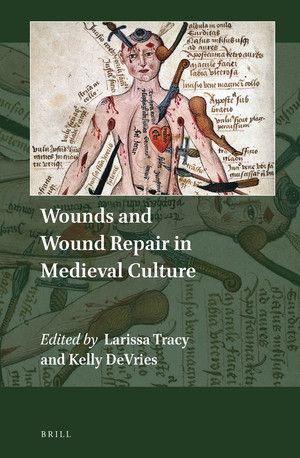
Visible Prowess?: Reading Men’s Head and Face Wounds in Early Medieval Europe to 1000 CE: Wounds and Wound Repair in Medieval Culture, Chapter 3
The spectacle of the wounded body figured prominently in the Middle Ages, from images of Christ’s wounds on the cross, to the ripped and torn bodies of tortured saints who miraculously heal through divine intervention, to graphic accounts of battlefield and tournament wounds—evidence of which survives in the archaeological record—and literary episodes of fatal (or not so fatal) wounds. This volume offers a comprehensive look at the complexity of wounding and wound repair in medieval literature and culture, bringing together essays from a wide range of sources and disciplines including arms and armaments, military history, medical history, literature, art history, hagiography, and archaeology across medieval and early modern Europe. Contributors are Stephen Atkinson, Debby Banham, Albrecht Classen, Joshua Easterling, Charlene M. Eska, Carmel Ferragud, M.R. Geldof, Elina Gertsman, Barbara A. Goodman, Máire Johnson, Rachel E. Kellett, Ilana Krug, Virginia Langum, Michael Livingston, Iain A. MacInnes, Timothy May, Vibeke Olson, Salvador Ryan, William Sayers, Patricia Skinner, Alicia Spencer-Hall, Wendy J. Turner, Christine Voth, and Robert C. Woosnam-Savage.
Democratic Citizenship in Flux: Conceptions of Citizenship in the Light of Political and Social Fragmentation
Traditionally, citizenship has been defined as the legal and political link between individuals and their democratic political community. However, traditional conceptions of democratic citizenship are currently challenged by various developments like migration, the rise of populism, increasing polarization, social fragmentation, and the challenging of representative democracy as well as developments in digital communication technology. Against this background, this peer reviewed book reflects recent conceptions of citizenship by bringing together insights from different disciplines, such as political science, sociology, economics, law, and history.
Democratic and Authoritarian Political Systems in 21st Century World Society: Vol. 1 – Differentiation, Inclusion, Responsiveness
This book is about the radical novelty of modern polities in a functionally differentiated world society. Premodern states were at the apex of a stratified, hierarchical society. They dominated society and all its groups and strata. Modern polities have to be understood through the ecology of relations among different function systems. They have to find and incessantly redefine their place in society. They produce decisions that are collectively binding, but in preparing these decisions experience constraints and knowledge deficiencies that are related to the complexity of a functionally differentiated society. The book concentrates on six analytical perspectives that reflect how modern polities are embedded into 21st century society.
These perspectives are: the concept of inclusion and the inclusion revolution constitutive of modern polities; the internal differentiation of polities that endows them with an unprecedented complexity; the fact that polities do not know anything about society and the ways in which they compensate for this; representation and responsiveness as strategies to reconnect with society; the self-restriction of some polities that brings about ever new autonomous expert organizations; the symmetrical rise of autocracies and democracies as the two modern variants of political regimes.
Democracy, Markets and the Commons: Towards a Reconciliation of Freedom and Ecology
How can we overcome the existing political, economic, and ecological crises that humanity faces? With the notion of the commons, Lukas Peter argues that this form of social organization can provide answers to the shortcomings of centralized states and open and competitive markets. By building on and going beyond the work of Elinor and Vincent Ostrom, he develops an ecological understanding of the commons and human freedom, more generally, thereby reinterpreting classical thinkers such as John Locke and John Rawls. Importantly, he does not suggest an end to property, states or markets, but rather a radical democratization thereof, ultimately providing a real alternative for the 21st century.
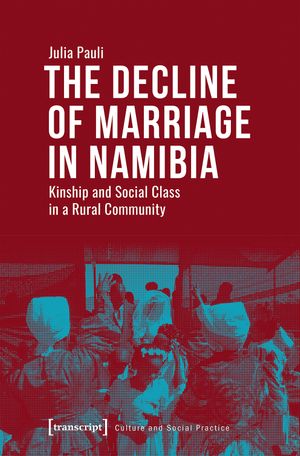
The Decline of Marriage in Namibia: Kinship and Social Class in a Rural Community
In Southern Africa, marriage used to be widespread and common. However, over the past decades marriage rates have declined significantly. Julia Pauli explores the meaning of marriage when only few marry. Although marriage rates have dropped sharply, the value of weddings and marriages has not. To marry has become an indicator of upper-class status that less affluent people aspire to. Using the appropriation of marriage by a rural Namibian elite as a case study, the book tells the entwined stories of class formation and marriage decline in post-apartheid Namibia.