
Open Access Books

EIB Group activities in EU cohesion regions 2022
This report analyses the EIB Group’s activity in cohesion regions in 2022. This year’s edition focuses on the Group’s contribution towards innovation for an inclusive, green and digital transition in line with the Innovation, Digital & Human Capital (IDHC) Orientation 2021-2027. The report starts with a review of recent economic trends in cohesion regions and their investments in innovation, followed by a presentation of the EIB Group’s activities in these regions in 2022. The Group’s support for economic, social and territorial cohesion is presented in relation to policy objectives, activity sectors, countries, contribution to the UN’s Sustainable Development Goals (SDGs) and sector-specific project results. A number of case studies are used to illustrate the Group’s activities and impact. The wider macroeconomic impact of the Group in cohesion regions is then discussed through the lens of a recent academic study. Finally, the role of digitalisation and innovation in cohesion regions is presented along with the range of tools deployed by the Group to support these policy objectives in cohesion regions.
Information Strategies for Communicators
Written by two nationally recognized experts in information strategy, Information Strategies for Communicators leads students step-by-step through the information search and evaluation process for news and strategic communication message production. The book includes a conceptual model of the information strategy process, case studies to illustrate the process in action and links to current examples throughout. The definitive text for the information search and evaluation process as practiced by news and strategic communication message producers. Currently used at the University of Minnesota School of Journalism and Mass Communication; JOUR 3004W/V, Information for Mass Communication.
The Information Literacy User’s Guide: An Open, Online Textbook
Good researchers have a host of tools at their disposal that make navigating today’s complex information ecosystem much more manageable. Gaining the knowledge, abilities and self-reflection necessary to be a good researcher helps not only in academic settings, but is invaluable in any career, and throughout one’s life. The Information Literacy User’s Guide will start you on this route to success.The Information Literacy User’s Guide is based on two current models in information literacy: The 2011 version of The Seven Pillars Model, developed by the Society of College, National and University Libraries in the United Kingdom and the conception of information literacy as a meta-literacy, a model developed by one of this book’s authors in conjunction with Thomas Mackey, Dean of the Center for Distance Learning at SUNY Empire State College. These core foundations ensure that the material will be relevant to today’s students.The Information Literacy User’s Guide introduces students to critical concepts of information literacy as defined for the information-infused and technology-rich environment in which they find themselves. This book helps students examine their roles as information creators and sharers and enables them to more effectively deploy related skills. This textbook includes relatable case studies and scenarios, many hands-on exercises and interactive quizzes.
Information and Entropy
This course explores the ultimate limits to communication and computation, with an emphasis on the physical nature of information and information processing. Topics include: information and computation, digital signals, codes and compression, applications such as biological representations of information, logic circuits, computer architectures and algorithmic information, noise, probability, error correction, reversible and irreversible operations, physics of computation and quantum computation. The concept of entropy applied to channel capacity and to the second law of thermodynamics.

Human Rights in Brief
In all civilized nations, attempts are made to define and buttress human rights. The core of the concept is the same everywhere: Human rights are the rights that one has simply because one is human. They are universal and equal. The following pubilcation gives an overview of human rights across the globe.
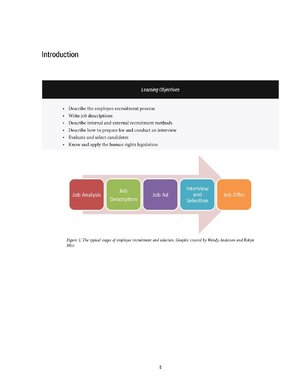
Human Resources in the Food Service and Hospitality Industry
Human Resources in the Food Services and Hospitality Industry is one of a series of Culinary Arts open textbooks developed to support the training of students and apprentices in British Columbia’s foodservice and hospitality industry. Although created with the Professional Cook, Baker and Meatcutter programs in mind, these have been designed as a modular series, and therefore can be used to support a wide variety of programs that offer training in foodservice skills.
Human Resource Management
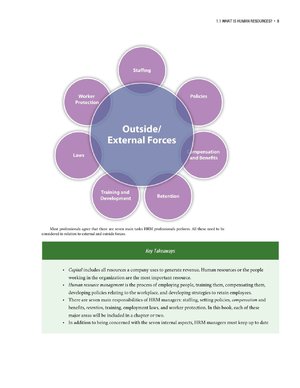
Human Resource Management is adapted from a work produced by a publisher who has requested that they and the original author not receive attribution. This adapted edition is produced by the University of Minnesota Libraries Publishing through the eLearning Support Initiative. Human Resource Management by Laura Portolese Dias teaches H.R.M. strategies and theories that any manager—not just those in H.R.—needs to know about recruiting, selecting, training, and compensating people.Most students will be managing people at some point in their careers and not necessarily in a human resource management capacity. As businesses cut back, they may outsource H.R. duties to outside vendors. Or, in smaller businesses, the H.R. department is sometimes small or non-existent, and managers from other departments have to perform their own H.R.M. Therefore, teaching H.R.M. from the perspective of a general manager, in addition to an H.R. manager, provides more relevance to students’ careers and will give them a competitive advantage in the workplace.This text also provides practical applications of theory relevant to today’s workplace. You won’t find discussions about “posting vacancies on a job board” or “sending memos.” In the real world, H.R.M. leverages technology in every aspect of the job—from online training modules to technology for better managing flex-time workers and telecommuters.Consider how most companies have gone “paperless” with pay stubs by using software. While such technology has made H.R.M. easier, it has also created a new set of challenges. For example, how does a manager actually implement a new pay system? Therefore, it’s important for students to understand what kinds of platforms exist in today’s workplace to enhance their effectiveness as future managers.This textbook is also loaded with supplements to support professors in traditional, hybrid and online courses. Chapter podcasts, test banks, PowerPoints and an activity manual are available. The activities in the manual include case studies, role-playing scenarios and assignments. Sample activities might include a role-playing scenario on letting go of an employee or a case study on a hiring practice issue. Other interactive activities include the development of a training manual for a specific job, interviewing activities and a performance review activity where the performance is “not so good.” All activities are “classroom-tested” and include directions on how to run them effectively. The conversational style of Human Resource Management engages students, while the academic rigor of its content provides them with the tools that any manager needs—whether they work in H.R. or a different department. Plus, it offers an array of supplements that gives them practice creating real H.R. documents and role-playing real H.R. scenarios. Add value to your students’ education, enhance the relevance of your curriculum, and make your students more employable by adopting this book for your H.R.M. class. Read it now online or request your desk copy today!
Human Relations
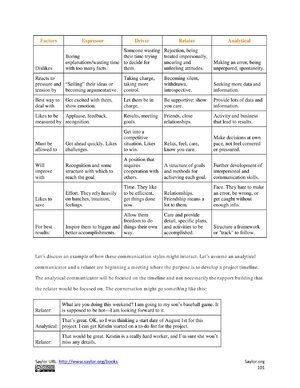
Human Relations by Laura Portolese-Dias addresses all of the critical topics to obtain career success as they relate to professional relationships. Knowing how to get along with others, resolve workplace conflict, manage relationships, communicate well and make good decisions are all critical skills all students need to succeed in career and in life. Human Relations is not an organizational behavior; rather, it provides a good baseline of issues students will deal with in their careers on a day-to-day basis. It is also not a professional communications, business English or professionalism textbook, as its focus is much broader—on general career success and how to effectively maneuver in the workplace. From communication challenges to focusing on one’s own emotional intelligence, the examples throughout Human Relations will help students understand the importance of the human side in their career. This book’s easy-to-understand language and tone is written to convey practical information in an engaging way. Every chapter opens with a realistic example which introduces a concept to be explained in detail later. Each chapter contains relevant examples, YouTube videos, figures, learning objectives, key takeaways, exercises and a chapter-ending case that offer different ways to promote learning. Many of the end-of-section exercises offer self-assessment quizzes, so students may engage in self-understanding and development.
How We Got from There to Here: A Story of Real Analysis
The typical introductory real analysis text starts with an analysis of the real number system and uses this to develop the definition of a limit, which is then used as a foundation for the definitions encountered thereafter. While this is certainly a reasonable approach from a logical point of view, it is not how the subject evolved, nor is it necessarily the best way to introduce students to the rigorous but highly non-intuitive definitions and proofs found in analysis.This book proposes that an effective way to motivate these definitions is to tell one of the stories (there are many) of the historical development of the subject, from its intuitive beginnings to modern rigor. The definitions and techniques are motivated by the actual difficulties encountered by the intuitive approach and are presented in their historical context. However, this is not a history of analysis book. It is an introductory analysis textbook, presented through the lens of history. As such, it does not simply insert historical snippets to supplement the material. The history is an integral part of the topic, and students are asked to solve problems that occur as they arise in their historical context.This book covers the major topics typically addressed in an introductory undergraduate course in real analysis in their historical order. Written with the student in mind, the book provides guidance for transforming an intuitive understanding into rigorous mathematical arguments. For example, in addition to more traditional problems, major theorems are often stated and a proof is outlined. The student is then asked to fill in the missing details as a homework problem.
How to Think Like a Computer Scientist: Learning With Python
How to Think Like a Computer Scientist: Learning With Python is an introduction to programming using Python.
How to Read Like a Writer
This essay is a chapter in Writing Spaces: Readings on Writing, Volume 2, a peer-reviewed open textbook series for the writing classroom.Print versions of the volume are available for purchase directly from ParlorPress and through other booksellers.
EIB Global Report: The Story
The world is beset by crises that are reshaping societies, economies, healthcare systems, transport and workplaces. Many parts of our lives are changing. The greatest challenges, such as COVID-19, climate change, poverty and equality, will require larger investments and more partnerships as this decade progresses. No single institution can meet the world’s needs for innovation and cooperation. EIB Global Report: The Story illustrates why we created a new development branch by telling more than a dozen stories that discuss how we can meet challenges in areas such as gender equality, innovation, vaccines and green energy.

Design for the New World: From Human Design to Planet Design
Design for the New World aims to introduce a new paradigm in design and design thinking, by shifting our approach from a human perspective that is primarily focused on human scales, needs, and desires, to a planet perspective, in which design is guided by the ambition to create a balanced coexistence between humans and the other species that make up the global ecosystem.
The book intervenes in current discussions within design research about what role design can play in the sustainable transition, by offering new methods and mindset to handle the giant-scale complexity of the climate and environmental crisis, as well as specific tools to turn these theoretical reflections into a transformative practice.
Essential reading for researchers, students, and practitioners in the fields of design, innovation, development, entrepreneurship, leadership, art, and creativity. The book is structured so that it can be easily used in an educational context, both at under- and postgraduate level and in courses of business, innovation, or management training. The practical suggestions and process-management tools can be used to facilitate sustainable transformations in in commercial businesses, organizations, and political networks.
Written in an accessible and clear style, where all technical terms are fully introduced and unpacked. The chapters can be read in order or independently, and the practical tools for facilitating processes of change are supplemented with additional questions for reflection and further development.

The House as a Product
Industrialized housing has been a common phenomenon in the building industry since the industrial revolution; the casting of iron components enabled Victorian iron casters to prefabricate entire buildings and to export them to all British colonies. It got a second boost from Modernist architects like Ludwig Mies van der Rohe, Walter Gropius and Konrad Wachsmann; and a third boost in the US when the soldiers came back from the Second World War in 1945 and wanted to buy a ready-made house.In the later decades of the 20th century, composite prototypes were built. Timber frame houses are extremely popular in low density areas worldwide. For densely populated areas housing is now firmly attached to reinforced concrete. The contracting industries have developed efficient building methods for the concrete structures on which separate systems of claddings are fixed to form a house.However, in the coming decades, designers, builders and scientists also have to keep the environment in mind, working with a minimal amount of materials and for minimizing embodied energy and energy use. In the coming age minimal embodied energy and low ecological footprints are renewed values that will be added to energy-positive housing and that will have an influence on the building technology of the future. This will lead to a reformation of the building vocabulary. Other materials will have to be chosen and developed to function in building elements and components.

History in the Making: A History of the People of the United States of America to 1877
History in the Making: A History of the People of the United States of America to 1877 is a downloadable, free-to-use textbook licensed under a CC-BY-SA 3.0 unported license.This textbook examines U.S. History from before European Contact through Reconstruction, while focusing on the people and their history.Prior to its publication, History in the Making underwent a rigorous double blind peer review, a process that involved over 30 scholars who reviewed the materially carefully, objectively and candidly in order to ensure not only its scholarly integrity but also its high standard of quality.This book provides a strong emphasis on critical thinking about U.S. History by providing several key features in each chapter. Learning Objectives at the beginning of each chapter help students to understand what they will learn in each chapter. Before You Move On sections at the end of each main section are designed to encourage students to reflect on important concepts and test their knowledge as they read. In addition, each chapter includes Critical Thinking Exercises that ask the student to deeply explore chapter content, Key Terms and a Chronology of events.
A Heat Transfer Textbook
This book is an introduction to heat and mass transfer oriented toward engineering students.
Handbook for Writers
You’ve probably had moments as a writing student when you’ve said to yourself, “I know what I think about this topic; I just can’t get it down on paper.” This frustration comes from the notion that writing comes after thinking, that it merely represents or translates thoughts that are already fully formed in your head. But what if the act of writing helps sharpen your thinking? What if the act of putting thoughts into words changes those thoughts for the better? Are there ways to make that transformation happen consistently enough so that writing becomes not an end but a beginning, not a chore but a revelation?
Guidelines for Improving the Effectiveness of Boards of Directors of Nonprofit Organizations
The purpose of this book is to help boards of directors of nonprofit organizations improve their performance after completing the online board self-assessment tool found at www.boardcheckup.com. However, it can also be used as a stand-alone resource for any board seeking to enhance its effectiveness in that it also contains the diagnostic questions on which the online tool is based. The approach taken here is similar to that which lies behind health checkups for individuals. Doctors usually begin by asking us to review a lengthy list of many possible health issues and we check those about which we have concerns. The doctor and patient then focus their discussions on these issues. The typical process proceeds through the following three stages: Understanding the symptoms. The doctor and patient begin by trying to define the issues more clearly. Diagnosis. Effort is made to understand the causes of the problems through tests and further examination. Treatment. Once the problem has been properly diagnosed, a treatment program to remedy it is begun. While the Board Check-Up survey on which this book is based does not pretend to be as scientifically rigorous as a medical examination, it is based on the same logic. It begins by having those who belong to, or relate to, boards provide their perceptions of how well the board is working by guiding them through a list of potential “health issues,” i.e. statements of possible problems, issues or challenges that boards might encounter in their work. These statements have been derived from comments made by those who serve on boards or interact with them as well as from the work of researchers and consultants who have studied boards over the past 30 years. Once issues (symptoms) have been identified, they become the focal point for discussions that explore how serious they are, what might be causing them (diagnosis) and what can be done to resolve them (treatment). As noted above, this book is intended to help boards assess performance and make decisions to improve the effectiveness of the governance process. Each chapter deals with one of the nine dimensions of governance effectiveness. It starts with the items dealing with that dimension on the Board Performance Self-Assessment Questionnaire. These items represent the symptoms that indicate possible issues, problems or challenges faced by the board. This is followed by a discussion of possible reasons that such symptoms might exist (diagnosis). The third part of each chapter looks at what might be done to alleviate the symptoms once a diagnosis is made (treatment). Included in this final part of the chapter are references to websites, books and articles that provide additional advice and assistance on how to deal with the issues raised.
Growth and Competitive Strategy in Three Circles
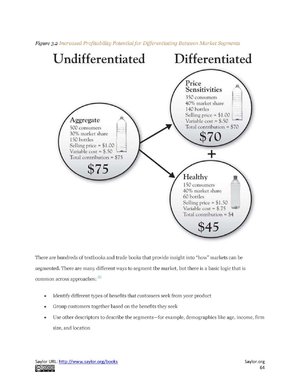
The Three-Circle model was developed over the past several years, initially in strategic planning for a university graduate program and in an executive M.B.A. course designed to integrate the concepts of marketing and competitive strategy. Over the course of time, the Three-Circle model has been successfully used by hundreds of organizations throughout the world in establishing and growing their market positions. Many of the case examples in this book demonstrating applications of the Three-Circle model applications are from executives who have attended executive education training at the University of Notre Dame. The development of competitive strategy is difficult because there are a lot of moving parts, as well as hundreds of frameworks, that might potentially guide the effort. Executives appreciate how the Three-Circle model simplifies the integration of customer, firm and competitor analysis to generate growth strategies. It also provides a common language and process for understanding and explaining competitive advantage and for identifying profitable growth strategy.
Graphic Design and Print Production Fundamentals
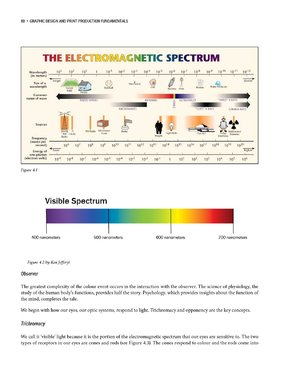
This textbook — written by a group of select experts with a focus on different aspects of the design process, from creation to production — addresses the many steps of creating and then producing physical, printed or other imaged products that people interact with on a daily basis. It covers the concept that, while most modern graphic design is created on computers using design software, the ideas and concepts don’t stay on the computer. The ideas need to be completed in the computer software, then progress to an imaging (traditionally referred to as printing) process. Keywords are highlighted throughout and summarized in a Glossary at the end of the book, and each chapter includes exercises and suggested readings.
Government Regulation and the Legal Environment of Business
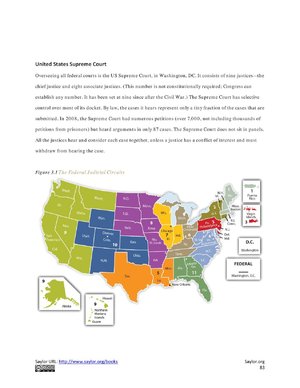
Mayer, Warner, Siedel and Lieberman’s Government Regulation and the Legal Environment of Business is an up-to-date textbook that covers legal issues that students must understand in today’s highly regulated business environment. The text is organized to permit instructors to tailor the materials to their particular approach. The authors take special care to engage students by relating law to everyday events with their clear, concise and readable style.After introductory chapters covering the legal environment of business, Government Regulation and the Legal Environment of Business provides students with context and essential legal concepts relating to contracts, consumer credit transactions, bankruptcy, intellectual property, securities regulation, regulation of real estate, antitrust, unfair trade practices, employment law and labor relations. The text provides the vocabulary and legal savvy they will need to talk in an educated way to customers, suppliers, employees, creditors, shareholders, government regulators and other stakeholders—and to their own lawyers.
Good Corporation, Bad Corporation: Corporate Social Responsibility in the Global Economy
This textbook provides an innovative, internationally oriented approach to the teaching of corporate social responsibility (C.S.R.) and business ethics. Drawing on case studies involving companies and countries around the world, the textbook explores the social, ethical, and business dynamics underlying C.S.R. in such areas as global warming, genetically modified organisms (G.M.O.) in food production, free trade and fair trade, anti-sweatshop and living-wage movements, organic foods and textiles, ethical marketing practices and codes, corporate speech and lobbying and social enterprise. The book is designed to encourage students and instructors to challenge their own assumptions and prejudices by stimulating a class debate based on each case study.
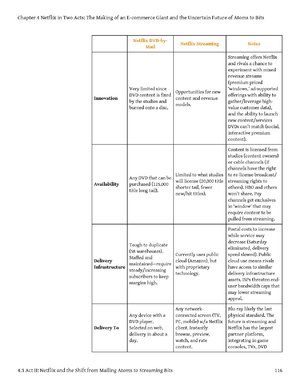
Getting the Most Out of Information Systems V. 2.0
This book is part of a small project by Andy Schmitz to archive copies of all the books which were made available online from a specific publisher at the end of 2012 in order to preserve their status as Creative Commons-licensed textbooks and therefore remain free to access and use. Schmitz explains why there are no authors, publisher names or descriptions: The books are licensed under the Creative Commons by-nc-sa 3.0 license, which typically requires attributing the source of the work (author, title, and URI). Initially, then, these books were attributed to the authors and publisher who made them available. However, in March 2013, I was contacted by the publisher, who, acting as the licensor of the works, asked me to remove the Creative Commons attribution to the original authors and publisher from the collection of books. They also indicated that, in situations where I was required to attribute the work, they wished the works to be attributed to anonymous authors. While I find this turn of events disappointing because it doesn’t give the publisher or the original authors very much credit for for making the books available, I have obliged by removing the original attribution I had added for Creative Commons, and by not specifying the publisher’s name in my templates for the books. What about the titles? In August 2013, I was contacted again by the publisher, who requested that I remove the books’ original titles as well. Under the understanding that the books republished here are a Collection, and that the title in the book URIs could be considered part of the Section 4(d) attribution, I have retitled all of the books hosted in this collection. Care has been taken to ensure that links to the old names in this collection will redirect to the book’s new location, and to the same content. Further, the publisher requested that I remove their “corporate trademarks” from the books. I have therefore also replaced the publisher’s name with the phrase “Unnamed Publisher” and a link to this page. And the citations? A number of the books in this archive had citations to other books from the publisher, or other resources that the publisher was hosting. As part of the publisher’s requests, they asked to have these citations and links removed as well. Because it did not appear as though the removal of the citations was likely to impact the books’ usability, where I have found citations to books from the publisher, I have removed those citations as well.
EIB Global Report: The Impact
“The European Investment Bank (EIB) has a long track record as a provider of development and climate finance, working with EU institutions, Member States and partner countries in the EU neighbourhood, sub-Saharan Africa and around the world to foster sustainable development and bring real benefits to people’s lives. The challenges faced by our partners around the world are many: economies struggle to provide adequate jobs and basic infrastructure, while dealing with the growing needs for climate action and protection of the environment. These challenges have been aggravated by the coronavirus pandemic and the ramifications of the conflict in Ukraine. As of the start of 2022, the EIB’s development finance role is being taken forward and intensified through EIB Global. The new structure builds on the strength and experience that the EIB has gained working outside Europe to mobilise more development and climate finance, and increase impact. The purpose of this report is twofold. First, it provides an overview of the Bank’s activities outside the European Union in 2021, with a focus on the expected results, complemented by reporting on the results already achieved by past operations. Second, it elaborates on the context of the Bank’s engagement in countries outside Europe, examining different development challenges and how they confront different regions, drawing on our own development research.”

Getting the Most Out of Information Systems V. 1.4
This book is part of a small project by Andy Schmitz to archive copies of all the books which were made available online from a specific publisher at the end of 2012 in order to preserve their status as Creative Commons-licensed textbooks and therefore remain free to access and use. Schmitz explains why there are no authors, publisher names or descriptions: The books are licensed under the Creative Commons by-nc-sa 3.0 license, which typically requires attributing the source of the work (author, title, and URI). Initially, then, these books were attributed to the authors and publisher who made them available. However, in March 2013, I was contacted by the publisher, who, acting as the licensor of the works, asked me to remove the Creative Commons attribution to the original authors and publisher from the collection of books. They also indicated that, in situations where I was required to attribute the work, they wished the works to be attributed to anonymous authors. While I find this turn of events disappointing because it doesn’t give the publisher or the original authors very much credit for for making the books available, I have obliged by removing the original attribution I had added for Creative Commons, and by not specifying the publisher’s name in my templates for the books. What about the titles? In August 2013, I was contacted again by the publisher, who requested that I remove the books’ original titles as well. Under the understanding that the books republished here are a Collection, and that the title in the book URIs could be considered part of the Section 4(d) attribution, I have retitled all of the books hosted in this collection. Care has been taken to ensure that links to the old names in this collection will redirect to the book’s new location, and to the same content. Further, the publisher requested that I remove their “corporate trademarks” from the books. I have therefore also replaced the publisher’s name with the phrase “Unnamed Publisher” and a link to this page. And the citations? A number of the books in this archive had citations to other books from the publisher, or other resources that the publisher was hosting. As part of the publisher’s requests, they asked to have these citations and links removed as well. Because it did not appear as though the removal of the citations was likely to impact the books’ usability, where I have found citations to books from the publisher, I have removed those citations as well.
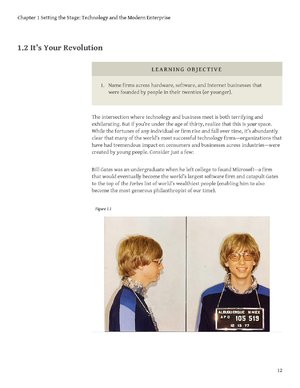
Getting the Most Out of Information Systems V. 1.3
This book is part of a small project by Andy Schmitz to archive copies of all the books which were made available online from a specific publisher at the end of 2012 in order to preserve their status as Creative Commons-licensed textbooks and therefore remain free to access and use. Schmitz explains why there are no authors, publisher names or descriptions: The books are licensed under the Creative Commons by-nc-sa 3.0 license, which typically requires attributing the source of the work (author, title, and URI). Initially, then, these books were attributed to the authors and publisher who made them available. However, in March 2013, I was contacted by the publisher, who, acting as the licensor of the works, asked me to remove the Creative Commons attribution to the original authors and publisher from the collection of books. They also indicated that, in situations where I was required to attribute the work, they wished the works to be attributed to anonymous authors. While I find this turn of events disappointing because it doesn’t give the publisher or the original authors very much credit for for making the books available, I have obliged by removing the original attribution I had added for Creative Commons, and by not specifying the publisher’s name in my templates for the books. What about the titles? In August 2013, I was contacted again by the publisher, who requested that I remove the books’ original titles as well. Under the understanding that the books republished here are a Collection, and that the title in the book URIs could be considered part of the Section 4(d) attribution, I have retitled all of the books hosted in this collection. Care has been taken to ensure that links to the old names in this collection will redirect to the book’s new location, and to the same content. Further, the publisher requested that I remove their “corporate trademarks” from the books. I have therefore also replaced the publisher’s name with the phrase “Unnamed Publisher” and a link to this page. And the citations? A number of the books in this archive had citations to other books from the publisher, or other resources that the publisher was hosting. As part of the publisher’s requests, they asked to have these citations and links removed as well. Because it did not appear as though the removal of the citations was likely to impact the books’ usability, where I have found citations to books from the publisher, I have removed those citations as well.
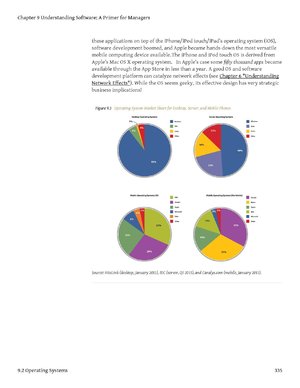
Getting the Most Out of Information Systems V. 1.2
This book is part of a small project by Andy Schmitz to archive copies of all the books which were made available online from a specific publisher at the end of 2012 in order to preserve their status as Creative Commons-licensed textbooks and therefore remain free to access and use. Schmitz explains why there are no authors, publisher names or descriptions: The books are licensed under the Creative Commons by-nc-sa 3.0 license, which typically requires attributing the source of the work (author, title, and URI). Initially, then, these books were attributed to the authors and publisher who made them available. However, in March 2013, I was contacted by the publisher, who, acting as the licensor of the works, asked me to remove the Creative Commons attribution to the original authors and publisher from the collection of books. They also indicated that, in situations where I was required to attribute the work, they wished the works to be attributed to anonymous authors. While I find this turn of events disappointing because it doesn’t give the publisher or the original authors very much credit for for making the books available, I have obliged by removing the original attribution I had added for Creative Commons, and by not specifying the publisher’s name in my templates for the books. What about the titles? In August 2013, I was contacted again by the publisher, who requested that I remove the books’ original titles as well. Under the understanding that the books republished here are a Collection, and that the title in the book URIs could be considered part of the Section 4(d) attribution, I have retitled all of the books hosted in this collection. Care has been taken to ensure that links to the old names in this collection will redirect to the book’s new location, and to the same content. Further, the publisher requested that I remove their “corporate trademarks” from the books. I have therefore also replaced the publisher’s name with the phrase “Unnamed Publisher” and a link to this page. And the citations? A number of the books in this archive had citations to other books from the publisher, or other resources that the publisher was hosting. As part of the publisher’s requests, they asked to have these citations and links removed as well. Because it did not appear as though the removal of the citations was likely to impact the books’ usability, where I have found citations to books from the publisher, I have removed those citations as well.
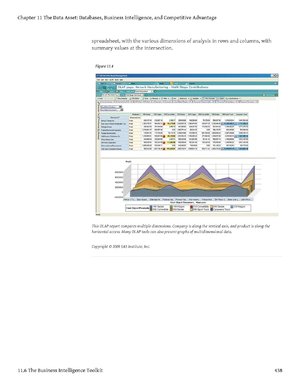
Getting the Most Out of Information Systems: A Manager’s Guide V. 1.1
This book is part of a small project by Andy Schmitz to archive copies of all the books which were made available online from a specific publisher at the end of 2012 in order to preserve their status as Creative Commons-licensed textbooks and therefore remain free to access and use. Schmitz explains why there are no authors, publisher names or descriptions: The books are licensed under the Creative Commons by-nc-sa 3.0 license, which typically requires attributing the source of the work (author, title, and URI). Initially, then, these books were attributed to the authors and publisher who made them available. However, in March 2013, I was contacted by the publisher, who, acting as the licensor of the works, asked me to remove the Creative Commons attribution to the original authors and publisher from the collection of books. They also indicated that, in situations where I was required to attribute the work, they wished the works to be attributed to anonymous authors. While I find this turn of events disappointing because it doesn’t give the publisher or the original authors very much credit for for making the books available, I have obliged by removing the original attribution I had added for Creative Commons, and by not specifying the publisher’s name in my templates for the books. What about the titles? In August 2013, I was contacted again by the publisher, who requested that I remove the books’ original titles as well. Under the understanding that the books republished here are a Collection, and that the title in the book URIs could be considered part of the Section 4(d) attribution, I have retitled all of the books hosted in this collection. Care has been taken to ensure that links to the old names in this collection will redirect to the book’s new location, and to the same content. Further, the publisher requested that I remove their “corporate trademarks” from the books. I have therefore also replaced the publisher’s name with the phrase “Unnamed Publisher” and a link to this page. And the citations? A number of the books in this archive had citations to other books from the publisher, or other resources that the publisher was hosting. As part of the publisher’s requests, they asked to have these citations and links removed as well. Because it did not appear as though the removal of the citations was likely to impact the books’ usability, where I have found citations to books from the publisher, I have removed those citations as well.
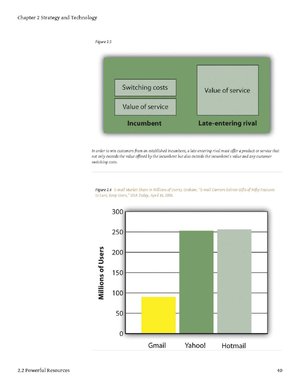
Getting the Most Out of Information Systems: A Manager’s Guide,: V. 1.0
This book is part of a small project by Andy Schmitz to archive copies of all the books which were made available online from a specific publisher at the end of 2012 in order to preserve their status as Creative Commons-licensed textbooks and therefore remain free to access and use. Schmitz explains why there are no authors, publisher names or descriptions: The books are licensed under the Creative Commons by-nc-sa 3.0 license, which typically requires attributing the source of the work (author, title, and URI). Initially, then, these books were attributed to the authors and publisher who made them available. However, in March 2013, I was contacted by the publisher, who, acting as the licensor of the works, asked me to remove the Creative Commons attribution to the original authors and publisher from the collection of books. They also indicated that, in situations where I was required to attribute the work, they wished the works to be attributed to anonymous authors. While I find this turn of events disappointing because it doesn’t give the publisher or the original authors very much credit for for making the books available, I have obliged by removing the original attribution I had added for Creative Commons, and by not specifying the publisher’s name in my templates for the books. What about the titles? In August 2013, I was contacted again by the publisher, who requested that I remove the books’ original titles as well. Under the understanding that the books republished here are a Collection, and that the title in the book URIs could be considered part of the Section 4(d) attribution, I have retitled all of the books hosted in this collection. Care has been taken to ensure that links to the old names in this collection will redirect to the book’s new location, and to the same content. Further, the publisher requested that I remove their “corporate trademarks” from the books. I have therefore also replaced the publisher’s name with the phrase “Unnamed Publisher” and a link to this page. And the citations? A number of the books in this archive had citations to other books from the publisher, or other resources that the publisher was hosting. As part of the publisher’s requests, they asked to have these citations and links removed as well. Because it did not appear as though the removal of the citations was likely to impact the books’ usability, where I have found citations to books from the publisher, I have removed those citations as well.
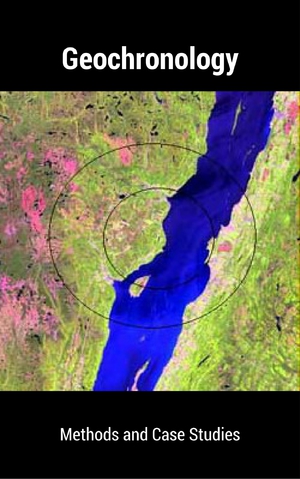
Geochronology: Methods and Case Studies
Chronology is the backbone of history, and there is a wise saying stating there is no history without a chronology. Earths evolutionary history is built up by geochronology, i.e. time benchmarks upon which the geological history is built up step by step over its total time period of about 4.5 billion years. The first marker in this history is the Jack Hills zircon from Australia dated at about 4.4 GA. The most detailed records come from seasonal changes within annual varves. Stratigraphy provides the basic chronological ordering of layers by layers, units by units, fossil assemblage by assemblage, varves by varves, growth zone by growth zone, etc. The radiometric techniques implied the introduction of absolute age determinations. This book includes a combination of methodological presentations and related case studies, from where we learn about practical problems and achievements. Therefore, the book should be of basic interest both for scientists in their practical in field and laboratory, as well as for general educational purpose.