
Open Access Books
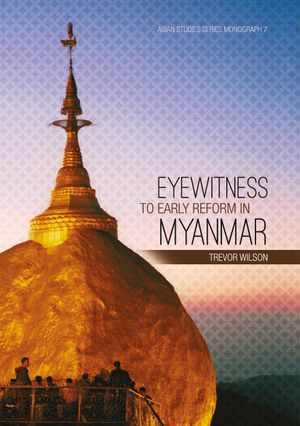
Eyewitness to Early Reform in Myanmar
By 2000, a ruthless military regime had ruled Myanmar for more than a decade, polarising opinion inside and outside Burma/Myanmar — with Western countries locked into non-UN sanctions and Asian countries and the rest of the world locked into unenthusiastic cooperation with Myanmar. While the United Nations and its agencies faced numerous obstacles as they sought to encourage national reconciliation in Myanmar, conditions in Myanmar were slowly starting to change. With a reform faction in charge, the military regime itself after 1999 slowly began experimenting with modest changes, before committing in 2008 to transfer power via a constitutional referendum and national elections, both of which it effectively controlled. This book provides the first eyewitness account of the early reform experiments.
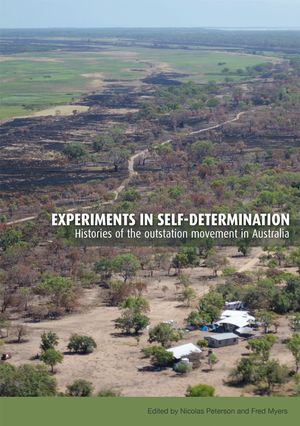
Experiments in self-determination: Histories of the outstation movement in Australia
Outstations, which dramatically increased in numbers in the 1970s, are small, decentralised and relatively permanent communities of kin established by Aboriginal people on land that has social, cultural or economic significance to them. In 2015 they yet again came under attack, this time as an expensive lifestyle choice that can no longer be supported by state governments. Yet outstations are the original, and most striking, manifestation of remote-area Aboriginal people’s aspirations for self-determination, and of the life projects by which they seek, and have sought, autonomy in deciding the meaning of their life independently of projects promoted by the state and market. They are not simply projects of isolation from outside influences, as they have sometimes been characterised, but attempts by people to take control of the course of their lives. In the sometimes acrimonious debates about outstations, the lived experiences, motivations and histories of existing communities are missing. For this reason, we invited a number of anthropological witnesses to the early period in which outstations gained a purchase in remote Australia to provide accounts of what these communities were like, and what their residents’ aspirations and experiences were. Our hope is that these closer-to-the-ground accounts provide insight into, and understanding of, what Indigenous aspirations were in the establishment and organisation of these communities.

Divine Domesticities: Christian Paradoxes in Asia and the Pacific
Divine Domesticities: Christian Paradoxes in Asia and the Pacific fills a huge lacuna in the scholarly literature on missionaries in Asia/Pacific and is transnational history at its finest.

Diversity in Leadership: Australian women, past and present
While leadership is an over-used term today, how it is defined for women and the contexts in which it emerges remains elusive. Moreover, women are exhorted to exercise leadership, but occupying leadership positions has its challenges. Issues of access, acceptable behaviour and the development of skills to be successful leaders are just some of them.
Diversity in Leadership: Australian women, past and present provides a new understanding of the historical and contemporary aspects of Indigenous and non-Indigenous women’s leadership in a range of local, national and international contexts. It brings interdisciplinary expertise to the topic from leading scholars in a range of fields and diverse backgrounds. The aims of the essays in the collection document the extent and diverse nature of women’s social and political leadership across various pursuits and endeavours within democratic political structures.

A Dissident Liberal: The Political Writings of Peter Baume
In the ‘broad church’ of the Australian Liberal Party, rarely has there been a maverick so unrelenting in his commitment to personal principles as Senator Peter Baume. Over a parliamentary career spanning 17 years, three ministerial portfolios and five party leaders, Baume was increasingly pitted against his own party room. In A Dissident Liberal: The Political Writings of Peter Baume, we learn of personal threats, crises, constitutional confrontation and the tension between conservatism and classical liberalism—and between ideology and toeing the party line. This collection of personal observations, speeches and commentaries on contentious policy issues presents a valuable resource for students of Australian political history.

Building Europe: A History of European Unification
Relying on internal sources, Wilfried Loth analyses the birth and subsequent development of the European Union, from the launch of the Council of Europe and the Schuman Declaration until the Euro crisis and the contested European presidential election of Jean-Claude Juncker. This book shines a light on the crises of the European integration, such as the failure of the European Defence Community, De Gaulle`s empty chair policy, or the rejection of the European Constitution in France and the Netherlands, but also highlights the indubitable successes that are the Franco-German reconciliation, the establishment of the European common market, and the establishment of an expanding common currency. What this study accomplishes, for the first time, is to illuminate the driving forces behind the European integration process and how it changed European politics and society.
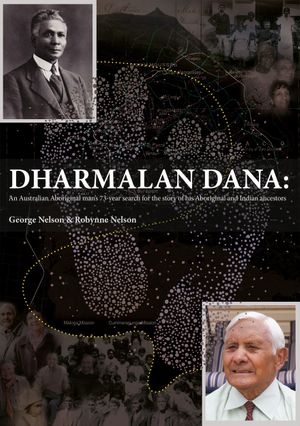
Dharmalan Dana: An Australian Aboriginal man’s 73-year search for the story of his Aboriginal and Indian ancestors
A Yorta Yorta man’s seventy-three-year search for the story of his Aboriginal and Indian ancestors including his Indian Grampa who, as a real mystery man, came to Yorta Yorta country in Australia, from Mauritius, in 1881 and went on to leave an incredible legacy for Aboriginal Australia. This story is written through George Nelson’s eyes, life and experiences, from the time of his earliest memory, to his marriage to his sweetheart Brenda, through to his journey to Mauritius at the age of seventy-three, to the production of this wonderful story in the present.

Developing Asian Bondmarkets
The absence of vibrant bondmarkets in East Asia was a significant contributor to the 1997–98 financial crisis. Ever since, the development of local bondmarkets has been a major objective of financial reforms in many East Asian economies. This effort has been frustrated by the inability to reach a consensus on whether Asian bondmarkets are truly needed in East Asia, whether they can be made viable in the competitive environment of the global economy, how they should be created and what role intergovernmental cooperation should play in their definition and creation. Developing Asian Bondmarkets helps build this consensus, proposing how to develop robust and efficient bondmarkets in East Asia. This book, the first of its kind, comes from the Finance Forum of the Pacific Economic Cooperation Council.

Degei’s Descendants: Spirits, Place and People in Pre-Cession Fiji
Dr Parke’s monograph examines how Fijians, especially in western areas of Fiji, currently understand and explain the origins and development of the social and political divisions of late pre-colonial traditional Fijian society. It assesses the reasoning, consistency and, where possible, the historical accuracy of such understandings. The oral history research which forms the backbone of the study was conducted in either standard Fijian or one or other of the western Fijian dialects with which Dr Parke was familiar. The period on which the monograph concentrates is the two centuries or so immediately prior to the Deed of Cession on 10 October 1874. A number of the major chiefs of Fiji had offered to cede Fiji to Queen Victoria; and after the offer had been accepted, Fiji became a British Crown Colony on that day. The volume will be of interest to all archaeologists, anthropologists and historians with an interest in Fiji. It will also be of wider interest to Pacific Studies scholars and those of British colonial history as well as historians with a wider interest in indigenous traditional histories and their role in governance today.

Deepening Reform for China’s Long-term Growth and Development
The Chinese economy has entered a new phase of development in which sources of growth are not so much dependent upon pure increases in labour, investment and credit expansion, but from productivity improvement, structural changes, technological progress and the benefits from improvement of the social security and welfare improvement. When market functions are fully established to become a main channel for allocating resources, the entrepreneurship will flourish engaging in more innovative activities, workers will move more freely and have more incentives to improve their skills, firms will become more productive through market entry and exit, the economic structure will become more balanced because of the improved resource allocation, and in the end, growth will become more spontaneous and sustainable. In this sense, reforms could deliver ‘dividend’ by raising China’s potential economic growth rates. For China to confront all the challenges it faces at present, the reforms undertaken now have to be deep, comprehensive and far-reaching in order to succeed in paving the way for China to complete the task of transformation in the long-term. There is no better alternative than deepening the market-oriented reform in advancing the course of China’s modernisation for future development and prosperity and lifting China to the status of a developed economy in the next two decades. The recent China update books have covered the topic of reform from different angles and this new book is another attempt to address this important issue.
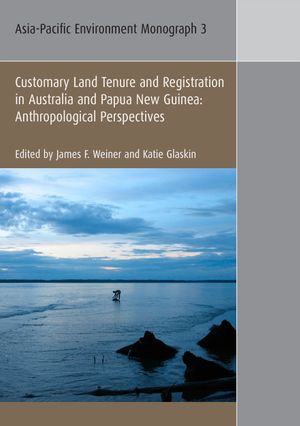
Customary Land Tenure & Registration in Australia and Papua New Guinea: Anthropological Perspectives
The main theme of this volume is a discussion of the ways in which legal mechanisms, such as the Land Groups Incorporation Act (1974) in PNG, and the Native Title Act (1993) in Australia, do not, as they purport, serve merely to identify and register already-existing customary indigenous landowning groups in these countries. Because the legislation is an integral part of the way in which indigenous people are defined and managed in relation to the State, it serves to elicit particular responses in landowner organisation and self-identification on the part of indigenous people. These pieces of legislation actively contour the progressive evolution of landowner social, territorial and political organisation at all levels in these nation states. The contributors to this volume provide in-depth anthropological case studies of social structural and cultural transformations engendered by the confrontation between states, developers and indigenous communities over rights to customarily owned land.

The Curious Country
By definition scientists are an inquisitive lot. But what are the scientific curiosities and concerns on the minds of Australians? What worries them, baffles them, and sets their curiosity meter to 10 out of 10? To find out, the Office of the Chief Scientist (OCS) took the nation’s intellectual temperature, surveying 1186 Australians: men and women aged 18 to 65, from all education levels and locations around Australia. The results frame this book: a collection of essays covering the diverse areas of science Australians are curious about. Edited by eminent science writer Leigh Dayton and including a foreword from Australia’s Chief Scientist, Ian Chubb. The collection covers a range of issues, including food and farming technology, environmental upheaval, health, fuel and energy technology and space exploration.

Culture and Sustainable Development in the Pacific
Throughout the South Pacific, notions of ‘culture’ and ‘development’ are very much alive—in political debate, the media, sermons, and endless discussions amongst villagers and the urban élites, even in policy reports.
Often the terms are counterposed, and development along with ‘economic rationality’, ‘good governance’ and ‘progress’ is set against culture or ‘custom’, ‘tradition’ and ‘identity’. The decay of custom and impoverishment of culture are often seen as wrought by development, while failures of development are haunted by the notion that they are due, somehow, to the darker, irrational influences of culture.
The problem is to resolve the contradictions between them so as to achieve the greater good—access to material goods, welfare and amenities, ‘modern life’—without the sacrifice of the ‘traditional’ values and institutions that provide material security and sustain diverse social identities.
Resolution is sought in this book by a number of leading writers from the South Pacific including Langi Kavaliku, Epeli Hau’ofa, Marshall Sahlins, Malama Meleisea, Joeli Veitayaki, and Tarcisius Tara Kabutaulaka. The volume is brought together for UNESCO by Antony Hooper, Professor Emeritus at the University of Auckland. UNESCO experts include Richard Engelhardt, Langi Kavaliku, Russell Marshall, Malama Meleisea, Edna Tait and Mali Voi.
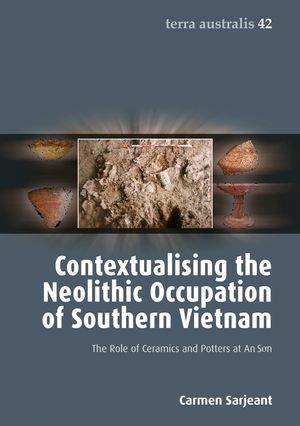
Contextualising the Neolithic Occupation of Southern Vietnam: The Role of Ceramics and Potters at An Son
Excavated in 2009, An Son, Long An Province, southern Vietnam has been dated to the second millennium BC, with evidence for neolithic occupation and burials. Very little is known about the neolithic period in southern Vietnam, and the routes and chronology for the appearance of cultivation, domestic animals, and ceramic and lithic technologies associated with sedentary settlements in mainland Southeast Asia are still debated. The ways in which the ceramic material culture at An Son conforms to the wider neolithic expression observed in Southeast Asia is investigated, and local and regional innovations are identified. The An Son ceramic assemblage is discussed in great detail to characterise the neolithic occupation, while considering the nature of craft production, manufacturing methods and the transference of traditions.
Contextualising the neolithic in southern Vietnam is conducted through a comparative study of material culture between An Son and the sites of Bến Ðò, Bình Đa, Cù Lao Rùa, Cái Vạn, Cầu Sắt, Đa Kai, Đình Ông, Lộc Giang, Rạch Lá, Rạch Núi and Suối Linh, all in southern Vietnam. Another analysis is presented to contextualise An Son in the wider neolithic landscape of mainland Southeast Asia, between An Son and Ban Non Wat, early Ban Lum Khao, early Ban Chiang, early Non Nok Tha, Khok Charoen, Tha Kae, Khok Phanom Di, Nong Nor (phase 1), Samrong Sen, Laang Spean, Krek, Bàu Tró, Mán Bạc and Xóm Rền. The aspects of material culture at An Son that appear to have ancestral links are considered in this research as well as local interaction spheres.
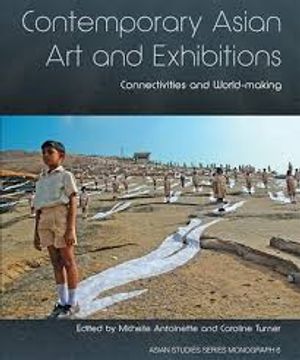
Contemporary Asian Art and Exhibitions: Connectivities and World-making
This volume draws together essays by leading art experts observing the dramatic developments in Asian art and exhibitions in the last two decades. The authors explore new regional and global connections and new ways of understanding contemporary Asian art in the twenty-first century.
The essays coalesce around four key themes: world-making; intra-Asian regional connections; art’s affective capacity in cross-cultural engagement; and Australia’s cultural connections with Asia. In exploring these themes, the essays adopt a diversity of approaches and encompass art history, art theory, visual culture and museum studies, as well as curatorial and artistic practice.
With introductory and concluding essays by editors Michelle Antoinette and Caroline Turner this volume features contributions from key writers on the region and on contemporary art: Patrick D Flores, John Clark, Chaitanya Sambrani, Pat Hoffie, Charles Merewether, Marsha Meskimmon, Francis Maravillas, Oscar Ho, Alison Carroll and Jacqueline Lo.
Richly illustrated with artworks by leading contemporary Asian artists, Contemporary Asian Art and Exhibitions: Connectivities and World-making will be essential reading for those interested in recent developments in contemporary Asian art, including students and scholars of art history, Asian studies, museum studies, visual and cultural studies.
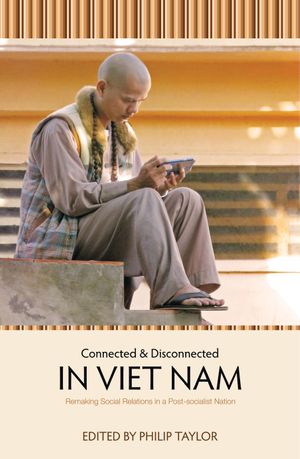
Connected and Disconnected in Viet Nam: Remaking Social Relations in a Post-socialist Nation
Vietnam’s shift to a market-based society has brought about profound realignments in its people’s relations with each other. As the nation continues its retreat from the legacies of war and socialism, significant social rifts have emerged that divide citizens by class, region and ethnicity. By drawing on social connections as a traditional resource, Vietnamese are able to accumulate wealth, overcome marginalisation and achieve social mobility. However, such relationship-building strategies are also fraught with peril for they have the potential to entrench pre-existing social divisions and lead to new forms of disconnectedness. This book examines the dynamics of connection and disconnection in the lives of contemporary Vietnamese. It features 11 chapters by anthropologists who draw upon research in both highland and lowland contexts to shed light on social capital disparities, migration inequalities and the benefits and perils of gift exchange. The authors investigate ethnic minority networks, the politics of poverty, patriotic citizenship, and the ‘heritagisation’ of culture. Tracing shifts in how Vietnamese people relate to their consociates and others, the chapters elucidate the social legacies of socialism, nation-building and the transition to a globalised market-based economy. With compelling case studies and including many previously unheard perspectives, this book offers original insights into social ties and divisions among the modern Vietnamese.
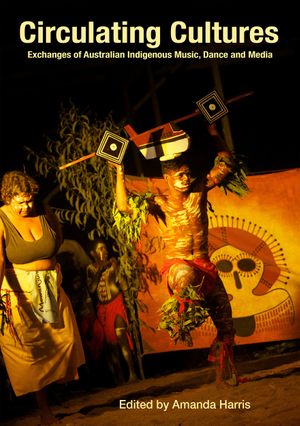
Circulating Cultures: Exchanges of Australian Indigenous Music, Dance and Media
Circulating Cultures is an edited book about the transformation of cultural materials through the Australian landscape. The book explores cultural circulation, exchange and transit, through events such as the geographical movement of song series across the Kimberley and Arnhem Land; the transformation of Australian Aboriginal dance in the hands of an American choreographer; and the indigenisation of symbolic meanings in heavy metal music. Circulating Cultures crosses disciplinary boundaries, with contributions from historians, musicologists, linguists and dance historians, to depict shifts of cultural materials through time, place and interventions from people. It looks at the way Indigenous and non-Indigenous performing arts have changed through intercultural influence and collaboration.
Chs Toolkit: Training Group Leaders How To include People With Chronic Disease in Community Activities
The purpose of this package is to support you to improve the inclusion of people with chronic disease in community activities in your local area. It contains information and resources to help you to plan, deliver and evaluate educational activities with your local community. The first section details the aim, rationale and background for the development of this package. The overall aim of this package is to educate community group leaders about chronic disease issues. Community leaders equipped with such knowledge will be better able to support people with chronic disease to manage their conditions while encouraging their participation in community group activities.

Chs Guide: How To include People With Chronic Disease in Community Activities
This guide provides community group leaders with useful information and strategies to assist them in welcoming people with chronic disease to their activities. Group leaders may be enthusiasts in their specific activity. They may be fitness instructors or committee members, paid or voluntary, qualified or unqualified.
China’s New Place in a World in Crisis: Economic, Geopolitical and Environmental Dimensions
The world and China’s place in it have been transformed over the past year. The pressures for change have come from the most severe global financial crisis ever. The crisis has accelerated China’s emergence as a great power. But China and its global partners have yet to think or work through the consequences of its new position for the governance of world affairs. China’s New Place in a World in Crisis discusses and provides in-depth analysis of the following questions. How have China’s growth prospects been affected by the global crisis? How will the crisis and China’s response to it impact China’s major domestic issues, such as industrialisation, urbanisation and the reform of the state-owned sector of the economy? How will the crisis and the international community’s response to it affect the rapidly emerging new international order? What will be China’s, and other major developing countries’, new role? Can China and the world find a way of breaking the nexus between economic growth and environmental sustainability — especially on the issue of climate change?
China’s Domestic Transformation in a Global Context
The phrase ‘New Normal’ captures the ongoing shift in the pattern and drivers of China’s economic growth. China’s new growth rate is both slower and imposing difficult structural change. These new economic conditions are challenging yet offer opportunities for China and its economic partners. Reforms must be deepened but also make growth more inclusive and environmentally sustainable, over this decade and beyond. This year’s Update offers both global context and domestic insight into this challenging new phase of China’s domestic economic transformation. How are policymakers elevating migrant workers concurrent with increasing consumption? Is China’s government spending enough on education and R&D to ensure it can achieve its aspirations to ascend the global manufacturing value chain and avoid the middle-income trap? Are energy market reforms reducing or increasing the price of gas and electricity in China? What are the consequences of China’s financial reforms and expanding Renminbi trading for foreign banks? What does China’s new growth model mean for the international resources economy and for Africa? Do SOEs face market conditions and are they dominating China’s fast-rising outbound investment? What is China’s strategy for navigating fragmented international trade policy negotiations?

Berufsbildung, eine Renaissance?: Motor für Innovation, Beschäftigung, Teilhabe, Aufstieg, Wohlstand, …
The potential role of vocational education in Austria, Germany and Switzerland was the topic of the Fifth Austrian Conference on Vocational Education and Training Research 2016 (5. Österreichische Berufsbildungsforschungskonferenz 2016). The debate revolved around the expectations of vocational education, for example whether it promotes social integration and mobility, if it can be understood as a driver of innovation and whether it is capable of providing employment impulses.

China & ANU: Diplomats, adventurers, scholars
The Pacific War and its aftermath radically transformed Australian perceptions of what was then called the ‘Near North’. Many recognised that in the postwar world Australia’s strategic interests and economic fortunes called for a new understanding of Asia and the Pacific. China loomed large in these calculations. Based on extensive research and featuring rare archival documents and photographs, China & ANU introduces the diplomats, adventurers and scholars who contributed to Australia’s engagement with China, the ‘Chinese Commonwealth’ and our region from the 1940s-1950s. In particular, this book focusses on the interconnection between Australia’s first diplomat-scholars in China and the founding of Chinese Studies at the newly established Australian National University.
Change!: Combining Analytic Approaches with Street Wisdom
Change happens all the time, so why is driving particular change generally so hard? Why are the outcomes often unpredictable? Are some types of change easier to achieve than others? Are some techniques for achieving change more effective than others? How can change that is already in train be stopped or deflected? Knowledge about change is fragmented and there is nowhere in the academic or practice worlds that provides comprehensive answers to these and other questions. Every discipline and practice area has only a partial view and there is not even a map of those different perspectives. The purpose of this book is to begin the task of developing a comprehensive approach to change by gathering a variety of viewpoints from the academic and practice worlds.
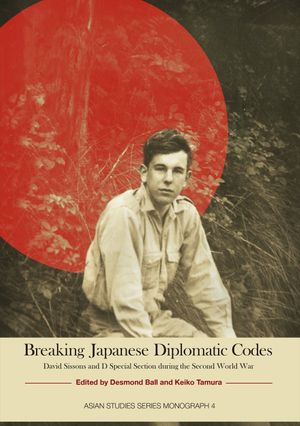
Breaking Japanese Diplomatic Codes: David Sissons and D Special Section during the Second World War
During the Second World War, Australia maintained a super-secret organisation, the Diplomatic (or ‘D’) Special Section, dedicated to breaking Japanese diplomatic codes. The Section has remained officially secret as successive Australian Governments have consistently refused to admit that Australia ever intercepted diplomatic communications, even in war-time.
This book recounts the history of the Special Section and describes its code-breaking activities. It was a small but very select organisation, whose ‘technical’ members came from the worlds of Classics and Mathematics. It concentrated on lower-grade Japanese diplomatic codes and cyphers, such as J-19 (FUJI), LA and GEAM. However, towards the end of the war it also worked on some Soviet messages, evidently contributing to the effort to track down intelligence leakages from Australia to the Soviet Union.
This volume has been produced primarily as a result of painstaking efforts by David Sissons, who served in the Section for a brief period in 1945. From the 1980s through to his death in 2006, Sissons devoted much of his time as an academic in the Department of International Relations at ANU to compiling as much information as possible about the history and activities of the Section through correspondence with his former colleagues and through locating a report on Japanese diplomatic codes and cyphers which had been written by members of the Section in 1946. Selections of this correspondence, along with the 1946 report, are reproduced in this volume. They comprise a unique historical record, immensely useful to scholars and practitioners concerned with the science of cryptography as well as historians of the cryptological aspects of the war in the Pacific.
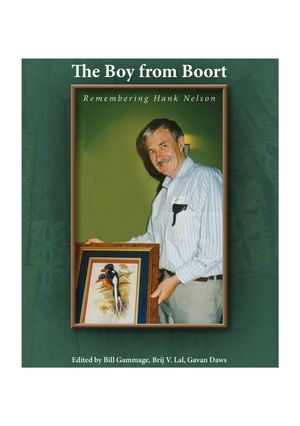
The Boy from Boort
Hank Nelson was an academic, film-maker, teacher, graduate supervisor and university administrator. His career at The Australian National University (ANU) spanned almost 40 years of notable accomplishment in expanding and deepening our understanding of the history and politics of Papua New Guinea, the experience of Australian soldiers at war, bush schools and much else. This book is a highly readable tribute to him, written by those who knew him well, including his students, and also contains wide-ranging works by Hank himself. –Professor Stewart Firth, ANU.
A Background to Primary School Science
The Australian Academy of Science has had a long standing interest in the provision of science education to Australian school students. Recognising that skills and attitudes in science are acquired at an early age, the Academy in 1994 launched a major program in science education at primary school level under the title Primary Investigations. Since science teachers at primary and lower secondary levels come from a wide range of backgrounds and many of them have not studied all the science subjects in detail, I have tried here to provide a broad survey of what is known about the world from a scientific perspective. The material presented, however, is not what teachers should expect to teach, but rather a much broader background that should help them to place school science and technology studies into a global context.
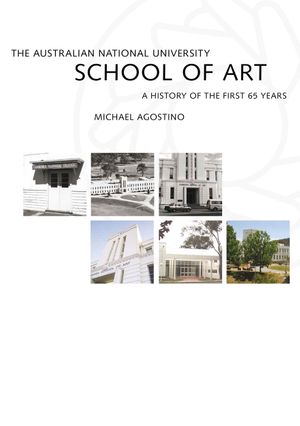
The Australian National University School of Art: a History of The First 65 Years
The ANU School of Art has built an international reputation as a leader in visual arts, attracting staff and students from around Australia and the world. it has an active exhibition program; regular visits from distinguished national and international artists; overseas student exchange; open art access classes and co-operative arrangements with many other areas of ANU research and teaching. This volume presents the history of the ANU School of Art, from its humble beginnings as part of the Canberra Technical College in Kingston, to its evolution to stand on the world stage as part of one of Australia’s top ranked universities playing an important role in the teaching of research of Australian visual arts, crafts and design.
Australian Department Heads Under Howard: Career Paths and Practice: Collected Articles from The Canberra Times
The articles in this collection were first published in the Canberra Times between 14 November 2005 and 22 April 2006 in a slightly different format. In some cases two articles were published on the one secretary. These have been combined into one and minor edits and corrections have been made. The articles have not been updated to take account of events since they were first published.
Australia and Latin America: Challenges and Opportunities in the New Millennium
This is a good time to reflect on opportunities and challenges for Australia in Latin America. Impressive economic growth and opportunities for trade and investment have made Latin America a dynamic area for Australia and the Asia Pacific region. A growing Latin American population, Australia’s attractiveness to Latin American students, a fascination with the cultural vibrancy of the Americas and an awareness of Latin America’s increasingly independent stance in politics and economic diplomacy, have all contributed to raising the region’s profile. This collection of essays provides the first substantial introduction to Australia’s evolving engagement with Latin America, identifying current trends and opportunities, and making suggestions about how relationships in trade, investment, foreign aid, education, culture and the media could be strengthened.