
Open Access Books
Professional Social Work in Australia
This is an unchanged republication of the first historical account of the social work profession in Australia. It traces the development of social work education and professional social work in the larger, more industrialised societies overseas before the same developments began in Australia in the late 1920s, and it notes the part played by overseas influence in the subsequent 30-odd years. The book concentrates on the development of training bodies and their courses, the spread of qualified social workers into various fields of employment in Australia’s expanding health and welfare services, and the growth of professional associations and their programmes. The author assesses the occupational group in terms of accepted attitudes towards the established professions. He concludes with a discussion of major contemporary issues facing the Australian social work profession.
The Socialist Way of Life in Siberia: Transformation in Buryatia
The Buryats are a Mongolian population in Siberian Russia, the largest indigenous minority. The Socialist Way of Life in Siberia presents the dramatic transformation in their everyday lives during the late twentieth century: challenges the common notion that the process of modernization during the later Soviet period created a Buryat national assertiveness rather than assimilation or support for the state.
Beyond the state: The colonial medical service in British Africa
The Colonial Medical Service was the personnel section of the Colonial Service, employing the doctors who tended to the health of both the colonial staff and the local populations of the British Empire. Although the Service represented the pinnacle of an elite government agency, its reach in practice stretched far beyond the state, with the members of the African service collaborating, formally and informally, with a range of other non-governmental groups. This collection of essays on the Colonial Medical Service of Africa illustrates the diversity and active collaborations to be found in the untidy reality of government medical provision. The authors present important case studies covering former British colonial dependencies in Africa, including Kenya, Malawi, Nigeria, Tanzania, Uganda and Zanzibar. They reveal many new insights into the enactments of colonial policy and the ways in which colonial doctors negotiated the day-to-day reality during the height of imperial rule in Africa.
Private Enterprise in China
“The Chinese economy is currently undergoing a profound institutional transformation—a quiet revolution. In a regulated environment geared to the requirements of state-owned enterprises, the successs of the private sector as the main focus for economic growth is remarkable. State-owned enterprises are currently being restructured based on market conditions in which private firms are now permitted to play an important role. Fascinated by the implications of this reform within the Chinese economy, the Asia-Pacific School of Economics and Management of The Australian National University, in conjunction with the China Center for Economic Research of Peking University research team, conducted a large sample survey. Four study sites were chosen: Beijing, Chengdu, Shunde and Wenzhou. Leading economists analyse the nature and dynamics of private sector reform within the Chinese economy and make recommendations for policy which support opportunities for growth and investment. This work, originally published by Asia Pacific Press, is reproduced here in the interests of maintaining open access to high-quality academic works no longer in print.”
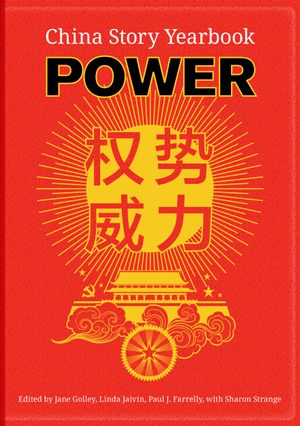
Power
“In 2018, the People’s Republic of China (PRC) was, by most measures, more powerful than at any other time in its history and had become one of the most powerful countries in the world. Its economy faced serious challenges, including from the ongoing ‘trade war’ with the US, but still ranked as the world’s second largest. Its Belt and Road Initiative, meanwhile, continued to carve paths of influence and economic integration across several continents. A deft combination of policy, investment, and entrepreneurship has also turned the PRC into a global ‘techno-power’. It aims, with a good chance of success, at becoming a global science and technology leader by 2049 – one hundred years from the founding of the PRC. In surveying the various ways in which the Party-state wields its hard, soft, and sharp power, the China Story Yearbook: Power offers readers a sense of the diversity of power at work both in China and abroad. Citizens of the PRC have long negotiated the state’s influence; increasingly, diaspora communities and other actors are now being subject to its might. As with previous editions in the series, we place important developments in historical context, and adopt a cross-disciplinary approach: it is our view that economy and politics cannot be divorced from culture, history, and society. The Yearbook provides accessible analysis of the main events and trends of the year and is an essential tool for understanding China’s growing power and influence around the world. “
Population Ageing and Australia’s Future
“This volume provides evidence from many of Australia’s leading scholars from a range of social science disciplines to support policies that address challenges presented by Australia’s ageing population. It builds on presentations made to the 2014 Symposium of the Academy of the Social Sciences in Australia. The material is in four parts: Perspectives on Ageing; Population Ageing: Global, regional and Australian perspectives; Improving Health and Wellbeing; Responses by Government and Families/Individuals. ‘The Academy of the Social Sciences in Australia sees this volume as a major contribution to improving our understanding of Australia’s population ageing. Social science research in this area truly underpins our ability as a nation to manage such demographic change, and its consequences for the economy and society. Such knowledge helps ensure that our citizens can live even better lives.’ — Glenn Withers, President, ASSA”
Popular Music, Stars and Stardom
A popular fascination with fame and stardom has existed in Western culture since the late eighteenth century; a fascination that, in the twenty‑first century, reaches into almost every facet of public life. The pervasive nature of stardom in modern society demands study from the perspectives of a range of distinct but thematically connected disciplines. The exploration of intersections between broader considerations of stardom and the discourses of popular music studies is the genesis for this volume. The chapters collected here demonstrate the variety of work currently being undertaken in stardom studies by scholars in Australia. The contributions range from biographical considerations of the stars of popular music, contributions to critical discourses of stardom in the industry more broadly, and the various ways in which the use of astronomical metaphors, in both cultural commentary and academic discourse, demonstrate notions of stardom firmly embedded in popular music thought. Not only do these chapters represent a range of perspectives on popular music, stars and stardom, they provide eloquent and innovative contributions to the developing discourse on stardom in popular music.
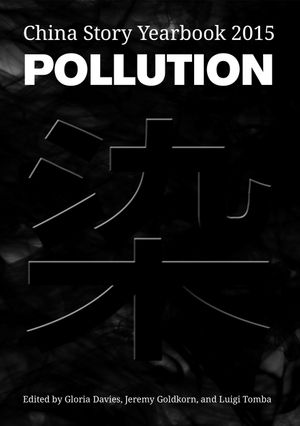
Pollution: China Story Yearbook 2015
Environmental pollution poses serious challenges for China, including to its economy as well as public health. The China Story Yearbook 2015: Pollution looks at how China’s Communist Party-state addresses these problems and how Chinese citizens have coped with and expressed their concerns about living with chronic, worsening pollution. This Yearbook also explores the broader ramifications of pollution in the People’s Republic for culture, society law and social activism, as well as the Internet, language, thought, and approaches to history. It looks at how it affects economic and political developments, urban change, and China’s regional and global posture. The Chinese Communist Party, led by ‘Chairman of Everything’ Xi Jinping, meanwhile, has subjected mainland society to increasingly repressive control in its new determination to rid the country of Western ‘spiritual pollutants’ while achieving cultural purification through ‘propaganda and ideological work’. To adulterate, contaminate, spoil or violate—these are among the metaphorical and literal connotations of pollution expressed in this Yearbook via the character ran 染, which forms part of the word for pollution in Chinese, wuran 污染. As the world increasingly relies on economic ties with China, the complexities of China’s one-party system and the Chinese government’s attitudes towards ‘pollution’ are of increasing global significance.
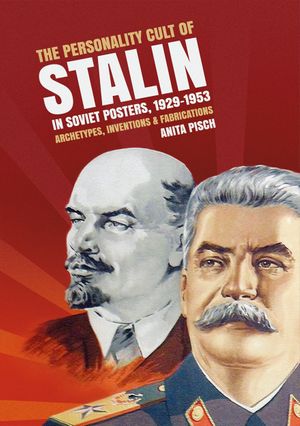
The personality cult of Stalin in Soviet posters, 1929–1953: Archetypes, inventions and fabrications
From 1929 until 1953, Iosif Stalin’s image became a central symbol in Soviet propaganda. Touched up images of an omniscient Stalin appeared everywhere: emblazoned across buildings and lining the streets; carried in parades and woven into carpets; and saturating the media of socialist realist painting, statuary, monumental architecture, friezes, banners, and posters. From the beginning of the Soviet regime, posters were seen as a vitally important medium for communicating with the population of the vast territories of the USSR. Stalin’s image became a symbol of Bolshevik values and the personification of a revolutionary new type of society. The persona created for Stalin in propaganda posters reflects how the state saw itself or, at the very least, how it wished to appear in the eyes of the people. The ‘Stalin’ who was celebrated in posters bore but scant resemblance to the man Iosif Vissarionovich Dzhugashvili, whose humble origins, criminal past, penchant for violent solutions and unprepossessing appearance made him an unlikely recipient of uncritical charismatic adulation. The Bolsheviks needed a wise, nurturing and authoritative figure to embody their revolutionary vision and to legitimate their hold on power. This leader would come to embody the sacred and archetypal qualities of the wise Teacher, the Father of the nation, the great Warrior and military strategist, and the Saviour of first the Russian land, and then the whole world. This book is the first dedicated study on the marketing of Stalin in Soviet propaganda posters. Drawing on the archives of libraries and museums throughout Russia, hundreds of previously unpublished posters are examined, with more than 130 reproduced in full colour. The personality cult of Stalin in Soviet posters, 1929–1953 is a unique and valuable contribution to the discourse in Stalinist studies across a number of disciplines.
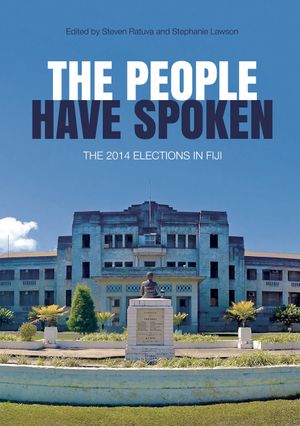
The People Have Spoken: The 2014 Elections in Fiji
The September 2014 elections in Fiji was one of the most anticipated in the history of the country, coming after eight years of military rule and under a radically new constitution that introduced a system of proportional representative (PR) and without any reserved communal seats. The election was won overwhelmingly by FijiFirst, a party formed by 2006 coup leader Frank Bainimarama. He subsequently embarked on a process of shifting the political configuration of Fijian politics from inter-ethnic to trans-ethnic mobilisation. The shift has not been easy in terms of changing people’s perceptions and may face some challenges in the longer term, despite Bainimarama’s clear victory in the polls. Ethnic consciousness has the capacity to become re‑articulated in different forms and to seek new opportunities for expression. This book explores these and other issues surrounding the 2014 Fiji elections in a collection of articles written from varied political, intellectual and ideological positions.
Party Rules?: Dilemmas of political party regulation in Australia
“Trust in political parties has never been lower, but we have more and more of them, to the point where voters need magnifying sheets to read ballot papers. What is the relationship between party regulation and the nature of our democracy? How is it that parties have been able to gather so many public resources yet with so little scrutiny of their affairs? This is the first book on party regulation in Australia. It covers a wide range of issues, from party donations to candidate selection, from expectations of parties in a representative democracy to the reluctance to regulate and the role of the courts where legislators fear to tread. ‘The regulation of political parties is one of the most important, but unexplored areas of Australian electoral policy. This important book fills that gap in providing a stimulating and insightful analysis of the pitfalls and potential solutions in this area.’ — Professor George Williams AO”
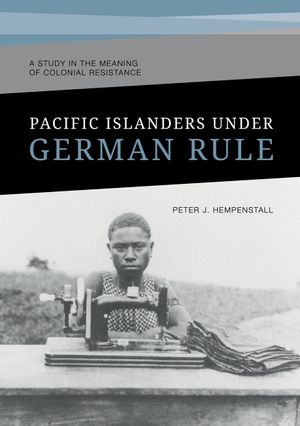
Pacific Islanders Under German Rule: A Study in the Meaning of Colonial Resistance
This is an important book. It is a reprint of the first detailed study of how Pacific Islanders responded politically and economically to their rulers across the German empire of the Pacific. Under one cover, it captures the variety of interactions between the various German colonial administrations, with their separate approaches, and the leaders and people of Samoa in Polynesia, the major island centre of Pohnpei in Micronesia and the indigenes of New Guinea. Drawing on anthropology, new Pacific history insights and a range of theoretical works on African and Asian resistance from the 1960s and 1970s, it reveals the complexities of Islander reactions and the nature of protests against German imperial rule. It casts aside old assumptions that colonised peoples always resisted European colonisers. Instead, this book argues convincingly that Islander responses were often intelligent and subtle manipulations of their rulers’ agendas, their societies dynamic enough to make their own adjustments to the demands of empire. It does not shy away from major blunders by German colonial administrators, nor from the strategic and tactical mistakes of Islander leaders. At the same time, it raises the profile of several large personalities on both sides of the colonial frontier, including Lauaki Namulau’ulu Mamoe and Wilhelm Solf in Samoa; Henry Nanpei, Georg Fritz and Karl Boeder in Pohnpei; or Governor Albert Hahl and Po Minis from Manus Island in New Guinea.
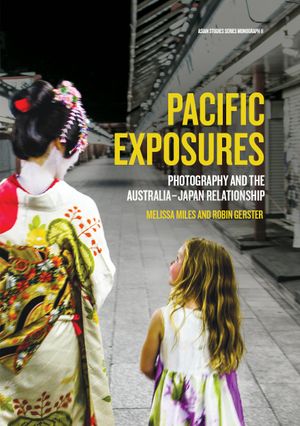
Pacific Exposures: Photography and the Australia–Japan Relationship
“Photography has been a key means by which Australians have sought to define their relationships with Japan. From the fascination with all things Japanese in the late nineteenth century, through the era of ‘White Australia’, the bitter enmity of the Pacific War, the path to reconciliation in the post-war period and the culturally complicated bilateralism of today, Australians have used their cameras to express a divided sense of conflict and kinship with a country that has by turns fascinated and infuriated. The remarkable photographs collected and discussed here for the first time shed new light on the history of Australia’s engagement with its most important regional partner. Pacific Exposures argues that photographs tell an important story of cultural production, response and reaction—not only about how Australians have pictured Japan over the decades, but how they see their own place in the Asia-Pacific. ‘Pacific Exposures presents the first study of the photographic exchanges between Australia and Japan—its photographers, personalities, motivations, anxieties and tensions—based on a diverse range of archival materials, interviews, and well-chosen photographs.’ — Dr Luke Gartlan, University of St Andrews ‘[Pacific Exposures] will become a key text on Australia’s interactions with Japan, and the way that photographs can inform cross-cultural relations through their production, consumption and circulation.’ — Prof. Kate Darian-Smith, University of Tasmania”
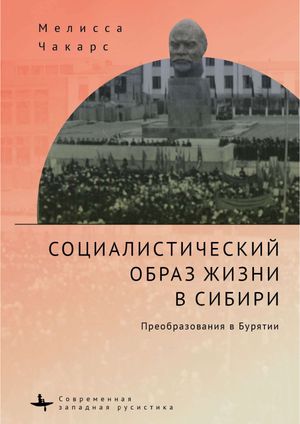
The Socialist Way of Life in Siberia: Transformation in Buryatia
The Buryats are a Mongolian population in Siberian Russia, the largest indigenous minority. The Socialist Way of Life in Siberia presents the dramatic transformation in their everyday lives during the late twentieth century: challenges the common notion that the process of modernization during the later Soviet period created a Buryat national assertiveness rather than assimilation or support for the state.
Opening Government: Transparency and Engagement in the Information Age
“Transparency and citizen engagement remain essential to good government and sound public policy. Indeed, they may well be the key to restoring trust in government itself, currently at an all-time low in Australia. It is ironic, then, that this has occurred at a time when the technological potential for information dissemination and interaction has never been greater. Opening Government: Transparency and Engagement in the Information Age explores new horizons and scenarios for better governance in the context of the new information age, focusing on the potentials and pitfalls for governments (and governance more broadly) operating in the new, information-rich environment. Its contributors, a range of international and Australian governance academics and practitioners, ask what are the challenges to our governing traditions and practices in the new information age, and where can better outcomes be expected using future technologies. They explore the fundamental ambiguities extant in opening up government, with governments intending to become far more transparent in providing information and in information sharing, but also more motivated to engage with other data sources, data systems and social technologies.”
New Worlds from Below: Informal life politics and grassroots action in twenty-first-century Northeast Asia
In Asia today, the grand ideologies of the past have lost their power over the popular imagination. Even in many of the region’s democracies, popular engagement in the political process faces profound challenges. Yet amidst this landscape of political disenchantment, groups of ordinary people across Asia are finding new ways to take control of their own lives, respond to threats to their physical and cultural survival, and build better futures. This collection of essays by prominent scholars and activists traces the rise of a quiet politics of survival from the villages of China to Japan’s Minamata and Fukushima, and from the street art of Seoul and Hong Kong to the illegal markets of North Korea. Introducing an innovative conceptual framework, New Worlds from Below shows how informal grassroots politics in Northeast Asia is generating new ideas and practices that have region-wide and global relevance.
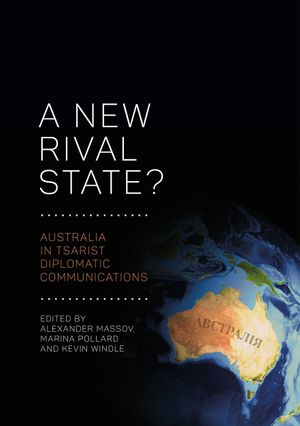
A New Rival State?: Australia in Tsarist Diplomatic Communications
“A New Rival State? is a unique collection of dispatches written in 1857–1917 by the Russian consuls in Melbourne to the Imperial Russian Embassy in London and the Russian Foreign Ministry in St Petersburg. Written by eight consuls, they offer a Russian view of the development of the settler colonies in the late nineteenth century and the first years of the federated Commonwealth of Australia. They cover the federalist movement, the changing domestic political situation, labour politics, the treatment of the Indigenous population, the ‘White Australia’ policy, Australia’s defensive capacity and foreign policy as part of the British Empire. The bulk of the material is drawn from the Russian-language collection The Russian Consular Service in Australia 1857–1917, edited by Alexander Massov and Marina Pollard (2014), using documents from the archive of the Russian Foreign Ministry.”
New Mana: Transformations of a Classic Concept in Pacific Languages and Cultures
‘Mana’, a term denoting spiritual power, is found in many Pacific Islands languages. In recent decades, the term has been taken up in New Age movements and online fantasy gaming. In this book, 16 contributors examine mana through ethnographic, linguistic, and historical lenses to understand its transformations in past and present. The authors consider a range of contexts including Indigenous sovereignty movements, Christian missions and Bible translations, the commodification of cultural heritage, and the dynamics of diaspora. Their investigations move across diverse island groups—Papua New Guinea, Solomon Islands, Vanuatu, Fiji, Tonga, Samoa, Hawai‘i, and French Polynesia—and into Australia, North America and even cyberspace. A key insight that the volume develops is that mana can be analysed most productively by paying close attention to its ethical and aesthetic dimensions. Since the late nineteenth century, mana has been an object of intense scholarly interest. Writers in many fields including anthropology, linguistics, history, religion, philosophy, and missiology have long debated how the term should best be understood. The authors in this volume review mana’s complex intellectual history but also describe the remarkable transformations going on in the present day as scholars, activists, church leaders, artists, and entrepreneurs take up mana in new ways.
New Directions in Strategic Thinking 2.0: ANU Strategic & Defence Studies Centre’s Golden Anniversary Conference Proceedings
“The Australian National University’s Strategic & Defence Studies Centre (SDSC) is Australia’s premier university-based strategic studies think tank. Fifty years after the Centre was founded in 1966, SDSC celebrated its continued research, publications, teaching and government advisory role with a two-day conference entitled ‘New Directions in Strategic Thinking 2.0’. The event saw the podium graced by many of the world’s premier thinkers in the strategic studies field. An evening between those tours to the lectern brought together academics, practitioners and other honoured guests at a commemorative dinner held beneath the widespread wings of the ‘G for George’ bomber in the Australian War Memorial—an event that included SDSC’s own Professor Desmond Ball AO making his last public appearance. Since SDSC’s 25th anniversary, the world has seen the collapse of the Soviet Union and the end of the Cold War. Bipolarity gave way to the emergence of the United States as the world’s sole superpower, a status many now see as under threat. Both the nature of the threats and identity of individual competitors has changed in the interim quarter-century. Non-state actors are presenting rising challenges to national governments. Meanwhile, a diminished Russia and far more wealthy China seek to reassert themselves. Never before has the call for reasoned innovative security studies thinking been more pronounced. Rarely has a group so able to offer that thought come together as was the case in July 2016. This book encapsulates the essence of this cutting-edge thinking and is a must read for those concerned with emerging strategic challenges facing Australia and its security partners.”
New Directions for Law in Australia: Essays in Contemporary Law Reform
For reasons of effectiveness, efficiency and equity, Australian law reform should be planned carefully. Academics can and should take the lead in this process. This book collects over 50 discrete law reform recommendations, encapsulated in short, digestible essays written by leading Australian scholars. It emerges from a major conference held at The Australian National University in 2016, which featured intensive discussion among participants from government, practice and the academy. The book is intended to serve as a national focal point for Australian legal innovation. It is divided into six main parts: commercial and corporate law, criminal law and evidence, environmental law, private law, public law, and legal practice and legal education. In addition, Indigenous perspectives on law reform are embedded throughout each part. This collective work—the first of its kind—will be of value to policy makers, media, law reform agencies, academics, practitioners and the judiciary. It provides a bird’s eye view of the current state and the future of law reform in Australia.
The Neoliberal State, Recognition and Indigenous Rights: New paternalism to new imaginings
The impact of neoliberal governance on indigenous peoples in liberal settler states may be both enabling and constraining. This book is distinctive in drawing comparisons between three such states—Australia, Canada and New Zealand. In a series of empirically grounded, interpretive micro-studies, it draws out a shared policy coherence, but also exposes idiosyncrasies in the operational dynamics of neoliberal governance both within each state and between them. Read together as a collection, these studies broaden the debate about and the analysis of contemporary government policy.The individual studies reveal the forms of actually existing neoliberalism that are variegated by historical, geographical and legal contexts and complex state arrangements. At the same time, they present examples of a more nuanced agential, bottom-up indigenous governmentality. Focusing on intense and complex matters of social policy rather than on resource development and land rights, they demonstrate how indigenous actors engage in trying to govern various fields of activity by acting on the conduct and contexts of everyday neoliberal life, and also on the conduct of state and corporate actors.
A National Asset: 50 Years of the Strategic and Defence Studies Centre
This volume commemorates the 50th anniversary of the Strategic and Defence Studies Centre (SDSC). The Centre is Australia’s largest body of scholars dedicated to the analysis of the use of armed force in its political context and one of the earliest generation of post-World War II research institutions on strategic affairs. The book features chapters replete with stories of university politics, internal SDSC activities, cooperation among people with different social and political values, and conflicts between others, as well as the Centre’s public achievements. It also details the evolution of strategic studies in Australia and the contribution of academia and defence intellectuals to national defence policy.

Narrow But Endlessly Deep: The struggle for memorialisation in Chile since the transition to democracy
On 11 September 1973, the Chilean Chief of the Armed Forces Augusto Pinochet overthrew the Popular Unity government of Salvador Allende and installed a military dictatorship. Yet this is a book not of parties or ideologies but public history. It focuses on the memorials and memorialisers at seven sites of torture, extermination, and disappearance in Santiago, engaging with worldwide debates about why and how deeds of violence inflicted by the state on its own citizens should be remembered, and by whom. The sites investigated — including the infamous National Stadium — are among the most iconic of more than 1,000 such sites throughout the country. The study grants a glimpse of the depth of feeling that survivors and the families of the detained-disappeared and the politically executed bring to each of the sites. The book traces their struggle to memorialise each one, and so unfolds their idealism and hope, courage and frustration, their hatred, excitement, resentment, sadness, fear, division and disillusionment. ‘This is a beautifully written book, a sensitive treatment of the issues and lives of those who have faced a great deal of loss, most often as unsung heroes, in what are now recognized as Chilean sites of memory. The book is a testament to people who have not been asked to speak, until Peter Read and Marivic Wyndham ask them to tell their stories. They do not shy away from hard tensions about memorialization, the difficulties of challenging a powerful state and the long and arduous struggles to ensure less powerful voices are heard.’ — Professor Katherine Hite, Frederick Ferris Thompson Chair of Political Science, Vassar College, USA.
The Moral Economy of Mobile Phones: Pacific Islands Perspectives
The moral economy of mobile phones implies a field of shifting relations among consumers, companies and state actors, all of whom have their own ideas about what is good, fair and just. These ideas inform the ways in which, for example, consumers acquire and use mobile phones; companies promote and sell voice, SMS and data subscriptions; and state actors regulate both everyday use of mobile phones and market activity around mobile phones. Ambivalence and disagreement about who owes what to whom is thus an integral feature of the moral economy of mobile phones. This volume identifies and evaluates the stakes at play in the moral economy of mobile phones. The six main chapters consider ethnographic cases from Papua New Guinea, Fiji and Vanuatu. The volume also includes a brief introduction with background information on the recent ‘digital revolution’ in these countries and two closing commentaries that reflect on the significance of the chapters for our understanding of global capitalism and the contemporary Pacific.
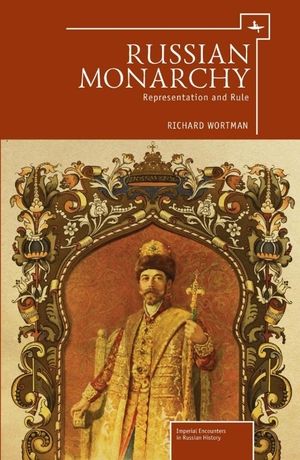
Russian Monarchy: Representation and Rule
This new volume from the author of Scenarios of Power explores the effect of the symbolic and mythical representations of the Russian imperial government on law, administrative practice, and concepts of national and imperial identities throughout centuries of monarchical rule. Richard Wortman demonstrates how the ideologies behind such representations shaped the thought patterns not only of the tsar and the imperial family but also of the Russian political and social elite. He characterizes the monarchy as an active agent in Russia’s political experience, one whose dominant role was resisting change until the inevitable collapse facing all absolute monarchies.
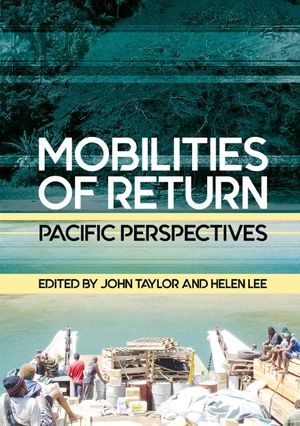
Mobilites of Return: Pacific Perspectives
“In recent decades, the term ‘mobility’ has emerged as a defining paradigm within the humanities. For scholars engaged in the multidisciplinary topics and perspectives now often embraced by the term Pacific Studies, it has been a much more longstanding and persistent concern. Even so, specific questions regarding ‘mobilities of return’—that is, the movement of people ‘back’ to places that are designated, however ambiguously or ambivalently, as ‘home’—have tended to take a back seat within more recent discussions of mobility, transnationalism and migration. This volume situates return mobility as a starting point for understanding the broader context and experience of human mobility, community and identity in the Pacific region and beyond. Through diverse case studies spanning the Pacific region, it demonstrates the extent to which the prospect and practice of returning home, or of navigating returns between multiple homes, is a central rather than peripheral component of contemporary Pacific Islander mobilities and identities everywhere.”

A Memory of Ice: The Antarctic Voyage of the Glomar Challenger
“In the southern summer of 1972/73, the Glomar Challenger was the first vessel of the international Deep Sea Drilling Project to venture into the seas surrounding Antarctica, confronting severe weather and ever-present icebergs. A Memory of Ice presents the science and the excitement of that voyage in a manner readable for non-scientists. Woven into the modern story is the history of early explorers, scientists and navigators who had gone before into the Southern Ocean. The departure of the Glomar Challenger from Fremantle took place 100 years after the HMS Challenger weighed anchor from Portsmouth, England, at the start of its four-year voyage, sampling and dredging the world’s oceans. Sailing south, the Glomar Challenger crossed the path of James Cook’s HMS Resolution, then on its circumnavigation of Antarctica in search of the Great South Land. Encounters with Lieutenant Charles Wilkes of the US Exploring Expedition and Douglas Mawson of the Australasian Antarctic Expedition followed. In the Ross Sea, the voyages of the HMS Erebus and HMS Terror under James Clark Ross, with the young Joseph Hooker as botanist, were ever present. The story of the Glomar Challenger’s iconic voyage is largely told through the diaries of the author, then a young scientist experiencing science at sea for the first time. It weaves together the physical history of Antarctica with how we have come to our current knowledge of the polar continent. This is an attractive, lavishly illustrated and curiosity-satisfying read for the general public as well as for scholars of science.”
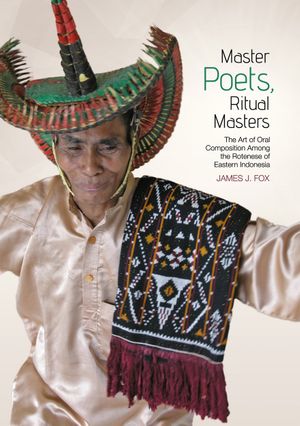
Master poets, ritual masters: The art of oral composition among the Rotenese of Eastern Indonesia
This is a study in oral poetic composition. It examines how oral poets compose their recitations. Specifically, it is a study of the recitations of 17 separate master poets from the Island of Rote recorded over a period of 50 years. Each of these poets offers his version of what is culturally considered to be the ‘same’ ritual chant. These compositions are examined in detail and their oral formulae are carefully compared to one another. Professor James J. Fox is an anthropologist who carried out his doctoral field research on the Island of Rote in eastern Indonesia in 1965–66. In 1965, he began recording the oral traditions of the island and developed a close association with numerous oral poets on the island. After many subsequent visits, in 2006, he began a nine-year project that brought groups of oral poets to Bali for week-long recording sessions. Recitations gathered over a period of 50 years are the basis for this book.

Managing Consultants. A practical guide for busy public sector managers
Public service cutbacks have increased reliance on consultants. But new legislation and rules governing the procurement of services from consultants are scattered over different legislative instruments. The first edition of this book attracted a record number of online hits. Busy public sector managers now have available to them an updated version that integrates an easy-to-follow, step-by-step guide that incorporates the many practical tips needed for successful procurement activity.
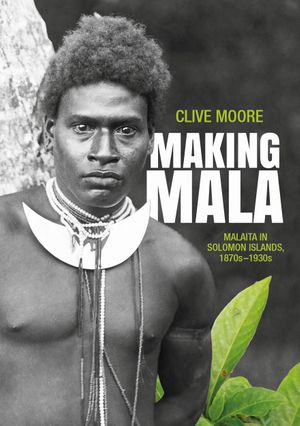
Making Mala: Malaita in Solomon Islands, 1870s–1930s
Malaita is one of the major islands in the Solomons Archipelago and has the largest population in the Solomon Islands nation. Its people have an undeserved reputation for conservatism and aggression. Making Mala argues that in essence Malaitans are no different from other Solomon Islanders, and that their dominance, both in numbers and their place in the modern nation, can be explained through their recent history. A grounding theme of the book is its argument that, far than being conservative, Malaitan religions and cultures have always been adaptable and have proved remarkably flexible in accommodating change. This has been the secret of Malaitan success. Malaitans rocked the foundations of the British protectorate during the protonationalist Maasina Rule movement in the 1940s and the early 1950s, have heavily engaged in internal migration, particularly to urban areas, and were central to the ‘Tension Years’ between 1998 and 2003. Making Mala reassesses Malaita’s history, demolishes undeserved tropes and uses historical and cultural analyses to explain Malaitans’ place in the Solomon Islands nation today.