
Books

35 Sonnets
While Portuguese author Fernando Pessoa is internationally now known mostly for his masterpiece The Book of Disquiet, he was also an outstanding poet. 35 of his sonnets are collected in this volume. – Summary by Carolin
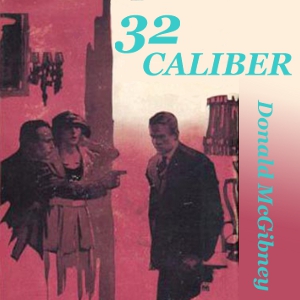
32 Caliber
A suspicious accident reveals itself to be a murder! Our story is narrated by a lawyer who turns detective in order to uncover the real murderer, and leads us on a chase through Bolshevik headquarters, country clubs, and a dry creek bed, before the real clues come to light. Up-in-the-air excitement! (Summary by Brenda Price)

30 American Poems
This is a sequel of sorts to 37 American Poems, one of my first solos. Concentration here is on late 19th to early 20th Century works by US poets. (Summary by BellonaTimes)
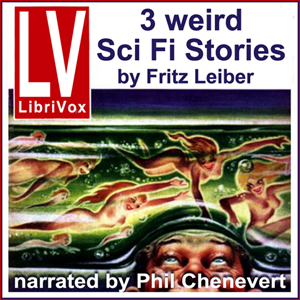
3 Weird SF Stories by Fritz Leiber
These are three of the strangest stories I could find by the very talented Fritz Leiber. And by strange I mean odd, weird, kinda creepy and yet wonderful. Not your normal Science Fiction here but then Leiber had an amazing imagination and these certainly made me stretch mine. – Summary by phil chenevert
3 SF Stories by Jack Williamson
Three classic SF stories by Jack Williamson: The Cosmic Express, The Pygmy Planet and Salvage in Space. All were published in Astounding Stories in the very early 1930’s. and all are fine examples of the far ranging imagination of science fiction writers of the day. – Summary by Phil Chenevert
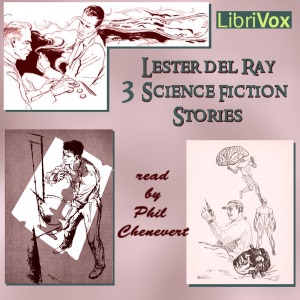
3 Science Fiction Stories by Lester del Ray
The quirky mind of famous SF writer Lester del Ray gives us three wonderful tales ranging from zombies (Dead Ringer), time travel (how do you convince your earlier self it is safe to get into the time machine, eh?)(…And It Comes Out Here) and eternal life (The Dwindling Years). Listen and enjoy.
3 Science Fiction Stories by Gerald Vance
Three Science Fiction stories by the great Gerald Vance: Monsoons of Death is a very nice blend of horror story and a study of true bravery on the planet Mars. A newly commissioned lieutenant finds out a lot about both! In Larson’s Luck, Vance takes us on a lighthearted jaunt into hot shot space ship pilots, piracy and the good part of breaking the rules. The last story, Vital Ingredient, takes the listener far into the future when the sport of boxing still has two muscled opponents battling it out in a ring, but they are simply puppets, every muscle, feint and jab controlled by ring side ‘managers’; ex fighters who have moved up. The story asks the question: is this how champions are made? and answers it of course in a most satisfying manner. Summary by Phil chenevert
3 Science Fiction Stories by Frank Herbert
As the title indicates, here are three SF stories by Frank Herbert, Missing LInk, originaly purlished in Astounding SF, 1959; Operation Haystack, also published in Astounding SF 1959; and Old Rambling House, published in Galaxy SF 1958. – Summary by Phil chenevert
3 Science Fiction Stories
These are three imaginative SF stories by an author I admire a lot, William Tenn. Venus is a Man’s World, (Galaxy Science Fiction, July 1951), Project Hush (Galaxy Science Fiction, 1954_ and Of All Possible Worlds. (Galaxy, Sept 1956) – Summary by phil chenevert
2 B R 0 2 B (version 2) & The Big Trip Up Yonder (version 5)
These two stories by Kurt Vonnegut were written over a decade apart but they are definitely connected. The Big Trip Up Yonder, published in Galaxy Science Fiction January 1954 is a comical yet scary description of what over population was going to do to society after aging was conquered and a simple daily dose of “anti-gerosone” would keep you forever the same age. Would Gramps EVER take ‘That Big Trip Up Yonder’, or would his hordes of descendants be stuck with him forever in a tiny apartment!? 2 B R 0 2 B, published in Worlds of If, January 1962 takes this basic situation many years into the future and a solution has been found. The population of the US has dropped from 80 billion to 40 million. Not what everyone would call a pretty solution, or the best solution, but nevertheless a solution to the population problem. I believe this is the type of story it is best to listen to, not describe, so enjoy. (Summary by Phil Chenevert)
Short Science Fiction Collection 070
Science fiction is a genre encompassing imaginative works that take place in this world or that of the author?s creation where anything is possible. The only rules are those set forth by the author. The speculative nature of the genre inspires thought and plants seeds that have led to advances in science. The genre can spark an interest in the sciences and is cited as the impetus for the career choice of many scientists. It is a playing field to explore social perspectives, predictions of the future, and engage in adventures unbound into the richness of the human mind. – Summary by A. Gramour

Short Science Fiction Collection 062
Science fiction is a genre encompassing imaginative works that take place in this world or that of the author?s creation where anything is possible. The only rules are those set forth by the author. The speculative nature of the genre inspires thought and plants seeds that have led to advances in science. The genre can spark an interest in the sciences and is cited as the impetus for the career choice of many scientists. It is a playing field to explore social perspectives, predictions of the future, and engage in adventures unbound into the richness of the human mind. -A. Gramour
Short Science Fiction Collection 020
Science Fiction is speculative literature that generally explores the consequences of ideas which are roughly consistent with nature and scientific method, but are not facts of the author?s contemporary world. The stories often represent philosophical thought experiments presented in entertaining ways. Protagonists typically ?think? rather than ?shoot? their way out of problems, but the definition is flexible because there are no limits on an author?s imagination. The reader-selected stories presented here were written prior to 1962 and became US public domain texts when their copyrights expired. (Summary by Gregg Margarite)
Short Science Fiction Collection 009
Science fiction (abbreviated SF or sci-fi with varying punctuation and case) is a broad genre of fiction that often involves sociological and technical speculations based on current or future science or technology. This is a reader-selected collection of short stories that entered the US public domain when their copyright was not renewed. Summary by Cori Samuel, with Wikipedia input.
Short Science Fiction Collection 002
Science fiction (abbreviated SF or sci-fi with varying punctuation and case) is a broad genre of fiction that often involves sociological and technical speculations based on current or future science or technology. This is the second volume of reader-selected collection of short stories originally published between 1941 and 1963, that entered the US public domain when their copyright was not renewed. (Introduction by Cori Samuel with input from Wikipedia.) Note: This collection originally included a tenth story, The Burning Bridge by Poul Anderson. That recording was removed in November 2011 because of a copyright claim.
2 B R 0 2 B (Dramatic Reading)
Kurt Vonnegut, Jr. was a prolific and genre-bending American novelist known for works blending satire, black comedy, and science fiction, such as Slaughterhouse-Five, Cat’s Cradle, and Breakfast of Champions. 2 B R 0 2 B is a satiric short story that imagines life (and death) in a future world where aging has been “cured” and population control is mandated and administered by the government. (Summary by Wikipedia and Laurie Anne Walden) This recording is done as a dramatic reading. Characters: Narrator: Denny Sayers Hospital Orderly: Mark F. Smith Painter: Alan Davis-Drake Leora Duncan: Laurie Anne Walden Dr. Hitz: Michael Yard Wehling: Julian Jamison Federal Bureau of Termination hostess: Kara Shallenberg

1916: First Chapters Collection
These are first chapters to books first published in 1916. Readers, following is a tentative list culled from Wikipedia’s article on the year in Literature; most of the works are to be found on Project Gutenberg. – Summary by Matt Pierard
1914, and Other Poems
This is a volume of poems by Rupert Brooke, named after the famous poems “1914”, written during and about World War I. Brooke himself died while taking part in a naval expedition to the Dardanelles, and was buried in Greece. The poems he wrote during the war were published posthumously and are the poems for which he is best-known today. This volume also contains poems written during a journey around the Pacific, and a number of miscellaneous poems. – Summary by Carolin

1900 or The Last President
The year is 1896. The United States is rocked by the election of an unlikely president. On election night, riots broke out in the streets of New York. The city was paralyzed with dread. Mobs organized under the lead of Anarchists and Socialists. Farther South, people celebrated. This was a President elected by the working class and he was a President who followed through with his commitment to fight for the rights of the people. This president would fight to end the enslavement of the people by money lenders, big bankers, corporations and government overtax. But can he be successful in a society that is rapidly absorbing socialist ideologies? – Summary by CJ Plogue
17th- and 18th-Century Poems by Women
This class project is a collection of seventeenth- and eighteenth-century verse by women, focusing first on women as writers. It has been coordinated by the students’ teacher, Tonya Howe.
1601: Conversation, as it was by the Social Fireside, in the Time of the Tudors (Version 2)
Please note: this recording contains strong language. Also known simply as “1601”, this is a humorously risque work by Mark Twain, first published anonymously in 1880, and finally acknowledged by the author in 1906. (Summary by John Greenman & Wikipedia)
1601: Conversation, as it was by the Social Fireside, in the Time of the Tudors
Please note: this recording contains strong language. “1601,” wrote Mark Twain, “is a supposititious conversation which takes place in Queen Elizabeth’s closet in that year, between the Queen, Ben Jonson, Beaumont, Sir Walter Raleigh, the Duchess of Bilgewater, and one or two others … If there is a decent word findable in it, it is because I overlooked it.” 1601 depicts a highfalutin and earthy discussion between the Queen and her court about farting and a variety of sexual peccadillos, narrated disapprovingly and sanctimoniously by the Queen’s Cup-Bearer, an eyewitness at “the Social Fireside.” [Summary by Denny Sayers] Cast: Introduction ? Denny Sayers Narrator ? Jonathan Horniblow The Queen ? miette Beaumonte ? David Lawrence Lady Margery Boothy ? Kristin Hughes Lady Alice Dilberry, Ben Jonson, Lord Bacon ? Ruth Golding Lady Helen ? Philippa Sir Walter Ralegh ? Mark F. Smith Shaxpur ? Andy Minter
12 Creepy Tales
This is a collection of 12 creepy stories by that master of creepiness, Poe. The Black Cat; The Fall of the House of Usher, The Raven; The Tell Tale Heart, The Masque of the Red Death, the Premature Burial and six others that are a shuddering delight to read and listen to. Turn off the lights, settle down and hear these stories read to you as only LibriVox readers can perform them. (Summary by Phil Chenevert)
1001 Questions and Answers on General History
A book for students of history to test their knowledge and to direct their studies. As the title tells us, this is a book of 1001 questions, with answers, regarding world history. – Summary by KevinS
1001 Questions and Answers on English Grammar
A book for students interested in finding out how many things about the English language have changed, and how many have weathered the test of time. – Summary by jasonb
1000 Things Worth Knowing
Part almanac, part encyclopedia, part dictionary, Nathaniel C. Fowler, Jr. gives us his idea of important, but sometimes obscure, facts that he thinks should be in our bank of general knowledge. He includes a large section on medical emergency and health. Items are arranged in alphabetical order, so there is no logical presentation, but reference is made easy. Or, it is just interesting browsing, and a glimpse into the world of the early twentieth century. – Summary by Larry Wilson
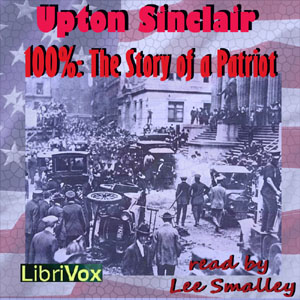
100%: The Story of a Patriot
“100%: The Story of a Patriot” dramatically recounts the adventures of a poor uneducated young man who lives by his wits and guile, as he becomes politicized during his involvement in the sometimes violent struggle between American ?patriots? and ?Reds?. The author wrote in the Appendix, which is not included in this recording: “Everything that has social significance is truth…. Practically all the characters in “100%” are real persons.” This exciting, polemical novel was published in 1920. Sinclair (1878-1968) wrote nearly 100 novels, many based on industrial abuse. One of his best known, “The Jungle”, was influential in initiating the regulation of food safety in the United States. He won the Pulitzer Prize for Fiction in 1943. (Lee Smalley)
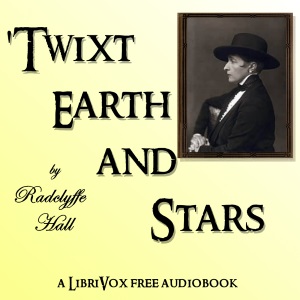
‘Twixt Earth and Stars
This is a volume of poetry by Radclyffe Hall. The poet and novelist led a highly scandalous lifestyle for the norms of her contemporary society, living openly lesbian in Germany and England. Some of the poems in this volume are also love poems to other women, a fact which was not generally known at the time the book was published. – Summary by Carolin
Kayray’s Storytime
A collection of my favorite short children’s stories and rhymes. Each book can be found online at Gutenberg.org if you wish to look at the wonderful pictures while you listen! (Summary by Kara)