
Books

The Book of Princes and Princesses by Mrs. Lang
All the stories about Princes and Princesses in this book are true stories, and were written by Mrs. Lang, out of old books of history. There are some children who make life difficult by saying, first that stories about fairies are true, and that they like fairies; and next that they do not like true stories about real people, who lived long ago. I am quite ready to grant that there really are such things as fairies, because, though I never saw a fairy, any more than I have seen the little animals which lecturers call molecules and ions, still I have seen people who have seen fairies—truthful people. Now I never knew a lecturer who ventured to say that he had seen an ion or a molecule. It is well known, and written in a true book, that the godmother of Joan of Arc had seen fairies, and nobody can suppose that such a good woman would tell her godchild what was not true—for example, that the squire of the parish was in love with a fairy and used to meet her in the moonlight beneath a beautiful tree. In fact, if we did not believe in fairy stories, who would care to read them? Yet only too many children dislike to read true stories, because the people in them were real, and the things actually happened.

Dead Men’s Money by J. S. Fletcher
The very beginning of this affair, which involved me, before I was aware of it, in as much villainy and wickedness as ever man heard of, was, of course, that spring evening, now ten years ago, whereon I looked out of my mother’s front parlour window in the main street of Berwick-upon-Tweed and saw, standing right before the house, a man who had a black patch over his left eye, an old plaid thrown loosely round his shoulders, and in his right hand a stout stick and an old-fashioned carpet-bag. He caught sight of me as I caught sight of him, and he stirred, and made at once for our door.

One Thousand Ways To Make Money by Page Fox
The object of this work is to help people who are out of employment to secure a situation; to enable persons of small means to engage in business and become their own employers; to give men and women in various lines of enterprise ideas whereby they may succeed; and to suggest new roads to fortune by the employment of capital. The author has been moved to the undertaking by the reflection that there exists nowhere a book of similar character. There have indeed been published a multitude of books which profess to tell men how to succeed, but they all consist of merely professional counsel expressed in general terms. We are told that the secrets of success are “industry and accuracy,” “the grasping of every opportunity,” “being wide awake,” “getting up early and sitting up late,” and other cheap sayings quite as well known to the taker as to the giver. Even men who have made their mark, when they come to treat of their career in writing, seem unable to give any concrete suggestions which will prove helpful to other struggling thousands, but simply tell us they won by “hard work,” or by “close attention to business.”

Motor Boat Boys Among the Florida Keys; Or, The Struggle for the Leadership by Louis Arundel
“Get busy here, Nick; now’s your chance to make a big score for a starter!”
“It’s awful kind of you, George, to let me out of my part of the work this afternoon, and that’s a fact. I appreciate it, too; because I just want to beat Jimmy out in this thing the worst kind.”

The Money Box by W. W. Jacobs
Sailormen are not good ‘ands at saving money as a rule, said the night-watchman, as he wistfully toyed with a bad shilling on his watch-chain, though to ‘ear ’em talk of saving when they’re at sea and there isn’t a pub within a thousand miles of ’em, you might think different.

First Footsteps in East Africa by Sir Richard Francis Burton
“If a fit and proper person volunteer to travel in the Somali Country, he goes as a private traveller, the Government giving no more protection to him than they would to an individual totally unconnected with the service. They will allow the officer who obtains permission to go, during his absence on the expedition to retain all the pay and allowances he may be enjoying when leave was granted: they will supply him with all the instruments required, afford him a passage going and returning, and pay the actual expenses of the journey.”

The Joys of Being a Woman, and Other Papers by Winifred Margaretta Kirkland
We are each launched in life with an elfin shipmate—set jogging upon earth beside a fairy comrade. When our ears are clear, he pipes magic music; when our feet are free he pleads with us to follow him on witching paths. We cannot often hear, we cannot often follow, but when we do, we know him for what he is; when we sail or run or fly with him, we know him for the gladdest fellow with whom life ever paired us, a companion rarely glimpsed, but glorious, for he is our own true Self. Poets and dreamers have sometimes snared him in a sonnet, but for the most part, for his waggishness and his wanderings, he demands, not the strait-jacketing of poetry, but the flexible garment of prose. It is the shifting subtleties of the essay that have ever best expressed him.
The Diamond Fairy Book by Various
There were the four Kings: the King of the North, the region of perpetual snow; the King of the South, where the sun shines all the year round; the King of the East, from whence the cold winds blow; and the King of the West, where the gentle zephyrs breathe upon the flowers, and coax them to open their petals while the rest of the world is still sleeping.
Fairy Tales From all Nations by Anthony R. Montalba
on the contrary, a spurious utilitarianism reigned supreme in literature, and fancy and imagination were told to fold their wings, and travel only in the dusty paths of every-day life. Fairy tales, and all such flights into the region of the supernatural, were then condemned as merely idle things, or as pernicious occupations for faculties that should be always directed to serious and profitable concerns. But now we have cast off that pedantic folly, let us hope for ever. We now acknowledge that innocent amusement is good for its own sake, and we do not affect to prove our advance in civilisation by our incapacity to relish those sportive creations of unrestricted fancy that have been the delight of every generation in every land from times beyond the reach of history.

The Russian Story Book by Richard Wilson
I have gone right into the heart of “Holy Russia,” to Kiev and Novgorod and the borders of the Caspian, in an endeavour to show by means of some of the early legends the ideals and point of view of the Russian nation while it was in the process of being made. The stories of the song-cycles of Kiev and Novgorod tell of a barbaric, though not a barbarian, world, full of high colour and spirited action, of the knock-down blow followed quickly by the hand of friendship freely extended to pick up the fallen foeman—if indeed he has had the hardihood to survive.

Tales of the Punjab: Folklore of India by Flora Annie Webster Steel
Many of the tales in this collection appeared either in the Indian Antiquary, the Calcutta Review, or the Legends of the Punjab. They were then in the form of literal translations, in many cases uncouth or even unpresentable to ears polite, in all scarcely intelligible to the untravelled English reader; for it must be remembered that, with the exception of the Adventures of Raja Rasâlu, all these stories are strictly folk-tales passing current among a people who can neither read nor write, and whose diction is full of colloquialisms, and, if we choose to call them so, vulgarisms. It would be manifestly unfair, for instance, to compare the literary standard of such tales with that of the Arabian Nights, the Tales of a Parrot, or similar works.

The Boy Inventors’ Radio Telephone by Richard Bonner
That’s it, Jack. Let her out!”
“Suffering speed laws of Squantum, but she can travel!” exclaimed Dick Donovan, redheaded and voluble.
“I tell you, electricity is the thing. Beats gasoline a million ways,” chimed in Tom Jesson. Tom sat beside his cousin, Jack Chadwick, on the driver’s seat of a curious-looking automobile which was whizzing down the smooth, broad, green-bordered road that led to Nestorville, the small town outside Boston where the Boy Inventors made their home.

How to Collect a Doctor Bill by Franklyn Pierre Davis
My excuse for presenting this little book to the profession is that I have often felt the want of just such information as is herein contained. In fourteen years of practice I have made it a point to study my patients and the business problems that confront the man in our profession. Some of the things that I have learned are embodied in this book. Taking my professional experience as a whole I have collected over ninety per cent of my accounts.
If this book shall be the means of causing any physician to study the business side of professional life, and get what is due him, I will feel that I have not worked in vain.

History of the Great American Fortunes, Vol. I by Gustavus Myers
In writing this work my aim has been to give the exact facts as far as the available material allows. Necessarily it is impossible, from the very nature of the case, to obtain all the facts. It is obvious that in both past and present times the chief beneficiaries of our social and industrial system have found it to their interest to represent their accumulations as the rewards of industry and ability, and have likewise had the strongest motives for concealing the circumstances of all those complex and devious methods which have been used in building up great fortunes. In this they have been assisted by a society so constituted that the means by which these great fortunes have been amassed have been generally lauded as legitimate and exemplary.

An Address to a Wealthy Libertine by James Parkerson
Believe me, Sir; I do these lines impart
With every pang that can corrode the heart;
Bring to your mind a dismal scene late past,
And let that guilty Amour be your last.
Think of my friend that was of late so gay,
By your vile arts dishonour’d and away;
From every joy that animates this life,
The tender mother and the happy wife.
A husband’s frowns, a father’s burning tears,
For Stella’s folly much increase their cares.
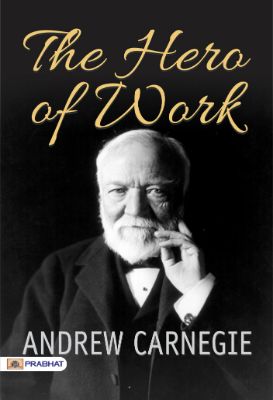
The Hero Of Work by Andrew Carnegie
From a speech to students at the Curry Trade Institute in Pittsburg, June 23, 1885.
Experience from a long business lane
It’s good that young men get started from the beginning and perform the most minor tasks. Many of Pittsburg’s outstanding businessmen received a very responsible call just at the very doorstep. They got the mess of trust and used the first hours of their business life to sweep clean the office. Now I notice that we have special caretakers and cleaners for the offices, and our young men unfortunately lose out on this useful branch of a vocational education. But if the ordinary sopier was to be gone one morning, then the gossip who carried the seed to an inexperienced chief should not hesitate to work on the broom. “The other day, a young man is spoken by a sore mother in Michigan, if He has ever seen a young lady so elegant and graciously sweeping the golf fat with her trailer as her Priscilla.

The Wealth of Echindul by Noel M. Loomis
He raised his heat-gun, fired once, saw the feathers burst into blue flame, saw it falling; then he rolled over and went back to sleep. Not even the thud of its heavy body on the sand disturbed him, but an hour later he heard another warning—a rasping sound—and through the stench of the ancient swamp he smelled a fetidness that meant danger.
Opportunities by Susan Warner
It was the morning after that Sunday when Matilda had been baptized. The girls came down to prepare breakfast as usual; Maria in a very unsettled humour. She was cloudy and captious to a degree that Matilda could not understand. The kitchen was hot; the butter was soft; the milk was turned; the bread was dry. All things went wrong.
“It is no wonder the bread is dry,” said Matilda; “it has been baked ever since last Friday.”
“Thursday. I didn’t say it was a wonder. Aunt Candy will have the bread dry. I hate it!”
“And it is no wonder the butter is soft, if you keep it up here in the kitchen. The kitchen must be hot, with this hot stove. But the milkman will be along directly.”

Betty Leicester’s Christmas by Sarah Orne Jewett
There was once a story-book girl named Betty Leicester, who lived in a small square book bound in scarlet and white. I, who know her better than any one else does, and who know my way about Tideshead, the story-book town, as well as she did, and who have not only made many a visit to her Aunt Barbara and Aunt Mary in their charming old country-house, but have even seen the house in London where she spent the winter: I, who confess to loving Betty a good deal, wish to write a little more about her in this Christmas story.

Sharing Her Crime: A Novel by May Agnes Fleming
It was Christmas Eve. All day long crowds of gayly dressed people had walked the streets, basking in the bright wintry sunshine. Sleigh after sleigh went dashing past, with merrily jingling bells, freighted with rosy cheeks, and bright eyes, and youthful faces, all aglow with happiness.
But the sun must set on Christmas Eve, as on all other days; and redly, threateningly, angrily, he sank down in the far west. Dark, sullen clouds came rolling ominously over the heavens; the wind blew piercingly cold, accompanied with a thin, drizzling rain that froze ere it fell.
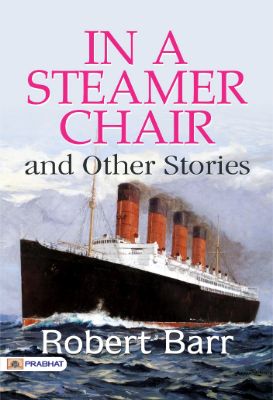
In a Steamer Chair, and Other Stories by Robert Barr
Mr. George Morris stood with his arms folded on the bulwarks of the steamship City of Buffalo, and gazed down into the water. All around him was the bustle and hurry of passengers embarking, with friends bidding good-bye. Among the throng, here and there, the hardworking men of the steamer were getting things in order for the coming voyage. Trunks were piled up in great heaps ready to be lowered into the hold; portmanteaux, satchels, and hand-bags, with tags tied to them, were placed in a row waiting to be claimed by the passengers, or taken down into the state-rooms. To all this bustle and confusion George Morris paid no heed. He was thinking deeply, and his thoughts did not seem to be very pleasant. There was nobody to see him off, and he had evidently very little interest in either those who were going or those who were staying behind. Other passengers who had no friends to bid them farewell appeared to take a lively interest in watching the hurry and scurry, and in picking out the voyagers from those who came merely to say good-bye.
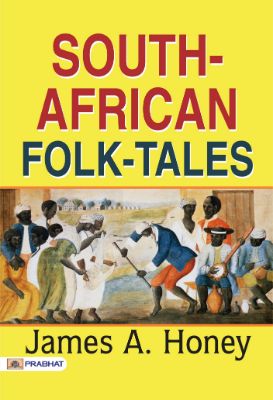
South-African Folk-Tales by James A. Honey
In presenting these stories, which are of deep interest and value to South Africans, I hope they may prove of some value to those Americans who have either an interest in animals or who appreciate the folklore of other countries.
Many of these tales have appeared among English collections previous to 1880, others have been translated from the Dutch, and a few have been written from childhood remembrance. Consequently they do not pretend to be original or unique. Care has been taken not to spoil the ethnological value for the sake of form or structure; and in all cases they are as nearly like the original as a translation from one tongue to another will allow. They are all South-African folklore tales and mainly from the Bushmen.

Twixt Land & Sea: Tales by Joseph Conrad
Ever since the sun rose I had been looking ahead. The ship glided gently in smooth water. After a sixty days’ passage I was anxious to make my landfall, a fertile and beautiful island of the tropics. The more enthusiastic of its inhabitants delight in describing it as the “Pearl of the Ocean.” Well, let us call it the “Pearl.” It’s a good name. A pearl distilling much sweetness upon the world.

Boyhood by Leo Tolstoy
Boyhood’s young narrator grew up in a small country town. With a father he imitated but could not respect, and a mother he both adored and resented, he picked his way through a world that refused to explain its rules, but whose rules he knew he must obey. Steering between these contradictions, Boyhood evokes the tensions, delights and terrors of childhood with startling, haunting immediacy. Coetzee examines his young self with the dispassionate curiosity of an explorer rediscovering his own early footprints, and the account of his progress is bright, hard and simply compelling.
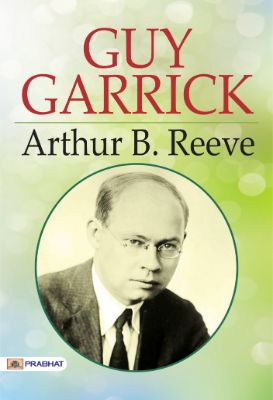
Guy Garrick by Arthur B. Reeve
“You are aware, I suppose, Marshall, that there have been considerably over a million dollars’ worth of automobiles stolen in this city during the past few months?” asked Guy Garrick one night when I had dropped into his office.
“I wasn’t aware of the exact extent of the thefts, though of course I knew of their existence,” I replied. “What’s the matter?”
“If you can wait a few moments,” he went on, “I think I can promise you a most interesting case—the first big case I’ve had to test my new knowledge of crime science since I returned from abroad. Have you time for it?”
An Advanced English Grammar with Exercises by Farley and Kittredge
This grammar is intended for students who have already received instruction in the rudiments. Still, every such textbook must begin at the beginning. gives a succinct treatment of the Parts of Speech in the Sentence and of their substitutes, the Phrase and the Clause, concluding with a Summary of Definitions. Thus it clears the way for what follows, and may be utilized as a review, if the student needs to refresh his memory.
—From this Book

The Christmas Eve: A Ghost Story by Charles Dickens
The mention of Marley’s funeral brings me back to the starting point of my story. There is no doubt that Marley was dead. That must be considered keenly, otherwise nothing wonderful can happen in the story that I will just tell you. If we were not completely convinced that Hamlet’s father was dead before the play began, there would be nothing strange in his nightly walk in the sharp east wind on the walls of his own castle. No more than any other middle-aged gentleman who, after sunset, quickly decides to take a walk in a breezy spot, for example, St. Paul’s Cemetery, merely to astonish his weak son.
—From this Book
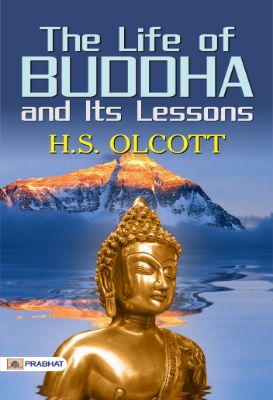
The Life of Buddha and Its Lessons by H.S. Olcott
What are the lessons to be derived from the life and teachings of this heroic prince of Kapilavasṭu? Lessons of gratitude and benevolence. Lessons of tolerance for the clashing opinions of men who live, move and have their being, think and aspire, only in the material world. Lessons of manly self-reliance, of equanimity in breasting whatsoever of good or ill may happen. Lessons of the meanness of the rewards. Lessons of the necessity for avoiding every species of evil thought and word, and for doing, speaking and thinking everything that is good, and for the bringing of the mind into subjection so that these may be accomplished without selfish motive or vanity.
—From this Book

Self-Determining Haiti by James Weldon Johnson
The articles and documents in this pamphlet were printed in The Nation during the summer of 1920. They revealed for the first time to the world the nature of the United States’ imperialistic venture in Haiti. While, owing to the censorship, the full story of this fundamental departure from American traditions has not yet been told, it appears at the time of this writing, October, 1920, that “pitiless publicity” for our sandbagging of a friendly and inoffensive neighbor has been achieved. The report of Major-General George Barnett, commandant of the Marine Corps during the first four years of the Haitian occupation, just issued, strikingly confirms the facts set forth by The Nation and refutes the denials of administration officials and their newspaper apologists. It is in the hope that by spreading broadly the truth about what has happened in Haiti under five years of American occupation The Nation may further contribute toward removing a dark blot from the American escutcheon, that this pamphlet is issued.
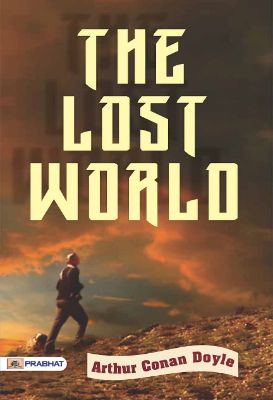
The Lost World by Arthur Conan Doyle
King Solomon’s Mines’ was published in 1885. It is a popular novel by the Victorian adventure writer and fabulist Sir H. Rider Haggard. It is about a search of an unexplored region of Africa by a group of adventurers led by Allan Quatermain for the missing brother of one of the party. It is the first English adventure novel set in Africa, and is considered to be the genesis of the Lost World literary genre.