
Books

Our Mutual Friend by Charles Dickens
Last and one of his critically most acclaimed novels, ‘Our Mutual Friend’ was first published in the year 1865. It is considered to be Dickens’ one of most sophisticated works, combining savage satire with social analysis. In the opening chapters a body is found in the Thames and identified as that of John Harmon, a young man recently returned to London to receive his inheritance. Were he alive, his father’s will would require him to marry Bella Wilfer, a beautiful, mercenary girl whom he had never met. Instead, the money passes to the working-class Boffins, and the effects spread into various corners of London society.
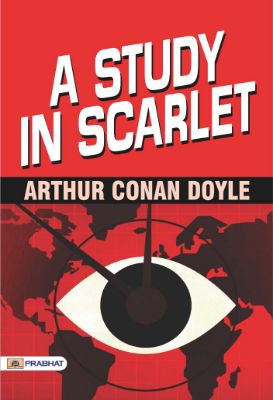
A Study In Scarlet by Arthur Conan Doyle
Famous detective novel writer Arthur Conan Doyle’s 1887 work ‘
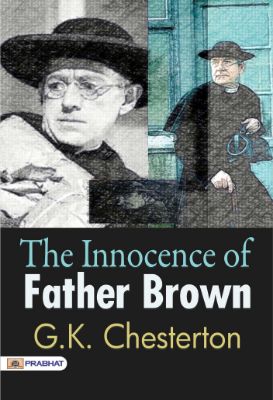
The Innocence of Father Brown by G. K. Chesterton
The Innocence of Father Brown’ is a novel by famous twentieth century novelist G. K. Chesterton. It revolves around a Roman Catholic priest and amateur sleuth Father Brown. Father Brown is featured in a series of short stories where he solves mysteries and crimes using his intuition and keen understanding of human nature. The character was loosely based by Chesterton on Father John O’Connor, who was a parish priest in Bradford and was involved in Chesterton’s conversion to Catholicism in 1922.

An Ideal Husband by Oscar Wilde
An Ideal Husband’ is an 1895 comedy stage play by Oscar Wilde. It revolves around blackmail and political corruption, and touches on the themes of public and private honour. The action is set in London, and takes place over the course of twenty-four hours.
Philosophical Works, v. 1 (of 4) by David Hume
Philosophical Works, v. 1 (of 4)’ is a collection of all the philosophical works by David Hume, including all the essays and letters exhibiting the alterations and corrections made in the successive editions published.
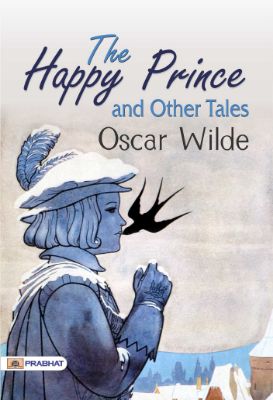
The Happy Prince and Other Tales by Oscar Wilde
A collection of fiction short stories written by one of the foremost writers of English literature – Oscar Wilde, for children. These stories are fantasies that are gross and engaging for children to read and experience life in a beautiful way.
First Lessons in Natural Philosophy by Joseph C. Martindale
First published in the year 1881, ‘First Lessons in Natural Philosophy’ is an essential reading for those who are serious and curious about learning philosophy. Joseph C. Martindale’s engaging and simple writing style makes it even better for the beginners.
Elizabeth Ann’s Houseboat by Josephine Lawrence
A collection of fiction stories written by Josephine Lawrence for girls, ‘Elizabeth Ann’s Houseboat’ was first published in the year 1929. ““I don’t see why we have to hurry,” protested Elizabeth Ann.
She wanted to get out and see what kind of a flower was growing in the middle of the large field on the right hand side of the road. Lex had declared that for once he couldn’t stop. Usually Lex did just as Elizabeth Ann asked him to—Cousin Nellie said that both Lex and Uncle Doctor always did as Elizabeth Ann asked.” -an excerpt
How Beauty Was Saved by Amanda Alcenia Strickland Washington
“In the summer of 1862, in the Bayou Manchac country near Baton Rouge, Louisiana, there was a modest little schoolhouse called the “Dove’s Nest.” To that school came two young girls to complete a course of study begun in Baton Rouge before the Federals captured that city.
“The country was visited quite often by bands of Confederates, “Jayhawkers,” and Federals; the slaves on the vast sugar plantations were in a demoralized condition from being so near the enemy’s lines; yet the girls braved all these dangers, and rode on horseback three miles through forest and field to attend school. They had no fear, for both could shoot a pistol, and always carried a loaded one, and a small Spanish dirk for self-protection. All the valuable horses on the plantation having been given to the Confederate army, only two were left for family use, an old one, not of much service, and a young beautiful bay, the individual property of one of the girls.” -an excerpt

THE MYSTERIOUS ISLAND by Jules Verne
First published in the year 1874, renowned european novelist Jules Verne’s novel ‘THE MYSTERIOUS ISLAND’ is a classic in English Literature. The novel is a crossover sequel to Verne’s famous Twenty Thousand Leagues Under the Sea and In Search of the Castaways, though its themes are vastly different from those books. Its plot focuses on the adventures of five Americans on an uncharted island in the South Pacific. During the American Civil War, five northern prisoners of war decide to escape, during the siege of Richmond, Virginia, by hijacking a balloon.
A searchlight on Germany: Germany’s Blunders, Crimes and Punishment by Dr. William T. Hornaday
“The blunders of Germany constitute a spectacle of very much more than passing interest. The questions they raise are by no means academic. The logic of them is as inexorable as Death. They are of vital interest to every freeman, and to every state and nation that sincerely undertakes to conserve the rights of its people. To unhappy Austria, shoved into the war by Germany, they are of life or death interest. A correct view of Germany is now absolutely essential to the future freedom of man!” -an excerpt
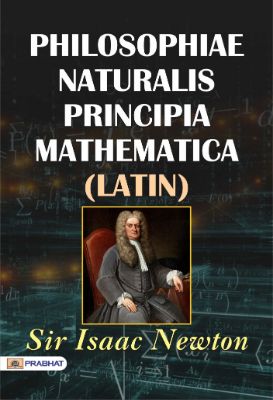
Philosophiae Naturalis Principia Mathematica by Sir Isaac Newton
Philosophiae Naturalis Principia Mathematica (Latin)’ by Sir Isaac Newton was first published in the year 1687 in Latin. It is a work in three books. It is regarded as one of the most important works in the history of science. It states Newton’s laws of motion, forming the foundation of classical mechanics, Newton’s law of universal gravitation, and a derivation of Kepler’s laws of planetary motion.
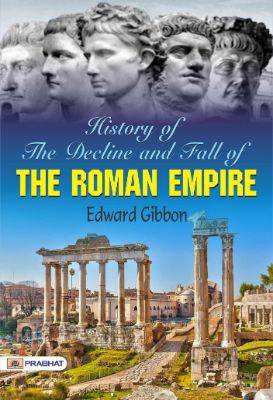
History of the Decline and Fall of the Roman Empire — Volume 1 by Edward Gibbon
History of the Decline and Fall of the Roman Empire — Volume 1′ by historian Edward Gibbon was first published in the year 1776. Through this book, Gibbon offers an explanation for the fall of the Roman Empire, a task made difficult by a lack of comprehensive written sources, though he was not the only historian to attempt the task.
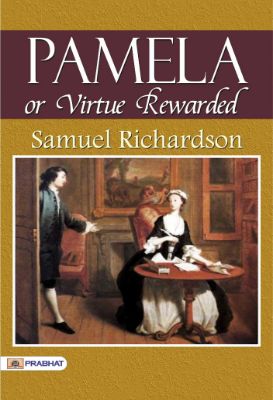
Pamela, or Virtue Rewarded by Samuel Richardson
“This novel (published 1740) created an epoch in the history of English fiction, and, with its successors, exerted a wide influence upon Continental literature. It is appropriately included in a series which is designed to form a group of studies of English life by the masters of English fiction. For it marked the transition from the novel of adventure to the novel of character—from the narration of entertaining events to the study of men and of manners, of motives and of sentiments. In it the romantic interest of the story (which is of the slightest) is subordinated to the moral interest in the conduct of its characters in the various situations in which they are placed. Upon this aspect of the “drama of human life” Richardson cast a most observant, if not always a penetrating glance. His works are an almost microscopically detailed picture of English domestic life in the early part of the eighteenth century.” -Preface

The Eyes Have It by Philip K. Dick
“It was quite by accident I discovered this incredible invasion of Earth by lifeforms from another planet. As yet, I haven’t done anything about it; I can’t think of anything to do. I wrote to the Government, and they sent back a pamphlet on the repair and maintenance of frame houses. Anyhow, the whole thing is known; I’m not the first to discover it. Maybe it’s even under control.” -an excerpt
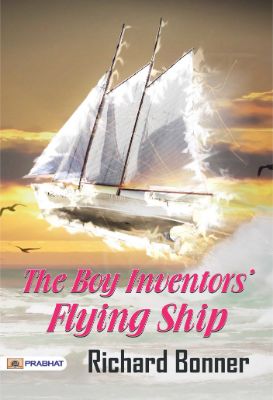
The Boy Inventors’ Flying Ship by Richard Bonner
The Boy Inventors’ Flying Ship’ is an adventure novel by Richard Bonner from early twentieth century. It was first published in the year 1913.
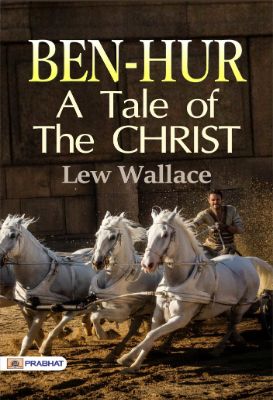
Ben-Hur; a tale of the Christ by Lew Wallace
Ben-Hur; a tale of the Christ’ is historical fiction novel by Lew Wallace. It was first published in the year 1880. The story recounts in descriptive detail the adventures of Judah Ben-Hur, a Jewish prince from Jerusalem who is enslaved by the Romans at the beginning of the 1st century and becomes a charioteer and a Christian. Running in parallel with Judah’s narrative is the unfolding story of Jesus, from the same region and around the same age. The novel reflects themes of betrayal, conviction, and redemption, with a revenge plot that leads to a story of love and compassion.
The Sea-Gull by Anton Pavlovich Chekhov
The Seagull’ is a comic play by Russian dramatist Anton Chekhov. It was written in the year 1895. It was first produced in 1896. It is generally considered to be the first of his four major plays. It dramatises the romantic and artistic conflicts between four characters: the famous middlebrow story writer Boris Trigorin, the ingenue Nina, the fading actress Irina Arkadina, and her son the symbolist playwright Konstantin Tréplev.

The Adventures of Pinocchio by Carlo Collodi
First published in the year 1883, ‘The Adventures of Pinocchio’ is a children’s adventure fantasy by Italian author Carlo Collodi. It is a story about an animated puppet, boys who turn into donkeys and other fairy tale devices. The setting of the story is the Tuscan area of Italy. It was a unique literary marriage of genres for its time. The story’s Italian language is peppered with Florentine dialect features, such as the protagonist’s Florentine name.
The Power of Mesmerism by Anonymous
Anonymously written in the year 1891, ‘The Power of Mesmerism’ is a classic Victorian erotic novel. It has grave sexual descriptions of fantasy. A remarkable work in this genre.

The Diary of a Girl in France in 1821 by Mary Browne
The Diary of a Girl in France in 1821′ by Mary Browne is a collection of diary notes written and accompanied by beautiful illustrations by a young girl in France. The work do not consists any classic matured style of writing, but helps put across what a common girl child at that time in France was perceiving from the world around her.

A Biblical and Theological Dictionary by Richard Watson
A Biblical and Theological Dictionary’ by Richard Watson consists explanatory notes about the history, manners, and customs of the Jews, and neighbouring nations. It was first published in the year 1832.

The Wendigo by Algernon Blackwood
First published in 1910, ‘The Wendigo’ is a horror short story by English author Algernon Blackwood. “A considerable number of hunting parties were out that year without finding so much as a fresh trail; for the moose were uncommonly shy, and the various Nimrods returned to the bosoms of their respective families with the best excuses the facts of their imaginations could suggest. Dr. Cathcart, among others, came back without a trophy; but he brought instead the memory of an experience which he declares was worth all the bull moose that had ever been shot. But then Cathcart, of Aberdeen, was interested in other things besides moose—amongst them the vagaries of the human mind. This particular story, however, found no mention in his book on Collective Hallucination for the simple reason (so he confided once to a fellow colleague) that he himself played too intimate a part in it to form a competent judgment of the affair as a whole…” -Preface

The Castle of Otranto by Horace Walpole
The Castle of Otranto’ is a gothic novel by Horace Walpole. It was first published in the year 1764. It is generally regarded as the first gothic novel, initiating a literary genre which would become extremely popular in the later 18th and early 19th century, with authors such as Charles Maturin, Ann Radcliffe, Bram Stoker, Edgar Allan Poe and Daphne du Maurier.
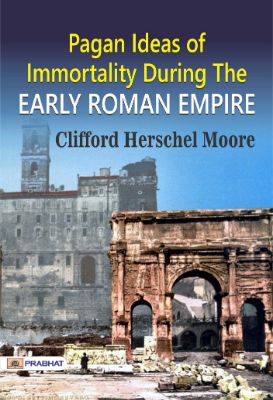
Pagan Ideas of Immortality During the Early Roman Empire by Clifford Herschel Moore
Pagan Ideas of Immortality During the Early Roman Empire’ is an interesting look at the evolution of philosophical thought through the age of antiquity into the early christian era through the various mystery sects, cults, and philosophical schools of the time. Speaking of the Stoics, Skeptics, Platonists and more, of Mithra, Osiris, and various tales of the underworld and afterlife, this text is an invaluable occult and academic reference, delivered in the form of a lecture.
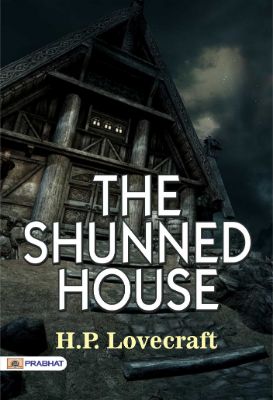
The Shunned House by H. P. Lovecraft
The Shunned House’ is a horror novel by H. P. Lovecraft. It was first published in the October 1937 issue of “Weird Tales”. It is based on an actual house in Providence, Rhode Island, built around 1763 and still standing at 135 Benefit Street; Lovecraft was familiar with the house because his aunt, Lillian Clark, lived there in 1919-20 as a companion to Mrs. H. C. Babbit. But it was another house in Elizabeth, New Jersey that actually provoked Lovecraft to write the story.
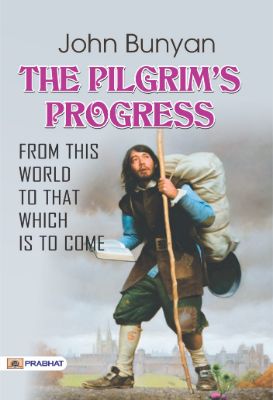
The Pilgrim’s Progress from this world to that which is to come by John Bunyan
The Pilgrim’s Progress From This World to That Which Is to Come’ is a 1678 Christian allegory written by John Bunyan. It is regarded as one of the most significant works of religious English literature. It has been translated into more than 200 languages, and has never been out of demand since first published.
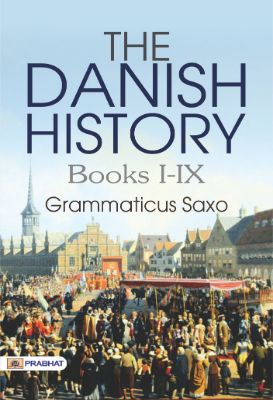
The Danish History, Books I-IX by Grammaticus Saxo
The Danish History, Books I-IX’ is the history of Germany in nine long volumes by renowned Danish historian Grammaticus Saxo. It will serve as an essential reading for those interested in studying the cultural, war, geographical and political history of Germany.
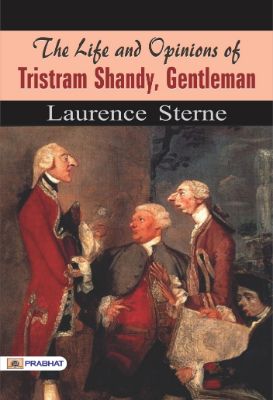
The Life and Opinions of Tristram Shandy, Gentleman by Laurence Sterne
First published in 1959, ‘The Life and Opinions of Tristram Shandy, Gentleman’ is a humorous novel by Laurence Sterne. It purports to be a biography of the eponymous character. Its style is marked by digression, double entendre, and graphic devices.
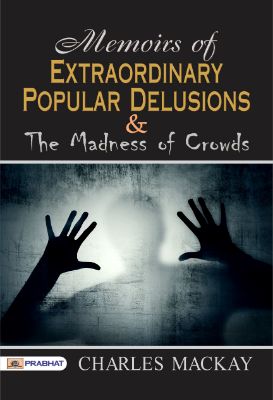
Memoirs of Extraordinary Popular Delusions and the Madness of Crowds by Charles Mackay
“In reading the history of nations, we find that, like individuals, they have their whims and their peculiarities; their seasons of excitement and recklessness, when they care not what they do. We find that whole communities suddenly fix their minds upon one object, and go mad in its pursuit; that millions of people become simultaneously impressed with one delusion, and run after it, till their attention is caught by some new folly more captivating than the first. We see one nation suddenly seized, from its highest to its lowest members, with a fierce desire of military glory; another as suddenly becoming crazed upon a religious scruple; and neither of them recovering its senses until it has shed rivers of blood and sowed a harvest of groans and tears, to be reaped by its posterity. At an early age in the annals of Europe its population lost their wits about the sepulchre of Jesus, and crowded in frenzied multitudes to the Holy Land; another age went mad for fear of the devil, and offered up hundreds of thousands of victims to the delusion of witchcraft.” -Preface