
Books
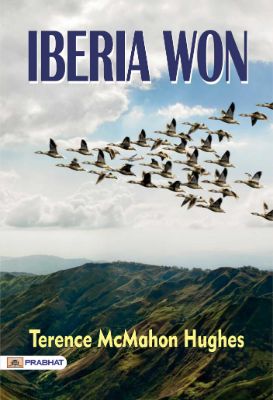
Iberia Won by Terence McMahon Hughes
Excerpt from Iberia Won:
But we weak minstrels of a laggard day,
Skilled but to imitate an elder page,
Timid and raptureless, can we repay
The debt thou claim’st in this exhausted age?
Thou giv’st our lyres a theme, that might engage
Those that could send thy name o’er sea and land,
While sea and land shall last; for Homer’s rage
A theme; a theme for Milton’s mighty hand—
How much unmeet for us, a faint degenerate band!

Heart Songs by Jean Blewett
Excerpt from HeartSongs:
If I could speak in phrases fine,
Full sweet the words that I would say
To woo you for my valentine
Upon this February day.
But when I strive to tell you all,
The charms I see in your dear face,
A dumbness on me seems to fall—
O, sweetheart, let me crave your grace!

How to Become a Public Speaker by William Pittenger
The methods of oratorical cultivation presented in this volume are not based upon mere theory. They have been tested in hundreds of instances, and their results are beyond question. A carpenter will assert with perfect assurance, “I guarantee to take an ordinary young man, who will place himself in my hands for a reasonable time, and turn him out a thorough mechanic, master of every part of his trade.” The effects of training are as marvelous and as certain in the fields of eloquence.’ -an excerpt from the book
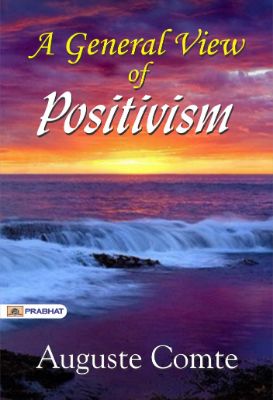
A General View of Positivism by Auguste Comte
Positivism is not simply a system of Philosophy; nor is it simply a new form of Religion; nor is it simply a scheme of social regeneration. It partakes of all of these, and professes to harmonize them under one dominant conception that is equally philosophic and social. ‘Its primary object,’ writes Comte, ‘is twofold: to generalize our scientific conceptions and to systematize the art of social life.’ Accordingly Comte’s ideal embraces the three main elements ofix which human life consists—Thoughts, Feelings and Actions.’ -an excerpt from the book
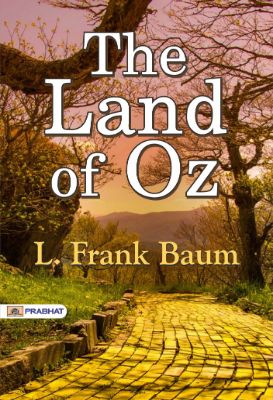
The Land of Oz by L. Frank Baum
The series of stories, all set in the wonderful land of Oz, full of strange characters of all kinds, is a fantastic and ever famous gift by American children’s storyteller L. Frank Baum. Since 1900, these delightful fairy tales have stimulated the imagination of millions of young readers.
These are stories which are genuine fantasy—creative, funny, tender, exciting and surprising. Filled with the rarest and most absurd creatures, each of the 14 volumes which now comprise the series, has been eagerly sought out by generation after generation until today they are known to all except the very young or those who were never young at all.

Under the Red Dragon by James Grant
Adventure and romance during the Crimean War await the reader in this tale of love and war by James Grant.
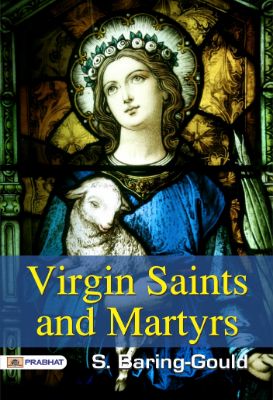
Virgin Saints and Martyrs by S. Baring-Gould
In the second century Lyons was the Rome of Gaul as it is now the second Paris of France. It was crowded with temples and public monuments. It was moreover the Athens of the West, a resort of scholars. Seated at the confluence of two great rivers, the Rhône and the Sâone, it was a centre of trade. It is a stately city now. It was more so in the second century when it did not bristle with the chimneys of factories pouring forth their volumes of black smoke, which the atmosphere, moist from the mountains, carries down so as to envelop everything in soot.

Helen Ford by Horatio Alger Jr.
The tribulations of a young woman in NYC before she falls in love with an artist. Cheated out of an inheritance by an unscrupulous relative, fourteen year old Helen Ford’s fortunes are restored with help from a spurned wife, a lawyer and a series of coincidence.
The Symbolist Movement in Literature by Arthur Symons
The Symbolist Movement in Literature’ by Arthur Symons was a noted work that brought French Revolution to the attention of Anglo-American literary circles. Its first two editions were vital influences on W. B. Yeats and T. S. Eliot—a note that, for nothing else, would assure its historical place with the most important early Modernist criticism.
Within the Gates by Elizabeth Stuart Phelps
Elizabeth Stuart Phelps Ward was an early feminist American author and intellectual who
Excerpt from Within the Gates:
challenged traditional Christian beliefs of the afterlife, challenged women’s traditional roles in marriage and family, and advocated clothing reform for women.
She wrote this play ‘Within the Gates’, in 1901. Her works have been

Julius, The Street Boy by Horatio Alger Jr.
A homeless New York City boy is taken west by a benefactor to work on a farm and ends up rescuing a little girl kidnapped by a vengeful Indian. Aka: Julius the Street Boy, A Waif’s Rise from Poverty, Life in the West, Out West.
The Book of Clever Beasts by Myrtle Reed
Excerpt from The Book of Clever Beasts: Studies in Unnatural History
What you need, said this gifted scientist to me, is absolute rest and quiet. If you do not pack up and take to the woods within three days from the receipt of this notice, I will not answer for the consequences. Your brain is slowly but surely giving way. Your batteries are becoming exhausted and must be renewed if measurable currents are to be expected. I recommend new cells, rather than recharging from a dynamo. Get busy now.

A Book of Christian Sonnets by William Ferneley Allen
A collection of such distinct, separate little poems,—mostly written within a recent period,—and not mingled with other forms of poetry,—constitutes this little volume.
Rescue the Perishing by Fred R. Seibert
Excerpt from the opening pages: Assurance. HOW you may KNOW you are saved. You may know you are saved, because God says so in His Word. THESE things have I written unto you that believe on the name of the Son of God, that ye may know (not hope, or guess) that ye have (not are going to have) eternal life.” I John 5:13. BUT as many as received Him (Christ) to them gave he power to become the sons of God, even to them that believe on his name. John 1:12. I KNOW whom I have believed and am persuaded that he is able to keep that which I have committed unto him against that day. II Timothy 1:12. VERILY, verily, I say unto you, He that heareth my word and believeth on Him that sent me HATH everlasting life, and shall not come into condemnation (judgment) but is passed from death unto life. John 5:24. A great many people think it is presumption for them to say they know they are saved-that they can only “hope for the best, and will have to wait until the judgment before they know.” Paul did not say to the jailer: “Believe on the Lord Jesus Christ and perhaps you will be saved, or you will have a good chance of being saved, or you may hope to be saved.” No, but “thou shalt be saved.” Acts 16:31. VERILY, verily, I say unto you, he that believeth on me HATH everlasting life. John 6:47. He that believeth on the Son hath (not perhaps will have) everlasting life. John 3:36. HE that hath the Son hath life. I John 5:12.
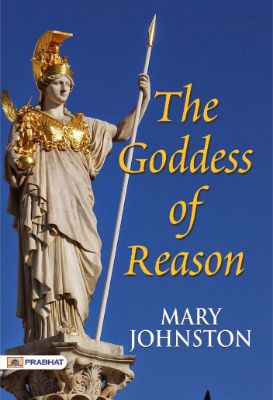
The Goddess of Reason by Mary Johnston
Johnston wrote historical books and novels that often combined romance with history. The Goddess of Reason uses the theme of the French Revolution. A Drama in Five Acts

A Literary History of Ireland by Douglas Hyde
A wonderful authoritative treatise covering the history from foreign sources, Druidism, early missionaries (Patrick, Brigit, etc.), the use of letters, Columcille, the Danish period, classic Irish poets. The author later became the first President of Ireland. – See more at: https:++www.thornbooks.com+pages+books+19950+douglas-hyde-an-craoibhin-aoibhinn+a-literary-history-of-ireland#sthash.WZHesz5o.dpuf
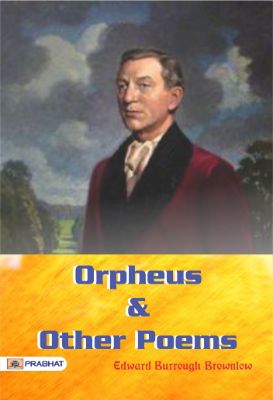
Orpheus and Other Poems by Edward Burrough Brownlow
Unto the realm of Pluto many roads
Lead with dark winding from the bright abodes
Of men, and when life’s last detaining thread
Is cut by Iris, and the body, dead,
With Charon’s coin in palm, rests in the tomb
Or on the pyre, the dæmon of its doom
After much pitiful forbearance tears
The soul from its environment of cares
With promise sweet of love’s awaiting kiss,
Of old friends greeting, and much holy bliss
On shores Elysian, where all ways are peace,
And all existence virtue without cease;
But ere the fields of Asphodel are won
Dire labours manifold must first be done
By soul and dæmon.
From the Book
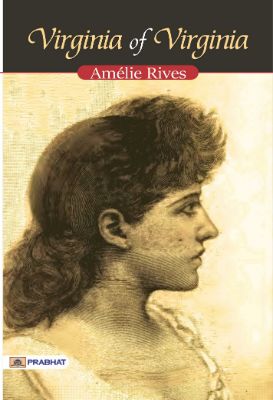
Virginia of Virginia by Amélie Rives
Amélie Louise Rives was born in 1863 in Richmond, Virginia to noted engineer Alfred L. Rives and the former Sadie MacMurdo. The younger son of a titled Englishman emigrates to America to establish a stud-farm in post-Civil War Virginia. He meets and falls in love with the daughter of the farm’s caretaker. She was named after her aunt Amélie, a goddaughter of French Queen Marie-Amélie. She was a goddaughter of Robert E. Lee and a granddaughter of the engineer and Senator William Cabell Rives, who had also been American ambassador to France.

Oaths of Allegiance in Colonial New England by Charles Evans
Excerpt from The Book of Oaths of Allegiance in Colonial New England :The antiquity of the custom of giving and taking Oaths, or the debatable questions of their observance being a religious or legal ceremony, and whether the moral or political aspect has the greater effect upon the minds of men, are subjects with which this paper has nothing to do.

Design and Tradition by Amor Fenn
Design and Tradition: A Short Account of the Principles and Historic Development of Architecture and the Applied Arts
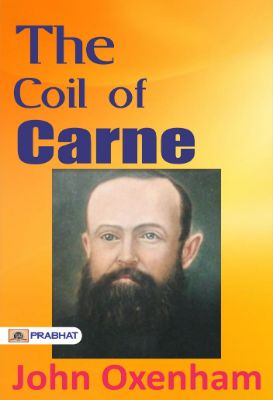
The Coil of Carne by John Oxenham
If by any chance you should ever sail on a low ebb-tide along a certain western coast, you will, if you are of a receptive humour and new to the district, receive a somewhat startling impression of the dignity of the absolutely flat.
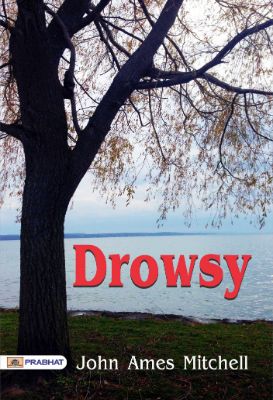
Drowsy by John Ames Mitchell
This remarkable novel by the founder of the legendary “Life” humor magazine combines romance, humor, adventure and science fiction in the story of a mysterious inventor and his claim to have discovered diamonds on the Moon.

Philosophical Works (Vol-II) by David Hume
David Hume, The Philosophical Works of David Hume. Including all the Essays, and exhibiting the more important Alterations and Corrections in the successive Editions by the Author.

Narrative of the Life of Frederick Douglass, an American Slave by Frederick Douglass
Narrative of the Life of Frederick Douglass is an 1845 memoir and treatise on abolition written by famous orator and former slave Frederick Douglass.

The Importance of Being Earnest: A Trivial Comedy for Serious People by Oscar Wilde
The Importance of Being Earnest, A Trivial Comedy for Serious People is a play by Oscar Wilde. First performed on 14 February 1895 at the St James’s Theatre in London, it is a farcical comedy.

My Secret Life (Volumes I to III) by Anonymous
This first reprint of “My Secret Life” is for private distribution
among connoisseur collectors. It is strictly limited to four hundred
and seventy five copies, all of which have been subscribed for prior to
publication.
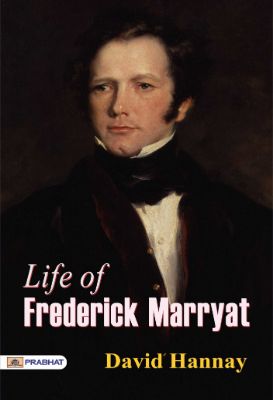
Life of Frederick Marryat by David Hannay
Marryat’s time aboard the Imperieuse included action off the Gironde, the rescue of a fellow midshipman who had fallen overboard, captures of many ships off the Mediterranean coast of Spain, and the capture of the castle of Montgat. The Imperieuse shifted to operations in the Scheldt in 1809, where Marryat contracted malaria; he returned to England on the 74-gun HMS Victorious.

Forge Work by William L. Ilgen
William L. Ilgen’s book Forge Work is an instructional text detailing metalwork, and more specifically working with a forge. The original purpose of the book, as outlined in the author’s preface, was to commit to text many of the oral instructions provided to metalworking and blacksmithing students so that they may have a reference document to which they can refer.


Intestinal Irrigation by Alcinous B. Jamison
In the year 1496 an Italian, Gatenaria, invented an appliance for taking an enema; since that time depuratory instruments have had more or less vogue in all civilized countries. of late years inventive powers have been taxed to construct more convenient and effective appliances, and now perfection has been almost reached, and the poor civilizee, whose habits are really very bad from the savage point of view, may enjoy the delicious privilege of an internal bath whenever he feels the need of it. By any other name this bath is just as purifying: call it irrigation, injection, lavement, clyster, enema—its many names and what they mean testify to the fact that it is for the disease of civil¬iza¬tion.
From the Book.