
Books
The Austronesians: Historical and Comparative Perspectives
Anthropology; Archeology; Social life; Customs; History; Asia; Madagascar; Islands of the pacific

Australian Politics in a Digital Age
Information and communications technologies are increasingly important in the Australian political landscape. From the adoption of new forms of electoral campaigning to the use of networking technology to organise social movements, media technology has the potential to radically change the way politics is conducted and experienced in this country. The first comprehensive volume on the impact of digital media on Australian politics, this book examines the way these technologies shape political communication, alter key public and private institutions, and serve as the new arena in which discursive and expressive political life is performed. Employing a range of theoretical perspectives, empirical data, and case examples, the book provides insights on political behaviour of Australia’s elites, as well as the increasingly important politics of mirco-activism and social media. Energetic and fast-paced, the book draws together a wide range of Australian and international scholarship on the interface between communications technology and politics. Crossing several genres, the book will find a wide audience amongst scholars of both politics and communication, among public relations professionals, and with members of the media themselves.
Australian Political Lives: Chronicling political careers and administrative histories
Biography; Politicians; History; Australia

Australian Chamber Music with Piano
This book represents the first critical survey of a section of a rich Australian corpus of chamber music. The author has included various instrumental combinations with piano as well as vocal music with piano. The survey is chronological, as well as by composer. An appendix to the work provides source material for future research into this area. The research has concentrated on progressive modernist music by Australian composers. The commentary utilises the author’s rich experience as composer, pianist and educator.
Australia Under Construction: Nation-building past, present and future
The Australian nation is a work in progress. So conclude the authors whose views are represented in this most recent offering in the ANZSOG monograph series, Australia Under Construction: Nation-building past, present and future. From its beginnings as a settler society through to present day concerns about ‘broadbanding the nation’, the nation-building narrative has resonated with Australians. The very idea of nation-building has both excited the popular imagination about what we might achieve as a society and a nation, and has occasioned despair about missed opportunities. The eleven authors contributing to this monograph reflect on these, and other themes from a variety of perspectives. They challenge our understanding of the term ‘nation-building’, reflect on its contemporary relevance as a framework for public policy and even re-appraise the contribution of past ‘iconic’ nation-building endeavours. To this subject the authors bring intelligence, wit and a healthy disdain for sacred cows. A stimulating read for anyone interested in the history, challenges and prospects of nation-building in Australia.
Australia, the European Union and the New Trade Agenda
“Australia (together with New Zealand) is one of the few Organisation for Economic Co-operation and Development (OECD) countries with which the EU does not have a comprehensive trade agreement. Australia and the EU are entering a new phase in the bilateral relationship, and the push towards a potential trade agreement has been steadily gaining momentum. This collection brings together diverse and deeply practical contributions to the forthcoming policy debate on the Australia–EU Free Trade Agreement (FTA), highlighting potential points of difficulty and possible gains from the agreement. This book makes two further contributions: it adds to the body of work reappraising the contemporary Australia–EU relationship; and provides a snapshot of current issues in trade policy—the ‘new trade agenda’—which is more complex and politically visible than ever. The issues confronting Australia and the EU in forthcoming negotiations are those confronting policy makers around the globe. They are testing public tolerance of decisions once viewed as dull and technocratic, and are redefining the academic treatment of trade policy. ‘… this book is especially important because it is talking about a very different type of trade agreement than the ones Australia has concluded recently with our major trading partners in East Asia. An agreement with the EU inevitably will focus on issues like services, investment, government procurement, and competition policy. These are major issues in their own right, are key parts of the new trade agenda, and are critical to Australia’s successful transition to a prosperous post–mining boom economy. In the absence of generalisable unilateral economic reform in this country, trade policy hopefully will provide an external source of pressure for reform. If this book adds to that pressure while also suggesting some of the tools needed for reform, it will have made a major contribution.’ Dr Mike Adams, Partner, Trading Nation Consulting”

Australia and Cyberwarfare
This book explores Australia’s prospective cyber-warfare requirements and challenges. It describes the current state of planning and thinking within the Australian Defence Force with respect to Network Centric Warfare, and discusses the vulnerabilities that accompany the use by Defence of the National Information Infrastructure (NII), as well as Defence’s responsibility for the protection of the NII. It notes the multitude of agencies concerned in various ways with information security, and argues that mechanisms are required to enhance coordination between them. It also argues that Australia has been laggard with respect to the development of offensive cyber-warfare plans and capabilities. Finally, it proposes the establishment of an Australian Cyber-warfare Centre responsible for the planning and conduct of both the defensive and offensive dimensions of cyber-warfare, for developing doctrine and operational concepts, and for identifying new capability requirements. It argues that the matter is urgent in order to ensure that Australia will have the necessary capabilities for conducting technically and strategically sophisticated cyber-warfare activities by the 2020s. The Foreword has been contributed by Professor Kim C. Beazley, former Minister for Defence (1984–90), who describes it as ‘a timely book which transcends old debates on priorities for the defence of Australia or forward commitments, [and] debates about globalism and regionalism’, and as ‘an invaluable compendium’ to the current process of refining the strategic guidance for Australia’s future defence policies and capabilities.
Australia: Identity, Fear and Governance in The 21St Century
The latter years of the first decade of the twenty-first century were characterised by an enormous amount of challenge and change to Australia and Australians. Australia’s part in these challenges and changes is borne of our domestic and global ties, our orientation towards ourselves and others, and an ever increasing awareness of the interdependency of our world. Challenges and changes such as terrorism, climate change, human rights, community breakdown, work and livelihood, and crime are not new but they take on new variations and impact on us in different ways in times such as these. In this volume we consider these recent challenges and changes and how Australians themselves feel about them under three themes: identity, fear and governance. These themes suitably capture the concerns of Australians in times of such change. Identity is our sense of ourselves and how others see us. How is this affected by the increased presence of religious diversity, especially Islamic communities, and increased awareness of moral and political obligations towards Indigenous Australians? How is it affected by our curious but changing relationship with Asia? Fear is an emotional reaction to particular changes and challenges and produces particular responses from individuals, politicians, communities and nations alike; fear of crime, fear of terrorism and fear of change are all considered in this volume.

Qualitätsmonitor 2020
Die Qualität der Versorgung, ihre Sicherung, Verbesserung und Incentivierung sind das erklärte Ziel der Gesetzgebung im Gesundheitswesen der letzten Jahre. Der Qualitätsmonitor widmet sich mit der aktuellen Ausgabe der Notfallversorgung, der Transparenzmängel und Steuerungsdefizite attestiert werden. Für die Diskussion über die Qualität und die Weiterentwicklung der prästationären und stationären Notfallversorgung liefert der Qualitätsmonitor 2020 weitere Impulse. Das von Gesundheitsstadt Berlin, der Initiative Qualitätsmedizin (IQM) und dem Wissenschaftlichen Institut der AOK (WIdO) herausgegebene Werk greift wiederholt relevante Qualitätsthemen aus stationärer und sektorenübergreifender Versorgung auf. Die Fachbeiträge zum Schwerpunkt Notfallversorgung stellen den Stand der politischen Reformdiskussion dar und betrachten für lebensbedrohliche Indikationen die stationäre Notfallversorgung, auch unter Berücksichtigung der bisherigen Erkenntnisse aus der COVID-19-Pandemie. Strukturen und Prozesse im Rettungswesen, regionale Modellprojekte sowie der Stand der Digitalisierung werden diskutiert und Verbesserungsvorschläge unterbreitet. Eine weitere Sektion zeigt Eckdaten zur Versorgungsstruktur und Qualitätsdaten der deutschen Krankenhäuser für ausgewählte Notfallindikationen der stationären Versorgung. Mit seinen Fachbeiträgen und bundesweiten Qualitätsdaten unterstützt der Qualitätsmonitor 2020 fundiert die Qualitätssicherungsdebatte in Deutschland. Den gesundheitspolitischen Akteuren und Anbietern, die mit der Schaffung und Umsetzung gesetzlicher Qualitätsvorgaben befasst sind oder diese mitgestalten wollen, werden relevante Ansätze aufgezeigt und Anregungen zur Weiterentwicklung und Verbesserung der Versorgungsqualität gegeben.
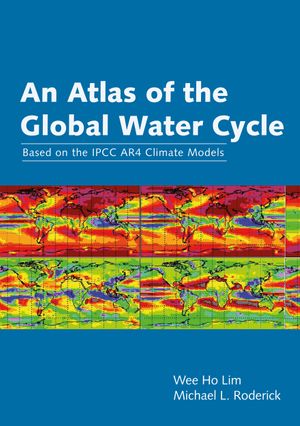
An Atlas on Global Water Cycle: Based on the IPCC AR4 Climate Models
What do climate models predict for the rainfall where you live? What about evaporation or runoff? Should your local community consider constructing new dams or do the existing water storages appear adequate? What about the availability of water for irrigation farming? Do the predictions differ between different climate models or do all the models basically predict the same changes in water availability where you live? These are all simple questions but it is surprisingly hard for an individual, whether they be a farmer, water resources engineer, teacher or interested citizen, to answer them. As researchers active in the field we could not answer the questions either. In fact, we had never seen a compilation of the rainfall, evaporation and runoff predictions made by all the different climate models. The Atlas contains maps and tables that document model predictions contributed by international climate modelling groups to the 2007 4th Assessment Report of the Intergovernmental Panel on Climate Change. The predictions are made available here via the wonders of the internet and ongoing cooperation by the international climate modelling community who routinely archive their results. The maps and tables in the Atlas document rainfall, evaporation and runoff estimates for the 20th century along with predictions of the same quantities at the end of the 21st century. Whatever your interest, we hope you find the Atlas as helpful as we do.
Assessing the evidence on Indigenous socioeconomic outcomes: A focus on the 2002 NATSISS
Aboriginal australian; Social conditions; Economic conditions
Asia-Pacific Security: Policy Challenges
Since September 11, 2001, our newspapers have been filled with the ‘war on terror’; our governments have mobilised their resources for ‘homeland security’; and people everywhere are braced for more terrorist attacks. Yet while the new threat is genuine, we must not lose sight of the continuing security concerns in the Asia-Pacific. Tensions persist on the Korean peninsula, in the Taiwan Straits and the South China Sea, and in Kashmir. The region is well supplied with weapons of mass destruction and may face an arms race, and there are a range of pressing human security issues. Likewise, the strategic realities of the region remain linked with US power, and with the emergence of China as a key regional player. The book examines the developing strategic relationships in the region, and clarifies the dilemmas for Australian policy-makers as they try to balance genuine engagement with the region against a long-standing and valued alliance with the United States. Emerging from discussions between the Shanghai Institute for International Studies and the University of New South Wales at ADFA, Asia-Pacific Security has a particular relevance for foreign-policy professionals and scholars of the region.

Asian Socialism and Legal Change: The dynamics of Vietnamese and Chinese Reform
Law and socialism; Socialism; Law reform; China; Vietnam
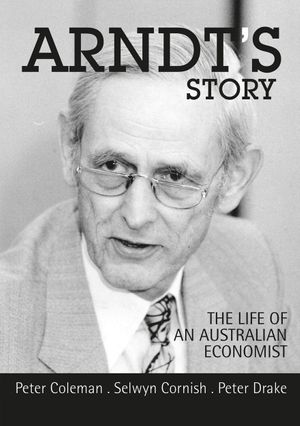
Ardnt’s Story: The life of an Australian economist
‘H.W. Arndt has been Australia’s leading scholar of Asian economic development for over thirty years’ – Former World Bank President James D Wolfensohn. The year of Heinz Wolfgang Arndt’s birth, 1915, was not a good time for a German boy to be born. His country was soon to be defeated in a great war, his school years were shadowed by the rise of Hitler. Yet when Heinz’s long-buried Jewish background led his academic father to lose his chair in chemistry and flee to Oxford, Heinz followed. As Heinz put it, the calamity of Hitler’s rise to power led him to ‘the incredible good fortune of an Oxford education and a life spent in England and Australia.’ This was a man of inexhaustible energy and optimism, who returned from months behind barbed wire interned in Canada to write a historical classic—The Economic Lessons of the Nineteen-Thirties. He seized the opportunity of an unexpected job offer to set off with his young family for Sydney where he quickly established himself as a leading authority on the Australian banking system, embarked on his fifty year career as a gifted university teacher and enjoyed the first of many vigorous forays as a public intellectual. But it was at ANU that Heinz took the bold step which led him to become the Grand Old Man of Asian Economics. In 1966, just after the Sukarno coup and the year of living dangerously, he determined the time had come to study the Indonesian economy. It took all his charm, persistence and formidable intellect to persuade the Indonesians to open their doors to him. The result was a world-leading centre of Indonesian economics which greatly contributed to the development of modern Indonesia.
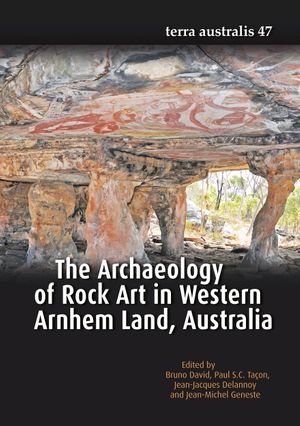
The Archaeology of Rock Art in Western Arnhem Land, Australia
Western Arnhem Land, in the Top End of Australia’s Northern Territory, has a rich archaeological landscape, ethnographic record and body of rock art that displays an astonishing array of imagery on shelter walls and ceilings. While the archaeology goes back to the earliest period of Aboriginal occupation of the continent, the rock art represents some of the richest, most diverse and visually most impressive regional assemblages anywhere in the world. To better understand this multi-dimensional cultural record, The Archaeology of Rock Art in Western Arnhem Land, Australia focuses on the nature and antiquity of the region’s rock art as revealed by archaeological surveys and excavations, and the application of novel analytical methods. This volume also presents new findings by which to rethink how Aboriginal peoples have socially engaged in and with places across western Arnhem Land, from the north to the south, from the plains to the spectacular rocky landscapes of the plateau. The dynamic nature of Arnhem Land rock art is explored and articulated in innovative ways that shed new light on the region’s deep time Aboriginal history.
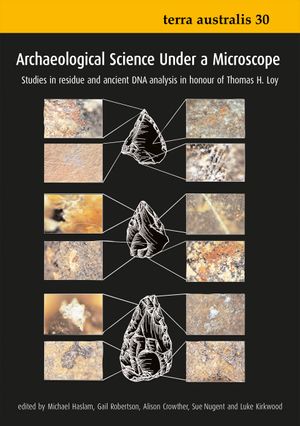
Archaeological Science Under a Microscope: Studies in Residue and Ancient DNA Analysis in Honour of Thomas H. Loy
These highly varied studies, spanning the world, demonstrate how much modern analyses of microscopic traces on artifacts are altering our perceptions of the past. Ranging from early humans to modern kings, from ancient Australian spears or Mayan pots to recent Maori cloaks, the contributions demonstrate how starches, raphides, hair, blood, feathers, resin and DNA have become essential elements in archaeology’s modern arsenal for reconstructing the daily, spiritual, and challenging aspects of ancient lives and for understanding human evolution. The book is a fitting tribute to Tom Loy, the pioneer of residue studies and gifted teacher who inspired and mentored these exciting projects.
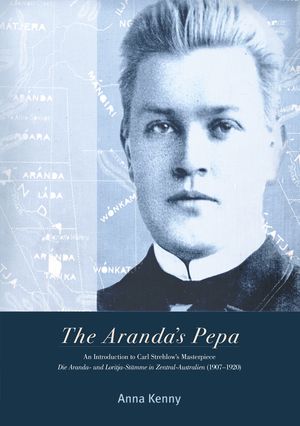
The Aranda’s Pepa: An introduction to Carl Strehlow’s Masterpiece Die Aranda- und Loritja-Stämme in Zentral-Australien (1907-1920)
“The German missionary Carl Strehlow (1871-1922) had a deep ethnographic interest in Aboriginal Australian cosmology and social life which he documented in his 7 volume work Die Aranda- und Loritja-Stämme in Zentral-Australien that remains unpublished in English. In 1913, Marcel Mauss called his collection of sacred songs and myths, an Australian Rig Veda. This immensely rich corpus, based on a lifetime on the central Australian frontier, is barely known in the English-speaking world and is the last great body of early Australian ethnography that has not yet been built into the world of Australian anthropology and its intellectual history. The German psychological and hermeneutic traditions of anthropology that developed outside of a British-Australian intellectual world were alternatives to 19th century British scientism. The intellectual roots of early German anthropology reached back to Johann Gottfried Herder (1744-1803), the founder of German historical particularism, who rejected the concept of race as well as the French dogma of the uniform development of civilisation. Instead he recognised unique sets of values transmitted through history and maintained that cultures had to be viewed in terms of their own development and purpose. Thus, humanity was made up of a great diversity of ways of life, language being one of its main manifestations. It is this tradition that led to a concept of cultures in the plural.”
APEC and liberalisation of the Chinese economy
“China is so large that its trading interests and influence are global. But its interests are disproportionately powerful in its immediate Western Pacific and Asia Pacific partners. The evolution of China’s economic relationships with its Asia Pacific partners, in which APEC came to play a significant role in the 1990s, is thus a central part of the story of China’s rapidly growing and changing interaction with the global economy.” – Ross Garnaut APEC is an important forum thorugh which China can demonstrate its commitment to economic openness. APEC has also been an important vehicle for China’s trade liberalisation on the way towards accession to the WTO. In facilitating trade liberalisation, APEC and te WTO are mutually reinforcing. APEC prepares China for the WTO and WTO accession encourages China’s active participation in the APEC process. Both APEC membership and WTO accession help with the huge task of China’s domestic reform. This book sets out China’s strategic interests in APEC in the lead-up to the APEC summit in Shanghai in 2001. Contributors include leading Chinese economists from the APEC Policy Research Centre in the Chinese Academy of Social Sciences–Zhang Yunling, Zhang Jianjun, Sun Xuegong, Li Kai, Chen Luzhi, Zhou Xiaobing, Zhao Jianglin–and from the Asia Pacific School of Economics and Management at The Australian National University–Peter Drysdale, Ligang Song, Ross Garnaut, hristopher Findlay, Andrew Elek, Yongzheng Yang, Yiping Huang, K.P. Kalirajan, Hadi Soesastro and Chen Chunlai.
Anomie and Violence: Non-truth and reconciliation in Indonesian peacebuilding
Indonesia suffered an explosion of religious violence, ethnic violence, separatist violence, terrorism, and violence by criminal gangs, the security forces and militias in the late 1990s and early 2000s. By 2002 Indonesia had the worst terrorism problem of any nation. All these forms of violence have now fallen dramatically. How was this accomplished? What drove the rise and the fall of violence? Anomie theory is deployed to explain these developments. Sudden institutional change at the time of the Asian financial crisis and the fall of President Suharto meant the rules of the game were up for grabs. Valerie Braithwaite’s motivational postures theory is used to explain the gaming of the rules and the disengagement from authority that occurred in that era. Ultimately resistance to Suharto laid a foundation for commitment to a revised, more democratic, institutional order. The peacebuilding that occurred was not based on the high-integrity truth-seeking and reconciliation that was the normative preference of these authors. Rather it was based on non-truth, sometimes lies, and yet substantial reconciliation. This poses a challenge to restorative justice theories of peacebuilding.
Qualitätsmonitor 2019
Die Qualität der Versorgung, ihre Sicherung, Verbesserung und Incentivierung sind das erklärte Ziel der Krankenhausgesetzgebung der letzten Jahre. Für die Diskussion über Bewertung, Vergütung und Kommunikation von Qualität im medizinischen Versorgungsgeschehen liefert der Qualitätsmonitor 2019 weitere Impulse. Das Werk greift jährlich relevante Themen aus stationärer und sektorenübergreifender Versorgung auf. Die Fachbeiträge gehen dabei der Frage nach, wie sich das Versorgungssystem unter Qualitätsaspekten gestalten lässt und wie Versorgungsqualität transparenter gemacht werden kann. Weiterhin werden Strukturanforderungen einer qualitätsorientierten medizinischen Versorgung diskutiert und die wissenschaftliche Evidenz zur Gestaltung relevanter Versorgungsbereiche zusammengefasst. Eine weitere Sektion zeigt Eckdaten zur Versorgungsstruktur und Qualitätsdaten der deutschen Krankenhäuser. Der Qualitätsmonitor 2019 unterstützt fundiert die Qualitätssicherungsdebatte in Deutschland.
Altered Ecologies: Fire, climate and human influence on terrestrial landscapes
Like a star chart this volume orientates the reader to the key issues and debates in Pacific and Australasian biogeography, palaeoecology and human ecology. A feature of this collection is the diversity of approaches ranging from interpretation of the biogeographic significance of plant and animal distributional patterns, pollen analysis from peats and lake sediments to discern Quaternary climate change, explanation of the patterns of faunal extinction events, the interplay of fire on landscape evolution, and models of the environmental consequences of human settlement patterns. The diversity of approaches, geographic scope and academic rigor are a fitting tribute to the enormous contributions of Geoff Hope. As made apparent in this volume, Hope pioneered multidisciplinary understanding of the history and impacts of human cultures in the Australia- Pacific region, arguably the globe’s premier model systems for understanding the consequences of human colonization on ecological systems. The distinguished scholars who have contributed to this volume also demonstrate Hope’s enduring contribution as an inspirational research leader, collaborator and mentor. Terra Australis leave no doubt that history matters, not only for land management, but more importantly, in alerting settler and indigenous societies alike to their past ecological impacts and future environmental trajectories.
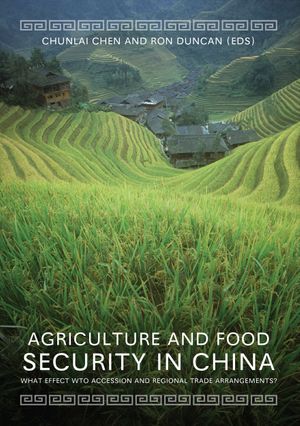
Agriculture and Food Security in China: What Effect WTO Accession and Regional Trade Arrangements?
China’s accession to the World Trade Organization (WTO) has had profound consequences for the structure of its economy, and there will many more before the full benefits of an open trading regime will be realised. Agriculture and Food Security in China explains the background to China’s WTO accession and links accession to reforms beginning as far back as 1979. The book highlights China’s policymakers’ decision to move away from protectionism and gain self-sufficiency, and illustrates how China’s step away from direct participation in the agricultural sector to indirect regulatory involvement and liberalisation could encourage further economic growth. Yet not all economic growth is cost-free. Agriculture and Food Security in China explores the short-term impacts of WTO accession as well as the mid and long-term implications of greater market involvement at an economy-wide and regional level. Growing divides between coastal and inland regions—and differences in rural and urban growth—will require a better understanding of the consequences of greater market dependency. Agriculture and Food Security in China adds to the existing knowledge of China’s agricultural growth as well as the impacts and interrelationships between WTO accession and China’s participation in other regional free trade agreements.
Agency, contingency and census process: Observations of the 2006 Indigenous Enumeration Strategy in remote Aboriginal Australia
The Indigenous Enumeration Strategy (IES) of the Australian National Census of Population and Housing has evolved over the years in response to the perceived ‘difference’ of the Aboriginal and Torres Strait Islander populations. Its defining characteristics are the use of locally recruited, mostly Indigenous collector interviewers, and the administration of a modified collection instrument in discrete Indigenous communities, mostly in remote Australia. The research reported here is unique. The authors, with the assistance of the Australian Bureau of Statistics, were able to follow the workings of the IES in the 2006 Census from the design of the collection instrument to the training of temporary census field staff at the Northern Territory’s Census Management Unit in Darwin, to the enumeration in four remote locations, through to the processing stage at the Data Processing Centre in Melbourne. This allowed the tracking of data from collection to processing, and an assessment of the effects of information flows on the quality of the data, both as input and output. This study of the enumeration involved four very different locations: a group of small outstation communities (Arnhem Land), a large Aboriginal township (Wadeye), an ‘open’ town with a majority Aboriginal population (Fitzroy Crossing), and the minority Aboriginal population of a major regional centre (Alice Springs). A comparison between these contexts reveals differences that reflect the diversity of remote Aboriginal Australia, but also commonalities that exert a powerful influence on the effectiveness of the IES, in particular very high levels of short-term mobility. The selection of sites also allowed a comparison between the enumeration process in the Northern Territory, where a time-extended rolling count was explicitly planned for, and Western Australia, where a modified form of the standard count had been envisaged. The findings suggest that the IES has reached a point in its development where the injection of ever-increasing resources into essentially the same generic set and structure of activities may be producing diminishing returns. There is a need for a new kind of engagement between the Australian Bureau of Statistics and local government and Indigenous community-sector organisations in remote Australia. The agency and local knowledge of Indigenous people could be harnessed more effectively through an ongoing relationship with such organisations, to better address the complex contingencies confronting the census process in remote Indigenous Australia.
Aboriginal Population Profiles for Development Planning in the Northern East Kimberley
Aboriginal australians; Western australia; Kimberly; Population; Economic conditions; Social conditions
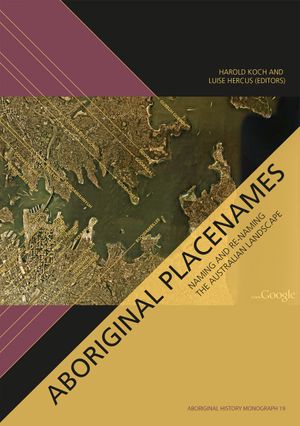
Aboriginal Placenames: Naming and re-naming the Australian landscape
Aboriginal approaches to the naming of places across Australia differ radically from the official introduced Anglo-Australian system. However, many of these earlier names have been incorporated into contemporary nomenclature, with considerable reinterpretations of their function and form. Recently, state jurisdictions have encouraged the adoption of a greater number of Indigenous names, sometimes alongside the accepted Anglo-Australian terms, around Sydney Harbour, for example. In some cases, the use of an introduced name, such as Gove, has been contested by local Indigenous people. The 19 studies brought together in this book present an overview of current issues involving Indigenous placenames across the whole of Australia, drawing on the disciplines of geography, linguistics, history, and anthropology. They include meticulous studies of historical records, and perspectives stemming from contemporary Indigenous communities. The book includes a wealth of documentary information on some 400 specific placenames, including those of Sydney Harbour, the Blue Mountains, Canberra, western Victoria, the Lake Eyre district, the Victoria River District, and southwestern Cape York Peninsula.
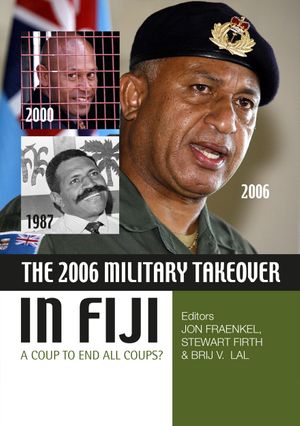
The 2006 Military Takeover in Fiji: A Coup to End All Coups?
This book explores the factors behind – and the implications of – the 2006 coup. It brings together contributions from leading scholars, local personalities, civil society activists, union leaders, journalists, lawyers, soldiers and politicians – including deposed Prime Ministers Laisenia Qarase and Mahendra Chaudhry. The 2006 Military Takeover in Fiji: A Coup to End All Coups? is essential reading for those with an interest in the contemporary history of Fiji, politics in deeply divided societies, or in military intervention in civilian politics.

Zukunft der Arbeit in Industrie 4.0
Industrial and Production Engineering; Robotics and Automation; Engineering Economics, Organization, Logistics, Marketing; Manufacturing, Machines, Tools; Information Systems Applications (incl. Internet)

Zukunft der Arbeit – Eine praxisnahe Betrachtung
Automatisierung; Digitalisierung; Industrie 4.0; Veränderung der Arbeitswelt; Arbeitsmodelle; Arbeitsorganisation; Gestaltung von Arbeitssystemen

X-Ray Contrast Media: Overview, Use and Pharmaceutical Aspects
X-Ray; Radiography; Imaging; Radiology
Working, Housing: Urbanizing: The International Year of Global Understanding – IYGU
Urban Geography / Urbanism (inc. megacities, cities, towns); Labor Economics; Human Geography; Regional Development