
Books

Bishops in Flight: Exile and Displacement in Late Antiquity
Flight during times of persecution has a long and fraught history in early Christianity. In the third century, bishops who fled were cowards or, worse yet, heretics. On the face of it, it meant denial of Christ and thus betrayal of the faith and its community. But, by the fourth century, the terms of persecution changed as Christianity became the favored cult of the Roman Empire. Prominent Christians who fled and hence survived became founders and influencers of Christianity over time. Bishops in Flight examines the various ways these episcopal leaders both appealed to and altered the discourse of Christian flight to defend their status as purveyors of Christian truth even when their exiles appeared to condemn them. It illuminates how profoundly Christian authors deployed theological discourse and the rhetoric of heresy to respond to the phenomenal political instability of the fourth and fifth centuries.
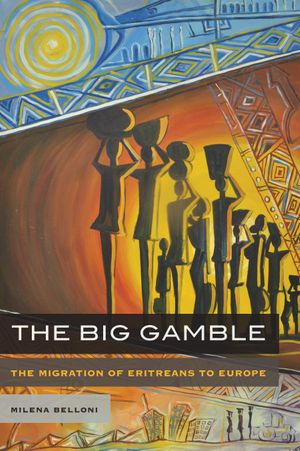
The Big Gamble: The Migration of Eritreans to Europe
Tens of thousands of Eritreans make perilous voyages across Africa and the Mediterranean Sea every year. Why do they risk their lives to reach European countries where so many more hardships await them? By visiting family homes in Eritrea and living with refugees in camps and urban peripheries across Ethiopia, Sudan, and Italy, Milena Belloni untangles the reasons behind one of the most under-researched refugee populations today. Balancing encounters with refugees and their families, smugglers, and visa officers, The Big Gamble contributes to ongoing debates about blurred boundaries between forced and voluntary migration, the complications of transnational marriages, the social matrix of smuggling, and the role of family expectations, emotions, and values in migrants’ choices of destinations.
“Milena Belloni’s engrossing ethnography—carried out across time, space, and place— is particularly commendable because of her scholarly commitment to ‘getting things right.’ The Eritrean women and men whose lives provided its empirical ground will see their pain, joy, and contradictions reflected back at them. This is scholar activism at its finest.” LAURA BISAILLON, Professor of Health and Society, University of Toronto Scarborough
“The Big Gamble is a study of a migrant group that has received very little scholarly attention. Its focus on the Eritrea to Europe corridor is a novel approach, and Milena Belloni has produced a compelling and courageous account.” PETER KIVISTO, Augustana College and University of Helsinki
“A monumental and perceptive story of migration, taking the reader on a journey not just from Africa to Europe but through reflections on moralities, risk, and trust that are central to contemporary mobility and immobility. Belloni’s account of Eritrean migration experiences is powered by formidable fieldwork and written with warmth and wisdom.” JØRGEN CARLING, Peace Research Institute Oslo
MILENA BELLONI is a sociologist at the University of Trento. Her doctoral research on Eritrean migration received the 2016 IMISCOE Award. Belloni has published in the Journal of Refugee Studies and the Journal of Ethnic and Migration Studies.
Al-Haq: A Global History of the First Palestinian Human Rights Organization
A free open access ebook is available upon publication. Learn more at www.luminosoa.org.
The leadership and legacy of al-Haq, from its origins in Palestine to its international impact
Established in Ramallah in 1979, al-Haq was the first Palestinian human rights organization and one of the first such organizations in the Arab world. This inside history explores how al-Haq initiated methodologies in law and practice that were ahead of its time and that proved foundational for many strands of today’s human rights work in Palestine and elsewhere. Lynn Welchman looks at both al-Haq’s history and legacy to explore such questions as: Why would one set up a human rights organization under military occupation? How would one go about promoting the rule of law in a Palestinian society deleteriously served by the law and with every reason to distrust those charged with implementing its protections? How would one work to educate overseas allies and activate international law in defense of Palestinian rights? This revelatory story speaks to the practice of local human rights organizations and their impact on international groups.

Advancing Equality: How Constitutional Rights Can Make a Difference Worldwide
In a world where basic human rights are under attack and discrimination is widespread, Advancing Equality reminds us of the critical role of constitutions in creating and protecting equal rights. Combining a comparative analysis of equal rights in the constitutions of all 193 United Nations member countries with inspiring stories of activism and powerful court cases from around the globe, the book traces the trends in constitution drafting over the past half century and examines how stronger protections against discrimination have transformed lives. Looking at equal rights across gender, race and ethnicity, religion, sexual orientation and gender identity, disability, social class, and migration status, the authors uncover which groups are increasingly guaranteed equal rights in constitutions, whether or not these rights on paper have been translated into practice, and which nations lag behind. Serving as a comprehensive call to action for anyone who cares about their country’s future, Advancing Equality challenges us to remember how far we all still must go for equal rights for all.
Using Gramsci: A New Approach
This is a new approach to one of the greatest political theorists, Antonio Gramsci. Gramsci’s Prison Notebooks are one of the most popular Marxist texts available and continue to inspire readers across the world. Here, Michele Filippini proposes a new approach based on the analysis of previously ignored concepts in his works, creating a book which stands apart.Including chapters on ideology, the individual, collective organisms, society, crisis and temporality, Using Gramsci offers a new pattern in Gramscian studies aimed to speak to the broader audience of social sciences scholars beyond the field of political theory and Marxism, while remaining firmly rooted in his writings. Working from the original Italian texts, Filippini also examines the more traditional areas of Gramsci’s thought, including hegemony, organic intellectuals and civil society.This book will be perfect for all scholars and students of Gramsci’s thought.
Beiträge zur Theaterwissenschaft Südosteuropas und des mediterranen Raums: 1. Band
This is a volume of 12 studies on specific topics of theatre and drama history in the Balkans and the Eastern Mediterranean. The scientific interest in the culture of this area during the unification process of Europe is increasing. Five of these studies are of comparative nature, seven focus on Greece and its European connections in the field of theatre and drama. Comparative studies in South Eastern Europe and the Eastern Mediterranean, especially in theatre and drama history, are very rare. Some of these studies are ground-breaking in specific subjects. Exhaustive registers will bring these studies together thematically, studies which in sum, together with the ones of the second volume, will give an idea of a future handbook on Southeatersn Europe theatre and drama from the Midde Ages up to the 20th century.
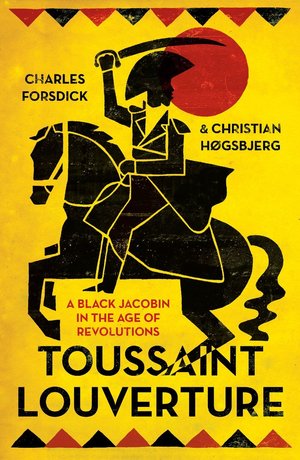
Toussaint Louverture: A Black Jacobin in the Age of Revolutions
Toussaint Louverture (c1743–1803) was the heroic leading figure in the Haitian Revolution of 1791–1804, the only successful slave revolt in recorded history, and he remains an international inspiration, seen by many to be one of the greatest anti-imperialist fighters who ever lived. Toussaint was a military genius who led an army composed overwhelmingly of former enslaved Africans and people of African descent to victory after victory under the banner Liberty or Death over the professional armies of France, Spain and Britain, before paying the ultimate price himself for refusing to compromise with imperial power at the expense of the maintenance of liberty for all. This new political biography of Toussaint aims to provide readers with an accessible yet scholarly introduction to his complex life while critically analysing Toussaint’s political thought, his contribution as a revolutionary leader, and his legacy for both Haiti and the wider world.

The Profit Doctrine: Economists of the Neoliberal Era
The economics profession has a lot to answer for. After the late 1970s, the ideas of influential economists have justified policies that have made the world more prone to economic crisis, remarkably less equal, more polluted and less secure than it might be. How could ideas and policies that proved to be such an abject failure come to dominate the economic landscape? By critically examining the work of the most famous economists of the neoliberal period including Alan Greenspan, Joseph Stiglitz and Paul Krugman, the authors Robert Chernomas and Ian Hudson demonstrate that many of those who rose to prominence did so primarily because of their defence of, and contribution to, rising corporate profits and not their ability to predict or explain economic events.An important and controversial book, The Profit Doctrine exposes the uses and abuses of mainstream economic canons, identify those responsible and reaffirm the primacy of political economy.
A People’s History of the Russian Revolution
The Russian Revolution was an explosion of mass democracy from below. It transformed the people who took part and inspired tens of millions across the world. Its global impact shook the capitalist system to its foundations and came close to bringing it down. But in the end, the revolutionary movement was destroyed by the most murderous counter-revolutionary terror in history. And because the real history of the revolution is so subversive of class rule everywhere— East, West, and South— it has been buried under a mountain of lies, distortions, and denials. This book sets out to nail every bogus argument about the Russian Revolution— from Tories, Stalinists, and sectarians— and to present the living reality of a mass movement of millions, organised in participatory assemblies, mobilised for militant action.
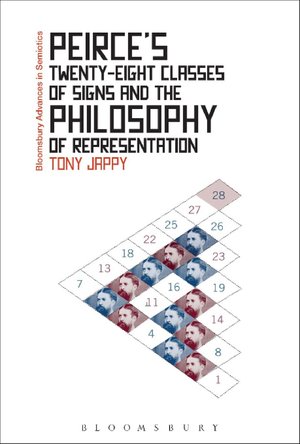
Peirce’s Twenty-Eight Classes of Signs and the Philosophy of Representation: Rhetoric, Interpretation and Hexadic Semiosis
The major principles and systems of C. S. Peirce’s ground-breaking theory of signs and signification are now generally well known. Less well known, however, is the fact that Peirce initially conceived these systems within a ‘Philosophy of Representation’, his latter-day version of the traditional grammar, logic and rhetoric trivium. In this book, Tony Jappy traces the evolution of Peirce’s Philosophy of Representation project and examines the sign systems which came to supersede it. Exploring the potential of the later sign-systems that Peirce scholars have hitherto been reluctant to engage with and extending Peirce’s semiotic theory beyond the much canvassed systems of his Philosophy of Representation, this book will be essential reading for everyone working in the field of semiotics.
Kurdish Hizbullah in Turkey: Islamism, Violence and the State
An academic insider’s account of the Islamist social movement Kurdish Hizbullah.
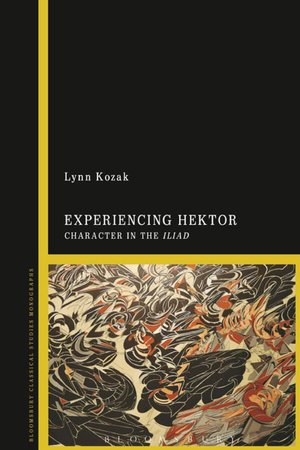
Experiencing Hektor: Character in the Iliad
This book presents a rigorous philological examination of every instance where Hektor enters the Iliad, analysing each entrance’s narrative context and style. In so doing, the author challenges and destabilises previous popular and scholarly assumptions about Hektor, and about the Iliad as a whole.
Corpus Linguistics and 17th-Century Prostitution: Computational Linguistics and History
Corpus linguistics has much to offer history, being as both disciplines engage so heavily in analysis of large amounts of textual material.This book demonstrates the opportunities for exploring corpus linguistics as a method in historiography and the humanities and social sciences more generally. Focusing on the topic of prostitution in 17th-century England, it shows how corpus methods can assist in social research, and can be used to deepen our understanding and comprehension.McEnery and Baker draw principally on two sources— the newsbook Mercurius Fumigosis and the Early English Books Online Corpus. This scholarship on prostitution and the sex trade offers insight into the social position of women in history.

The Revolutions of 1989: A Handbook
Only a few people foresaw the sudden and momentous events of 1989: within weeks the seemingly unshakable communist regimes of Eastern Europe were washed away and with them the postwar international order. This book gives an overview over the national revolutions and external reactions. It contains chapters on the revolutions in all major countries of the former communist bloc as well as on the responses of all major international players. The first part examines the revolutionary events – from above and from below – in Eastern Europe as well as China and their backgrounds. The second part deals with Soviet and Western perceptions and responses. The third part focuses on the aftermath of the revolutions, on societal transformations, the acceptance of the new Central European democracies to NATO and the EU, and on the memory of 1989.
“By far the best collective work on this topic … This book will be unique, and is much needed – at a time when social scientists continue to strive to understand the ‘Arab revolutions’.” Pierre Grosser
“We get in-depth analysis and diversity of the assessments.” Pierre Grosser

Cultural Circulation: Dialogues between Canada and the American South
Der Band basiert auf den Vorträgen, die ExpertInnen aus Nordamerika und Europa bei einem internationalen Kolloquium 2010 an der ÖAW über die historischen, kulturellen und literarischen Beziehungen zwischen Kanada und dem amerikanischen Süden gehalten haben. Die Beiträge zu dem breiten und bisher noch nicht systematisch untersuchten Themenkomplex gruppieren sich um vier Schwerpunkte. Sie erhellen demographische Phänomene (und ihre künstlerische Verarbeitung) wie die Vertreibung der Acadiens im 18. Jahrhundert und ihre Ansiedlung in Louisiana (Cajuns) und die Flucht afroamerikanischer Sklaven nach Kanada im 19. Jahrhundert. Besonders aber werden die intertextuellen Beziehungen zwischen AutorInnen aus den Südstaaten der USA (etwa William Faulkner oder Eudora Welty) und von ihnen inspirierten kanadischen SchriftstellerInnen im 20. Jahrhundert (Alice Munro, Jack Hodgins, Margaret Atwood u. a.) untersucht. Der so geführte intensive Dialog zwischen den beiden Kulturräumen wird aus verschiedenen Blickwinkeln und mit unterschiedlichen Methoden betrachtet und dabei kultur- und literarhistorisches Neuland betreten. Dies gilt auch für die Erörterung von parallelen gattungsspezifischen Entwicklungen in den beiden Gesellschaften. Neben den über zwanzig wissenschaftlichen Aufsätzen kommt auch das ludische Element in phantasievoll-kreativen Dialogen im Buch zu seinem Recht.

Roland Barthes at the Collège de France
Roland Barthes at the Collége de France studies the four lecture courses given by Barthes in Paris between 1977 and 1980. This study, the first full-length account of this material, places Barthes’s teaching within institutional, intellectual and personal contexts. Analysing the texts and recordings of Comment vivre ensemble, Le Neutre and La Préparation du roman I et II in tandem with Barthes’s 1970s output, the book brings together for the first time all the strands of Barthes’s activity as writer, teacher and public intellectual. Theoretically wide-ranging in scope, Lucy O’Meara’s study focuses particularly on Barthes’s pedagogical style, addressing how his willfully un-magisterial teaching links to the anti-systematic, anti-dogmatic goals of the rest of his work. Roland Barthes at the Collége de France reassesses the critical and ethical priorities of Barthes’s work in the decade before his death, demonstrating the vitally affirmative core of Barthes’s late thought.
Au-pair: Von der Kulturträgerin zum Dienstmädchen : Die moderne Kleinfamilie als Bildungsbörse und Arbeitsplatz
Since the 1970s, highly educated families in Austria have employed Au-pairs for taking care of their children. Why have these families preferred Au-pairs to kindergartens with qualified teachers? Were Au-pairs just a flexible substitute or did they have additional functions in the family? Which social and political climate has favoured this private form of childcare? The empirical basis of the work was the documentation of one of the major Austrian Au-pair agencies for the period 1978 – 2000, particularly 298 self-descriptions from guest families and the agency´s annual reports. The material was supplemented by interviews with ten guest families and by interviews with two experts. Thus is possible to analyze the socio-demographic characteristics of guest-families in Vienna and its suburbs, their motivations for taking Au-pairs, and their expectations. The findings indicate that Au-pairs usually serve several roles within the families: for instance, one very important role is to “double” mothers in order to free their minds to continue their social and work life. The pair system is also discussed in view of its two historic threads: one is a long European “education abroad” tradition for rather upper class children. The other thread is a “work-migration” tradition for lower class childs that had to go to cities to work as domestic servants. Which of the two traditions dominates the Au-pair market depends on the economic situation of the countries from which the Au-pairs come. Consequently, the economic and political changes around 1989 in Eastern Europe have had major impacts on the characteristics of Au-pair jobs in Austria.
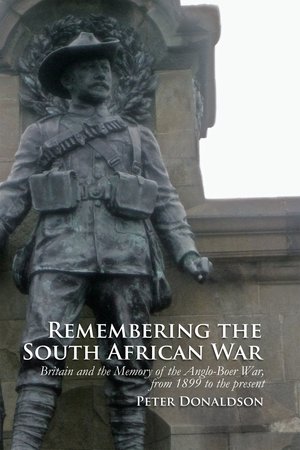
Remembering the South African War: Britain and the Memory of the Anglo-Boer War, from 1899 to the Present
The experience of the South African War sharpened the desire to commemorate for a number of reasons. An increasingly literate public, a burgeoning populist press, an army reinforced by waves of volunteers and, to contemporaries at least, a shockingly high death toll embedded the war firmly in the national consciousness. In addition, with the fallen buried far from home those left behind required other forms of commemoration. For these reasons, the South African War was an important moment of transition in commemorative practice and foreshadowed the rituals of remembrance that engulfed Britain in the aftermath of the Great War. This work provides the first comprehensive survey of the memorialisation process in Britain in the aftermath of the South African War. By uncovering the themes and myths that underpinned these interpretations of the war, shifting patterns in how the war was represented and conceived are revealed.

Proust and America: The Influence of American Art, Culture, and Literature on A la recherche du temps perdu
It is strange— Proust wrote in 1909—that, in the most widely different departments… there should be no other literature which exercises over me so powerful an influence as English and American.â€? In the spirit of Proust’s admission, this engaging and critical volume offers the first comparative reading of the French novelist in the context of American art, literature, and culture. In addition to examining Proust’s key American influences— Ralph Waldo Emerson, Edgar Allen Poe, and James McNeill Whistler— Proust and America investigates the previously overlooked influence of the American neurologist George Beard, whose writings on neurasthenia and American nervousness contributed to the essential modernity of the author’s work.
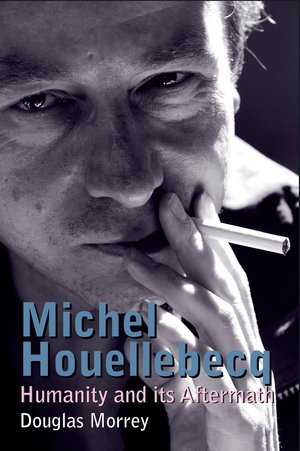
Michel Houellebecq: Humanity and its Aftermath
Michel Houellebecq is perhaps the single most successful and controversial of all contemporary novelists writing in French. Houellebecq has become a global publishing phenomenon: his books have been translated worldwide, three film adaptations of his work have been produced, and the author has been the subject of million-euro publishing deals and of successive media scandals in France. His novels narrate a metaphysical mutation or paradigm shift through which humanity as we know it ceases to be the over-riding value or focus of our world when it comes into conflict with a competitor in the form of a post-human or neo-human species. It is the aim of this book to appraise the global significance of Houellebecq’s novelistic visions while at the same time situating them within the context of French literature, culture and society.
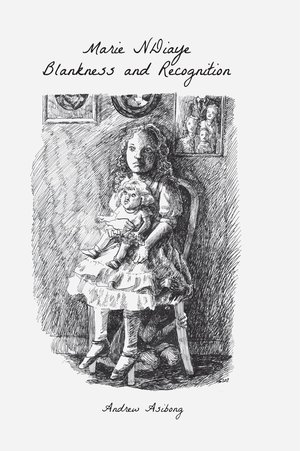
Marie NDiaye: Blankness and Recognition
This is the first critical study in English to focus exclusively on the work of Marie NDiaye, born in central France in 1967, winner of the Prix Femina (2001), the Prix Goncourt (2009), shortlisted for the Man Booker International Prize (2013), and widely considered to be one of the most important French authors of her generation. Andrew Asibong argues that at the heart of NDiaye’s world lurks an indefinable blankness which makes it impossible for the reader to decode narrative at the level of psychology or event. Considering each of NDiaye’s works (including her novels, theatre, short fiction and writing for children), Asibong assesses the aesthetic, emotional and political stakes of NDiaye’s portraits of impenetrable selfhood. His book provides an original and provocative framework within which to read NDiaye as a simultaneously hybrid and hyper-French cultural figure, fascinating and fantastical practitioner of the postmodern and reluctantly postcolonial blank arts.
Involuntary Associations: Postcolonial Studies and World Englishes
The consequences of Englishes spread have become increasingly clear to its diverse speakers. Sometimes associated with a standardization leading to homogenization, often also with imperialism, English is increasingly understood to have no necessary connection with any country or group of countries. The willingness to accept that English has become Englishes might be less evident among so-called native speakers, but their authority is weaker than it seemed. This book puts examples from World Englishes into dialogue with postcolonial studies. The dialogue will correct misconceptions and misapprehensions in postcolonial studies, with World Englishes offering renewal for postcolonial studies. At the same time, the dialogue will also apply postcolonial studies’ political and philosophical ideas to World Englishes, resulting in a postcolonial perspective on English today.
French Cycling: A Social and Cultural History
French Cycling: a Social and Cultural History aims to provide a balanced and detailed analytical survey of the complex leisure activity, sport, and industry that is cycling in France. Identifying key events, practices, stakeholders and institutions in the history of French cycling, the volume presents an interdisciplinary analysis of how cycling has been significant in French society and culture since the late Nineteenth century. Based on a very wide range of primary and secondary sources, the volume aims to present in clear language an explanation of the varied significance of cycling in France over the last hundred years.
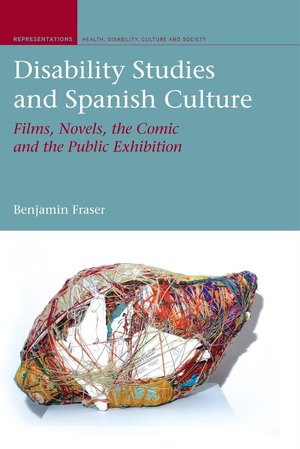
Disability Studies and Spanish Culture: Films, Novels, the Comic and the Public Exhibition
Disability Studies and Spanish Culture is the first book to apply the tenets of Disability Studies to the Spanish context. In particular, this work is an important corrective to existing cultural studies of disability in Spain that tend to largely ignore intellectual disabilities. Taking on the representation of Down syndrome, autism, alexia/agnosia as well as childhood disability, its chapters combine close readings of a number of Spanish cultural products (films, novels, the comic/graphic novel and the public exhibition) with a broader socio-cultural take on the state of disability in Spain. While researchers and students of cinema will be particularly interested in the book’s detailed analyses of the formal aspects of the films, comics, and novels discussed, readers from backgrounds in history, political science and sociology will all be able to appreciate discussions of contemporary legislation, advocacy groups, cultural perceptions, models of social integration and more.

Creolizing Europe: Legacies and Transformations
Creolizing Europe critically interrogates creolization as the decolonial, rhizomatic thinking necessary for understanding the cultural and social transformations set in motion through trans/national dislocations. Exploring the usefulness, transferability, and limitations of creolization for thinking post/coloniality, raciality and othering not only as historical legacies but as immanent to and constitutive of European societies, this volume develops an interdisciplinary dialogue between the social sciences and the humanities. While not all the contributions in this volume explicitly address Edouard Glissant’s approach to creolization, they all engage with aspects of his thinking. All of the chapters explore the usefulness, transferability, and limitations of creolization to the European context. As such, this edited collection offers a significant contribution and intervention in the fields of European Studies, Postcolonial Studies, and Cultural Studies on two levels.

Contagion and Enclaves: Tropical Medicine in Colonial India
Colonialism created exclusive economic and segregatory social spaces for the exploitation and management of natural and human resources, in the form of plantations, ports, mining towns, hill stations, civil lines and new urban centres for Europeans. Contagion and Enclaves studies the social history of medicine within two intersecting enclaves in colonial India; the hill station of Darjeeling which incorporated the sanitarian and racial norms of the British Raj; and in the adjacent tea plantations of North Bengal, which produced tea for the global market. It establishes the vital link between medicine, the political economy and the social history of colonialism. It demonstrates that while enclaves were essential and distinctive sites of articulation of colonial power and economy, they were not isolated sites. The book shows that the critical aspect of the enclaves was in their interconnectedness; with other enclaves, with the global economy and international medical research.
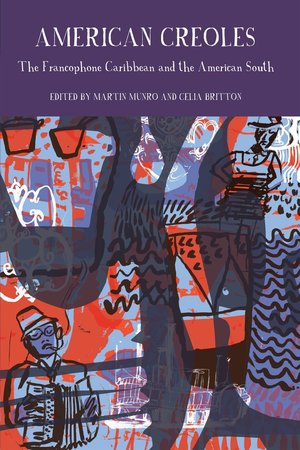
American Creoles: The Francophone Caribbean and the American South
The Francophone Caribbean and the American South are sites born of the plantation, the common matrix for the diverse nations and territories of the circum-Caribbean. This book takes as its premise that the basic configuration of the plantation, in terms of its physical layout and the social relations it created, was largely the same in the Caribbean and the American South. Essays written by leading authorities in the field examine the cultural, social, and historical affinities between the Francophone Caribbean and the American South, including Louisiana, which among the Southern states has had a quite particular attachment to France and the Francophone world. The essays focus on issues of history, language, politics and culture in various forms, notably literature, music and theatre.

Architekten- und Designer-Ehepaar Jacques und Jacqueline Groag: Zwei vergessene Künstler der Wiener Moderne
This manuscript is based on the results of a research project (No. 7726), carried out at the Institute for the History of Art (University of Vienna) under the direction of Professor Dr. Peter Haiko, and sponsored by the Jubilee Funds of the Austrian National Bank. The artists Jacques Groag (b. Olomouc, February 5, 1892, d. London, January 26, 1962) and his wife Jacqueline (née Hilde Blumberger, b.Prague, April 6, 1903, d. London, January 13, 1986) belong to those representatives of the Viennese Modernists between the two World Wars who are now forgotten, due to the fact that, being Jews, they were forced to emigrate in 1938. In the early phase of his career Jacques Groag worked as an assistant and executing architect for Adolf Loos (Moller house, 1927) and Ludwig Wittgenstein (Wittgenstein house, 1928) and co-operated with the interior designers Friedl Dicker and Franz Singer (Heller tennis club house, 1928). After that, in independent practice he realized a considerable number of remarkable architectural projects in Vienna and native Moravia (now Czech Republic), among others a pair of semi-detached houses at the Werkbundsiedlung, a house for the actress Paula Wessely, a country house for the industrialist Otto Eisler, several houses for other private clients, but also industrial buildings. At this time he was regarded as one of the most important followers of Adolf Loos. He also enjoyed remarkable success as a designer of interiors, and was befriended to many Viennese artists such as the painters Sergius Pauser and Josef Dobrowsky, the sculptor Georg Ehrlich and the photographer Trude Fleischmann. His wife Jacqueline, a student of Franz Cizek and Josef Hoffmann at the Wiener Kunstgewerbeschule, between the wars was active as a designer of textiles for the Wiener Werkstätte and for fashion houses in Paris. After the couple’s emigration to England in 1939 Jacques Groag could only find commissions as a designer of interiors and furniture, but found no opportunity to realize architectural projects. As a team, Jacques and Jacqueline made important contributions to prominent exhibitions on British design in the post-war period. Jacqueline, who outlived her husband for more than twenty years, continued her career as a successful textile designer until her late age.
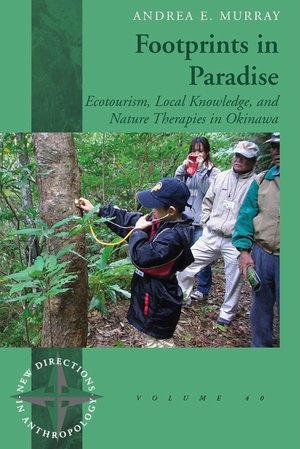
Footprints in Paradise: Ethnography of Ecotourism, Local Knowledge and Nature Therapies in Okinawa
In Okinawa, the southernmost prefecture of Japan, “ecotourism” promises to provide employment for a dwindling population of rural youth while preserving the natural environment and bolstering regional pride. Footprints in Paradise centers on how Okinawans’ sense of place is transforming rapidly, along with language, landscapes, cultural traditions, and wildlife: from marginalized and exoticized island phenomena into global heritage resources worth cherishing by insiders and outsiders. Footprints in Paradise is intended for readers interested in the anthropology of US-Japan-Okinawa relations, tourism and island environments, the politics of ecological sustainability, and the shifting ethics of human-animal relationships in the early twenty-first century.

Driving Modernity: Technology, Experts, Politics, and Fascist Motorways, 1922-1943
On March 26th, 1923, in a formal ceremony, construction of the Milan–Alpine Lakes autostrada officially began, the preliminary step toward what would become the first European motorway. That Benito Mussolini himself participated in the festivities indicates just how important the project was to Italian Fascism. This book recounts the twisting fortunes of the autostrada, which—alongside railways, aviation, and other forms of mobility—Italian authorities hoped would spread an ideology of technological nationalism. It explains how Italy ultimately failed to realize its mammoth infrastructural vision, addressing the political and social conditions that made a coherent plan of development impossible.