
Open Access Books

Strategic Affection?: Gift Exchange in Seventeenth-Century Holland
Gifts, from objects to hospitality and from poems to support, are a means of establishing and maintaining social ties. This study focuses on the nature of seventeenth- century Dutch social relations through the exchange of gifts by a wide range of individuals, from schoolmaster and artisan to poet and regent. Their gift-exchange behaviour is compared to contemporary gift exchange to show that both strategy and affection are necessary elements of social relations at any given time, and that what changes most is not the system but the discourse of exchange.

Steunberen van de samenleving: Sociologische essays
What keeps a society together? Common values and norms are usually indicated as the answer to the striking question about the bonding (or social cohesion) of society. However, the author of this new collection of sociological essays is not satisfied with this standard answer. After all, the question must be asked what keeps a society together when common values are no longer present or no longer exist and society threatens to be torn apart by fierce group conflicts and sharp we-they contradictions. In those situations, a society, like a large cathedral, needs a number of buttresses in order not to collapse completely. These buttresses have indeed developed throughout history: a fair trial, religious tolerance, the search for scientific truth and, finally, non-violent conflict resolution. A society desperately needs these historically developed social institutions to deal with many opposing group interests and religious differences without falling into social disorder or destruction. These social institutions provide ‘counterforce’ against too much and too little social bonding. From this perspective, the essays compiled in a well-organized manner have been written and collected here for the first time.

Statistics and Reality: Concepts and Measurements of Migration in Europe
In the last decade, there has been a distinct trend towards a worldwide harmonisation of migration statistics, chiefly pushed by international bodies and organisations that need comparative data. Statistics and Reality shows that these attempts have as yet not been very successful. It provides an accessible account of the history of migration measurement in Europe and analyses the current conceptualisations of migration and data gathering procedures in twelve European countries in the context of their migration histories. Based on this analysis, the authors provide a critical insight into the migrant stocks and flows in their countries.

Sound Souvenirs: Audio Technologies, Memory and Cultural Practices
In recent decades, the importance of sound for remembering the past and for creating a sense of belonging has been increasingly acknowledged. We keep “sound souvenirs” such as cassette tapes and long play albums in our attics because we want to be able to recreate the music and everyday sounds we once cherished. Artists and ordinary listeners deploy the newest digital audio technologies to recycle past sounds into present tunes. Sound and memory are inextricably intertwined, not just through the commercially exploited nostalgia on oldies radio stations, but through the exchange of valued songs by means of pristine recordings and cultural practices such as collecting, archiving and listing. This book explores several types of cultural practices involving the remembrance and restoration of past sounds. At the same time, it theorizes the cultural meaning of collecting, recycling, reciting, and remembering sound and music.

Solidariteit en slachtofferschap: De morele betekenis van criminaliteit in een postmoderne cultuur
What is it that really binds Dutch people together? That’s the central question of many public debates.This study focuses on the the role of victimhood on our concept of society. Drawing on the works of the American philosopher Richard Rorty, the author discusses morality, criminality, religion, sexual abuse and legalisation of prostituiton.

Sociale (on)zekerheid: De voorziene toekomst
In the twentieth century, the debate about the future of social security focused on two key questions: who are eligible for social security and how exactly should whom organize this security? This model came under heavy pressure from the late 1970s. In the meantime, the system has become a lot more austere and the use of collective resources has been roughly halved. A new debate arose from the late 1990s. This concerned developments in the labor market with major consequences for social security: internationalization, automation and flexibility of the labor market. In the past decade it has become increasingly tangible that many certainties that once used to be certainties are no longer, or are no longer experienced as such. It is this quest that is central to the project ‘Future of social security’.
Social Movements in China and Hong Kong: The Expansion of Protest Space
The starting point of this book is the acknowledgement that on one side Chinese individuals, freer from the constraints of the State, have to rely on their own efforts for their well-being and, on the other side, in some circumstances, they gather together to defend their interests. The individualisation of society goes hand in hand with the collective movements that emerged as a result of individual wants. There are not only internal factors leading to the emergence of collective forms of action, but also external ones and that’s why the editors have chosen to encompass Hong Kong in their study. The authors argue that protest actions and movement taking place in the Mainland and Hong Kong have enabled both societies to expand their protest spaces. At a theoretical level, these developments lead us to reconceputalise citizenship as practised rather than as given.
Social Concertation in Times of Austerity: European Integration and the Politics of Labour Market Governance in Austria and Switzerland
Why do governments still negotiate with trade unions and employers in the design of labour market and welfare reforms despite the steady decline of trade union membership almost everywhere in Europe? Social Concertation in Times of Austerity investigates the political underpinnings of social concertation in this new context with a focus on the regulation of labour mobility and unemployment protection in Austria and Switzerland. It shows that the involvement of organised interests in policymaking is a strategy of compromise-building used by governments when they are faced with party-political divisions, or when unpopular reforms are likely to have risky electoral consequences.

From Mutual Observation to Propaganda War: Premodern Revolts in Their Transnational Representations
The Arab spring, protest movements in the EU, Russia, Turkey or elsewhere, are often labeled as twitter-revolutions. A crucial role is attributed to the new media, coverage of events abroad and ensuing mutual reactions. With the dissemination of print, revolts in early-modern times faced the challenge of a similar media-revolution. This influenced the very face of the events that could become full-fledged propaganda wars once the insurgents had won access to the printing press. But it also had an impact on revolt-narratives. Governments severely persecuted dissident views in such delicate issues as revolts. Observers abroad had no such divided loyalties and were freer to reflect upon the events. Therefore, the book focuses mainly on representations of revolts across borders.
Sign Here!: Handwriting in the Age of New Media
Sign Here! Handwriting in the Age of New Media features a number of articles from different fields, reaching from cultural and media studies to literature, film and art, and from philosophy and information studies to law and archival studies. Questions addressed in this book are: Will handwriting disappear in the age of new (digital) media? What happens to important cultural and legal concepts, such as original, copy, authenticity, reproducibility, uniqueness, and iterability? Where is the writing hand to be located if handwriting is performed not immediately ‘by hand’ but when it is (re)mediated by electronic or artistic media? Sign Here! Handwriting in the Age of New Media is the first part in the series Transformations in Art and Culture.

Shrines and Pilgrimage in the Modern World: New Itineraries into the Sacred
The modern pilgrimage – to sites ranging from Elvis’s Graceland to the Vietnam veterans’ annual Ride to the Wall to Jim Morrison’s Paris grave – is intertwined with our existential uncertainties in the face of a rapidly changing world. In a climate that reproduces the religious quest in seemingly secular places, it is no longer clear exactly what the term pilgrimage infers – and this unique glimpse at the modern spiritual journeys critiques our notions of the secular and the sacred, while commenting on the media’s multiplication of images that renders the modern pilgrimage a quest without an object. Using new ethnographical and theoretical approaches, this vivid collection offers a surprising new vision on the nonsecularity of the “secular” pilgrimage.

The Shifts in Hizbullah’s Ideology: Religious Ideology, Political Ideology, and Political Program
The Lebanese Shi’ite resistance movement, Hizbullah, is going through a remarkable political and ideological transformation. Hizbullah was founded in 1978 by various sectors of Lebanese Shi’ite clergy and cadres, and with Iranian backing as an Islamic movement protesting against social and political conditions. Over the years 1984/85 to 1991, Hizbullah became a full-fledged social movement in the sense of having a broad overall organization, structure, and ideology aiming at social change and social justice, as it claimed. Starting in 1992, it became a mainstream political party working within the narrow confines of its pragmatic political program. The line of argument in this dissertation is that Hizbullah has been adjusting its identity in the three previously mentioned stages by shifting emphasis among its three components: (1) from propagating an exclusivist religious ideology (2) to a more encompassing political ideology, and (3) to a down-to-earth political program.

Secularism or Democracy?: Associational Governance of Religious Diversity
Established institutions and policies of dealing with religious diversity in liberal democratic states are increasingly under pressure. Practical politics and political theory is caught in a trap between a fully secularized state (strict separation of state and politics from completely privatized religions based on an idealized version of American denominationalism or French republicanism) and neo-corporatist or ‘pillarized’ regimes of selective cooperation between states and organized religions. The book offers an original, comprehensive conceptual, theoretical and practical approach to problems of governance of religious diversity from a multi-disciplinary perspective combining moral and political philosophy, constitutional law, history, sociology and anthropology of religions and comparative institutionalism. Proposals of associative democracy – a moderately libertarian, flexible version of democratic institutional pluralism – are introduced and scrutinized whether they can serve as as plausible third way overcoming the inherent deficiencies of the predominant models in theory and practice.
Rural Livelihoods, Resources and Coping with Crisis in Indonesia: A Comparative Study
Most literature on the economic crisis in indonesia has focused on the negative macro-economic impacts during the “crisis- years” of 1997-99. The case studies presented in this book take a different perspective. With a longitudinal research perspective, this comparative study analyses a wide variety of responses to the crisis among communities and households. The case studies in this book cover the coping and adapting mechanisms of rural households under a variety of resource use practices and resource use regulations in different areas of Indonesia.

Romantic Modernism: Nostalgia in the World of Conservation
Is it possible for conservationists to approve of the reconstruction of old façades when virtually everything behind them is modern? Should they continue to protect the front façade, when the rest of the historic building has vanished? Is it socially responsible to spend government money on reconstructing a historic building that has been completely destroyed? Can one do such a thing fifty years on? According to reigning ideas in the world of conservation, the answer to all these questions is ‘no’. It is felt that building a stage set is dishonest, and rebuilding something that no longer exists is labelled a lie against history. Where does this predilection for honesty originate? And why do people prefer modern architecture to the reconstruction of what has been lost? Perhaps we are witnessing the legacy of Functionalism here, a movement that denounced the building of pseudo-architecture. Functionalism originated in Romanticism, when architects turned their backs on academic formalism and strove to invent a new, rational form of building. This romantic hunger for honesty was adopted by the conservationists, giving rise to a new respect for the authentic art work and a rejection of historicist restorations. Among conservationists too, distaste arose for the cultivation of a harmonious urban image, because an urban image that is maintained artificially ‘old’ was seen as a form of fraud.

Risks in the Making: Travels in Life Insurance and Genetics
Since the 1990s, the impact of genetic testing for insurance has been the subject of international debates. However, these have been rather speculative and abstract. In an effort to find new openings, the author explores this concern from an empirical sociological angle – by studying the insurance world from the inside, through an ethnographic study of the life insurance industry, exploring insurance practices and how insurers make risks, and underscoring the diversity of insurance markets, underwriting practices and strategies.
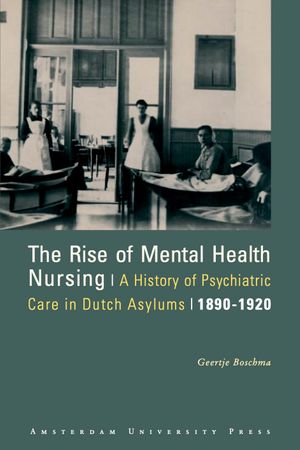
The Rise of Mental Health Nursing: A History of Psychiatric Care in Dutch Asylums, 1890-1920
Examining the relations between the rise of scientific psychiatry and the emergence of mental health nursing in Dutch asylums, this study analyses the social relationships of class, gender and religion that structured asylum care in the Netherlands around 1900. Drawing on archival collections of four Dutch asylums, the book highlights the gendered nature of mental health nursing politics. Seeking to model the asylum after the forceful example of the general hospital, psychiatrists introduced new somatic treatments and designed mental nurse training which aimed at creating a nursing staff skilled in somatic care. The training system, based on the projected image of the civilized, middle-class female nurse, bringing competence and compassion to the care of the mentally ill, created new opportunities for women, while at the same time restricting the role of men in nursing. Capturing the contradictory realities of hospital-oriented asylum care, the book illustrates the social complexity of the care of the mentally ill and forms an important addition to the historiography on European psychiatry.
Rhetoric, Rhetoricians and Poets: Studies in Renaissance Poetry and Poetics
The Netherlandish rhetoricians of the sixteenth century have, in the course of the last decades, shed their image of third-rate poets who, lacking all sense of true beauty, were capable only of pompous verbosity and a shallow manipulation of form. The new scholarly assessment has also shed light on the role they played in the cultural and literary life of their time, and it now appears that many of their dramas are well worth staging. Once the sixteenth century was freed from the stigma of being the “preparatory phase” for the Golden Age, the way was clear for thorough studies of the literature produced during the most turbulent period in the history of the Low Countries. This volume contains essays which deal with works written not only in Dutch, but also in French and in New Latin, with topics ranging from the effects of poetic principles on literary practice to the use of poetry as a means for improving society and developing the individual. The unifying thread in these studies is the pivotal importance of rhetoric in all forms of literary expression.
Responding to the West: Essays on Colonial Domination and Asian Agency
The nine essays of this volume, spanning from the eighteenth to mid-twentieth century, highlight the workings of, and reactions to, colonial domination in Asian contexts. The scholars, which include Victoria Haskins of the University of Newscastle, use a range of social science history methods to explore new paths to colonial history. How were individuals, groups, and social categories able to order their lives in the face of the implementation of external dominance? In other words, what was the agency enabling them to interact with, adapt to, use, counteract and in the end defeat colonialism? The essays emphasize colonialism as a multifaceted historical phenomenon which has taken a number of mutually incompatible forms. The various texts thus reflect on both the “early” colonialism build on indirect and informal practices, and the later forms marked by a high degree of authoritarian control.

Feminist Media: Participatory Spaces, Networks and Cultural Citizenship
While feminists have long recognised the importance of self-managed, alternative media to transport their messages, to challenge the status quo, and to spin novel social processes, this topic has been an under-researched area. Hence, this book explores the processes of women’s and feminist media production in the context of participatory spaces, technology, and cultural citizenship. The collection is composed of theoretical analyses and critical case studies. It highlights contemporary alternative feminist media in general as well as blogs, zines, culture jamming, and street art.
The Republican Alternative: The Netherlands and Switzerland Compared
The Netherlands and Switzerland are among the world’s most economically successful societies. Their inhabitants enjoy high standards of living and express great satisfaction with their lives according to surveys. This despite serious natural handicaps, such as a lack of raw materials and an abundance of water and rock respectively. The foundation for their prosperity was laid in the early modern period, between roughly 1500 and 1800, when, as federal republics, the two countries were already something of an anomaly in Europe. Their inhabitants experienced serious anxieties and tried to justify their exceptionality, to which they were, at the same time, greatly attached. The Republican Alternative attempts to clarify, through a sustained comparison, the special character of the two countries, which were similar perhaps at first sight, but nonetheless developed their own solutions to the challenges they faced. The book includes in-depth discussions of citizenship arrangements, Swiss and Dutch dealings with religious pluriformity, political discourses justifying the republican form of government, the advantages and disadvantages of an agrarian over a commercial society.
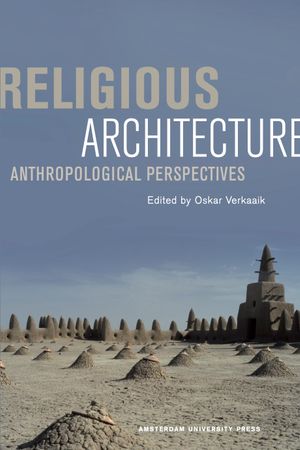
Religious Architecture: Anthropological Perspectives
Religious Architecture: Anthropological Perspectives develops an anthropological perspective on modern religious architecture, including mosques, churches and synagogues. Borrowing from a range of theoretical perspectives on space-making and material religion, this volume looks at how religious buildings take their place in opposition to the secular surroundings, how they, as evocations of the sublime, help believers to move beyond the boundaries of modern subjectivity, and how they, in their common sense definition, function as community centers in urban daily life. The volume includes contributions from a range of anthropologists working in the UK, Mali, Brazil, Spain and Italy.
Reframing Singapore: Memory – Identity – Trans-Regionalism
Over the past two decades, Singapore has advanced rapidly towards becoming a both a global city-state and a key nodal point in the international economic sphere. These developments have caused us to reassess how we understand this changing nation, including its history, population, and geography, as well as its transregional and transnational experiences with the external world. This collection spans several disciplines in the humanities and social sciences and draws on various theoretical approaches and methodologies in order to produce a more refined understanding of Singapore and to reconceptialize the challenges faced by the country and its peoples.
The Reform of Bismarckian Pension Systems: A Comparison of Pension Politics in Austria, France, Germany, Italy and Sweden
Pension reform has emerged as a major political issue in most advanced welfare states. Sluggish economic growth and rising unemployment put public pension systems under increasing financial pressure. In combination with a rapidly ageing population in the decades to come, these pressures render major adjustements in pension policy design inevitable, especially in countries with costly earnings-related benefit arrangements. However, timely and successful adjustement is anything but guaranteed. Both cuts of pension benefits and increases in contribution levels are bound to be highly unpopular and entail massive political risks. Thus, pension politics these days is as much about adjusting pension arrangements to changing demographic and economic conditions as it is about overcoming widespread political resistance to reforms that impose tangible losses on large parts of the population. This study reveals striking differences in the extent to which pension policy makers were able to generate a sufficient political support basis for their reform initiatives. As a consequence, pension reform outcomes reach from successful restructuring of existing pension arrangements all the way down to instances of outright policy failure. By tracing the political process of pension reform in Austria, France, Germany, Italy and Sweden since the late 1980s the book also provides us with deeper insights about the factors that facilitate – or impede – social policy reforms in the context of fiscal austerity.
Reading Contemporary Indonesian Muslim Women Writers: Representation, Identity and Religion of Muslim Women in Indonesian Fiction
Most literary analysis of the canon of Indonesian literature overlooks its religious aspect. This book is the first to discuss the construction of gender and Islamic identities in literary writing by four prominent Indonesian Muslim women writers: Titis Basino P I, Ratna Indraswari Ibrahim, Abidah El Kalieqy and Helvy Tiana Rosa. The narratives of the four writers are rich sources for revealing the construction of Indonesian Muslim women’s identities. Within their feminist reading the writers understand that gender roles are negotiable rather than inherent. In representing women in a variety of discourses they draw multi-faceted women struggling against repression and domination, and resisting their status as powerless.
Practising Citizenship and Heterogeneous Nationhood: Naturalisations in Swiss Municipalities
Switzerland likely has the most particular naturalization system in the world. Whereas in most countries citizenship attribution is regulated at the central level of the state, in Switzerland each municipality is accorded the right to decide who can become a Swiss citizen. This book aims at exploring naturalization processes from a comparative perspective and to explain why some municipalities pursue more restrictive citizenship policies than others. The Swiss case provides a unique opportunity to approach citizenship politics from new perspectives. It allows us to go beyond formal citizenship models and to account for the practice of citizenship. The analytical framework combines quantitative and qualitative data and helps us understand how negotiation processes between political actors lead to a large variety of local citizenship models. An innovative theoretical framework, integrating Bourdieu’s political sociology, combines symbolic and material aspects of naturalizations and underlines the production processes of ethnicity.

The Popular Policeman and Other Cases: Psychological Perspectives on Legal Evidence
In this compelling title, two distinguished scholars share their experiences as expert witnesses in cases ranging from eyewitness testimony, person identification and recovered memories, to false confessions, collaborative storytelling and causal attribution, in the context of various interrogation techniques and their ability to deliver reliable results. Each chapter describes in lucid, entertaining prose a representative case in the context of scholarly literature to date, showing how psychological expertise has been (and can be) used in a legal setting. The cases include petty and serious crime, from illegal gambling, infringed trademarks and risqué courtship behaviour, to honour killing and death on the climbing wall. The authors’ findings and recommendations apply to legal systems worldwide. There is no other English-language textbook covering a similarly wide range of offences, and this volume will fill a gap in the existing literature and demonstrate how psychological expertise can be used in a much larger area than is often realised.

The Place of Play: Toys and Digital Cultures
Increasingly, technology is at stake in toys, games and playing. With the immense popularity of computer games, questions concerning the role and function of technology in play have become more pressing. A key aspect of the increasing technologization and digitalization of both toys and play is the vagueness of borders between producers, consumers and players. In these so-called participatory cultures, players do not simply play with toys designed behind closed doors but become co-designers. This book takes a critical look at the advantages and disadvantages of participatory cultures and places the changing world of toys, games and playing in a historical context. Contrary to many New Media and computer game studies, this book takes the historical background of these phenomena into account by situating the changing world of play in the context of the social and cultural processes of commodification, domestication and urbanization from the 1850s to the present.
Persuasive Gaming in Context
The rapid developments of new communication technologies have facilitated the popularization of digital games, which has translated into an exponential growth of the game industry in the last decades. The ubiquitous presence of digital games has resulted in an expansion of the applications of these games from mere entertainment purposes to a great variety of serious purposes. In this edited volume, we narrow the scope of attention by focusing on what game theorist Ian Bogost has called “persuasive games”, that is, gaming practices that combine the dissemination of information with attempts to engage players in particular attitudes and behaviors. This volume offers a multifaceted reflection on persuasive gaming, that is, on the process of these particular games being played by players. The purpose is to better understand when and how digital games can be used for persuasion, by further exploring persuasive games and some other kinds of persuasive playful interaction as well. The book critically integrates what has been accomplished in separate research traditions to offer a multidisciplinary approach to understanding persuasive gaming that is closely linked to developments in the industry by including the exploration of relevant case studies.
Perfect Worlds: Utopian Fiction in China and the West
Perfect Worlds offers an extensive historical analysis of utopian narratives in the Chinese and Euro-American traditions. This comparative study discusses finally the rise of dystopian writing – a negative expression of the utopian impulse – in Europe and America (Zamyatin, Huxley, Orwell, Bradbury, Atwood) as well as in China (Lao She, Wang Shuo, and others). The author observes that the utopian imagination thrives in a context of secularization. It appears that in the twentieth century the distinction between utopia and dystopia is blurred as a result of the increasing autonomy of the reader. Fokkema argues that in modern times utopianism in China and in the West has developed in opposite directions, each appropriating attitudes from the other culture which originally were considered alien.