
Open Access Books
From Early Tang Court Debates to China’s Peaceful Rise
This volume presents new topics from Chinese history of the last 1400 years from a broad range of fields such as politics, religion, society, economy and culture. The refreshing eight articles give new insights on events as different as the inter-religious court debates of the Tang, the Jiaqing reform of the Qing, the China display on the Chicago World Fair in 1893, Christianity and state-building in Chaozhou, the Taiwan salt trade, Chinese indentured labour in World War I in France, China’s rise and current internet regulation. This book highlights the complexity of multi-level interaction of different agents in the center and periphery of China, inside and outside China, contributing to intellectual debates, political and social dynamics, economy structure, modernization, identity building and interaction with the outside.
From Behind the Curtain: A Study of a Girls’ Madrasa in India
In the aftermath of 9/11 Islamic seminaries or madrasas received much media attention in India, mostly owing to the alleged link between madrasa education and forms of violence. Yet, while ample information on madrasas for boys is available, similar institutions of Islamic learning for girls have for the greater part escaped public attention so far. This study investigates how madrasas for girls emerged in India, how they differ from madrasas for boys, and how female students come to interpret Islam through the teachings they receive in these schools. Observations suggest that, next to the official curriculum, the ‘informal’ curriculum plays an equally important role. It serves the madrasa’s broader aim of bringing about a complete reform of the students’ morality and to determine their actions accordingly.
Film Remakes as Ritual and Disguise: From Carmen to Ripley
The first book-length account of the symbolic chains that link remakes and explain their disguises, Film Remakes as Rituals and Disguise is also the first book to explore how and why these stories are told. Anat Zanger focuses on contemporary retellings of three particular tales-Joan of Arc, Carmen, and Psycho-to reveal what she calls the remake’s “rituals of disguise.” Joan of Arc, Zanger demonstrates, later appears as the tough, androgynous Ripley in the blockbuster Alien III film and the God-ridden Bess in Lars Von Trier’s Breaking the Waves. Ultimately, these remake chains offer evidence of the archetypes of our own age, cultural “fingerprints” that are reflective of society’s own preferences and politics. Underneath the redundancy of the remake, Zanger shows, lies our collective social memory. Indeed, at its core the lowly remake represents a primal attempt to gain immortality, to triumph over death-playing at movie theatres seven days a week, 365 days a year. Addressing the wider theoretical implications of her argument with sections on contemporary film issues such as trauma, jouissance, and censorship, Zanger offers an insightful addition to current debates in film theory and cinema history.

Film Festivals: From European Geopolitics to Global Cinephilia
Film festivals are hugely popular events that attract lovers of cinema worldwide. Focusing on the world’s most famous festivals – Cannes, Berlin, Venice and Rotterdam – Film Festivals tells the story of a phenomenon that began in the midst of geopolitical disputes in war-torn Europe. De Valck shows how festivals turned the odds into advantages and developed into a successful global network. Taking into account the oft multilateral influences of major actors, such as Hollywood, the avant-garde and political/economic agenda’s, the book offers a comprehensive understanding of film festivals. A must-read for everyone interested in quality film cultures that revolve around cultural value, aesthetic innovation and socio-political relevance.
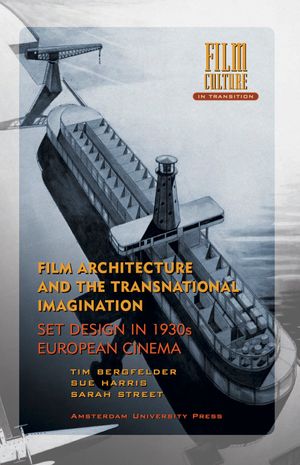
Film Architecture and the Transnational Imagination: Set Design in 1930s European Cinema
Film Architecture and the Transnational Imagination presents for the first time a comparative study of European film set design in the late 1920s and 1930s; based on a wealth of designers’ drawings, film stills and archival documents, the book offers a new insight into the development and significance of trans-national artistic collaboration during this period. European cinema from the late 1920s to the late 1930s is famous for its attention to detail in terms of set design and visual effect. Focusing on developments in Britain, France, and Germany, Film Architecture and the Transnational Imagination: Set Design in 1930s European Cinema provides a comprehensive analysis of the practices, styles, and function of cinematic production design during this period, and its influence on subsequent filmmaking patterns.
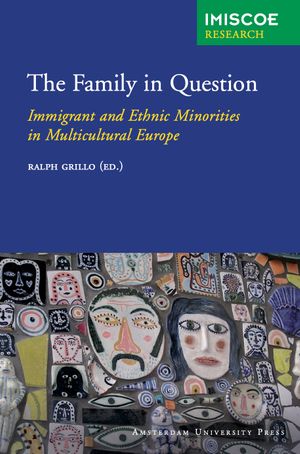
The Family in Question: Immigrant and Ethnic Minorities in Multicultural Europe
The family lives of immigrants and ethnic minority populations have become central to arguments about the right and wrong ways of living in multicultural societies. While the characteristic cultural practices of such families have long been scrutinized by the media and policy makers, these groups themselves are beginning to reflect on how to manage their family relationships. Exploring case studies from Austria, the Netherlands, Norway, Portugal, Spain, Switzerland, the United Kingdom, and Australia, The Family in Question explores how those in public policy often dangerously reflect the popular imagination, rather than recognizing the complex changes taking place within the global immigrant community.
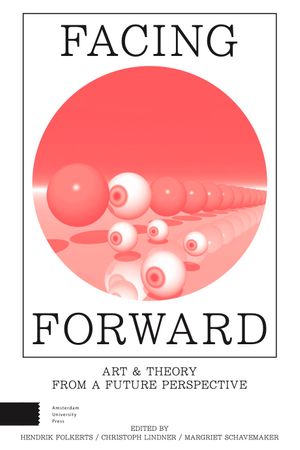
Facing Forward: Art and Theory from a Future Perspective
This spirited exploration of the interfaces between art and theory in the 21st century brings together a multidisciplinary range of viewpoints on their future. The authors examine contemporary visual culture based on speculative predictions and creative scientific arguments. Focusing on seven themes – Future Tech, Future Image, Future Museum, Future City, Future Freedom, Future History, and Future Future – the book shows how our sense of the future is shaped by a visual rhetoric of acceleration, progression, excess and destruction. The essays reflect collaborative work between the Stedelijk Museum Amsterdam, the Amsterdam School for Cultural Analysis at the University of Amsterdam, De Appel Arts Centre, W139–Space for Contemporary Art, and the art magazine Metropolis M. Discussing provocative themes like future history and future freedom, ‘Facing Forward’ is an energetic look at how our visions of the future affect how we depict the world around us.
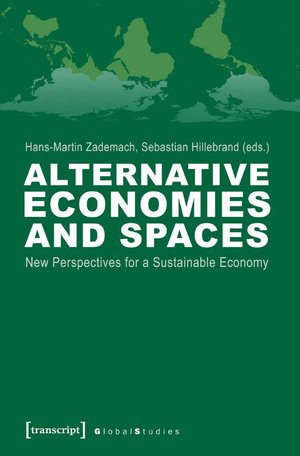
Alternative Economies and Spaces: New Perspectives for a Sustainable Economy
The volume entails a collection of contributions by leading scholars (Raymond Bryant, Michael K. Goodman, Benjamin Huybrechts, Andrew E.G. Jonas, Roger Lee, Peter North, and Katinka Weber) concerned with alternative modes of economic and social exchange. The cases addressed in these contributions – including credit unions, alternative currencies, sustainable consumption, and social enterprises – deliver valuable insights into how such alternatives are performed at various scales and spaces in relation to and beyond the economic mainstream. In sum, the collection provides vital grounds for both a transition of the economic system towards a more sustainable one, and a reconceptualisation of the economic itself in our scholarly thinking and everyday lives.
Exploring ‘Unseen’ Social Capital in Community Participation: Everyday Lives of Poor Mainland Chinese Migrants in Hong Kong
This book argues that using social capital to eradicate poverty is less likely to succeed because the mainstream neoinstitutional approach mistakenly assumes that social capital necessarily benefits poor people. This inadequacy calls for a re-assessment of human motivations, institutional dynamics and structural complexity in social capital building. Using ethnographic and participatory methods, this book calls for an exploration of ‘unseen’ social capital which is intended to challenge the mainstream understanding of ‘seen’ social capital. As such this book is useful to policy makers and practitioners.

Evart van Dieren: een kroniek van het falen
This remarkable title describes the life of one of Holland’s most remarkable figures: medical practitioner Van Dieren (1861-1940), Amsterdammer and prolific writer who caused quite a stir in his days. The author recounts the life and times of Van Dieren in the form of a series of narratives about the fights of this Dutch Don Quixote with his particular windmills. Individual chapters deal with his life, work, personal style, friendships and enmities, his discussions with psychoanalysts, socialists, scientists and above all of his tragic-comical failures. Unique source material is used to reconstruct this picture, such as the correspondence between Van Dieren and a large number of well-known Dutchmen, including novelist Van Eeden, Nobel laureate C.Eijkman, the philosopher Bolland, politician De Savornin Lohman, Queen Emma, and many others. Marginality and non-conformity are the key themes that run through the life of this observer which made him one of the most successful failures in Dutch history.

Euthanasie: Het proces van rechtsverandering
The process of legal change related to euthanasia in the Netherlands has been lengthy and extremely complex. Over a period of more than thirty years, legal standards have been developed that were laid down in a law in 2001. These legal norms have arisen in an interaction between different groups such as doctors (and in particular their professional group the Royal Dutch Society for the Promotion of Medicine), patient advocates (in particular the Dutch Association for Voluntary Euthanasia and health lawyers), advisory bodies, the judiciary, and also the Medical Inspectorate for Public Health and the medical disciplinary colleges), various political bodies and institutions and all kinds of individuals who may or may not have professionally engaged in the debate on euthanasia. In Euthanasia: The Legal Change Process, this complex process is unraveled and described in detail.
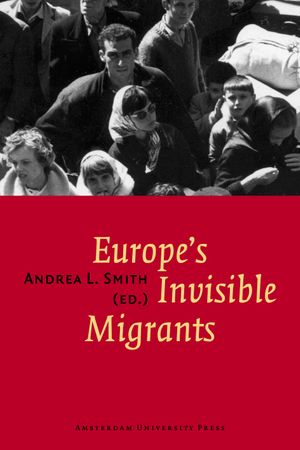
Europe’s Invisible Migrants
Following the decolonization movements that swept the globe after World War II, between four and six million people were ‘returned’ to Europe from the colonies. From an exporter of people, Europe turned to a site of immigration for the first time in the twentieth century. Until now, these migrations have been overlooked as scholars have highlighted instead the parallel migrations of former ‘colonized’ peoples. Europe’s Invisible Migrants corrects this bias. This multidisciplinary volume presents essays by prominent sociologists, historians, and anthropologists on their research with these ‘invisible’ migrant communities. Their work highlights the experiences of colonists returning to France, Portugal and the Netherlands, the intersection of race, citizenship, and colonial ideologies, and the ways these migrations reflect the return of the ‘colonial’ to Europe. This volume offers fresh insights into immigration, racism and ethnic conflict in post-colonial Europe by presenting colonial repatriates as another ‘immigrant’ population.

European Cinema: Face to Face with Hollywood
In the face of renewed competition from Hollywood since the early 1980s and the challenges posed to Europe’s national cinemas by the fall of the Wall in 1989, independent filmmaking in Europe has begun to re-invent itself. European Cinema: Face to Face with Hollywood re-assesses the different debates and presents a broader framework for understanding the forces at work since the 1960s. These include the interface of “world cinema” and the rise of Asian cinemas, the importance of the international film festival circuit, the role of television, as well as the changing aesthetics of auteur cinema. New audiences have different allegiances, and new technologies enable networks to reshape identities, but European cinema still has an important function in setting critical and creative agendas, even as its economic and institutional bases are in transition.
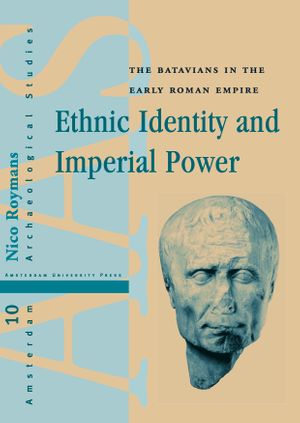
Ethnic Identity and Imperial Power: The Batavians in the Early Roman Empire
This study explores the theme of Batavian ethnicity and ethnogenesis in the context of the Early Roman Empire, starting with the current view of ethnicity as a culturally determined, subjective construct shaped through interaction with an ethnic ‘other’. The study analyses literary, epigraphic and archaeological sources relating to the Batavian image and self-image against the background of the specific integration of the Batavian community into the Roman world. The Batavian society was exploited by the Roman authorities for the recruitment of auxiliary soldiers. As a result it developed into a full-blown military community. The study’s main conclusion is that Rome exerted a profound influence on the formation of the Batavians both as a political entity and as an ethnic group. The combination of an explicit theoretical framework and a clear presentation of empirical data makes this book an indispensable work for all those interested in ethnicity and ethnogenesis in the context of the Roman Empire.
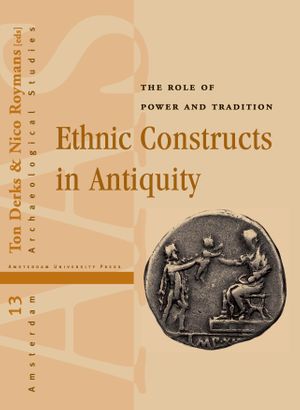
Ethnic Constructs in Antiquity: The Role of Power and Tradition
This volume explores the theme of ethnicity and ethnogenesis in societies of the ancient world. Its starting point is the current view in the social and historical sciences of ethnicity as a subjective construct that is shaped through interaction with an ethnic ‘other’. The 13 essays collected in this volume are based on the analysis of historical, epigraphic and archaeological source material and thematically range from Archaic Greece to Early Mediaeval Western Europe. Despite frequent claims by ethnic groups to the contrary, all ethnic formations are intrinsically unstable and dynamic over time. Much of this dynamism is to be understood in close association with conflict, violence and changing constellations of power. The explicit theoretical framework, together with the wide range of case-studies makes this volume indispensable for historians, archaeologists and social scientists with an interest in the ancient world.

Erfgoed: De geschiedenis van een begrip
The word ‘heritage’ is nowadays mainly used in the term pair ‘cultural heritage’. Another use of the word ‘heritage’ focuses precisely on the intangible meaning of the word. This includes the spiritual legacy of a thinker or artist. In the latter sense, the term ‘heritage’ has a longer history than in the first. In Heritage. The history of a concept reconstructs and analyzes the different histories of the concept. First of all, attention is paid to the legal origin and development of the word ‘heritage’. Willem Frijhoff highlights its religious dimension. Other authors focus on related concepts, such as ‘monument’ or ‘antiquities’. Eco Haitsma Mulier pays attention to the concept of ‘testators’, made famous by the famous Erflaters publication of our civilization by Jan and Annie Romein (1938). Eric Ketelaar, Gerard Rooijakkers and others each discuss a specific field of action within the cultural heritage: archives, literature, archeology, folklore. The collection ends with a reflection by Wessel Krul on the need of some to oppose the heritage idea or even the urge to destroy heritage.
The Englishization of Higher Education in Europe
The introduction of English as a medium of instruction (EMI) has changed higher education enormously in many European countries. This development is increasingly encapsulated under the term Englishization, that is, the increasing dispersion of English as a means of communication in non-Anglophone contexts. Englishization is not undisputed: legal challenges have arisen in several countries. Nor is it uniform; universities across Europe embrace Englishization, but they do so in their own way. In this volume, authors from 15 European countries present analyses from a range of perspectives coalescing around core concerns: the quality of education, cultural identity, inequality of opportunities and access, questions of justice and democracy, and internationalization and language policy. This book will appeal to researchers in applied linguistics, sociolinguistics, educational sciences, and political science, as well as policy makers and people with a concern about the direction of higher education.
Employment ‘Miracles’: A Critical Comparison of the Dutch, Scandinavian, Swiss, Australian and Irish Cases versus Germany and the US
Why did some economies experience a boom in the 1990s? Employment ‘Miracles’ comparatively analyses select miracle economies. The contributors to the volume critically analyze how the small size and institutional structure of seven countries like the Netherlands, Denmark and Ireland accounted for their success and status as economic models. Comparisons with the American and German markets reveal how differing policies – liberal versus corporatist/social democratic – determine job growth and levels of income inequality and poverty. The book also stresses the explanatory relevance of lucky circumstances such as the housing price bubble. Employment ‘Miracles’ is an important resource for political scientists and economists in their study of employment development.
When populism meets nationalism: Reflections on Parties in Power
“In Europe and beyond, today populism is alive and kicking. Over the past few years, anti-establishment parties have made substantial strides. Some of them have reached the levers of governments, while others are consolidating their gains. Being a “thin” ideology, populism is being contaminated by nationalism. This book offers a number of case studies on those countries whose governments have been labelled “national-populist”. Ranging from Italy to the United States, from the Visegrad countries to Turkey, Russia, and Latin America, this Report aims to single out what all these cases have in common, but also what sets them apart from each other.”

The Emotional Life of Contemporary Public Memorials: Towards a Theory of Temporary Memorials
From the commemoration of September 11 to the Holocaust memorial in Berlin, recent decades have witnessed a substantial increase in the number of new public memorials built in both Europe and the United States. This volume considers the contemporary explosion of public commemoration in terms of changed cultural and social practices of mourning, memory, and public feeling. Positing memorials as the physical and visual embodiment of our affective responses to loss, Erika Doss focuses especially on the memorial ephemera of flowers, candles, balloons, and cards placed at sites of tragic death in order to better comprehend how grief is mediated in contemporary commemorative cultures.
The Electoral Consequences of Third Way Welfare State Reforms: Social Democracy’s Transformation and its Political Costs
In all advanced Western nations, policy-makers have implemented encompassing welfare state reforms in recent decades breaking with past welfare arrangements. In particular, social democracy engaged in significant policy change under the Third Way paradigm and broke with its traditional reputation on welfare that had built the ties with the core constituency in the 20th century. The Electoral Consequences of Third Way Welfare State Reforms: Social Democracy’s Transformation and its Political Costs provides a comparative study of the electoral consequences of Third Way welfare state reforms. The book demonstrates that Third Way reforms went against the social policy preferences of social democracy’s core voters and indeed produced an electoral setback for social democrats at the ballots. Moreover, and accounting for cross-national variation, the analysis shows that the nature of the setback is contingent on the electoral system and the party competition social democrats face when reforming the welfare state.
Dynamic Entrepreneurship: First and Second-Generation Immigrant Entrepreneurs in Dutch Cities
The nature of immigrant entrepreneurship is changing in Dutch society. Nowadays, many immigrant entrepreneurs start businesses in producer and personal services instead of more traditional sectors such as retail or hotel and catering. At the same time, a growing number of second-generation immigrants are setting up their own firms in the Netherlands. These second-generation immigrants-born and/or raised in the receiving country-are following different trajectories in comparison with first-generation immigrant entrepreneurs, indeed displaying a move away from traditional immigrant niches. Yet studies on second-generation immigrant entrepreneurs remain limited in both the Dutch and international literature on this subject. This study presents one of the first explicit comparisons between first and second-generation self-employed immigrants. The embeddedness of immigrants in local and transnational networks and the dynamics of the markets in which these entrepreneurs are active are examined based on in-depth interviews with immigrant entrepreneurs in Dutch cities. In doing so, this study provides a vivid, longitudinal view of first and second-generation immigrant entrepreneurs, their incorporation into Dutch society, their businesses and business development(s).

The Dutch Polder Model in science and research
Scientific research in the Netherlands is doing remarkably well. Dutch researchers, universities and institutes reside at or near the top of international rankings. In this essay, José van Dijck and Wim van Saarloos, the president and vice-president of the Royal Netherlands Academy of Arts and Sciences (KNAW), explore how such a small country could become a global player in science and research. They highlight interconnectedness, collaboration, trust, and interwoven research and education among the quintessentially Dutch factors that paved the way to the success. They also show, however, that the country’s efforts to reach the top sometimes chip away at these trusted foundations. Investments in its research base are lagging, and some typically Dutch strengths have recently come under pressure. They close off with some suggestions on how the country may turn the tide, prolong its great achievements, and ensure a leading role for Dutch research in the nation’s future.

Democratie door interventie: De nieuwe White Man’s Burden?
Intervention democracy is about one of the most current and controversial aspects of contemporary international politics: meddling in the internal affairs of states to initiate, strengthen or defend democratic development. International democracy promotion is controversial. Do we have the right and the ability to meddle in the political affairs of other states on behalf of our idea of democracy? Continuing problems in countries such as Liberia, Sierra Leone, Afghanistan and Iraq indicate that international intervention, even an international military presence, does not guarantee stability, let alone democratic development. In Democracy through intervention, the arguments for and against international democracy promotion (with or without the deployment of military personnel) are discussed.

The deliverance of open access books: Examining usage and dissemination
In many scholarly disciplines, books – not articles – are the norm. As print runs become smaller, the question arises whether publishing monographs in open access helps to make their contents globally accessible. To answer this question, the results of multiple studies on the usage of open access books are presented. The research focuses on three areas: economic viability; optimization of open access monographs infrastructure and measuring the effects of open access in terms of scholarly impact and societal influence. Each chapter reviews a different aspect: book sales, digital dissemination, open licenses, user communities, measuring usage, developing countries and the effects on citations and social media.
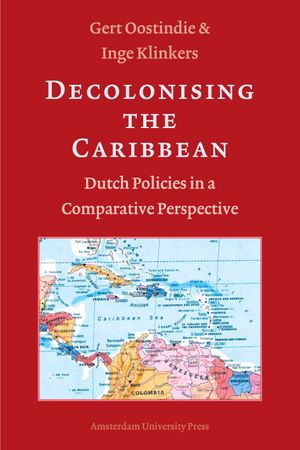
Decolonising the Caribbean: Dutch Policies in a Comparative Perspective
Much has been written on the post-war decolonisation in the Caribbean, but rarely from a truly comparative perspective, and seldom with serious attention to the former Dutch colonies of Surinam, the Netherlands Antilles and Aruba. This study bridges both gaps. In their analysis of Dutch decolonisation policies since the 1940s, the authors discuss not only political processes, but also development aid, the Dutch Caribbean exodus to the metropolis and cultural antagonisms. A balance is drawn both of the costs and benefits of independence in the Caribbean and of the outlines and results of the policies pursued in the non-sovereign Caribbean by France, the Netherlands, the United Kingdom and the United States.

Decentralisation in Africa: A Pathway out of Poverty and Conflict?
Grounded in empirically-based country case studies, this new study provides a sober assessment of what decentralisation can achieve. The current momentum for decentralisation of government in Africa and elsewhere in the developing world is unparalleled, but are the benefits claimed by its advocates being realised? Focusing on two claims in particular, this book questions whether decentralisation does offer a significant pathway out of poverty and conflict in Africa. Issues of poverty reduction are addressed in Uganda, Ghana, Malawi and Tanzania, while those of conflict management are explored in Mauritius, Namibia, South Africa, Uganda and Rwanda.

De staat van informatie
In times of computerization, the functioning and character of both society and government change. Sometimes this is clearly demonstrable, but sometimes it also happens in a more insidious way. The use of ICT offers opportunities for policy areas such as health care, youth policy and immigration policy, but also poses new fundamental questions to the public administration. How to deal with risks and vulnerabilities surrounding the use of new ICT? What does ‘forget’ mean in the age of unlimited storage capacity, or is it ‘once a digital thief, always a digital thief’? How can the government take responsibility for the network of information flows from which the digital government is increasingly built? In The State of Information, authors such as Ybo Buruma, Paul de Hert, Michel van Eeten, Corien Prins and Albert Meijer address these and other questions. The bundle is an important building block for the WRR report iGovernment (2011).

De perfecte verleiding: Muzikale scènes op het Amsterdams toneel in de 17e eeuw
In the seventeenth century, almost every stage performance was accompanied by music. Music was not only played between the companies, but also in the play itself. Music served as a background and decoration and was functionally integrated in the act of drama. The accounts of the Amsterdamse Schouwburg show that they employed professional musicians; in addition, the actors sang and danced. Following on from foreign stage music studies, this book focuses extensively on seventeenth-century theater music in the Netherlands for the first time. The centerpiece is the stage poet Jan Harmensz Krul, who skillfully interweaved music into his plays and who founded the Amsterdam Musyck room in 1634 – a foundation devoted entirely to the combination of poetry and music on stage. On the basis of five characteristic musical scenes from his work (the watchman scene, prison scene, serenade, sacrificial scene and sleep scene), an image is sketched of the Amsterdam theater music practice at the time. Such musical scenes were also loved by other stage poets, at home and abroad. They had a signaling function for the audience: they were immediately recognizable situations, benchmarks in the drama, which were associated with music by default. Poets varied to their heart’s content. For the playwright and spectator, those stereotypical musical scenes were what music was for the characters in the plays: an effective means of manipulation – a perfect seduction, of eye, ear and heart.
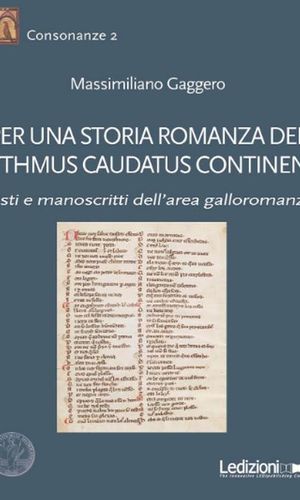
Per una storia romanza del rythmus caudatus continents: Testi e manoscritti dell’area galloromanza
Il rythmus caudatus continens è una tipologia metrica attestata nel Medioevo dalle Artes rythmicae latine e diffusa nelle letterature francese, provenzale, italiana e catalana, in un periodo che va dal XII al XV secolo e oltre. Pur senza costituire un genere letterario, i testi scritti in rythmus caudatus continens presentano, nelle diverse letterature, importanti somiglianze tematiche. Questo libro offre una sintesi della circolazione del metro partendo dallo studio dei testi composti nell’area galloromanza, che intreccia analisi metrico-stilistica, contenutistica e filologica. Vengono così descritte le costanti e i punti di snodo della tradizione, e presentate delle ipotesi sul modo in cui il rythmus caudatus continens è stato trasmesso alle letterature italiana e catalana, costituendosi in tal modo come un elemento importante della coesione del sistema letterario europeo del Medioevo.