
Books

Stop This Game! by Krishna Saksena
Society is in great distress today. We feel proud that we have advanced in the field of technology and science. But then we hang our heads down when corruption, deceit and immorality guide us to choose our
way in life. Elders fail to give a right direction to
the young.
All this and much more are disheartening as we walk ahead. But then, I would say, all is not lost, for hope glimmers from those few that can still show us the way.
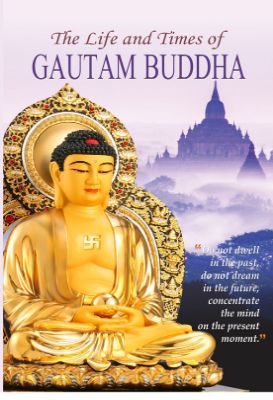
The Life and Times of Gautam Buddha by Arun K. Tiwari
What is the secret of Buddha’s hold on the mind and imagination of vast numbers of Asiatic humanity over two millenniums? What should one think when on the one hand Buddhism tells us that life is suffering and on the other we are told to enjoy life’s every moment?
The Life and Times of Gautam Buddha seeks to answer these questions. It brings together the leading ideas and tenets of Buddhism, interpreting them in the light of the fundamental principles of human life as well as of the latest research in the science of human mind.
The book takes reader through the life of Siddhartha Gautam in a manner of a mortal hero and establishes basis for his eventual enlightenment and observations. It describes his protected royal youth, search for a way to end suffering and his enlightenment. The book also takes up the core teachings one by one—the Four Noble Truths, the Noble Eightfold Path and the Six-sense media. The book brings together teachings of the Buddha ranging from basic ethical observances recommended to the busy man or woman of the modern world.
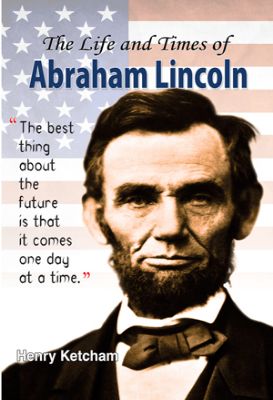
The Life and Times of Abraham Lincoln by Henry Ketcham
Abraham Lincoln was the 16th President of the United States, serving from March 1861 until his assassination in April 1865. Lincoln led the United States through its Civil War—its bloodiest war and an event often considered its greatest moral, constitutional, and political crisis.
Largely self-educated, Lincoln became a lawyer in Illinois, a Whig Party leader, and a member of the Illinois House of Representatives, in which he served for twelve years.
In 1860, Lincoln secured the Republican Party presidential nomination as a moderate from a swing state. Though he gained very little support in the slaveholding states of the South, he swept the North and was elected president in 1860. Lincoln’s victory prompted seven southern slave states to form the Confederate States of America before he moved into the White House.
Lincoln was re-elected president in November of 1864.
He was shot dead on April 14, 1865.
An inspiring biography of one of the greatest human beings on the earth who laid down his life for the betterment of mankind.
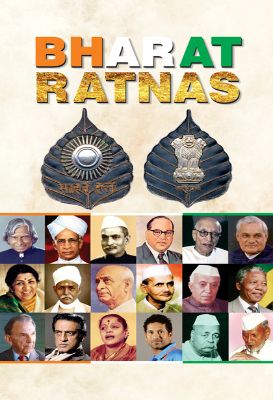
Bharat Ratnas by Anil Kumar / Manish Kumar
Bharat Ratna is the highest Civilian Award of India for exemplary service to the nation in various fields viz. social service, art & culture, science & research, sports etc. Bharat Ratna is special identity of those exceptional personalities, who possess extraordinary leadership qualities, who set a goal for their life and who never waived from their goal. They lead from the front, confront the challenges with fortitude, never allowed themselves to be cowed down by adverse circumstances; rather, they mould the circumstances in order to earn name and fame for themselves.
The purpose of this book is to acquaint the youth with the personalities and works of such great gems of India who have brought laurels for themselves and our motherland. Readers will realise that it is not enough to fly high in imagination for achievement of goal, rather it needs strict discipline and finest efforts.
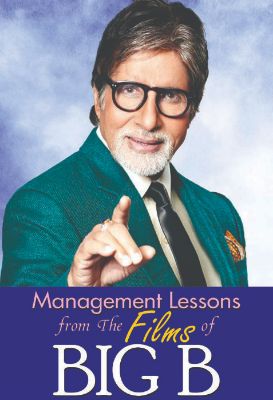
Management Lesson from the Films of Big B by Harmik Vaishnav
Management Lessons from the Films of Big B is a book born out of sheer love and passion for the movies of the great legend—Amitabh Bachchan; and its journey began with the repeated watching of the films of Amitabh Bachchan, especially Deewar and the meeting-room scene where Vijay—the hero plunges into action and is given confidence by the Boss bringing a ‘Eureka!’. The films are entertaining, of course, as it is the primary objective of any film. They also throw light on the contemporary society. But extracting the lessons for management, leadership, day-to-day professional attitude and learning for the personal life as well has hardly been contemplated hitherto.
This book will give an insight into the diverse topics which Amitabh Bachchan’s movies are based on and will provide valuable input about his dialogues and memorable acting
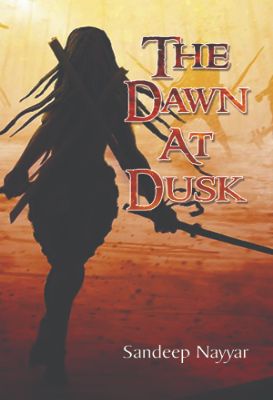
The Dawn At Dusk by Sandeep Nayyar
A gripping tale of love, betrayal, and vengeance, steeped in the magical realism of post-Vedic India. Shatvari is a beautiful young Brahmin girl, practitioner of classical music and firm believer in the holy Vedas and its spiritual philosophies. The king of the Yaduvanshis and his scheming priests twist that faith to turn her into a bloodthirsty Chandaal warrior. Exploited and shattered, Shatvari hunts a magical Yantra and the spiritual powers it contains. But in her single-minded pursuit of revenge, she falls victim to the curse lurking within the very same miraculous powers. Elsewhere, the young Nishaad King Neel, courtesans Amodini and Vaishali, and the Yaduvanshis’ nemeses the Raghuvanshis, gear up to enter the fray as well. What heavenly powers lie within the Yantra, and what curse stays the hands of those who would unleash them? Can Shatvari survive that curse and harness those powers? Will the Yaduvanshis’ other enemies help Shatvari seek her vengeance? Or will the story end in all-out war?
Living Life Loving Life by Brig. Chitranjan Sawant
The book Living Life Loving Life by Brigadier Chitranjan Sawant, VSM written in a racy language for the common man makes an interesting reading in leisure hours both in the library and at home. The essays therein on different topics of interest to both the literati and the glitterati are indeed a perennial source of casual information and lasting knowledge.
Written in simple English, various essays on myriad topics kindle keen interest and an intense desire to continue reading the book irrespective of time of the day or night. When a prospective reader is tense, Living Life Loving Life relaxes him. Essays on controversial subjects too are read and discussed among literary circles in a gentle manner without raising the blood pressure of men and women fond of making issues where none exists.
Living Life Loving Life generates joy unbound. The book is equally enjoyable by both research scholars in the Vedic realm and casual readers in a public reading room.
Wishing you a happy reading.
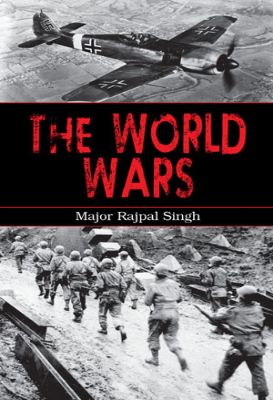
The World Wars by Major Rajpal Singh
The devastation caused by the World Wars I & II is remembered even today. These wars shattered the lives of thousands of people and posed a serious threat to mankind as such. The brutalities and atrocities committed on humanity is highly condemnable. Use of lethal weapons, the fierce atom bomb attacks lead to destabilisation of millions of people.
This book gives an account of the sequence of events which lead to the happenings of these wars. A special feature of this book is the analysis and impact of different strategies and tactics, from the perspective of a common reader, to understand why different battles were fought in a particular manner. It gives the message that no such war should be fought in the future because that would be fatal for the humanity.
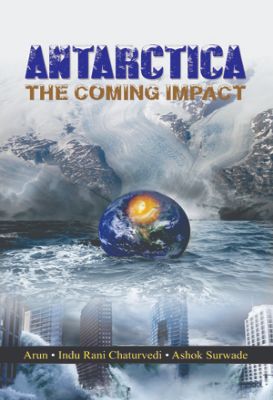
Antarctica–The Coming Impact by Arun • Indu Rani Chaturvedi
The melting of ice at the bottom of the globe, thousands of kilometers away from you, is going to affect your profession, your livelihood, your finances, your home, your lands! And not only your life, but even the very future of your children! Shocking?? But that exactly is what is happening now!! Antarctica has an enormous 2 km thick ice-cap! Global Warming threatens to melt this vast ice-cap. What happens?! Melting Antarctic ice has potential to raise global sea levels by 70 meters, yes, 230 feet! A colossal SLOW MOTION TSUNAMI has been triggered!! In coming decades, major cities will start disappearing! And then, a second tidal wave of climate-refugees will be triggered! By 2100, about 400 crore refugees will swamp other cities!! This book gives the scientific foundation of these dire predictions; listing cities getting wiped out; hints of financial planning; and potential scientific discoveries that might still save the earth! The melting of ice will also expose a huge continent of Antarctica-where your children will settle down! The first author has decades of experience of working in Antarctica; read a first-hand story about this strange land and its coming impact on YOUR life!!
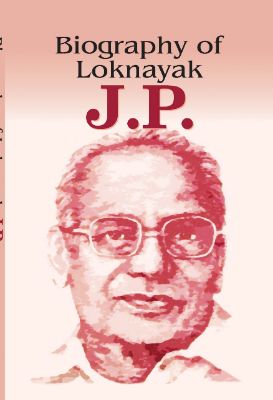
Biography of Loknayak Jp by A K Gandhi
Jayprakash Narayan (J.P.) was born on 11 October 1902 in the village of Sitabdiara in Saran district of Bihar, India. He came from a Kayastha family. He was the fourth child of Harsu Dayal Srivastava and Phul Rani Devi.
The People’s Hero – an Indian independence activist, social reformer and political leader, remembered especially for leading the mid-1970s opposition against the powerful Prime Minister Indira Gandhi. In 1999, he was awarded the Bharat Ratna, India’s highest civilian award, in recognition of his social work. Other awards include the Magsaysay Award for Public Service in 1965.
During the Indian independence movement he was arrested, jailed, and tortured several times by the British and won particular fame during the Quit India Movement.
J.P. returned to prominence in State politics in the late 1960s. On 8 April 1974, aged 72, he led a silent procession at Patna. This led to students’ movement in the state of Bihar which gradually developed into a popular people’s movement known as the Bihar Movement. JP died in Patna, Bihar on 8 October 1979, three days before his 77th birthday, due to effects of diabetes and heart ailments.
A readable biography about a legendary personality and popular Indian.
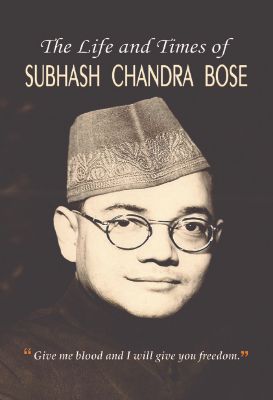
The Life and Times of Subhash Chandra Bose by Praveen Bhalla
Give me blood and I’ll give you freedom’, declared Subhash Chandra Bose. This was exactly what he believed in. The moderate ways of the Congress were not for him. Therefore, he formed the Azad Hind Fauj to overthrow the British. Burning with patriotic zeal, he tried his best to oust the British from his motherland. He was respectfully addressed as ‘Netaji’ and he dedicated his entire life for the freedom of his country.The annals of history have not done justice to this great patriot. It is time that he should be known by the people of India and given his due recognition. This book attempts to bring his life into spotlight and illuminate it so that the reader is conversant with it and appreciates his efforts.
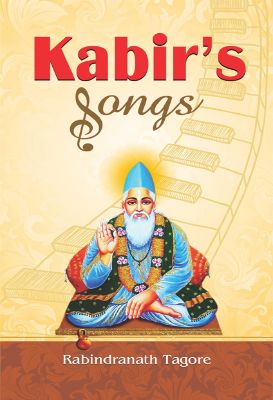
Kabirs Songs by Translated By Rabindranath Tagore
Kabir lived in the 15th Century (1440-1518), born to Mohammadan parents, he came under the influence of the famous Hindu saint, Sri Ramananda and delved deep into the mysteries of Hindu mysticism. A true worshipper of God, he emphasized the purity of mind and selfless devotion to God. He openly opposed the weaknesses of both Hinduism and Islam.
During his life time he composed many poems. They are usually two line couplets, known as dohas, recited by many scholars even today to denote some deep philosophical truths.
All these songs of Kabir were translated into English by none other than Rabindranath Tagore, the mystic poet and the Noble Laureate, the first edition, published by The Macmillan Company, 1915, New York.
This book shall prove to be an asset for the Kabir lovers who can’t enjoy his writings in Hindi.
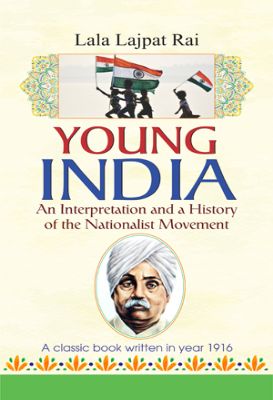
Young India by Lala Lajpat Rai
The book reflects the study of the nationalist movement in India by veteran freedom fighter and our foremost leader Lala Lajpat Rai. It covers India from 1757 to 1857 A.D. and then from the mutiny of 1857 to 1905 A.D. It was revised further by the author to the happenings up to the year 1915. It gives a detailed account of the socio-economic condition and the spread of awakening for freedom among the masses. It decimates the arguments of British colonialism of having a welfare state in India. It is an important tool for the study of Indian independence.
A great read for the current generation by one of the tallest freedom fighters of India.
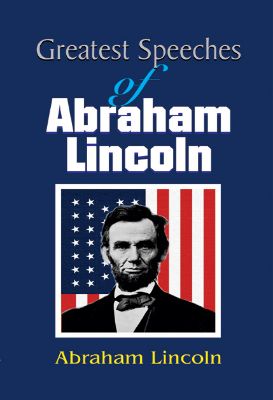
Greatest Speeches of Abraham Lincoln by Abraham Lincoln
Abraham Lincoln the 16th President of the United States was born in February 1809, serving from March 1861 until his assassination in April 1865. He played in key role in passage of the Thirteenth Amendment, which ended slavery in America. Prior to his election as President in 1860, he had successful careers as a lawyer and politician in Illinois, serving several terms in the state legislature and one in the US House of Representatives. He also holds the distinction of being the only US President to receive a patent; in 1849, he designed a system for lifting riverboats off sandbars.
Lincoln won the 1860 election and was inaugurated as President in March of 1861. He set up a national banking system while he was President. President Abraham Lincoln was shot by John Wilkes Booth while attending a play at the Ford Theatre in Washington D.C. He died the next day on April 15, 1865. On the day he was shot, Lincoln told his bodyguard that he had dreamt he would be assassinated.

The Unity of India by Dr Rajendra Prasad
This book brings together twenty-eight selected speeches of Dr. Rajendra Prasad, on the theme of the cultural and political unity of India. In these speeches, the President dwells on the essential unity of Indian culture, which is the heritage of the country’s unbroken history of thousands of years. He emphasizes the need to preserve and strengthen our national unity and to guard against fissiparous tendencies.
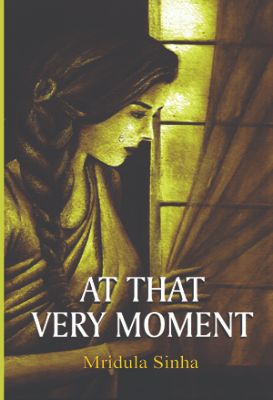
At That Very Moment by Mridula Sinha
My mom had died after suffering a great pain. The sorrow of her separation was mitigated by loss of suffering by death.
I reached the village, the car stopped at the gate of my brother. All the children of the neighbourhood came rushing, “Madhu phua has come.” My nephew and bhabhi also came out of the house. Everyone was happy at my sudden arrival. Suddenly I felt that my blood vessels were numbed as if my legs were going behind. After crossing the stair cases, I found the easy chair; near the door was the machia. The whole atmosphere was the same; my bhabhi has not made any changes after the passing away of my father and mother. Near the vacant easy chair, suddenly my legs stopped and I forcefully prevented my hands from folding. I forcefully entered the room. Bhabhi has spread the cot in the yard, women and children surrounded us, from courtyard to door and every place was full. After a long time all have gathered together but even in the atmosphere emptiness was pursuing me. I realised my mom was staring at my every limb, I was shaken. My aunt quickly perceived my condition and said, “Madhu is remembering her dead mother.” As if somebody had pierced a needle in the wound, I started crying.
—from this collection
Heart touching stories from renowned author Mridula Sinha, which will move you and make you emotional.
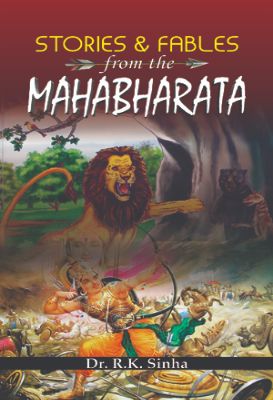
Stories and Fables from the Mahabharata by Dr. R.K. Sinha
The Mahabharata is the “book of books”. It is an encyclopedia of ancient Bharat (India). That is why it is said, “What is not in the Mahabharata is not in Bharat (India)”. Expanse and depth of thoughts and ideas in this book are bewildering, The highest and lowest of human nature are painted in glowing colors. The stories of gods, men, demons, birds, beasts, insects and plants are spread on a big canvas. Conflicts of emotions and call of duty, the wisdom and foolishness of human endeavors described in the Mahabharata, stun the readers. The variety of characters and situations are perennial source of inspiration for politicians, poets, writers and scholars. Even for saints and sages.
The Mahabharata is full of interesting and instructive fables. Much before the Aesop’s fables, and the Panchtantras, the Mahabharata presented gems of political, diplomatic and humanitarian thoughts and ideas through the fables. They are used to impart valuable ethical and social lessons.
The fables from the Mahabharata provide us practical knowledge and also elevate us to higher ethical standards.
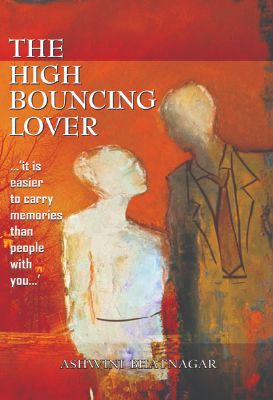
The High Bouncing Lover by Ashwini Bhatnagar
A compelling account of contemporary life, both interesting and tragic. “He had been a high-bouncing lover who had savoured the pleasure of being caught on the throes of a vibration that flowed from a clap of cymbals struck upon a spire. It needn’t have ended but it had. He would carry the echo of it with him but the actual pulsation had ceased. A memory had been formed. Danny felt relieved-it was easier to carry memories than people with him.
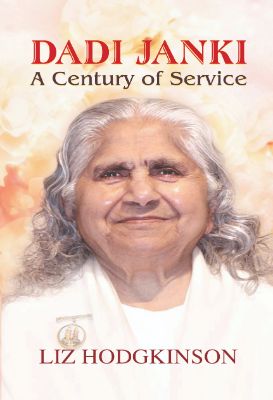
Dadi Janki a Century of Service by Liz Hodgkinson
Dadi Janki, the unusual subject of this biography, presides over a unique global spiritual empire run and led by women.
Born in 1916 into a traditional Hindu family, she was expected to follow the standard pattern for Indian women of the day, which was to succumb to an arranged marriage at the earliest possible opportunity and then disappear from view.
But she had other ideas. Since the age of two, she has only ever wanted to connect to one being, and that is God. She never sought nor desired any other relationship and she managed to escape her unwanted marriage in order to dedicate her life to spiritual study, service and contemplation.
She joined the Brahma Kumaris, then in its infancy, in 1937, and for many years, ran centres in India. In the early 1970s, the decision was taken to try and introduce the movement to the West and Dadi Janki arrived in London with no real idea how she would do it.
Her task was made especially difficult as she arrived not speaking any English, with no money, no influence and nowhere to live. But with God as her constant companion, she never gave up and within 20 years of being in London, had established the Brahma Kumaris as a respected, influential, worldwide organization.
This is the story of how she did it.
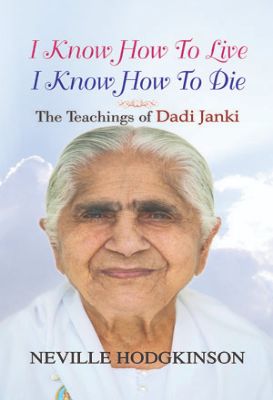
I Know How to Live, I Know How to Die by Neville Hodgkinson
Frontier science meets deep soul awareness in this unique exploration of the teachings of Dadi Janki, head of the Brahma Kumaris World Spiritual University, by Neville Hodgkinson, former Sunday Times science and medical correspondent. I Know How to Live, I Know How to Die conveys the love and strength that emerge within us, and the huge benefits brought to our work and relationships, when we restore our connection with the divine through spiritual understanding and practice.

Mgnrega and Women Empowerment by Annita Ranjan
A lot has changed in Indian social and economic planning since the introduction of the grand rural employment guarantee scheme, now known as the Mahatma Gandhi National Rural Employment Act (MGNREGA). The act has been implemented, suffered setbacks, established land-marks, drawn criticism, and collected accolades in all these years. But most significantly it has profoundly changed the character of the Indian women at large. Whether these changes are good for Indian democracy is a matter of debate, the sides in which are determined by the position on democracy and development taken by the participant.
In this book, we seek to present different aspects of the Act, scheme and its implemen-tation so as to give the readers a common insight how successful this scheme has been and what needs to be done.
This book would be useful for those who are interested in an informed and passionate debate about social policy in India and in the constitutional vision of bringing dignity to all fellow citizens.

The Life and Times of Warren Buffett by Dinkar Kumar
Warren Buffett is most successful and followed investor of the world. He has always been one of the wealthiest people in the world. Besides being richest, he is one of the most known people for donating personal wealth.
Buffett was born in 1930 in Omaha, Nebraska of distant French Huguenot descent. Buffett graduated from Woodrow Wilson High School in 1947.
Buffett displayed an interest in business and investing at a young age. While still in high school, he made money delivering newspapers, selling golf balls and stamps, and detailing cars, among other means. He formed Buffett Partnership Ltd. In 1956, and by 1965 he has assumed control of Berkshire Hathaway.
In 2008, Buffett became the richest person in the world, with a total net worth of estimated at $ 62 billion by Forbes and at $ 58 billion by Yahoo, overtaking Bill Gates, who had been number one on the Forbes list for 13 consecutive years. Buffett is renowned for his wit and wisdom.
He has set various standards of simple living despite being wealthy men on earth. Even though he is recognized as the world’s third richest man with a fortune of $ 46 billion, investor Warren Buffett, the ‘Wizard of Omaha’, still lives in the same modest home he bought in 1958 for $ 31,500 only.

A Guide to Health by Mahatma Gandhi
As the familiar saying goes, ‘Prevention is better than cure.’ It is far easier and safer to prevent illness by the observance of the laws of health than to set about curing the illness which has been brought on by our own ignorance and carelessness. Hence it is the duty of all thoughtful men to understand aright the laws of health, and the object of this book is to give an account of these laws. The best methods of cure for some of the most common diseases are also mentioned.
The author Mahatma Gandhi assures the readers that there is absolutely no necessity for them to seek the aid of doctors. To those, however, who may not be willing to boycott doctors and medicines altogether, he directs, “As possible, possess your souls in patience, and do not trouble the doctors. In case you are forced at length to call in the aid of a doctor, be sure to get a good man; then, follow his directions strictly, and do not call in another doctor, unless by his own advice. But remember, above all, that the curing of your disease does not rest ultimately in the hands of any doctor.”
Mahatma Gandhi led a disciplined life and in this book he has discussed in detail the meaning of health, how to live a healthy life and has also suggested some simple treatments for common ailments.
A practical guide to health for all.

Body Language by M.K. Mazumdar
We are social beings and cannot live without mixing with others. The moment we come in contact with other people, we start communicating; if not through words then by other ways. One such way is body language. It is the voice of silence. Our body reveals more than words and sometimes even contradicts them. It can belie our words. Body language is the non-verbal expression one makes-consciously or unconsciously. The way one carries oneself, moves, sits and stands, speaks volumes. It communicates more effectively than words. If one can present oneself through body language in the same manner that the words voice the thoughts, then it can make all the difference between a good and a bad communication. This popular book is the one that will help enhance your communication skills as well as help you understand what the others are trying to say or not voicing what they want to say.

Relationship & Other Stories by Mamta Mehrotra
Most of the stories in this collection depict women battling for their existence. These stories narrate the story of a woman’s modesty through a sari and indicate how a woman faces abuse and is neglected at every stage in life. If she wants to progress honorably, men at every stage are eager to exploit her. Even courts do not offer full justice and she finds herself a lone fighter in entire struggle.
The book is merely an effort to reveal the deep rooted void and a complicated and double faced mindset of ours. It emphasises on the empower-ment of women and equality of status in all spheres of life.
A salute to womanhood and must read for all who advocate women liberation.

How to Be Genius in Mathematics by Rajesh Kumar Thakur
Mathematics is the backbone of all subjects that’s why it is called the queen. Since the Vedic era, the knowledge of mathematics has been felt essential for the growth of human being. The Rishis were using mathematical knowledge to perform Yagna and making altar for Yagna.
Mathematics is now considered the dreadful subject and most dangerous subject. Most of the students dislike it. If you try to look at the reason, you will find that the basic knowledge of mathematics is missing; causing a great loss to the subject.
Most of the basic and fundamental things have been arranged here with examples so that even a layman with less or no knowledge of mathematics can begin to attract towards mathematics by gaining the missing gaps.

If Autumn Comes by Santosh Shailja
There is one long story or a short novel ‘Ninni’. The stories are historical, regional, social and romantic. In a nutshell, these are from the varied pattern of life which is woven with bright as well as grey threads. You will find the characters as if they were quite known to you. You might feel a bond with them in their smiles or tears; their happiness or sorrow. And that is the essence of a story to immerse you in its depth. The writer is blessed when the reader feels one with the written word.

The Joy of Recreational Mathematics by Vijaya Khandhurie
A teacher by profession and a sports lover by hobby, Vijaya Khandurie has a mission to enthuse and inculcate interest in sports among the students and teachers by way of writing and interaction. A keen quiz and crossword addict, he has written innumerable articles and many books to popularise sports and science, besides publishing a bi-monthly Word Games & Puzzles.

Be a Humble Winner by Suresh Mohan Semwal
If I were to ask you to pen down the top ten reasons for your success in life. What would you write? I know you can’t just write ten, there will be thirty reasons. But still in your top 10 list you might have the following reasons:
1. Hardwork
2. Commitment
3. Patience
4. Honesty
5. Discipline
6. Dedication
7. Positive Attitude
8. Skills
9. Education
10. Attention to details
We have a very natural tendency to overestimate our contribution in case of success and underestimate in case of failure. Is it not so? There are always people who help/assist/guide/supervise/motivate us to attain success. We tend to remember those who hurt rather than who help. If we really observe our life events and success we will realise that there are many people without whom we could not have become successful. So always be a humble winner!

20 Dictators of the World by Kalyani Mookherji
In the late nineteenth and twentieth century, with the disappearance of monarchies in many parts of the world, a new autocratic system emerged – the dictatorship, in which all power over a state or community was again concentrated into the hands of one person, without being restricted by constitution, laws or opposition. The individual with this kind of absolute authority was known as the dictator.
Here are the twenty dictators of modern times whose actions have left a strong imprint on destiny of the country they ruled, and sometimes even influenced the very history of the world.
More often though, dictators rose to the power by leading a coup d’état, in which often a weak monarch of government was deposed and instead a dictatorship established. A nice read book to deep into history.