
Books
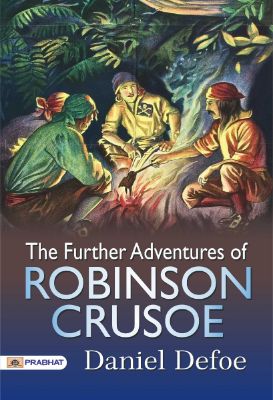
The Further Adventures of Robinson Crusoe by Daniel Defoe
That homely proverb, used on so many occasions in England, viz. “That what is bred in the bone will not go out of the flesh,” was never more verified than in the story of my Life. Any one would think that after thirty-five years’ affliction, and a variety of unhappy circumstances, which few men, if any, ever went through before, and after near seven years of peace and enjoyment in the fulness of all things; grown old, and when, if ever, it might be allowed me to have had experience of every state of middle life, and to know which was most adapted to make a man completely happy; I say, after all this, any one would have thought that the native propensity to rambling which I gave an account of in my first setting out in the world to have been so predominant in my thoughts, should be worn out, and I might, at sixty one years of age, have been a little inclined to stay at home, and have done venturing life and fortune any more.
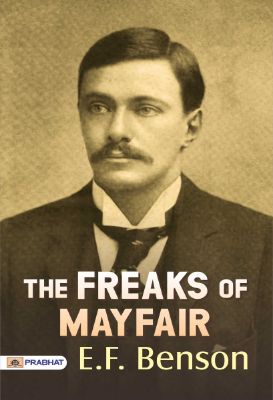
The Freaks of Mayfair by E.F. Benson
THERE IS NO MORE JOYOUS COUPLE in all Mayfair than Sir Louis Marigold, Bart., M.P., and Lady Mary Marigold, and whether they are at Marigold Park, Bucks, or at Homburg, or in their spacious residence in Berkeley Square, their lives form one unbroken round of pomp and successful achievement. She was the daughter of an obscure Irish Earl, and when she married her husband was still hard at work building up the business of Marigold & Sons. Those were strenuous days, and the profession of money-getting made it necessary for him to indulge his snobbishness only as a hobby. But she, like the good wife she has always been to him, took care of his hobby, as of a stamp-collection, and constantly enriched it with specimens of her own acquisition, being a snob of purest ray serene herself. She is the undoubted descendant of Arrahmedear, king of Donegal, in which salubrious county her brother, the present Earl, is steadily drinking himself to death in the intervals of farming his fifty-acre estate. When he has succeeded in completely poisoning himself with whisky, she will become Countess of Ballamuck herself, since the title descends, in default of male heirs, in the female line, and there will be what I hope it is not irreverent to call high old times in Berkeley Square and Marigold Park.

The Face of the Earth as Seen from the Air by Willis T. Lee
Scarcely a generation has passed during the evolution of the airplane from a ridiculous dream to a practical factor in the work of the world. Men who once read with derision, or only passive interest at best, of the experiments of Langley, Chanute, and the Wrights have seen the airplane developed suddenly into an indispensable instrument of war and an agency of demonstrated value and of such diversity of application that its future is hard to estimate.

The Three Stages of Clarinda Thorbald by William T. Hamilton
In the soft light of an afternoon sun, Clarinda sat in an old chair and read a thesis upon love, and she found set forth in this thesis that without love the world would not go around. Further, without love life would be but dross and hideous calamity. She also found therein that men have died from love, and women have languished in torments when it was unrequited.
Even though she was filled with apprehension as she read, she did not wish to eschew love, but was glad she was suffering from its effects.
She imagined that her own particular love was different from the love anybody had ever been consumed with, and she was glad in her heart she was suffering from its effects. She perceived it affected the glint of her hair, and she even thought it affected the beauty of her smile. She knew it affected her eyes, and gave an added color to her cheeks.

A Yankee Girl at Antietam by Alice Turner Curtis
Roxana Delfield, wearing a dress of blue-checked gingham, stout leather shoes and white stockings, and a broad-rimmed hat of rough straw, ran down the narrow path that led from her Grandmother Miller’s farm to the highway leading to the little village of Antietam, Maryland.
The path curved about a rocky ledge, skirted a group of small cedar trees and reached a stone wall where there was an opening just wide enough for one person to squeeze through. Roxy thought it was a fortunate thing that all the people at her Grandmother Miller’s were thin enough to get through this opening, all except Dulcie, the negro cook, who declared her weight “up’ards ob two hunderd pounds.” Dulcie, however, seldom left the farm, and when she did was obliged to take the longer way by the road.

Sylvia: A Novel by Upton Sinclair
This is the story of Sylvia Castleman, of her love and her marriage. The story goes back to the days of her golden youth; but it has to be told by an old woman who had no youth at all, and who never dreamed of having a story to tell. It begins with scenes of luxury among the proudest aristocracy of the South; it is told by one who for the first thirty years of her life was a farmer’s wife in a lonely pioneer homestead in Manitoba, and who, but for the pictures and stories in magazines, would never have known that such a world as Sylvia Castleman’s existed.

Virginia’s Adventure Club by Grace May North
“Now that the Christmas holidays are over,” Babs remarked on the first Monday evening after the close of the short vacation, “I mean to redeem myself.”
Margaret Selover looked down at the Dresden China girl who, her fluffy golden curls loosened from their fastenings, was wearing a blue corduroy kimona which matched her eyes. Babs sat tailorwise upon the furry white rug close to their grate fire.
Megsy laughed. “Which means?” she inquired as she sat in front of her birds-eye maple dressing table, brushing her pretty brown hair.

Norðurfari; or, Rambles in Iceland by Pliny Miles
A PREFACE to a book, is a sort of pedestal where the author gets up to make a speech; frequently an apologizing ground, where he “drops in—hopes he don’t intrude;” a little strip of green carpet near the foot-lights, where he bows to the audience, and with a trembling voice asks them to look with lenient eyes on his darling bantling that is just coming before the world. Very likely he tells of the numerous difficulties and disadvantages under which he has labored; perhaps apologizes for his style, under the plea of writing against time, and that he has been greatly hurried. Readers and critics are usually indulgent towards the minor faults of an author, provided he entertains or instructs them; but they pay little attention to special pleadings.

Prince Dusty: A Story of the Oil Regions by Kirk Munroe
Twelve-year-old Arthur Dale Dustin did not look the least bit like a Prince, sitting perched on the topmost rail of the zig-zag fence that bright September afternoon. As he dangled his bare brown legs idly, he wistfully watched his cousins at the play in which they would not allow him to join. He loved to play as dearly as any other boy; but somehow or other he was always left out of their games by the boisterous crew of little Dustins whom he called cousins. He tried his best to like what they liked, and to be one with them; but something always seemed to happen to prevent.

The Giant Fish of Florida by J. Turner-Turner
THE sea has its big game as well as the land, and there are some of us—the name of Mr. W. H. Grenfell, M.P., at once occurs in this connection—who have derived much sport from its pursuit. Whether, as Mr. Grenfell and others would seem to indicate, the tunny of the Mediterranean, which is identical with the tuna of American waters, may yet be recognised as a sporting fish by British anglers has to be seen; meanwhile the coast of America, and more particularly that of Florida and Mexico, is the recognised resort of those who angle for the biggest that the sea has to give.

The Profession of Journalism by Willard Grosvenor Bleyer
The purpose of this book is to bring together in convenient form a number of significant contributions to the discussion of the newspaper and its problems which have appeared in the Atlantic Monthly in recent years. Although these articles were intended only for the readers of that magazine at the time of their original publication, they have permanent value for the general reader, for newspaper workers, and for students of journalism.

Southey by Edward Dowden
No one of his generation lived so completely in and for literature as did Southey. “He is,” said Byron, “the only existing entire man of letters.” With him literature served the needs both of the material life and of the life of the intellect and imagination; it was his means of earning daily bread, and also the means of satisfying his highest ambitions and desires. This, which was true of Southey at five-and-twenty years of age, was equally true at forty, fifty, sixty.

The First Duke and Duchess of Newcastle-upon-Tyne by Thomas Longueville
THE compiler of these pages does not labour under the delusion that he has written a book. All that he has attempted has been, as it were, to invite his reader to an arm-chair in his study, and to place in the reader’s hands a succession of open volumes and copies of manuscripts containing passages which throw more or less light upon the lives of the first Duke and Duchess of Newcastle. Occasionally he has ventured to make a few remarks, either of introduction or of retrospection, concerning the evidence thus brought before his guest, remarks which may easily be skipped at will.

Lightfoot, the Leaping Goat: His Many Adventures by Richard Barnum
Lightfoot stamped his hoofs on the hard rocks, shook his horns, wiggled the little bunch of whiskers that hung beneath his chin, and called to another goat who was not far away:
“I’m going up on the high rocks!”
“Oh, you’d better not,” said Blackie. “If you go up there you may slip and fall down here and hurt yourself, or some of the big goats may chase you back.”
“Well, if they do I’ll just jump down again,” went on Lightfoot, as he stood on his hind legs.
“You can’t jump that far,” said Blackie, looking up toward the high rocks which were far above the heads of herself and Lightfoot.
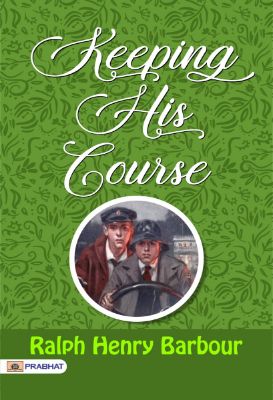
Keeping His Course by Ralph Henry Barbour
A boy with light blue eyes that just about matched the slightly hazy June sky sat on the float below the town landing at Greenhaven, L. I., and stared thoughtfully across harbor and bay to where, two miles northward, the village of Johnstown stretched along the farther shore. He had a round, healthy, and deeply tanned face of which a short nose, many freckles, the aforementioned blue eyes, and a somewhat square chin were prominent features. There was, of course, a mouth, as well, and that, too, was prominent just now, for it was puckered with the little tune that the boy was softly whistling. Under a sailor’s hat of white canvas the hair was brown, but a brown that only escaped being red by the narrowest of margins. That fact was a sore subject with Toby Tucker.

Blood Will Tell: The Strange Story of a Son of Ham by Benjamin Rush Davenport
Boston was shrouded in a mantle of mist that November day, the north-east wind bringing at each blast re-enforcement to the all-enveloping and obscuring mass of gloom that embraced the city in its arms of darkness.

A Capillary Crime, and Other Stories by Francis Davis Millet
NEAR the summit of the hill in the Quartier Montmartre, Paris, is a little street in which the grass grows between the paving-stones, as in the avenues of some dead old Italian city. Tall buildings border it for about one third its length, and the walls of tiny gardens, belonging to houses on adjacent streets, occupy the rest of its extent. It is a populous thoroughfare, but no wheels pass through it, for the very good reason that near the upper end it suddenly takes a short turn, and shoots up the hill at an incline too steep for a horse to climb.

A Girl of High Adventure by L. T. Meade
Marguerite St. Juste was Irish on her mother’s side, who was born of the Desmonds of Desmondstown in the County Kerry. Marguerite’s father was a French Comte, whose grandfather had been one of the victims of the guillotine.
Little Marguerite lived with an uncle, who was really only that relation by marriage; his name was the Reverend John Mansfield. He had a large living in a large town about fifty miles from London, and he adopted Marguerite shortly after the death of her parents. This tragedy happened when she was very young, almost a baby. She did not in the least remember her father, whose dancing black eyes and merry ways had endeared him to all who knew him. Nor did she recall a single fact with regard to her mother—one of those famous Desmonds, who had joined the rebels in the great insurrection of ’97, and whose people still lived and prospered and were gay and merry of the merry on their somewhat tattered and worn-out country estate.

Radio Boys in the Secret Service; Or, Cast Away on an Iceberg by J. W. Duffield
“Good-by and good luck, Guy,” said Walter Burton as his twin brother, with small traveling bag in one hand and amber glasses protecting his supersensitive eyes, was about to step aboard a south-bound train at the Ferncliffe station one clear, crisp winter-end day. “Send me a wireless message from Europe, and I’ll be listening in and catch it.”
“I’d like to, Walt,” was Guy’s smiling answer; “but I’m afraid that would be extravagant. I’ll tell you what I’ll do, though. When we get to New York, I’ll hunt up Vacuum Tube and send you a message from his station. You know he invited us to come and see him any time we were in New York.”
“All right,” agreed Walter. “When’ll you send it?”
“At 4 o’clock tomorrow if he’s home.”
The Photographer’s Evidence; Or, Clever but Crooked by Nicholas Carter
“Mr. Carter, can I trust you?”
It was in the great detective’s own house that this question was asked.
“Well,” was Nick’s quiet answer, “if you had any doubt on that matter, why did you come to me?”
His caller looked nervously at the floor.
“There’s no use in talking to me,” Nick went on, “unless you do trust me. A detective can do nothing for a client who does not give him his confidence absolutely.”
“Of course,” the other assented; “I did not mean to offend you.”
“You haven’t offended me.”
“I am so disturbed by it, you see. So much depends on secrecy. It is so terribly important that I found it difficult to make up my mind to consult anybody on the matter; and yet I know by your reputation that you are a perfectly trustworthy man. There is nobody in the States more so.”
While the man was speaking Nick was studying him.
In fact, the detective had been doing that from the moment the man entered.
He was apparently about fifty years old; a well-dressed, prosperous-looking man, who might be a merchant, or a lawyer, or a banker.

A Week in Wall Street by Frederick Jackson
The following pages were written during leisure hours of the last six or eight weeks, of which “the times” have thrown rather too many upon the writer’s hands; and the statement of this fact, I conceive to be a tacit admission, that such hours might have been better employed.
They were originally composed for the writer’s own amusement; to beguile the tediousness of otherwise idle time. And not the least motive for this indulgence was a desire to abstract the mind from too near a contemplation of the dark side of that picture, which I have described as a panic. They were not written in the first place, with any view to publication, but as each chapter was successively read in the presence of friends, and principally for amusement, those friends at length advised their publication; and with their advice they have been submitted to the press, in the original manuscript, almost without correction.

New research on the origin of the name América by Jules Marcou
Four facts dominate and summarize the whole question about the origin of the name of America: 1st Amerrique is the Indian name of some mountains between Juigalpa and La Libertad, Department of Chontales, that separate Lake Nicaragua from the coast of mosquitoes. . In Mayan language it means “Country of the wind,” “Country where the wind always blows.”
2. Vespucci’s proper name is, in Italian and Spanish, Alberico , in Latin Albericus .
3.º No name has ever suffered so many variations and combinations, some intentionally, others unconsciously, like Vespucci. Such confusion is without example, it is unique in the history of famous men. With the exception of the Alberico name , none of the other names is found in the nomenclatures and calendars, at that time so rich, of Italian and Spanish saints, and this in time of the greatest religious fervor, and of the absolute supremacy of Roman Catholic Christianity. Let’s list some of those names: Americus , Amerrigo , Amerigo , Amérigo , Amergio , Americo , Almerigo , Albertutio , Almerico , Morigo , Damerrigho , Armerico , Emeric , Aïmeric , Alméric and Améric . These are not diminutives, nor usual alterations, whether in Italian, Spanish or French, by Alberico , Albericus, Albéric , Albert .
Finally, before 1507, the date of the publication of the name Americus by Jean Basin, in Saint Dié, this name is not found in any printed document, or even manuscript, of recognized and incontestable authenticity.

The Day of Small Things by Anne Manning
“I think I have been laid up nearly two years on this sofa, Phillis?” said I.
“Two years, come the 6th of October,” said Phillis.
“And, during that time, what mercies I have received! what alleviations, what blessings!”
“What sea-kale and early spare-o’-grass! what baskets of grapes and pottles of strawberries!” said Phillis.
“What songs in the night, what in-pourings of strength!” said I.
“So many pheasants, too, and partridges!” said Phillis. “Teal, woodcocks, and wild ducks!”
“David might well say, the Lord maketh our bed in our sickness, Phillis,” said I.
“Such a pretty bed as it is, too!” said Phillis. “So white, sweet, and clean! Russia sheets and Marseilles quilt, bleached on a heath common, close by a sweetbriar hedge!”
“Not only that—” said I.
“Not only that,” said Phillis, “but such pretty daisy-fringe to the curtains, and a clean tarletan blind to the window.”
“Such a lovely view from the window!” said I.

Bicycling for Ladies by Maria E. Ward
I have found that in bicycling, as in other sports essayed by them, women and girls bring upon themselves censure from many sources. I have also found that this censure, though almost invariably deserved, is called forth not so much by what they do as the way they do it.
It is quite natural to suppose, in attempting an unaccustomed exercise, that you have to do only what you see done and as others about you are doing. But to attain success in bicycling, as in other things, it is necessary to study the means as well as to look to the end to be attained, and to understand what must not be attempted as well as to know each step that will be an advance on the road to progress.
A great deal has been said against attempting to study a little of anything; but when a slight knowledge of several important branches of science that bear directly upon a subject under consideration, and that a subject concerning the health and safety of many individuals, will render one intelligently self-dependent, and able at least to exercise without endangering one’s own health or the lives of others, the acquisition of such knowledge should not be neglected.

Chambers’s Journal of Popular Literature, Science, and Art by Various
THE pleasures of social intercourse are amongst the best and truest enjoyments in which we can participate—the desire for the friendship of others is more or less inherent in human nature. There are nevertheless thousands upon thousands who are surrounded by every opportunity for realising these pleasures, and who yet fail to benefit by their influence, either for temporary and healthy pastime, or for permanent good. Most people have doubtless many amongst their circle of acquaintance who are easily distinguished from others by the term ‘unsociable.’ It would, however, be both unfair and incorrect to estimate that a large proportion of a given number of people have a decided objection to and shun all society. The habitually unsociable people are frequently those who would readily confess to a liking for society, but who do not enter into it on account of the various and numerous obstacles which, they will tell you, are in the way. It is not so much on account of an innate and acknowledged indisposition for social intercourse that the saying, ‘Some folk are as unsociable as milestones,’ is proverbially correct, as that many barriers have been erected by the suspicious imaginations of those concerned. People are often heard to complain of the unsociability of others; but it is not unseldom that the very people who adopt this standpoint are those who, at the least approach from others, retire almost entirely within their insignificant individuality, and assume a reserve of manner and constrained mode of conversation, that of itself forbids any attempt to cultivate their acquaintance. Something like a hedgehog which, should you happen to catch sight of it, instead of making friends, rolls itself up into a ball, and shews off its bristles to the best advantage.

Studies of childhood by James Sully
The following Studies are not a complete treatise on child-psychology, but merely deal with certain aspects of children’s minds which happen to have come under my notice, and to have had a special interest for me. In preparing them I have tried to combine with the needed measure of exactness a manner of presentation which should attract other readers than students of psychology, more particularly parents and young teachers.
A part of these Studies has already appeared elsewhere. The Introductory Chapter was published in the Fortnightly Review for November, 1895. The substance of those from II. to VIII. has been printed in the Popular Science Monthly of New York. Portions of the “Extracts from a Father’s Diary” appeared in the form of two essays, one on “Babies and Science” in the Cornhill Magazine in 1881, and the other on “Baby Linguistics” in the English Illustrated Magazine in 1884. The original form of these, involving a certain disguise—though hardly one of impenetrable thickness—has been retained. The greater part of the study on “George Sand’s Childhood” was published as two articles in Longmans’ Magazine in 1889 and 1890.
The Wrecking Master by Ralph Delahaye Paine
“A thick night and no mistake, Dan. It’s as black as the face of a Nassau pilot. We ought to be nearing the coal wharf by now. Of course they wouldn’t have sense enough to leave a light on it to give us our bearings.”
Captain Jim Wetherly was growling through the window of the darkened wheel-house to his deck-hand, young Dan Frazier, as the oceangoing tug Resolute felt her way up the harbor of Pensacola. She had towed a dismasted bark into port after a long and stubborn tussle with wind and sea, and her master was in haste to fill the empty bunkers and drive her home to Key West, five hundred miles across the blue Gulf.
The mate and several of the crew had gone ashore for the evening, the fat and grizzled chief engineer was loafing on the deck below, and Captain Wetherly was somewhat consoled to have a sympathetic listener in his youngest deck-hand. This Dan Frazier was his nephew, not long out of the Key West High School, and trying his hand at seafaring in the Resolute as the first chance which had offered to ease his mother’s task of caring for him.

An Irish Crazy-Quilt: Smiles and tears, woven into song and story by Forrester
I HAVE knelt in great cathedrals with their wondrous naves and aisles,
Whose fairy arches blend and interlace,
Where the sunlight on the paintings like a ray of glory smiles,
And the shadows seem to sanctify the place;
Where the organ’s tones, like echoes of an angel’s trumpet roll,
Wafted down by seraph wings from heaven’s shore—
They are mighty and majestic, but they cannot touch my soul
Like the little whitewashed church of Ballymore.
Ah! modest little chapel, half-embowered in the trees,
Though the roof above its worshippers was low,
And the earth bore traces sometimes of the congregation’s knees,
While they themselves were bent with toil and woe!
Milan, Cologne, St. Peter’s—by the feet of monarchs trod—
With their monumental genius and their lore,
Never knew in their magnificence more trustful prayers to God
Than ascended to His throne from Ballymore!

The Basis of Social Relations: A Study in Ethnic Psychology by Daniel G. Brinton
It is strange that not in any language has there been published a systematic treatise on Ethnic Psychology; strange, because the theme is in nowise a new one but has been the subject of many papers and discussions for a generation; indeed, had a journal dedicated to its service for a score of years; strange, also, because its students claim that it is the key to ethnology, the sure interpreter of history, and the only solid basis for constructive sociology.
Why this apparent failure to establish for itself a position in the temple of the Science of Man? This inquiry must be answered on the threshold of a treatise which undertakes to vindicate for this study an independent position and a permanent value.

Practical Organ Building by W. E. Dickson
We shall assume at once, and at the very outset, that our reader has the fixed purpose of producing an organ which shall be creditable to its builder, a source of pleasure to its players and their hearers, and an ornament to the room or building in which it is erected: in short, that he remembers the excellent maxim, “whatever is worth doing at all, is worth doing well,” and will not be content with rough workmanship, inferior materials, and inharmonious results.
Assuming this as the basis and principle of all our suggestions, we shall nevertheless bear in mind the necessity of adapting our rules to the conditions imposed by slender purses, and the imperfect appliances of humble workshops. Without attempting to quote the actual market prices of the wood, leather, and metal required, or of those important parts of the instrument which in most cases will be purchased ready-made, we shall endeavour to show how economy may be consulted by obtaining all these gradually, as our work advances with that inevitably slow progress which attends all proceedings in which most haste is found to be worse speed.