
Books

The Magnificent Ambersons by Booth Tarkington
Major Amberson had “made a fortune” in 1873, when other people were losing fortunes, and the magnificence of the Ambersons began then. Magnificence, like the size of a fortune, is always comparative, as even Magnificent Lorenzo may now perceive, if he has happened to haunt New York in 1916; and the Ambersons were magnificent in their day and place. Their splendour lasted throughout all the years that saw their Midland town spread and darken into a city, but reached its topmost during the period when every prosperous family with children kept a Newfoundland dog.
In that town, in those days, all the women who wore silk or velvet knew all the other women who wore silk or velvet, and when there was a new purchase of sealskin, sick people were got to windows to see it go by. Trotters were out, in the winter afternoons, racing light sleighs on National Avenue and Tennessee Street; everybody recognized both the trotters and the drivers; and again knew them as well on summer evenings, when slim buggies whizzed by in renewals of the snow-time rivalry. For that matter, everybody knew everybody else’s family horse-and-carriage, could identify such a silhouette half a mile down the street, and thereby was sure who was going to market, or to a reception, or coming home from office or store to noon dinner or evening supper.

The Machine Stops by E.M. Forster
Imagine, if you can, a small room, hexagonal in shape, like the cell of a bee. It is lighted neither by window nor by lamp, yet it is filled with a soft radiance. There are no apertures for ventilation, yet the air is fresh. There are no musical instruments, and yet, at the moment that my meditation opens, this room is throbbing with melodious sounds. An armchair is in the centre, by its side a reading-desk – that is all the furniture. And in the armchair there sits a swaddled lump of flesh – a woman, about five feet high, with a face as white as a fungus. It is to her that the little room belongs.
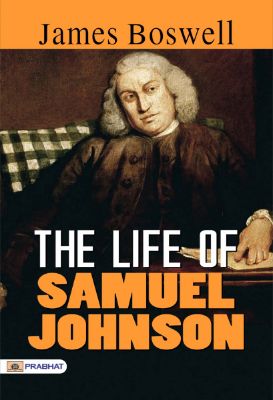
The Life of Samuel Johnson by James Boswell
In making this abridgement of Boswell’s Life of Johnson I have omitted most of Boswell’s criticisms, comments, and notes, all of Johnson’s opinions in legal cases, most of the letters, and parts of the conversation dealing with matters which were of greater importance in Boswell’s day than now. I have kept in mind an old habit, common enough, I dare say, among its devotees, of opening the book of random, and reading wherever the eye falls upon a passage of especial interest. All such passages, I hope, have been retained, and enough of the whole book to illustrate all the phases of Johnson’s mind and of his time which Boswell observed.
The Learned Women by Jean-Baptiste Poquelin (Moliere)
SCENE I.—ARMANDE, HENRIETTE.
ARM. What! Sister, you will give up the sweet and enchanting title of maiden? You can entertain thoughts of marrying! This vulgar wish can enter your head!
HEN. Yes, sister.
ARM. Ah! Who can bear that “yes”? Can anyone hear it without feelings of disgust?
HEN. What is there in marriage which can oblige you, sister, to….
ARM. Ah! Fie!
HEN. What?
ARM. Fie! I tell you. Can you not conceive what offence the very mention of such a word presents to the imagination, and what a repulsive image it offers to the thoughts? Do you not shudder before it? And can you bring yourself to accept all the consequences which this word implies?
HEN. When I consider all the consequences which this word implies, I only have offered to my thoughts a husband, children, and a home; and I see nothing in all this to defile the imagination, or to make one shudder.

The Captain’s Daughter by Alexsander Pushkin
Shea had just beaten me at chess, as usual, and, also as usual, I had gleaned what questionable satisfaction I might by twitting him with this indication of failing mentality by calling his attention for the nth time to that theory, propounded by certain scientists, which is based upon the assertion that phenomenal chess players are always found to be from the ranks of children under twelve, adults over seventy-two or the mentally defective—a theory that is lightly ignored upon those rare occasions that I win. Shea had gone to bed and I should have followed suit, for we are always in the saddle here before sunrise; but instead I sat there before the chess table in the library, idly blowing smoke at the dishonored head of my defeated king.
While thus profitably employed I heard the east door of the living-room open and someone enter. I thought it was Shea returning to speak with me on some matter of tomorrow’s work; but when I raised my eyes to the doorway that connects the two rooms I saw framed there the figure of a bronzed giant, his otherwise naked body trapped with a jewel-encrusted harness from which there hung at one side an ornate short-sword and at the other a pistol of strange pattern. The black hair, the steel-gray eyes, brave and smiling, the noble features—I recognized them at once, and leaping to my feet I advanced with outstretched hand.

My Year in a Log Cabin by William Dean Howells
In the fall of the year 1850 my father removed with his family from the city of D——, where we had been living, to a property on the Little Miami River, to take charge of a saw-mill and grist-mill, and superintend their never-accomplished transformation into paper-mills. The property belonged to his brothers—physicians and druggists—who were to follow later, when they had disposed of their business in town. My father left a disastrous newspaper enterprise behind him when he came out to apply his mechanical taste and his knowledge of farming to the care of their place. Early in the century his parents had brought him to Ohio from Wales, and his boyhood was passed in the new country, where pioneer customs and traditions were still rife, and for him it was like renewing the wild romance of those days to take up once more the life in a log-cabin interrupted by forty years’ sojourn in matter-of-fact dwellings of frame and brick.
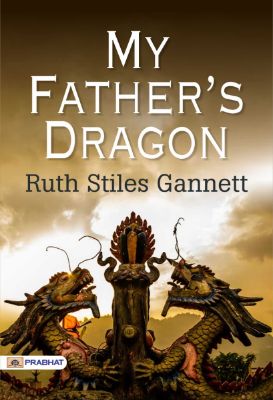
My Father’s Dragon by Ruth Stiles Gannett
One cold rainy day when my father was a little boy, he met an old alley cat on his street. The cat was very drippy and uncomfortable so my father said, “Wouldn’t you like to come home with me?”
This surprised the cat—she had never before met anyone who cared about old alley cats—but she said, “I’d be very much obliged if I could sit by a warm furnace, and perhaps have a saucer of milk.”

Mrs. Farrell by William Dean Howells
This story of my father’s was first printed under the title of Private Theatricals in the Atlantic Monthly of 1875, while he was still editor of the magazine. It appeared a few years after Henry James’s Gabrielle de Bergerac, and neither of the two short novels was ever republished by their authors. My father’s must have been written in the Concord Avenue house in Cambridge which he and my mother had just built and moved into. They were very proud of the new house, even of its mansard roof such as every house of the period was obliged to have, and which is reflected in the newly added French roofs of some of the houses near the church in West Pekin; but their greatest pride was in the library. My impressions of the house are those of rather extreme youth, but I can remember that it was lined with bookshelves bordered by bands of red, scalloped leather that were meant, as I now suppose, to keep the dust from the book tops but which were then pleasantly mysterious to the infant mind. There were very satisfactory tiles of Eastlake tendencies over the fireplace, picturing the seasons in yellow and brown, and a vast flat-topped desk in the middle of the room with rows of drawers on either side that went down to the floor, leaving a dark hole between them, which was useful as a doll’s house when not occupied by my father’s feet. The room was at the back of the house, for greater quiet, and looked out into a deep, grassy yard divided down the center by a hedge of lilacs, and only invaded by birds and children.

The Chimes by Charles Dickens
There are not many people—and as it is desirable that a story-teller and a story-reader should establish a mutual understanding as soon as possible, I beg it to be noticed that I confine this observation neither to young people nor to little people, but extend it to all conditions of people: little and big, young and old: yet growing up, or already growing down again—there are not, I say, many people who would care to sleep in a church. I don’t mean at sermon-time in warm weather (when the thing has actually been done, once or twice), but in the night, and alone. A great multitude of persons will be violently astonished, I know, by this position, in the broad bold Day. But it applies to Night. It must be argued by night, and I will undertake to maintain it successfully on any gusty winter’s night appointed for the purpose, with any one opponent chosen from the rest, who will meet me singly in an old churchyard, before an old church-door; and will previously empower me to lock him in, if needful to his satisfaction, until morning.
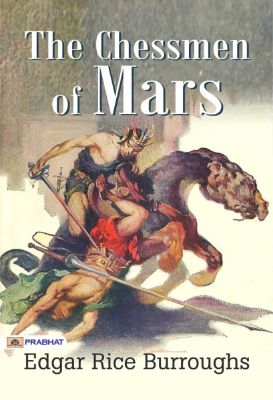
The Chessmen of Mars by Edgar Rice Burroughs
MY father, Andrey Petrovitch Grinyov, had in his youth served under Count Miinnich and retired with the rank of first Major in 17—. From that time onwards he lived on his estate in the province of Simbirsk, where he married Avdotya Vassilyevna U., daughter of a poor landowner of the district. There had been nine of us. All my brothers and sisters died in infancy. Through the kindness of Prince B., our near relative, who was a major of the Guards, I was registered as sergeant in the Semyonovsky regiment. I was supposed to be on leave until I had completed my studies. Our bringing-up in those days was very different from what it is now. At tlie age of five I was entrusted to the groom Savelyitch, who was told off to look after me, as a reward for the sobriety of his behaviour. Under his supervision I had learned, by the age of twelve, to read and write Russian, and could judge very soundly the points of a borzoi dog. At that time my father hired for me a Frenchman, Monsieur Beaupre, who was fetched from Moscow together with the yearly supply of wine and olive oil. Savelyitch very much disliked his coming.
‘The child, thank heaven, has his face washed and his hair combed, and his food given him,’ he grumbled to himself. ‘Much good it is to spend money on the Frenchman, as though there weren’t enough servants on the estate!’
The Four Just Men by Edgar Wallace
Four men sat about a table on the sidewalk in front of the Café of the Nations in the High Street of Cadiz and talked business.
Leon Gonsalez was one, Poiccart was another, George Manfred was a notable third, and one, Thery, or Saimont, was the fourth. Of this quartet, only Thery requires no introduction to the student of contemporary history. In the Bureau of Public Affairs you will find his record. As Thery, alias Saimont, he is registered, and to all students of Criminology and Physiognomy, he must need no introduction.
He sat at the little table, this man, obviously ill at ease, pinching his fat cheeks, smoothing his shaggy eyebrows, fingering the white scar on his unshaven chin, doing all the things that the lower classes do when they suddenly find themselves placed on terms of equality with their betters.
For although Gonsalez, with the light blue eyes and the restless hands, and Poiccart, heavy, saturnine, and suspicious, and George Manfred, with his grey-shot beard and single eyeglass, were less famous in the criminal world, each was a great man, as you shall learn.
Manfred laid down the Heraldo di Madrid, removed his eyeglass, rubbed it with a spotless handkerchief, and laughed quietly.

The Gods of Mars by Edgar Rice Burroughs
As I stood upon the bluff before my cottage on that clear cold night in the early part of March, 1886, the noble Hudson flowing like the grey and silent spectre of a dead river below me, I felt again the strange, compelling influence of the mighty god of war, my beloved Mars, which for ten long and lonesome years I had implored with outstretched arms to carry me back to my lost love.
Not since that other March night in 1866, when I had stood without that Arizona cave in which my still and lifeless body lay wrapped in the similitude of earthly death had I felt the irresistible attraction of the god of my profession.
With arms outstretched toward the red eye of the great star I stood praying for a return of that strange power which twice had drawn me through the immensity of space, praying as I had prayed on a thousand nights before during the long ten years that I had waited and hoped.
Suddenly a qualm of nausea swept over me, my senses swam, my knees gave beneath me and I pitched headlong to the ground upon the very verge of the dizzy bluff.

The Girls of Silver Spur Ranch by Grace MacGowan Cooke
The girls of Silver Spur ranch were all very busy helping Mary, the eldest, with her wedding sewing. Silver Spur was rather a pretentious name for John Spooner’s little Texas cattle-farm, but Elizabeth, the second daughter, who had an ear attuned to sweet sounds, had chosen it; as a further confirmation of the fact she had covered an old spur with silver-leaf and hung it over the doorway. The neighboring ranchers had laughed, at first, and old Jonah Bean, the one cowboy left in charge of the small Spooner herd, always sniffed scornfully when he had occasion to mention the name of his ranch, declaring that The Tin Spoon would suit it much better. However, in time everybody became used to it, and Silver Spur the ranch remained–somehow Elizabeth always had her own way.
This young lady sat by the window in the little living-room where they were all at work, and carefully embroidered a big and corpulent “B” on a sofa-pillow for Mary, who was to marry, in a few days, a young man from another state who owned the euphonious name of Bellamy–a name Elizabeth openly envied him.

The Girl from Farris’s by Edgar Rice Burroughs
Just what Mr. Doarty was doing in the alley back of Farris’s at two of a chill spring morning would have puzzled those citizens of Chicago who knew Mr. Doarty best.
To a casual observer it might have appeared that Mr. Doarty was doing nothing more remarkable than leaning against a telephone pole, which in itself might have been easily explained had Mr. Doarty not been so palpably sober; but there are no casual observers in the South Side levee at two in the morning—those who are in any condition to observe at all have the eyes of ferrets.
This was not the first of Mr. Doarty’s nocturnal visits to the vicinage of Farris’s. For almost a week he had haunted the neighborhood between midnight and dawn, for Mr. Doarty had determined to “get” Mr. Farris.
From the open doors of a corner saloon came bursts of bacchanal revelry—snatches of ribald song; hoarse laughter; the hysterical scream of a woman; but though this place, too, was Farris’s and the closing hour long passed Mr. Doarty deigned not to notice so minor an infraction of the law.

The Free Rangers by Joseph A. Altsheler
The wilderness rolled away to north and to south, and also it rolled away to east and to west, an unbroken sweep of dark, glossy green. Straight up stood the mighty trunks, but the leaves rippled and sang low when a gentle south wind breathed upon them. It was the forest as God made it, the magnificent valley of North America, upon whose edges the white man had just begun to nibble.
A young man, stepping lightly, came into a little glade. He was white, but he brought with him no alien air. He was in full harmony with the primeval woods, a part of them, one in whose ears the soft song of the leaves was a familiar and loved tune. He was lean, but tall, and he walked with a wonderful swinging gait that betokened a frame wrought to the strength of steel by exercise, wind, weather, and life always in the open. Though his face was browned by sun and storm his hair was yellow and his eyes blue. He was dressed wholly in deerskin and he carried over his shoulder the long slender rifle of the border. At his belt swung hatchet and knife.

The Gates Ajar by Elizabeth Stuart Phelps
The wilderness rolled away to north and to south, and also it rolled away to east and to west, an unbroken sweep of dark, glossy green. Straight up stood the mighty trunks, but the leaves rippled and sang low when a gentle south wind breathed upon them. It was the forest as God made it, the magnificent valley of North America, upon whose edges the white man had just begun to nibble.
A young man, stepping lightly, came into a little glade. He was white, but he brought with him no alien air. He was in full harmony with the primeval woods, a part of them, one in whose ears the soft song of the leaves was a familiar and loved tune. He was lean, but tall, and he walked with a wonderful swinging gait that betokened a frame wrought to the strength of steel by exercise, wind, weather, and life always in the open. Though his face was browned by sun and storm his hair was yellow and his eyes blue. He was dressed wholly in deerskin and he carried over his shoulder the long slender rifle of the border. At his belt swung hatchet and knife.

The Diary of Samuel Pepys by Samuel Pepys
Although the Diary of Samuel Pepys has been in the hands of the public for nearly seventy years, it has not hitherto appeared in its entirety. In the original edition of 1825 scarcely half of the manuscript was printed. Lord Braybrooke added some passages as the various editions were published, but in the preface to his last edition he wrote: “there appeared indeed no necessity to amplify or in any way to alter the text of the Diary beyond the correction of a few verbal errors and corrupt passages hitherto overlooked.”
The public knew nothing as to what was left unprinted, and there was therefore a general feeling of gratification when it was announced some eighteen years ago that a new edition was to be published by the Rev. Mynors Bright, with the addition of new matter equal to a third of the whole. It was understood that at last the Diary was to appear in its entirety, but there was a passage in Mr. Bright’s preface which suggested a doubt respecting the necessary completeness. He wrote: “It would have been tedious to the reader if I had copied from the Diary the account of his daily work at the office.”
As a matter of fact, Mr. Bright left roughly speaking about one-fifth of the whole Diary still unprinted, although he transcribed the whole, and bequeathed his transcript to Magdalene College.

The Forest Runners by Joseph A. Altsheler
Paul stopped in a little open space, and looked around all the circle of the forest. Everywhere it was the same—just the curving wall of red and brown, and beyond, the blue sky, flecked with tiny clouds of white. The wilderness was full of beauty, charged with the glory of peace and silence, and there was naught to indicate that man had ever come. The leaves rippled a little in the gentle west wind, and the crisping grass bowed before it; but Paul saw no living being, save himself, in the vast, empty world.

Oak Openings by James Fenimore Cooper
It ought to be matter of surprise how men live in the midst of marvels, without taking heed of their existence. The slightest derangement of their accustomed walks in political or social life shall excite all their wonder, and furnish themes for their discussions, for months; while the prodigies that come from above are presented daily to their eyes, and are received without surprise, as things of course. In a certain sense, this may be well enough, inasmuch as all which comes directly from the hands of the Creator may be said so far to exceed the power of human comprehension, as to be beyond comment; but the truth would show us that the cause of this neglect is rather a propensity to dwell on such interests as those over which we have a fancied control, than on those which confessedly transcend our understanding. Thus is it ever with men. The wonders of creation meet them at every turn, without awakening reflection, while their minds labor on subjects that are not only ephemeral and illusory, but which never attain an elevation higher than that the most sordid interests can bestow.
Of the Nature of Things by Lucretius
Mother of Rome, delight of Gods and men,
Dear Venus that beneath the gliding stars
Makest to teem the many-voyaged main
And fruitful lands—for all of living things
Through thee alone are evermore conceived,
Through thee are risen to visit the great sun—
Before thee, Goddess, and thy coming on,
Flee stormy wind and massy cloud away,
For thee the daedal Earth bears scented flowers,
For thee waters of the unvexed deep
Smile, and the hollows of the serene sky
Glow with diffused radiance for thee!
For soon as comes the springtime face of day,
And procreant gales blow from the West unbarred,
First fowls of air, smit to the heart by thee,
Foretoken thy approach, O thou Divine,
And leap the wild herds round the happy fields
Or swim the bounding torrents. Thus amain,
Seized with the spell, all creatures follow thee
Whithersoever thou walkest forth to lead,
And thence through seas and mountains and swift streams,
Through leafy homes of birds and greening plains,
Kindling the lure of love in every breast,
Thou bringest the eternal generations forth,
Kind after kind. And since ’tis thou alone
Guidest the Cosmos, and without thee naught
Is risen to reach the shining shores of light,
Nor aught of joyful or of lovely born,
Thee do I crave co-partner in that verse
Which I presume on Nature to compose
For Memmius mine, whom thou hast willed to be
Peerless in every grace at every hour—
Wherefore indeed, Divine one, give my words
Immortal charm. Lull to a timely rest
O’er sea and land the savage works of war,
For thou alone hast power with public peace
To aid mortality; since he who rules
The savage works of battle, puissant Mars,
How often to thy bosom flings his strength
O’ermastered by the eternal wound of love—
And there, with eyes and full throat backward thrown,
Gazing, my Goddess, open-mouthed at thee,
Pastures on love his greedy sight, his breath
Hanging upon thy lips. Him thus reclined
Fill with thy holy body, round, above!

Mary Barton by Elizabeth Gaskell
Three years ago I became anxious (from circumstances that need not be more fully alluded to) to employ myself in writing a work of fiction. Living in Manchester, but with a deep relish and fond admiration for the country, my first thought was to find a frame-work for my story in some rural scene; and I had already made a little progress in a tale, the period of which was more than a century ago, and the place on the borders of Yorkshire, when I bethought me how deep might be the romance in the lives of some of those who elbowed me daily in the busy streets of the town in which I resided. I had always felt a deep sympathy with the care-worn men, who looked as if doomed to struggle through their lives in strange alternations between work and want; tossed to and fro by circumstances, apparently in even a greater degree than other men. A little manifestation of this sympathy, and a little attention to the expression of feelings on the part of some of the work-people with whom I was acquainted, had laid open to me the hearts of one or two of the more thoughtful among them; I saw that they were sore and irritable against the rich, the even tenor of whose seemingly happy lives appeared to increase the anguish caused by the lottery-like nature of their own. Whether the bitter complaints made by them, of the neglect which they experienced from the prosperous—especially from the masters whose fortunes they had helped to build up—were well-founded or no, it is not for me to judge. It is enough to say, that this belief of the injustice and unkindness which they endure from their fellow-creatures, taints what might be resignation to God’s will, and turns it to revenge in too many of the poor uneducated factory-workers of Manchester.
Miss Crespigny by Frances Hodgson Burnett
“Another party?” said Mrs. Despard.
“Oh yes!” said Lisbeth. “And, of course, a little music, and then a little supper, and a little dancing, and all that sort of thing.” And she frowned impatiently.
Mrs. Despard looked at her in some displeasure.
“You are in one of your humors, again, Lisbeth,” she said, sharply.
“Why shouldn’t I be?” answered Miss Crespigny, not a whit awed by her patroness. “People’s humors are their privileges. I would not help mine if I could. I like them because they are my own private property, and no one else can claim them.”
“I should hardly think any one would want to claim yours,” said Mrs. Despard, dryly, but at the same time regarding the girl with a sort of curiosity.

Moods by Louisa May Alcott
The room fronted the west, but a black cloud, barred with red, robbed the hour of twilight’s tranquil charm. Shadows haunted it, lurking in corners like spies set there to watch the man who stood among them mute and motionless as if himself a shadow. His eye turned often to the window with a glance both vigilant and eager, yet saw nothing but a tropical luxuriance of foliage scarcely stirred by the sultry air heavy with odors that seemed to oppress not refresh. He listened with the same intentness, yet heard only the clamor of voices, the tramp of feet, the chime of bells, the varied turmoil of a city when night is defrauded of its peace by being turned to day. He watched and waited for something; presently it came. A viewless visitant, welcomed by longing soul and body as the man, with extended arms and parted lips received the voiceless greeting of the breeze that came winging its way across the broad Atlantic, full of healthful cheer for a home-sick heart. Far out he leaned; held back the thick-leaved boughs already rustling with a grateful stir, chid the shrill bird beating its flame-colored breast against its prison bars, and drank deep draughts of the blessed wind that seemed to cool the fever of his blood and give him back the vigor he had lost.

Miss Lulu Bett by Zona Gale
Miss Lulu Bett book;best book of Zona Gale; FICTION / General book;Classics Book

Men Like Gods by H.G. Wells
Men Like Gods book ;Best book of H.G. Wells; FICTION / General book;Classics Book
Marching Men by Sherwood Anderson
Marching Men book;best book of Sherwood Anderson; FICTION / General book;Classics Book

George Silverman’s Explanation by Charles Dickens
George Silverman’s Explanation book; Best book of Charles Dickens; FICTION / General book;Classics Book

Editha’s Burglar by Frances Hodgson Burnett
Editha’s Burglar book;Best book of Frances Hodgson Burnett; FICTION / General book;Classics Book

Dr. Heidenhoff’s Process by Edward Bellamy
Dr. Heidenhoff’s Process book;Best book of Edward Bellamy; FICTION / General book;Classics Book