
Books
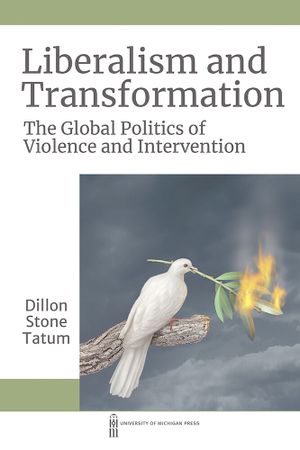
Liberalism and Transformation: The Global Politics of Violence and Intervention
Liberalism and Transformation is the first scholarly work that explores the historical, philosophical, and intellectual development of global liberalism since the nineteenth century in the context of the deployment of violence, force, and intervention. Using an approach that includes interpretive and contextual analysis of texts from writers, philosophers, and policy-makers across nearly two centuries, as well as historiographical and historical analysis of archival documents (some of which have been recently declassified) and other media, Liberalism and Transformation narrates the messy history of emancipatory liberalism and its engagement with issues of war and peace. The book contributes to both a rethinking of liberal democracy and its relationship to world politics, as well as the effects of liberal internationalism on global processes. Furthermore, Liberalism and Transformation invites readers to reflect on global ethics and transformation in world politics. In the first place, it shows how ethical imaginings of the world have direct effects on actions of transformative importance. In the second place, it suggests that discourses are fluid, changing, and complex.
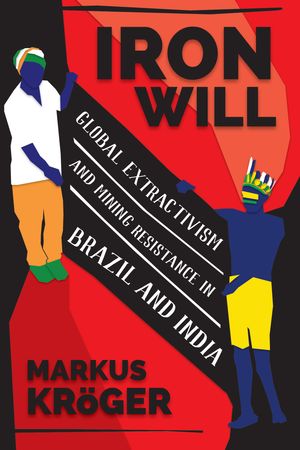
Iron Will: Global Extractivism and Mining Resistance in Brazil and India
Iron Will lays bare the role of extractivist policies and efforts to resist these policies through a deep ethnographic exploration of globally important iron ore mining in Brazil and India. Markus Kröger addresses resistance strategies to extractivism and tracks their success, or lack thereof, through a comparison of peaceful and armed resource conflicts, explaining how different means of resistance arise. Using the distinctly different contexts and political systems of Brazil and India highlights the importance of local context for resistance. For example, if there is an armed conflict at a planned mining site, how does this influence the possibility to use peaceful resistance strategies? To answer such questions, Kröger assesses the inter-relations of contentious, electoral, institutional, judicial, and private politics that surround conflicts and interactions, offering a new theoretical framework of “investment politics” that can be applied generally by scholars and students of social movements, environmental studies, and political economy, and even more broadly in Social Scientific and Environmental Policy research.
By drawing on a detailed field research and other sources, this book explains precisely which resistance strategies are able to influence both political and economic outcomes. Kröger expands the focus of traditionally Latin American extractivism research to other contexts such as India and the growing extractivist movement in the Global North. In addition, as the book is a multi-sited political ethnography, it will appeal to sociologists, political scientists, anthropologists, geographers, and others using field research among other methods to understand globalization and global political interactions. It is the most comprehensive book on the political economy and ecology of iron ore and steel. This is astonishing, given the fact that iron ore is the second-most important commodity in the world after oil.
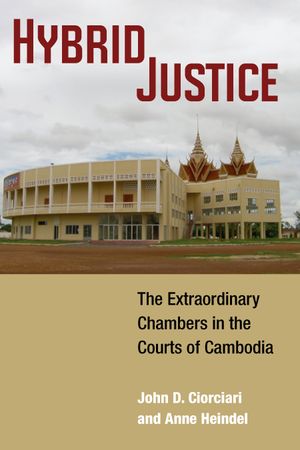
Hybrid Justice: The Extraordinary Chambers in the Courts of Cambodia
Since 2006, the United Nations and Cambodian Government have participated in the Extraordinary Chambers in the Courts of Cambodia, a hybrid tribunal created to try key Khmer Rouge officials for crimes of the Pol Pot era. In Hybrid Justice, John D. Ciorciari and Anne Heindel examine the contentious politics behind the tribunal’s creation, its flawed legal and institutional design, and the frequent politicized impasses that have undermined its ability to deliver credible and efficient justice and leave a positive legacy. They also draw lessons and principles for future hybrid and international courts and proceedings.

Home Truths?: Video Production and Domestic Life
Over the past decade, the video camera has become a commonplace household technology. With falling prices on compact and easy-to-use cameras, as well as mobile phones and digital still cameras with video recording capabilities, access to moving image production technology is becoming virtually universal. Home Truths? represents one of the few academic research studies exploring this everyday, popular use of video production technology, looking particularly at how families use and engage with the technology and how it fits into the routines of everyday life. The authors draw on interviews, observations, and the participants’ videos themselves, seeking to paint a comprehensive picture of the role of video making in their everyday lives. While readers gain a sense of the individual characters involved in the project and the complexities and diversities of their lives, the analysis also raises a range of broader issues about the nature of learning and creativity, subjectivity and representation, and the “”domestication”” of technology—issues that are of interest to many in the fields of sociology and media/cultural studies.
Electoral Campaigns, Media, and the New World of Digital Politics
Today, political leaders and candidates for office must campaign in a multimedia world through traditional forums—newspapers, radio, and television—as well as new digital media, particularly social media. Electoral Campaigns, Media, and the New World of Digital Politics chronicles how Twitter, Facebook, Reddit, email, and memes are used successfully and unsuccessfully to influence elections. Each of these platforms have different affordances and reach various audiences in different ways. Campaigns often have to wage different campaigns on each of these mediums. In some instances, they are crucial in altering coverage in the mainstream media. In others, digital media remains underutilized and undeveloped. As has always been the case in politics, outcomes that depend on economic and social conditions often dictate people’s readiness for certain messages. However, the method and content of those messages has changed with great consequences for the health and future of democracy.
This book answers several questions: How do candidates/parties reach audiences that are preoccupied, inattentive, amorphous, and bombarded with so many other messages? How do they cope with the speed of media reporting in a continuous news cycle that demands instantaneous responses? How has media fragmentation altered the campaign styles and content of campaign communication, and general campaign discourse? Finally and most critically, what does this mean for how democracies function?
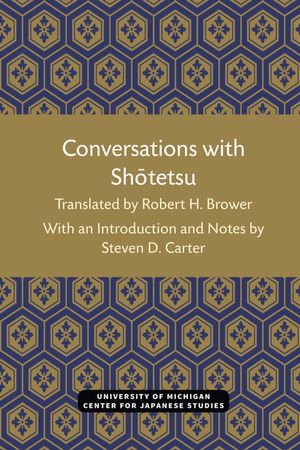
Conversations with Shotetsu
Shotetsu monogatari was written by a disciple of Shotetsu (1381–1459), whom many scholars regard as the last great poet of the courtly tradition. The work provides information about the practice of poetry during the 14th and 15th centuries, including anecdotes about famous poets, advice on how to treat certain standard topics, and lessons in etiquette when attending or participating in poetry contests and gatherings. But unlike the many other works of that time that stop at that level, Shotetsu’s contributions to medieval aesthetics gained prominence, showing him as a worthy heir—both as poet and thinker—to the legacy of the great poet-critic Fujiwara no Teika (1162–1241).
The last project of the late Robert H. Brower, Conversations with Shôtetsu provides a translation of the complete Nihon koten bungaku taikei text, as edited by Hisamatsu Sen’ichi. Steven D. Carter has annotated the translation and provided an introduction that details Shôtetsu’s life, his place in the poetic circles of his day, and the relationship of his work to the larger poetic tradition of medieval Japan.Conversations with Shotetsu is important reading for anyone interested in medieval Japanese literature and culture, in poetry, and in aesthetics. It provides a unique look at the literary world of late medieval Japan.

Contingent Encounters: Improvisation in Music and Everyday Life
Contingent Encounters offers a sustained comparative study of improvisation as it appears between music and everyday life. Drawing on work in musicology, cultural studies, and critical improvisation studies, as well as his own performing experience, Dan DiPiero argues that comparing improvisation across domains calls into question how improvisation is typically recognized. By comparing the music of Eric Dolphy, Norwegian free improvisers, Mr. K, and the Ingrid Laubrock/Kris Davis duo with improvised activities in everyday life (such as walking, baking, working, and listening), DiPiero concludes that improvisation appears as a function of any encounter between subjects, objects, and environments. Bringing contingency into conversation with the utopian strain of critical improvisation studies, DiPiero shows how particular social investments cause improvisation to be associated with relative freedom, risk-taking, and unpredictability in both scholarship and public discourse. Taking seriously the claim that improvisation is the same thing as living, Contingent Encounters overturns long-standing assumptions about the aesthetic and political implications of this notoriously slippery term.

The Buddhist Poetry of the Great Kamo Priestess: Daisaiin Senshi and Hosshin Wakashu
Senshi was born in 964 and died in 1035, in the Heian period of Japanese history (794–1185). Most of the poems discussed here are what may loosely be called Buddhist poems, since they deal with Buddhist scriptures, practices, and ideas. For this reason, most of them have been treated as examples of a category or subgenre of waka called Shakkyoka, “Buddhist poems.”
Yet many Shakkyoka are more like other poems in the waka canon than they are unlike them. In the case of Senshi’s “Buddhist poems,” their language links them to the traditions of secular verse. Moreover, the poems use the essentially secular public literary language of waka to address and express serious and relatively private religious concerns and aspirations. In reading Senshi’s poems, it is as important to think about their relationship to the traditions and conventions of waka and to other waka texts as it is to think about their relationship to Buddhist thoughts, practices, and texts.
The Buddhist Poetry of the Great Kamo Priestess creates a context for the reading of Senshi’s poems by presenting what is known and what has been thought about her and them. As such, it is a vital source for any reader of Senshi and other literature of the Heian period.

Brushed in Light: Calligraphy in East Asian Cinema
Drawing on a millennia of calligraphy theory and history, Brushed in Light examines how the brushed word appears in films and in film cultures of Korea, Japan, Taiwan, Hong Kong, and PRC cinemas. This includes silent era intertitles, subtitles, title frames, letters, graffiti, end titles, and props. Markus Nornes also looks at the role of calligraphy in film culture at large, from gifts to correspondence to advertising. The book begins with a historical dimension, tracking how calligraphy is initially used in early cinema and how it is continually rearticulated by transforming conventions and the integration of new technologies. These chapters ask how calligraphy creates new meaning in cinema and demonstrate how calligraphy, cinematography, and acting work together in a single film. The last part of the book moves to other regions of theory. Nornes explores the cinematization of the handwritten word and explores how calligraphers understand their own work.
Genetische Individualität im Recht
Die Entzifferung des Genoms und zuletzt die Entwicklung moderner Sequenzierungsverfahren lassen viele Menschen befürchten, dass dadurch ihre „Individualität“ verlorengehen könnte. Was damit genau gemeint ist, welches Selbstverständnis des Individuums dem zugrunde liegt und inwieweit die Sorge berechtigt ist, untersucht der vorliegende Band im interdisziplinären Diskurs zwischen Humangenetik und Recht. Die Beiträge resultieren aus einem interdisziplinären Workshop des Göttinger Instituts für Humangenetik in Kooperation mit dem Zentrum für Medizinrecht im Januar 2012. Ergänzende Beiträge sowohl aus humangenetischer als auch juristischer Perspektive verbreitern die Faktenbasis und geben einen vertieften Einblick in den aktuellen Sachstand.
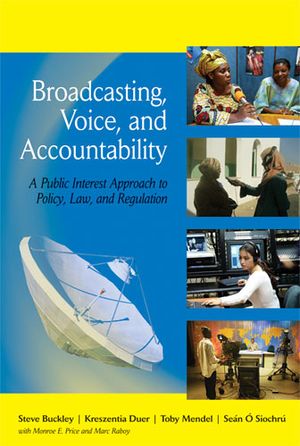
Broadcasting, Voice, and Accountability: A Public Interest Approach to Policy, Law, and Regulation
Participatory development and government accountability depend in part on the existence of media that provide broad access to information from varied sources and that equip and encourage people to raise and debate issues and develop public opinion. Conducive policies, laws, and regulations are essential for media to develop that are independent and widely accessible and that enable the expression of diverse perspectives and sources of information. Broadcasting, Voice, and Accountability presents a framework to inform analysis of existing policies and support the development of a vigorous media sector, with a particular emphasis on broadcasting. It focuses on broadcasting because that is the medium with the greatest potential to reach and involve society at large, including the most disadvantaged and illiterate segments of society in developing countries. Information on good practices in broadcasting policy is in demand in countries of every region—particularly in countries that are opening their economies, democratizing, and decentralizing public service delivery. This book provides development practitioners with a wide overview of the key policy and regulatory issues involved in supporting freedom of information and expression and enabling development of a pluralistic, independent, and robust broadcasting sector. Policy, regulation, capacity, and institutional development are important development levers that shape the ownership, content, and social impacts of broadcasting systems. The guide shows the importance of enabling a mix of ownership and uses, commonly classified in terms of commercial, public service, and community broadcasting, that serves the public interest. With the guidance of this book, broadcasting policy and regulation can be tackled as a mainstream development topic, with important consequences for government transparency, government accountability, and enabling disadvantaged constituencies to voice their concerns and press for action. This book is the World Bank’s first publication presenting good practices from around the world in media and broadcasting policy and regulation and complements existing work in governance, public sector reform, and access to information. It is a useful tool for policymakers, reform managers, development practitioners, and students alike.
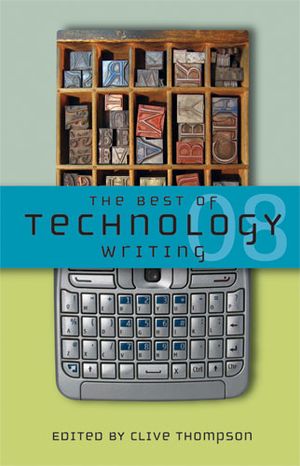
The Best of Technology Writing 2008
The Best of Technology Writing 2008 proves that technology writing is a bona fide literary genre with some of the most stylish, compelling, and just plain readable work in journalism today.
The third volume in this annual series, The Best of Technology Writing 2008 covers a fascinating mix of topics—from a molecular gastronomist’s recipe for the perfect gin and tonic; to “the Mechanism,” an ancient Greek artifact that might be the world’s first laptop computer; to social media, privacy, and what is possibly the biggest generation gap since rock ‘n’ roll.
Featuring contributions from
Ted Allen
Michael Behar
Caleb Crain
Julian Dibbell
Cory Doctorow
David Glenn
Thomas Goetz
Charles Graeber
Alex Hutchinson
Walter Kirn
Robin Mejia
Emily Nussbaum
Ben Paynter
Jeffrey Rosen
John Seabrook
Cass R. Sunstein
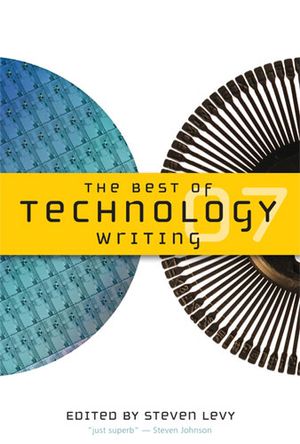
The Best of Technology Writing 2007
Together the essays in The Best of Technology Writing 2007 capture the versatility and verve of technology writing today. Solicited through an open online nominating process, these pieces explore a wide range of intriguing topics—from “crowdsourcing” to the online habits of urban moms to the digital future of movie production. The Best of Technology Writing 2007 will appeal to anyone who enjoys stellar writing.
Steven Levy is a Senior Editor at Newsweek, where he writes the biweekly column “The Technologist.” One of the most acclaimed and versatile technology writers in the country, Levy has written six books, including The Perfect Thing (about Apple’s iPod) and Hackers, which PC Magazine’s readers voted the best sci-tech book written in the last twenty years. He has written for many publications, including the New Yorker, the New York Times Magazine, Rolling Stone, and Wired.
Featuring contributions from
Kevin Berger
Paul Boutin
Kiera Butler
Joshua Davis
Julian Dibbell
Matt Gaffney
Lori Gottlieb
John Gruber
Jeff Howe
Kevin Kelly
Jaron Lanier
Preston Lerner
Farhad Manjoo
Justin McElroy
Ben McGrath
Katharine Mieszkowski
Emily Nussbaum
Jeffrey M. O’Brien
Larry O’Brien
The Onion
Adam L. Penenberg
John Seabrook
Philip Smith
Aaron Swartz
Clive Thompson
Jeffrey R. Young
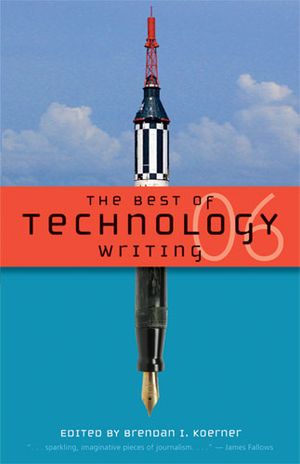
The Best of Technology Writing 2006
The Best of Technology Writing 2006 brings together some of the most important, timely, and just plain readable writing in the fast-paced, high-stakes field of technology.
The first annual collection to target this vibrant and versatile area, The Best of Technology Writing 2006 features innovative work from an unusually diverse array of writers: best-selling authors, noted academics, and indie journalists and bloggers.
The culmination of an open, on-line nominating process, this collection covers topics ranging from jetpacks, to the ethics of genetically cloned pets, to the meaning of life in the information age. By turns epic and intimate, serious and playful, The Best of Technology Writing 2006 captures the vitality, importance, and complexity of technology today.
Featuring contributions from:
David A. Bell
David Bernstein
Mike Daisey
Joshua Davis
Jay Dixit
Daniel Engber
Dan Ferber
Steven Johnson
Steven Levy
Farhad Manjoo
Lisa Margonelli
David McNeill
Justin Mullins
Koranteng Ofosu-Amaah
Adam L. Penenberg
Daniel H. Pink
Evan Ratliff
Alex Ross
Jim Rossignol
Jesse Sunenblick
Edward Tenner
Clive Thompson
Joseph Turow
Richard Waters
Being Human during COVID
Science has taken center stage during the COVID-19 crisis; scientists named and diagnosed the virus, traced its spread, and worked together to create a vaccine in record time. But while science made the headlines, the arts and humanities were critical in people’s daily lives. As the world went into lockdown, literature, music, and media became crucial means of connection, and historians reminded us of the resonance of the past as many of us heard for the first time about the 1918 influenza pandemic. As the twindemics of COVID-19 and racial injustice tore through the United States, a contested presidential race unfolded, which one candidate described as “a battle for the soul of the nation.”
Being Human during COVID documents the first year of the pandemic in real time, bringing together humanities scholars from the University of Michigan to address what it feels like to be human during the COVID-19 crisis. Over the course of the pandemic, the questions that occupy the humanities—about grieving and publics, the social contract and individual rights, racial formation and xenophobia, ideas of home and conceptions of gender, narrative and representations and power—have become shared life-or-death questions about how human societies work and how culture determines our collective fate. The contributors in this collection draw on scholarly expertise and lived experience to try to make sense of the unfamiliar present in works that range from traditional scholarly essays, to personal essays, to visual art projects. The resulting book is shot through with fear, dread, frustration, and prejudice, and, on a few occasions, with a thrilling sense of hope.

The American Literature Scholar in the Digital Age
The American Literature Scholar in the Digital Age, which features a wide range of practitioner-scholars, is the first of its kind: a gathering of people who are expert in American literary studies and in digital technologies, scholars uniquely able to draw from experience with building digital resources and to provide theoretical commentary on how the transformation to new technologies alters the way we think about and articulate scholarship in American literature. The volume collects articles from those who are involved in tool development, usability testing, editing and textual scholarship, digital librarianship, and issues of race and ethnicity in digital humanities, while also situating digital humanities work within the larger literary discipline. In addition, the volume examines the traditional structures of the fields, including tenure and promotion criteria, modes of scholarly production, the skill sets required for scholarship, and the training of new scholars. The American Literature Scholar in the Digital Age will attract practitioners of digital humanities in multiple fields, Americanists who utilize digital materials, and those who are intellectually curious about the new movement and materials.

Academic Ableism: Disability and Higher Education
Academic Ableism brings together disability studies and institutional critique to recognize the ways that disability is composed in and by higher education, and rewrites the spaces, times, and economies of disability in higher education to place disability front and center. For too long, argues Jay Timothy Dolmage, disability has been constructed as the antithesis of higher education, often positioned as a distraction, a drain, a problem to be solved. The ethic of higher education encourages students and teachers alike to accentuate ability, valorize perfection, and stigmatize anything that hints at intellectual, mental, or physical weakness, even as we gesture toward the value of diversity and innovation. Examining everything from campus accommodation processes, to architecture, to popular films about college life, Dolmage argues that disability is central to higher education, and that building more inclusive schools allows better education for all.
Digital Learning
This eBook is the first research report on the media diet of young university students. The research deals with investigating their cultural consumption, closely observing the students’ familiarity with the most innovative technological tools, monitoring the consumption habits of contents and cultural products, verifying the frequency and the main ways in which students connect to Internet, analyzing the knowledge and use of web 2.0 platforms and tools.
Redes integradas de servicios de salud en Colombia y Brasil: Un estudio de casos
En este libro se presenta una parte de los resultados del proyecto internacional de investigación “Impacto en la equidad de acceso y la eficiencia de las redes integradas de servicios de salud en Colombia y Brasil (Equity-LA)”, financiado por la Unión Europea y en el que participaron seis instituciones de cuatro países, dos europeos (España y Bélgica) y dos latinoamericanos (Colombia y Brasil). La investigación se diseñó con el propósito de mejorar la comprensión sobre el impacto de la implementación de las redes integradas de servicios de salud en el acceso, la coordinación, la eficiencia y la equidad de acceso, en diferentes contextos de Latinoamérica. El estudio además de evidencia, generó nuevas preguntas, que dieron lugar al proyecto Equity LA II (www.equity-la.eu), actualmente en desarrollo, también financiado por la Unión Europea, que profundiza en sus resultados y amplía el análisis a cuatro países más de América Latina: Argentina, Chile, México y Uruguay.

Medicamentos simples para males graves: Los Casos felices y auténticos de medicina de Domingo
Con todas las cosas creó Dios la medicina, simple y específica; y a la naturaleza, admirable en lo productiva y conservativa, y vio que todo era excelente, bueno”, de esta manera comienzan los Casos felices y auténticos de medicina del relojero, platero y médico Domingo Rota; libro que dio vida a esta investigación. Este ejercicio microhistórico busca esclarecer algunos aspectos claves de la medicina neogranadina de finales del siglo XVIII en Santafé y sus alrededores, a través de la comprensión y estudio de los casos médicos presentados por Domingo Rota en su libro.
El texto explora eventos de la vida de este singular personaje, su proceso de aprendizaje del saber médico, el trato que este mantenía con otros practicantes, los contenidos de su libro y la relación que todos estos aspectos establecen con el universo en el que Domingo llevó a cabo su práctica.

Generation | Garderobe | Geschlecht – Kleidungspraxis bei Mutter-Tochter-Paaren
Geben, Nehmen, Schenken, Leihen und Vererben – Prozesse der Weitergabe sind ebenso vielschichtig wie die Beziehungen, die sie manifestieren. Die Studie betrachtet die Modi des Austauschs und die wechselseitigen Wahrnehmungen von Mutter-Tochter-Paaren anhand ihrer alltäglichen Kleidungspraxen. Ausgehend von Gesprächen, Familienfotos und Beobachtungen vor Kleiderschränken spürt sie den vestimentären Erfahrungshorizonten zweier Frauengenerationen nach. Gefragt wird nach den Generationalisierungen, den Konzeptionalisierungen von Weiblichkeit sowie den historisch vorgeprägten Geschmackspräferenzen, die diesen Prozessen zugrunde liegen. Neben Konstruktionen von Gemeinsamkeit und Differenz wird dabei der Zusammenhang von Generation und Geschlecht diskutiert.

La naturalización de las emociones: Anotaciones a partir de Wittgenstein
En la literatura sobre las emociones una de las teorías con mayor fuerza es la llamada “teoría James-Lange”. En esta obra se intenta hacer una crítica a dicha teoría a partir de algunas observaciones de Wittgenstein sobre el uso de conceptos psicológicos, sacando a la luz dos confusiones gramaticales que surgen en ella. Para ello, se construye primero la categoría de “programa de naturalización de las emociones” que recoge las teorías del Descartes, James y Prinz, siguiendo la metodología de Lakatos. Luego, se identifica como problema central el de la naturalización de la intencionalidad. Para luego exponer algunas herramientas de Wittgenstein para estudiar la gramática de la pregunta por el objeto y la intencionalidad las emociones, mostrando que las respuestas del programa de naturalización no son satisfactorias y no respetan las reglas de ciertos usos del lenguaje.

La adaptación al cambio: El negocio de la resiliencia climática
Este libro analiza el surgimiento de negocios, así como lo planes y la preparación para enfrentar eventos climáticos (ej., incendios, inundaciones, tormentas y huracanes) y nuevas tendencias (ej., sequías) por parte de compañías líderes en sectores estratégicos: tecnología, telecomunicaciones, alimentos, banca y seguros.
Este libro hace especial énfasis en las oportunidades de negocios de empresas innovadoras líderes, con un sustancial aporte de sus empleados, entre otros grupos de interés y que ya han sido implementadas en respuesta al cambio climático.
El público objetivo incluye profesionales, estudiantes y comunicadores en el área de los negocios, así como a todas aquellas personas interesadas en el tema.
Los lectores se beneficiarán al aprender cómo compañías reales, con problemas reales, están enfrentando, en tiempo real, una crisis que nos afecta a todos y cómo están usando su perspicacia en los negocios para crear soluciones a situaciones rápidamente cambiantes.

Educación legal clínica y litigio estratégico en Iberoamérica
Este libro es un resultado de investigación sobre dos conceptos de enorme importancia para la educación jurídica en Iberoamérica: la educación legal clínica como modelo pedagógico en construcción y el litigio estratégico como herramienta de incidencia social y política. Se considera que el proceso de construcción de las Clínicas en la región, es un hito en la educación jurídica iberoamericana y existen evidencias que permiten afirmarlo ya que se trata de historias paralelas que se fortalecieron por los intercambios de aprendizajes y experiencias a través de las redes.
De igual forma se desarrolla el concepto de litigio estratégico o estructural y se examina la forma como inciden en dicha propuesta las alianzas estratégicas. Luego se pasa a una profundización sobre la agenda de las Clínicas y los temas prioritarios de Derechos humanos en Iberoamérica.

Edición académica y difusión: Libro abierto en Iberoamérica
Conocer la situación del acceso abierto del libro académico en Iberoamérica fue el objetivo de la investigación que se presenta en este libro. Entender las dinámicas propias de los libros en acceso abierto en el espacio iberoamericano en este momento particular permite trazar rutas y diseñar estrategias que favorezcan la presencia de contenidos académicos en español y en otros idiomas de la región en la red. Todo ello entendiendo el acceso abierto como una extraordinaria posibilidad de divulgación y circulación de contenidos académicos, además de verlo como un compromiso con la sociedad. La panorámica que se ofrece en este libro es resultado de un estudio en el que participaron más de ciento cuarenta editoriales universitarias latinoamericanas, por medio de un instrumento diseñado para tal fin, aportando información sobre la edición digital y la edición de publicaciones en acceso abierto en la región.

Del este de Europa al sur de América: Migraciones soviéticas y postsoviéticas a la ciudad de Bucaramanga, Santander
El objetivo principal de esta obra es reconstruir los procesos migratorios que llevaron a los migrantes de la ex Unión de Repúblicas Socialistas Soviéticas, a residir en Bucaramanga (Colombia). Así mismo, se indaga sobre la falsa creencia de que en Colombia no existe la inmigración y el vacío en la producción académica frente a este tema, que suele centrarse en las personas que dejan el país y no en quienes llegan. Por otro lado, se indaga sobre el hecho de que la literatura sobre el tema obedece más a investigaciones de tipo histórico.
Metodológicamente, este estudio se sustentó en el uso de historias de curso de vida basados en los supuestos de Howard Becker, donde el uso de historias de vida permite aproximarse a cuestiones subjetivas de los investigados, sus experiencias, sus motivaciones y la interpretación que estos tienen de su realidad.

Anulabilidad de las cláusulas abusivas
Esta obra presenta el problema del desconocimiento de la naturaleza jurídica del fenómeno denominado “cláusulas abusivas”, partiendo de la existencia de la gran diversidad de planteamientos y tratamientos jurídicos dados a dicho fenómeno a nivel internacional, con principal énfasis en el ordenamiento jurídico colombiano, donde se encuentran distintas concepciones y consecuencias para el mismo fenómeno. Ante dicha situación se pretende determinar cuál es la naturaleza jurídica de las cláusulas abusivas, los elementos y requisitos para que se configure dicho fenómeno jurídico para poder determinar cuál es la consecuencia jurídica que debe aplicarse al mismo, procurando una simetría entre una y otra, así como un entendimiento a mayor profundidad del fenómeno que tanta importancia ha cobrado a nivel internacional en los últimos años debido a la masificación y estandarización de la contratación en los distintos sectores económicos y comerciales.

A Partnership with Africa: How the European Investment Bank delivers on EU policies in Africa and our future plans for development and partnership across the continent
Africa is embarking upon a period in which its political, economic and social outlook will transform. The European Investment Bank is a key part of the EU toolbox that for decades has helped make the partnership between Africa and Europe stronger. We aim to maximise our potential as the EU bank, so that we can join our African partners in addressing today’s critical challenges together and embrace our opportunities. This publication lays out our track record in Africa and our vision for our future partnership with the continent.
On Inequality (Big Ideas)
Does Europe have an inequality problem? Amid the COVID-19 pandemic, many Europeans are certainly struggling. The rise of populist movements is another signal that something is awry. Many Europeans no longer see their economy as fair. But is this a problem of too much inequality, or just a problem of ideology? Is inequality even a bad thing? We need to consider the statistics on economic inequality, but also look beyond towards the lived experience of trying to make ends meet. We need to consider different ideas on the impact and significance of the inequality we see. Does inequality drive entrepreneurship, and thus innovation, through the struggle for upward social mobility? Or does inequality affect life chances, becoming entrenched, blocking social mobility and innovation? And does anyone really need a billion euros? If we have a euro to spare, do we create more happiness by giving it to the rich or to the poor? An old, once infamous, now oft-forgotten question in economics. Tessa Bending conducts research on social inclusion, social development and impact measurement at the Economics Department of the European Investment Bank (EIB). The department provides indepth analysis on critical investment issues to support international policy debates. This is the sixteenth essay in the Big Ideas series created by the European Investment Bank. The EIB has invited international thought leaders and experts to write about the most important issues of the day. These essays are a reminder that we need new thinking to protect the environment, promote equality and improve people’s lives around the globe.
Investment Report 2021/2022 — Key Findings: Recovery as a springboard for change
The massive resources the European Union is unleashing to rebuild after COVID-19 present a unique opportunity to deal with climate change and improve the ability of firms and individuals to compete in a more digital world. The Investment Report 2021-2022 examines how government interventions helped support investment and enabled firms to weather the crisis. The report’s analysis is based on a unique set of databases and data from a survey of 12 500 firms conducted in the summer of 2021. These key findings, provide a short accessible summary of the main report’s messages.