
Books
Europäisches Unterhaltsrecht – die Bedeutung der Haager Übereinkommen und der UnterhaltsVO für das englische und deutsche Recht
Dieser Band enthält die Referate des 8. Göttinger Workshops zum Familienrecht 2009, der die Bedeutung der neuen Haager Unterhaltsübereinkommen und der Unterhaltsverordnung für das englische und deutsche Recht thematisierte. Die Referate von Matthias Heger (BMJ) und Juliane Hirsch (Haager Konferenz für Internationales Privatrecht) schildern den Entstehungsprozess, die Verständigungsschwierigkeiten und den Anwendungsmechanismus der neuen Rechtsinstrumente. Wolfgang Hau (Universität Passau) und Joachim Dose (BGH) reflektieren die Auswirkungen und neue Problemfelder, die sich für das deutsche Recht und die deutsche Rechtspraxis ergeben. Einen besonderen Akzent erhielt der Workshop durch die Beteiligung eines englischen Richters (Ian Karsten) und eines englischen Barristers (Tim Amos), die in anschaulicher Weise darstellen, warum die grenzüberschreitenden Rechtsinstrumente im Hinblick auf das englische autonome Verfahrens- und materielle Recht Schwierigkeiten bereiten. Band 8 der Reihe „Göttinger Juristische Schriften“ Die Reihe wird von der Juristischen Fakultät der Georg-August-Universität herausgegeben und macht Veranstaltungen an der Fakultät einer interessierten Öffentlichkeit zugänglich.
Interdisciplining Digital Humanities: Boundary Work in an Emerging Field
Interdisciplining Digital Humanities sorts through definitions and patterns of practice over roughly sixty-five years of work, providing an overview for specialists and a general audience alike. It is the only book that tests the widespread claim that Digital Humanities is interdisciplinary. By examining the boundary work of constructing, expanding, and sustaining a new field, it depicts both the ways this new field is being situated within individual domains and dynamic cross-fertilizations that are fostering new relationships across academic boundaries. It also accounts for digital reinvigorations of “public humanities” in cultural heritage institutions of museums, archives, libraries, and community forums.
Industry at the Crossroads
International communication as a field of inquiry is, in fact, not very “internationalized.” Rather, it has been taken as a conceptual extension or empirical application of U.S. communication, and much of the world outside the West has been socialized to adopt truncated versions of Pax Americana’s notion of international communication. At stake is the “subject position” of academic and cultural inquirers: Who gets to ask what kind of questions? It is important to note that the quest to establish universally valid “laws” of human society with little regard for cultural values and variations seems to be running out of steam. Many lines of intellectual development are reckoning with the important dimensions of empathetic understanding and subjective consciousness.
In Internationalizing “International Communication,” Lee and others argue that we must reject both America-writ-large views of the world and self-defeating mirror images that reject anything American or Western on the grounds of cultural incompatibility or even cultural superiority. The point of departure for internationalizing “international communication” must be precisely the opposite of parochialism – namely, a spirit of cosmopolitanism. Scholars worldwide have a moral responsibility to foster global visions and mutual understanding, which forms, metaphorically, symphonic harmony made of cacophonic sounds.
An Index to Reproductions of Paintings by Twentieth-Century Chinese Artists
In the second half of the twentieth century, studies in Chinese painting history have been greatly aided by several major lists of Chinese artists and their works. Published between 1956 and 1980, these lists were limited to Imperial China.The current index covers the period from 1912 to around 1980. It includes the names of approximately 3,500 traditional-style artists along with lists of their works, reproduced in some 264 monographs, books, journals, and catalogs published from the 1920s to around 1980. With a few exceptions, artists working after 1949 outside continental China are excluded.
Revised Edition, 1998; first published by the Asian Studies Program, University of Oregon, 1984.
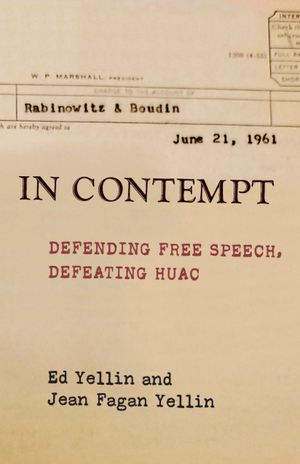
In Contempt: Defending Free Speech, Defeating HUAC
“YOU ARE HEREBY COMMANDED to be and appear before the Committee on Un-American Activities of the House of Representatives of the United States, or a duly appointed subcommittee thereof, on February 10 (Monday), 1958, at ten o’clock a.m. at City Council Chambers, City Hall, Gary, Indiana, then and there to testify touching matters of inquiry committed to said committee, and not to depart without leave of said committee.”
So began a decade of hardship for Ed and Jean Yellin and their three young children as the repressive weight of the U.S. government, caught up in the throes of McCarthyism, crashed down upon their careers, their daily household budget, and their relationships to colleagues, neighbors, and their country. In Contempt is a faithful, factual testament to the enduring quality of patriotic dissent in our evolving democracy—and a loving reconstruction of what it meant to be labeled “unAmerican” for defending the Constitution.
The Imperial Style of Inquiry in Twentieth-Century China: The Emergence of New Approaches
How have traditional Chinese ways of thinking affected problem solving in this century? The traditional, imperial style of inquiry is associated with the belief that the universe is a coherent, internally structured unity understandable through the similarly structured human mind. It involves a reliance on antecedent and authoritarian models, coupled with an introspective focus in investigations, at some cost to objective fact gathering.In contrast, emergent forms of inquiry are guided by the values of individual autonomy and new perspectives on objectivity. In the 1930s and 1940s, some liberal educators held the model of Western science in great esteem, and some scientists practicing objective inquiry helped to create an awareness in the urban areas of inquiry not directed by political values.Drawing on philosophical, social science, and popular culture materials, Donald Munro shows that the two strains coexisted in twentieth century China as mixed motives. Many important figures were motivated by a desire to act consistently with the social values associated with the premodern or received view of knowledge and inquiry. At the same time, these people often had other motives, such as utilitarian values, efficiency, and entrepreneurship. Munro argues that while many competing positions can coexist in the same person, the seeds of the positive, instrumental value of individual autonomy in Chinese inquiry are beginning to compete in both scholarly and popular culture with other, older approaches.
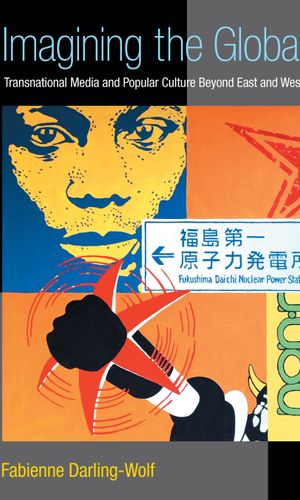
Imagining the Global: Transnational Media and Popular Culture Beyond East and West
Based on a series of case studies of globally distributed media and their reception in different parts of the world, Imagining the Global reflects on what contemporary global culture can teach us about transnational cultural dynamics in the 21st century. A focused multisited cultural analysis that reflects on the symbiotic relationship between the local, the national, and the global, it also explores how individuals’ consumption of global media shapes their imagination of both faraway places and their own local lives. Chosen for their continuing influence, historical relationships, and different geopolitical positions, the case sites of France, Japan, and the United States provide opportunities to move beyond common dichotomies between East and West, or United States and “the rest.” From a theoretical point of view, Imagining the Global endeavors to answer the question of how one locale can help us understand another locale. Drawing from a wealth of primary sources—several years of fieldwork; extensive participant observation; more than 80 formal interviews with some 160 media consumers (and occasionally producers) in France, Japan, and the United States; and analyses of media in different languages—author Fabienne Darling-Wolf considers how global culture intersects with other significant identity factors, including gender, race, class, and geography. Imagining the Global investigates who gets to participate in and who gets excluded from global media representation, as well as how and why the distinction matters.
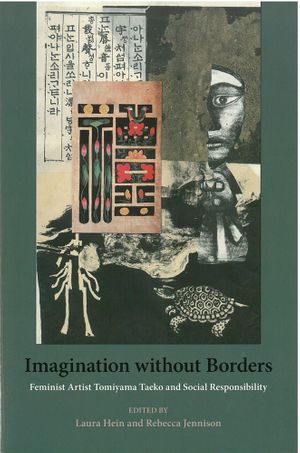
Imagination without Borders: Feminist Artist Tomiyama Taeko and Social Responsibility
Tomiyama Taeko, a Japanese visual artist born in 1921, is changing the way World War II is remembered in Japan, Asia, and the world. Her work deals with complicated moral and emotional issues of empire and war responsibility that cannot be summed up in simple slogans, which makes it compelling for more than just its considerable beauty.
Japanese today are still grappling with the effects of World War II, and, largely because of the inconsistent and ambivalent actions of the government, they are widely seen as resistant to accepting responsibility for their nation’s violent actions against others during the decades of colonialism and war. Yet some individuals, such as Tomiyama, have produced nuanced and reflective commentaries on those experiences, and on the difficulty of disentangling herself from the priorities of the nation despite her lifelong political dissent. Tomiyama’s sophisticated visual commentary on Japan’s history—and on the global history in which Asia is embedded—provides a compelling guide through the difficult terrain of modern historical remembrance, in a distinctively Japanese voice.
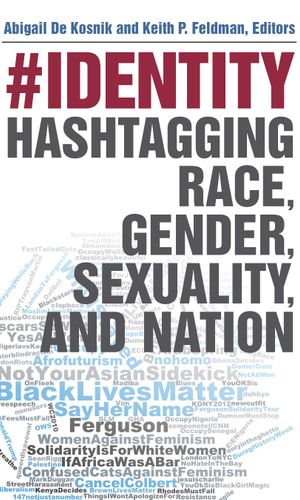
#identity: Hashtagging Race, Gender, Sexuality, and Nation
Since its launch in 2006, Twitter has served as a major platform for political performance, social justice activism, and large-scale public debates over race, ethnicity, gender, sexuality, and nationality. It has empowered minoritarian groups to organize protests, articulate often-underrepresented perspectives, and form community. It has also spread hashtags that have been used to bully and silence women, people of color, and LGBTQ people.
#identity is among the first scholarly books to address the positive and negative effects of Twitter on our contemporary world. Hailing from diverse scholarly fields, all contributors are affiliated with The Color of New Media, a scholarly collective based at the University of California, Berkeley. The Color of New Media explores the intersections of new media studies, critical race theory, gender and women’s studies, and postcolonial studies. The essays in #identity consider topics such as the social justice movements organized through #BlackLivesMatter, #Ferguson, and #SayHerName; the controversies around #WhyIStayed and #CancelColbert; Twitter use in India and Africa; the integration of hashtags such as #nohomo and #onfleek that have become part of everyday online vernacular; and other ways in which Twitter has been used by, for, and against women, people of color, LGBTQ, and Global South communities. Collectively, the essays in this volume offer a critically interdisciplinary view of how and why social media has been at the heart of US and global political discourse for over a decade.

i used to love to dream
“i used to love to dream” is a mixtap/e/ssay that performs hip-hop scholarship using sampled and live instrumentation; repurposed music, film, and news clips; and original rap lyrics. As a genre, the mixtap/e/ssay brings together the mixtape—a self-produced or independently released album issued free of charge to gain publicity—and the personal and scholarly essays. “i used to love to dream” names Decatur, Illinois—the author’s hometown—as a reference point for place- and time-specific rapped ruminations about the ideas of growing up, moving away, and pondering one’s life choices. At the same time, the tracks attempt to account for moral, philosophical, and ethical dimensions undergirding unease about authenticity, or staying true to oneself and to one’s city or neighborhood, as well as the external factors that contribute to such feelings. Using the local to ask questions about the global, “i used to love to dream” highlights outlooks on Black life generally, and Black manhood in particular, in the United States. The tracks are presented along with liner notes and a short documentary about the making of the mixtap/e/ssay, and accompanying articles to provide context for the tracks for listeners both in classrooms and outside of them.
The Hyperlinked Society: Questioning Connections in the Digital Age
“Links” are among the most basic—and most unexamined—features of online life. Bringing together a prominent array of thinkers from industry and the academy, The Hyperlinked Society addresses a provocative series of questions about the ways in which hyperlinks organize behavior online. How do media producers’ considerations of links change the way they approach their work, and how do these considerations in turn affect the ways that audiences consume news and entertainment? What role do economic and political considerations play in information producers’ creation of links? How do links shape the size and scope of the public sphere in the digital age? Are hyperlinks “bridging” mechanisms that encourage people to see beyond their personal beliefs to a broader and more diverse world? Or do they simply reinforce existing bonds by encouraging people to ignore social and political perspectives that conflict with their existing interests and beliefs?This pathbreaking collection of essays will be valuable to anyone interested in the now taken for granted connections that structure communication, commerce, and civic discourse in the world of digital media.”This collection provides a broad and deep examination of the social, political, and economic implications of the evolving, web-based media environment. The Hyperlinked Society will be a very useful contribution to the scholarly debate about the role of the internet in modern society, and especially about the interaction between the internet and other media systems in modern society.”
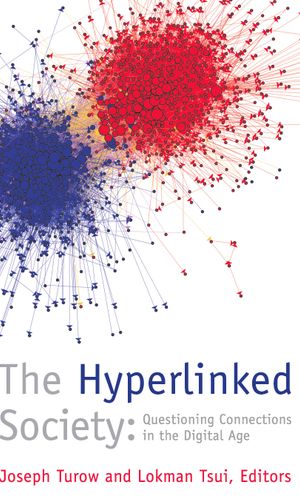
—Charles Steinfield, Professor and Chairperson, Department of Telecommunication, Information Studies, and Media, Michigan State UniversityJoseph Turow is Robert Lewis Shayon Professor at the Annenberg School for Communication, University of Pennsylvania. He was named a Distinguished Scholar by the National Communication Association and a Fellow of the International Communication Association in 2010. He has authored eight books, edited five, and written more than 100 articles on mass media industries. His books include Niche Envy: Marketing Discrimination in the Digital Age and Breaking up America: Advertisers and the New Media World.Lokman Tsui is a doctoral candidate at the Annenberg School for Communication, University of Pennsylvania. His research interests center on new media and global communication.Cover image: This graph from Lada Adamic’s chapter depicts the link structure of political blogs in the United States. The shapes reflect the blogs, and the colors of the shapes reflect political orientation—red for conservative blogs, blue for liberal ones. The size of each blog reflects the number of blogs that link to it.digitalculturebooks is an imprint of the University of Michigan Press and the Scholarly Publishing Office of the University of Michigan Library dedicated to publishing innovative and accessible work exploring new media and their impact on society, culture, and scholarly communication. Visit the website at www.digitalculture.org.
Europäisches Strafrecht post-Lissabon
This volume deals with the future of European criminal law under the Lisbon Treaty. The contributions assess the risks and prospects of the progressing European integration with a special focus on the enlarged competences of the EU in the field of criminal law.
Hsin-lun (New Treatise) and Other Writings by Huan T’an (43 B.C.–28 A.D.)
Better known in his own times than later, Huan T’an (43 BCE–25 CE) was a scholar-official, independent in his thought and unafraid to criticize orthodox currents of his time. A practitioner of the Old Text exegesis of the Classics, he maintained a position on the court during a turbulent time of political crises, uprisings, and civil war, spanning the reigns of four emperors.
His principal work, Hsin-lun, differs from other books on political criticism in that it does not deal primarily with history but takes many examples from contemporary social and political life. While belonging to the Old Text group of court officials and scholars, Huan T’an differed radically from them in his stress on direct knowledge, in his range of practical experience, and in his outspoken criticism of popular opinions. He was not a systematic philosopher, but his ideas were influential in the return to a more worldly conception of Confucianism.
To translate Huan T’an’s writings, one must reconstruct the texts. Timoteus Pokora uses two nineteenth-century fragments as a basis around which to orient quotations from Hsin-lun from sixty-four other sources, primarily encyclopedias and commentaries. Pokora provides notes to give context to these short references and to account for discrepancies between quotations and originals, and he includes a large index to add coherence and points of entry.
A History of Japan’s Government-Business Relationship: The Passenger Car Industry
Despite the economic and political importance of the U.S.-Japan relationship and the extensive attention paid to automotive trade, few American scholars or policy makers are familiar with the history of Japanese government-business relations, either generally or for specific industries such as passenger cars. This book hopefully helps in a small way to fill that gap in our knowledge and, thus, to help strengthen the foundation from which we make public policy decisions about bilateral trade.

A Heart Beating Hard
A Heart Beating Hard is about looking long and deep into the invisible life of a person we too often pass by. It is the story of Marjorie, who works in the Store and does her best to go on with the days; of Margie, growing up in Apartment #2 with the sounds of Ma and Gram and Him all around; and of Marge, who should never have been, who should have been helped. In A Heart Beating Hard, we see how Marjorie manages to go on with the days, how even in the bright lights and grabbing hands of the outside world, inside, Marjorie knows how to take care of her self and her secrets. It is a story about the passed-along People, about how we are the same and how we are different, about how we become who we are and how we protect our most private places from the cold glare of all that we cannot control.
Hacking the Academy: New Approaches to Scholarship and Teaching from Digital Humanities
On May 21, 2010, Daniel J. Cohen and Tom Scheinfeldt posted the following provocative questions online:“Can an algorithm edit a journal? Can a library exist without books? Can students build and manage their own learning management platforms? Can a conference be held without a program? Can Twitter replace a scholarly society?”As recently as the mid-2000s, questions like these would have been unthinkable. But today serious scholars are asking whether the institutions of the academy as they have existed for decades, even centuries, aren’t becoming obsolete. Every aspect of scholarly infrastructure is being questioned, and even more importantly, being hacked. Sympathetic scholars of traditionally disparate disciplines are canceling their association memberships and building their own networks on Facebook and Twitter. Journals are being compiled automatically from self-published blog posts. Newly minted PhDs are forgoing the tenure track for alternative academic careers that blur the lines between research, teaching, and service. Graduate students are looking beyond the categories of the traditional CV and building expansive professional identities and popular followings through social media. Educational technologists are “punking” established technology vendors by rolling out their own open source infrastructure.Here, in Hacking the Academy, Daniel J. Cohen and Tom Scheinfeldt have gathered a sampling of the answers to their initial questions from scores of engaged academics who care deeply about higher education. These are the responses from a wide array of scholars, presenting their thoughts and approaches with a vibrant intensity, as they explore and contribute to ongoing efforts to rebuild scholarly infrastructure for a new millennium.
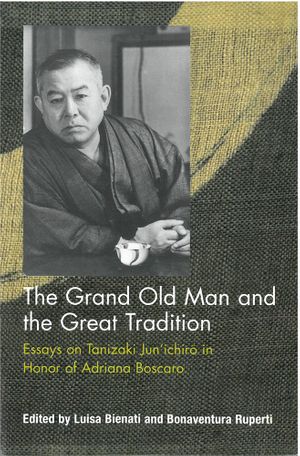
The Grand Old Man and the Great Tradition: Essays on Tanizaki Jun’ichiro in Honor of Adriana Boscaro
In 1995, on the thirtieth anniversary of Tanizaki Jun’ichiro’s death, Adriana Boscaro organized an international conference in Venice that had an unusally lasting effect on the study of this major Japanese novelist. Thanks to Boscaro’s energetic commitment, Venice became a center for Tanizaki studies that produced two volumes of conference proceedings now considered foundational for all scholarly works on Tanizaki. In the years before and after the Venice Conference, Boscaro and her students published an abundance of works on Tanizaki and translations of his writings, contributing to his literary success in Italy and internationally.The Grand Old Man and the Great Tradition honors Boscaro’s work by collecting nine essays on Tanizaki’s position in relation to the “great tradition” of Japanese classical literature. To open the collection, Edward Seidensticker contributes a provocative essay on literary styles and the task of translating Genji into a modern language. Gaye Rowley and Ibuki Kazuko also consider Tanizaki’s Genji translations, from a completely different point of view, documenting the author’s three separate translation efforts. Aileen Gatten turns to the influence of Heian narrative methods on Tanizaki’s fiction, arguing that his classicism, far from being superficial, “reflects a deep sensitivity to Heian narrative.” Tzevetana Kristeva holds a different perspective on Tanizaki’s classicism, singling out specific aspects of Tanizaki’s eroticism as the basis of comparison.The next two essays emphasize Tanizaki’s experimental engagement with the classical literary genres—Amy V. Heinrich treats the understudied poetry, and Bonaventura Ruperti considers a 1933 essay on performance arts. Taking up cinema, Roberta Novelli focuses on the novel Manji, exploring how it was recast for the screen by Masumura Yasuzo. The volume concludes with two contributions interpreting Tanizaki’s works in the light of Western and Meiji literary traditions: Paul McCarthy considers Nabokovas a point of comparison, and Jacqueline Pigeot conducts a groundbreaking comparison with a novel by Natsume Soseki.
A Glossary of Words and Phrases in the Oral Performing and Dramatic Literatures of the Jin, Yuan, and Ming
For many years, the oral performing and dramatic literatures of China from 1200 to 1600 CE were considered some of the most difficult texts in the Chinese corpus. They included ballad medleys, comic farces, Yuan music dramas, Ming music dramas, and the novel Shuihu zhuan. The Japanese scholars who first dedicated themselves to study these works in the mid-twentieth century were considered daring. As late as 1981, no comprehensive dictionary or glossary for this literature existed in any language, Asian or Western.
A Glossary of Words and Phrases fills this gap for Western readers, allowing even a relative novice who has reasonable command of Chinese to read, translate, and appreciate this great body of literature with an ease undreamed of even two decades ago. The Glossary is organized into approximately 8,000 entries based on the reading notes and glosses found in various dictionaries, thesauruses, glossaries, and editions of works from the period. Main entries are listed alphabetically in the pinyin romanization system. In addition to glosses, entries include symbolic annotations, guides to pronunciation, and text citations. The result is a broadly useful glossary serving the needs of students of this literature as well as scholars researching Jin and Yuan language and its usage.
Global Digital Cultures: Perspectives from South Asia
Digital media histories are part of a global network, and South Asia is a key nexus in shaping the trajectory of digital media in the twenty-first century. Digital platforms like Facebook, WhatsApp, and others are deeply embedded in the daily lives of millions of people around the world, shaping how people engage with others as kin, as citizens, and as consumers. Moving away from Anglo-American and strictly national frameworks, the essays in this book explore the intersections of local, national, regional, and global forces that shape contemporary digital culture(s) in regions like South Asia: the rise of digital and mobile media technologies, the ongoing transformation of established media industries, and emergent forms of digital media practice and use that are reconfiguring sociocultural, political, and economic terrains across the Indian subcontinent. From massive state-driven digital identity projects and YouTube censorship to Tinder and dating culture, from Twitter and primetime television to Facebook and political rumors, Global Digital Cultures focuses on enduring concerns of representation, identity, and power while grappling with algorithmic curation and data-driven processes of production, circulation, and consumption.
Gaming the Stage: Playable Media and the Rise of English Commercial Theater
Rich connections between gaming and theater stretch back to the 16th and 17th centuries, when England’s first commercial theaters appeared right next door to gaming houses and blood-sport arenas. In the first book-length exploration of gaming in the early modern period, Gina Bloom shows that theaters succeeded in London’s new entertainment marketplace largely because watching a play and playing a game were similar experiences. Audiences did not just see a play; they were encouraged to play the play, and knowledge of gaming helped them become better theatergoers. Examining dramas written for these theaters alongside evidence of analog games popular then and today, Bloom argues for games as theatrical media and theater as an interactive gaming technology.Gaming the Stage also introduces a new archive for game studies: scenes of onstage gaming, which appear at climactic moments in dramatic literature. Bloom reveals plays to be systems of information for theater spectators: games of withholding, divulging, speculating, and wagering on knowledge. Her book breaks new ground through examinations of plays such as The Tempest, Arden of Faversham, A Woman Killed with Kindness, and A Game at Chess; the histories of familiar games such as cards, backgammon, and chess; less familiar ones, like Game of the Goose; and even a mixed-reality theater videogame.

Full Metal Jhacket
Two boys discover that the title of their stop-motion animated film about Vietnam has been taken by director Stanley Kubrick. A 150-year-old woman on the run from the government is tracked down by the company who extended her life. A military contractor carrying his robot son in a gym bag struggles to find his way out of the Nigerian delta during a bloody civil war. The wife of an up-and-coming politician grieves his infidelity by prowling rooftops with a sniper rifle. Following his celebrated debut collection, Super Flat Times, Matthew Derby delivers a disturbing new set of stories that plunges us into a lonely heartland of misfits, outcasts, and would-be assassins who lurk in the shadows, searching for connection and meaning in all the wrong places.
Finding Voice: A Visual Arts Approach to Engaging Social Change
In Finding Voice, Kim Berman demonstrates how she was able to use visual arts training in disenfranchised communities as a tool for political and social transformation in South Africa. Using her own fieldwork as a case study, Berman shows how hands-on work in the arts with learners of all ages and backgrounds can contribute to economic stability by developing new skills, as well as enhancing public health and gender justice within communities. Berman’s work, and the community artwork her book documents, present the visual arts as a crucial channel for citizens to find their individual voices and to become agents for change in the arenas of human rights and democracy.
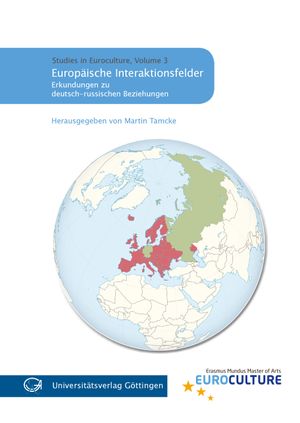
Europäische Interaktionsfelder – Erkundungen zu deutsch-russischen Beziehungen
Das Verhältnis von Deutschen und Russen wird oft im Kontext von Kriegen und politischen Spannungen thematisiert. Aber eine derartige Sicht trennt auch das, was verbindet. Tatsächlich hat es im Laufe der Jahrhunderte nicht nur wechselseitige starke Migrationsbewegungen gegeben (Deutschland war zunächst eines der bevorzugten Fluchtländer der russischen Flüchtlinge nach der Russischen Revolution, Russland zog zur Zeit der Zarin Katharina deutsche Aussiedler an), sondern immer haben beide Kulturen auch stark aufeinander gewirkt. Am Schicksal der Russlanddeutschen zeigt sich in besonderer Prägnanz Fluch und Segen einer Existenz zwischen den Kulturen. Hier kann der Blick einzelnen Russlanddeutschen (wie dem letzten lutherischen Pastor von Tomsk) oder grundsätzlichen Überlegungen zur Geschichte und zum Selbstverständnis der Russlanddeutschen gelten. Umgekehrt werden Migrantenschicksale deutlich, die gerade deren Situation zwischen den Kulturen zum Teil tragisch verdeutlichen (Henry von Heiseler, Alexander Schmorell), die Wirkung russischer Kultur auf die deutsche erörtert etwa der Aufsatz zur Dostojewskij-Rezeption der dialektischen Theologen, während die studentische Arbeit zu Dostojewskijs Gotteslästerungsthematik im Großinquisitor ein Stück heutiger Rezeption bietet. Die Schlagwörter Märtyrer und Migranten belegen die gegenwärtig die Gesellschaften in Deutschland und Russland unterschiedlich bewegenden Tendenzen öffentlicher bzw. kultureller Diskurse, deren direkte Vergleichbarkeit nicht von vornherein gegeben ist.
Explorations in Early Southeast Asian History: The Origins of Southeast Asian Statecraft
While following the probes of foreign individuals into various obscure parts of Southeast Asia over the centuries is a diverting and entertaining pastime, the purpose of this volume is to investigate this past with the mind, to question and postulate upon the historical patterns that have developed from earlier study of the area, and to bring concepts from other areas and disciplines to bear on the existing information. The product of this effort, as it is encompassed in this volume, is not an attempt at the definitive study of any of the topics. It is rather a series of speculations on the directions feasible for the further study of the Southeast Asian past. As such, the answers proposed in these essays are really questions. Are the ideas presented here true within the specific historical contexts for which they have been developed? If so, can we use these ideas, or variations of them, to interpret the history of other parts of Southeast Asia? If not, what other ideas may be brought to bear on these situations in order to understand them? The ultimate aim of this volume is thus a challenge to the profession at large not only to criticize what we have done, but also to go beyond our postulations and create new ones.
Ethnic Diversity and the Control of Natural Resources in Southeast Asia
The authors consider the ways in which the high degree of ethnic diversity within the region is related to the nature of tropical Asian environments, on the one hand, and the nature of Southeast Asian political systems and the ways in which they manipulate natural resources, on the other. Rather than focus on defining the phenomenon of ethnicity, this book examines the different social evolutionary contexts in which the phenomenon is manifested.Companion volume to Cultural Values and Human Ecology in Southeast Asia (Michigan Papers no. 27).
Ethical Programs: Hospitality and the Rhetorics of Software
Living in a networked world means never really getting to decide in any thoroughgoing way who or what enters your “space” (your laptop, your iPhone, your thermostat . . . your home). With this as a basic frame-of-reference, James J. Brown’s Ethical Programs examines and explores the rhetorical potential and problems of a hospitality ethos suited to a new era of hosts and guests. Brown reads a range of computational strategies and actors, from the general principles underwriting the Transmission Control Protocol (TCP), which determines how packets of information can travel through the internet, to the Obama election campaign’s use of the power of protocols to reach voters, harvest their data, incentivize and, ultimately, shape their participation in the campaign. In demonstrating the kind of rhetorical spaces networked software establishes and the access it permits, prevents, and molds, Brown makes a significant contribution to the emergent discourse of software studies as a major component of efforts in broad fields including media studies, rhetorical studies, and cultural studies.
Essays on the Modern Japanese Church: Christianity in Meiji Japan
Essays on the Modern Japanese Church (Gendai Nihon kyokai shiron), published in 1906, was the first Japanese-language history of Christianity in Meiji Japan. Yamaji Aizan’s firsthand account describes the reintroduction of Christianity to Japan—its development, rapid expansion, and decline—and its place in the social, political, and intellectual life of the Meiji period. Yamaji’s overall argument is that Christianity played a crucial role in shaping the growth and development of modern Japan.
Yamaji was a strong opponent of the government-sponsored “emperor-system ideology,” and through his historical writing he tried to show how Japan had a tradition of tolerance and openness at a time when government-sponsored intellectuals were arguing for greater conformity and submissiveness to the state on the basis of Japanese “national character.”
Essays is important not only in terms of religious history but also because it highlights broad trends in the history of Meiji Japan. Introductory chapters explore the significance of the work in terms of the life and thought of its author and its influence on subsequent interpretations of Meiji Christianity.
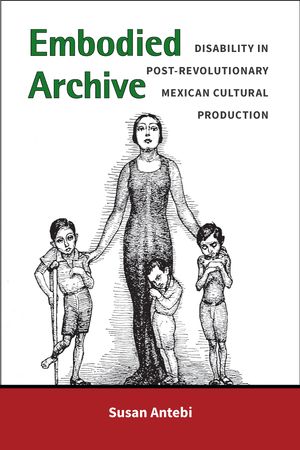
Embodied Archive: Disability in Post-Revolutionary Mexican Cultural Production
Embodied Archive focuses on perceptions of disability and racial difference in Mexico’s early post-revolutionary period, from the 1920s to the 1940s. In this period, Mexican state-sponsored institutions charged with the education and health of the population sought to strengthen and improve the future of the nation, and to forge a more racially homogeneous sense of collective identity and history. Influenced by regional and global movements in eugenics and hygiene, Mexican educators, writers, physicians, and statesmen argued for the widespread physical and cognitive testing and categorization of schoolchildren, so as to produce an accurate and complete picture of “the Mexican child,” and to carefully monitor and control forms of unwanted difference, including disability and racialized characteristics. Differences were not generally marked for eradication—as would be the case in eugenics movements in the US, Canada, and parts of Europe—but instead represented possible influences from a historically distant or immediate reproductive past, or served as warnings of potential danger haunting individual or collective futures.
Weaving between the historical context of Mexico’s post-revolutionary period and our present-day world, Embodied Archive approaches literary and archival documents that include anti-alcohol and hygiene campaigns; projects in school architecture and psychopedagogy; biotypological studies of urban schoolchildren and indigenous populations; and literary approaches to futuristic utopias or violent pasts. It focuses in particular on the way disability is represented indirectly through factors that may have caused it in the past or may cause it in the future, or through perceptions and measurements that cannot fully capture it. In engaging with these narratives, the book proposes an archival encounter, a witnessing of past injustices and their implications for the disability of our present and future.
Educated Youth and the Cultural Revolution in China
The Cultural Revolution was an emotionally charged political awakening for the educated youth of China. Called upon by aging revolutionary Mao Tse-tung to assume a “vanguard” role in his new revolution to eliminate bourgeois revisionist influence in education, politics, and the arts, and to help to establish proletarian culture, habits, and customs, in a new Chinese society, educated young Chinese generally accepted this opportunity for meaningful and dramatic involvement in Chinese affairs. It also gave them the opportunity to gain recognition as a viable and responsible part of the Chinese polity. In the end, these revolutionary youths were not successful in proving their reliability. Too “idealistic” to compromise with the bourgeois way, their sense of moral rectitude also made it impossible for them to submerge their factional differences with other revolutionary mass organizations to achieve unity and consolidate proletarian victories. Many young revolutionaries were bitterly disillusioned by their own failures and those of other segments of the Chinese population and by the assignment of recent graduates to labor in rural communes.
Educated Youth and the Cultural Revolution in China reconstructs the events of the Cultural Revolution as they affected young people. Martin Singer integrates material from a range of factors and effects, including the characteristics of this generation of youths, the roles Mao called them to play, their resentment against the older generation, their membership in mass organizations, the educational system in which they were placed, and their perception that their skills were underutilized. To most educated young people in China, Singer concludes, the Cultural Revolution represented a traumatic and irreversible loss of political innocence, made yet more tragic by its allegiance to the unsuccessful campaign of an old revolutionary to preserve his legacy from the inevitable storms of history.
The Economy of Communist China, 1949–1969
Economic development in mainland China during the first two decades of Communist control provides a typical example for the difficult task to transform a vast underdeveloped agrarian economy into a modern industrial one. In the first half of this period, a series of massive transformations of social and economic institutions was accompanied by a drafted industrialization program; the result was an impressive speed-up in economic growth. The second decade witnessed an economic crisis (1960–62) and a political upheaval (1966–68). These disruptions marred the economic performance over the period as a whole. Consequently, the long-term growth rate appears to have been only moderate.The Economy of Communist China reviews selected aspects of the economy. After examining the development strategy, it analyzes the quantitative trends and the structural changes. The book goes on to analyze the key factors contributing to the earlier growth and the elements responsible for the later disruption and finally assesses the impact of the Cultural Revolution on the Chinese economy and the prospects of the current Third Five-Year Plan.The text includes a bibliography of selected materials on Chinese economic development.