
Books
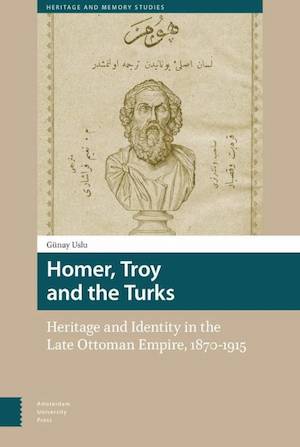
Homer, Troy and the Turks: Heritage and Identity in the Late Ottoman Empire, 1870-1915
Homer’s stories of Troy are part of the foundations of Western culture. What’s less well known is that they also inspired Ottoman-Turkish cultural traditions. Yet even with all the historical and archaeological research into Homer and Troy, most scholars today rely heavily on Western sources, giving Ottoman work in the field short shrift. This book helps right that balance, exploring Ottoman-Turkish involvement and interest in the subject between 1870, when Heinrich Schliemann began his excavations in search of Troy on Ottoman soil, and the battle of Gallipoli in 1915, which gave the Turks their own version of the heroic epic of Troy.

Fanfiction and the Author: How Fanfic Changes Popular Cultural Texts
Whether you look at quantity, quality, or readership, we are in an unprecedented era of fan fiction. Thus far, however, the genre has been subject to relatively little rigorous qualitative or quantitative study—a problem that Judith May Fathallah remedies here through close analysis of fanfiction related to Sherlock, Supernatural, and Game of Thrones. Her large-scale study of the sites, receptions, and fan rejections of fanfic demonstrate how it often legitimates itself through traditional notions of authorship even as its explicit discussion and deconstruction of the author figure contests traditional discourses of authority and opens new spaces for writing that challenges the authority of media professionals.
Accelerators in Silicon Valley: Building Successful Startups
This book describes how accelerators, the ‘schools of startup entrepreneurship’, help startups to become successful companies in Silicon Valley, the world’s most successful innovation region.

Trust and Terror: Social Capital and the Use of Terrorism as a Tool of Resistance
Why do some individuals choose to protest political grievances via non-violent means, while others take up arms? What role does whom we trust play in how we collectively act? This book explores these questions by delving into the relationship between interpersonal trust and the nature of the political movements that individuals choose to join. Utilizing the examples of the Arab Spring uprisings in Egypt, Libya and Syria, a novel theoretical model that links the literature on social capital and interpersonal trust to violent collective action is developed and extended. Beyond simply bringing together two lines of literature, this theoretical model can serve as a prism from which the decision to join terrorist organizations or violent movements may be analyzed. The implications of the theory are then examined more closely through an in-depth look at the behavior of members of political movements at the outset of the Arab Spring, as well as statistical tests of the relationship between interpersonal trust and terrorism in the Middle East and globally.
Stalin’s Constitution: Soviet Participatory Politics and the Discussion of the 1936 Draft Constitution
Upon its adoption in December 1936, Soviet leaders hailed the new so-called Stalin Constitution as the most democratic in the world. Scholars have long scoffed at this claim, noting that the mass repression of 1937-1938 that followed rendered it a hollow document. This book focuses on the six-month long popular discussion of the draft Constitution, which preceded its formal adoption in December 1936. Drawing on rich archival sources, this book uses the discussion of the draft 1936 Constitution to examine discourse between the central state leadership and citizens about the new Soviet social contract, which delineated the roles the state and citizens should play in developing socialism.
Refugees and the Ethics of Forced Displacement
This book is a philosophical analysis of the ethical treatment of refugees and stateless people, a group of people who, though extremely important politically, have been greatly under theorized philosophically. The limited philosophical discussion of refugees by philosophers focuses narrowly on the question of whether or not we, as members of Western states, have moral obligations to admit refugees into our countries. This book reframes this debate and shows why it is important to think ethically about people who will never be resettled and who live for prolonged periods outside of all political communities. Parekh shows why philosophers ought to be concerned with ethical norms that will help stateless people mitigate the harms of statelessness even while they remain formally excluded from states.

Wege zum illuminierten Buch: Herstellungsbedingungen für Buchmalerei in Mittelalter und früher Neuzeit
The essays in this volume present art historical methods for research on the conditions in which books were produced and decorated in the Middle Ages and Early Modern Period. The consideration of the multiple factors impacting on the production and dissemination of illustrated books serves to improve our understanding of the works and helps to place them more accurately in the cultural discourse of their time.
Rampage Shootings and Gun Control: Politicization and Policy Change in Western Europe
While the causes of rampage violence have been analysed thoroughly in diverse academic disciplines, we hardly know anything about the factors that affect their consequences for public policy. This book addresses rampage shootings in Western Europe and their conditional impact on politicization and policy change in the area of gun control.
The author sets out to unravel the factors that facilitate or impede the access of gun control to the political agenda in the wake of rampage shootings and analyses why some political debates lead to profound shifts of the policy status quo, while others peter out without any legislative reactions. In so doing, the book not only contributes to the theoretical literature on crisis-induced policy making, but also provides a wealth of case-study evidence on rampage shootings as empirical phenomena.

Power, Knowledge and Feminist Scholarship: An Ethnography of Academia
Feminist scholarship is sometimes dismissed as not quite ‘proper’ knowledge – it’s too political or subjective, many argue. But what are the boundaries of ‘proper’ knowledge? Who defines them, and how are they changing? How do feminists negotiate them? And how does this boundary-work affect women’s and gender studies, and its scholars’ and students’ lives? These are the questions tackled by this ground-breaking ethnography of academia inspired by feminist epistemology, Foucault, and science and technology studies. Drawing on data collected over a decade in Portugal and the UK, US and Scandinavia, this title explores different spaces of academic work and sociability, considering both official discourse and ‘corridor talk’. It links epistemic negotiations to the shifting political economy of academic labour, and situates the smallest (but fiercest) departmental negotiations within global relations of unequal academic exchange.
Persons and Their Minds: Towards an Integrative Theory of the Mediated Mind
Today’s approaches to the study of the human mind are divided into seemingly opposed camps. On one side we find the neurosciences, with their more or less reductionist research programs, and on the other side we find the cultural and discursive approaches, with their frequent neglect of the material sides of human life. Persons and their Minds seeks to develop an integrative theory of the mind with room for both brain and culture. Brinkmann’s remarkable and thought-provoking work is one of the first books to integrate brain research with phenomenology, social practice studies and actor-network theory, all of which are held together by the concept of the person.
Hate Speech Law: A Philosophical Examination
Hate speech law can be found throughout the world. But it is also the subject of numerous principled arguments, both for and against. These principles invoke a host of morally relevant features (e.g., liberty, health, autonomy, security, non-subordination, the absence of oppression, human dignity, the discovery of truth, the acquisition of knowledge, self-realization, human excellence, civic dignity, cultural diversity and choice, recognition of cultural identity, intercultural dialogue, participation in democratic self-government, being subject only to legitimate rule) and practical considerations (e.g., efficacy, the least restrictive alternative, chilling effects). The book develops and then critically examines these various principled arguments. It also attempts to de-homogenize hate speech law into different clusters of laws/regulations/codes that constrain uses of hate speech, so as to facilitate a more nuanced examination of the principled arguments.
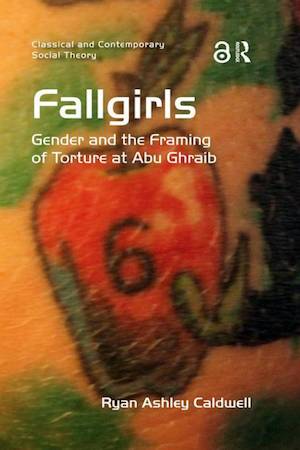
Fallgirls: Gender and the Framing of Torture at Abu Ghraib
Fallgirls provides an analysis of the abuses that took place at Abu Ghraib in terms of social theory, gender and power, based on first-hand participant-observations of the courts-martials of Lynndie England and Sabrina Harman. This book examines the trials themselves, including interactions with soldiers and defense teams, documents pertaining to the courts-martials, US government reports and photographs from Abu Ghraib, in order to challenge the view that the abuses were carried out at the hands of a few rogue soldiers. With a keen focus on gender and sexuality as prominent aspects of the abuses themselves, as well as the ways in which they were portrayed and tried, Fallgirls engages with modern feminist thought and contemporary social theory in order to analyse the manner in which the abuses were framed, whilst also exploring the various lived realities of Abu Ghraib by both prisoners and soldiers alike.

The Emergence of the Digital Humanities
In The Emergence of the Digital Humanities, Steven E. Jones examines this shift in our relationship to digital technology and the ways that it has affected humanities scholarship and the academy more broadly. Based on the premise that the network is now everywhere rather than merely “out there,” Jones links together seemingly disparate cultural events—the essential features of popular social media, the rise of motion-control gaming and mobile platforms, the controversy over the “gamification” of everyday life, the spatial turn, fabrication and 3D printing, and electronic publishing—and argues that cultural responses to changes in technology provide an essential context for understanding the emergence of the digital humanities as a new field of study in this millennium.
Against Meritocracy: Culture, power and myths of mobility
In this book Jo Littler argues that meritocracy is the key cultural means of legitimation for contemporary neoliberal culture – and that whilst it promises opportunity, it in fact creates new forms of social division. Against Meritocracy is split into two parts. Part I explores the genealogies of meritocracy within social theory, political discourse and working cultures. It traces the dramatic U-turn in meritocracy’s meaning, from socialist slur to a contemporary ideal of how a society should be organised. Part II uses a series of case studies to analyse the cultural pull of popular ‘parables of progress’, from reality TV to the super-rich and celebrity CEOs, from social media controversies to the rise of the ‘mumpreneur’. Paying special attention to the role of gender, ‘race’ and class, this book provides new conceptualisations of the meaning of meritocracy in contemporary culture and society.
Migration and Integration in Europe, Southeast Asia, and Australia: A Comparative Perspective
This volume brings together a group of scholars from a wide range of disciplines to address crucial questions of migration flows and integration in Europe, Southeast Asia, and Australia. Comparative analysis of the three regions and their differing approaches and outcomes yields important insights for each region, as well as provokes new questions and suggests future avenues of study.
Islamic Studies in the Twenty-first Century: Transformations and Continuities
In recent decades, traditional methods of philology and intellectual history, applied to the study of Islam and Muslim societies, have been met with considerable criticism from rising generations of scholars who have turned to the social sciences, most notably anthropology and social history, for guidance. This change has been accompanied by the rise of new fields, studying, for example, Islam in Europe and Africa, and new topics, such as the role of gender. This collection surveys these transformations and others, taking stock of the field and showing new paths forward.
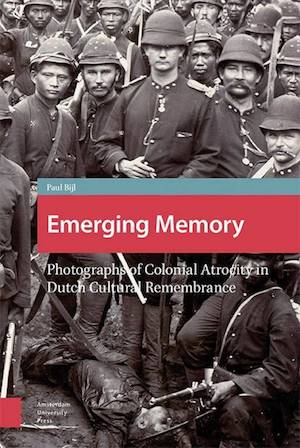
Emerging Memory: Photographs of Colonial Atrocity in Dutch Cultural Remembrance
This incisive volume brings together postcolonial studies, visual culture and cultural memory studies to explain how the Netherlands continues to rediscover its history of violence in colonial Indonesia. Dutch commentators have frequently claimed that the colonial past and especially the violence associated with it has been ‘forgotten’ in the Netherlands. Uncovering ‘lost’ photographs and other documents of violence has thereby become a recurring feature aimed at unmasking a hidden truth.
The author argues that, rather than absent, such images have been consistently present in the Dutch public sphere and have been widely available in print, on television and now on the internet. Emerging Memory: Photographs of Colonial Atrocity in Dutch Cultural Remembrance shows that between memory and forgetting there is a haunted zone from which pasts that do not fit the stories nations live by keep on emerging and submerging while retaining their disturbing presence.

Weana Tanz (Wiener Tänze): Teil 1: Geschichte und Typologie
The “Weana Tanz” (Viennese dance music) are instrumental plays of music, the character of which developped out of the alpine “landler melodics. They were shaped to a specific genre of urban folk music by the Viennese “Tanzgeigern”. In the history of Viennese music the WEANA TANZ represents an important period. Their discription and interpretation in 8 chapters show the extraordinary position they held in the music life of the 19th century. Manuscripts and prints of the early 19th and 20th century are documents of the historical period of development, its expression in style and melody as well as their musical function for entertainment and social gatherings. As an addition sound recordings are selected from the first productions of records between 1900 and 1930. One chapter is dedicated to remarkable composers and exponents. In their lives and opus we find the seasonable situation of music life in Vienna. A detailed register gives access to the exceptionally abundant content of this volume. After this monography the “WEANA TANZ” as part 1 of the 20th volume of the Encyclopaedia CORPUS MUSICAE POPULARIS AUSTRIACAE follows volume 2 with a collection of 130 “Viennese dances” which can be interpreted in diverse instrumentations.
Die Kosovopolitik Österreichs in den Jahren 1986-1999
Nach der Zuspitzung der Krise in Jugoslawien nach 1989 versuchte die österreichische Außenpolitik, einen Beitrag dazu zu leisten, die bewaffneten und ethnischen Konflikte zwischen den Völkern in Jugoslawien, insbesondere in Bezug auf die zunehmende Verschlechterung der politischen Lage im Kosovo, zu entschärfen und die internationale Staatengemeinschaft darauf aufmerksam zu machen. In dieser Hinsicht nahm Österreich im Vergleich zu vielen anderen europäischen Staaten eine Vorreiterrolle ein und unternahm zahlreiche Initiativen zur Internationalisierung der Kosovo-Frage. Die aktive Rolle Österreichs in der Kosovo-Frage manifestierte sich in einer Frühwarnfunktion.
Women in the Silent Cinema: Histories of Fame and Fate
This magisterial book offers comprehensive accounts of the professional itineraries of three women in the silent film in the Netherlands, France and North America. Annette Förster presents a careful assessment of the long career of Dutch stage and film actress Adriënne Solser; an exploration of the stage and screen careers of French actress and filmmaker Musidora and Canadian-born actress and filmmaker Nell Shipman; an analysis of the interaction between the popular stage and the silent cinema from the perspective of women at work in both realms; fresh insights into Dutch stage and screen comedy, the French revue and the American Northwest drama of the 1910s; and much more, all grounded in a wealth of archival research.
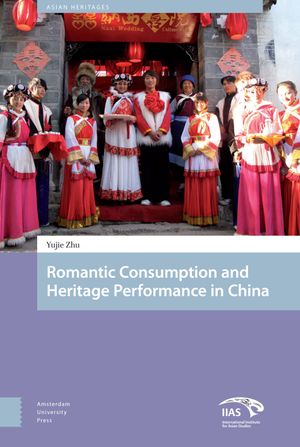
Romantic Consumption and Heritage Performance in China
The drums beat, an old man in a grand robe mutters incantations and three brides on horseback led by their grooms on foot proceed to the Naxi Wedding Courtyard, accompanied, watched and photographed the whole way by tourists, who have bought tickets for the privilege. The traditional wedding ceremonies are performed for the ethnic tourism industry in Lijiang, a World Heritage town in southwest China. This book examines how heritage interacts with social-cultural changes and how individuals perform and negotiate their identities through daily practices that include tourism, on the one hand, and the performance of ethnicity on the other. The wedding performances in Lijiang not only serve as a heritage ‘product’ but show how the heritage and tourism industry helps to shape people’s values, dreams and expectations. This book also explores the rise of ‘romantic consumerism’ in contemporary China. Chinese dissatisfaction with the urban mundane leads to romanticized interests in practices and people deemed to be natural, ethnic, spiritual and aesthetic, and a search for tradition and authenticity. But what, exactly, are tradition and authenticity, and what happens to them when they are turned into performance?
Nazism and Neo-Nazism in Film and Media
This timely book takes an original transnational approach to the theme of Nazism and neo-Nazism in film, media, and popular culture, with examples drawn from mainland Europe, the UK, North and Latin America, Asia, and beyond. This approach fits with the established dominance of global multimedia formats, and will be useful for students, scholars, and researchers in all forms of film and media. Along with the essential need to examine current trends in Nazism and neo-Nazism in contemporary media globally, what makesthis book even more necessary is that it engages with debates that go to the very heart of our understanding of knowledge: history, memory, meaning, and truth.

Medieval Saints and Modern Screens: Divine Visions as Cinematic Experience
This ground-breaking book brings theoretical perspectives from twenty-first century media, film, and cultural studies to medieval hagiography. Medieval Saints and Modern Screens stakes the claim for a provocative new methodological intervention: consideration of hagiography as media. More precisely, hagiography is most productively understood as cinematic media. Medieval mystical episodes are made intelligible to modern audiences through reference to the filmic – the language, form, and lived experience of cinema. Similarly, reference to the realm of the mystical affords a means to express the disconcerting physical and emotional effects of watching cinema. Moreover, cinematic spectatorship affords, at times, a (more or less) secular experience of visionary transcendence: an ‘agape-ic encounter’. The medieval saint’s visions of God are but one pole of a spectrum of visual experience which extends into our present multi-media moment. We too conjure godly visions: on our smartphones, on the silver screen, and on our TVs and laptops. This book places contemporary pop-culture media – such as blockbuster movie The Dark Knight, Kim Kardashian West’s social media feeds, and the outputs of online role-players in Second Life – in dialogue with a corpus of thirteenth-century Latin biographies, ‘Holy Women of Liège’. In these texts, holy women see God, and see God often. Their experiences fundamentally orient their life, and offer the women new routes to knowledge, agency, and belonging. For the holy visionaries of Liège, as with us modern ‘seers’, visions are physically intimate, ideologically overloaded spaces. Through theoretically informed close readings, Medieval Saints and Modern Screens reveals the interconnection of decidedly ‘old’ media – medieval textualities – and artefacts of our ‘new media’ ecology, which all serve as spaces in which altogether human concerns are brought before the contemporary culture’s eyes.Read Alicia Spencer-Hall’s keynote paper ‘Hagiography, Media, and the Politics of Visibility’ from the Gender and Medieval Studies conference in Oxford on her blog Medieval She Wrote.
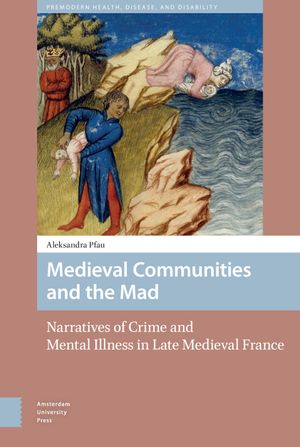
Medieval Communities and the Mad: Narratives of Crime and Mental Illness in Late Medieval France
The concept of madness as a challenge to communities lies at the core of legal sources. This book considers how communal networks, ranging from the locale to the realm, responded to people who were considered mad. The madness of individuals played a role in engaging communities with legal mechanisms and proto-national identity constructs, as petitioners sought the king’s mercy as an alternative to local justice. The resulting narratives about the mentally ill in late medieval France constructed madness as an inability to live according to communal rules. Although such texts defined madness through acts that threatened social bonds, those ties were reaffirmed through the medium of the remission letter. The composers of the letters presented madness as a communal concern, situating the mad within the household, where care could be provided. These mad were usually not expelled but integrated, often through pilgrimage, surveillance, or chains, into their kin and communal relationships.

Francophonie and the Orient: French-Asian Transcultural Crossings (1840-1940)
Based on transnational France-Asia approaches, this book studies Asian cultures once steeped in French civilisation but free of a colonial mode in order to highlight the transliterary examples of cultural transfer. This book is a pioneering study of the Francophone phenomenon within the context of cultures categorised as non-Francophone. Espousing a transcultural approach, Francophonie and the Orient examines the emergence of French heritage in the Far-East, the various forms of its manifestation, and the modes of its identification.Several thematic signposts guide the diverse pathways of the research. Firstly, the question is posed as to whether colonisation is the ultimate coat of arms for entry into Francophonie? Secondly, the book raises issues relative to Asian Francophone works: the emergence of literatures with French expression from Asian countries historically free of French domination. Finally, the study reconfigures the Asian Francophone heritage with new paradigms (transnational/global studies), which redefine the frontiers of Francophonie in Asia.
Becoming a European Homegrown Jihadist: A Multilevel Analysis of Involvement in the Dutch Hofstadgroup, 2002-2005
How and why do people become involved in European homegrown jihadism? This book addresses this question through an in-depth study of the Dutch Hofstadgroup, infamous for containing the murderer of filmmaker Theo van Gogh, who was killed in November 2004 in Amsterdam, and for plotting numerous other terrorist attacks. The Hofstadgroup offers a window into the broader phenomenon of homegrown jihadism that arose in Europe in 2004 and is still with us today. Utilizing interviews with former Hofstadgroup participants and the extensive police files on the group, Becoming a European Homegrown Jihadist overcomes the scarcity of high-quality data that has hampered the study of terrorism for decades. The book advances a multicausal and multilevel understanding of involvement in European homegrown jihadism that is critical of the currently prevalent ‘radicalization’-based explanatory frameworks. It stresses that the factors that initiate involvement are separate from those that sustain it, which in turn are again likely to differ from those that bring some individuals to actual acts of terrorism. This is a key resource for scholars of terrorism and all those interested in understanding the pathways that can lead to involvement in European homegrown jihadism.
Understanding Body Movement: A Guide to Empirical Research on Nonverbal Behaviour – With an Introduction to the NEUROGES Coding System
Understanding Body Movement is an interdisciplinary guide to empirical research on nonverbal behaviour. It focuses on tools and procedures to investigate body movement and gesture and the relation to cognitive, emotional, and interactive processes: NEUROGES, ELAN, interrater agreement, etc.
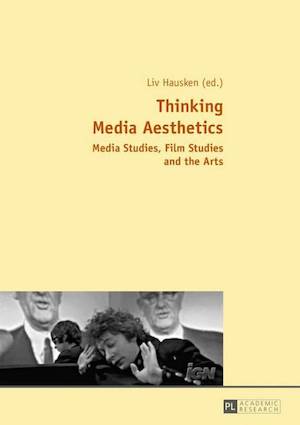
Thinking Media Aesthetics: Media Studies, Film Studies and the Arts
Thinking Media Aesthetics investigates the field between media studies and the aesthetic disciplines. It presents an interdisciplinary program for aesthetic analysis and theoretical reflection. It stages a conversation around basic concepts in the field, like «medium» and «media», and about how we might best go about studying these terms.
Euroscepticism, Europhobia and Eurocriticism: The Radical Parties of the Right and Left vis-Ã -vis” the European Union”
This book analyses in detail the electoral manifestos and programmes presented by twenty-two parties during the European Parliamentary elections in 2009. The research indicates that radical right-wing parties usually have Europhobic impulses, however, radical left-wing parties are, in theory, favourable to European integration, but dispute the direction currently imposed by the EU authorities.
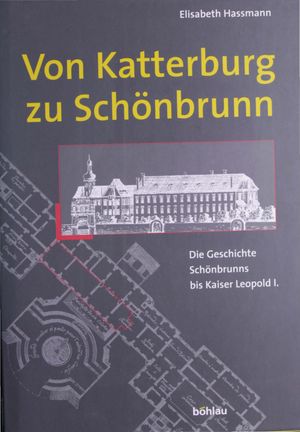
Von Katterburg zu Schönbrunn: Die Geschichte Schönbrunns bis Kaiser Leopold I.
In 1996, the Palace and Gardens of Schönbrunn were inscribed on the World Heritage List. In inscribing Schönbrunn, the World Heritage Committee of UNESCO recognised that “the Palace and Gardens of Schönbrunn in Vienna – as a symbol of great heritage and one of the most important corner-stones in the history of Austria – are of outstanding universal value”, according to Mounir Bouchenaki, director of the UNESCO World Heritage Centre. With this honour, the commitment to preserve the complex, which of necessity is connected with the research into it, was not created for the first time, but greater public interest and consciousness were focused on it. Since the dissolution in 1992 of the Schlosshauptmannschaft Schönbrunn, the monument has been administered by the Schloss Schönbrunn Kultur- and Betriebsgesellschaft. This occurred as a result of the Federal Law of 1 October 1992, supported by all parliamentary parties. Its first point is: “Preservation of the fabric of the buildings, protection, improvement and care of the cultural monument of Schönbrunn Palace as a total complex, architectural monument, cultural treasure, historical garden and place of scholarly activity, giving particular consideration to the historical importance of the palace.” Over the course of the past ten years, from 1992 to 2002, the palace building, its adjacent buildings and the structures found in its gardens have been restored at a total cost of one billion schillings (c. 73 million euros). At the initiative of the technical managing director of the Schloss Schönbrunn Kultur- and Betriebsgesellschaft, Dr. Wolfgang Kippes, this work was accompanied by a large number of scientific studies. These include the present work, which arose in the course of two Austrian Science Fund research projects (P-12208-HIS and P-14326-ARS). They were directed by Dr. Artur Rosenauer, Professor of the History of Austrian Art at the University of Vienna. The occasion for the two research projects was provided by completely unexpected finds discovered in 1994 during construction work in the central area of the main building and subsequently exposed by the Archaeology Department of the Austrian Federal Office for the Care of Monuments. They were found to be the remains of buildings that were predecessors of the palace built by Johann Bernhard Fischer von Erlach beginning in 1695-96. The finds were completely unexpected because Schönbrunn research up to that time was unanimous in its opinion that the earlier complex had been much farther to the east and on the (modern) boundary of the district of Meidling. The finds of 1994-95 did not clarify the early architectural history of Schönbrunn before the second Turkish siege of Vienna in 1683. Rather it created an awareness of how inadequately this period of the history of Schönbrunn, which before 1642 was named Katterburg, had been researched previously. What was lacking, above all, was basic archival research with a critical analysis of the written and pictorial sources. It was clear from the outset that this research into the sources could not be restricted to the buildings themselves but had to also include the history of their ownership and use because of the direct influence these had on the respective history of the buildings. Moreover, it was also necessary to include areas of the districts of Hietzing and Meidling that adjoined Schönbrunn on the west and east, since this was the only means of retracing the former size of the Katterburg property during the various periods. Written documentation traced the origins of the monument of Schönbrunn back to the 12th century, resulting in a 500-year period to be researched. On the one hand the later position of Schönbrunn as a château de plaisance and summer residence of the Austrian sovereigns gives meaning to its past.