
Books
Dissent! Refracted: Histories, Aesthetics and Cultures of Dissent
This collection of essays addresses the ongoing problem of dissent from a broad range of disciplinary perspectives: political philosophy, intellectual history, literary studies, aesthetics, architectural history and conceptualizations of the political past. Taking a global perspective, the volume examines the history of dissent both inside and outside the West, through events in the twentieth and twenty-first centuries both nearer to our own times as well as more distant, and through a range of styles reflecting how contested and pressing the problem of dissent in fact is. Drawing on a range of authors and international problematics, the contributions discuss the multiple ways in which we refract memories of dissent in cultural, historical and aesthetic context. It also discusses the diverse ideas, images and phenomena we use to do so.
About Russia, Its Revolutions, Its Development and Its Present
The author analyzes modern Russian history from a new perspective. Due to the ideological heritage of the XIXth and XXth centuries, the social settings of the sociopolitical history of the USSR (1917–1945) have not been fully identified. Detailed examination of ideological and political concepts shows that the revolution of 1917 became not a middle class, proletarian movement, but rather a plebeian one. The misjudgment by the new power enabled growth but caused tremendous losses of human lives and material damages. Socialization of economy and strict centralization led to a new social structure and established terror as an instrument for social reorganization. WWII revealed the necessity of a correction of these developments, but the events of the Cold War circumvented any further considerations.
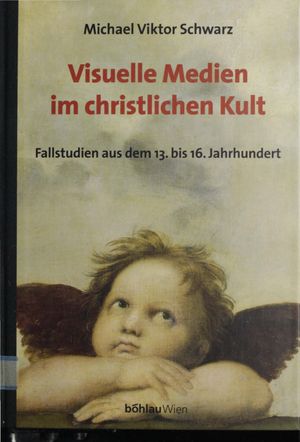
Visuelle Medien im christlichen Kult: Fallstudien aus dem 13. bis 16. Jahrhundert
The concepts of art history were developed in the nineteenth century. This can inhibit dialogue with neighbouring disciplines. The concept “medium”, which belongs to the late twentieth century, can provide assistance and connect the argument of art history to the contemporary state of consciousness at least in the cultural sciences dealing with communication. At the centre of the book lie questions of the use and effect of objects. Dealing with a series of high-ranking art works, an observational method is practised that is both historically founded and compatible with modern discourses. The six case studies address the Naumburg Stifterfiguren, Pietro Lorenzetti’s frescos in Assisi, the Parament of Narbonne, the tomb of Archbishop Chichele in Canterbury, Raphael’s Sistine Madonna in Dresden, and the self-portraits of Anton Pilgram in St Stephen’s Church in Vienna.
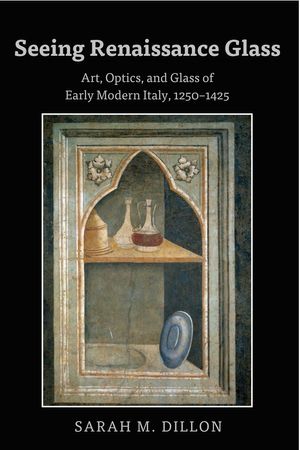
Seeing Renaissance Glass: Art Optics and Glass of Early Modern Italy 1250–1425
With the invention of eyeglasses around 1280 near Pisa, the mundane medium of glass transformed early modern optical technology and visuality. It also significantly influenced contemporaneous art, religion, and science. References to glass are found throughout the Bible and in medieval hagiography and poetry. For instance, glass is mentioned in descriptions of Heavenly Jerusalem, the Beatific Vision, and the Incarnation. At the same time, a well-known Islamic scientific treatise, which likened a portion of the eye’s anatomy to glass, entered the scientific circles of the Latin West. Amidst this complex web of glass-related phenomena early modern Italian artists used glass in some of their most important artworks but, until now, no study has offered a comprehensive consideration of the important role glass played in shaping the art of the Italian Renaissance.
Seeing Renaissance Glass explores how artists such as Giotto, Duccio, Nicola Pisano, Simone Martini, and others employed the medium of glass—whether it be depictions of glass or actual glass in the form of stained glass, gilded glass, and transparent glass—to resonate with the period’s complex visuality and achieve their artistic goals.
Such an interdisciplinary approach to the visual culture of early modern Italy is particularly well-suited to an introductory humanities course as well as classes on media studies and late medieval and early Renaissance art history. It is also ideal for a general reader interested in art history or issues of materiality.

Redesigning Life: Eugenics Biopolitics and the Challenge of the Techno-Human Condition
The emerging development of genetic enhancement technologies has recently become the focus of a public and philosophical debate between proponents and opponents of a liberal eugenics – that is, the use of these technologies without any overall direction or governmental control. Inspired by Foucault’s, Agamben’s and Esposito’s writings about biopower and biopolitics, the author sees both positions as equally problematic, as both presuppose the existence of a stable, autonomous subject capable of making decisions concerning the future of human nature, while in the age of genetic technology the nature of this subjectivity shall be less an origin than an effect of such decisions. Bringing together a biopolitical critique of the way this controversial issue has been dealt with in liberal moral and political philosophy with a philosophical analysis of the nature of and the relation between life, politics, and technology, the author sets out to outline the contours of a more responsible engagement with genetic technologies based on the idea that technology is an intrinsic condition of humanity.

Media Migration and Public Opinion: Myths Prejudices and the Challenge of Attaining Mutual Understanding between Europe and North Africa
Sensitive issues like migration and human mobility provoke paradigms and prejudices in public opinion. Media, Migration and Public Opinion is a collective effort of academic criticism to over-come these myths.
The main motive of this book is linked to the fact that migration, media and public opinion related issues focusing on North Africa have not been addressed properly by available literature. Against this background, the objective of Media, Migration and Public Opinion pursues three aims: Firstly, it fills a gap in the scholarly literature regarding media, political communication and migration by shifting the focus to the North African countries Morocco, Algeria and Libya. Secondly, it assesses to what extent the paradigms of the «other» and its characterization as a source of problems established in receiving countries are also present in sending and transit countries. Thirdly, the book puts North African issues in relation to European countries by presenting case-studies focused on Spain, Malta and Switzerland in order to raise commonalities and differences.

Gender and Emotion: An Interdisciplinary Perspective
Women express more emotion than men, but do they also experience more emotion than men? Are emotions represented differently in men and women’s brains? What are the origins of gender differences in emotions – are we born different or is it socialization that renders us different? What are the implications of gender differences in emotion for general well-being, insomnia, depression, antisocial behavior, and alexithymia? What are the most appropriate methodologies for the empirical study of gender differences in emotional experiences?
In the current book, coordinated by The Swiss Center for Affective Sciences, these questions are answered by reviewing research on general emotional expression and experience, but also on specific emotions and affective experiences such as shame, empathy, and impulsivity. We propose an interdisciplinary contribution to the field of gender and emotions, with works authored by specialists in the fields of psychology, neuroscience, psychiatry, economics, philosophy, and anthropology.
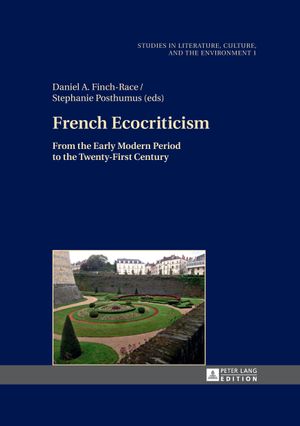
French Ecocriticism: From the Early Modern Period to the Twenty-First Century
This book expounds fruitful ways of analysing matters of ecology, environments, nature, and the non-human world in a broad spectrum of material in French. Scholars from Canada, France, Great Britain, Spain, and the United States examine the work of writers and thinkers including Michel de Montaigne, Victor Hugo, Émile Zola, Arthur Rimbaud, Marguerite Yourcenar, Gilbert Simondon, Michel Serres, Michel Houellebecq, and Éric Chevillard. The diverse approaches in the volume signal a common desire to bring together form and content, politics and aesthetics, theory and practice, under the aegis of the environmental humanities.

Forces of Secularity in the Modern World: Volume 1
Stephen Strehle is a leading scholar of church/state issues. In this volume, he focuses his rigorous historical analysis and philosophical acumen upon a topic of great interest today and source of cultural wars around the globe—the process of secularization. The book starts with a discussion of early capitalism and how it saw the real world functioning well-enough on its own principles of individual struggle and self-interest, without needing religious or moral principles to meddle in its affairs and eventually dispelling the need for any intelligent design or providential orchestration of life through the work of Darwin. The book then discusses the growth of the secular point of view: how historians dismissed the impact of religion in developing modern culture, how scientists conceived of the universe running on self-sufficient or mechanistic principles, and how people no longer looked to the providential hand of God to explain their suffering. The book ends with a discussion of how the Deist concept of human autonomy became a political policy in America through Jefferson’s concept of a wall of separation between church and state and how the US Supreme Court proceeded to dismiss the importance of religion in shaping or justifying the values of the nation and its laws. The book is accessible to most upper-level and graduate students in a wide-variety of disciplines, keeping technical and foreign words to a minimum and leaving scholarly details or debates to its extensive notes.
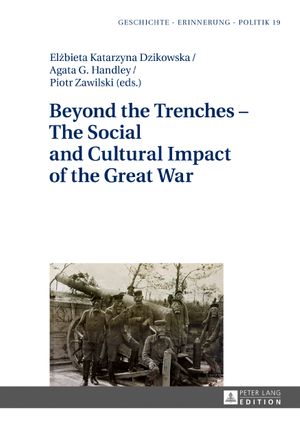
Beyond the Trenches: The Social and Cultural Impact of the Great War
This collection of articles is the outcome of extensive investigations into archival materials, concerning the involvement of various nations in the Great War. The authors analyse the wartime experiences of individuals and local communities, as well as whole nations. They offer a closer, more personal view of the impact of the Great War. The book re-constructs individual war narratives, and studies the long-term consequences of the conflict. The result is a multifaceted portrayal of the war, seen from local and international perspectives.
Behind the Scenes of Artistic Creativity: Processes of Learning Creating and Organising
Throughout the literature of creative learning, many assumptions and even stereotypes about the artists’ creativity are nurtured, often according to myths going back to the Romanticism. The authors have been investigating and describing outstanding artists’ creativity and learning/working processes, asking the question: how do artists create, learn, and organise their work? This book explores these questions by means of original empirical data (interviews with 22 artists) and theoretical research in the field of the arts and creativity from a learning perspective. Findings shed an original light on how artists learn and create, and how their creative learning and change processes come about, for instance when facilitating and leading creative processes.

Arab TV-Audiences: Negotiating Religion and Identity
Today the relations between Arab audiences and Arab media are characterised by pluralism and fragmentation. More than a thousand Arab satellite TV channels alongside other new media platforms are offering all kinds of programming. Religion has also found a vital place as a topic in mainstream media or in one of the approximately 135 religious satellite channels that broadcast guidance and entertainment with an Islamic frame of reference. How do Arab audiences make use of mediated religion in negotiations of identity and belonging? The empirical based case studies in this interdisciplinary volume explore audience-media relations with a focus on religious identity in different countries such as Egypt, Tunisia, Algeria, Morocco, Great Britain, Germany, Denmark, and the United States.

Zootechnologies: A Media History of Swarm Research
Swarming has become a fundamental cultural technique related to dynamic processes and an effective metaphor for the collaborative efforts of society. This book examines the media history of swarm research and its significance to current socio-technological processes. It shows that the hype about collective intelligence is based on a reciprocal computerization of biology and biologization of computer science: After decades of painstaking biological observations in the ocean, experiments in aquariums, and mathematical model-making, it was swarms-inspired computer simulation which provided biological researchers with enduring knowledge about animal collectives. At the same time, a turn to biological principles of self-organization made it possible to adapt to unclearly delineated sets of problems and clarify the operation of opaque systems – from logistics to architecture, or from crowd control to robot collectives. As zootechnologies, swarms offer performative, synthetic, and approximate solutions in cases where analytical approaches are doomed to fail.

Visualisierungen von Kult
“Visualizations of cult“ deals with the strategies of visual representations of cult as well as with concretisations of its visualization, in the perspective of historical and cultural studies. Cult is understood in a broad sense, describing modes of collective veneration and auratization, in religious, quasi-religious or trivial-profane connections. Cult practice and experience and their manifestations are treated under five aspects: (1) objects: staging of cult, (2) subjects: experiences of cult, (3) cult of persons, (4) spaces of cult, (5) manifestations of cult practice.
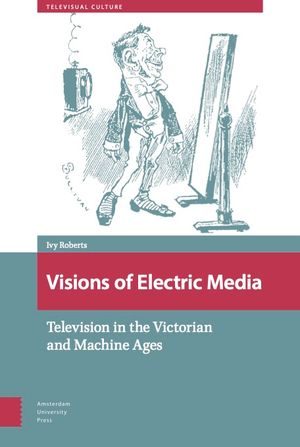
Visions of Electric Media: Television in the Victorian and Machine Ages
Visions of Electric Media is an historical examination into the early history of television, as it was understood during the Victorian and Machine ages. How did the television that we use today develop into a functional technology? What did Victorians expect it to become? How did the ‘vision’ of television change once viewers could actually see pictures on a screen? We will journey through the history of ‘television’: from the first indications of live communications in technology and culture in the late nineteenth century, to the development of electronic televisual systems in the early twentieth century. Along the way, we will investigate the philosophy, folklore, engineering practices, and satires that went into making television a useful medium.
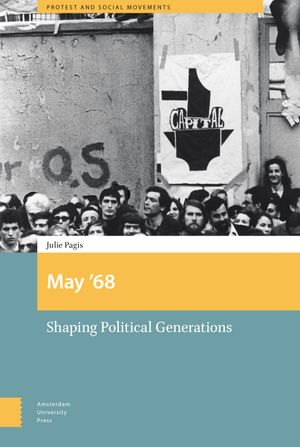
May ’68: Shaping Political Generations
Much as in other locations around the world, civil uprising, particularly rooted in the activism of young people and students, plagued France during May of 1968. Massive strikes and occupations succeeded in paralysing France’s economy and bringing the country to the verge of a leftist revolution. This book studies the life trajectories of many ordinary protestors during the period, using statistics andpersonal narratives to analyse how this activism arose, its impact on people’s personal and professional lives, and its transmission through familial generations.
List Cultures: Knowledge and Poetics from Mesopotamia to BuzzFeed
We live in an age of lists, from magazine features to online clickbait. This book situates the list in a long tradition, asking key questions about the list as a cultural and communicative form. What, Liam Cole Young asks, can this seemingly innocuous form tell us about historical and contemporary media environments and logistical networks? Connecting German theories of cultural techniques to Anglo-American approaches that address similar issues, List Cultures makes a major contribution to debates about New Materialism and the post-human turn.

Inventing Cinema: Machines, Gestures, and Media History
With machines mediating most of our cultural practices, and innovations, obsolescence and revivals constantly transforming our relation with images and sounds, media feel more unstable than ever. But was there ever a ‘stable’ moment in media history? Inventing Cinema proposes to approach this question through an archaeology and epistemology of media machines. The archaeology analyses them as archives of users’ gestures, as well as of modes of perception. The epistemology reconstructs the problems that the machines’ designers and users have strived to solve, and the network of concepts they have elaborated to understand these problems. Drawing on the philosophy of technology and anthropology, Inventing Cinema argues that networks of gestures, problems, perception and concepts are inscribed in vision machines, from the camera obscura to the stereoscope, the Cinématographe, and digital cinema. The invention of cinema is ultimately seen as an ongoing process irreducible to a single moment in history.

Imams in Western Europe: Developments, Transformations, and Institutional Challenges
As European Muslims and Muslims in the Middle East diverge, imams in Europe have emerged as major agents of religious authority who shape Islam’s presence in Western societies. This volume examines the theoretical and practical questions concerning the evolving role of imams in Europe. To what extent do imams act as intermediaries between European states and Muslim communities? Do states subsidise imam training? How does institutionalisation of Islam differ between European states?
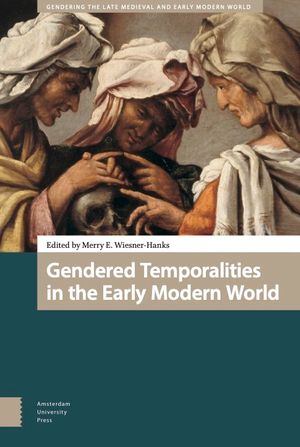
Gendered Temporalities in the Early Modern World
Is time gendered? This international, interdisciplinary anthology studies the early modern era to analyse how material objects express, shape, complicate, and extend human concepts of time and how people commemorate time differently. It examines conceptual aspects of time, such as the categories women and men use to define it, and the somatic, lived experiences of time ranging between an instant and the course of family life. Drawing on a wide array of textual and material primary sources, this book assesses the ways that gender and other categories of difference affect understandings of time.

English Aristocratic Women and the Fabric of Piety, 1450-1550
The role played by women in the evolution of religious art and architecture has been largely neglected. This study of upper-class women in the fifteenth and sixteenth centuries corrects that oversight, uncovering the active role they undertook in choosing designs, materials, and locations for monuments, commissioning repairs and additions to many parish churches, chantry chapels, and almshouses characteristic of the English countryside. Their preferred art, Barbara J. Harris shows, reveals their responses to the religious revolution and signifies their preferred identities.

Chivalry, Reading, and Women’s Culture in Early Modern Spain: From Amadís de Gaula to Don Quixote
The Iberian chivalric romance has long been thought of as an archaic, masculine genre and its popularity as an aberration in European literary history. Chivalry, Reading, and Women’s Culture in Early Modern Spain contests this view, arguing that the surprisingly egalitarian gender politics of Spain’s most famous romance of chivalry has guaranteed it a long afterlife. Amadís de Gaula had a notorious appeal for female audiences, and the early modern authors who borrowed from it varied in their reactions to its large cast of literate female characters. Don Quixote and other works that situate women as readers carry the influence of Amadís forward into the modern novel. When early modern authors read chivalric romance, they also read gender, harnessing the female characters of the source text to a variety of political and aesthetic purposes.
Work and Livelihoods: History, Ethnography and Models in Times of Crisis
Winner of the Society for the Anthropology of Work book prize 2017
This volume presents a global range of ethnographic case studies to explore the ways in which – in the context of the restructuring of industrial work, the ongoing financial crisis, and the surge in unemployment and precarious employment – local and global actors engage with complex social processes and devise ideological, political, and economic responses to them. It shows how the reorganization and re-signification of work, notably shifts in the perception and valorization of work, affect domestic and community arrangements and shape the conditions of life of workers and their families.

Sex, Slavery and the Trafficked Woman: Myths and Misconceptions about Trafficking and its Victims
Sex, Slavery and the Trafficked Woman is a go-to text for readers who seek a comprehensive overview of the meaning of ’human trafficking’ and current debates and perspectives on the issue. It presents a more nuanced understanding of human trafficking and its victims by examining – and challenging – the conventional assumptions that sit at the heart of mainstream approaches to the topic. A pioneering study, the arguments made in this book are largely drawn from the author’s fieldwork in Ukraine, Vietnam and Ghana. The author demonstrates to readers how a law enforcement and criminal justice-oriented approach to trafficking has developed at the expense of a migration and human rights perspective. She highlights the importance of viewing trafficking within a broad spectrum of migratory movement. The author contests the coerced, female victim archetype as stereotypical and challenges the reader to understand trafficking in an alternative manner, introducing the counterintuitive concept of the ’voluntary victim’. Overall, this text provides readers of migration and development, gender studies, women’s rights and international law a comprehensive and multidisciplinary analysis of the concept of trafficking.

Villenarchitektur am Semmering: Semmering Architektur/ Band 2
The present manuscript is intended to be part II of a publication in two volumes, but at the same time it can be seen as an independent, complete study. It deals with the different aspects of the historic architecture in the region of “Semmering” in southern Lower Austria. The book is the result of the FWF-project P 13959, in which one year of research under scientifically direction and supervision of the applicant (Prof. Dr. Mario Schwarz) was dedicated to intensive studies in art history, cultural history and history of architecture of this region. The author Dr. Guenther Buchinger – responsible collaborator of the project – attempted a large-scale research of the historical villas and county-houses at Semmering. The study contains a full, detailed documentation of the history and construction of the buildings and much information about the employers and the building contractors and architects as well. Consequently the author elaborated a comprehensive stylistic analyse. By the way of elucidating the circumstances of the construction of the buildings, it was possible to reconsider the background of the creating of this artificial settlement at Semmering. A certain social group of great influence among the Viennese bourgeoisie appears in this study, which created this recreation resort as a “vacation-paradise”, at that time a complete new, futuristic project, motivated by personal and commercial interests likewise. The result, a colony of villas, was used not only for private purpose, but at the same time for tourism, partially in connection with the hotel buildings. In his stylistic analyse Guenther Buchinger gives a convincing proof that the phenomenon, which in general is subsumed as “homeland-style”, “vernacular architecture” or “Swiss-cottage-style”, in fact is a particular form of historicism between “severe historicism” and “late historicism”. In the sense of “severe historicism” patterns of genuine architecture – by preference from publications on historical Swiss architecture – were used and extensively quoted. Consequently the forms and details developed in the style of “late historicism” in free evolution and eventually took into the formal repertory also elements of “Jugendstil”. The scientific results of this study are important especially concerning the architects Franz von Neumann and Josef Buendsdorf, whose work has not yet been object of detailed research, but likewise for the general oeuvre of the prominent contractor’s bureau Fellner & Helmer, whose theatre-architecture is already well documented in art history, but whose country houses and hotel-buildings are largely unknown. The study partially is designed as a catalogue, which presents each object in detail, and a comprehensive report of the scientific results in a distinct summary and contains numerous photos, plans and comparative illustrations.

Politics, Religion and Gender: Framing and Regulating the Veil
Heated debates about Muslim women’s veiling practices have regularly attracted the attention of European policymakers over the last decade. The headscarf has been both vehemently contested by national and/or regional governments, political parties and public intellectuals and passionately defended by veil wearing women and their supporters. Systematically applying a comparative perspective, this book addresses the question of why the headscarf tantalises and causes such controversy over issues about religious pluralism, secularism, neutrality of the state, gender oppression, citizenship, migration, and multiculturalism.Seeking also to establish why the issue has become part of the disciplinary practices of some European countries but not of others, this work brings together an important collection of interpretative research regarding the current debates on the veil in Europe, offering an interdisciplinary scope and European-wide setting. Brought together through a common research methodology, the contributors focus on the different religious, political and cultural meanings of the veiling issue across eight countries and develop a comparative explanation of veiling regimes. This work will be of great interest to students and scholars of religion & politics, gender studies and multiculturalism.

Meeting Ethnography: Meetings as Key Technologies of Contemporary Governance, Development, and Resistance
This volume asks and addresses elusive ontological, epistemological, and methodological questions about meetings. What are meetings? What sort of knowledge, identities, and power relationships are produced, performed, communicated, and legitimized through meetings? How do—and how might—ethnographers study meetings as objects, and how might they best conduct research in meetings as particular elements of their field sites? Through contributions from an international group of ethnographers who have conducted “meeting ethnography” in diverse field sites, this volume offers both theoretical insight and methodological guidance into the study of this most ubiquitous ritual.

Global Resource Scarcity: Catalyst for Conflict or Cooperation?
A common perception of global resource scarcity holds that it is inevitably a catalyst for conflict among nations; yet, paradoxically, incidents of such scarcity underlie some of the most important examples of international cooperation. This volume examines the wider potential for the experience of scarcity to promote cooperation in international relations and diplomacy beyond the traditional bounds of the interests of competitive nation states. The interdisciplinary background of the book’s contributors shifts the focus of the analysis beyond narrow theoretical treatments of international relations and resource diplomacy to broader examinations of the practicalities of cooperation in the context of competition and scarcity. Combining the insights of a range of social scientists with those of experts in the natural and bio-sciences—many of whom work as ‘resource practitioners’ outside the context of universities—the book works through the tensions between ‘thinking/theory’ and ‘doing/practice’, which so often plague the process of social change. These encounters with scarcity draw attention away from the myopic focus on market forces and allocation, and encourage us to recognise more fully the social nature of the tensions and opportunities that are associated with our shared dependence on resources that are not readily accessible to all. The book brings together experts on theorising scarcity and those on the scarcity of specific resources. It begins with a theoretical reframing of both the contested concept of scarcity and the underlying dynamics of resource diplomacy. The authors then outline the current tensions around resource scarcity or degradation and examine existing progress towards cooperative international management of resources. These include food and water scarcity, mineral exploration and exploitation of the oceans. Overall, the contributors propose a more hopeful and positive engagement among the world’s nations as they pursue the economic and social benefits derived from natural resources, while maintaining the ecological processes on which they depend.

Fairness and Justice in Natural Resource Politics
As demand for natural resources increases due to the rise in world population and living standards, conflicts over their access and control are becoming more prevalent. This book critically assesses different approaches to and conceptualizations of resource fairness and justice and applies them to the analysis of resource conflicts.Approaches addressed include cosmopolitan liberalism, political economy and political ecology. These are applied at various scales (local, national, international) and to initiatives and instruments in public and private resource governance, such as corporate social responsibility instruments, certification schemes, international law and commodity markets. In doing so, the contributions contrast existing approaches to fairness and justice and extend them by taking into account the interplay between political scales, regions, resources, and power structures in “glocalized” resource politics. Various case studies are included concerning agriculture, agrofuels, land grabbing, water resources, mining and biodiversity. The volume adds to the academic and policy debate by bringing together a variety of disciplines and perspectives in order to advance both a research and policy agenda that puts notions of resource fairness and justice center-stage.

Development, Sexual Rights and Global Governance
This book addresses how sexual practices and identities are imagined and regulated through development discourses and within institutions of global governance.The underlying premise of this volume is that the global development industry plays a central role in constructing people’s sexual lives, access to citizenship, and struggles for livelihood. Despite the industry’s persistent insistence on viewing sexuality as basically outside the realm of economic modernization and anti-poverty programs, this volume brings to the fore heterosexual bias within macroeconomic and human rights development frameworks. The work fills an important gap in understanding how people’s intimate lives are governed through heteronormative policies which typically assume that the family is based on blood or property ties rather than on alternative forms of kinship. By placing heteronormativity at the center of analysis, this anthology thus provides a much-needed discussion about the development industry’s role in pathologizing sexual deviance yet also, more recently, in helping make visible a sexual rights agenda. Providing insights valuable to a range of disciplines, this book will be of particular interest to students and scholars of Development Studies, Gender Studies, and International Relations. It will also be highly relevant to development practitioners and international human rights advocates.