
Books
Roman Frontier Archaeology – in Britain and Beyond: Papers in Honour of Paul Bidwell Presented on the Occasion of the 30th Annual Conference of the Arbeia Society
Roman Frontier Archaeology – in Britain and beyond gathers contributions by some 30 leading archaeologists and historians in honour of Paul Bidwell. In a wide-ranging career Paul has been one of the leading excavators and pottery specialists of his generation, admired for his ground-breaking work both in the south-west and the military north of Roman Britain.
Contributions reflect the wide range of Paul Bidwell’s interests. Studies of samian pottery use, coins, carved stone pinecones, multi-piece bone dice and agricultural strategies shed light on the economy and everyday life of a Roman frontier province. For the civil southern part of the province there are studies of place-names and various aspects of the public baths of the Roman cities, as well as the impact of changing sea-levels on coastal topography. A number of contributions focus on the problems of the military north and Hadrian’s Wall, including studies of the nineteenth century antiquarian pioneers and assessments of the purpose of the Wall, the possibility of destructive attacks by an enemy, the way in which Roman forts were designed, and the use of Iron Age tradition military gear by the Roman army. The papers also take us beyond Britannia to consider developments on and beyond Rome’s Eastern, Danube and North African frontiers.
The collection will be essential reading for anyone with an interest in either the civil or military aspects of Roman Britain, or the frontiers of the Roman empire.
Paul Bidwell (1949-2022)
Tragically Paul Bidwell died after a short illness in November 2022 soon after being presented with this book by his friends and colleagues. What was conceived as a gesture to honour Paul has become, in effect, a monument to one of the most respected Roman archaeologists of his generation, and a testament to the wide range of his archaeological interests and achievements.
The Roman Cemetery at Lankhills
Outside the north gate of Venta Belgarum, Roman Winchester, a great cemetary stretched for 500 yards along the road to Cirencester. Excavations at Lankhills from 1967 to 1972 uncovered 451 graves, many elaborately furnished, at the northern limits of this cemetery, and dating from the fourth century A.D. This book, the second in a two-part study of Venta Belgarum, which forms the third volume of Winchester Studies, describes the excavations of these burials and analyses in detail both the graves and their contents. There are detailed studies and important re-assessments of many categories of object, but it is the information about late Roman burial, religion, and society which is of special interest.
The Rise of Metallurgy in Eurasia: Evolution, Organisation and Consumption of Early Metal in the Balkans
“The Rise of Metallurgy in Eurasia is a landmark study in the origins of metallurgy. The project aimed to trace the invention and innovation of metallurgy in the Balkans. It combined targeted excavations and surveys with extensive scientific analyses at two Neolithic-Chalcolithic copper production and consumption sites, Belovode and Pločnik, in Serbia. At Belovode, the project revealed chronologically and contextually secure evidence for copper smelting in the 49th century BC. This confirms the earlier interpretation of c. 7000-year-old metallurgy at the site, making it the earliest record of fully developed metallurgical activity in the world. However, far from being a rare and elite practice, metallurgy at both Belovode and Pločnik is demonstrated to have been a common and communal craft activity.
This monograph reviews the pre-existing scholarship on early metallurgy in the Balkans. It subsequently presents detailed results from the excavations, surveys and scientific analyses conducted at Belovode and Pločnik. These are followed by new and up-to-date regional syntheses by leading specialists on the Neolithic-Chalcolithic material culture, technologies, settlement and subsistence practices in the Central Balkans. Finally, the monograph places the project results in the context of major debates surrounding early metallurgy in Eurasia before proposing a new agenda for global early metallurgy studies.”
Religion and Cult in the Dodecanese during the First Millennium BC: Proceedings of the International Archaeological Conference
Religion and Cult in the Dodecanese during the First Millennium BC publishes the proceedings of the conference of the same name, held in Rhodes in October 2018. Religion has always been one of the major components of peoples’ lives, an integral part of social, economic and political contexts, contributing to the formation of culture and history. In order to study and understand the religious and cult practices of a particular region, it is necessary to explore their various expressions through material culture and written sources. The oldest known cult remains in the Dodecanese can be dated to the end of the 10th and early 9th centuries BC and throughout the 1st millennium BC. They demonstrate the existence of a vibrant island society with various evolving cult practices. As a major stopover on maritime trade routes, the southeastern Aegean was influenced by contacts from throughout the Greek world and beyond. The contributions to this volume draw on archaeological and literary sources to explore both the development and continuity of cults in the Dodecanese, from the Early Iron Age through to the 1st century BC.
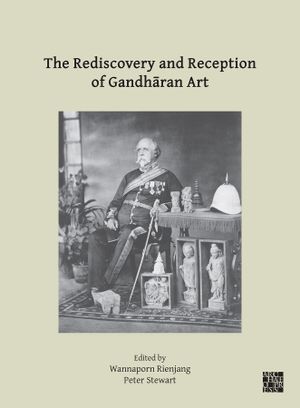
The Rediscovery and Reception of Gandhāran Art: Proceedings of the Fourth International Workshop of the Gandhāra Connections Project, University of Oxford, 24th-26th March, 2021
“The ancient Buddhist art of Gandhāra was rediscovered from the 1830s and 1840s onwards in what would become the North-West Frontier of British India. By the end of the century an abundance of sculptures had been accumulated by European soldiers and officials, which constituted the foundations for a new field of scholarship and internationally celebrated museum collections. Both then and since, the understanding of Gandhāran art has been impeded by gaps in documentation, haphazard excavation, forgery, and smuggling of antiquities. Consequently, the study of Gandhāran archaeology often involves the evaluation and piecing together of fragmentary clues. In more subtle ways, however, the modern view of Gandhāran art has been shaped by the significance accorded to it by different observers over the past century and a half. Conceived in the imperial context of the late nineteenth century as ‘Graeco-Buddhist’ art – a hybrid of Asian religion and Mediterranean artistic form – Gandhāran art has been invested with various meanings since then, both in and beyond the academic sphere. Its puzzling links to the classical world of Greece and Rome have been explained from different perspectives, informed both by evolving perceptions of the evidence and by modern circumstances.
From the archaeologists and smugglers of the Raj to the museums of post-partition Pakistan and India, from coin-forgers and contraband to modern Buddhism and contemporary art, this fourth volume of the Classical Art Research Centre’s Gandhāra Connections project presents the most recent research on the factors that mediate our encounter with Gandhāran art.”
A Quaint & Curious Volume
John J. Dobbins, Professor of Roman Art and Archaeology, taught at the University of Virginia in the Department of Art from 1978 until his retirement in 2019. His legacy of research and pedagogy is explored in A Quaint & Curious Volume: Essays in Honor of John J. Dobbins. Professor Dobbins’ research in the field of Roman art and archaeology spans the geographical and chronological limits of the Roman Empire, from Pompeii to Syria, and Etruria to Spain. This volume demonstrates some of his wide-reaching interests, expressed through the research of his former graduate students. Several essays examine the city of Pompeii and cover the topics of masonry analysis, re-examinations of streets and drains, and analyses of the heating capacity of baths in Pompeii. Beyond Pompeii, the archaeological remains of bakeries are employed to elucidate labor specialization in the Late Roman period across the Mediterranean basin. Collaborations between Professor Dobbins and his former students are also explored, including a pioneering online numismatic database and close examination of sculpture and mosaics, including expressions of identity and patronage through case studies of the Ara Pacis and mosaics at Antioch-on-the-Orontes. A Quaint & Curious Volume not only demonstrates John Dobbins’ scholarly legacy, but also presents new readings of archaeological data and art, illustrating the impact that one professor can have on the wider field of Roman art and archaeology through the continuing work of his students.

Qatar: Evidence of the Palaeolithic Earliest People Revealed
“Qatar: Evidence of the Palaeolithic Earliest People Revealed, with full text in both English and Arabic, tells the story of the long and difficult search to discover the identity of the first people to inhabit the sovereign State of Qatar, which is situated on a peninsula, that extends into the Arabian Gulf. The book synthesises the results of extensive fieldwork by the PADMAC Unit with the many diverse historical records and reports of investigations, beginning with Holgar Kapel’s, in the early 1950s.
The archaeology of the State of Qatar is an important part of the cultural heritage of the world. The loss of archaeological sites to urban and industrial development since the 1950s has been inevitable but the loss of over 30 years of Palaeolithic research in Qatar, an area of prehistoric significance, as a result of academic dissension, is certainly regrettable. The work of the PADMAC Unit in Qatar now marks the end of this Palaeolithic research hiatus.”

Practice and Prestige: An Exploration of Neolithic Warfare, Bell Beaker Archery, and Social Stratification from an Anthropological Perspective
Practice and Prestige: An Exploration of Neolithic Warfare, Bell Beaker Archery, and Social Stratification from an Anthropological Perspective investigates the appearance of the ‘archer’s package’ in select Bell Beaker burials raising questions of daily life, warfare, and social stratification during the Neolithic period. It draws on a recent study by the author that applied an anthropological methodology to assess the bone morphology of these skeletons for signs of specialised archery activity. These analyses revealed results at both a population as well as an individual level. In order to contextualise these osteological findings, the book explores the evidence for warfare and archery throughout the Neolithic period in general and the Bell Beaker period in particular. This perspective considers warfare to be a primary function of archery, thereby associating ‘archer’ burials with concepts of warfare and the warrior. A second perspective delves into prehistoric concepts of specialisation and social hierarchy in order to situate archers, archery, and warfare within potentially stratified populations. These two perspectives allow for the contextualisation of the anthropological results within a broad archaeological framework in which archers and archery were prominent parts of a complex Bell Beaker society.
Viktor E. Frankl: Gesammelte Werke: Psychotherapie, Psychiatrie und Religion : Über das Grenzgebiet zwischen Seelenheilkunde und Glauben
The fifth Volume of the Edition of the Collected Works of Viktor Frankls unites Frankl’s writings, notes, lectures and interviews on the border area of psychology, psychiatry, and religion.
Dialekt und Logopädie
Der vorliegende Themenband bringt zwei Teildisziplinen zusammen: die Variationslinguistik (Dialektologie) und die klinische Linguistik (Logopädie).
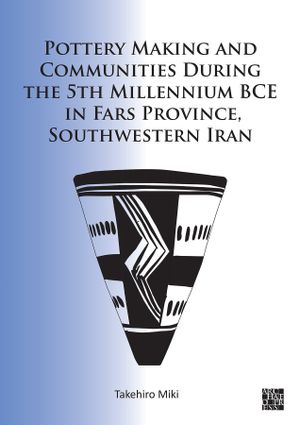
Pottery Making and Communities During the 5th Millennium BCE in Fars Province, Southwestern Iran
This book explores pottery making and communities during the Bakun period (c. 5000 – 4000 BCE) in the Kur River Basin, Fars province, southwestern Iran, through the analysis of ceramic materials collected at Tall-e Jari A, Tall-e Gap, and Tall-e Bakun A & B. Firstly, it reconsiders the stratigraphy and radiocarbon dates of the four sites by reviewing the descriptions of excavation trenches, then presents a new chronological relationship between the sites. The book sets out diachronic changes in the the Bakun pottery quantitatively, namely the increase of black-on-buff ware and the gradual shift of vessel forms. It also presents analyses of pottery-making techniques, painting skills, petrography, and geochemistry and clarifies minor changes in the chaînes opératoires and major changes in painting skill. Finally, the book discusses the organisation of pottery production from a relational perspective. It concludes that the more fixed community of pottery making imposed longer apprenticeship periods and that social inequality also increased.

Portus, investigaciones geoarqueológicas en el muelle este-oeste
Portus, investigaciones geoarqueológicas en el muelle este-oeste collects the scientific results of the geoarchaeological project on the east-west pier of Portus (Rome) developed within the framework of the Archaeological Projects Abroad program of the Ministerio de Cultura y Deporte of the Kingdom of Spain, and also under a collaboration agreement between the University of Huelva and the Parco Archeologico di Ostia Antica. Since 2017, without interruption until the present, various excavation and study campaigns have focused their efforts on the pier via an inter- and multidisciplinary methodology involving archaeologists, geologists, palaeobotanists and palaeontologists. Thus, excavation activities, geophysical prospecting, petrographic, archaeometric studies and architectural analysis have been developed, always with the application of new photogrammetric techniques and laser scanning, which have allowed us to obtain a significant volume of data. Its analysis and interpretation now gives the most extensive and up-to-date picture of one of the most interesting and extensive docks in Portus, with new contributions related to its chronology, with a building phase from the fourth century AD; its construction system, whose foundations have been determined; the surrounding paleoenvironment, with new data related to the silting process of the Claudio inlet; as well as the changes that occured in the transition to the Early Middle Ages, among others.
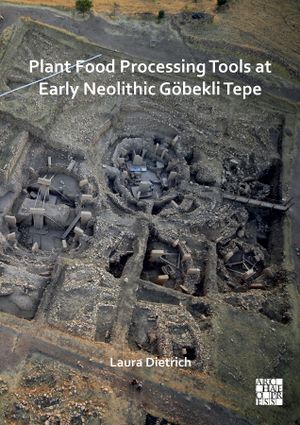
Plant Food Processing Tools at Early Neolithic Göbekli Tepe
Plant Food Processing Tools at Early Neolithic Göbekli Tepe reconstructs plant food processing at this key Pre-Pottery Neolithic (9600-8000 BC) site, with an emphasis on cereals, legumes and herbs as food sources, on grinding and pounding tools for their processing, and on the vessels implied in the consumption of meals and beverages. Functional investigations on grinding and pounding tools and on stone containers through use-wear and residue analyses are at the core of the book. Their corpus amounts to more than 7000 objects, constituting thus the largest collection published so far from the Neolithic of Upper Mesopotamia. The spectrum of tools and of processed plants is very broad, but porridges made of cereals, legumes and herbs, and beers predominate over bread-like food. The find contexts show that cooking took place around the well-known monumental buildings, while the large quantity of tools suggests feasting in addition to daily meals.
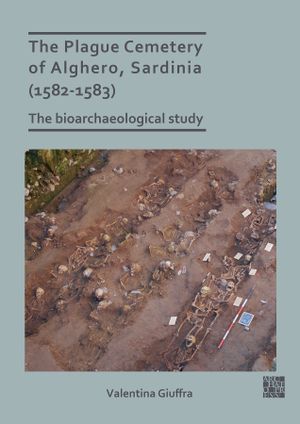
The Plague Cemetery of Alghero, Sardinia (1582-1583): The Bioarchaeological Study
“The Plague Cemetery of Alghero (Sardinia, Italy, 1582-1583) presents a bioarchaeological analysis of the individuals exhumed from the cemetery of Alghero, which is associated with the plague outbreak that ravaged the city in 1582-1583. This cemetery revealed a particular burial typology, consisting of long and narrow trenches, each containing multiple inhumations, which attests to a catastrophic event, such as an epidemic with high mortality in a short period of time. Given the rarity of human remains from epidemic contexts buried in trenches, the skeletal sample from Alghero represents valuable material. In fact, no other Italian plague cemeteries have been examined through a detailed bioarchaeological analysis, and the study thus serves as a model for future research.
The author examines a series of parameters, starting from the demographic profile of the sample –181 individuals from 15 trenches – and taphonomic analysis, and then analysing stature, dental pathologies, stress indicators, degenerative joint disease, entheseal changes and other pathologies. The study is intended to illuminate a cross section of 16th century Sardinian society in a coastal city through a holistic view, which interweaves the documentary evidence for plague, funerary responses and the health status of the population. The main objective is therefore to shed light on a population which lived during a period of plague, revealing lifestyles, activity patterns and illnesses and providing a significant contribution to the bioarchaeology, palaeopathology, and archaeology of the Italian territory.”
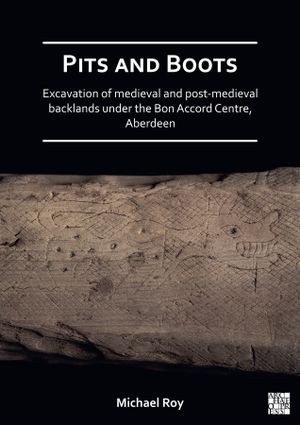
Pits and Boots: Excavation of Medieval and Post-medieval Backlands under the Bon Accord Centre, Aberdeen
Pits and Boots derives from excavations carried out in 2007-8, in advance of an extension to the Bon Accord Centre in Aberdeen, that uncovered the backlands of an area that would have formed part of the industrial quarter of the medieval town. The site is well-dated by dendrochronology, augmented by artefactual evidence, and indicates activity from the late 12th century AD into the early modern period, with a particularly intensive period in the 13th century. Structural evidence consists primarily of the backland boundaries, hearth/ovens, several wood-lined wells and many large pits. It is the contents of these pits and wells which forms the core of this monograph. The waterlogged conditions within the pits and wells has meant that a remarkable assemblage of organic remains including leather, wooden artefacts, textiles, animal pelts, fibres, and cordage has survived. The leather assemblage is the largest ever to be found in Scotland and has revealed a range of activities associated with the use of animal hides, from hide processing to tanning and shoemaking. The wood assemblage is also extensive and includes bowls, platters, coopered vessels and tools. Metalwork, crucibles, clay mould fragments and ceramics all testify to the industrial nature of the area, while the large quantities of animal and fishbone demonstrate that butchery on an industrial scale took place in the area. The excavation charts the changing nature of this once-peripheral area of Aberdeen, from an industrial zone in the medieval period, to horticultural and domestic spaces in post-medieval times, and has thus greatly enhanced our knowledge of Scottish urban development.
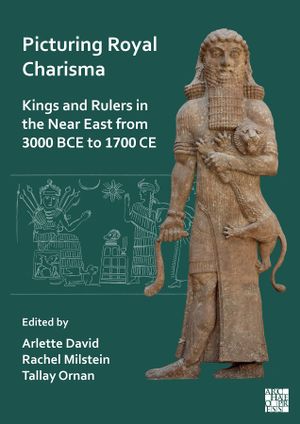
Picturing Royal Charisma: Kings and Rulers in the Near East from 3000 BCE to 1700 CE
Picturing Royal Charisma assesses how Middle Eastern leaders manipulated visuals to advance their rule from around 4500 BC to the 19th century AD. In nine fascinating narratives, it showcases the dynamics of long-lasting Middle Eastern traditions, dealing with the visualization of those who stood at the head of the social order. The contributions discuss: Mesopotamian kings who cast themselves as divine representatives in art; the relationships between the ‘king of men’ and ‘king of beasts’ – the lion; Akhenaten’s visual conception of a divine king without hybrid attributes; the royal image as guiding movements of visitors in the palace of Nimrud; continuities in the functions and representation of Neo-Assyrian eunuchs that survived in the Achaemenid, Sasanian, Byzantine and Islamic courts; the triumphal arch of the emperor Titus and its reflections in Christian Constantinople; patterns of authority and royal legitimacy in 3rd century AD Palmyra and Rome; the use of the Biblical past in the construction of kingship in 12th century Crusader Jerusalem; and the use of ‘the power of images’ by Islamic rulers, adopting visuals of thrones and throne-rooms despite Islamic opposition to the figurative portrayal of kings.
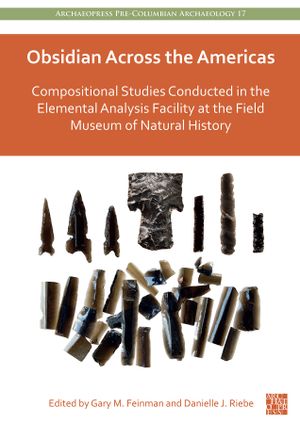
Obsidian Across the Americas: Compositional Studies Conducted in the Elemental Analysis Facility at the Field Museum of Natural History
Obsidian Across the Americas draws attention to recent obsidian studies in the Americas and acts as a reference for archaeologists and scholars interested in material culture and exchange. Moreover, it provides a wide range of case studies in obsidian characterization, material application, and theoretical interpretations in the Americas.
The limited geographic occurrence and relatively homogenous nature of obsidian have made the material ideal for archaeometric studies. Since Cann and Renfrew’s seminal paper in 1967 on the compositional analysis of obsidian in the Mediterranean, analytical techniques have improved, identification and characterization of sources have increased, and applications have broadened geographically and theoretically to address various socio-cultural activities and behaviours around the world. While many previous publications have focused on different aspects of obsidian characterization, this volume uniquely presents obsidian compositional studies from across the Americas that have relied on the instrumentation housed in the Elemental Analysis Facility at the Field Museum of Natural History. The case studies, which feature materials from North American, Mesoamerican, and South American geological sources, explore the ways in which obsidian analyses have been used to investigate interactions, socio-economic exchanges, and socio-cultural change at multiple scales in the past.

Normative, Atypical or Deviant? Interpreting Prehistoric and Protohistoric Child Burial Practices
Normative, Atypical or Deviant? Interpreting Prehistoric and Protohistoric Child Burial Practices, the tenth volume in the SSCIP monograph series, explores the response of the living when dealing with the death of a child. This response is strongly connected to belief systems and concern for the fate of the deceased in the afterlife. The funerary rituals for each culture generally follow a prescribed format that will both satisfy the needs of the dead and ensure there are no negative consequences for the living. But how do we interpret burials that do not adhere to the recognised formula for their society? Can we find evidence that such differences involved positive or, indeed, negative emotions? Should atypical rites for children actually be considered normal since they are typical for their age cohort, differing only from those of adults, and perhaps simply reflect adult-centric interpretations of the past? The papers within the volume discuss these issues by focusing on juvenile burial practices in Europe and the Near East during recent prehistory and protohistory. The interpretation of normative, atypical or deviant is interrogated based on the context of the burials and the intentionality of the practice.
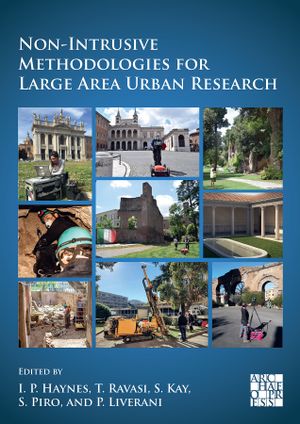
Non-Intrusive Methodologies for Large Area Urban Research
Non-Intrusive Methodologies for Large Area Urban Research brings together contributions from a conference held in 2021 in association with the ERC-funded ‘Rome Transformed’ research project. The papers address a major challenge in archaeology. Non-intrusive research in pursuit of a deeper understanding of urban areas can be both richly informative and cost-effective. Multiple successes in the field have led to an impressive array of innovative methodologies, methodologies that are frequently combined for still greater insight and impact. Geophysical surveys, the use of UAVs, the study of exposed historic structures and the exhaustive examination of archival records can all play a vital role, and the development of these data capture methodologies is of the utmost importance for the future of research. As well as advances in data capture methodologies, however, the papers also present case studies in the management of the big data generated and in the integration of different methodologies. A further strength of this collection lies in the range of site types considered. While many projects have historically pursued non-intrusive research in areas relatively clear of modern buildings, a growing number of research initiatives, such as ‘Rome Transformed’ are seeking to advance them in areas which remain densely occupied. Accordingly the material presented here will also be of interest to non-archaeologists working in such diverse fields as civil engineering, urban planning and physical geography.
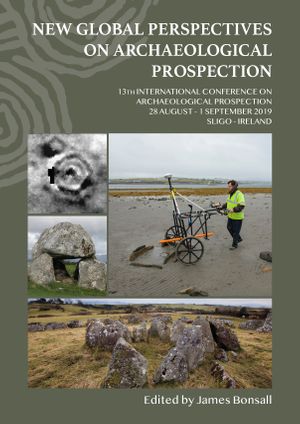
New Global Perspectives on Archaeological Prospection: 13th International Conference on Archaeological Prospection, 28 August – 1 September 2019, Sligo – Ireland
This volume is a product of the 13th International Conference on Archaeological Prospection 2019, which was hosted by the Department of Environmental Science in the Faculty of Science at the Institute of Technology Sligo. The conference is held every two years under the banner of the International Society for Archaeological Prospection and this was the first time that the conference was held in Ireland. New Global Perspectives on Archaeological Prospection draws together over 90 papers addressing archaeological prospection techniques, methodologies and case studies from 33 countries across Africa, Asia, Australasia, Europe and North America, reflecting current and global trends in archaeological prospection. At this particular ICAP meeting, specific consideration was given to the development and use of archaeological prospection in Ireland, archaeological feedback for the prospector, applications of prospection technology in the urban environment and the use of legacy data. Papers include novel research areas such as magnetometry near the equator, drone-mounted radar, microgravity assessment of tombs, marine electrical resistivity tomography, convolutional neural networks, data processing, automated interpretive workflows and modelling as well as recent improvements in remote sensing, multispectral imaging and visualisation.

Verwaltete Verwandtschaft: Eheverbote, kirchliche und staatliche Dispenspraxis im 18. und 19. Jahrhundert
This study analyses the phenomenon of marriages between kin in the various relevant discursive and conceptual, legal and political, administrative and bureaucratic, familial and household-organizational, sociocultural and sociopolitical contexts. These were interwoven so as to lead all the way from villages and local parishes to the Roman Curia, and from widower’s households and local municipal offices to the Imperial Court Chancellery in Vienna. The focus on how kinship was administrated opens up an approach to processes by which the state and the church, as well as the state and the regions, were integrated during an era that, in this respect, would prove to be historically decisive.

The Neolithic Settlement of Aknashen (Ararat valley, Armenia): Excavation seasons 2004-2015
The Neolithic settlement of Aknashen (Ararat valley, Armenia): excavation seasons 2004-2015 is the first monograph devoted to the Neolithic period in Armenia. The research is based on an Armenian-French project, in which specialists from Canada, Romania, Germany and Greece also participated. The volume concerns the natural environment, material culture and subsistence economy of the populations of the first half of the 6th millennium BC, who established the first sedentary settlements in the alluvial plain of the Araxes river. The thickness of the cultural layer of Aknashen (almost 5m), the extent of the excavated areas and the multidisciplinary nature of the research, confer great importance upon this site for the study of the Neolithic, both in Armenia and in the South Caucasus as a whole. The publication examines the similarities and differences that exist between the sites established in the 6th millennium in the basins of the rivers Araxes (Armenia) and Kura (Georgia and Azerbaijan), as well as parallels with contemporary cultures in Southwest Asia. It also examines questions concerning the characterisation and periodisation of the Neolithic in the central part of the South Caucasus, the emergence of a production economy (pottery, animal husbandry, etc.) and the Neolithisation of this region.
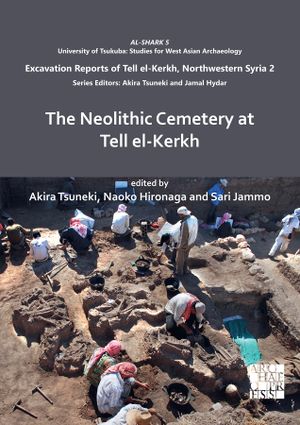
The Neolithic Cemetery at Tell el-Kerkh
The Neolithic Cemetery at Tell el-Kerkh is the second volume of the final reports on the excavations at Tell el-Kerkh, northwest Syria. The 12-year field campaigns at Tell el-Kerkh yielded several unexpected archaeological findings. The existence of the oldest cultural deposits from the early Pre-Pottery Neolithic B period (c. 8700-8300 BC) in northwestern Syria was revealed. The investigations also revealed that several large and complex societies had existed from the late Pre-Pottery Neolithic B to the middle Pottery Neolithic periods (c. 7600–6000 BC). One of the most conspicuous findings of the excavations at Tell el-Kerkh was the discovery of a Pottery Neolithic cemetery dating between c. 6400 and 6100 BC, which makes it one of the oldest outdoor communal cemeteries in West Asia. This book focuses specifically on this cemetery. It reports the discovery of over 240 burials and discusses the process of the formation and development of the cemetery. Initially used for traditional house burials in a corner of the settlement, the cemetery eventually became a graveyard that was physically separated from the residential buildings and consisted only of graves. In other words, burials that were deeply related to each house developed into an outdoor communal cemetery of the settlement. The Kerkh Neolithic cemetery was a precursor to the wider development of communal cemeteries in West Asia, and its investigation provides us with a deeper understanding of Neolithic society in West Asia.
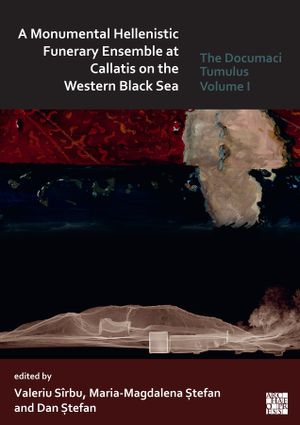
A Monumental Hellenistic Funerary Ensemble at Callatis on the Western Black Sea: The Documaci Tumulus: Volume I
A Monumental Hellenistic Funerary Ensemble at Callatis on the Western Black Sea presents one of the most spectacular early Hellenistic funerary monuments, recently excavated on the western Black Sea coast by a Romanian-Bulgarian-Polish interdisciplinary research team. Documaci Tumulus, covering a painted tomb, and marked by a monumental statue, was built at the threshold of the 4th to 3rd centuries BC in the cemetery of the Greek City of Callatis. The sophisticated construction techniques and the remains of commemorative rituals attest to the dynamic political arena of the Diadochi wars in the Black Sea area and offer a glimpse into a complex and interconnected world of Hellenistic architects and artists. The monument will fuel discussions about the mechanisms of ritualised identity expression in mixed cultural environments, functioning under the pressure of political change, or about community membership, symbolic discourse and ancestors— all reflected in ‘le jeu des miroirs’ of the funerary practices.
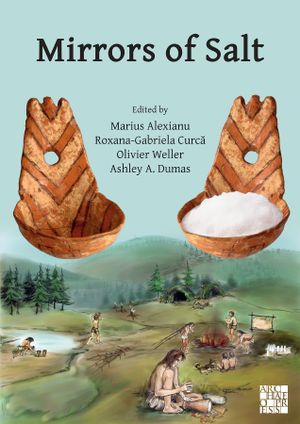
Mirrors of Salt: Proceedings of the First International Congress on the Anthropology of Salt: 20-24 August 2015, ‘Al. I. Cuza’ University, Iași, Romania
Mirrors of Salt publishes the proceedings of the First International Congress on the Anthropology of Salt, which took place at the Alexandru Ioan Cuza University in Iasi (Romania). The impact of salt on the development of human communities, from the Neolithic to the present, has generated a huge number of specialized studies. However, scientific research has become so atomized that the primordial importance of the mineral has been lost, creating a need for a holistic, comprehensive vision of the dimensions generated by salt. This can only be achieved through anthropology. The anthropology of salt encompasses the entirety of human behavior, i.e. cognitive, spiritual, pragmatic, and social reactions to salt, and provides a holistic view of its role in the evolution of human communities. The anthropology of salt thus brings salt studies from an ancillary position to an autonomous discipline. The papers in this volume are organized into six sections: theory, archaeology, history, ethnography/ ethnoarchaeology/ethnohistory, linguistics, and literature. Topics include salt in Greek and Roman antiquity, as well as from Cameroon, Georgia, Ireland, Italy, Mexico, Moldova, Mongolia, Nigeria, Peru, Romania, Spain, Sudan, Syria, Ukraine, the USA and Venezuela. The congress was organized within the project The Ethnoarchaeology of the Salt Springs and Salt Mountains from the Extra-Carpathian Areas of Romania, financed by the Government of Romania (CNCS – UEFISCDI) (2011-2016). Its theoretical novelty and geographical range render Mirrors of Salt a unique study of the world’s most-used non-metallic mineral.
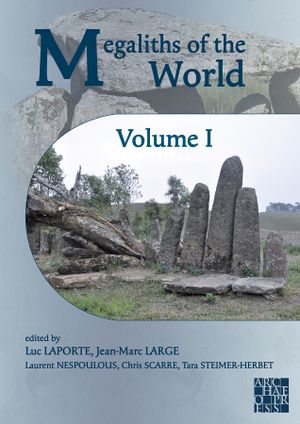
Megaliths of the World: Volume 1
“Megaliths of the World brings together the latest research on megalithic monuments throughout the world. Many of these sites are well known, others less familiar, yet equally deserving of close attention. Megalithic monuments in different regions of the world are far from being a single unified phenomenon, having varied chronologies, and diverse origins, but they all share a certain family resemblance through their common characteristic: the deployment of large stones. No fewer than 150 researchers have contributed 72 articles and inserts, providing a vital region-by region account of the megalithic monuments in their specialist areas, and the current state of knowledge.
The insights offered in these volumes emphasize the particular character and significance of these apparently inanimate stones. The use of such large blocks must surely have been an expression of power or prestige, yet the size and materiality of the stones themselves opens up new perspectives into the meaning and symbolism of these monuments, the places from which the blocks were derived, and the way they were manipulated and shaped.
Megaliths of the World takes the reader on a fascinating journey, offering new insights through encounters with megaliths and megalithic traditions that will often be new and unfamiliar. Highlighting salient themes, it provides a compendium of detailed information that will be vital to anyone interested in the phenomenon of megalithic monumentality.”
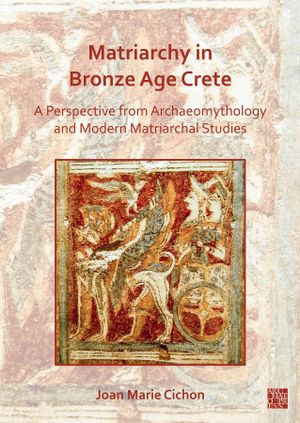
Matriarchy in Bronze Age Crete: A Perspective from Archaeomythology and Modern Matriarchal Studies
“Matriarchy in Bronze Age Crete: A Perspective from Archaeomythology and Modern Matriarchal Studies offers a very different perspective of Crete than is usually found in academic writing; making a compelling case for a matriarchal Bronze Age Crete.
Bronze Age Crete evokes for many the image of an exceptionally sophisticated civilization: peaceful, artistic, and refined; a society in which women were highly visible and important, and the supreme deity was a Goddess. Yet, despite the fact that authorities acknowledge that the preeminent deity of Crete was a Female Divine, and that women played a major role in Cretan society, there is a gap in the scholarly literature, and a lively, ongoing debate regarding the centrality of women and the existence of matriarchy in Bronze Age Crete.
The purpose of this work is to fill that gap, and to advance the debate over whether or not ancient Crete was a woman-centered and matriarchal society toward a more complex, detailed, and certain conclusion. To that end this publication utilises the field of modern matriarchal studies, with its carefully elucidated definition of the term matriarchy, and employs the methodology of archaeomythology – the use of historical, mythological, linguistic, and folkloric as well as archaeological sources.
Given its scope, the volume will be of interest to scholars and students in the fields encompassed by archaeomythology, as well as the fields of women’s studies, women’s history, women’s spirituality, and modern matriarchal studies.”
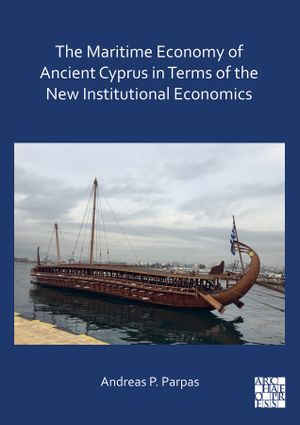
The Maritime Economy of Ancient Cyprus in Terms of the New Institutional Economics
“
The Maritime Economy of Ancient Cyprus in Terms of the New Institutional Economics deals with the maritime economy of ancient Cyprus from 1450 BC to 295 BC, and comprises three parts which correspond to three distinct economic cycles:
- first economic cycle during the age of internationalism 1450–1200 BC
- second economic cycle during political volatility, economic growth and transformation 1200–525 BC
- third economic cycle in the Persian Empire until annexation into the Ptolemaic kingdom.
The principles of New Institutional Economics are used to trace the island’s institutions and their continuity and to reconstruct its maritime history. A unique feature is that for the first time a traditional descriptive and cultural approach is complemented by systematic and mathematical analysis and marketing documentation which results in meaningful examination of economic performance. This new approach highlights and explains the maritime economic activity of Ancient Cyprus and the Eastern Mediterranean in general. It brings together, for the first time, three distinct disciplines, that is History, Archaeology and Economic theory, in order to create a balanced explanation and reconstruction of the maritime economy of ancient Cyprus and of the challenges which confronted the ancient seafarers and traders of the Eastern Mediterranean. The approach and methodology is influenced by the author’s engineering, business background and training.
“
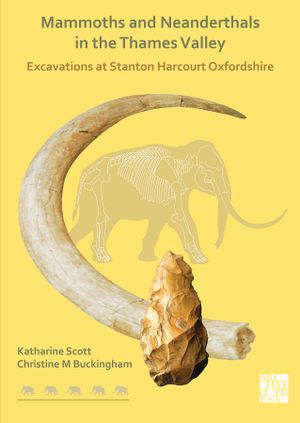
Mammoths and Neanderthals in the Thames Valley
Today the Upper Thames Valley is a region of green pastures and well-managed farmland, interspersed with pretty villages and intersected by a meandering river.
The discovery in 1989 of a mammoth tusk in river gravels at Stanton Harcourt, Oxfordshire, revealed the very different ancient past of this landscape. Here, some 200,000 years ago, mammoths, straight-tusked elephants, lions, and other animals roamed across grasslands with scattered trees, occasionally disturbed by small bands of Neanderthals.
The pit where the tusk was discovered, destined to become a waste disposal site, provided a rare opportunity to conduct intensive excavations that extended over a period of 10 years. This work resulted in the recording and recovery of more than 1500 vertebrate fossils and an abundance of other biological material, including insects, molluscs, and plant remains, together with 36 stone artefacts attributable to Neanderthals. The well-preserved plant remains include leaves, nuts, twigs and large oak logs. Vertebrate remains notably include the most comprehensive known assemblage of a distinctive small form of the steppe mammoth, Mammuthus trogontherii, that is characteristic of an interglacial period equated with marine isotope stage 7 (MIS 7).
Richly illustrated throughout, Mammoths and Neanderthals in the Thames Valley offers a detailed account of all these finds and will be of interest to Quaternary specialists and students alike.
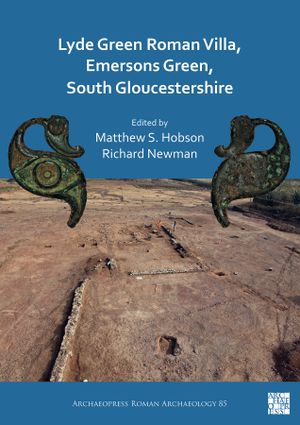
Lyde Green Roman Villa, Emersons Green, South Gloucestershire
“Lyde Green Roman Villa, Emersons Green, South Gloucestershire was excavated between mid-2012 and mid-2013 along with its surroundings and antecedent settlement. The excavations took place as part of the Emersons Green East Development Area, funded through the mechanism of commercial archaeology by Gardiner & Theobald LLP. The results of the stratigraphic analysis are given here along with specialist reports on the human remains, pottery (including thin sections), ceramic building material, small finds, coinage and iron-working waste. Six open-area excavations allowed the archaeologists the rare opportunity to trace a substantial part of the site’s layout. Three ancillary buildings within the villa compound, including a bathhouse, were excavated. Evidence of advanced water management was uncovered in the form of lead piping, ceramic drain tiles and an enigmatic stone structure built into a canalised spring line. The villa’s economy included stock raising, crop processing and iron and textile production. The settlement appears to have originated in the mid-1st century AD, or slightly earlier. “