
Books

Escaping Poverty: The Origins of Modern Economic Growth
One of the biggest debates in economic history deals with the Great Divergence. How can we explain that at a certain moment in time (the eighteenth and nineteenth centuries) a certain part of the world (the West) escaped from general poverty and became much richer than it had ever been before and than the rest of the world? Many prominent scholars discussed this question and came up with many different answers. This book provides a systematic analysis of the most important of those answers by means of an analysis of possible explanations in terms of natural resources, labour, capital, the division of labour and market exchange, accumulation and innovation, and as potential underlying determining factors institutions and culture. The author juxtaposes the views of economists / social scientists and of global historians and systematically compares Great Britain and China to illustrate his position.
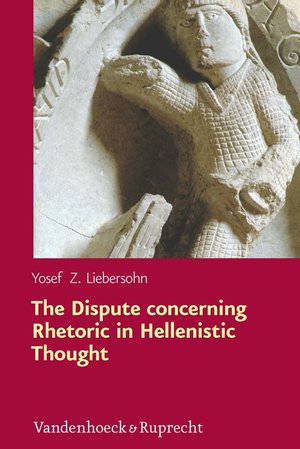
The Dispute Concerning Rhetoric in Hellenistic Thought
This study tries to reconstruct the dispute over rhetoric in Hellenistic thought, by using two main interrelated axes. Firstly, it delineates the exact milieu in which this dispute took place, including locations, dates and persons. Secondly, five main arguments used against rhetoric have been reconstructed, all of which concentrate on rhetoric’s claim to be considered an art.
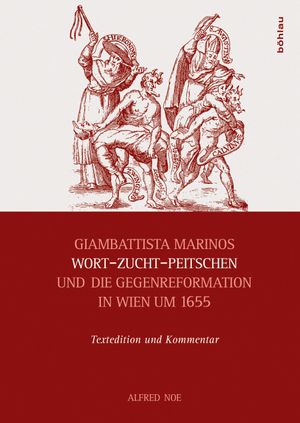
Giambattista Marinos Wort-Zucht-Peitschen und die Gegenreformation in Wien um 1655: Textedition und Kommentar
Critical edition of the german translation of G. B. Marino’s La sferza invettiva, commentary and context of the Counterreformation in Vienna 1655

Authority and Performance: Sociological Perspectives on the Council of Chalcedon (AD 451)
One can hardly exaggerate the importance of the church councils in the 5th and 6th centuries. They provide us with great insights into the situation in the late Roman Empire and particularly into the role of the Church at that time. Because of the rich source materials, the dramatic course it took and its overall historical relevance, the Council of Chalcedon (AD 451) is one of the most important events of that period. The decrees of this council led to major upheavals in the Church which continue to this very day. Hagit Amirav presents the first study on the social dynamics and various roles played by the stakeholders of this council, the power plays of the imperial representatives and the bishops, their actions and statements designed to further a consensus. At the centre of this analysis lies Marcian in his dual role as Emperor of the East Roman Empire as well as a central figure in the Church.

War and Law in the Islamic World
Armed conflict, today, has diverged from war as it was known in generations past, and from this, has tested the means by which conflicts and violence are regulated. Written with an eye to a region plagued by such conflicts, War and Law in the Islamic World examines the origins and roles that two distinct systems of governance – Islamic law and international humanitarian law – have played in conflicts past and present. Meant equally for the scholar or student, this book presents the legal and policy complexities of today’s conflicts in a new light through its careful and well-researched investigation of the past and the present.

Modern Slavery: A Comparative Study of the Definition of Trafficking in Persons
In Modern Slavery – A Comparative Study of the Definition of Trafficking in Persons Dominika Borg Jansson discusses why, despite international anti-trafficking efforts, there are so few trafficking convictions worldwide. In an easily accessible language, the author explains why international legal harmonization in this area has been difficult. Making use of the concept of legal transplants, Dominika Borg Jansson compares experiences from Sweden, Poland and Russia offering insights into especially Russian legislation that are not widely available. The problems concerning the implementation of the international definition of trafficking are here divided into country-specific challenges and obstacles attributable to the original source. Jansson also addresses the effectiveness of criminalization of trafficking and offers suggestions on how future trafficking legislation might be framed.

Globalization and “Minority” Cultures: The Role of “Minor” Cultural Groups in Shaping Our Global Future
Globalization and “Minority” Cultures: The Role of “Minor” Cultural Groups in Shaping Our Global Future is a collective work which brings to the forefront of global studies new perspectives on the relationship between globalization and the experiences of cultural minorities worldwide. These perspectives are crucial to the process of questioning contemporary global values and practices, and contribute to current debates in a variety of fields (politics, education, culture, the economy, etc.) on the causes, consequences and future of globalization. The book develops new theories and practices of transculturality that link different theoretical and cultural spheres (“minor” and “dominant”) in order to formulate new discussions and propositions about appropriate responses to give in defiance of the adverse effects of globalization.

Documents and the History of the Early Islamic World
Historians have long lamented the lack of contemporary documentary sources for the Islamic middle ages and the inhibiting effect this has had on our understanding of this critically important period. Although the field is richly served by surviving evidence, much of it is hard to locate, difficult to access, and philologically intractable. Presenting a mixture of historical studies and new editions of Greek, Arabic and Coptic material from the seventh to the fifteenth century C.E. from Egypt and Palestine, Documents and the History of the Early Islamic World explores the untapped wealth of documentary sources available in collections around the world and shows how this exciting material can be used for historical analysis.

Dionysos in Classical Athens: An Understanding through Images
“Dionysos, with his following of satyrs and women, was a major theme in a big part of the figure painted pottery in 500-300 B.C. Athens. As an original testimonial of their time, the imagery on these vases convey what this god meant to his worshippers. It becomes clear that he was not only appropriate for wine, wine indulgence, ecstasy and theatre. Rather, he was present on many, both happy and sad, occasions. The vase painters have emphasized different aspects of Dionysos for their customers inside and outside of Athens, depending on the political and cultural situation.”

Bilingual Europe: Latin and Vernacular Cultures – Examples of Bilingualism and Multilingualism c. 1300-1800
“Bilingual Europe presents to the reader a Europe that for a long time was ‘multilingual’: besides the vernacular languages Latin played an important role. Even ‘nationalistic’ treatises could be written in Latin. Until deep into the 18th century scientific works were written in it. It is still an official language of the Roman Catholic Church. But why did authors choose for Latin or for their native tongue? In the case of bilingual authors, what made them choose either language, and what implications did that have? What interactions existed between the two?
Contributors include Jan Bloemendal, Wiep van Bunge, H. Floris Cohen, Arjan C. van Dixhoorn, Guillaume van Gemert, Joep T. Leerssen, Ingrid Rowland, Arie Schippers, Eva Del Soldato, Demmy Verbeke, Françoise Waquet, and Ari H. Wesseling”

Wahrheit und Revolution: Studien zur Grundproblematik der Marx’schen Gesellschaftskritik
Dass Marx’ Gesellschaftskritik den wissenschaftlichen Anspruch hat, wahr zu sein, scheint selbstverständlich. Doch was für ein Wahrheitsverständnis liegt einem Denken zugrunde, das die gesellschaftlichen und politischen Verhältnisse im Hinblick auf die Möglichkeit ihrer praktischen Umwälzung zu begreifen versucht? Dieser Frage wird in drei Studien nachgegangen, die anhand der Marx’schen Überlegungen zur Organisierung revolutionärer Subjektivität, seiner journalistischen Arbeiten sowie seiner Kritik der politischen Ökonomie den immanenten Zusammenhang von wissenschaftlichem Wahrheitsanspruch und Revolutionsperspektive in Marx’ Werk herausarbeiten. Dadurch eröffnet sich zugleich der Blick auf eine zentrale Problematik jeder modernen Gesellschaftskritik, die einen begründeten Anspruch auf Wahrheit hat.

Stuttgart 21 – eine Rekonstruktion der Proteste: Soziale Bewegungen in Zeiten der Postdemokratie
Die Konflikte um das Großprojekt »Stuttgart 21« verdeutlichen exemplarisch, wie Protestbewegungen das postdemokratische Zusammenspiel von Staat und Wirtschaft herausfordern. Bürgerbeteiligung und Kostentransparenz sind seither nahezu obligatorisch, dabei hat die Bewegung gegen »S21« ihr eigentliches Ziel, das Bahn- und Immobilienprojekt zu stoppen, verfehlt, trotz scheinbar positiver Ausgangslage. Anhand von Schlüsselereignissen im Konflikt um das Großprojekt rekonstruiert Julia von Staden die Dynamiken und Diskurse dieser sozialen Bewegung. Diese Untersuchung stellt in ihrer Art eine Neuheit in der Protest- und Bewegungsforschung dar und ist gleichzeitig ein Lehrstück für andere soziale Bewegungen.
Student und Demokratie: Das politische Potenzial deutscher Studierender in Geschichte und Gegenwart
Studierende gelten als eine soziale Gruppe, die zu kritischen und rebellischen Haltungen neigt – dies legt zumindest ein Blick in die jüngere deutsche Geschichte nahe. Doch trifft dieser Eindruck von potenziell aktivistischen Studierenden auch tatsächlich zu oder handelt es sich dabei eher um einen lieb gewonnenen Mythos? Julian Schenke geht dieser Frage nach und sucht nach Anhaltspunkten für besondere Potenziale politischer Aktivität unter deutschen Studierenden. Dabei bewegt er sich in der interdisziplinären Schnittmenge von Geschichts- und Politikwissenschaft und liefert eindrucksvolle Ergebnisse für die Demokratieforschung aus Geschichte und Gegenwart.

Geschichtsraum Österreich: Die Habsburger und ihre Geschichte in der bildenden Kunst des 19. Jahrhunderts
The history is intended as the first comprehensive examination of the role of Austrian history in the visual arts of the Habsburg monarchy between 1804 and 1918. At its centre are the following three key questions: What status did the general preoccupation with history acquire? What where the favorite historical subjects for artistic representation? What significance did the Habsburgs´own history (almost endlessly “extendible” all the way back to its fictitious mythical beginnings) hold for the issues of the day? Works of art contribute to the creation of traditions in a double sense: a given work simultaneously contains and creates history. A work of art is also a medium for social identification, facilitating communication between the monarch and the people. Investigating the characteristics of the different “reflections on history” in the visual arts in Austria in the 19th century led to the practical necessity of significantly widening the known material basis. It became apparent that previous research was based on a relatively limited range of works (primarily “high art”) and failed to relate these works to literary documents from the fiields of historiography or belles-lettres. I believe it is only by expanding the basis in terms of both word and picture documentation that a reliable overview of the different strategies pursued by Habsburg iconography can be gained. Not only did my chosen methodology seem expedient, and indeed almost indispensable for an examination of concrete historical cases, it also reveals that this interlocking approach (furthermore justified by the nature of the material) based on interrelating picture and text media contains the very key to a proper investigation of the historical art of the 19th century. In approaching the central questions, this study begins with an introduction that looks at concepts and methodology and charts the difficult formation of the “Austrian nation” from “Casa d´Austria” to the Habsburg “nation state”. The second chapter examines the relevance of the Austrian 18th century in the consciousness of the following century based on the examples of rulers Maria Theresia and Joseph II. This is folloewd almost of necessity by a long section on the ruler iconography of the period Emperor Franz II (I) to Emperor Franz Joseph I. The visual strategies of the Habsburg rulers in the 19th century and the inseparable question of the legitimation of the Austrian Empire in the years after 1848 steer attention back to the quest for “origins” and to the Habsburg “insurance policy” of evoking the figure of founding father Rudolf I. This forms the main focus of the fourth chapter. In this context, the various appeals to the famous progenitor assume the character of an “underpinning” myth (Jan Assmann). The final chapter attempts to provide answers to questions relating to the “flowering” of Austrian historiography in the 19th century relative to historical interpretations in painting. The complex genesis of the celebration of glorious Austrian deeds ist examined on the basis of the concrete example of “military iconography” and the decoration of the “hall of fame” in the “Arsenal” in Vienna.

Segregation, Inequality, and Urban Development: Forced Evictions and Criminalisation Practices in Present-Day South Africa
In present-day South Africa, urban development agendas have inscribed doctrines of desirable and undesirable life in city spaces and the public that uses the space. This book studies the ways in which segregated city spaces, displacement of people from their homes, and criminalization practices are structured and executed. Sara Dehkordi shows that these doctrines are being legitimized and legalized as part of a discursive practice and that the criminalization of lower-class members are part of that practice, not as random policing techniques of individual security forces, but as a technology of power that attends to the body, zooms in on it, screens it, and interrogates it.
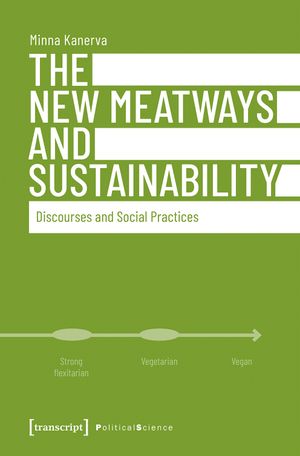
The New Meatways and Sustainability: Discourses and Social Practices
Social practice theories help to challenge the often hidden paradigms, worldviews, and values at the basis of many unsustainable practices. Discourses and their boundaries define what is seen as possible, as well as the range of issues and their solutions. By exploring the connections between practices and discourses, Minna Kanerva develops a conceptual approach enabling purposive change in unsustainable social practices. Radical transformation towards new meatways is arguably necessary, yet complex psychological, ideological, and power-related mechanisms currently inhibit change.

Nationale Hoffnung und konservative Enttäuschung: Zum Wandel des konservativen Nationenverständnisses nach der deutschen Vereinigung
Konservativ, nationalbewusst, rechts – diese Kategorien verschwimmen zusehends, da rechtspopulistische Protagonist*innen eifrig darauf bedacht sind, aus taktischen Erwägungen als eine nicht näher definierte »bürgerliche Mitte« zu erscheinen. Der offenbar immer noch in weiten Teilen der Gesellschaft akzeptierte Begriff des Konservativen wird vielfältig benutzt, um national-chauvinistische Inhalte zu verschleiern. Florian Finkbeiner zeigt mit seiner Untersuchung konservativer Intellektueller im Zuge der deutschen Vereinigung von den 1980er zu den 1990er Jahren exemplarisch auf, wie es hierzu kommen konnte. Mit dieser Begriffsgeschichte des Konservatismus liefert er spannende Einsichten auch für die gegenwärtige politische Lage.
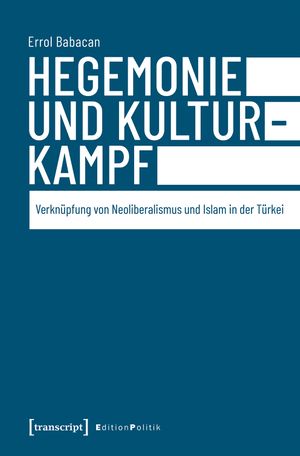
Hegemonie und Kulturkampf: Verknüpfung von Neoliberalismus und Islam in der Türkei
Die Türkei durchläuft einen tiefgreifenden gesellschaftlichen Wandel. Während sich die öffentliche Aufmerksamkeit auf den politischen Autoritarismus und die Repression richtet, rückt Errol Babacan die kulturkämpferische Dynamik in den Blick. Auf der Basis einer Feldstudie bestimmt er die Regierungspartei AKP als Trägerin eines Hegemonieprojekts, das mit einer wachsenden Schicht religiöser Akteure vernetzt ist, die ihre Stellung sukzessive ausbauen. Die Religionsbehörde Diyanet, theologische Schulen und islamische Bruderschaften werden dabei im Zentrum einer religiösen Privilegienstruktur verortet, deren sozio-ökonomische Grundlage ein neoliberales Armutsregime ist.
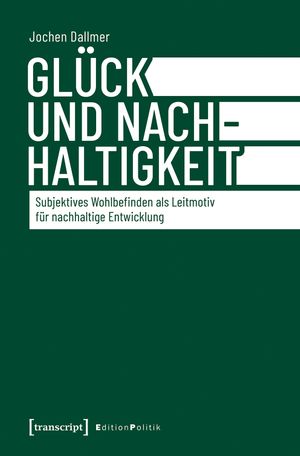
Glück und Nachhaltigkeit: Subjektives Wohlbefinden als Leitmotiv für nachhaltige Entwicklung
Wie lassen sich Glück und Nachhaltigkeit verbinden? Um die gegenwärtige ressourcenintensive Lebensweise zu überwinden, braucht es neue Leitbilder von subjektivem Wohlbefinden, die das gute Leben jenseits von Produktion und Konsum verorten. Die bisherige Debatte um Suffizienz und Postwachstum ist dabei vor allem von asketischen Idealen geprägt, welche für die Mehrzahl der Menschen nicht attraktiv erscheinen. Als eine vielversprechende Variante entwickelt Jochen Dallmer das Modell eines aufgeklärten Hedonismus, welcher das Streben nach subjektivem Wohlbefinden zu einem Beitrag für Nachhaltigkeit werden lässt.

European Regions: Perspectives, Trends and Developments in the 21st Century
At the beginning of the 21st century, the EU is facing deep political, social, and economic changes. The benefit of supranational organization is no longer obvious to European citizens and questions of legitimacy have accompanied the EU’s development over the last decades. Regions – albeit often deemed »obsolete« – present themselves as stable and reliable partners in this turbulent environment: in being important objects of identification to their citizens, but also relevant political and legal entities in the EU’s multilevel governance system. This edited volume asks about the role of regions and regional identity in a European Union that is perhaps struggling more than ever about its future.

Epistemische Gewalt: Wissen und Herrschaft in der kolonialen Moderne
Gewalt ist nicht nur Ereignis, sondern auch Prozess und Verhältnis. Sie zerstört Ordnung nicht nur, sondern begründet sie auch und hält sie aufrecht. Der Dimension des Wissens wird in den meisten Gewaltdebatten nur wenig Bedeutung beigemessen, gilt sie doch als Gegenteil von oder als Gegenmittel zu Gewalt. Mit dem Begriff der »epistemischen Gewalt« rückt Claudia Brunner den konstitutiven Zusammenhang von Wissen, Herrschaft und Gewalt in der kolonialen Moderne, unserer Gegenwart, in den Fokus. Ausgehend von feministischer, post- und dekolonialer Theorie entwickelt sie in Auseinandersetzung mit struktureller, kultureller, symbolischer und normativer Gewalt ein transdisziplinäres Konzept epistemischer Gewalt.
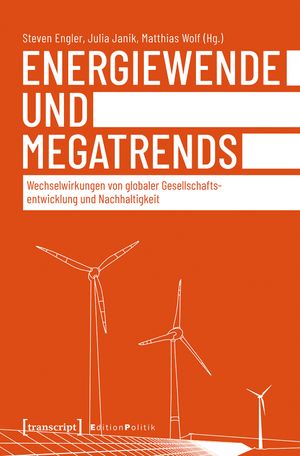
Energiewende und Megatrends: Wechselwirkungen von globaler Gesellschaftsentwicklung und Nachhaltigkeit
Die Energiewende findet gesellschaftlich nicht im »luftleeren Raum« statt: Sie kann sich nur im Kontext anderer tiefgreifender Prozesse sozialen Wandels vollziehen. Digitalisierung, Mobilität, Urbanisierung – diese und andere gesellschaftliche Großentwicklungen werden als »Megatrends« bezeichnet. Sie gelten als Wegweiser und gesellschaftliche Dimensionen, die berücksichtigt werden müssen, wenn es um die Gestaltung der Zukunft geht. Doch was macht eine Entwicklung eigentlich zu einem solchen Megatrend? Und welchen Einfluss haben diese Megatrends auf die Energiewende?
Die Beiträger*innen des Bandes diskutieren die Bedingungen von Megatrends sowie die Herausforderungen und Möglichkeiten, die sich angesichts dieser Großentwicklungen für die Energiewende stellen.
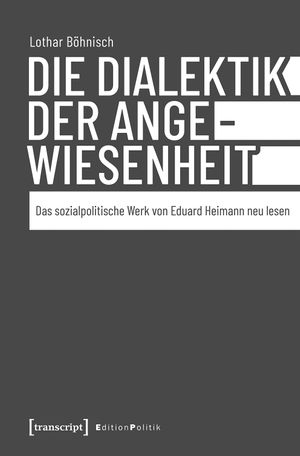
Die Dialektik der Angewiesenheit: Das sozialpolitische Werk von Eduard Heimann neu lesen
Eduard Heimann zählt zu den seit der Nachkriegszeit bis heute vergessenen Sozialwissenschaftler*innen. Weder in den allgemeinen sozialökonomischen Diskursen noch in der Diskussion um den »dritten Weg« finden die Überlegungen des emigrierten linken Forschers Resonanz. Doch nicht nur der gegenwärtige sozialökologische Transformationsdiskurs kann sein historisch-dialektisches Modell der Angewiesenheit gebrauchen, auch die gegenwärtige Diskussion zum »Neosozialismus« kann ihn als reflexives historisches Erbe annehmen. Lothar Böhnisch stellt das sozialökonomische Gesamtwerk Heimanns vor und führt seine ungebrochene Aktualität auf verschiedenen Ebenen konstruktiv aus.
Settlement and History in Hellenistic, Roman, and Byzantine Galilee: An Archaeological Survey of the Eastern Galilee
Uzi Leibner aims to provide the most accurate picture possible of the nature and history of the rural settlement in the Lower Galilee during Hellenistic, Roman and Byzantine periods when this region played an important role in the development of both Judaism and Christianity.
In an attempt to draw a historical reconstruction based on systematic data, a test case area in the »heart« of ancient Galilee was chosen for this research. Uzi Leibner used two distinct disciplines: the study of the relevant historical sources and the advanced archaeological field survey. Greek, Latin, Hebrew and Aramaic sources concerning settlements in the region were translated and discussed. Some fifty archaeological sites from the periods under discussion were identified and surveyed. The analysis of the finds enabled the author to draw a detailed portrait of settlement – including periods of construction, abandonment, prosperity and decline in each site and in the region as a whole. This book sheds new light on major historical issues such as the origins of the Galilean Jewry in the Second Temple Period, the First Jewish Revolt and its outcomes, the Jews of Galilee under Christian regime, demography, economy, continuity and decline.
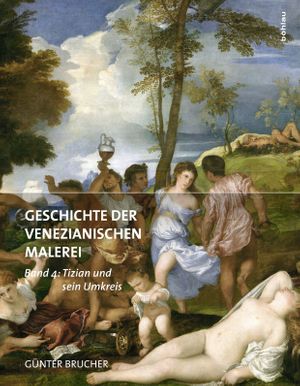
Geschichte der Venezianischen Malerei: Band 4: Tizian und sein Umkreis
About a third of the present book deals with titian’s artistic entourage: Paris Bordone, Palma Vecchio and Bonifazio de’Pitati. And, on the other hand, artists as Lorenzo Lotto, Pordenone, Savoldo, proving to be more self-contained, especially Pordenone.

Intellectual Property in the Global Arena: Jurisdiction, Applicable Law, and the Recognition of Judgments in Europe, Japan and the US
The private international law of intellectual property is currently much debated both in Europe and abroad. Art. 8 of the Rome II Regulation of 2007, which codifies a territorial approach for the infringement of intellectual property, has provoked an intensive discussion in Europe as to whether the lex loci protection is still appropriate for intellectual property litigation in the age of worldwide networks. A condensed outcome of this debate is summarized in the »Principles for Conflict of Laws in Intellectual Property« (CLIP Principles) drafted by the European Max Planck Group on Conflict of Laws in Intellectual Property (CLIP), published recently in a second preliminary draft. On the international scale, the American Law Institute’s »Intellectual Property: Principles Governing Jurisdiction, Choice of Law, and Judgments in Transnational Disputes« of 2007 (ALI Principles) are the focal point of the debate. A Japanese project (»Transparency Proposal«) was finalized in 2009.
This volume provides a comparative analysis of the three proposals. It compiles papers presented at an international conference held in Tokyo in May 2009.

Economic Analysis of International Law: Contributions to the XIIIth Travemünde Symposium on the Economic Analysis of Law (March 29–31, 2012)
The topics covered in this volume range from classics of the on-going discussion on the economic analysis of international law – such as the issue of legitimacy of customary international law – to more recent topics such as internet privacy, private military contractors, the fight against piracy, the International Criminal Court and the highly topical issue of land grabbing.

Common Principles of European Intellectual Property Law
Intellectual property law has been harmonized by EU law to a considerable extent. At the same time intellectual property rights have converged. The academic discussion has not kept pace with this development. European intellectual property law is often seen through the spectacles of national law; pan-European discussions about issues of Community law seem to be the exception rather than the rule. The contributors to this volume investigate if and to what extent European rules and principles applicable to all intellectual property rights already exist or whether they can be found on the basis of the acquis communautaire and comparative law. In particular, they discuss the merits and the methodology of common principles before turning to several areas of substantive intellectual property law such as grounds of protection, secondary liability and exceptions, to enforcement and finally to the relationship between intellectual property and neighbouring areas of EU law.
Calvin – Saint or Sinner?
The Calvin year 2009 began on October 31, 2008 with a conference organized by the Institute for Reformation Research (Apeldoorn) on the topic »Calvin: Saint or Sinner?« A number of scholars dealt with the question of whether and how Calvin brought a renewal to theology, the church and society. This volume contains the papers held at this conference, which demonstrate the detailed and growing research on the reformer of Geneva. Since the contributions reflect the latest research in Calvin studies, the conclusions reached in many of the papers are surprising. Calvin was not a reformer in all respects in the original sense, as some would have wanted him to be. However on other subjects he definitely distanced himself from tradition and from his fellow reformers. All in all, this volume gives an overview of the many facets of John Calvin and his theology.

Fighting for a Living: Volume 1: A Comparative History of Military Labour 1500–2000
Fighting for a Living investigates the circumstances that have produced starkly different systems of recruiting and employing soldiers in different parts of the globe over the last 500 years. It does so on the basis of a wide range of case studies taken from Europe, Africa, America, the Middle East and Asia.The novelty of “Fighting for a Living” is that it is not military history in the traditional sense (concentrating at wars and battles or on military technology) but that it looks at military service and warfare as forms of labour, and at the soldiers as workers. Military employment offers excellent opportunities for this kind of international comparison. Where many forms of human activity are restricted by the conditions of nature or the stage of development of a given society, organized violence is ubiquitous. Soldiers, in one form or another, are always part of the picture, in any period and in every region. Nevertheless, Fighting for a Living is the first study to undertake a systematic comparative analysis of military labour. It therefore speaks to two distinct, and normally quite separate, communities: that of labour historians and that of military historians. This title was made Open Access by libraries from around the world through Knowledge Unlatched.