
Books

Radical Approaches to Political Science: Roads Less Traveled
This ground breaking volume offers a range of alternative approaches to political science, highlighting problems too rarely confronted by “mainstream†political scientists. Ranging from Gunfighter Sagas to the changing faces of an imaginary Mars, the innovative chapters introduce whole new ways of rethinking politics, stirring up the all too conventional ways of the discipline.
Migration and Social Pathways: Biographies of Highly Educated People Moving East-West-East in Europe
The landscape of European migration has changed considerably over the past decades, in particular after the fall of the iron curtain and again after the EU enlargement to the east. The author researches the phenomenon of highly qualified migration using the example of migration between the Czech Republic and Germany. The book reveals diverse strategies migrants use to respond to the possible de-valuation of their qualification, e.g. by making use of their language skills, starting new studies or using transnational knowledge.
Anna Guhlich investigates the role of migration within the biographies, the shifts of social positions, as well as the ways migrants negotiate their skills, qualification and knowledge across the borders. Based on biographical narrative interviews, she investigates the migration pathways and the processes of social mobility. The study investigates the influence developments within the Czech society have on migration decisions and transnational spaces as well as o
Gender and Politics: The State of the Discipline
This timely collection offers a fresh look on the impact of gender perspectives in the discipline of political science at the beginning of the 21st century. Jane Bayes combats the Eurocentric focus that has characterised both fields and suggests viable alternatives for the future of the disciplines.

“Frozen Conflicts” in Europe
Oft forgotten but simmering “frozen conflicts†continuously mark the political map of Europe. All located in South Eastern Europe, the Black Sea area and Transcaucasia, these conflicts run along ethnic, national, cultural and linguistic lines, separating communities. This insightful book offers a rare critical analyses of the cases of Northern Cyprus, Transnistria, Abkhazia, South Ossetia, Nagorno-Karabakh, Kosovo, and Crimea.
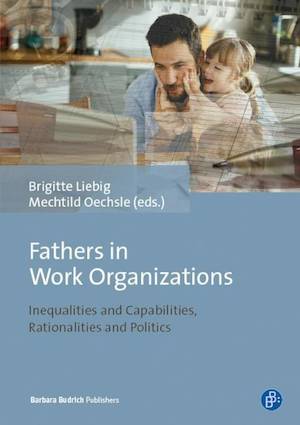
Fathers in Work Organizations: Inequalities and Capabilities, Rationalities and Politics
This book is dedicated to the role of work organizations when it comes to the realization of an active fatherhood. Firstly, it deals with barriers for active fatherhood and its correlating mechanisms of inequality: Which aspects of discrimination and social closure do fathers face today if they assert a claim for active fatherhood, and with what kind of barriers are they confronted? Secondly, capabilities of fathers are addressed: Which is their possible scope of action, and which factors lead to differences in capabilities at the workplace? Finally, the book analyzes the meaning of organizational rationalities, and the effects of policies and programs on change and organizational learning with respect to fatherhood.
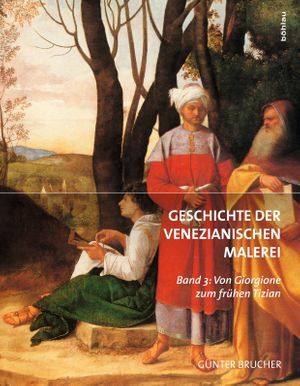
Geschichte der venezianischen Malerei: Band 3: Von Giorgione zum frühen Tizian
Giorgione remains the central figure in the scientific discussion dealing with Venetian painting of the age, and accordingly the amount of literature on him is exuberant. The state of scientific discussion which harks back well into the 19th century, proves to be very heterogeneous, a selection of statements proves to be inapt as to serve as a basis for a further critical discussion. The outcome of all this is a general dissent, caused by the poor state of sources and the comparatively small number of secured works. In consequence, we are confronted with a constant struggle of attributions, increasing and decreasing in number, and a host of dates, often contradictory.
Electronic Democracy
The timely book takes stock of the state of the art and future of electronic democracy, exploring the history and potential of e-democracy in global perspective. Analysing the digital divide, the role of the internet as a tool for political mobilisation, internet Voting and Voting Advice Applications, and other phenomena, this volume critically engages with the hope for more transparency and political participation through e-democracy.

Democracy under stress: The global crisis and beyond
This book focuses on the global financial crisis of 2008-2009 and its implications for democracy. Why and how did the crisis come about? Are there any instructive lessons to be drawn from comparisons with the Great Depression of the 1930s? What are the democratic response mechanisms to cope with serious crises? Do they work? Is China a new trend setter? Do values matter? Are global democratic rules a possibility? These are some of the key questions addressed in the volume.

Breaking Intergenerational Cycles of Repetition: A Global Dialogue on Historical Trauma and Memory
The authors in this volume explore the interconnected issues of intergenerational trauma and traumatic memory in societies with a history of collective violence across the globe. Each chapter’s discussion offers a critical reflection on historical trauma and its repercussions, and how memory can be used as a basis for dialogue and transformation. The perspectives include, among others: the healing journey of three generations of a family of Holocaust survivors and their dialogue with third generation German students over time; traumatic memories of the British concentration camps in South Africa; reparations and reconciliation in the context of the historical trauma of Aboriginal Australians; and the use of the arts as a strategy of dialogue and transformation.
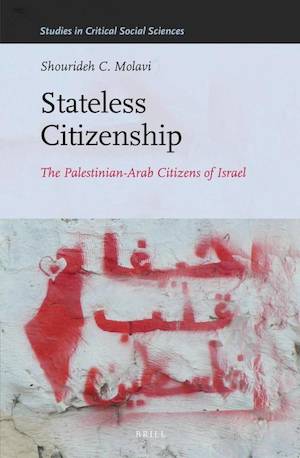
Stateless Citizenship: The Palestinian-Arab Citizens of Israel
Far from integration into the Israeli incorporation regime, Palestinians inside the state are today placed in a paradoxical situation where, as Arab citizens of a Jewish state, they are both inside and outside, host and guest, citizen and stateless. Through the paradigm of stateless citizenship, Shourideh C. Molavi examines the dynamics of exclusion of Palestinian citizens and analytically frames the mechanisms through which their statelessness is maintained. With this she centres our analytical gaze on the paradox that it is through the actual provision of Israeli citizenship that Palestinians are deemed stateless. Molavi critically engages with the liberal variant of Zionist thought, and deconstructs discourse around minority rights and liberal citizenship in the context of Israel’s racialized ideological and political makeup.
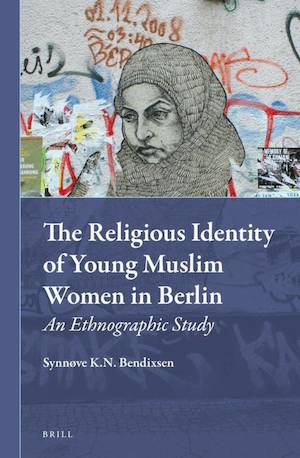
The Religious Identity of Young Muslim Women in Berlin: An Ethnographic Study
The Religious Identity of Young Muslim Women in Berlin offers an in-depth ethnographic account of Muslim youth’s religious identity formation and their engagement with Islam in everyday life. Focusing on Muslim women in the organisation MJD in Germany, it provides a deeper understanding of processes related to immigration, transnationalism, the transformation of identifications and the reconstruction of selfhood. The book deals with the collective content of religious identity formation and processes of differentiation, engaging with the changing role of religion in an urban European setting, restructuring of religious authority and the formation of gender identity through religion. Synnøve K.N. Bendixsen examines how the participants seek and debate what it means to be a good Muslim, and discusses the religious movement as individual engagement in a collective project.
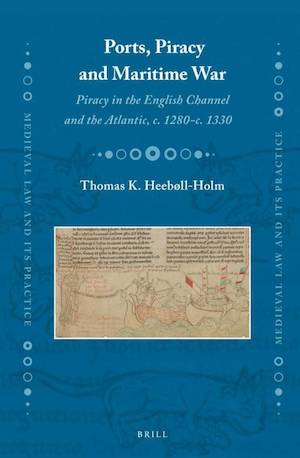
Ports, Piracy and Maritime War: Piracy in the English Channel and the Atlantic, c. 1280-c. 1330
In Ports, Piracy, and Maritime War Thomas K. Heebøll-Holm presents a study of maritime predation in English and French waters around the year 1300. Following Cicero, pirates have traditionally been cast as especially depraved robbers and the enemy of all, but Heebøll-Holm shows that piracy was often part of private wars between English, French, and Gascon ports and mariners, occupying a liminal space between crime and warfare. Furthermore he shows how piracy was an integral part of maritime commerce and how the adjudication of piracy followed the legal procedure of the march. Heebøll-Holm convincingly demonstrates how piracy influenced the policies of the English and the French kings and he contributes to our understanding of Anglo-French relations on the eve of the Hundred Years’ War.
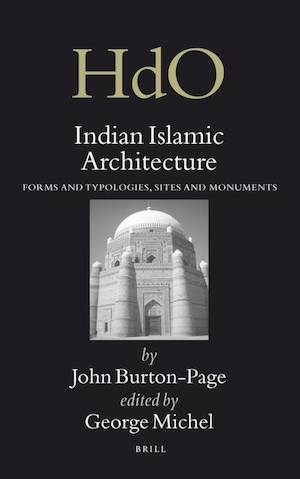
Indian Islamic Architecture: Forms and Typologies, Sites and Monuments
The British scholar John Burton-Page contributed numerous formative articles on Indian Islamic architecture for the Encyclopaedia of Islam over a period of 25 years. Assembled here for the first time, these offer an insightful overview of the subject, ranging from the earliest mosques and tombs erected by the Delhi sultans in the 13th, 14th and 15th centuries, to the great monuments of the Mughal emperors dating from the 16th and 17th centuries. The articles cover the principal forms of Indian Islamic architecture — mosques, tombs, minarets, forts, gateways and water structures — as well as the most important sites and their monuments. Unsurpassed for their compression of information, these succinct articles serve as the best possible introduction to the subject, indispensible for both students and travellers. The articles are supplemented by a portfolio of photographs especially selected for the volume, as well as a glossary and up to date bibliography.
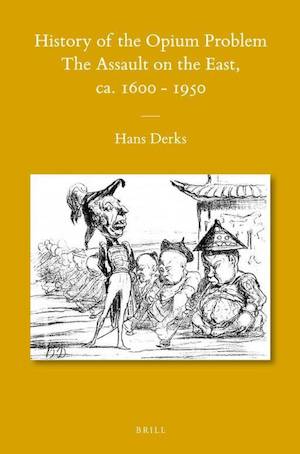
History of the Opium Problem: The Assault on the East, ca. 1600 – 1950
This is the first scholarly study in which the production, trade and political effects of opium and its derivatives are shown over many centuries, and in many countries (China, India, Indonesia, Japan, all Southeast Asian countries and some in Europe and the Americas). Starting in the 16th century, slavery and opium became the two means with which the bodies and souls of men and women in the tropics were exploited in western imperialism and colonialism. The first waned with the abolition movement in the 19th century, but opium production and trade continued to spread, with the associated serious social and political effects. Around 1670 the Dutch introduced opium as a cash crop for mass production and distribution in India and Indonesia. China became the main target in the 19th century, and only succeeded in getting rid of the opium problem around 1950. Then it had already been transformed from an “Eastern†into a “Western†problem.
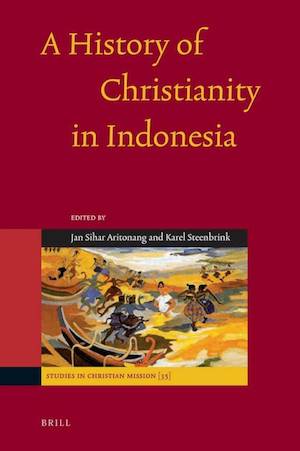
A History of Christianity in Indonesia
Indonesia is the home of the largest single Muslim community of the world. Its Christian community, about 10% of the population, has until now received no overall description in English. Through cooperation of 26 Indonesian and European scholars, Protestants and Catholics, a broad and balanced picture is given of its 24 million Christians. This book sketches the growth of Christianity during the Portuguese period (1511-1605), it presents a fair account of developments under the Dutch colonial administration (1605-1942) and is more elaborate for the period of the Indonesian Republic (since 1945). It emphasizes the regional differences in this huge country, because most Christians live outside the main island of Java. Muslim-Christian relations, as well as the tensions between foreign missionaries and local theology, receive special attention.

Early Greek Poets’ Lives: The Shaping of the Tradition
This book examines the formation and development of the biographical traditions about early Greek poets, focusing on the traditions of Hesiod, Stesichorus, Archilochus, Hipponax, Terpander and Sappho. The study provides a detailed overview of the traditions and chronographical material about these poets and seeks to clarify who were the creators of the particular traditions; what were the sources; when the traditions were formed; and to what extent they are shaped by formulaic themes and story-patterns. It challenges several mainstream assumptions on the subject, for example, that the traditions were formed mainly in the Post-Classical period; that the only significant source for the legends is the works of the particular poet; and that the poets were perceived as “new heroes.â€
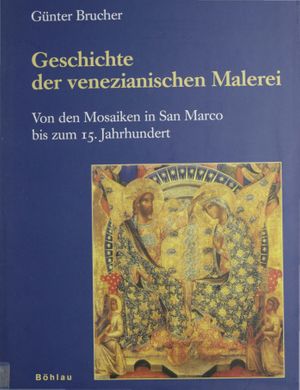
Geschichte der venezianischen Malerei: Band 1: Von den Mosaiken in San Marco bis zum 15. Jahrhundert
The present manuscript is meant as volume I of a series of books comprising four volumes in total. Except for Hüttinger´s barely sufficient survey, its object, an overall presentation of Venetian painting from the early beginnings till the 18th and 19th centuries, has almost been neglected by German scholars up to this day. The same may be said about Italian investigations, the more so as the book-series Pittura nell Veneto (edited in several volumes) strongly resembles a corpus opus: It does comprise the most important facts (e.g.the biographies of the artists) and provides a fine collection of pictures as well as a presentation of the momentary status of research, making every effort to completeness, but purely artistic, developmental, iconographic, style-genetic and coloring problems are examined in a rather rudimentary manner and, moreover, organised in a way which cannot easily be followed by the reader. When overlooking the numerous single publications by Italian authors, one will realize that they share an almost incomprehensible timidity of analysing the paintings thoroughly. Such an attempt, however, must be considered the only proper way to get to the root of both development and peculiarity of Venetian painting, so well characterized by Hetzer´s term “ornamental”. Comparative work interpretations will have to meet this scientific deficiency. Proceeding from a descriptive technique based on the specific structure and thus taking form as well as colour into consideration, the theories of morphology and perceptive psychology largely contribute to this intention. Only on the ground of visual findings which have been proven analytically, questions of how to date properly, of how to decide possible work participation and/or dependence of the artists can be clarified, with the additional goal of reaching hermeneutic results and working out what is considered typically Venetian.- Volume I starts out with a survey of Venetian history till the middle of the 15th century, leading from the mosaics of San Marco (beginning with the 11th century) to the second half of the quattrocento. Contrary to usual scholarly views, the art of mosaics is classed with the art of painting, for it incorporates the very same criteria of painting as to form, style and arrangement. The main point here is to bring O.Demus´s scientific results with reference to chronology, genesis of style etc. in accordance with those of Italian scientists who quite frequently hold different views, and to come up with personal decisions at times. Prevailing in the mosaics of San Marco, Byzantinism conditions Venetian painting (fresco and table painting, which gets into being at the end of the 13th century) and remains dominant till late into the trecento. Here it is first observed with Paolo Veneziano, who seldom glances at the development of the occidental style on Terraferma (e.g. Giotto). The ensuing breakthrough of the Gothic style is found with Lorenzo Veneziano. In its course, Byzantine, Upper-Italian and transalpine stimulations fuse into a remarkable symbiosis. Hence investigations in the field of coloring, which have rarely been dealt with in specialized literature, play and hitherto will play a decisive rôle in the evaluation of Venetian painting. A special chapter is dedicated to N. Semitecolo who stands under Padua´s influence (cf. Guariento). After recurrences to conservative Byzantine elements in the last third of the trecento, the international Gothic style celebrates its entry into Venetian painting (cf Jacobello de Fiore) under the strong influence of Gentile da Fabriano. At the same time, first signs of a more modern attitude to painting can be observed with Giambono. Far longer than in the rest of Italy, painting in Venice was partial to the tendencies of the international Gothic as well as to elements of splendour, decoration and space.
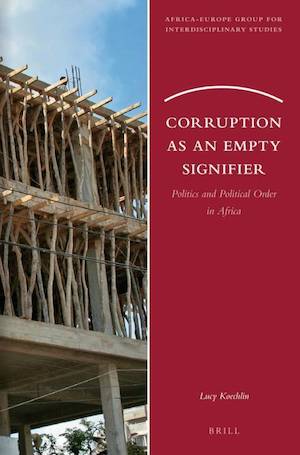
Corruption as an Empty Signifier: Politics and Political Order in Africa
Corruption as an Empty Signifier critically explores the ways in which corruption in Africa has been equated with African politics and political order, and offers a novel approach to understanding corruption as a potentially emancipatory discourse of political transformation. Conventionally, both academic literature as well as development policies depict corruption as the lynchpin of politics in Africa, locking African societies into political orders which subvert democratic change.
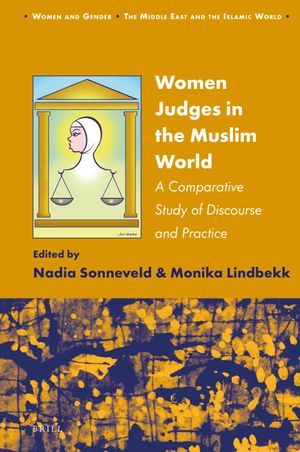
Women Judges in the Muslim World: A Comparative Study of Discourse and Practice
Women Judges in the Muslim World: A Comparative Study of Discourse and Practice fills a gap in academic scholarship by examining public debates and judicial practices surrounding the performance of women as judges in eight Muslim-majority countries (Indonesia, Malaysia, Pakistan, Syria, Egypt, Libya, Tunisia and Morocco). Gender, class, and ethnic biases are inscribed in laws, particularly in the domain of shariʿa-derived family law. Editors Nadia Sonneveld and Monika Lindbekk have carefully woven together the extensive fieldwork and expertise of each author. The result is a rich tapestry that brings out the various effects of women judges in the management of justice. In contrast to early scholarship, they convincingly prove that ‘the woman judge’ does not exist.
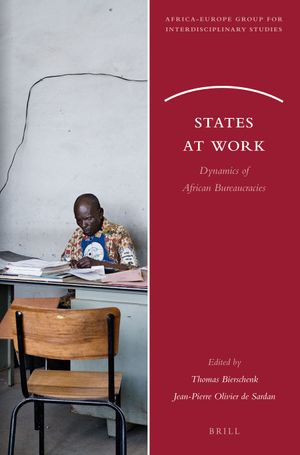
States at Work: Dynamics of African Bureaucracies
States at Work explores the mundane practices of state-making in Africa by focussing on the daily functioning of public services and the practices of civil servants. Adopting mainly an ethnographic approach as a basis for theorizing, the authors deal with topics including: bureaucratic cultures and practical norms, operational routines in offices, career patterns and modes of appointment; how bureaucrats themselves perceive and deliver goods and services and interact with service users; the accumulation of public administration reforms and how the different bureaucratic corps react to the ‘good governance’ discourse and new public management policies; the consequences of these reforms for the daily working of state bureaucracies and for the civil servants’ identities and modes of accountability; and the space that exists for bottom-up micro-reforms that build on local innovations or informal arrangements.
Sharīʿa in Africa Today: Reactions and Responses
Sharīʿa in Africa Today. Reactions and Responses explores how Islamic law has influenced relations between Muslims and Christians, through a series of case studies by young African scholars working in four African countries: in Sudan where total Sharīʿa was applied until recently; in Nigeria where the Northern states re-introduced Sharīʿa courts; in Kenya where the place of Islamic courts has been contested in constitutional debates; in Tanzania where Muslims are calling for the re-introduction of Islamic courts.
Sacrifice in Modernity: Community, Ritual, Identity: From Nationalism and Nonviolence to Health Care and Harry Potter
Sacrifice seems to belong to a religious context of the past. In Sacrifice in Modernity: Community, Ritual, Identity it is demonstrated how sacrificial themes remain an essential element in our post-modern society. The shaping of community, performing rituals and the search for identity, three main characteristics of traditional sacrifice, are dynamics of our modern times as well which cannot be understood without sacrificial awareness. This is demonstrated in such areas as the German poet Hölderlin, Harry Potter, martyrdom, the Twilight Saga, the Japanese writer Endo, Tarkovsky, movies and more.
Religious Minorities in the Middle East: Domination, Self-Empowerment, Accommodation
The relationship between religious majorities and minorities in the Middle East is often construed as one of domination versus powerlessness. While this may indeed be the case, to claim that this is only or always so is to give a simplified picture of a complex reality. Such a description lays emphasis on the challenges faced by the minorities, while overlooking their astonishing ability to mobilize internal and external resources to meet these challenges. Through the study of strategies of domination, resilience, and accommodation among both Muslim and non-Muslim minorities, this volume throws into relief the inherently dynamic character of a relationship which is increasingly influenced by global events and global connections.
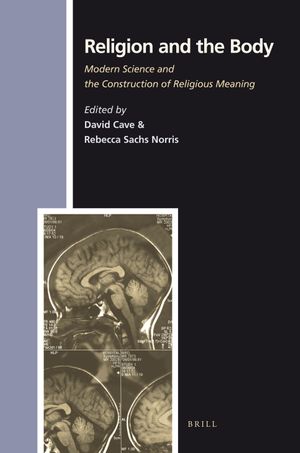
Religion and the Body
This book reflects on the implications of neurobiology and the scientific worldview on aspects of religious experience, belief, and practice. Just as interest in the neurosciences and related fields has burgeoned in contemporary society, interest in the fields of neuroscience and cognitive studies is also growing within the religious studies academy, and reflection on these shifts is well overdue. How do religious practitioners negotiate the interconnection of science and religion? What can the neurosciences add to scholars’ understanding of religion and to how humans construct religious meaning?
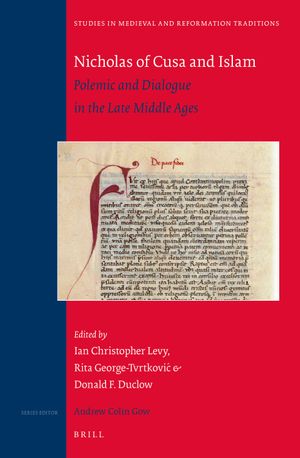
Nicholas of Cusa and Islam: Polemic and Dialogue in the Late Middle Ages
This collection of essays explores the complex relations between Christians and Muslims at the dawn of the modern age. It begins by examining two seminal works by Nicholas of Cusa: De pace fidei, a dialogue seeking peace among world religions written after the conquest of Constantinople in 1453, and Cribratio Alkorani (1460-61), an attempt to confirm Gospel truths through a critical reading of the Qur’an. After considering Nicholas, his sources, and his context, the book explores a wider range of late medieval texts on Christian-Muslim relations—not only Christian writings about Islam but also Muslim responses to Christianity. The book’s focus is historical, but it can also contribute to efforts at increasing Muslim-Christian understanding today.

News in Early Modern Europe: Currents and Connections
News in Early Modern Europe – Currents and Connections, edited by Simon Davies and Puck Fletcher, presents significant new research on the production and dissemination of news in early modern Europe. Interdisciplinary in focus, and wide in geographical and chronological scope, the collection includes theoretical enquiries about the nature of news alongside deep archival case studies.

The Making of Englishmen: Debates on National Identity 1550-1650
Making the Englishmen: Debates on National Identity 1550-1650 asks how Englishmen defined themselves at a time of profound change and uncertainty. It will seek to contextualise the ways in which Englishness came to be construed as free, plain and unCatholic, and situate this construction as part of a larger attempt to create a narrative which would distinguish them from the rest of Europe.
But all such attempts were fraught with anxiety and contestation. The normative ideals of Englishness were constantly being undermined, affronted and ignored. In the disarray characteristic of the post-Reformation era, there were constant fears that the Englishman was becoming both slavish and treacherous in political, cultural and religious ways. Englishness was under threat.
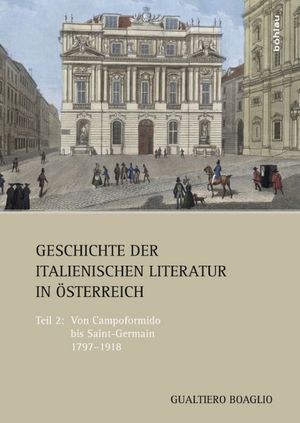
Geschichte der italienischen Literatur in Österreich: Teil 2: Von Campoformido bis Saint-Germain 1797–1918
The present monograph focuses on the history of Italian literature and language in Austria’s Habsburg past, covering the period from the Peace of Campoformido between Napoleon and Francis II in 1797 to the end of the Habsburg monarchy in 1918. The study reveals that Italian court poetry was amazingly alive in the 19th century as it gradually had been adapted to the changes in the fields of politics, society, and the press. After analyzing the end of the golden era of Italian poetry in Austria, the author presents Archduchess Maria Beatrice d’Este and her literary circle. She was the last patroness of Italian artists and poets and kept up the old-style tradition of court poetry until her death in 1829. During the 19th century, however, this tradition faced an ever increasing popularization, with Italian language books and instruction getting more and more common. The Italian language was never discriminated against in the Habsburg monarchy. On the contrary, it was even extensively taught at universities because officials with a good command of Italian were needed both in the federal government and in the Italian regions of the monarchy. Moreover, the Habsburgs’ language policy favored the publication of quality papers and literary magazines in Italian. The study also deals with Italian school books and anthologies for schools in the Italian parts of the monarchy, which were usually written and published in Vienna. In the last part of this chapter, records of the future Emperor Franz Joseph’s Italian instruction are presented and analyzed on the basis of archive materials. Anachronistically, court poetry survived the 1848/1849 revolution and continued until World War I. The Emperor was popularized in jubilee editions, newspapers, and ceremonies, but also in the Italian poetry which was no longer of high quality, but still instrumental in presenting Franz Joseph as the “father of the nation”.
Global Antisemitism: A Crisis of Modernity
The essays are written by scholars from a wide array of disciplines, intellectual backgrounds, and perspectives, and address the conference’s two inter-related areas of focus: global antisemitism and the crisis of modernity currently affecting the core elements of Western society and civilization. Rather than treating antisemitism merely as an historical phenomenon, the authors place it squarely in the contemporary context. As a result, this volume also provides important insights into the ideologies, processes, and developments that give rise to prejudice in the contemporary global context.
Cracking Facebook: The Importance of Understanding Technology-Based Communication
This book presents a Facebook study on members of the Cusp Generation, or those born before the “great digital divide” of 1995. This delineation allows for a discussion on the possible socio-cultural implications of Facebook use for people of all ages. Members of the Cusp Generation are in a unique position as “part digital natives” to easily acquire and use new media technologies, while being more critically aware of the personal, social, and cultural effects that may arise from them thanks to having some memory of the pre-digital era. Drawing on identity theories rooted in critical theory and cultural studies, the author shows that there are potential constrictions on people’s agency in their Facebook use caused by consumer discourse, Facebook’s hyperreal nature and structure, psychological predispositions, and the potential for avatar attachment. In raising concerns over the impacts of technology-based communication, this book explores how the medium of Facebook extends and exacerbates processes of offline social reproduction and discusses how the positive social and political aspects of Facebook can be enhanced.