
Books
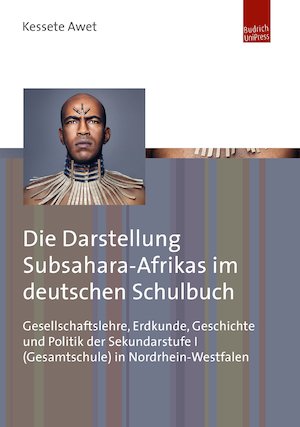
Die Darstellung Subsahara-Afrikas im deutschen Schulbuch: Gesellschaftslehre, Erdkunde, Geschichte und Politik der Sekundarstufe I (Gesamtschule) in Nordrhein-Westfalen
Schulbücher haben innerhalb der Schule eine große Bedeutung für die Gestaltung des Unterrichts. Das Thema Subsahara-Afrika spielt sowohl in der hiesigen Gesellschaft als auch in Schulbüchern eine eher untergeordnete Rolle. Diese Erfahrung machte der aus Eritrea geflüchtete Autor in den 1980/90er Jahren als Lernender an einer Wuppertaler Gesamtschule. Im Rahmen seines Studiums der Sozialpädagogik stellte er fest, dass diese Problematik im universitären Kontext ebenfalls nur marginal behandelt wird. Auch außerhalb der Schule wird Subsahara-Afrika in der allgemeinen Medienberichterstattung als Krisen- und Katastrophenregion dargestellt, bei der insbesondere der Anteil europäischer bzw. westlicher Länder an dieser Situation weitgehend eine untergeordnete Rolle spielt und Initiativen aus Subsahara-Afrika zur Lösung von Problemen kaum Erwähnung finden.

Der Aufbruch der Frauen in der SPD: Die Entwicklung der Frauenarbeitsgemeinschaft (ASF) während der 1970er und 1980er Jahre
In the 1970s and 1980s, the SPD made significant changes in women’s politics: reorienting its women’s and family policies, adopting feminist goals in the program of principles, and introducing a gender quota to increase the proportion of female party members in party functions and political offices. The study tells the story of this upheaval with the help of eyewitness interviews and a comprehensive review of the party documents.
The Future of Dialects: Selected papers from Methods in Dialectology XV
Traditional dialects have been encroached upon by the increasing mobility of their speakers and by the onslaught of national languages in education and mass media. Typically, older dialects are “leveling” to become more like national languages. This is regrettable when the last articulate traces of a culture are lost, but it also promotes a complex dynamics of interaction as speakers shift from dialect to standard and to intermediate compromises between the two in their forms of speech. Varieties of speech thus live on in modern communities, where they still function to mark provenance, but increasingly cultural and social provenance as opposed to pure geography. They arise at times from the need to function throughout the different groups in society, but they also may have roots in immigrants’ speech, and just as certainly from the ineluctable dynamics of groups wishing to express their identity to themselves and to the world.
Changing Gender Norms in Islam Between Reason and Revelation
Women‘s movements in Islamic countries have had a long and arduous journey in their quest for the realization of human rights and genuine equality. The author examines whether discriminatory laws against women do in fact originate from Islam and, ultimately, if there is any interpretation of Islam compatible with gender equality. She investigates women’s rights in Iran since the 1979 Revolution from the perspectives of the main currents of Islamic thought, fundamentalists, reformists, and seculars, using a sociological explanation.

Bildung und Erziehung im Kontext globaler Transformationen
Der Band widmet sich der Reflexion ausgewählter Aspekte von Bildung und Erziehung im Kontext globaler Transformationen. Die Beiträge untersuchen die Transformationsprozesse der Bildung für den globalen Süden sowie Europas Rolle im Kontext dieser Entwicklungen. Zudem zeigen sie, dass die globalen Herausforderungen nicht nur die Frage nach Normen und Werten für Bildung und Erziehung aufwerfen, sondern auch die nach der Veränderung der Erziehungswissenschaft selbst.

Alte neue Ungleichheiten?: Auflösungen und Neukonfigurationen von Erwerbs- und Familiensphäre
Wie sehen die Lebensrealitäten von Frauen und Männern in den Lebensbereichen „Erwerbssystem“ und „Familie“ aus? Welche Interdependenzen und damit möglicherweise einhergehenden Ungleichheiten im Geschlechterverhältnis ergeben sich hieraus? Das Heft präsentiert theoretische und empirische Beiträge, die sich mit der Auflösung und Neubestimmung der gesellschaftlichen Sphären ‚Erwerbsarbeit‘ und ‚private Lebensführung‘ auseinandersetzen. Dabei werden neben der Analyse des Bestehenden auch aktuelle Tendenzen und Perspektiven diskutiert.
New Insights in the History of Interpreting
Who mediated intercultural exchanges in 9th-century East Asia or in early voyages to the Americas? Did the Soviets or the Americans invent simultaneous interpreting equipment? How did the US government train its first Chinese interpreters? Bringing together papers from an international symposium held at Rikkyo University in 2014 along with two select pieces, this volume pursues such questions in an exploration of the practice of interpreting, the recruitment of interpreters, and the challenges interpreters have faced in diplomacy, colonization, religion, war, and occupation. It also introduces innovative use of photography, artifacts, personal journals, and fiction as tools for the historical study of interpreters and interpreting. Targeted at practitioners, scholars, and students of interpreting, translation, and history, the new insights presented aim to spark discussion and research on the vital roles interpreters have played in intercultural communication through history.

Moving Ourselves, Moving Others: Motion and Emotion in Intersubjectivity, Consciousness and Language
The close relationship between motion (bodily movement) and emotion (feelings) is not an etymological coincidence. While moving ourselves, we move others; in observing others move – we are moved ourselves. The fundamentally interpersonal nature of mind and language has recently received due attention, but the key role of (e)motion in this context has remained something of a blind spot. The present book rectifies this gap by gathering contributions from leading philosophers, psychologists and linguists working in the area. Framed by an introducing prologue and a summarizing epilogue the volume elaborates a dynamical, active view of emotion, along with an affect-laden view of motion – and explores their significance for consciousness, intersubjectivity, and language. As such, it contributes to the emerging interdisciplinary field of mind science, transcending hitherto dominant computationalist and cognitivist approaches.

Elements of Structural Syntax
This volume is now finally available in English, sixty years after the death of its author, Lucien Tesnière. It has been translated from the French original into German, Spanish, Italian, and Russian, and now at long last into English as well. The volume contains a comprehensive approach to the syntax of natural languages, an approach that is foundational for an entire stream in the modern study of syntax and grammar. This stream is known today as dependency grammar (DG). Drawing examples from dozens of languages, many of which he was proficient in, Tesnière presents insightful analyses of numerous phenomena of syntax. Among the highlights are the concepts of valency and head-initial vs. head-final languages. These concepts are now taken for granted by most modern theories of syntax, even by phrase structure grammars, which represent, in a sense, the opposite sort of approach to syntax from what Tesnière was advocating.

Cyberpragmatics: Internet-mediated Communication In Context
Cyberpragmatics is an analysis of Internet-mediated communication from the perspective of cognitive pragmatics. It addresses a whole range of interactions that can be found on the Net: the web page, chat rooms, instant messaging, social networking sites, 3D virtual worlds, blogs, videoconference, e-mail, Twitter, etc. Of special interest is the role of intentions and the quality of interpretations when these Internet-mediated interactions take place, which is often affected by the textual properties of the medium. The book also analyses the pragmatic implications of transferring offline discourses (e.g. printed paper, advertisements) to the screen-framed space of the Net. And although the main framework is cognitive pragmatics, the book also draws from other theories and models in order to build up a better picture of what really happens when people communicate on the Net.
Culinary Linguistics: The Chef’s Special
Language and food are universal to humankind. Language accomplishes more than a pure exchange of information, and food caters for more than mere subsistence. Both represent crucial sites for socialization, identity construction, and the everyday fabrication and perception of the world as a meaningful, orderly place. This volume contains an introduction to the study of food and an extensive overview of the literature focusing on its role in interplay with language. It is the only publication fathoming the field of food and food-related studies from a linguistic perspective. The research articles assembled here encompass a number of linguistic fields, ranging from historical and ethnographic approaches to literary studies, the teaching of English as a foreign language, psycholinguistics, and the study of computer-mediated communication, making this volume compulsory reading for anyone interested in genres of food discourse and the linguistic connection between food and culture.
Anthropology of Color: Interdisciplinary Multilevel Modeling
The field of color categorization has always been intrinsically multi- and inter-disciplinary, since its beginnings in the nineteenth century. The main contribution of this book is to foster a new level of integration among different approaches to the anthropological study of color. The editors have put great effort into bringing together research from anthropology, linguistics, psychology, semiotics, and a variety of other fields, by promoting the exploration of the different but interacting and complementary ways in which these various perspectives model the domain of color experience. By so doing, they significantly promote the emergence of a coherent field of the anthropology of color.

(In)Appropriate Online Behavior: A pragmatic analysis of message board relations
This descriptive and comprehensive study on the discursive struggle over interpersonal relations in online message boards is located at the fascinating interface of pragmatics and computer-mediated discourse – a research area which has so far not attracted much scientific interest. It sets out to shed light on the question how interpersonal relations are established, managed and negotiated in online message boards by giving a valid overview of the entire panoply of interpersonal relations (and their interrelations), including both positively and negatively marked behavior. With the first part of the book providing an in-depth discussion and refinement of the pivotal theoretical positions of both fields of research, students as well as professionals are (re-)acquainted with the subject at hand. Thus supplying a framework for the ensuing case study, the empirical part displays the results of the analysis of 50 threads (ca. 300,000 words) of a popular British message board.

Further Investigations Into the Nature of Phrasal Compounding
This collection of papers on phrasal compounding is part of a bigger project whose aims are twofold: First, it seeks to broaden the typological perspective by providing data for as many different languages as possible to gain a better understanding of the phenomenon itself. Second, based on these data which clearly show interaction between syntax and morphology it aims to discuss theoretical models which deal with this kind of interaction in different ways. Models like Generative Grammar assume components of grammar and a clear-cut distinction between the lexicon (often including morphology) and grammar. Other models, like construction grammar, do not assume such components and are rather based on a lexicon including constructs. A comparison of these models on the basis of this phenomenon on the morphology-syntax interface makes it possible to assess their descriptive and explanatory power.
Discourse, Politics and Media in Contemporary China
After three and a half decades of economic reforms, radical changes have occurred in all aspects of life in China. In an authoritarian society, these changes are mediated significantly through the power of language, carefully controlled by the political elites. Discourse, as a way of speaking and doing things, has become an indispensable instrument for the authority to manage a fluid, increasingly fragmented, but highly dynamic and yet fragile society. Written by an international team of leading scholars, this volume examines socio-political transformations of contemporary Chinese society through a systematic account, analysis and assessment of its salient discourses and their production, circulation, negotiation, and consequences. In particular, the volume focuses on the interplay of politics and media. The book’s intended readership is academics and students of Chinese studies, language and discourse, and media and communication studies.
Chomskyan (R)evolutions
It is not unusual for contemporary linguists to claim that “Modern Linguistics began in 1957” (with the publication of Noam Chomsky’s Syntactic Structures). Some of the essays in Chomskyan (R)evolutions examine the sources, the nature and the extent of the theoretical changes Chomsky introduced in the 1950s. Other contributions explore the key concepts and disciplinary alliances that have evolved considerably over the past sixty years, such as the meanings given for “Universal Grammar”, the relationship of Chomskyan linguistics to other disciplines (Cognitive Science, Psychology, Evolutionary Biology), and the interactions between mainstream Chomskyan linguistics and other linguistic theories active in the late 20th century: Functionalism, Generative Semantics and Relational Grammar. The broad understanding of the recent history of linguistics points the way towards new directions and methods that linguistics can pursue in the future.
Afro-Peruvian Spanish: Spanish slavery and the legacy of Spanish Creoles
The present work not only contributes to shedding light on the linguistic and socio-historical origins of Afro-Peruvian Spanish, it also helps clarify the controversial puzzle concerning the genesis of Spanish creoles in the Americas in a broader sense. In order to provide a more concrete answer to the questions raised by McWhorter’s book on The Missing Spanish Creoles, the current study has focused on an aspect of the European colonial enterprise in the Americas that has never been closely analyzed in relation to the evolution of Afro-European contact varieties, the legal regulations of black slavery. This book proposes the ‘Legal Hypothesis of Creole Genesis’, which ascribes a prime importance in the development of Afro-European languages in the Americas to the historical evolution of slavery, from the legal rules contained in the Roman Corpus Juris Civilis to the codes and regulations implemented in the different European colonies overseas. This research was carried out with the belief that creole studies will benefit greatly from a more interdisciplinary approach, capable of combining linguistic, socio-historical, legal, and anthropological insights. This study is meant to represent an eclectic step in such a direction.
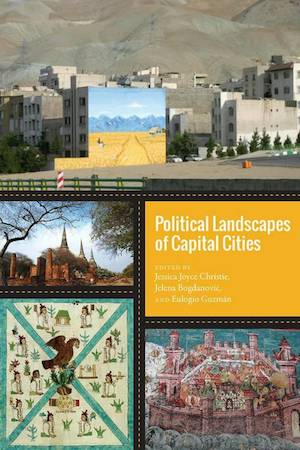
Political Landscapes of Capital Cities
“[Political Landscapes of Capital Cities] is a welcome contribution to the study of the spatialization of society and suggests paths that anthropologists can take to analyze political space in urban and non-urban settings alike.” —Anthropology Review Database
“[O]utstanding contributions of an interdisciplinary group of authors trained in different methodologies. . . . offer[s] both scholarly and popular audiences wide-ranging perspectives in exploring, imagining, perceiving and experiencing capital cities.” —Journal of Urban Cultural Studies

Alternative Pathways to Complexity: A Collection of Essays on Architecture, Economics, Power, and Cross-Cultural Analysis
“[T]he volume represents an important contribution to the examination of issues for which Blanton has furthered scholarship, organized as three sections with cases from Mesoamerica, the Old World, and cross-cultural studies.” —American Antiquity.
Alternative Pathways to Complexity focuses on the themes of architecture, economics, and power in the evolution of complex societies. Case studies from Mesoamerica, Asia, Africa, and Europe examine the relationship between political structures and economic configurations of ancient chiefdoms and states through a framework of comparative archaeology.
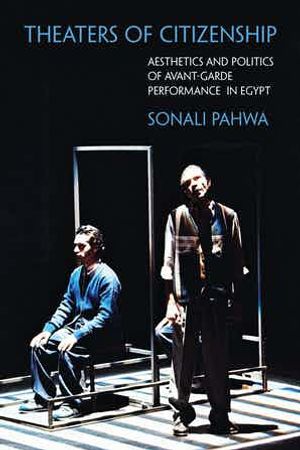
Theaters of Citizenship: Aesthetics and Politics of Avant-Gardist Performance in Egypt
Theaters of Citizenship investigates the Egyptian movement for free theater, arguing that it evolved from an avant-gardist movement to an undercommons of revolutionary cultural practice. Using historiography, ethnography, and performance analysis, the book tells a story of this avant-garde from 2004-2014, analyzing its staging of rights claims, generational identity politics, and post-revolution citizenship. Using Moten and Harney’s theory of the undercommons, a space-time for politicized cultural practice, the book extends avant-gardist theater theory to consider the revolutionary potential of performance within and outside theater spaces. Pahwa considers the performer’s bodily repertoire as a medium of cultural and political citizenship, drawing on Diana Taylor’s concept of repertoire, and expanding it to account for how performance mediates futurist culture and revolutionary practice.
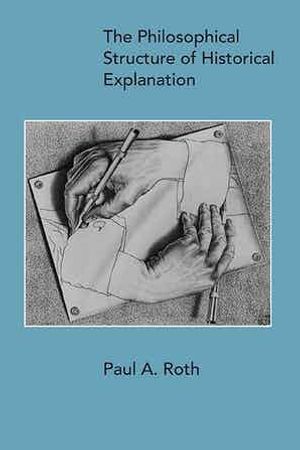
The Philosophical Structure of Historical Explanation
Roth develops an argument that resolves disputes persisting since the 19th century about the scientific status of history. He does this by showing why historical explanations must take the form of a narrative, making their logic explicit, and revealing how the rational evaluation of narrative explanation becomes possible. The book also develops a nonrealist/irrealist metaphysics and epistemology of history—arguing that there exists not one fixed past but many. It includes a novel reading of Kuhn’s The Structure of Scientific Revolutions, displaying how it offers a narrative explanation of theory change in science, and situates narrative explanations within a naturalistic framework. The first 4 chapters defuse methodological and metaphysical objections to narrative explanations. The final 3 chapters explore how narrative explanations relate to other sciences. It will be of interest to researchers in historiography, epistemology, and philosophies of history, science, and social science.
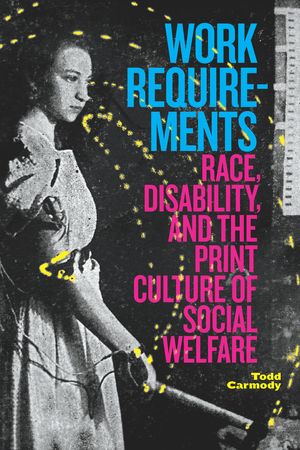
Work Requirements: Race, Disability, and the Print Culture of Social Welfare
Throughout the history of the United States, work-based social welfare practices have served to affirm the moral value of work. In the late nineteenth century this representational project came to be mediated by the printed word with the emergence of industrial print technologies, the expansion of literacy, and the rise of professionalization. In Work Requirements Todd Carmody asks how work, even the most debasing or unproductive labor, came to be seen as inherently meaningful during this era. He explores how the print culture of social welfare—produced by public administrators, by economic planners, by social scientists, and in literature and the arts—tasked people on the social and economic margins, specifically racial minorities, incarcerated people, and people with disabilities, with shoring up the fundamental dignity of work as such. He also outlines how disability itself became a tool of social discipline, defined by bureaucratized institutions as the inability to work. By interrogating the representational effort necessary to make work seem inherently meaningful, Carmody ultimately reveals a forgotten history of competing efforts to think social belonging beyond or even without work.
Identity Politics of Difference: The Mixed-Race American Indian Experience
Montgomery uses a multidisciplinary approach to examine questions of identity construction and multiracialism through the experiences of mixed-race Native American students at a tribal school in New Mexico. She explores the multiple ways in which these students navigate, experience, and understand their racial status and how this status affects their educational success and social interactions.
Based on in-depth interviews with nine students who identify as mixed-race (Native American–White, Native American–Black, and Native American–Hispanic), Montgomery challenges us to scrutinize how the category of “mixed-race” bears different meanings for those who fall under it based on their their outward perceptions, including their ability to “pass” as one race or another.
Ancient Households of the Americas: Conceptualizing What Households Do
Several different cultures — Iroquois, Coosa, Anasazi, Hohokam, San Agustín, Wankarani, Formative Gulf Coast Mexico, and Formative, Classic, Colonial, and contemporary Maya — are analyzed through the lens of household archaeology in concrete, data-driven case studies.
“This excellent book should be heavily used by anyone with an interest in household archaeology.”
—North American Archaeologist
“There are a number of excellent studies that scholars interested in household archaeology will find highly useful.”
—Journal of Anthropological Research
“This collection underscores the importance of household archaeology to the study of social dynamics.”
—Choice
“This volume is an impressive one. . . . In an era in which household archaeology has become essential to archaeological praxis, this volume is indeed essential reading.”
—Cambridge Archaeological Journal
Eyetracking and Applied Linguistics
Eyetracking has become a powerful tool in scientific research and has finally found its way into disciplines such as applied linguistics and translation studies, paving the way for new insights and challenges in these fields. The aim of the first International Conference on Eyetracking and Applied Linguistics (ICEAL) was to bring together researchers who use eyetracking to empirically answer their research questions. It was intended to bridge the gaps between applied linguistics, translation studies, cognitive science and computational linguistics on the one hand and to further encourage innovative research methodologies and data triangulation on the other hand. These challenges are also addressed in this proceedings volume: While the studies described in the volume deal with a wide range of topics, they all agree on eyetracking as an appropriate methodology in empirical research.

Unfinished Revolution: Haiti, Black Sovereignty and Power in the Nineteenth-Century Atlantic World
Unfinished Revolution is the first study to gather nineteenth-century representations and performances of Haitian sovereignty in the Atlantic world. In assembling this undiscovered archive of black power, this book offers compelling evidence of the ways that sovereignty and blackness intersect with unstable processes of modernity to produce an articulation of black authority always, already under threat for eradication or ridicule. Undeterred, nineteenth-century Haitian leaders mounted a century’s-long battle to situate Haiti at the centre of the Atlantic world.
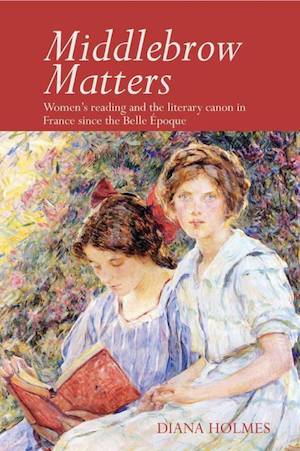
Middlebrow Matters: Women’s reading and the literary canon in France since the Belle Époque
Middlebrow is a derogatory word that connotes blandness, mediocrity and a failed aspiration to ‘high’ culture. However, when appropriated as a positive term to denote that wide swathe of literature between the challenging experimentalism of the high and the formulaic drive of the popular, it enables a rethinking of the literary canon from the point of view of what most readers actually read, a criterion curiously absent from dominant definitions of literary value. Since women have long formed a majority of the nation’s reading public, this perspective immediately feminises what has always been a very male canon. Opening with a theorisation of the concept of middlebrow that mounts a defence of some literary qualities disdained by modernism, the book then focuses on a series of case studies of periods (the Belle Époque, inter-war, early twenty-first century), authors (including Colette, Irène Nemirovsky, Françoise Sagan, Anna Gavalda) and the middlebrow nature of literary prizes.

Frères Ennemis: The French in American Literature, Americans in French Literature
Frères Ennemis focuses on Franco-American tensions as portrayed in works of literature. An Introduction is followed by nine chapters, each focused on a French or American literary text which shows the evolution/devolution of the relations between the two nations at a particular point in time. While the heart of the analysis consists of close textual readings, social, cultural and political contexts are introduced to provide a better understanding of the historical reality influencing the individual novels, a reality to which these novels are also responding. Chapters One through Five, covering a period from the mid-1870s to the end of the Cold War, discuss significant aspects of the often fraught relationship from the theoretical perspective of Roland Barthes’ theory of modern myth, described in his Mythologies. Barthes’ theory helps situate Franco-American tensions in a paradigmatic structure, while at the same time it is supple enough to allow for shifts and reversals within the paradigm. Subsequent chapters explore new French attitudes toward the powerful, potentially dominant influence of American culture on French life. In these sections I argue that recent French fiction displays more openness to the American experience than has existed in the past, and as such contrasts with the more static American approach to French culture.
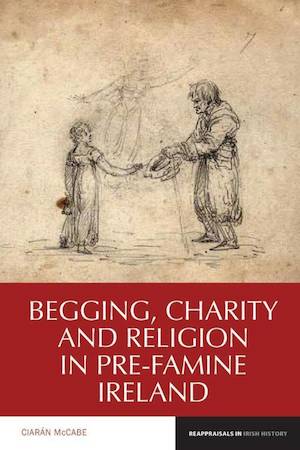
Begging, Charity and Religion in Pre-Famine Ireland
Beggars and begging were ubiquitous features of pre-Famine Irish society, yet have gone largely unexamined by historians. This book explores at length for the first time the complex cultures of mendicancy, as well as how wider societal perceptions of and responses to begging were framed by social class, gender and religion. The study breaks new ground in exploring the challenges inherent in defining and measuring begging and alms-giving in pre-Famine Ireland, as well as the disparate ways in which mendicants were perceived by contemporaries. A discussion of the evolving role of parish vestries in the life of pre-Famine communities facilitates an examination of corporate responses to beggary, while a comprehensive analysis of the mendicity society movement, which flourished throughout Ireland in the three decades following 1815, highlights the significance of charitable societies and associational culture in responding to the perceived threat of mendicancy. The instance of the mendicity societies illustrates the extent to which Irish commentators and social reformers were influenced by prevailing theories and practices in the transatlantic world regarding the management of the poor and deviant. Drawing on a wide range of sources previously unused for the study of poverty and welfare, this book makes an important contribution to modern Irish social and ecclesiastical history.
Persuasion in Public Discourse: Cognitive and functional perspectives
This book approaches persuasion in public discourse as a rhetorical phenomenon that enables the persuader to appeal to the addressee’s intellectual and emotional capacities in a competing public environment. The aim is to investigate persuasive strategies from the overlapping perspectives of cognitive and functional linguistics. Both qualitative and quantitative analyses of authentic data (including English, Czech, Spanish, Slovene, Russian, and Hungarian) are grounded in the frameworks of functional grammar, facework and rapport management, classical rhetoric studies and multimodal discourse analysis and are linked to the constructs of (re)framing, conceptual metaphor and blending, mental space and viewpoint. In addition to traditional genres such as political speeches, news reporting, and advertising, the book also studies texts that examine book reviews, medieval medical recipes, public complaints or anonymous viral videos. Apart from discourse analysts, pragmaticians and cognitive linguists, this book will appeal to cognitive musicologists, semioticians, historical linguists and scholars of related disciplines.