
Books

The Contemporary Reader of Gender and Fat Studies
The Contemporary Reader of Gender and Fat Studies is a key reference work in contemporary scholarship situated at the intersection between Gender and Fat Studies, charting the connections and tensions between these two fields.
Comprising over 20 chapters from a range of diverse and international contributors, the Reader is structured around the following key themes: theorizing gender and fat; narrating gender and fat; historicizing gender and fat; institutions and public policy; health and medicine; popular culture and media; and resistance. It is an intersectional collection, highlighting the ways that “gender” and “fat” always exist in connection with multiple other structures, forms of oppression, and identities, including race, ethnicity, sexualities, age, nationalities, disabilities, religion, and class.
The Contemporary Reader of Gender and Fat Studies is essential reading for scholars and advanced students in Gender Studies, Sexuality Studies, Sociology, Body Studies, Cultural Studies, Psychology, and Health.
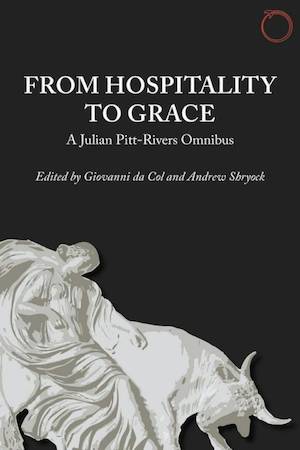
From Hospitality to Grace: A Julian Pitt-Rivers Omnibus
The Pitt-Rivers Omnibus brings together the definitive essays and lectures of the influential social anthropologist Julian A. Pitt-Rivers, a corpus of work that has, until now, remained scattered, untranslated, and unedited. Illuminating the themes and topics that he engaged throughout his life—including hospitality, grace, the symbolic economy of reciprocity, kinship, the paradoxes of friendship, ritual logics, the anthropology of dress, and more—this omnibus brings his reflections to new life.
Holding Pitt-Rivers’s diversity of subjects and ethnographic foci in the same gaze, this book reveals a theoretical unity that ran through his work and highlights his iconic wit and brilliance. Striking at the heart of anthropological theory, the pieces here explore the relationship between the mental and the material, between what is thought and what is done.
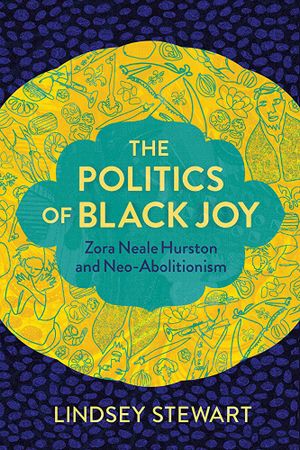
The Politics of Black Joy: Zora Neale Hurston and Neo-Abolitionism
In the antebellum period, slave owners weaponized southern Black joy to argue for enslavement while abolitionists wielded sorrow by emphasizing racial oppression. Both arguments were so effective that a political uneasiness on the subject still lingers. Lindsey Stewart wades into these uncomfortable waters by developing Zora Neale Hurston’s contributions to political theory and philosophy of race by introducing the politics of joy as a refusal of neo-abolitionism, a political tradition that reduces southern Black life to tragedy or social death. Zora Neale Hurston’s essays, Beyoncé’s Lemonade, and figures including Frederick Douglass, W.E.B. Du Bois, Toni Morrison, Angela Davis, Saidiya Hartman, Imani Perry, Eddie Glaude, and Audra Simpson offer crucial insights and new paths for our moment. Examining popular conceptions of Black political agency at the intersection of geography, gender, class, and Black spirituality, The Politics of Black Joy is essential reading.

Jihad and Islam in World War I
This books investigates the background and nature of the Ottoman Jihad proclamation, but also its effects in the wider Middle East. It looks at the German hopes and British fears of a worldwide rising of Muslims in the colonial empires. It also discusses the fierce academic debates caused by the Jihad proclamation, in which the 1915 manifesto of Leiden Islam scholar Christiaan Snouck Hurgronje (Holy War Made in Germany) played a key role.This title was made Open Access by libraries from around the world through Knowledge Unlatched.
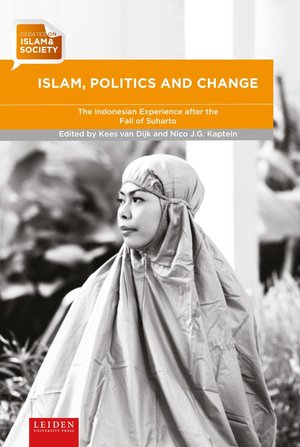
Islam, Politics and Change: The Indonesian Experience after the Fall of Suharto
After violent protests all over the country had forced President Suharto to step down in 1998, Indonesia successfully made the transition from an authoritarian state to a democracy. In this book Indonesian scholars attached to Islamic universities and Dutch researchers investigate what happened since and what the consequences are of the growing influence of orthodoxy and radicalism, which already visible before 1998, only got stronger.This title was made Open Access by libraries from around the world through Knowledge Unlatched.

Vaccine Rhetorics
Addresses the underlying rhetoric of vaccination debates by examining the full spectrum of viewpoints to develop a nuanced way forward.
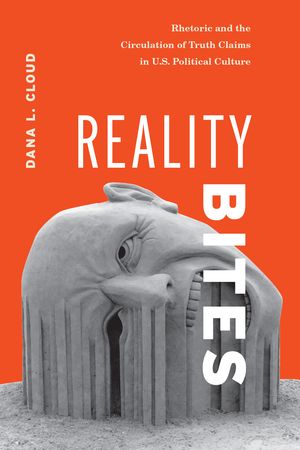
Reality Bites: Rhetoric and the Circulation of Truth Claims in U.S. Political Culture
Fake news, alternative facts, post truth—terms all too familiar to anyone in U.S. political culture and concepts at the core of Dana L. Cloud’s new book, Reality Bites, which explores truth claims in contemporary political rhetoric in the face of widespread skepticism regarding the utility, ethics, and viability of an empirical standard for political truths. Cloud observes how appeals to truth often assume—mistakenly—that it is a matter of simple representation of facts. However, since neither fact-checking nor “truthiness” can respond meaningfully to this problem, she argues for a rhetorical realism—the idea that communicators can bring knowledge from particular perspectives and experiences into the domain of common sense.
Through a series of case studies—including the PolitiFact fact-checking project, the Planned Parenthood “selling baby parts” scandal, the Chelsea Manning and Edward Snowden cases, Neil DeGrasse Tyson’s Cosmos, the rhetoric of Thomas Paine and the American Revolution, and the Black Lives Matter movement—Cloud advocates for the usefulness of narrative, myth, embodiment, affect, and spectacle in creating accountability in contemporary U.S. political rhetoric. If dominant reality “bites”—in being oppressive and exploitative—it is time, Cloud argues, for those in the reality-based community to “bite back.”
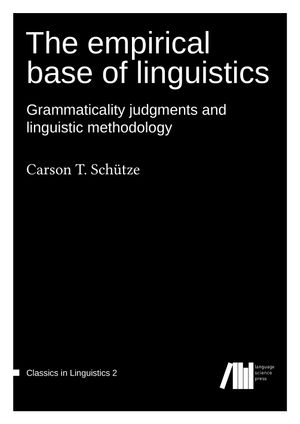
The Empirical Base of Linguistics: Grammaticality judgments and linguistic methodology
Throughout much of the history of linguistics, grammaticality judgments – intuitions about the well-formedness of sentences – have constituted most of the empirical base against which theoretical hypothesis have been tested. Although such judgments often rest on subtle intuitions, there is no systematic methodology for eliciting them, and their apparent instability and unreliability have led many to conclude that they should be abandoned as a source of data.

Precarious Crossings: Immigration, Neoliberalism, and the Atlantic
Examines the underlying precarity in twenty-first-century immigrant fiction and reveals the contradictions inherent in neoliberalism as an ideology.
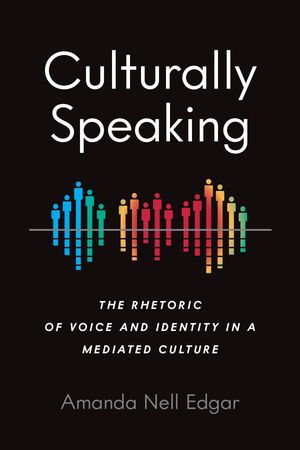
Culturally Speaking: The Rhetoric of Voice and Identity in a Mediated Culture
Examines racial and gendered dimensions of voice in American culture, showing how vocal sound helps to shape cultural power dynamics.

Constructing Nineteenth-Century Religion: Literary, Historical, and Religious Studies in Dialogue
Examines the ways in which religion was constructed as a category and region of experience in nineteenth-century literature and culture.

Why We Play: An Anthropological Study
Whether it’s childhood make-believe, the theater, sports, or even market speculation, play is one of humanity’s seemingly purest activities: a form of entertainment and leisure and a chance to explore the world and its possibilities in an imagined environment or construct. But as Roberte Hamayon shows in this book, play has implications that go even further than that. Exploring play’s many dimensions, she offers an insightful look at why play has become so ubiquitous across human cultures. Hamayon explores facets of play such as learning, interaction, emotion, strategy, luck, and belief, and she emphasizes the crucial ambiguity between fiction and reality that is at the heart of play as a phenomenon. Revealing how consistent and coherent play is, she ultimately shows it as a unique modality of action that serves an invaluable role in the human experience.
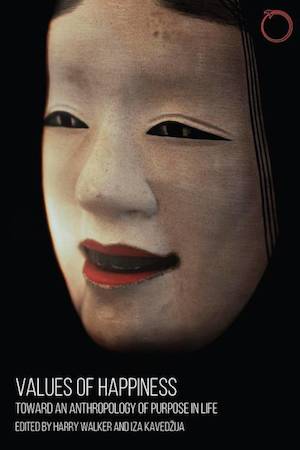
Values of Happiness: Toward an Anthropology of Purpose in Life
How people conceive of happiness reveals much about who they are and the values they hold dear. Drawing on ethnographic insights from diverse field sites around the world, this book offers a unique window onto the ways in which people grapple with fundamental questions about how to live and what it means to be human. Developing a distinctly anthropological approach concerned less with gauging how happy people are than with how happiness figures as an idea, mood, and motive in everyday life, the book explores how people strive to live well within challenging or even hostile circumstances. The contributors explore how happiness intersects with dominant social values as well as an array of aims and aspirations that are potentially conflicting, demonstrating that not every kind of happiness is seen as a worthwhile aim or evaluated in positive moral terms.

Before and After Gender: Sexual Mythologies of Everyday Life
Written in the early 1970s amidst widespread debate over the causes of gender inequality, Marilyn Strathern’s Before and After Gender was intended as a widely accessible analysis of gender as a powerful cultural code and sex as a defining mythology. But when the series for which it was written unexpectedly folded, the manuscript went into storage, where it remained for more than four decades. This book finally brings it to light, giving the long-lost feminist work—accompanied here by an afterword from Judith Butler—an overdue spot in feminist history. Strathern incisively engages some of the leading feminist thinkers of the time. Building with characteristic precision toward a bold conclusion in which she argues that we underestimate the materializing grammars of sex and gender at our own peril, she offers a powerful challenge to the intransigent mythologies of sex that still plague contemporary society. The result is a sweeping display of Strathern’s vivid critical thought.

Verse and Transmutation: A Corpus of Middle English Alchemical Poetry (Critical Editions and Studies)
Identifies and investigates a corpus of twenty-one anonymous Middle English recipes for the philosophers’ stone dating from the fifteenth century.Verse and Transmutation: A Corpus of Middle English Alchemical Poetry identifies and investigates a corpus of twenty-one anonymous recipes for the philosophers’ stone dating from the fifteenth century. These were circulated and received in association with each other until the mid-seventeenth century, when a number of them appeared in Elias Ashmole’s Theatrum Chemicum Britannicum.These editions are the first to make this previously unidentified corpus available to researchers. The accompanying studies discover the complex histories of these alchemica, in plain and illuminated manuscripts, as anonyma and in attribution to famous authors, and in private and institutional, medical and academic book collections. Together, they offer novel insights into the role of alchemy and poetry in late medieval and early modern England.This title was made Open Access by libraries from around the world through Knowledge Unlatched.
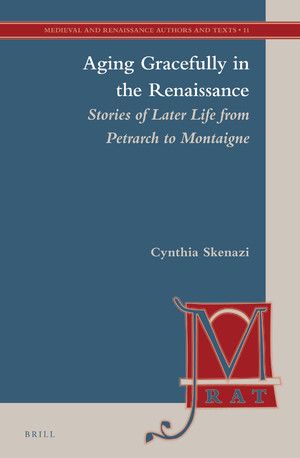
Aging Gracefully in the Renaissance: Stories of Later Life from Petrarch to Montaigne
Cynthia Skenazi explores in this book a shift in attitudes towards aging and provides a historical perspective on a crucial problem of our time.In Aging Gracefully in the Renaissance: Stories of Later Life from Petrarch to Montaigne Cynthia Skenazi explores a shift in attitudes towards aging and provides a historical perspective on a crucial problem of our time.From the late fourteenth to the end of the sixteenth centuries, the elderly subject became a point of new social, medical, political, and literary attention on both sides of the Alps. A movement of secularization tended to dissociate old age from the Christian preparation for death, re-orienting the concept of aging around pragmatic matters such as health care, intergenerational relationships, and accrued insights one might wish to pass along. Such changes were accompanied by an increasing number of personal accounts of later life.This title was made Open Access by libraries from around the world through Knowledge Unlatched.
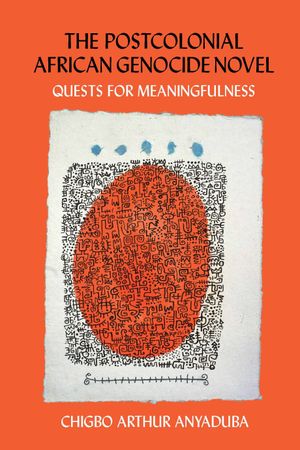
The Postcolonial African Genocide Novel: Quests for Meaningfulness
In The Postcolonial African Genocide Novel, Chigbo Anyaduba examines fictional responses to mass atrocities occurring in postcolonial Africa. Through a comparative reading of novels responding to the genocides of the Igbo in Nigeria (1966-1970) and the Tutsi in Rwanda (1990-1994), the book underscores the ways that literary encounters with genocides in Africa’s postcolonies have attempted to reimagine the conditions giving rise to exterminatory forms of mass violence. The book concretizes and troubles one of the apparent truisms of genocide studies, especially in the context of imaginative literature: that the reality of genocide more often than not resists meaningfulness. Particularly given the centrality of this truism to artistic responses to the Holocaust and to genocides more generally, Anyaduba tracks the astonishing range of meanings drawn by writers at a series of (temporal, spatial, historical, cultural and other) removes from the realities of genocide in Africa’s postcolonies, a set of meanings that are often highly‐specific and irreducible to maxims or foundational cases. The book shows that in the artistic projects to construct meanings against genocide’s nihilism writers of African genocides deploy tropes that while significantly oriented to African concerns are equally shaped by the representational conventions and practices associated with the legacies of the Holocaust.

Challenging Communion: The Eucharist and Middle English Literature
In this book, Jennifer Garrison examines literary representations of the central symbol of later medieval religious culture: the Eucharist. In contrast to scholarship that depicts mainstream believers as enthusiastically and simplistically embracing the Eucharist, Challenging Communion: The Eucharist and Middle English Literature identifies a pervasive Middle English literary tradition that rejects simplistic notions of eucharistic promise. Through new readings of texts such as Piers Plowman, A Revelation of Love, The Book of Margery Kempe, and John Lydgate’s religious poetry, Garrison shows how writers of Middle English often take advantage of the ways in which eucharistic theology itself contests the boundaries between the material and the spiritual, and how these writers challenge the eucharistic idea of union between Christ and the community of believers.

Einführung in die grammatische Beschreibung des Deutschen: Second Edition: Zweite, überarbeitete Auflage
This textbook is an introduction to the descriptive grammar of German on the levels of phonetics, phonology, morphology, syntax, and graphemics. It is a recommended read for anyone interested in the grammar of German and especially for students of German philology. The book focuses on how grammatical generalizations are derived from concrete linguistic material while covering a huge number of the important phenomena of German grammar. No specific theoretical framework is adopted in the book but it constitutes an ideal starting point for reading more theory-specific textbooks and accessible research papers. Despite its length, the book is suitable for inclusion in all sorts of curricula, mostly because the five parts of the book can be read separately. Almost all chapters contain a large number of exercises, many of which come with solutions in the appendix. The second edition was prepared based to a large extent on reader feedback. It introduces numerous corrections and improvements. Most prominently, the chapter on phonology was completely rewritten so as to provide a better description of the relevant generalizations of German syllable structure.
Advances in the Analysis of Spanish Exclamatives
Advances in the Analysis of Spanish Exclamatives is the first book entirely devoted to Spanish exclamatives, a special sentence type often overlooked by contemporary linguists and neglected in standard grammatical descriptions. The seven essays in this volume, each by a leading specialist on the topic, scrutinize the syntax, as well as the semantic and pragmatic aspects, of exclamations on theoretical grounds. The book begins by summarizing, commenting on, and evaluating previous descriptive and theoretical contributions on Spanish exclamatives. This introductory overview also contains a detailed classification of Spanish exclamative grammatical types, along with an analysis of their main properties.
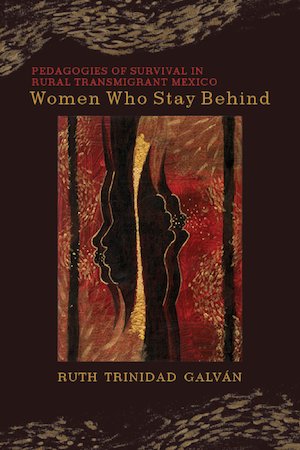
Women Who Stay Behind: Pedagogies of Survival in Rural Transmigrant Mexico
Women Who Stay Behind examines the social, educational, and cultural resources rural Mexican women employ to creatively survive the conditions created by the migration of loved ones. Using narrative, research, and theory, Ruth Trinidad Galván presents a hopeful picture of what is traditionally viewed as the abject circumstances of poor and working-class people in Mexico who are forced to migrate to survive.

Reimagining Marginalized Foods: Global Processes, Local Places
This volume brings together ethnographically based anthropological analyses of shifting meanings and representations associated with the foods, ingredients, and cooking practices that of marginalized and/or indigenous cultures. Contributors are particularly interested in how these foods intersect with politics, nationhood and governance, identity, authenticity, and conservation.

Paleonutrition
The study of paleonutrition provides valuable insights into shifts and changes in human history. This is the most comprehensive book on the topic. Intended for students and professionals, it describes the nature of paleonutrition studies, reviews the history of research, discusses methodological issues in the reconstruction of prehistoric diets, presents theoretical frameworks frequently used in research, and showcases examples in which analyses have been successfully conducted on prehistoric individuals, groups, and populations. It offers an integrative approach to understanding state-of-the-art anthropological dietary, health, and nutritional assessments. The most recent and innovative methods used to reconstruct prehistoric diets are discussed, along with the major ways in which paleonutrition data are recovered, analyzed, and interpreted. The book includes five contemporary case studies that illustrate the mutually beneficial linkages between ethnography and archaeology.

Nature Inc.: Environmental Conservation in the Neoliberal Age
With global wildlife populations and biodiversity riches in peril, it is obvious that innovative methods of addressing our planet’s environmental problems are needed. But is “the market” the answer? Nature™ Inc. brings together cutting-edge research by respected scholars from around the world to analyze how “neoliberal conservation” is reshaping human–nature relations.

Nature and Antiquities: The Making of Archaeology in the Americas
Nature and Antiquities analyzes how the study of indigenous peoples was linked to the study of nature and natural sciences. Leading scholars break new ground and entreat archaeologists to acknowledge the importance of ways of knowing in the study of nature in the history of archaeology.
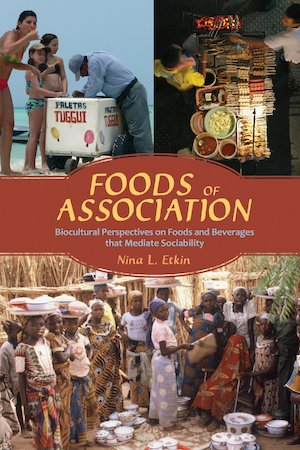
Foods of Association: Biocultural Perspectives on Foods and Beverages that Mediate Sociability
This fascinating book examines the biology and culture of foods and beverages that are consumed in communal settings, with special attention to their health implications. Nina Etkin covers a wealth of topics, exploring human evolutionary history, the Slow Food movement, ritual and ceremonial foods, caffeinated beverages, spices, the street foods of Hawaii and northern Nigeria, and even bottled water. Her work is framed by a biocultural perspective that considers both the physiological implications of consumption and the cultural construction and circulation of foods.
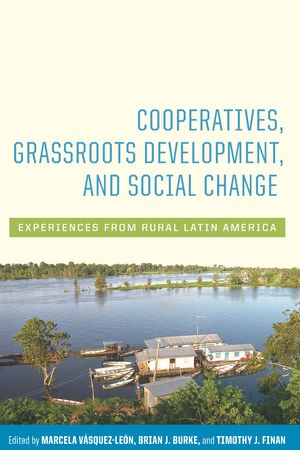
Cooperatives, Grassroots Development, and Social Change: Experiences from Rural Latin America
“Cooperatives, Grassroots Development, and Social Change” presents examples from Paraguay, Brazil, and Colombia, examining what is necessary for smallholder agricultural cooperatives to support holistic community-based development in peasant communities. Reporting on successes and failures of these cooperative efforts, the contributors offer analyses and strategies for supporting collective grassroots interests. Illustrating how poverty and inequality affect rural people, they reveal how cooperative organizations can support grassroots development strategies while negotiating local contexts of inequality amid the broader context of international markets and global competition.
The contributors explain the key desirable goals from cooperative efforts among smallholder producers. They are to provide access to more secure livelihoods, expand control over basic resources and commodity chains, improve quality of life in rural areas, support community infrastructure, and offer social spaces wherein small farmers can engage politically in transforming their own communities.
The stories in “Cooperatives, Grassroots Development, and Social Change” reveal immense opportunities and challenges. Although cooperatives have often been framed as alternatives to the global capitalist system, they are neither a panacea nor the hegemonic extension of neoliberal capitalism. Through one of the most thorough cross-country comparisons of cooperatives to date, this volume shows the unfiltered reality of cooperative development in highly stratified societies, with case studies selected specifically because they offer important lessons regarding struggles and strategies for adapting to a changing social, economic, and natural environment.
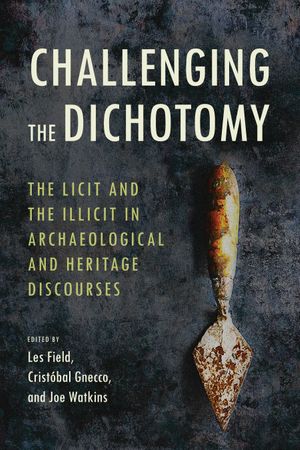
Challenging the Dichotomy: The Licit and the Illicit in Archaeological and Heritage Discourses
“Challenging the Dichotomy” explores how dichotomies regarding heritage dominate the discourse of ethics, practices, and institutions. Examining issues of cultural heritage law, policy, and implementation, editors Les Field, Cristóbal Gnecco, and Joe Watkins guide the focus to important discussions of the binary oppositions of the licit and the illicit, the scientific and the unscientific, incorporating case studies that challenge those apparent contradictions.
Utilizing both ethnographic and archaeological examples, contributors ask big questions vital to anyone working in cultural heritage. What are the issues surrounding private versus museum collections? What is considered looting? Is archaeology still a form of colonialization? The contributors discuss this vis-à-vis a global variety of contexts and cultures from the United States, South Africa, Argentina, New Zealand, Honduras, Colombia, Palestine, Greece, Canada, and from the Nasa, Choctaw, and Maori nations.
“Challenging the Dichotomy” underscores how dichotomies—such as licit/illicit, state/nonstate, public/private, scientific/nonscientific—have been constructed and how they are now being challenged by multiple forces. Throughout the eleven chapters, contributors provide examples of hegemonic relationships of power between nations and institutions. Scholars also reflect on exchanges between Western and non-Western epistemologies and ontologies.
The book’s contributions are significant, timely, and inclusive. “Challenging the Dichotomy” examines the scale and scope of “illicit” forms of excavation, as well as the demands from minority and indigenous subaltern peoples to decolonize anthropological and archaeological research.

Big Water: The Making of the Borderlands Between Brazil, Argentina, and Paraguay
Big Water explores four centuries of the overlapping histories of Brazil, Argentina, and Paraguay (the Triple Frontier), and the colonies that preceded them. Examining an important area that includes some of the first national parks established in Latin America and one of the world’s largest hydroelectric dams, this transnational approach illustrates how these three nation-states have interacted over time. From the Jesuit reductions in the seventeenth century to the flows of capital and goods accelerated by contemporary trade agreements, the Triple Frontier region has proven fundamental to the development of Brazil, Argentina, and Paraguay, as well as to the Southern Cone and South America itself. Although historians from each of these three countries have tended to construct narratives that stop at their respective borders, the contributors call for a reinterpretation that goes beyond the material and conceptual boundaries of the Triple Frontier. In offering a transnational approach, Big Water helps transcend nation-centered blind spots and approach new understandings of how space and society have developed throughout Latin America. These essays complicate traditional frontier histories and balance the excessive weight previously given to empires, nations, and territorial expansion. Overcoming stagnant comparisons between national cases, the research explores regional identity beyond border and geopolitical divides. Thus, Big Water focuses on the uniquely overlapping character of the Triple Frontier and emphasizes a perspective usually left at the periphery of national histories.

Einführung in die grammatische Beschreibung des Deutschen: First Edition
This textbook is an introduction to the descriptive grammar of German on the levels of phonetics, phonology, morphology, syntax, and graphemics. It is a recommended read for anyone interested in the grammar of German and especially for students of German philology. The book focuses on how grammatical generalizations are derived from concrete linguistic material while covering a huge number of the important phenomena of German grammar. No specific theoretical framework is adopted in the book but it constitutes an ideal starting point for reading more theory-specific textbooks and accessible research papers. Despite its length, the book is suitable for inclusion in all sorts of curricula because more advanced parts are clearly marked and can be skipped, and the five parts of the book can be read separately. Almost all chapters contain a large number of exercises with complete solutions in the appendix.