
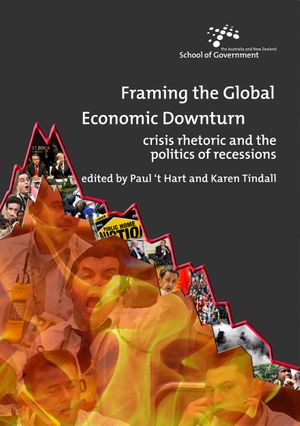


Framing the Global Economic downturn: Crisis rhetoric and the politics of recessions
The global economic downturn that followed the collapse of major US financial institutions is no doubt the most significant crisis of our times. Its effects on corporate and governmental balance sheets have been devastating, as have been its impacts on the employment and well being of tens of millions of citizens. It continues to pose major challenges to national policymakers and institutions around the world. Managing public uncertainty and anxiety is vital in coping with financial crises. This requires not just prompt action but, most of all, persuasive communication by government leaders. At the same time, the very occurrence of such crises raises acute questions about the effectiveness and robustness of current government policies and institutions. With the stakes being so high, defining and interpreting what is going on, how and why it happened, and what ought to be done now become key questions in the political and policy struggles that crises invariably unleash. In this volume, we study how heads of government, finance ministers and national bank governors in eight countries as well as the EU engage in such ‘framing contests’, and how their attempts to interpret the cascading events of the economic downturn were publicly received. Using systematic content analysis of speeches and media coverage, this volume offers a unique comparative assessment of public leadership in times of crisis.
| Publication Language | English |
|---|---|
| Publication Access Type | Freemium |
| Publication Author | Paul `t Hart |
| Publisher | ANU Press |
| Publication Year | 2023 |
| Publication Type | eBooks |
| ISBN/ISSN | 9780000000000 |
| Publication Category | Open Access Books |
Kindly Register and Login to Shri Guru Nanak Dev Digital Library. Only Registered Users can Access the Content of Shri Guru Nanak Dev Digital Library.
You must be logged in to post a review.





Reviews
There are no reviews yet.