
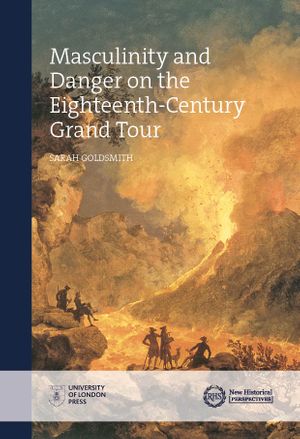

Masculinity and Danger on the Eighteenth-Century Grand Tour
The Grand Tour was a journey to continental Europe undertaken by British nobility and wealthy landed gentry during the seventeenth and eighteenth centuries. As a rite of passage, the Tour also played an important role in the formation of contemporary notions of elite masculinity. Examining letters, diaries and other records left by Grand Tourists, tutors and their families, this book demonstrates how the Tour was used to educate elite young men in a wide variety of skills, virtues and masculine behaviours that extended well beyond polite society. Sarah Goldsmith argues that dangerous experiences, in particular, were far more central to the Tour as a means of constructing Britain’s next generation of leaders than has previously been acknowledged. Influenced by aristocratic concepts of honour and cultures of military leadership, elites viewed experiences of danger and hardship as powerfully transformative and therefore as central to the process of constructing masculinity. Far from viewing danger as a disruptive force, Grand Tourists willingly tackled a variety of social, geographical and physical perils, gambling their way through treacherous landscapes; scaling mountains, volcanoes and glaciers; and encountering war and disease. Through this innovative study of danger, Goldsmith offers a revision of eighteenth-century elite masculine culture and the critical role the Grand Tour played within this.
| Publication Language | English |
|---|---|
| Publication Access Type | Freemium |
| Publication Author | Sarah Goldsmith |
| Publisher | University of London Press |
| Publication Year | 2023 |
| Publication Type | eBooks |
| ISBN/ISSN | 9780000000000 |
| Publication Category | Open Access Books |
Kindly Register and Login to Shri Guru Nanak Dev Digital Library. Only Registered Users can Access the Content of Shri Guru Nanak Dev Digital Library.
You must be logged in to post a review.




Reviews
There are no reviews yet.