
Open Access Books

Whistleblowing, Communication and Consequences: Lessons from The Norwegian National Lottery
Whistleblowing, Communication and Consequences offers the first in-depth analysis of the most publicized, and morally complex, case of whistleblowing in recent European history: the Norwegian national lottery, Norsk Tipping. With contributions from the whistleblower himself, as well as from key voices in the field, this book offers unique perspectives and insights into not only this fascinating case, but into whistleblowing and wrongdoing in organizations more broadly. An international team of scholars use fourteen different theoretical lenses to show the complex and multi-faceted nature of whistleblowing. The book begins with an ethnographic account by the whistleblower story and proceeds into an analysis of the literature and conceptual topics related to that whistleblowing incident to present the lessons that can be learnt from this extreme example of institutional failure.This fascinating, complex, and multi-theoretical book will be of great interest to scholars, students and industry leaders in the areas of public relations, corporate communication, leadership, corporate social responsibility, whistleblowing and organizational resistance.

Vienna: Still a Just City?
This book explores and debates the urban transformations that have taken place in Vienna over the past 30 years and their consequences in policy fields such as labour and housing, political and social participation and the environment. Historically, European cities have been characterised by a strong association between social cohesion, quality of life, economic ambition and a robust State. Vienna is an excellent example for that. In more recent years, however, cities were pressured to change policy principles and mechanisms in the context of demographic shifts, post-industrial transformations and welfare recalibration which have led to worsened social conditions in many cities. Each chapter in this volume discusses Vienna’s responses to these pressures in key policy arenas, looking at outcomes from the context-specific local arrangements. Against a theoretical framework debating the European city as a model of inclusion and social justice, authors explore the local capacity to innovate urban policies and to address new social risks, while paying attention to potential trade-offs.The book questions and assesses the city’s resilience using time series and an institutional analysis of four key dimensions that characterise the European city model within the context of post-industrial transition: redistribution, recognition, representation and sustainability. It offers a multiscalar perspective of urban governance through labour, housing, participatory and environmental policies, bringing together different levels and public policy types.Vienna: Still a Just City? is aimed at academics, researchers and policy-makers in urban studies, including urban sociology, ecology, geography and welfare.

Imagining Earth: Concepts of Wholeness in Cultural Constructions of Our Home Planet
While concepts of Earth have a rich tradition, more recent examples show a distinct quality: Though ideas of wholeness might still be related to mythical, religious, or utopian visions of the past, ”Earth” itself has become available as a whole. This raises several questions: How are the notions of one Earth or our Planet imagined and distributed? What is the role of cultural imagination and practices of signification in the imagination of ”the Earth”? Which theoretical models can be used or need to be developed to describe processes of imagining Planet Earth? This collection invites a wide range of perspectives from different fields of the Humanities to explore the means of imagining Earth.

Valuing Nature: The Roots of Transformation
When a group of liberal arts students embark on a university assignment about the natural environment, no one could have quite prepared them for the bewildering array of questions and provocations to confront them in their task. What starts out as an earnest attempt to understand nature in the modern world, turns into a philosophical and practical tangle that only a good transdisciplinary education can provide. Can anyone save the day and actually start to value ‘nature’? And if they can’t, then what’s stopping them?The idea of ‘valuing nature’ harmonises diverse areas of natural resource management and is an important dimension of scientific and practical work concerned with managing ecosystems and habitats for sustainability. This graphic book takes the reader on an exploration of the issues that arise from this growing interest and concern in the valuation of nature. Set around the premise of a ‘motley’ group of undergraduates endeavouring to complete a university assignment on ‘nature in the modern world’, the book explores: the many and diverse meanings people assign to nature the different ways the relationship between people and nature might be characterisedthe many values systems people hold for the natural worldthe options and approaches society can deploy to manage it the extent to which we need entirely new economic systems to protect and sustain nature. This highly interdisciplinary book invites consideration of a range of philosophical and applied debates and questions. Written in an accessible style, it is an ideal undergraduate text in the fields of ecology, human and physical geography, conservation science, environment, social science and spatial planning, as well as a general primer for graduate natural and social scientists embarking on interdisciplinary research in the natural resource management arena.
Urban Modernity in the Contemporary Gulf: Obsolescence and Opportunities
Urban Modernity in the Contemporary Gulf offers a timely and engaging discussion on architectural production in the modernization era in the Arabian Peninsula. Focusing on the 20th century as a starting point, the book explores the display of transnational architectural practices resulting in different notions of locality, cosmopolitanism, and modernity. Contextually, with an eye on the present, the book reflects on the initiatives that recently re-engaged with the once ville moderne which, meanwhile, lost its pivotal function and meaning.A city within a bigger city, the urban fabric produced during the modernization era has the potential to narrate the social growth, East–West dynamics, and citizens’ memories of the recent past. Reading obsolescence as an opportunity, the book looks into this topic from a cross-country perspective. It maps, reads and analyses the notion of modern heritage in relation to the contemporary city and looks beyond physical transformations to embrace cultural practices and strategies of urban re-appropriation. It interrogates the value of modern architecture in the non-West, examining how academic research is expanding the debate on Gulf urbanism, and describes how practices of reuse could foster rethinking neglected areas, also addressing land consumption in the GCC. Presenting a diverse and geographically inclusive authorship, which combines established and up-and-coming researchers in the field, this is an important reference for academics and upper-level students interested in heritage studies, post-colonial urbanism, and architecture in the non-West.
Urban Blue Spaces: Planning and Design for Water, Health and Well-Being
This book presents an evidence-based approach to landscape planning and design for urban blue spaces that maximises the benefits to human health and well-being while minimising the risks. Based on applied research and evidence from primary and secondary data sources stemming from the EU-funded BlueHealth project, the book presents nature-based solutions to promote sustainable and resilient cities.Numerous cities around the world are located alongside bodies of water in the form of coastlines, lakes, rivers and canals, but the relationship between city inhabitants and these water sources has often been ambivalent. In many cities, water has been polluted, engineered or ignored completely. But, due to an increasing awareness of the strong connections between city, people, nature and water and health, this paradigm is shifting.The international editorial team, consisting of researchers and professionals across several disciplines, leads the reader through theoretical aspects, evidence, illustrated case studies, risk assessment and a series of validated tools to aid planning and design before finishing with overarching planning and design principles for a range of blue-space types. Over 200 full-colour illustrations accompany the case-study examples from geographic locations all over the world, including Portugal, the United Kingdom, China, Canada, the US, South Korea, Singapore, Norway and Estonia. With green and blue infrastructure now at the forefront of current policies and trends to promote healthy, sustainable cities, Urban Blue Spaces is a must-have for professionals and students in landscape planning, urban design and environmental design. Open Access for the book was funded by the European Union’s Horizon 2020 research and innovation programme under grant agreement No 666773

The University Revolution: Outline of a Processual Theory of Modern Higher Education
Few institutions in modern society are as significant as universities, yet our historical and sociological understanding of the role of higher education has not been substantially updated for decades. By revisiting the emergence and transformation of higher education since 1800 using a novel processual approach, this book recognizes these developments as having been as central to constituting the modern world as the industrial and democratic revolutions. This new interpretation of the role of universities in contemporary society promises to re-orient our understanding of the importance of higher education in the past and future development of modern societies. It will therefore appeal to scholars of social science and history with interests in social history and social change, education, the professions and inequalities.

Unifying Physics of Accelerators, Lasers and Plasma
Unifying Physics of Accelerators, Lasers and Plasma introduces the physics of accelerators, lasers and plasma in tandem with the industrial methodology of inventiveness, a technique that teaches that similar problems and solutions appear again and again in seemingly dissimilar disciplines. This unique approach builds bridges and enhances connection

Understanding Drugs Markets: An Analysis of Medicines, Regulations and Pharmaceutical Systems in the Global South
Drawing on anthropology, historical sociology and social-epidemiology, this multidisciplinary book investigates how pharmaceuticals are produced, distributed, prescribed, (and) consumed, and regulated in order to construct a comprehensive understanding of the issues that drive (medicine) pharmaceutical markets in the Global South today. Based on primary research conducted in Benin and Ghana, and additional data collected in Cambodia and the Ivory Coast, this volume uses artemisinin-based combination therapies (ACTs) against malaria as a central case study. It highlights the influence of the countries colonial and post-colonial history on their models for state regulation, production, and distribution, explores the determining role transnational actors as well as industries from the North but also and increasingly from the South play in influencing local pharmaceutical markets and looks at the behaviour of health care professionals and individuals. Stepping back, the authors then unpick the pharmaceuticalization process and the multiple regulations at stake by looking at the workings of, and linkages between, (biomedical health) pharmaceutical systems, (representatives of companies) industries, actors in private distribution, and consumer practices. Providing a thorough comparative analysis of the advantages and disadvantages of different pharmaceutical systems, it is an important contribution to the literature on pharmaceutalization and the governance of medication. It is of interest to students, researchers and policy-makers interested in medical anthropology, the sociology of health and illness, global health, healthcare management and pharmacy. The Open Access version of this book, available at http://www.taylorfrancis.com/books/9780429329517, has been made available under a Creative Commons Attribution-Non Commercial-No Derivatives 4.0 license.

Understanding Disability Throughout History: Interdisciplinary Perspectives in Iceland from Settlement to 1936
Understanding Disability Throughout History explores seldom-heard voices from the past by studying the hidden lives of disabled people before the concept of disability existed culturally, socially and administratively. The book focuses on Iceland from the Age of Settlement, traditionally considered to have taken place from 874 to 930, until the 1936 Law on Social Security (Lög um almannatryggingar), which is the first time that disabled people were referenced in Iceland as a legal or administrative category. Data sources analysed in the project represent a broad range of materials that are not often featured in the study of disability, such as bone collections, medieval literature and census data from the early modern era, archaeological remains, historical archives, folktales and legends, personal narratives and museum displays. The ten chapters include contributions from multidisciplinary team of experts working in the fields of Disability Studies, History, Archaeology, Medieval Icelandic Literature, Folklore and Ethnology, Anthropology, Museum Studies, and Archival Sciences, along with a collection of post-doctoral and graduate students. The volume will be of interest to all scholars and students of disability studies, history, medieval studies, ethnology, folklore, and archaeology.
Trust and Transparency in an Age of Surveillance
Investigating the theoretical and empirical relationships between transparency and trust in the context of surveillance, this volume argues that neither transparency nor trust provides a simple and self-evident path for mitigating the negative political and social consequences of state surveillance practices. Dominant in both the scholarly literature and public debate is the conviction that transparency can promote better-informed decisions, provide greater oversight, and restore trust damaged by the secrecy of surveillance. The contributions to this volume challenge this conventional wisdom by considering how relations of trust and policies of transparency are modulated by underlying power asymmetries, sociohistorical legacies, economic structures, and institutional constraints. They study trust and transparency as embedded in specific sociopolitical contexts to show how, under certain conditions, transparency can become a tool of social control that erodes trust, while mistrust—rather than trust—can sometimes offer the most promising approach to safeguarding rights and freedom in an age of surveillance. The first book addressing the interrelationship of trust, transparency, and surveillance practices, this volume will be of interest to scholars and students of surveillance studies as well as appeal to an interdisciplinary audience given the contributions from political science, sociology, philosophy, law, and civil society.

True Cost Accounting for Food: Balancing the Scale
This book explains how True Cost Accounting is an effective tool we can use to address the pervasive imbalance in our food system. Calls are coming from all quarters that the food system is broken and needs a radical transformation. A system that feeds many yet continues to create both extreme hunger and diet-related diseases, and one which has significant environmental impacts, is not serving the world adequately. This volume argues that True Cost Accounting in our food system can create a framework for a systemic shift. What sounds on the surface like a practice relegated to accountants is ultimately a call for a new lens on the valuation of food and a new relationship with the food we eat, starting with the reform of a system out of balance. From the true cost of corn, rice and water, to incentives for soil health, the chapters economically compare conventional and regenerative, more equitable farming practices in and food system structures, including taking an unflinching look at the true cost of cheap labour. Overall, this volume points towards the potential for our food system to be more human-centred than profit-centred and one that has a more respectful relationship to the planet. It sets forth a path forward based on True Cost Accounting for food. This path seeks to fix our current food metrics, in policy and in practice, by applying a holistic lens that evaluates the actual costs and benefits of different food systems, and the impacts and dependencies between natural systems, human systems, agriculture and food systems. This volume is essential reading for professionals and policymakers involved in developing and reforming the food system, as well as students and scholars working on food policy, food systems and sustainability.

Translating Feminism in China: Gender, Sexuality and Censorship
This book explores translation of feminism in China through examining several Chinese translations of two typical feminist works: The Second Sex (TSS, Beauvoir 1949/1952) and The Vagina Monologues (TVM, Ensler 1998). TSS exposes the cultural construction of woman while TVM reveals the pervasiveness of sexual oppression toward women. The female body and female sexuality (including lesbian sexuality) constitute a challenge to the Chinese translators due to cultural differences and sexuality still being a sensitive topic in China. This book investigates from gender and feminist perspectives, how TSS and TVM have been translated and received in China, with special attention to how the translators meet the challenges. Since translation is the gateway to the reception of feminism, an examination of the translations should reveal the response to feminism of the translator as the first reader and gatekeeper, and how feminism is translated both ideologically and technically in China. The translators’ decisions are discussed within the social, historical, and political contexts. Translating Feminism in China discusses, among other issues:Feminist Translation: Practice, Theory, and StudiesTranslating the Female Body and SexualityTranslating LesbianismCensorship, Sexuality, and TranslationThis book will be relevant to postgraduate students and researchers of translation studies. It will also interest academics interested in feminism, gender studies and Chinese literature and culture.Zhongli Yu is Assistant Professor of Translation Studies at the University of Nottingham Ningbo China (UNNC).

Humour and Laughter in History: Transcultural Perspectives
Humour can be used as a »weapon« or as a means of coping with problematic historical events, especially in times of war and crisis. The book presents examples from different cultures (Russia, Europe, USA), from different historical epochs (from the Napoleonic era up to the current time) and from different medias (caricature, journalism, film). By looking at the individual cases it becomes possible to recognize some general structural patterns and to gain a deeper insight into the »functioning« of humour and laughter.

Towards a Climate-Neutral Europe: Curbing the Trend
This book explains the EU’s climate policies in an accessible way, to demonstrate the step-by-step approach that has been used to develop these policies, and the ways in which they have been tested and further improved in the light of experience. The latest changes to the legislation are fully explained throughout. The chapters throughout this volume show that no single policy instrument can bring down greenhouse gas emissions. The challenge facing the EU, as for many countries that have made pledges under the Paris Agreement, is to put together a toolbox of policy instruments that is coherent, delivers emissions reductions, and is cost-effective. The book stands out by the fact it covers the EU’s emissions trading system, the energy sector and other economic sectors, including their development in the context of international climate policy. This accessible book will be of great relevance to students, scholars and policy makers alike.
Theory and Methods for Sociocultural Research in Science and Engineering Education
Introducing original methods for integrating sociocultural and discourse studies into science and engineering education, this book provides a much-needed framework for how to conduct qualitative research in this field. The three dimensions of learning identified in the Next Generation Science Standards (NGSS) create a need for research methods that examine the sociocultural components of science education. With cutting-edge studies and examples consistent with the NGSS, this book offers comprehensive research methods for integrating discourse and sociocultural practices in science and engineering education and provides key tools for applying this framework for students, pre-service teachers, scholars, and researchers.

Sweden, Japan, and the Long Second World War: 1931-1945
We thank Ekman & Co AB and Gadelius Holding Ltd for their kind and generous support, making this research available online for free.Lottaz and Ottosson explore the intricate relationship between neutral Sweden and Imperial Japan during the latter’s 15 years of warfare in Asia and in the Pacific. While Sweden’s relationship with European Axis powers took place under the premise of existential security concerns, the case of Japan was altogether different. Japan never was a threat to Sweden, militarily or economically. Nevertheless, Stockholm maintained a close relationship with Tokyo until Japan’s surrender in 1945. This book explores the reasons for that and therefore provides a study on the rationale and the value of neutrality in the Long Second World War. Sweden, Japan, and the Long Second World War is a valuable resource for scholars of the Second World War and of the history of neutrality.
Sustainable Development in India: Groundwater Irrigation, Energy Use, and Food Production
This book explores and interrogates the food–water–energy nexus, arguably the most crucial factor in sustaining India’s economic development. The book sheds light on different experiences faced in states across India, including the consequences of electricity tariff reforms and related policies on irrigated agriculture. Part 1 focuses on the historical development of agriculture and social change in India, with special reference to the mode of responses and adaptations in social systems against the inherent low and erratic rainfall and resulting water stress in India during the pre-colonial period. Additionally, it investigates how colonial development destroyed social systems and discusses future development prospects. Part 2 discusses contemporary issues of agriculture and social change in India. A comprehensive examination of various important issues related to South Asian agricultural development in the past and in the present, this book will be a valuable reference for researchers of Asian development, sustainable development, environmental policy, South Asian Studies and Development Studies.
Sustainable Development Goal 3: Health and Well-being of Ageing in Hong Kong
Sustainable Development Goals (SDGs) aim to develop a better and sustainable future for the world and the goals are part of an action plan to address poverty, hunger, health, gender equity and various pressing world issues. One of these goals looks at health and wellness. Ageing populations have become a crucial issue worldwide and this short monograph explores ageing and how the consequences of an ageing population may affect our health care system through the case study on Hong Kong’s population.The book looks at several critical health issues related to ageing. The elderly, particularly those with low socioeconomic status, rely more on the acute-centric care rather than primary care. The book suggests that secondary care service may only be effective to limited extent as a healthcare measure and an optimum health care system should be one that focuses on primary care. The authors put forth a compelling argument for disease prevention and screening schemes and explain how they are more cost-effective and beneficial to the society and the system.This thoughtful book will provide beneficial insights into the relationship of ageing and sustainable development goals in the context of health and wellness for policy makers and healthcare professionals.
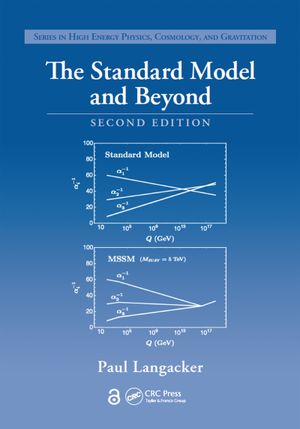
The Standard Model and Beyond
This new edition of The Standard Model and Beyond presents an advanced introduction to the physics and formalism of the standard model and other non-abelian gauge theories. It provides a solid background for understanding supersymmetry, string theory, extra dimensions, dynamical symmetry breaking, and cosmology. In addition to updating all of the experimental and phenomenological results from the first edition, it contains a new chapter on collider physics; expanded discussions of Higgs, neutrino, and dark matter physics; and many new problems.The book first reviews calculational techniques in field theory and the status of quantum electrodynamics. It then focuses on global and local symmetries and the construction of non-abelian gauge theories. The structure and tests of quantum chromodynamics, collider physics, the electroweak interactions and theory, and the physics of neutrino mass and mixing are thoroughly explored. The final chapter discusses the motivations for extending the standard model and examines supersymmetry, extended gauge groups, and grand unification.Thoroughly covering gauge field theories, symmetries, and topics beyond the standard model, this text equips readers with the tools to understand the structure and phenomenological consequences of the standard model, to construct extensions, and to perform calculations at tree level. It establishes the necessary background for readers to carry out more advanced research in particle physics.Supplementary materials are provided on the author’s website and a solutions manual is available for qualifying instructors.
Stakeholder Management and Social Responsibility: Concepts, Approaches and Tools in the Covid Context
The main objective of this book is to provide an innovative set of concepts and tools regarding company management, internal and external stakeholders and social responsibilities, reflecting the necessities and opportunities generated by the digital transformation, the transition to a knowledge-based economy, and the COVID-19 crisis. The book, based on a holistic vision and contextual approach of business, contributes to the development of company management and stakeholder and social responsibility theories and practices, being structured in 12 chapters.The original company management vision, approaches, and tools are based on three pillars: a new “manager–relevant stakeholder” rather than “manager–subordinate” managerial paradigm; a new type of company social responsibility rather than corporate social responsibility; and a new concept of company-relevant stakeholder rather than that of salient stakeholders. The book contains two innovative managerial mechanisms: the managerial synapse and company-relevant stakeholders-based management system able to help companies and stakeholders face successfully the challenges of digital transformation and the COVID-19 crisis and to generate greater organization functionality and performance.The book will be of interest to company managers and management specialists, management academics, consultants and researchers, and MBA students interested in a style of management with social responsibility at the forefront.
Spiritual, Religious, and Faith-Based Practices in Chronicity: An Exploration of Mental Wellness in Global Context
This book explores how people draw upon spiritual, religious, or faith-based practices to support their mental wellness amidst forms of chronicity. From diverse global contexts and spiritual perspectives, this volume critically examines several chronic conditions, such as psychosis, diabetes, depression, oppressive forces of colonization and social marginalization, attacks of spirit possession, or other forms of persistent mental duress. As an inter- and transdisciplinary collection, the chapters include innovative ethnographic observations and over 300 in-depth interviews with care providers and individuals living in chronicity, analyzed primarily from the phenomenological and hermeneutic meaning-making traditions. Overall, this book depicts a modern global era in which spiritualty and religion maintain an important role in many peoples’ lives, underscoring a need for increased awareness, intersectoral collaboration, and practical training for varied care providers. This book will be of interest to scholars of religion and health, the sociology and psychology of religion, medical and psychological anthropology, religious studies, and global health studies, as well as applied health and mental health professionals in psychology, social work, physical and occupational therapy, cultural psychiatry, public health, and medicine.
Spatial Transformations: Kaleidoscopic Perspectives on the Refiguration of Spaces
This book examines a variety of subjective spatial experiences and knowledge production practices in order to shed new light on the specifics of contemporary socio-spatial change, driven as it is by inter alia, digitalization, transnationalization and migration. Considering the ways in which emerging spatial phenomena are conditioned by an increasing interconnectedness, this book asks how spaces are changing as a result of mediatization, increased mobility, globalization and social dislocation. With attention to questions surrounding the negotiation and (visual) communication of space, it explores the arrangements, spatialities and materialities that underpin the processes of spatial refiguration by which these changes come about. Bringing together the work of leading scholars from across diverse range disciplines to address questions of socio-spatial transformation, this volume will appeal to sociologists and geographers, as well as scholars and practitioners of urban planning and architecture.
Spaces of Multilingualism
This innovative collection explores critical issues in understanding multilingualism as a defining dimension of identity creation and negotiation in contemporary social life. Reinforcing interdisciplinary conversations on these themes, each chapter is co-authored by two different researchers, often those who have not written together before. The combined effect is a volume showcasing unique and dynamic perspectives on such topics as rethinking of language policy, testing of language rights, language pedagogy, meaning-making, and activism in the linguistic landscape. The book explores multilingualism through the lenses of spaces and policies as embodied in Elizabeth Lanza’s body of work in the field, with a focus on the latest research on linguistic landscapes in diverse settings. Taken together, the book offers a window into better understanding issues around processes of change in and of languages and societies.This ground breaking volume will be of particular interest to students and scholars in multilingualism, applied linguistics, and sociolinguistics.

Historicizing the Uses of the Past: Scandinavian Perspectives on History Culture, Historical Consciousness and Didactics of History Related to World War II
This book presents new developments in Scandinavian memory cultures related to World War II and the Holocaust by combining this focus with the perspective of history didactics. The theoretical framework of historical consciousness offers an approach linking individual and collective uses and re-uses of the past to the question how history can and should be taught. It also offers some examples of good practice in this field. The book promotes a teaching practice which, in taking the social constructivist notions of historical consciousness as a starting point, can contribute to self-reflecting and critical thinking – being fundamental for any democratic political culture.
Southeast Asia and the Civil Society Gaze: Scoping a Contested Concept in Cambodia and Vietnam
As developing countries with recent histories of isolation and extreme poverty, followed by restoration and reform, both Cambodia and Vietnam have seen new opportunities and demands for non-state actors to engage in and manage the effects of rapid socio-economic transformation. This book examines how in both countries, civil society actors and the state manage their relationship to one another in an environment that is continuously shaped and (re)constructed by changing legislation, collaboration and negotiation, advocacy and protest, and social control. Further, it explores the countries’ divergent experiences whilst also uncovering the underlying basis and drivers of civil society activity that are shared by Cambodia and Vietnam. Crucially, this book engages with the contested nature of civil society and how it is socially constructed through research and development activities, by looking at contemporary discourses and manifestations of civil society in the two countries, including national and community-level organisations, associations, and networks that operate in a variety of sectors, such as gender, the environment and health. Drawing on extensive fieldwork conducted in Cambodia and Vietnam, this book will be of huge interest to students and scholars of Southeast Asian studies, Southeast Asian politics, development studies and civil society.
Socio-economics of Personalized Medicine in Asia
The second decade of the twenty-first century has witnessed a surging interest in personalized medicine with the concomitant promise to enable more precise diagnosis and treatment of disease and illness, based upon an individual’s unique genetic makeup.In this book, my goal is to contribute to a growing body of literature on personalized medicine by tracing and analyzing how this field has blossomed in Asia. In so doing, I aim to illustrate how various social and economic forces shape the co-production of science and social order in global contexts. This book shows that there are inextricable transnational linkages between developing and developed countries and also provides a theoretically guided and empirically grounded understanding of the formation and usage of particular racial and ethnic human taxonomies in local, national and transnational settings.
Social Protection and Informal Workers in Sub-Saharan Africa: Lived Realities and Associational Experiences from Tanzania and Kenya
The promotion of social protection in Sub-Saharan Africa happens in a context where informal labour markets constitute the norm, and where most workers live uncertain livelihoods with very limited access to official social protection. The dominant social protection agenda and the associated literature come with an almost exclusive focus on donor and state programmes even if their coverage is limited to small parts of the populations – and in no way stands measure to the needs. In these circumstances, people depend on other means of protection and cushioning against risks and vulnerabilities including different forms of collective self-organizing providing alternative forms of social protection. These informal, bottom-up forms of social protection are at a nascent stage of social protection discussions and little is known about the extent or models of these informal mechanisms. This book seeks to fill this gap by focusing on three important sectors of informal work, namely: transport, construction, and micro-trade in Kenya and Tanzania. It explores how the global social protection agenda interacts with informal contexts and how it fits with the actual realities of the informal workers. Consequently, the authors examine and compare the social protection models conceptualized and implemented ‘from above’ by the public authorities in Tanzania and Kenya with social protection mechanisms ‘from below’ by the informal workers own collective associations. The book will be of interest to academics in International Development Studies, Political Economy, and African Studies, as well as development practitioners and policy communities.
Social Enterprise in Western Europe: Theory, Models and Practice
In the last two decades, the quest for a widely accepted definition of social enterprise has been a central issue in a great number of publications.The main objective of the ICSEM Project on which this book is based was to show that the social enterprise field would benefit much more from linking conceptualisation efforts to the huge diversity of social enterprises than from an additional and ambitious attempt at providing an encompassing definition. Starting from a hypothesis that could be termed “the impossibility of a unified definition”, the ICSEM research strategy relied on bottom-up approaches to capture the social enterprise phenomenon in its local and national contexts. This strategy made it possible to take into account and give legitimacy to locally embedded approaches, while simultaneously allowing for the identification of major social enterprise models to delineate the field on common grounds at the international level.Social Enterprise in Western Europe –the third volume in a series of four ICSEM-based books on social enterprise worldwide – will serve as a key reference and resource for teachers, researchers, students, experts, policy makers, journalists and others who want to acquire a broad understanding of the social enterprise and social entrepreneurship phenomena as they emerge and develop in this region.
Social Enterprise in Central and Eastern Europe: Theory, Models and Practice
In the last two decades, the quest for a widely accepted definition of social enterprise has been a central issue in a great number of publications.The main objective of the ICSEM Project (on which this book is based) was to show that the social enterprise field would benefit much more from linking conceptualisation efforts to the huge diversity of social enterprises than from an additional and ambitious attempt at providing an encompassing definition. Starting from a hypothesis that could be termed “the impossibility of a unified definition”, the ICSEM research strategy relied on bottom-up approaches to capture the social enterprise phenomenon in its local and national contexts. This strategy made it possible to take into account and give legitimacy to locally embedded approaches, while simultaneously allowing for the identification of major social enterprise models to delineate the field on common grounds at the international level.Social Enterprise in Central and Eastern Europe – the last volume in a series of four ICSEM-based books on social enterprise worldwide — will serve as a key reference and resource for teachers, researchers, students, experts, policy makers, journalists and others who want to acquire a broad understanding of the social enterprise and social entrepreneurship phenomena as they emerge and develop in this region.