
Open Access Books

Significance in Language: A Theory of Semantics
This book offers a unique perspective on meaning in language, broadening the scope of existing understanding of meaning by introducing a comprehensive and cohesive account of meaning that draws on a wide range of linguistic approaches.The volume seeks to build up a complete picture of what meaning is, different types of meaning, and different ways of structuring the same meaning across myriad forms and varieties of language across such domains, such as everyday speech, advertising, humour, and academic writing. Supported by data from psycholinguistic and neurolinguistic research, the book combines different approaches from scholarship in semantics, including formalist, structuralist, cognitive, functionalist, and semiotics to demonstrate the ways in which meaning is expressed in words but also in word order and intonation. The book argues for a revised conceptualisation of meaning toward presenting a new perspective on semantics and its wider study in language and linguistic research. This book will appeal to scholars interested in meaning in language in such fields as linguistics, semantics, and semiotics.

Shakespeare and Hospitality: Ethics, Politics, and Exchange
This volume focuses on hospitality as a theoretically and historically crucial phenomenon in Shakespeare’s work with ramifications for contemporary thought and practice. Drawing a multifaceted picture of Shakespeare’s scenes of hospitality—with their numerous scenes of greeting, feeding, entertaining, and sheltering—the collection demonstrates how hospitality provides a compelling frame for the core ethical, political, theological, and ecological questions of Shakespeare’s time and our own. By reading Shakespeare’s plays in conjunction with contemporary theory as well as early modern texts and objects—including almanacs, recipe books, husbandry manuals, and religious tracts — this book reimagines Shakespeare’s playworld as one charged with the risks of hosting (rape and seduction, war and betrayal, enchantment and disenchantment) and the limits of generosity (how much can or should one give the guest, with what attitude or comportment, and under what circumstances?). This substantial volume maps the terrain of Shakespearean hospitality in its rich complexity, demonstrating the importance of historical, rhetorical, and phenomenological approaches to this diverse subject.
Science in Movements: Knowledge Control and Social Contestation in China’s Hydropower, GMO and Nuclear Controversies
This book analyses and compares the origins, evolutionary patterns and consequences of different science and technology controversies in China, including hydropower resistance, disputes surrounding genetically modified organisms and the nuclear power debate.The examination combines social movement theories, communication studies, and science and technology studies. Taking a multidisciplinary approach, the book provides an insight into the interwoven relationship between social and political controls and knowledge monopoly, and looks into a central issue neglected by previous science communication studies: why have different controversies shown divergent patterns despite similar social and political contexts? It is revealed that the media environment, political opportunity structures, knowledge-control regimes and activists’ strategies have jointly triggered, nurtured and sustained these controversies and led to the development of different patterns. Based on these observations, the author also discusses the significance of science communication studies in promoting China’s social transformation and further explores the feasible approach to a more generic framework to understand science controversies across the world.The book will be of value to the academics of science communication, science and technology studies, political science studies and sociology, as well as general readers interested in China’s science controversies and social movements.The Open Access version of this book, available at http://www.taylorfrancis.com/books/e/9781003160212, has been made available under a Creative Commons Attribution-Non Commercial-No Derivatives 4.0 license.
Safe Migration and the Politics of Brokered Safety in Southeast Asia
The book investigates how the United Nations, governments, and aid agencies mobilise and instrumentalise migration policies and programmes through a discourse of safe migration. Since the early 2000s, numerous non-governmental organizations (NGOs), UN agencies, and governments have warmed to the concept of safe migration, often within a context of anti-trafficking interventions. Yet, both the policy-enthusiasm for safety, as well as how safe migration comes into being through policies and programs remain unexplored. Based on seven years of ethnographic fieldwork in the Mekong region, this is the first book that traces the emergence of safe migration, why certain aid actors gravitate towards the concept, as well as how safe migration policies and programmes unfold through aid agencies and government bodies. The book argues that safe migration is best understood as brokered safety. Although safe migration policy interventions attempt to formalize pre-emptive and protective measures to enhance labour migrants’ well-being, the book shows through vivid ethnographic details how formal migration assistance in itself depends on – and produces – informal asnd mediated practices. The book offers unprecedented insights into what safe migration policies look like in practice. It is an innovate contribution to contemporary theorizing of contemporary forms of migration governance and will be of interest to sociologists, anthropologists, political scientists, and human geographers working within the fields of Migration studies, Development Studies, as well as Southeast Asian and Global Studies.
Rural Crime and Community Safety
Crime is often perceived as an urban issue rather than a problem that occurs in rural areas, but how far is this view tenable? This book explores the relationship between crime and community in rural areas and addresses the notion of safety as part of the community dynamics in such areas.Rural Crime and Community Safety makes a significant contribution to crime science and integrates a range of theories to understand patterns of crime and perceived safety in rural contexts. Based on a wealth of original research, Ceccato combines spatial methods with qualitative analysis to examine, in detail, farm and wildlife crime, youth related crimes and gendered violence in rural settings. Making the most of the expanding field of Criminology and of the growing professional inquiry into crime and crime prevention in rural areas; rural development; and the social sustainability of rural areas, this book builds a bridge by connecting Criminology and Human Geography. This book will be suitable for academics, students and practitioners in the fields of criminology, community safety, rural studies, rural development and gender studies.

Doing Anthropology in Wartime and War Zones: World War I and the Cultural Sciences in Europe
World War I marks a well-known turning point in anthropology, and this volume is the first to examine the variety of forms it took in Europe. Distinct national traditions emerged and institutes were founded, partly due to collaborations with the military. Researchers in the cultural sciences used war zones to gain access to »informants«: prisoner-of-war and refugee camps, occupied territories, even the front lines. Anthropologists tailored their inquiries to aid the war effort, contributed to interpretations of the war as a »struggle« between »races«, and assessed the »warlike« nature of the Balkan region, whose crises were key to the outbreak of the Great War.

The Purpose of the First World War: War Aims and Military Strategies
Ten million soldiers died during the First World War. But why, and for what reason? The Great War is widely seen as a “pointless carnage” (Pope Benedict XV). Was there a point, at least in the eyes of the political and military decision makers? International specialists analyse the hopes and expectations of the political and military leaders and try to explain why the contemporaries thought that they had to fight the Great War.
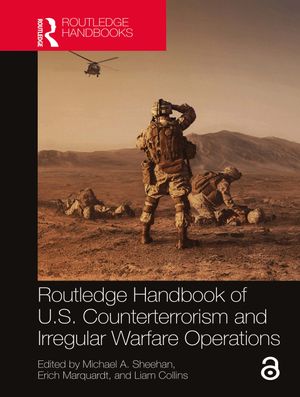
Routledge Handbook of U.S. Counterterrorism and Irregular Warfare Operations
This handbook comprises essays by leading scholars and practitioners on the topic of U.S. counterterrorism and irregular warfare campaigns and operations around the globe.Terrorist groups have evolved substantially since 9/11, with the Islamic State often described as a pseudo-state, a terrorist group, and insurgency all at the same time. While researchers’, analysts’, and policymakers’ understanding of terrorism has grown immensely over the past two decades, similar advancements in the understanding of counterterrorism lag. As such, this handbook explains why it is necessary to take a broader view of counterterrorism which can, and often does, include irregular warfare. The volume is divided into three thematic sections: Part I examines modern terrorism in the Islamic world and gives an overview of the major terrorist groups from the past three decades;Part II provides a wide variety of case studies of counterterrorism and irregular warfare operations, spanning from the 1980s to the irregular warfare campaign against the Islamic State in northern Syria in 2018;Part III examines the government instruments used to combat terrorism and wage irregular warfare, such as drones, Theater Special Operations Commands, and Theater Commands.The handbook fills a gap in the traditional counterterrorism literature by its inclusion of irregular warfare and by providing analyses from academic experts as well as practitioners. It will be of much interest to students of counterterrorism, counterinsurgency, U.S. national security, military affairs, and International Relations.The Open Access version of this book, available at https://www.routledge.com/Routledge-Handbook-of-US-Counterterrorism-and-Irregular-Warfare-Operations/Sheehan-Marquardt-Collins/p/book/9780367758363, has been made available under a Creative Commons Attribution-Non Commercial-No Derivatives 4.0 license.
The Routledge Handbook of Taxation and Philanthropy
The Routledge Handbook of Taxation and Philanthropy ventures into a territory that is still widely unexplored. It contains 30 academic contributions that aim to provide a better understanding of whether, why, and how philanthropic initiatives, understood as voluntary contributions for the common good, can and should be fostered by states through tax incentives. The topic has been addressed from a multidisciplinary and multicultural perspective – covering neuroeconomics, sociology, political science, psychology, affective sciences, philosophy, behavioral economy, and law – because of its global and multifaceted nature. It also contains the OECD report on Taxation and Philanthropy released in November 2020, which was prepared in this context as a result of a collaboration with the Geneva Centre for Philanthropy of the University of Geneva.The book is divided into four sections, exploring, respectively, the justification of tax incentives for philanthropy, theoretical and empirical insights about taxes, efficiency and donor behavior in that context, and tax incentives for cross-border philanthropy and for hybrid entities and social entrepreneurship. It is believed that this volume will be a landmark yet only the beginning of a journey in which a lot remains to be studied, learned, and said.
Rethinking EMI: Multidisciplinary Perspectives from Chinese-Speaking Regions
Due to the competitive edge it confers on students, educational institutions, and non-English speaking nations in a globalized economy, English as a medium of instruction (EMI) has been gaining popularity in tertiary education in non-native English-speaking (NNES) countries. Institute-wide EMI implementation has often been imposed by top-down decisions, in combination with the optimistic view that the horse should always be placed before the cart. However, emerging evidence suggests that the delivery of such programs to NNES students has led to new pedagogical challenges and learning problems that go beyond the scope of language learning and teaching and deserve immediate attention. For example, how would an instructor respond to situations in which students’ learning of content is compromised by their limited language proficiency? This book draws on the current practice of EMI in diverse disciplines and university settings and examines how these new pedagogical and learning issues can be addressed. The discussion also involves a reflection on the essence of EMI in relation to the use of the first language (L1) as the medium of instruction in tertiary education. In addition, the book includes discussion about how to ensure and maintain the quality of EMI programs and assess the readiness of stakeholders for such programs, which include administrators, teachers, and students. The discussion is led by exemplars in Hong Kong and Taiwan, where the majority of students are native Chinese speakers, in the hope of developing critical perspectives and practical guidelines as references for EMI in other NNES settings.“The Open Access version of this book, available at http://www.taylorfrancis.com/books/e/ISBN, has been made available under a Creative Commons Attribution-Non Commercial-No Derivatives 4.0 license.

Reputation Management and Family Business
Corporate reputation is important in gaining long-term competitive advantage and building company value. Thus, the author points out the need to manage reputation, which, due to its complex nature and multidimensional character, is a serious and difficult challenge.The author develops a strategic model for family business reputation management. The book presents the review, systematization and synthesis of views on the notion of reputation and its role in building company value, the determinants of reputation; the identification of the characteristics and distinguishing factors of family businesses, areas of reputation building and resources involved in family business reputation building processes; and the description of determinants, components and processes in the field of corporate reputation management, and the identification of key links between them. It also identifies the key elements of the concept of family business reputation management and the relationship between them and practical recommendations for the use of reputation management concepts in improving the functioning of family businesses.The developed model can undoubtedly be seen as a pioneering contribution to research into the competitiveness of enterprises. The book will therefore be useful to researchers, students and managers who are interested in decision-making in family businesses, entrepreneurship and small business management, and leadership studies.
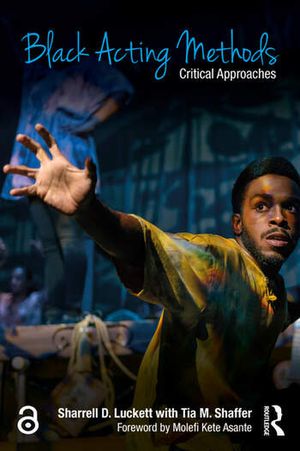
Remembering, rewriting, and re-imagining: Afrocentric approaches to directing new work for the theatre: Black Acting Methods: Critical Approaches, Chapter 7
Black Acting Methods seeks to offer alternatives to the Euro-American performance styles that many actors find themselves working with.
A wealth of contributions from directors, scholars and actor trainers address afrocentric processes and aesthetics, and interviews with key figures in Black American theatre illuminate their methods. This ground-breaking collection is an essential resource for teachers, students, actors and directors seeking to reclaim, reaffirm or even redefine the role and contributions of Black culture in theatre arts.

Regulating Coastal Zones: International Perspectives on Land Management Instruments
Regulating Coastal Zones addresses the knowledge gap concerning the legal and regulatory challenges of managing land in coastal zones across a broad range of political and socio-economic contexts.In recent years, coastal zone management has gained increasing attention from environmentalists, land use planners, and decision-makers across a broad spectrum of fields. Development pressures along coasts such as high-end tourism projects, luxury housing, ports, energy generation, military outposts, heavy industry, and large-scale enterprise compete with landscape preservation and threaten local history and culture. Leading experts present fifteen case studies among advanced-economy countries, selected to represent three groups of legal contexts: signatories to the 2008 Mediterranean ICZM Protocol, parties to the 2002 EU Recommendation on Integrated Coastal Zone Management, and the USA and Australia.This book is the first to address the legal-regulatory aspects of coastal land management from a systematic cross-national comparative perspective. By including both successful and less-effective strategies, it aims to inform professionals, graduate students, policy makers, and NGOs of the legal and socio-political challenges as well as the better practices from which others could learn.
The Reflective Entrepreneur
In a world where entrepreneurial success often seems deceptively accessible, it is not always clear what makes a person entrepreneurial. In this book, Dimo Dimov offers a reflective insight into the entrepreneurial journey, striking up a conversation about entrepreneurship in order to challenge and untangle existing preconceptions.A discussion of challenges and tensions such as idea versus opportunity, genius versus lunatic, and skill versus luck forms the foundation of the book, while the second part offers actions and considerations which can help the reader to seek opportunities in a fractious environment. The final part of the text focuses on the collective spirit in entrepreneurship, arising from the interplay between participation and outcomes.The author brings a succinct diversity to the field, making this book essential reading for undergraduate and postgraduate students on entrepreneurship courses, as well as scholars, researchers, and practitioners looking for a new perspective on entrepreneurship.
Reconfiguring Human, Nonhuman and Posthuman in Literature and Culture
The time has come for human cultures to seriously think, to severely conceptualize, and to earnestly fabulate about all the nonhuman critters we share our world with, and to consider how to strive for more ethical cohabitation. Reconfiguring Human, Nonhuman and Posthuman in Literature and Culture tackles this severe matter within the framework of literary and cultural studies. The emphasis of the inquiry is on the various ways actual and fictional nonhumans are reconfigured in contemporary culture – although, as long as the domain of nonhumanity is carved in the negative space of humanity, addressing these issues will inevitably clamor for the reconfiguration of the human as well.
Questing Excellence in Academia: A Tale of Two Universities
Unlike almost most other studies of neoliberal universities and academic capitalism this book ethnographically explores and interprets those transformations and their contradictions empirically in the everyday practices of students, faculty members, and administrators at two public universities: NTNU in Norway and UCLA in California.Differently situated in global political economies, both are ambitious, prosperous campuses. The book refl exively examines their disturbing disputes about quality, competition, and innovation. It argues that some academic, bureaucratic, and corporate university governance practices are both unsustainable and undermining what some university students and faculty already do well: circulate interdisciplinary knowledge and its making globally across the diasporic domains of academia, society, industry, and government while addressing the world’s immediate challenges: power, inequities, and sustainability.It shows the important, strategic work of domesticating, co- morphing, and meshworking at the faultlines of emerging knowledge. This book is for students, faculty, society members, and policy makers who want to engage more effectively with contemporary universities that increasingly serve as busy crossroads for sharing ideas and how to make them. It will be of interest to workers and scholars in the interdisciplinary fi elds of higher education studies, critical university studies, and critical public infrastructure studies, plus science, technology, and society studies.

Procedural Justice and Relational Theory: Empirical, Philosophical, and Legal Perspectives
This book bridges a scholarly divide between empirical and normative theorizing about procedural justice in the context of relations of power between citizens and the state. Empirical research establishes that people’s understanding of procedural justice is shaped by relational factors. A central premise of this volume is that this research is significant but needs to be complemented by normative theorizing that draws on relational theories of ethics and justice to explain the moral significance of procedures and make normative sense of people’s concerns about relational factors. The chapters in Part 1 provide comprehensive reviews of empirical studies of procedural justice in policing, courts and prisons. Part 2 explores empirical and normative perspectives on procedural justice and legitimacy. Part 3 examines philosophical approaches to procedural justice. Part 4 considers the implications of a relational perspective for the design of procedures in a range of legal contexts. This collection will be of interest to a wide academic readership in philosophy, law, psychology and criminology.

Creative Networks and the City: Towards a Cultural Political Economy of Aesthetic Production
This book offers a fundamental contribution to the literature on the creative industries and the knowledge-based economy by focusing on three aspects: urban spaces as key sites of capitalist restructuring, creative industries policies as state technologies aimed at economic exploitation, and the role of networks of aesthetic production in inflecting these tendencies. It simultaneously goes beyond these debates by integrating a concern with the cultural and aesthetic dimensions of the creative industries. As such, the book is relevant to researchers interested in the transdisciplinary project of a cultural political economy of creativity and urban change.
A Powerful Particulars View of Causation
This book critically examines the recent discussions of powers and powers-based accounts of causation. The author then develops an original view of powers-based causation that aims to be compatible with the theories and findings of natural science.Recently, there has been a dramatic revival of realist approaches to properties and causation, which focus on the relevance of Aristotelian metaphysics and the notion of powers for a scientifically informed view of causation. In this book, R.D. Ingthorsson argues that one central feature of powers-based accounts of causation is arguably incompatible with what is today recognised as fact in the sciences, notably that all interactions are thoroughly reciprocal. Ingthorsson’s powerful particulars view of causation accommodates for the reciprocity of interactions. It also draws out the consequences of that view for issue of causal necessity and offers a way to understand the constitution and persistence of compound objects as causal phenomena. Furthermore, Ingthorsson argues that compound entities, so understood, are just as much processes as they are substances.A Powerful Particulars View of Causation will be of great interest to scholars and advanced students working in metaphysics, philosophy of science, and neo-Aristotelian philosophy, while also being accessible for a general audience.
Post-Truth Imaginations: New Starting Points for Critique of Politics and Technoscience
This book engages with post-truth as a problem of societal order and for scholarly analysis. It claims that post-truth discourse is more deeply entangled with main Western imaginations of knowledge societies than commonly recognised. Scholarly responses to post-truth have not fully addressed these entanglements, treating them either as something to be morally condemned or as accusations against which scholars have to defend themselves (for having somehow contributed to it). Aiming for wider problematisations, the authors of this book use post-truth to open scholarly and societal assumptions to critical scrutiny. Contributions are both conceptual and empirical, dealing with topics such as: the role of truth in public; deep penetrations of ICTs into main societal institutions; the politics of time in neoliberalism; shifting boundaries between fact – value, politics – science, nature – culture; and the importance of critique for public truth-telling. Case studies range from the politics of nuclear power and election meddling in the UK, over smart technologies and techno-regulation in Europe, to renewables in Australia. The book ends where the Corona story begins: as intensifications of Modernity’s complex dynamics, requiring new starting points for critique.
Populist Challenges to Constitutional Interpretation in Europe and Beyond
This book explores the relationship between populism or populist regimes and constitutional interpretation used in those regimes. The volume discusses the question of whether contemporary populist governments and movements have developed, or encouraged new and specific constitutional theories, doctrines and methods of interpretation, or whether their constitutional and other high courts continue to use the old, traditional interpretative tools in constitutional adjudication. The book is divided into four parts. Part I contains three chapters elaborating the theoretical basis for the discussion. Part II examines the topic from a comparative perspective, representing those European countries where populism is most prevalent, including Austria, Croatia, the Czech Republic, Greece, Hungary, Italy, Poland, Romania, Spain, and the United Kingdom. Part III extends the focus to the United States, reflecting how American jurisprudence and academia have produced the most important contributions to the theory of constitutional interpretation, and how recent political developments in that country might challenge the traditional understanding of judicial review. This section also includes a general overview on Latin America, where there are also some populist governments and strong populist movements. Finally, the editors’ closing study analyses the outcomes of the comparative research, summarizing the conclusions of the book. Written by renowned national constitutional scholars, the book will be essential reading for students, academics and researchers working in Constitutional Law and Politics.

The Popular and the Sacred in Music
Music, as the form of art whose name derives from ancient myths, is often thought of as pure symbolic expression and associated with transcendence. Music is also a universal phenomenon and thus a profound marker of humanity. These features make music a sphere of activity where sacred and popular qualities intersect and amalgamate. In an era characterised by postsecular and postcolonial processes of religious change, re-enchantment and alternative spiritualities, the intersections of the popular and the sacred in music have become increasingly multifarious. In the book, the cultural dynamics at stake are approached by stressing the extended and multiple dimensions of the sacred and the popular, hence challenging conventional, taken-for-granted and rigid conceptualisations of both popular music and sacred music. At issue are the cultural politics of labelling music as either popular or sacred, and the disciplinary and theoretical implications of such labelling. Instead of focussing on specific genres of popular music or types of religious music, consideration centres on interrogating musical situations where a distinction between the popular and the sacred is misleading, futile and even impossible. The topic is discussed in relation to a diversity of belief systems and different repertoires of music, including classical, folk and jazz, by considering such themes as origin myths, autonomy, ingenuity and stardom, authenticity, moral ambiguity, subcultural sensibilities and political ideologies.
The Politics of Knowledge in Inclusive Development and Innovation
This book develops an integrated perspective on the practices and politics of making knowledge work in inclusive development and innovation. While debates about development and innovation commonly appeal to the authority of academic researchers, many current approaches emphasise the plurality of actors with relevant expertise for addressing livelihood challenges. Adopting an action-oriented and reflexive approach, this volume explores the variety of ways in which knowledge works, paying particular attention to dilemmas and controversies. The six parts of the book address the complex interplay of knowledge and politics, starting with the need for knowledge integration in the first part and decolonial perspectives on the politics of knowledge integration in the second part. The following three parts focus on the practices of inclusive development and innovation through three major themes of learning for transformative change, evidence, and digitisation. The final part of the book addresses the governance of knowledge and innovation in the light of political struggles about inclusivity. Exploring conceptual and practical themes through case studies from the Global North and South, this book will be of great interest to students, scholars, and practitioners researching and working in development studies, epistemology, innovation studies, science and technology studies, and sustainability studies more broadly.
Plurilingual Classroom Practices and Participation: Analysing Interaction in Local and Translocal Settings
Plurilingual Classroom Practices and Participation contributes to a better understanding of plurilingual education in Catalonia by providing a description of the interactional resources mobilised by learners as social actors. This volume is a collection of studies that show interactions containing plurilingual and multimodal sequences that illustrate moments of potential acquisition of aspects of language use. Analysing data collected through ethnographic fieldwork, the studies explore interactions in primary, secondary, and tertiary milieus as well as non-formal settings and examine how participants organise their interaction, their ways of participating, and the resources they mobilise for them. The linguistic policies of the educational settings studied establish the use of a given language but contain samples of plurilingual practices in which languages like Arabic, Catalan, English, French, Greek, Mandarin, Punjabi, Riffian Berber, Spanish and Urdu come into play. The chapters explore the links between these practices and the construction of participation in the ongoing interaction. Although focused on language education in Catalonia, results can be transferred to classrooms worldwide which host plurilingual learners. Thus, the volume is an excellent resource for teachers and researchers interested in plurilingual education and can be used as a reference book in doctoral studies and teacher training programmes in this research field.

Patterns of Death, 1800–2020: Global rates and causes: The Routledge History of Death since 1800, Chapter 1
The Routledge History of Death Since 1800 looks at how death has been treated and dealt with in modern history – the history of the past 250 years – in a global context, through a mix of definite, often quantifiable changes and a complex, qualitative assessment of the subject. The book is divided into three parts, with the first considering major trends in death history and identifying widespread patterns of change and continuity in the material and cultural features of death since 1800. The second part turns to specifically regional experiences, and the third offers more specialized chapters on key topics in the modern history of death. Historical findings and debates feed directly into a current and prospective assessment of death, as many societies transition into patterns of ageing that will further alter the death experience and challenge modern reactions. Thus, a final chapter probes this topic, by way of introducing the links between historical experience and current trajectories, ensuring that the book gives the reader a framework for assessing the ongoing process, as well as an understanding of the past. Global in focus and linking death to a variety of major developments in modern global history, the volume is ideal for all those interested in the multifaceted history of how death is dealt with in different societies over time and who want access to the rich and growing historiography on the subject.

Painting the Novel: Pictorial Discourse in Eighteenth-Century English Fiction
Painting the Novel: Pictorial Discourse in Eighteenth-Century English Fiction focuses on the interrelationship between eighteenth-century theories of the novel and the art of painting – a subject which has not yet been undertaken in a book-length study. This volume argues that throughout the century novelists from Daniel Defoe to Ann Radcliffe referred to the visual arts, recalling specific names or artworks, but also artistic styles and conventions, in an attempt to define the generic constitution of their fictions. In this, the novelists took part in the discussion of the sister arts, not only by pointing to the affinities between them but also, more importantly, by recognising their potential to inform one another; in other words, they expressed a conviction that the theory of a new genre can be successfully rendered through meta-pictorial analogies. By tracing the uses of painting in eighteenth-century novelistic discourse, this book sheds new light on the history of the so-called “rise of the novel”.

Ovarian Hyperstimulation Syndrome
Major advances have recently been made in our understanding of Ovarian Hyperstimulation Syndrome (OHSS). These include improving classification, recognizing primary and secondary risk factors, manipulating and monitoring ovarian stimulation, handling risky situations, and elucidating the underlying pathophysiologic mechanisms of the syndrome. As such, all health care professionals working in reproductive medicine should be acquainted with the theoretical and practical aspects of how to deal with this syndrome, both from a prophylactic point of view and once it has developed.
Focusing on the clinically relevant aspects of the syndrome, Ovarian Hyperstimulation Syndrome is well-illustrated with appropriate diagrams showing biologic mechanisms, procedural algorithms, sonographs and radiological images. At the end of each chapter, frequently asked questions with appropriate answers help expand and elaborate difficult practice problems.
Our Extractive Age: Expressions of Violence and Resistance
Our Extractive Age: Expressions of Violence and Resistance emphasizes how the spectrum of violence associated with natural resource extraction permeates contemporary collective life. Chronicling the increasing rates of brutal suppression of local environmental and labor activists in rural and urban sites of extraction, this volume also foregrounds related violence in areas we might not expect, such as infrastructural developments, protected areas for nature conservation, and even geoengineering in the name of carbon mitigation. Contributors argue that extractive violence is not an accident or side effect, but rather a core logic of the 21st Century planetary experience. Acknowledgement is made not only of the visible violence involved in the securitization of extractive enclaves, but also of the symbolic and structural violence that the governance, economics, and governmentality of extraction have produced. Extractive violence is shown not only to be a spectacular event, but an extended dynamic that can be silent, invisible, and gradual. The volume also recognizes that much of the new violence of extraction has become cloaked in the discourse of “green development,” “green building,” and efforts to mitigate the planetary environmental crisis through totalizing technologies. Ironically, green technologies and other contemporary efforts to tackle environmental ills often themselves depend on the continuance of social exploitation and the contaminating practices of non-renewable extraction. But as this volume shows, resistance is also as multi-scalar and heterogeneous as the violence it inspires. The book is essential reading for activists and for students and scholars of environmental politics, natural resource management, political ecology, sustainable development, and globalization.

Congoism: Congo Discourses in the United States from 1800 to the Present
To justify the plundering of todays Democratic Republic of the Congo, U.S. intellectual elites have continuously produced dismissive Congo discourses. Tracing these discourses in great depth and breadth for the first time, Johnny Van Hove shows how U.S. intellectuals (and their influential European counterparts) have been using the Congo in similar fashions for their own goals. Analyzing intellectuals as diverse as W.E.B. Du Bois, Joseph Conrad, and David Van Reybrouck, the book offers a theorization of Central West Africa, a case study of normalized narratives on the »Other«, and a stirring wake up call for all contemporary writers on international history and politics.
Organizational Network Analysis: Auditing Intangible Resources
The integrated meta-model for organizational resource audit is a consistent and comprehensive instrument for auditing intangible resources and their relations and associations from the network perspective. This book undertakes a critically important problem of management sciences, poorly recognized in literature although determining the current and future competitiveness of enterprises, sectors and economies. The author notes the need to introduce a theoretical input, which is manifested by the meta-model. An expression of this treatment is the inclusion of the network as a structure of activities, further knowledge as an activity, and intangible assets as intellectual capital characterized by a structure of connections. The case study presented is an illustration of the use of network analysis tools and other instruments to identify not only the most important resources, tasks or actors, as well as their effectiveness, but also to connect the identified networks with each other. The author opens the field for applying her methodology, revealing the structural and dynamic features of the intangible resources of the organization. The novelty of the proposed meta-model shows the way to in-depth applications of network analysis techniques in an intra-organizational environment. Organizational Network Analysis makes a significant contribution to the development of management sciences, in terms of strategic management and more strictly resource approach to the company through structural definition of knowledge; application of the concept of improvement-oriented audit abandoning a narrow understanding of this technique in terms of compliance; reliable presentation of audits available in the literature; rigorous reasoning leading to the development of a meta-model; close linking of knowledge and resources with the strategy at the design stage of the developed audit model, including the analysis of link dynamics and networks together with an extensive metrics proposal; an interesting illustration of the application with the use of metrics, tables and charts. It will be of value to researchers, academics, managers, and students in the fields of strategic management, organizational studies, social network analysis in management, knowledge management, and auditing knowledge resources in organizations.