
Open Access Books

Storie di confine: Biografie linguistiche e ristrutturazione dei repertori tra Alto Adige e Balcani
Oggetto del volume sono le biografie linguistiche di persone trasferitesi in Alto Adige (Südtirol) dai paesi successori alla Jugoslavia dal 1985 al 2015. Esaminando a livello contenutistico e formale i discorsi epilinguistici di parlanti che hanno vissuto e vivono in spazi sociolinguistici altamente complessi, la ricerca si propone di contribuire allo studio della ristrutturazione dei repertori in situazioni di contatto. Due sono le unità di analisi specifiche, identificate tramite i metodi della sociolinguistica interpretativa. Da un lato, si analizzano i glottonimi e le apposizioni usate per riferirsi alle varietà linguistiche d’origine. Ne emerge un quadro dei modi di posizionarsi dei partecipanti nei confronti dei recenti interventi di pianificazione linguistica in area balcanica. Dall’altro, si ricostruiscono gli spazi comunicativi narrati di tre intervistate attraverso l’esame delle loro storie di dialoghi. Questi racconti mostrano come le narratrici, attingendo a schemi interpretativi circolanti nella società altoatesina o resistendo loro, diano un senso vis-à-vis con la ricercatrice al cristallizzarsi di nessi più o meno inamovibili tra codici, luoghi e interlocutori nella regione d’arrivo..

State’s Responsibility for International Crimes: Reflections upon the Rosenburg Exhibition
Although more than 75 years have elapsed since the end of the Second World War, the magnitude of crimes and their long-term effects, caused also by lawyers e.g. in German special courts, make the subject of liability of the state in the context of the Second World War ever topical and valid. Historia magistra vitae est, and the process of learning from history should in this case cover not only the years 1933–1945, but also the entire post-war period. Justice was neither restored nor meted out. One of the reasons for the lack of administration of justice was West Germany’s conscious policy of personal continuity after the Second World War. The latter was the topic of the Rosenburg Exhibition – the Federal Ministry of Justice of the Federal Republic of Germany in the Shadow of National Socialist Past. The texts grew out of the context of the exhibition and show the far-reaching consequences of War and Nazi crimes in international relations of a legal nature.

Socio-Economic Atlas of Myanmar
The Socio-Economic Atlas of Myanmar focuses on the analysis and evaluation of regional differences in geographical conditions, natural resources, infrastructure and, in particular, the socio-economic development in the states and regions of the country in the current transformation process of Myanmar. The Atlas is based on international literature, statistical data, qualitative research and spatial information in a Geographic Information System on Myanmar. The spatial analyses aim to increase the state of knowledge about Myanmar both within the country and abroad, and to support decision-making on spatial development policy.

Die Herrlichkeit des Gekreuzigten: Studien zu den Johanneischen Schriften I
Auf dem Weg zu einer ausführlichen Kommentierung des Johannesevangeliums bietet der Band Vorstudien und Aufsätze aus 15 Jahren zur Auseinandersetzung mit den klassischen Modellen der Johannesauslegung, zur Frage nach dem religionsgeschichtlichen Hintergrund und Kontext des Johannesevangeliums, insbesondere seinem Verhältnis zu den Qumran-Texten und zu den synoptischen Evangelien, zum Profil der Adressatengemeinden und zur Interpretation des Bildes der ‘Juden’ im Johannesevangelium. Weitere Beiträge behandeln die Brotmetapher in Joh 6 und die Bedeutung und Funktion der dualistischen Sprachelemente, die spezifische Form der johanneischen Kreuzestheologie und die Modelle der Deutungen des Todes Jesu im vierten Evangelium, die Frage nach dem bleibenden Geschichtsbezug des Heils und nach der Bedeutung des Doxa- Motivs, die eschatologischen Traditionen und ihre Interpretation, die Bedeutung der Leiblichkeit, den inneren Zusammenhang der johanneischen Liebes-Aussagen und die Ansätze einer Ethik im vierten Evangelium.

Selling Weimar: German Public Diplomacy and the United States, 1918–1933
In the decade after World War I, German-American relations improved swiftly. While resentment and bitterness ran high on both sides in 1919, Weimar Germany and the United States managed to forge a strong transatlantic partnership by 1929. But how did Weimar Germany overcome its post-war isolation so rapidly? How did it regain the trust of its former adversary? And how did it secure U.S. support for the revision of the Versailles Treaty? Elisabeth Piller, winner of the Franz Steiner Preis für Transatlantische Geschichte 2019, explores these questions not from an economic, but from a cultural perspective. Based on extensive archival research, her ground-breaking work illustrates how German state and non-state actors drew heavily on cultural ties – with German Americans, U.S. universities and American tourists – to rewin American trust, and even affection, at a time when traditional foreign policy tools had failed to achieve similar successes. Contrary to common assumptions, Weimar Germany was never incapable of selling itself abroad. In fact, it pursued an innovative public diplomacy campaign to not only normalize relations with the powerful United States, but to build a politically advantageous transatlantic friendship.
“In her deeply researched, vividly illustrated history of cultural-diplomatic relations between Weimar Germany and the United States, Elisabeth Piller charts a new course in the history of transatlantic interwar diplomacy.” Victoria de Grazia, Columbia University
“This is a splendidly written and researched work of history, crossing any number of geographic and cultural borders. With much transatlantic verve, Dr. Piller has achieved a masterful synthesis of diplomatic, intellectual and cultural history.” Michael Kimmage, Catholic University of America

Negationskongruenz in den deutschen Dialekten
Ein auffallendes Merkmal in den deutschen Basisdialekten stellt die sogenannte “Negationskongruenz” oder auch “doppelte Negation” dar. Umso erstaunlicher ist es, dass bisher nur selektiv zu einzelnen Dialekten geforscht wurde, nicht jedoch eine mikrotypologisch angelegte, korpusbasierte Arbeit zu diesem Phänomen vorliegt. Diese Forschungslücke schließt Ann-Marie Moser: Sie identifiziert zwei verschiedene Typen der Negationskongruenz und legt dar, dass diese Negationskonstruktionen unterschiedlich im Raum verteilt sind. Die Negationskongruenz ist nicht obligatorisch, sondern optional – während Ansätze aus dem Minimalismus nur beschränkt mit der Optionalität umgehen können, bietet sich eine Analyse im Rahmen der Optimalitätstheorie an. Eine qualitativ angelegte Datenerhebung im oberdeutschen Raum bestätigt, dass sich Sprecherinnen und Sprecher des Alemannischen und Bairischen in der Wahl der Negationskonstruktion und auf pragmatischer Ebene unterscheiden. Schließlich geht Moser der Frage nach, warum im Standarddeutschen die Negationskongruenz nicht möglich ist, in allen deutschen Dialekten hingegen schon.
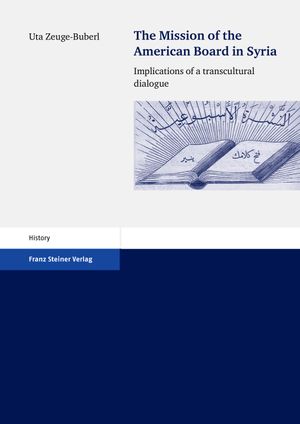
The Mission of the American Board in Syria: Implications of a transcultural dialogue
The focus of this study is the “Syria Mission”, directed by the Protestant missionary society American Board of Commissioners for Foreign Missions (ABCFM) from 1819 to 1870 in the Ottoman province of Syria, operating mainly within the territory of present-day Lebanon. The analysis of the cultural transfer between the Ottoman Empire and the United States of America undertaken in this study focuses on four relevant protagonists, whose contributions have not yet been sufficiently explored in missiological studies: The missionaries Eli Smith and Cornelius Van Dyck as well as the Syrian Protestants Butrus al-Bustani and John Wortabet. As a result, the Syria Mission of the ABCFM demonstrates how two different cultures met in a so called contact zone in the mission field and how these dialogue partners, despite many conflicts and disagreements, succeeded in contributing towards a fruitful dialogue.
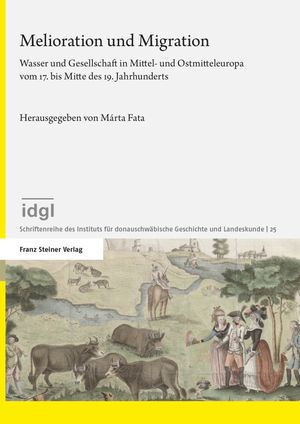
Melioration und Migration: Wasser und Gesellschaft in Mittel- und Ostmitteleuropa vom 17. bis Mitte des 19. Jahrhunderts
Ständig oder durch regelmäßige Überschwemmungen periodisch unter Wasser liegende Feuchtgebiete prägten das Landschaftsbild im vorindustriellen Europa. Doch Moore, Sümpfe und Bruchgebiete wurden schon seit der frühen Neuzeit zu Schauplätzen von Meliorationsprojekten. Sie bezweckten die Erweiterung agrarischer Nutzflächen und trugen zur Intensivierung des Ackerbaus wie auch zur Entwicklung von Handel und Verkehr bei. Meliorationen gingen häufig mit Migrationen und neuen Siedlungsgründungen einher. Im Band wird deshalb neben agrarischer Expansion und Mobilität auch der Begriff “Kolonie” mit seinen unterschiedlichen Bedeutungsdimensionen wie Kolonialisierung, Kolonisierung und Kolonisation untersucht. Die Meliorationsbeispiele aus Mittel- und Ostmitteleuropa belegen die vielfache Verschränkung ökonomischer, demographischer, ökologischer und kultureller Fragen und zeigen neben dem zeittypischen Fortschrittsglauben – gerade auch aus heutiger Perspektive – lehrreiche Schattenseiten des Eingriffs des Menschen in die Natur.

Mehr-als-menschliche Geographien: Schlüsselkonzepte, Beziehungen und Methodiken
More-than-human geographies haben sich im angelsächsischen Raum als wichtiges Forschungsfeld etabliert und in den letzten Jahren auch in der deutschsprachigen Geographie zunehmend an Bedeutung gewonnen. Die Dezentrierung des Menschen wird durch verschiedene Ansätze wie die Phänomenologie, den Pragmatismus, die Akteur-Netzwerk-Theorie, Assemblage-, Affekt- und Mehr-als-repräsentationale Theorien sowie durch praxistheoretische, performative und viszerale Ansätze konzeptionell vorangetrieben. Trotz dieser großen Heterogenität eint die Mehr-als-menschlichen Geographien, dass sie den Menschen als Teil eines größeren Gesamtzusammenhangs begreifen, sich der Welt aus mehr als nur streng rational greifbaren Erfahrungs- und Sinndimensionen nähern und insofern leibliche, affektive, emotionale und sensorische Praktiken, Transaktionen und Intra-Aktionen in den Blick nehmen. Die Autorinnen und Autoren führen in die Entwicklungslinien, Grundzüge und Schlüsselkonzepte der komplexen Debatte ein und tragen so dazu bei, sie systematisch für die deutschsprachige Geographie und interessierte Nachbardisziplinen zu erschließen.

Künstliche Intelligenz und Gesundheit: Ethische, philosophische und sozialwissenschaftliche Explorationen
Der Einsatz von künstlicher Intelligenz im Gesundheitsbereich verspricht besonders großen Nutzen durch eine bessere Versorgung sowie effizientere Abläufe und bietet damit letztlich auch ökonomische Vorteile. Dem stehen unter anderem Befürchtungen entgegen, dass sich durch den Einsatz von künstlicher Intelligenz das Arzt-Patienten-Verhältnis verändern könnte, Arbeitsplätze gefährdet seien oder die Ökonomisierung des Gesundheitswesens einen weiteren Schub erfahren könnte. Zuweilen wird die Debatte um diese Technologie, zumal in der Öffentlichkeit, emotional und fern sachlicher Argumente geführt. Die Autorinnen und Autoren untersuchen die Geschichte des KI-Einsatzes in der Medizin, deren öffentliche Wahrnehmung, Governance der KI, die Möglichkeiten und Grenzen der Technik sowie Einsatzgebiete, die bisher noch nicht oder nur wenig im Fokus der Aufmerksamkeit waren. Dabei erweist sich die KI als leistungsfähiges Werkzeug, das zahlreiche ethische und soziale Fragen aufwirft, die bei der Einführung anderer Technologien bereits gestellt wurden; allerdings gibt es auch neue Herausforderungen, denen sich Professionen, Politik und Gesellschaft stellen müssen.

Imaginative Animals: Leibniz’s Logic of Imagination
Through the reconstruction of Leibniz’s theory of the degrees of knowledge, this book investigates and explores the intrinsic relationship of imagination with space and time. The inquiry into this relationship defines the logic of imagination that characterizes both human and non-human animals, albeit differently, making them two different species of imaginative animals. Lucia Oliveri explains how the emergence of language in human animals goes hand in hand with the emergence of thought and a different form of rationality constituted by logical inferences based on identity and contradiction, principles that are out of reach of the imagination. The book concludes that the presence of innate principles in human animals transforms the way in which they sense-perceive the world, thereby constantly increasing the distinction between human and non-human animals.
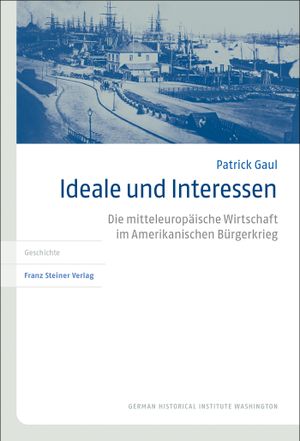
Ideale und Interessen: Die mitteleuropäische Wirtschaft im Amerikanischen Bürgerkrieg
Der Amerikanische Bürgerkrieg (1861–65) war ein Konflikt von transatlantischen Ausmaßen. Auch für Mitteleuropa hatte er spürbare, bis jetzt nur wenig erforschte Konsequenzen. Patrick Gaul widmet sich den grenzüberschreitenden Auswirkungen dieses Krieges aus wirtschafts- und kulturhistorischen Blickwinkeln, untersucht bisher unberücksichtigte Quellen und fördert dadurch neue Facetten zu Tage. Anhand von Schlaglichtern auf die Städte Hamburg, Bremen und Frankfurt zeigt Gaul unter anderem, wie Mitteleuropäerinnen und Mitteleuropäer durch Kredite, Schmuggel, humanitäre Hilfe und Waffenlieferungen in den Bürgerkrieg verwickelt waren und dass US-amerikanische Agenten und Konsuln vor Ort eifrig für die Interessen der Union beziehungsweise der sklavenhaltenden Südstaaten warben. Vor diesem Hintergrund wird deutlich, dass längst nicht alle deutschsprachigen Beteiligten vorbehaltlose Unterstützer der Nordstaaten oder Befürworter der Sklavenemanzipation waren. Gaul geht zudem den Fragen nach, wie der Civil War auf den Deutschen “Bürgerkrieg” von 1866 wirkte und welche Folgen die Emanzipation der Afroamerikanerinnen und Afroamerikaner auf mitteleuropäische Diskurse über Arbeit, Freiheit und den Umgang mit Minderheiten provozierte.
Gesellschaft im Brief / Lire la société dans la lettre: Ciceros Korrespondenz und die Sozialgeschichte / La Correspondance de Cicéron et l’histoire sociale
Die Korrespondenz des Politikers und Philosophen M. Tullius Cicero (106–43 v. Chr.) ist ein einzigartiges Quellenkorpus: Von keiner anderen Person der römischen Antike sind vergleichbar umfassende Selbstzeugnisse überliefert. In Ciceros Selbstdarstellung zeigt sich der Habitus einer Senatsaristokratie, deren soziales Feld durch das Netzwerk der Freundschaftsbeziehungen strukturiert ist. Die gesellschaftlichen Praktiken situieren sich in urbanen und ländlichen Räumen zwischen Italien und den Provinzen, die als Orte von Begegnung und Kommunikation unter Eliteangehörigen, aber auch zwischen diesen und sozial Untergeordneten dienen. Die Autorinnen und Autoren setzen in ihren Analysen der Cicero-Briefe aktuelle theoretische und methodologische Ansätze der historischen Anthropologie um und entwickeln neue Perspektiven auf die römische Sozialgeschichte. Mikrohistorische Lektüren lassen die geschlechtsspezifischen Bedingungen des Handelns erkennen, die Bedeutung von Krankheit und Tod und das Verhältnis zu griechischen Sklavinnen und Sklaven. In der Auseinandersetzung mit den deutsch- und französischsprachigen Forschungstraditionen römischer Sozialgeschichte entwerfen die Beiträge ein multiperspektivisches Bild des gesellschaftlichen Alltags im 1. Jahrhundert v. Chr.

Germanistische Dialektlexikographie zu Beginn des 21. Jahrhunderts
Die Autorinnen und Autoren des Bandes widmen sich der germanistischen Dialektlexikographie zu Beginn des 21. Jahrhunderts und bieten einen Überblick über sämtliche aktive Wörterbuchprojekte zu Dialekten des Deutschen. Die Beiträge enthalten Informationen zur Geschichte der Wörterbuchprojekte, ihren wissenschaftshistorischen Kontexten und institutionellen Rahmenbedingungen sowie den empirischen Materialien. Daneben werden konzeptionelle Fragen der Wörterbucharbeit diskutiert und anhand von Beispielartikeln illustriert. Ein weiterer Schwerpunkt des Bandes liegt auf texttechnologischen Aspekten, die sowohl die elektronische Aufbereitung und Bereitstellung von vorhandenen Materialien als auch das digitale Publizieren von Wörterbuchartikeln umfassen. Exemplarische Fallstudien verdeutlichen die linguistischen Potenziale der zugrundeliegenden Materialien und deren Verwertbarkeit über die klassische Wörterbucharbeit hinaus.
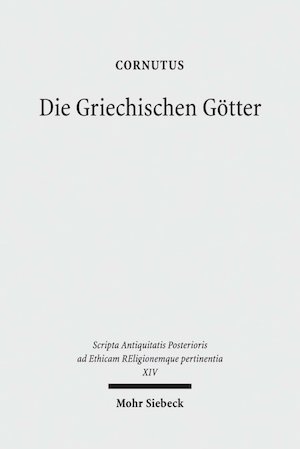
Die Griechischen Götter: Cornutus – Ein Überblick über Namen, Bilder und Deutungen
Die vorliegende erste vollständige Übersetzung von “Die Griechischen Götter” des Philosophen Lucius Annaeus Cornutus stellt ein ebenso einzig- wie eigenartiges Handbuch der stoischen allegorischen Götterdeutung dar, das Namen und Attribute der Götter sowie Aspekte der mit ihnen verbundenen Mythen, Riten und bildlichen Darstellungen mit Hilfe einer entwickelten Philosophie interpretiert.

Evidenzen der Bilder: Visualisierungsstrategien in der medizinischen Diagnostik um 1900
Evidenz beschreibt etwas, das unmittelbar einleuchtet. Wissenschaftliche Abbildungen erheben zwar den Anspruch, evident zu sein, aber ihre Evidenz ist nicht natürlich. Sie ist nur mittelbar für diejenigen einleuchtend, die sie lesen können. Das gilt auch für Bilder in der medizinischen Diagnostik: Im Visualisierungsprozess diagnostischer Abbildungen werden zum einen Strukturen und Zusammenhänge sichtbar gemacht, die zuvor unsichtbar waren. Zum anderen muss über Lese- und Denkprozesse die Evidenz in das Bild implementiert werden. Allerdings sind diese Bilder primär durch Mehrdeutigkeit und Unbestimmtheit geprägt, was Strategien der Evidenzproduktion erfordert. Hierzu gehören der Einsatz geschulter Zeichner am Mikroskop, die Produktion von Diagrammen auf Basis von Messwerten, der versierte Einsatz von Endoskopen sowie die physikalisch-chemische Erzeugung von Radiogrammen zur Sichtbarmachung des Körperinneren. Die Evidenz diagnostischer Abbildungen unterliegt also immer bestimmten Verfahren und Strategien der Evidenzzuschreibung. Sie bleibt eine nützliche Fiktion, die überaus vielfältig und immer kontextabhängig ist. Heiner Fangerau und Michael Martin sprechen deshalb statt von Evidenz im Singular von den Evidenzen diagnostischer Bilder im Plural.

Die Hamburger Beginen bei St. Jacobi im Kontext ihrer Handschriften und Kultur
Aus dem Beginenkonvent bei St. Jacobi in Hamburg sind 14 mittelniederdeutsche Handschriften überliefert, die einen einzigartigen Einblick in das religiöse Leben spätmittelalterlicher Frauen ermöglichen. Die Gebetbücher, zusammen mit Archivalien aus dem Konvent wie den Rechnungsbüchern der Meisterinnen oder Testamenten, weisen auf eine aktive Rolle des Konvents im spätmittelalterlichen Hamburg hin. Von ihrem religiösen Profil her fallen in den Hamburger Gebetbüchern insbesondere ordensübergreifende Einflüsse der Devotio moderna auf. Dies zeigt, dass diese Literatur unbedingt in einem geographisch und religiös weiteren Kontext zu lesen ist. Allein schon liturgische und materielle Ähnlichkeiten zu Traditionen norddeutscher Bistümer und Klöster, z.B. Klöstern der Lüneburger Heide, veranschaulichen, wie komplex die Vernetzung der religiösen Institutionen im Spätmittelalter war. Materiell gesehen führen die Hamburger Codices in die bislang wenig bekannte Buchkultur von semireligiosen Frauen ein.

Die “Ephemeris” des Ulmer Arztes Johann Franc (1649–1725): Reichsstädtisch-territoriale Netzwerke in der frühneuzeitlichen Arztpraxis
Der Ulmer Arzt Johann Franc (1649–1725) hinterließ unter dem Titel “Ephemeris” eine in ihrer Art einzigartige Sammlung medizinischer Fallbeobachtungen aus seiner Praxis. Von eigener Hand mit einer Fülle farbiger Zeichnungen verziert, schildert Franc in seinen Aufzeichnungen detailreich die Erkrankungen seiner Patientinnen und Patienten, Untersuchungen und Behandlungen. Dabei erscheint der Arzt als streitbarer Gelehrter, der nicht mit Kritik an seinen Ulmer Standeskollegen geizt und sich in beigefügten Kommentaren mit den medizinischen Theorien seiner Zeit auseinandersetzt. Die Autorinnen und Autoren werten die “Ephemeris” unter Berücksichtigung weiterer Zeugnisse zu Johann Francs Leben und Schaffen unter vielfältigen Aspekten aus. Ihre Analysen vermitteln ein anschauliches Bild des medizinischen Alltags in Ulm um 1700 und decken Francs Vernetzung im innerstädtischen wie territorialen Kontext auf.
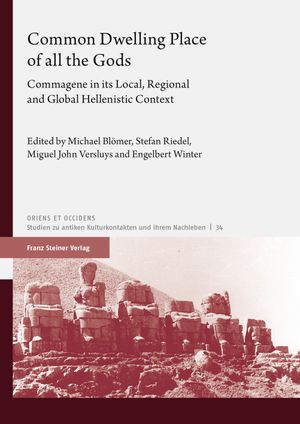
Common Dwelling Place of all the Gods: Commagene in its Local, Regional and Global Hellenistic Context
The history and archaeology of Hellenistic Commagene is a rich field of study, not in the least because of the remarkable monuments and inscriptions of king Antiochos I (c. 70–36 BC). Over the last decades important new work has been done on Commagene proper, providing novel interpretations of the epigraphical and historical record or the archaeological data and individual sites, like Nemrud Dağ, Samosata or Arsameia. Simultaneously scholars have tried to better understand Hellenistic Commagene by situating the region and its history in a wider Mediterranean and Near Eastern context. This long-awaited e-book provides a critical evaluation of all these new data and ideas on the basis of a theoretically embedded, state-of-the-art overview for the history and archaeology of Hellenistic Commagene. From this volume a new picture emerges in which Hellenistic Commagene is no longer understood as peripheral and out-of-the-ordinary, but as an important node in a global Hellenistic network, from Ai-Khanoum to Pompeii and from Alexandria to Armawir.
Bewertungen – Erwartungen – Gebrauch: Sprachgebrauchsnormen zur inneren Mehrsprachigkeit an der Universität
Inwiefern regeln soziale Normen den Gebrauch unterschiedlicher Varietäten in der Hochschullehre? Philip C. Vergeiner untersucht dies in seiner Fallstudie zur Universität Salzburg schwerpunktmäßig für die lautliche Variation im Deutschen auf der Dialekt-/Standardachse. Am Beginn der Arbeit entwickelt er eine praxeologische Normkonzeption, der zufolge durch den Rückbezug von Handlungsregelmäßigkeiten auf normative Wertungen und Erwartungen auf das Vorhandensein sozialer Normen geschlossen werden kann. Um in diesem Sinne Sprachgebrauchsnormen aufzudecken, verwendet Vergeiner ein Mixed-Methods-Design, welches objekt- und metasprachliche Daten trianguliert: Neben einer quantitativ-statistischen Analyse von Fragebögen und einer Inhaltsanalyse von Interviews, um den normativen Diskurs freizulegen, untersucht er den tatsächlichen Sprachgebrauch anhand universitärer Lehrveranstaltungen.
Aspects of Roman Dance Culture: Religious Cults, Theatrical Entertainments, Metaphorical Appropriations
The fourteen chapters of this e-book examine Roman dance by looking at its role in Roman religion, by following it into the theatre and the banquet hall, and by tracing its (metaphorical) presence in a variety of literary contexts, including rhetorical treatises, biography, and lyric poetry. These different approaches, which draw on literary texts, inscriptions, documentary papyri, the visual record, and modern reperformances, converge in illustrating a rich and vibrant dance culture which prided itself on indigenous dances no less than on its capacity to absorb, transform, or revive the dance traditions of their Etruscan or Greek neighbours. Dance was a cultural practice which was able to affirm Romanness, for instance in the case of the Salian priests, but also to raise the question of what was Roman in the first place, for instance when the originally Greek pantomime was embraced by Augustus and came to be known as “Italian style of dancing”. Together the fourteen case studies offer fresh perspectives on an underexplored topic, shedding light on the manifold contexts, functions, practitioners, and appreciations of Roman dance.

Women and the UN: A New History of Women’s International Human Rights
This book provides a critical history of influential women in the United Nations and seeks to inspire empowerment with role models from bygone eras.
The women whose voices this book presents helped shape UN conventions, declarations, and policies with relevance to the international human rights of women throughout the world today. From the founding of the UN and the Latin American feminist movements that pushed for gender equality in the UN Charter, up until the Security Council Resolutions on the role of women in peace and conflict, the volume reflects on how women delegates from different parts of the world have negotiated and disagreed on human rights issues related to gender within the UN throughout time. In doing so it sheds new light on how these hidden historical narratives enrich theoretical studies in international relations and global agency today. In view of contemporary feminist and postmodern critiques of the origin of human rights, uncovering women’s history of the United Nations from both Southern and Western perspectives allows us to consider questions of feminism and agency in international relations afresh.
With contributions from leading scholars and practitioners of law, diplomacy, history, and development studies, and brought together by a theoretical commentary by the Editors, Women and the UN will appeal to anyone whose research covers human rights, gender equality, international development, or the history of civil society.
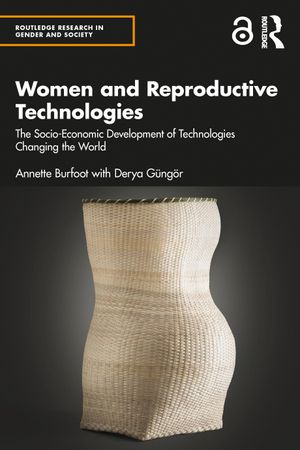
Women and Reproductive Technologies: The Socio-Economic Development of Technologies Changing the World
A sociological and historical study of the development of reproductive technologies, this book focuses on key technological developments through a biomedicalization lens with special attention to gender. Using in vitro fertilization (IVF) as a hub, it critically examines the main areas of related socio-technical developments: reproductive science, birth control, animal husbandry, genetics and reproductive medicine. Employing a critical framework to illuminate dominant discourses, the book also highlights examples of social resistance, as well as contradictory responses to new reproductive technologies. Over eight chapters, the author examines the social history of reproduction and sexuality, reproductive technologies from old to new and debates surrounding new reproductive technologies and genetic engineering. Women and Reproductive Technologies pays close attention to the interconnections between the business of reproduction (and replication industries), the sociality of reproduction (including reproductive justice) and what are considered the technologies themselves. As such, it constitutes essential reading for students and researchers in the fields of sociology, health studies and gender studies interested in the current state of human reproduction.

Gender Equity in STEM in Higher Education: International Perspectives on Policy, Institutional Culture, and Individual Choice
This timely volume brings together a range of international scholars to analyse cultural, political, and individual factors which contribute to the continued global issue of female underrepresentation in STEM study and careers. Offering a comparative approach to examining gender equity in STEM fields across countries including the UK, Germany, the United States, Hong Kong, Taiwan, South Africa, and China, the volume provides a thematic breakdown of institutional trends and national policies that have successfully improved gender equity in STEM at institutions of higher education. Offering case studies that demonstrate how policies interact with changing social and cultural norms, and impact women’s choices and experiences in relation to the uptake and continuation of STEM study at the undergraduate level, the volume highlights new directions for research and policy to promote gender equity in STEM at school, university, and career levels.Contributing to the United Nations’ (UN) 2030 Agenda for Sustainable Development, this text will benefit researchers, academics, and educators with an interest in science education, higher education, and gender equity in STEM fields. The text will also support further discussion and reflection around multicultural education, educational policy and politics, and the sociology of education more broadly.

English and Translation in the European Union: Unity and Multiplicity in the Wake of Brexit
This book explores the growing tension between multilingualism and monolingualism in the European Union in the wake of Brexit, underpinned by the interplay between the rise of English as a lingua franca and the effacement of translations in EU institutions, bodies and agencies.
English and Translation in the European Union draws on an interdisciplinary approach, highlighting insights from applied linguistics and sociolinguistics, translation studies, philosophy of language and political theory, while also looking at official documents and online resources, most of which are increasingly produced in English and not translated at all – and the ones which are translated into other languages are not labelled as translations. In analysing this data, Alice Leal explores issues around language hierarchy and the growing difficulty in reconciling the EU’s approach to promoting multilingualism while fostering monolingualism in practice through the diffusion of English as a lingua franca, as well as questions around authenticity in the translation process and the boundaries between source and target texts. The volume also looks ahead to the implications of Brexit for this tension, while proposing potential ways forward, encapsulated in the language turn, the translation turn and the transcultural turn for the EU.
Offering unique insights into contemporary debates in the humanities, this book will be of interest to scholars in translation studies, applied linguistics and sociolinguistics, philosophy and political theory.
Die göttliche Weisheit des Hermes Trismegistos: Pseudo-Apuleius, Asclepius
Als aus dem Griechischen übersetzter Lehrdialog ist der lateinische Asclepius ein wichtiger Textzeuge des Hermetismus, einer geistigen Bewegung, die aus der Begegnung von Griechen und Ägyptern erwuchs und im 1. bis 4. Jahrhundert n. Chr. blühte. Ihr namengebender Lehrer ist Hermes Trismegistos. Im Asclepius belehrt er seinen Schüler Asclepius über die Natur Gottes und seiner Schöpfung und über die Stellung des Menschen in der Welt. Eingebunden ist ein apokalyptischer Passus, der den Untergang Ägyptens voraussagt. Der vorliegende Band enthält den lateinischen Text, eine Übersetzung mit Kommentar und sechs Aufsätze, die den Asclepius und den Hermetismus im Blick auf die ägyptisch-griechische Misch-Kultur ihrer Entstehungszeit, die platonische Philosophie, die Tradition apokalyptischer Literatur und die Nachwirkung in Mittelalter und Renaissance untersuchen. Text und Übersetzung einer fragmentarisch überlieferten koptischen Parallelversion sind beigefügt.
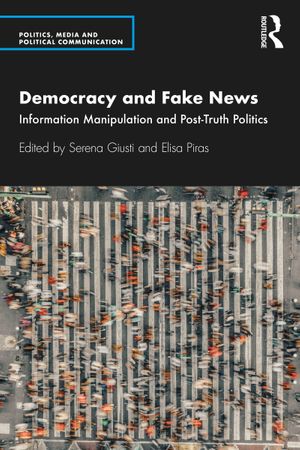
Democracy and Fake News: Information Manipulation and Post-Truth Politics
This book explores the challenges that disinformation, fake news, and post-truth politics pose to democracy from a multidisciplinary perspective. The authors analyse and interpret how the use of technology and social media as well as the emergence of new political narratives has been progressively changing the information landscape, undermining some of the pillars of democracy.The volume sheds light on some topical questions connected to fake news, thereby contributing to a fuller understanding of its impact on democracy. In the Introduction, the editors offer some orientating definitions of post-truth politics, building a theoretical framework where various different aspects of fake news can be understood. The book is then divided into three parts: Part I helps to contextualise the phenomena investigated, offering definitions and discussing key concepts as well as aspects linked to the manipulation of information systems, especially considering its reverberation on democracy. Part II considers the phenomena of disinformation, fake news, and post-truth politics in the context of Russia, which emerges as a laboratory where the phases of creation and diffusion of fake news can be broken down and analysed; consequently, Part II also reflects on the ways to counteract disinformation and fake news. Part III moves from case studies in Western and Central Europe to reflect on the methodological difficulty of investigating disinformation, as well as tackling the very delicate question of detection, combat, and prevention of fake news.This book will be of great interest to students and scholars of political science, law, political philosophy, journalism, media studies, and computer science, since it provides a multidisciplinary approach to the analysis of post-truth politics.

Artificial Intelligence in the Capitalist University: Academic Labour, Commodification, and Value
Using Marxist critique, this book explores manifestations of Artificial Intelligence (AI) in Higher Education and demonstrates how it contributes to the functioning and existence of the capitalist university. Challenging the idea that AI is a break from previous capitalist technologies, the book offers nuanced examination of the impacts of AI on the control and regulation of academic work and labour, on digital learning and remote teaching, and on the value of learning and knowledge. Applying a Marxist perspective, Preston argues that commodity fetishism, surveillance, and increasing productivity ushered in by the growth of AI, further alienates and exploits academic labour and commodifies learning and research. The text puts forward a solid theoretical framework and methodology for thinking about AI to inform critical and revolutionary pedagogies.Offering an impactful and timely analysis, this book provides a critical engagement and application of key Marxist concepts in the study of AI’s role in Higher Education. It will be of interest to those working or researching in Higher Education.

Archives and Human Rights
Why and how can records serve as evidence of human rights violations, in particular crimes against humanity, and help the fight against impunity? Archives and Human Rights shows the close relationship between archives and human rights and discusses the emergence, at the international level, of the principles of the right to truth, justice and reparation.Through a historical overview and topical case studies from different regions of the world the book discusses how records can concretely support these principles. The current examples also demonstrate how the perception of the role of the archivist has undergone a metamorphosis in recent decades, towards the idea that archivists can and must play an active role in defending basic human rights, first and foremost by enabling access to documentation on human rights violations.Confronting painful memories of the past is a way to make the ghosts disappear and begin building a brighter, more serene future. The establishment of international justice mechanisms and the creation of truth commissions are important elements of this process. The healing begins with the acknowledgment that painful chapters are essential parts of history; archives then play a crucial role by providing evidence. This book is both a tool and an inspiration to use archives in defence of human rights.

The Cultural Practice of Immigrant Filmmaking: Minor Immigrant Cinemas in Sweden 1950–1990
Based on a research project funded by the Swedish Research Council, this book analyses 40 years of post-war independent immigrant filmmaking in Sweden. John Sundholm and Lars Gustaf Andersson consider the creativity that lies in the state of exile, offering analyses of over 50 rarely seen immigrant films that would otherwise remain invisible and unarchived. They shed light on the complex web of personal, economic and cultural circumstances around migrant filmmaking, and discuss associations that became important sites of self-organization for exiled filmmakers: The Independent Film Group, The Stockholm Film Workshop, Cineco, Kaleidoscope and Tensta Film Association.