Open Access Books
After Ethnos
For most of the twentieth century, anthropologists understood themselves as ethnographers. The art of anthropology was the fieldwork-based description of faraway others—of how social structures secretly organized the living-together of a given society, of how a people had endowed the world surrounding them with cultural meaning. While the poetics and politics of anthropology have changed dramatically over the course of a century, the basic equation of anthropology with ethnography—as well as the definition of the human as a social and cultural being—has remained so evident that the possibility of questioning it occurred to hardly anyone. In After Ethnos Tobias Rees endeavors to decouple anthropology from ethnography—and the human from society and culture—and explores the manifold possibilities of practicing a question-based rather than an answer-based anthropology that emanates from this decoupling. What emerges from Rees’s provocations is a new understanding of anthropology as a philosophically and poetically inclined, fieldwork-based investigation of what it could mean to be human when the established concepts of the human on which anthropology has been built increasingly fail us.
Soziale Medien in Schule und Hochschule: Linguistische, sprach- und mediendidaktische Perspektiven
Social media challenges didactics from two perspectives: as didactic tools, they can enrich lessons in achieving their educational and promotional goals. As a subject of reflection, they must be analyzed for their effects on language, communication, the individual, and society in order to provide learners with skills for orientation in the digital world. This volume presents ten works by 17 linguistics, language and media didactics teachers, using practical examples and teaching suggestions to reflect current developments and challenges in teaching and learning through social media and social media.
Think D.S.P.: Digital Signal Processing in Python, Version 1.0.9
Think D.S.P. is an introduction to Digital Signal Processing in Python. The premise of this book (and the other books in the Think X series) is that if you know how to program, you can use that skill to learn other things. The author is writing this book because he thinks the conventional approach to digital signal processing is backward: most books (and the classes that use them) present the material bottom-up, starting with mathematical abstractions like phasors.
Teaching in a Digital Age
Teachers, instructors and faculty are facing unprecedented change, with often larger classes, more diverse students, demands from government and employers who want more accountability and the development of graduates who are workforce ready, and above all, we are all having to cope with ever changing technology. To handle change of this nature, teachers and instructors need a base of theory and knowledge that will provide a solid foundation for their teaching, no matter what changes or pressures they face.Although the book contains many practical examples, it is more than a cookbook on how to teach. It addresses the following questions: Is the nature of knowledge changing, and how do different views on the nature of knowledge result in different approaches to teaching? What is the science and research that can best help me in my teaching? How do I decide whether my courses should be face-to-face, blended or fully online? What strategies work best when teaching in a technology-rich environment?What methods of teaching are most effective for blended and online classes?How do I make choices among all the available media, whether text, audio, video, computer or social media, in order to benefit my students and my subject?How do I maintain high quality in my teaching in a rapidly changing learning environment while managing my workload?What are the real possibilities for teaching and learning using M.O.O.C.s, O.E.R.s, open textbooks?In summary, the book examines the underlying principles that guide effective teaching in an age when everyone, and in particular the students we are teaching, is using technology. A framework and a set of guidelines are suggested for making decisions about your teaching, while understanding that every subject is different, and every teacher and instructor has something unique and special to bring to their teaching. In the end, though, the book isn’t really about teachers and instructors, although you are the target group. It’s about you helping your students to develop the knowledge and skills they will need in a digital age — not so much digital skills, but the thinking and knowledge that will bring them success. For that to happen, though, your students need you to be on top of your game. This book is your coach.
Interpreting Canada’s 2019 Food Guide and Food Labelling for Health Professionals
This textbook provides the novice learner with a foundational understanding of Canada’s 2019 Food Guide and Food Labelling. It highlights important considerations for future health professionals seeking to adopt the new food guide into their practice, including strategies towards healthy eating. This open textbook underscores a relational inquiry approach to inform discussions with clients about nutrition and healthy eating.

Geothermal Energy: Clean Power From the Earth’s Heat
In an attempt to help national planners and average citizens alike understand the nature and energy potential of geothermal resources, this book (1) describes the distribution and nature of geothermal energy, (2) reviews the common types of geothermal systems that provide useful energy with current technology, (3) considers potential geothermal resources that might someday be tapped with developing technologies, and (4) summarizes the role of earth-science information in assessing and harnessing geothermal resources wherever they occur worldwide.

Fundamentals of Business: Canadian Edition
An introductory textbook in business that covers a variety of topics: The Foundations of Business, Economics and Business, Ethics and Social Responsibility, Business in a Global Environment, Forms of Business Ownership, Entrepreneurship: Starting a Business, Management and Leadership, Structuring Organizations, Operations Management, Motivating Employees, Managing Human Resources, Union/Management Issues, Marketing: Providing Value, Accounting and Financial Information, and Personal Finances.
From M.S.A. to C.A.: A Beginner’s Guide to Transitioning to Colloquial Arabic
This book is for students who have studied Modern Standard Arabic (M.S.A.) for one year or more and would like to learn colloquial Arabic basics using their knowledge of M.S.A. It aims at transitioning learners from Novice Mid level to Intermediate Low through presenting situations useful for living in an Arab country. The book has several features including hyperlinks, practice dialogues with open answers, cultural tips and more. To access the audio files to accompany this book, please visit http://pdxscholar.library.pdx.edu/pdxopen/8/
Essentials of Linguistics
This Open Educational Resource (OER) brings together Open Access content from around the web and enhances it with dynamic video lectures about the core areas of theoretical linguistics (phonetics, phonology, morphology, syntax, and semantics), supplemented with discussion of psycholinguistic and neurolinguistic findings. Essentials of Linguistics is suitable for any beginning learner of linguistics but is primarily aimed at the Canadian learner, focusing on Canadian English for learning phonetic transcription, and discussing the status of Indigenous languages in Canada. Drawing on best practices for instructional design, Essentials of Linguistics is suitable for blended classes, traditional lecture classes, and for self-directed learning. No prior knowledge of linguistics is required.

Der Philosoph und sein Bild: Dion von Prusa
Der Band präsentiert bisher noch nie im Detail kommentierte Vortragstexte des Redners und Philosophen Dion von Prusa (um 40 – nach 111 n. Chr.), die ein Bild des Philosophen nicht als eines abstrakten Denkers, sondern als eines praktischen Ethikers zeichnen, der durch sein Auftreten die Menschen zum Überdenken und Korrigieren ihres Lebens anregt.
The Resonance of Unseen Things: Poetics, Power, Captivity, and UFOs in the American Uncanny
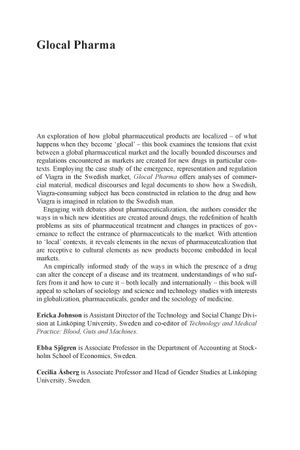
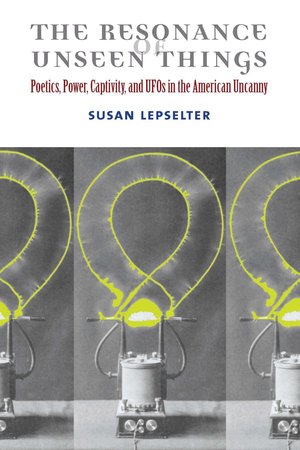
The Resonance of Unseen Things offers an ethnographic meditation on the “uncanny” persistence and cultural freight of conspiracy theory. The project is a reading of conspiracy theory as an index of a certain strain of late 20th-century American despondency and malaise, especially as understood by people experiencing downward social mobility. Written by a cultural anthropologist with a literary background, this deeply interdisciplinary book focuses on the enduring American preoccupation with captivity in a rapidly transforming world. Captivity is a trope that appears in both ordinary and fantastic iterations here, and Susan Lepselter shows how multiple troubled histories of race, class, gender, and power become compressed into stories of uncanny memory. We really don’t have anything like this in terms of a focused, sympathetic, open-minded ethnographic study of UFO experiencers… The author’s semiotic approach to the paranormal is immensely productive, positive, and, above all, resonant with what actually happens in history.

Digital Accessibility as a Business Practice: Essential Skills for Business Leaders
Most business leaders would agree that reaching the broadest audience is good for a business’s bottom line. A good portion of that audience will be people with disabilities. How, though, would an organization go about ensuring it is as accessible as it can be to all its potential clients or customers, including people with disabilities? This resource has been created to answer this question and to demystify “digital accessibility” as a business practice. It brings together all the pieces of the digital accessibility picture and provides strategies and resources that will help make digital accessibility a part of an organization’s business culture. This resource is an adaptation of the massive open online course (MOOC) of the same name, developed through The G. Raymond Chang School of Continuing Education at Ryerson University and offered through the Canvas Network. To see when the course will be offered next, check the course website. Though the resource originates in Ontario, Canada, and includes some discussion of the Accessibility for Ontarians with Disabilities Act (AODA), the content will be relevant to a global audience. Accessibility as it applies to AODA and Ontarians applies equally in other jurisdictions, albeit perhaps in some cases without the motivation of the law to enforce it as a requirement. Many are watching Ontario as it rolls out its 20-year plan to make the province the most accessible jurisdiction in the world. Though the learning materials here are aimed at educating business leaders and managers about digital accessibility as a business practice, it will be of interest to anyone who wants to understand organizational culture in general and how digital accessibility fits into that culture. What you’ll learn here goes well beyond accommodating people with disabilities or adhering to the law. It is about improving your bottom line and ensuring your business or organization is able to serve its whole audience — not just those who are able bodied or using the latest technology, but also those from the margins of society, who are often overlooked by the mainstream. Being a good “corporate citizen” and “doing the right thing” are phrases often used to justify making an effort to remove potential barriers to goods and services, but it’s more than that. The business arguments for accessibility are many. They are about reaching the broadest audience possible. People with disabilities have family and friends, who will go elsewhere if together they are unable to effectively access your business’s website or digital content. When you consider that people with disabilities make up nearly 15% of the population (WHO), and when you include their mothers and fathers, brothers and sisters, aunts and uncles, and more, that number can reach 50% of the population who are affected by disability in one way or another. Most businesses would have a hard time justifying serving only 50% of their potential customer base. The bottom line: Digital accessibility is good for business.
Cinematic Rupture: Reading Cambodia’s Genocide through Deleuze and Guattari
This paper will deploy Deleuze and Guattari’s geophilosophy to read the political economy of contemporary Cambodia as a stratum that emerged from the deterritorializing mechanisms of the Khmer Rouge genocide and politicide. The recent documentary Enemies of the People offers a cinematic space for the unpunished and now-elderly executioners of Democratic Kampuchea to share their memories of these foundational events of mass murder, thereby forcing ruptures in the body politic of Cambodia through their revelations of the violent processes of deterritorialization that allowed the emergence of this high growth Southeast Asian economy. The paper will proceed by examining the double articulation of stratification in Cambodia, thereby excavating the bodies hidden by the processes of reterritorialization and overcoding, and will conclude with a speculative look at what these cinematic ruptures portend for becoming-Cambodia.
Building a Competitive First Nation Investment Climate
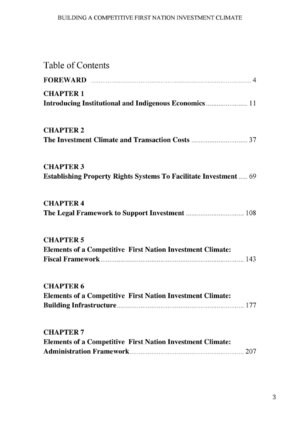
This is the first edition of the open text book Building a Competitive Investment Climate on First Nation Lands. This textbook is for students who are First Nation and tribal government employees or students who would like to work for or with First Nation and tribal governments. The purpose of this textbook is to help interested First Nation and tribal governments build a competitive investment climate. Work began on this text book in early 2012 with a generous grant from the Donner Canadian Foundation. Financial support was also provided by the First Nations Tax Commission and the Tulo Centre.
Beginning Japanese for Professionals
This textbook is designed for beginning learners who want to learn basic Japanese for the purpose of living and working in Japan. Unlike textbooks written primarily for students, whose content largely centers on student life, this book focuses more on social and professional life beyond school.As a beginning level textbook, this book includes many elementary grammar patterns (Japanese Language Proficiency Test Levels 5 and 4), but the vocabulary and situations are selected specifically for working adults. Explanations are kept concise so as to only cover key points. This textbook can be used for self-study, as part of an online course or as a traditional college course.

The desert home: The desert home
Reid, M. (1908). The desert home; or, The adventures of a lost family in the wilderness. London: Routledge, 1908.

[D] M. Reid, The desert home; or, the adventures of a lost family in the wilderness (1908).: London: Routledge, 1908.
The Desert Home was clearly targeted at a young British audience. Reid addressed his readers as ‘my young friend’, and used images of the North American wilderness to shape the impressions of young British readers. For more information on material in the University of Liverpool Library’s Special Collections & Archives, and how to access it, see https://www.liverpool.ac.uk/library/sca/

[C] R. M. Ballantyne, The wild man of the west: a tale of the Rocky Mountains (1863).: London and New York: Routledge, 1863.
The Wild Man of the West is an example of how wilderness can become a testing space in which white and male characters prove and improve themselves mentally, physically, and spirituality. For more information on material held in the University of Liverpool Library’s Special Collections & Archives, and how to access it, see https://www.liverpool.ac.uk/library/sca/

Der lateinische Begriff “otium”: Eine semantische Studie
O tium ist einer der schillerndsten Begriffe der lateinischen Sprache. Sein Bedeutungsspektrum umfasst zahlreiche ambivalente Komponenten, die es erschweren, seine Bedeutung zu fassen. Häufig wird otium im Deutschen mit “Muße” übersetzt, doch gleichbedeutend sind die beiden Begriffe keineswegs. Hiervon ausgehend werden als Ergebnisse einer semantischen Studie die grundlegenden Bedeutungskomponenten von otium herausgearbeitet und sein Bedeutungsspektrum strukturiert beschrieben. Dabei nimmt Franziska C. Eickhoff das gesamte semantische Feld von otium in den Blick und arbeitet die Bedeutungskomponenten heraus, die allen Verwendungsmöglichkeiten als Kernbedeutungen gemeinsam sind. So skizziert sie mit Ansätzen der kognitiven Semantik das mentale Konzept von otium und vergleicht es mit dem Konzept von Muße.