
Open Access Books
Cyber Public Sphere and Social Movements: Calling to Cyber Spaces
The diversification and politicisation of the mass media within itself and also societal pressure created by the mass media at a social level have caused changes to our social structure. The first change began with the contextual changes to the mass media, and this change led to visible changes in societies. That transformation has almost erased the distinction between the private and the public spheres, especially as social media has entered our lives. Now, things that occur in the private sphere are easily transported into the public sphere and others’ private spheres. Therefore, the virtual public sphere has emerged through social media and all other practices on the internet. It appears that activist movements have either been founded in the cyberworld or that existing activist movements have been strengthened by finding supporters via social media and blogs. The public sphere and activist movements that come into existence in the virtual environment, such as social media, are a new experience in terms of societies, and they are the sign of how the future will be shaped. It is obvious that social media is now an integral part of our daily lives. It is a place where political and secular ideas spread. In this social area each individual has the opportunity to make political statements as if they were standing in an agora. Shared content represents the position within the virtual life that individuals have built for themselves. This study defines the virtual public sphere together with virtual activism and the network society in the light of the public sphere – private sphere debates.

Armed Conflict and Environment: From World War II to Contemporary Asymmetric Warfare
This study is the first to analyse the manifold interrelations between armed conflicts and the human and natural environments both historically and sociologically. While most research to date has dealt with this topic primarily with regard to environmental destruction caused by acts of war or armament in peacetime, this publication goes one step further by highlighting the historical changes to this complex interrelationship with concrete examples: from the Second World War in Europe and Asia via the classic proxy war in Vietnam to the current asymmetric wars in South Asia. At the same time, it focuses on systematic questions: How do environments influence armed conflicts? How do wars change environments? And how do complete ‘war landscapes’ (warscapes) emerge, in which war and militarisation permanently change the relations between people and their environment?
With contributions by:
Detlef Briesen, Anthony Goreau-Ponceaud, David Pickus, Sarada Prasanna Das, Nguyen Thi Hanh, Nguyen Thi Thuy Hang, Dao Duc Thuan/Nguyen Van Ngoc, Tim Kaiser, Dam Thi Phuong Thuy/Nguyen Van Bac, Brigitte Sébastia, Manish Tiwari, Babu Rangaiah/Kumaresan Raja, Martin Dinges.
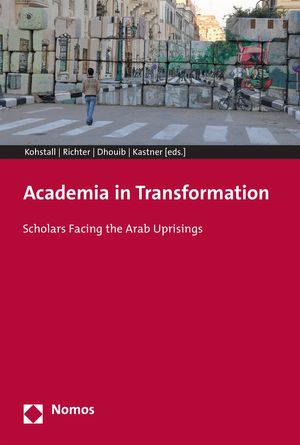
Academia in Transformation: Scholars Facing the Arab Uprisings
Popular uprisings in the Middle East and North Africa (MENA) have had a deep impact, not only on the societies and political structures in the respective countries there, but also on different academic disciplines. The events that started in 2010 in Tunisia have altered academic terminology, contributed to a shift in study focus and sometimes challenged dominant theoretical approaches. The book provides an insightful and illuminating view of the transformation of the academic landscape in the aftermath of these uprisings. It analyses how the academic discourse in and on the MENA region has changed and reflects on how the aforementioned transformation processes, which are still ongoing, are shaping lines of inquiry in different disciplines, including political science, Arabic literature and language studies, philosophy, communication studies, sociology, computer studies and archaeology. The book’s authors are members of the Arab-German Young Academy of Sciences and Humanities (AGYA).
With contributions by
Ammar Abdulrahman, Tobias Amft, Hanan Badr, Sarhan Dhouib, Kalman Graffi, Amal Grami, Maha Houssami, Christian Junge, Fatima Kastner, Florian Kohstall, Bilal Orfali, Carola Richter, Hans Jörg Sandkühler, Rana Siblini, Jan Claudius Völkel, Barbara Winckler

Strain-Engineered MOSFETs
This book brings together new developments in the area of strain-engineered MOSFETs using high-mibility substrates such as SIGe, strained-Si, germanium-on-insulator and III-V semiconductors into a single text which will cover the materials aspects, principles, and design of advanced devices, their fabrication and applications. The book presents a full TCAD methodology for strain-engineering in Si CMOS technology involving data flow from process simulation to systematic process variability simulation and generation of SPICE process compact models for manufacturing for yield optimization.

Signal Processing: A Mathematical Approach (2nd Edition)
This book explains how mathematical tools can be used to solve problems in signal processing. Assuming an advanced undergraduate- or graduate-level understanding of mathematics, this second edition contains new chapters on convolution and the vector DFT, plane-wave propagation, and the BLUE and Kalman filters. It expands the material on Fourier analysis to three new chapters to provide additional background information, presents real-world examples of applications that demonstrate how mathematics is used in remote sensing, and includes robust appendices and problems for classroom use.

Writing the Reader: Configurations of a Cultural Practice in the English Novel
The history of the novel is also a history of shifting views of the value of novel reading. This study investigates how novels themselves participate in this development by featuring reading as a multidimensional cultural practice. English novels about obsessive reading, written in times of medial transition, serve as test cases for a model that brings together analyses of form and content.

Die Frühehe im Recht: Praxis, Rechtsvergleich, Kollisionsrecht, höherrangiges Recht
Die Frühehe, ein globales und altes Phänomen, ist seit einigen Jahren nicht nur in den Blickwinkel menschenrechtlicher und rechtspolitischer Diskussionen geraten, sondern auch Objekt nationaler Rechtsreformen geworden. Mehrere europäische Staaten, darunter 2017 Deutschland, reformierten ihr Recht dahingehend, nicht nur die inländische Frühehe ausnahmslos zu verbieten, sondern zudem der im Ausland geschlossenen Frühehe die Anerkennung zu verweigern. Der Sammelband stellt vergleichend Praxis und soziale Hintergründe der Frühehe sowie ihre rechtliche Behandlung in ausgewählten Rechtsordnungen Europas, Nord- und Lateinamerikas, des Nahen Ostens und Asiens dar. Darauf aufbauend untersucht er, ob die Reform des deutschen internationalen Privatrechts zielführend ist und ob sie mit höherrangigem Recht vereinbar ist.
Theories of Informetrics and Scholarly Communication
Scientometrics have become an essential element in the practice and evaluation of science and research, including both the evaluation of individuals and national assessment exercises. Yet, researchers and practitioners in this field have lacked clear theories to guide their work. As early as 1981, then doctoral student Blaise Cronin published “The need for a theory of citing” —a call to arms for the fledgling scientometric community to produce foundational theories upon which the work of the field could be based. More than three decades later, the time has come to reach out the field again and ask how they have responded to this call.
This book compiles the foundational theories that guide informetrics and scholarly communication research. It is a much needed compilation by leading scholars in the field that gathers together the theories that guide our understanding of authorship, citing, and impact.
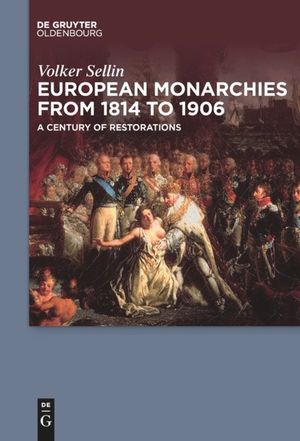
European Monarchies from 1814 to 1906: A Century of Restorations
The year 2014 saw the 200th anniversary of Napoleon’s downfall – and the restauration of the French monarchy under the house of Bourbon. With this as a starting point, Volker Sellin shows how the European monarchies restored and prolonged their reigns by giving their countries constitutions. This new angle results in an astonishing history of the 19th century in Europe from Spain to Russia.

Diaspora, Law and Literature
The well-known challenges of international migration have triggered new departures in academic approaches, with ‘diaspora studies’ evolving as an interdisciplinary and even transdisciplinary field of study. Its emerging methodology shares concerns with another interdisciplinary field, the study of the relations between law and literature, which focuses on the ways in which the two cultural practices of law and literature mutually negotiate each other and on the question after the ontological commensurability of the domains. This volume offers, for the first time, an attempt to provide an interface between these overlapping interdisciplinary endeavours of literary studies, legal studies, and diaspora studies. In doing so, it explores new approaches and invites new perspectives on diasporas, migration and the disciplines that study them, hopefull also adding to the cultural resources of coping with a swiftly changing social landscape in a globalizing world.

Communism’s Jewish Question: Jewish Issues in Communist Archives
In the last two decades a large amount of previously secret documents on Jewish issues emerged from the newly opened Communist archives. The selection of these papers published in the volume and stemming mostly from Hungarian archives will shed light on a period of Jewish history that is largely ignored because much of the current scholarship treats the Shoah as the end of Jewish history in the region. The documents introduced and commented by the editor of the volume, András Kovács, will give insight into the conditions and constraints under which the Jewish communities, first of all, the largest Jewish community of the region, the Hungarian one had to survive in the time of the post-Stalinist Communist dictatorship. They may shed light on the ways how “Jewish policy” of the Soviet bloc countries was coordinated and orchestrated from Moscow and by the single countries. The archival material will prove that the ruling communist parties were restlessly preoccupied with the “Jewish question.” This preoccupation, which kept the whole issue alive in the decades of communist rule, explains to a great extent its open reemergence in the time of transition and in the post-communist period.

The Cold War: Historiography, Memory, Representation
The traces of the Cold War are still visible in many places all around the world. It is the topic of exhibits and new museums, of memorial days and historic sites, of documentaries and movies, of arts and culture. There are historical and political controversies, both nationally and internationally, about how the history of the Cold War should be told and taught, how it should be represented and remembered. While much has been written about the political history of the Cold War, the analysis of its memory and representation is just beginning. Bringing together a wide range of scholars, this volume describes and analyzes the cultural history and representation of the Cold War from an international perspective. That innovative approach focuses on master narratives of the Cold War, places of memory, public and private memorialization, popular culture, and schoolbooks. Due to its unique status as a center of Cold War confrontation and competition, Cold War memory in Berlin receives a special emphasis.

Christianity, Book-Burning and Censorship in Late Antiquity: Studies in Text Transmission
It is estimated that only a small fraction, less than 1 per cent, of ancient literature has survived to the present day. The role of Christian authorities in the active suppression and destruction of books in Late Antiquity has received surprisingly little sustained consideration by academics. In an approach that presents evidence for the role played by Christian institutions, writers and saints, this book analyses a broad range of literary and legal sources, some of which have hitherto been little studied. Paying special attention to the problem of which genres and book types were likely to be targeted, the author argues that in addition to heretical, magical, astrological and anti-Christian books, other less obviously subversive categories of literature were also vulnerable to destruction, censorship or suppression through prohibition of the copying of manuscripts. These include texts from materialistic philosophical traditions, texts which were to become the basis for modern philosophy and science. This book examines how Christian authorities, theologians and ideologues suppressed ancient texts and associated ideas at a time of fundamental transformation in the late classical world.
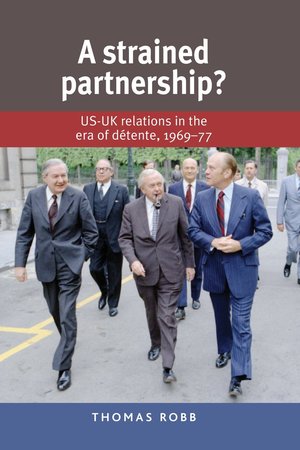
A Strained Partnership?: US–UK relations in the era of détente, 1969–77
This is the first monograph-length study that charts the coercive diplomacy of the administrations of Richard Nixon and Gerald Ford as practised against their British ally in order to persuade Edward Heath’s government to follow a more amenable course throughout the ‘Year of Europe’ and to convince Harold Wilson’s governments to lessen the severity of proposed defence cuts. Such diplomacy proved effective against Heath but rather less so against Wilson. It is argued that relations between the two sides were often strained, indeed, to the extent that the most ‘special’ elements of the relationship were suspended. Yet, the relationship also witnessed considerable co-operation. This book offers new perspectives on US and UK policy towards British membership of the European Economic Community; demonstrates how US détente policies created strain; reveals the temporary shutdown of US-UK intelligence and nuclear co-operation, and re-evaluates the US-UK relationship throughout the IMF Crisis.
Populismus und Mittelklasse: Die Kirchner-Regierungen zwischen 2003 und 2015 in Argentinien
Populismus der Mitte? Was zunächst als Widerspruch erscheint, entpuppt sich im Falle Argentiniens als fruchtbare Perspektive auf die gesellschaftlichen Entwicklungen während der Kirchner-Regierungen (2003-2015). Tobias Boos zeigt, dass Populismus weit entfernt davon ist, ein Phänomen der randständigen Massen zu sein. Vielmehr offenbaren sich Teile der argentinischen Mittelklasse als gewichtige Säule des politischen Projekts der Kirchners. Die Studie geht den Verflechtungen von politischer Ökonomie und politischen Identitäten nach und wirft ein neues Licht auf die lateinamerikanischen Populismen des 21. Jahrhunderts.
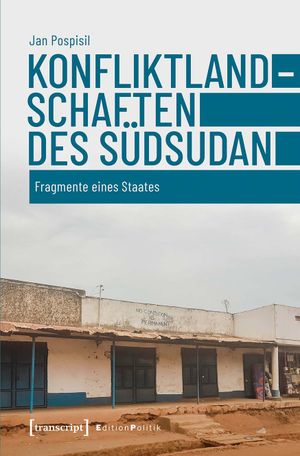
Konfliktlandschaften des Südsudan: Fragmente eines Staates
Nach einem jahrzehntelangen Bürgerkrieg erlangt die Republik Südsudan am 9. Juli 2011 ihre Unabhängigkeit. Doch trotz aller Bemühungen um einen friedlichen Staatsaufbau nimmt die erste Dekade der Eigenstaatlichkeit einen gewaltsamen Verlauf: Im Dezember 2013 schlittert der Südsudan in einen blutig geführten Bürgerkrieg, der sich nicht als einheitlicher Konflikt mit klar definierbaren Parteien, sondern zu einem Amalgam komplex verschachtelter Konfliktlandschaften entwickelt. In analytischen Vignetten, die verschiedene Regionen sowie die nationale und internationale Dimension des Bürgerkrieges untersuchen, gibt Jan Pospisil einen Einblick in die südsudanesische Konfliktrealität.
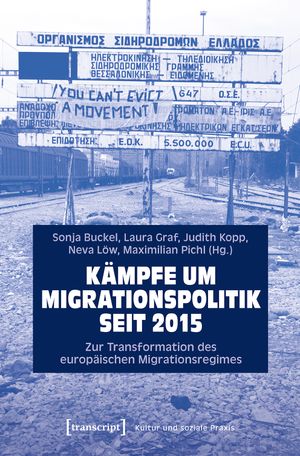
Kämpfe um Migrationspolitik seit 2015: Zur Transformation des europäischen Migrationsregimes
Die migrantische Mobilität im Sommer 2015 hat die europäische Flüchtlingspolitik auf den Kopf gestellt. Rechte und konservative Kräfte wurden bestärkt, aber auch die Solidaritätserfahrungen hallen immer noch nach. Wie steht es nun um die Kämpfe der Migration? Welche Kräfte haben sich durchgesetzt und welche Verschiebungen haben sich diskursiv und politisch ergeben? Und was bedeutet dies für emanzipatorische, pro-migrantische Perspektiven? Die Forschungsgruppe »Beyond Summer 15« diskutiert diese Transformation des Migrationsregimes und zeigt u.a. in den Bereichen Recht, öffentliche Debatten, zivilgesellschaftliche Interventionen und Arbeitsmarkt auf, wie um Migration gerungen wird.

Die Brautgabe im Familienvermögensrecht: Innerislamischer Rechtsvergleich und Integration in das deutsche Recht
Die Brautgabe (mahr) ist eine Schlüsselfigur des klassischen islamischen Eherechts, die von allen islamischen Ländern rezipiert worden ist. Nadjma Yassari untersucht die Grundlagen dieses Rechtsinstituts, verfolgt ihre historische Entwicklung und kontextualisiert sie im Familienvermögensrecht von Ägypten, Iran, Pakistan und Tunesien. Obwohl die vermögensrechtlichen Beziehungen zwischen den Ehegatten stetig fortentwickelt worden sind, ist die Ausstrahlungskraft dieser Reformen schwach: Der Grundsatz der nachehelichen Solidarität ist kaum gefestigt; nennenswerte soziale Transferleistungen bestehen nicht. Die Brautgabe spielt somit weiterhin eine wichtige Rolle bei der Schließung der bestehenden Versorgungslücken. Diese Erkenntnis bildet in der Folge die Grundlage für eine Verortung der Brautgabe im Kollisionsrecht sowie für ihre Integration in das deutsche Familienrecht.

In digitaler Gesellschaft: Neukonfigurationen zwischen Robotern, Algorithmen und Usern
Wie verändern sich gesellschaftliche Praktiken und die Chancen demokratischer Technikgestaltung, wenn neben Bürger*innen und Öffentlichkeit auch Roboter, Algorithmen, Simulationen oder selbstlernende Systeme einbezogen und als Beteiligte ernstgenommen werden? Die Beiträger*innen des Bandes untersuchen die Neukonfiguration von Verantwortung und Kontrolle, Wissen, Beteiligungsansprüchen und Kooperationsmöglichkeiten im Umgang mit intelligenten Systemen wie smart grids, Servicerobotern, Routenplanern, Finanzmarktalgorithmen und anderen soziodigitalen Arrangements. Aufgezeigt wird, wie die digitalen »Neulinge« dazu beitragen, die Gestaltungsmöglichkeiten für Demokratie, Inklusion und Nachhaltigkeit zu verändern und Macht- und Kraftverhältnisse zu verschieben.

Freie Zeit: Eine politische Idee von der Antike bis zur Digitalisierung
»Das Reich der Freiheit beginnt in der That erst da, wo das Arbeiten, das durch Noth und äußere Zweckmäßigkeit bestimmt ist, aufhört« – so einst Karl Marx.Und heute? Trotz weitgehender Automatisierung bleibt die Norm der Vollzeitarbeit bestehen. Das Motto »Sozial ist, was Arbeit schafft« wird von fast allen politischen Akteuren getragen. Zugleich wird die bisherige Form der Vollzeitarbeitsgesellschaft in vielen Momenten brüchiger und ungleicher: Pflegekrise, Gender-Pay-Gap, prekäre Jobs oder unregulierte Crowdwork auf digitalen Plattformen offenbaren nur einige der vielfältigen Bruchlinien.Mit Blick auf die politische Ideengeschichte der freien Zeit und die aktuellen Debatten um Automatisierung und Digitalisierung entwirft Gregor Ritschel ein Plädoyer für den schrittweisen Ausgang aus der bisherigen Arbeits- in eine »Multiaktivitätsgesellschaft« (André Gorz). Er zeigt: Eine Verkürzung der Arbeitszeit kann uns eine sozialere, kreativere und auch umweltschonendere Welt ermöglichen.

EU-Staatlichkeit zwischen Ausbau und Stagnation: Kritische Perspektiven auf die Transformationsprozesse in der Euro-Krise
Die nicht-hegemonial verankerte EU-Interventionsstaatlichkeit im Herrschaftsmodus der (Selbst-)Disziplinierung stellt die Akteur*innen in der Europäischen Union vor große Herausforderungen. Johannes Gerken widmet sich, aufbauend auf den Traditionslinien kritischer Europaforschung, dem durch die Euro-Krise induzierten EU-Staatlichkeitsausbau und entwickelt ein eigenes begriffliches Verständnis der EU-Staatlichkeit. Auf Grundlage einer historisch-materialistischen Staatlichkeitsanalyse präsentiert er eine Einordnung der Politik zur Bewältigung der Euro-Krise in den Gesamtzusammenhang der EU-Staatlichkeitsgenese.

Die Eigentumsfrage im 21. Jahrhundert: Ein rechtsphilosophischer Traktat über die Zukunft der Menschheit
Die Ökologie warnt vor der Erderwärmung, die Soziologie vor sozialer Ungleichheit: beides bedroht das Überleben der kommenden Generationen. Alexander von Pechmann behandelt aus rechtsphilosophischer Perspektive die Frage, welche künftigen Formen des Eigentums diesen globalen Herausforderungen gewachsen sind. Er kommt zu dem Ergebnis, dass weder das kapitalistische Privateigentumsrecht noch das nationale Souveränitätsprinzip in der Lage sind, die globalen Zukunftsprobleme zu lösen. Dies vermag, so die These, nur die Menschheit als Gesamteigentümer in der Rechtsgestalt »Vereinter Nationen«.

Der Wert der Digitalisierung: Gemeinwohl in der digitalen Welt
Die digitale Zukunft ist bereits Realität. Wir können den Wandel nicht weiter aussitzen, sondern müssen ihn gemeinsam aktiv gestalten. Doch welchen ethischen Herausforderungen müssen wir uns hierbei stellen? Wie wahren wir die Menschen-, Grund- und Bürgerrechte? Und wie können wir unsere Werte für die Gestaltung disruptiver Innovationen und der digitalen Zukunft nutzen? Die Autor*innen aus Politik, Wissenschaft und Praxis zeigen auf, wie technologische Phänomene mit unseren Werten in Einklang gebracht werden können und diskutieren normative Impulse und Ideen für die Regelung des Gemeinwohls in der digitalen Welt.

Bürgerwehren in Deutschland: Zwischen Nachbarschaftshilfe und rechtsextremer Raumergreifung
Von scheinbar unpolitischen Nachbarschaftswachen bis zu organisierten rechtsextremen Patrouillen – immer häufiger inszenieren sich Bürger*innen als alternative Ordnungsmacht. Nina Marie Bust-Bartels hat Bürgerwehren auf ihren Streifzügen begleitet und liefert Einblicke in die politischen Motivationen der Mitglieder. Mit ihrer Studie an der Schnittstelle von Soziologie, Ethnologie und Politikwissenschaft zeigt sie, warum vor allem Männer das staatliche Gewaltmonopol infrage stellen. Darüber hinaus untersucht sie erstmals Bürgerwehren als Strategie rechtsextremer Akteure, die durch die Kontrolle des öffentlichen Raumes politische Macht gewinnen wollen.
Real Folks: Race and Genre in the Great Depression
During the Great Depression, people from across the political spectrum sought to ground American identity in the rural know-how of “the folk.” At the same time, certain writers, filmmakers, and intellectuals combined documentary and satire into a hybrid genre that revealed the folk as an anxious product of corporate capitalism, rather than an antidote to commercial culture. In Real Folks, Sonnet Retman analyzes the invention of the folk as figures of authenticity in the political culture of the 1930s, as well as the critiques that emerged in response. Diverse artists and intellectuals—including the novelists George Schuyler and Nathanael West, the filmmaker Preston Sturges, and the anthropologist Zora Neale Hurston—illuminated the fabrication and exploitation of folk authenticity in New Deal and commercial narratives. They skewered the racist populisms that prevented interracial working-class solidarity, prophesized the patriotic function of the folk for the nation-state in crisis, and made their readers and viewers feel self-conscious about the desire for authenticity. By illuminating the subversive satirical energy of the 1930s, Retman identifies a rich cultural tradition overshadowed until now by the scholarly focus on Depression-era social realism.

A Language of Song: Journeys in the Musical World of the African Diaspora
In A Language of Song, Samuel Charters—one of the pioneering collectors of African American music—writes of a trip to West Africa where he found “a gathering of cultures and a continuing history that lay behind the flood of musical expression [he] encountered everywhere . . . from Brazil to Cuba, to Trinidad, to New Orleans, to the Bahamas, to dance halls of west Louisiana and the great churches of Harlem.” In this book, Charters takes readers along to those and other places, including Jamaica and the Georgia Sea Islands, as he recounts experiences from a half-century spent following, documenting, recording, and writing about the Africa-influenced music of the United States, Brazil, and the Caribbean.
Each of the book’s fourteen chapters is a vivid rendering of a particular location that Charters visited. While music is always his focus, the book is filled with details about individuals, history, landscape, and culture. In first-person narratives, Charters relates voyages including a trip to the St. Louis home of the legendary ragtime composer Scott Joplin and the journey to West Africa, where he met a man who performed an hours-long song about the Europeans’ first colonial conquests in Gambia. Throughout the book, Charters traces the persistence of African musical culture despite slavery, as well as the influence of slaves’ songs on subsequent musical forms. In evocative prose, he relates a lifetime of travel and research, listening to brass bands in New Orleans; investigating the emergence of reggae, ska, and rock-steady music in Jamaica’s dancehalls; and exploring the history of Afro-Cuban music through the life of the jazz musician Bebo Valdés. A Language of Song is a unique expedition led by one of music’s most observant and well-traveled explorers.
The Indian Craze: Primitivism, Modernism, and Transculturation in American Art, 1890–1915
In the early twentieth century, Native American baskets, blankets, and bowls could be purchased from department stores, “Indian stores,” dealers, and the U.S. government’s Indian schools. Men and women across the United States indulged in a widespread passion for collecting Native American art, which they displayed in domestic nooks called “Indian corners.” Elizabeth Hutchinson identifies this collecting as part of a larger “Indian craze” and links it to other activities such as the inclusion of Native American artifacts in art exhibitions sponsored by museums, arts and crafts societies, and World’s Fairs, and the use of indigenous handicrafts as models for non-Native artists exploring formal abstraction and emerging notions of artistic subjectivity. She argues that the Indian craze convinced policymakers that art was an aspect of “traditional” Native culture worth preserving, an attitude that continues to influence popular attitudes and federal legislation.
Illustrating her argument with images culled from late-nineteenth- and early-twentieth-century publications, Hutchinson revises the standard history of the mainstream interest in Native American material culture as “art.” While many locate the development of this cross-cultural interest in the Southwest after the First World War, Hutchinson reveals that it began earlier and spread across the nation from west to east and from reservation to metropolis. She demonstrates that artists, teachers, and critics associated with the development of American modernism, including Arthur Wesley Dow and Gertrude Käsebier, were inspired by Native art. Native artists were also able to achieve some recognition as modern artists, as Hutchinson shows through her discussion of the Winnebago painter and educator Angel DeCora. By taking a transcultural approach, Hutchinson transforms our understanding of the role of Native Americans in modernist culture.

A Century of Violence in a Red City: Popular Struggle, Counterinsurgency, and Human Rights in Colombia
In A Century of Violence in a Red City Lesley Gill provides insights into broad trends of global capitalist development, class disenfranchisement and dispossession, and the decline of progressive politics. Gill traces the rise and fall of the strong labor unions, neighborhood organizations, and working class of Barrancabermeja, Colombia, from their origins in the 1920s to their effective activism for agrarian reforms, labor rights, and social programs in the 1960s and 1970s. Like much of Colombia, Barrancabermeja came to be dominated by alliances of right-wing politicians, drug traffickers, foreign corporations, and paramilitary groups. These alliances reshaped the geography of power and gave rise to a pernicious form of armed neoliberalism. Their violent incursion into Barrancabermeja’s civil society beginning in the 1980s decimated the city’s social networks, destabilized life for its residents, and destroyed its working-class organizations. As a result, community leaders are now left clinging to the toothless discourse of human rights, which cannot effectively challenge the status quo. In this stark book, Gill captures the grim reality and precarious future of Barrancabermeja and other places ravaged by neoliberalism and violence.
Dialog über die Liebe – Amatorius: Plutarch
Plutarch gives Plato’s philosophy of love a new direction by applying its basic ideas to marital love and by defending the significance of sexuality for personality development and human bonding. This work is presented here with a literary-oriented introduction, the Greek text has been checked carefully, the German translation aims to be readable and is supplemented by detailed notes. Four essays by various authors are included.
Anthropology and the Racial Politics of Culture
In the late nineteenth century, if ethnologists in the United States recognized African American culture, they often perceived it as something to be overcome and left behind. At the same time, they were committed to salvaging “disappearing” Native American culture by curating objects, narrating practices, and recording languages. In Anthropology and the Racial Politics of Culture, Lee D. Baker examines theories of race and culture developed by American anthropologists during the late nineteenth century and early twentieth. He investigates the role that ethnologists played in creating a racial politics of culture in which Indians had a culture worthy of preservation and exhibition while African Americans did not.
Baker argues that the concept of culture developed by ethnologists to understand American Indian languages and customs in the nineteenth century formed the basis of the anthropological concept of race eventually used to confront “the Negro problem” in the twentieth century. As he explores the implications of anthropology’s different approaches to African Americans and Native Americans, and the field’s different but overlapping theories of race and culture, Baker delves into the careers of prominent anthropologists and ethnologists, including James Mooney Jr., Frederic W. Putnam, Daniel G. Brinton, and Franz Boas. His analysis takes into account not only scientific societies, journals, museums, and universities, but also the development of sociology in the United States, African American and Native American activists and intellectuals, philanthropy, the media, and government entities from the Bureau of Indian Affairs to the Supreme Court. In Anthropology and the Racial Politics of Culture, Baker tells how anthropology has both responded to and helped shape ideas about race and culture in the United States, and how its ideas have been appropriated (and misappropriated) to wildly different ends.