
OA eBooks Collection
Organizational Interventions for Health and Well-being: A Handbook for Evidence-Based Practice
This important new collection provides not only a comprehensive overview of how organizational interventions can improve health and well-being in the workplace – addressing its causes rather than the symptoms – but also the practical issues faced in their design, implementation and evaluation. Drawing on a range of case studies and empirical investigations, it is the first book to seriously examine each element of the intervention process, and to recognize the individual, group, leader and organizational factors that researchers should consider. The authors describe the various challenges to such collaborative processes, as well as the specific methods and tools that can be used in response. Each chapter offers practical, evidence-based guidance. Featuring a final section examining new directions and approaches in organizational intervention research, the book features contributions from some of the leading international researchers in the field. It will be essential reading for any researcher or practitioner interested in the practical issues involved in improving the organization, design and management of the contemporary workplace.
Open World Learning: Research, Innovation and the Challenges of High-Quality Education
This book provides state-of-the-art contemporary research insights into key applications and processes in open world learning. Open world learning seeks to understand access to education, structures, and the presence of dialogue and support systems. It explores how the application of open world and educational technologies can be used to create opportunities for open and high-quality education.Presenting ground-breaking research from an award winning Leverhulme doctoral training programme, the book provides several integrated and cohesive perspectives of the affordances and limitations of open world learning. The chapters feature a wide range of open world learning topics, ranging from theoretical and methodological discussions to empirical demonstrations of how open world learning can be effectively implemented, evaluated, and used to inform theory and practice. The book brings together a range of innovative uses of technology and practice in open world learning from 387,134 learners and educators learning and working in 136 unique learning contexts across the globe and considers the enablers and disablers of openness in learning, ethical and privacy implications, and how open world learning can be used to foster inclusive approaches to learning across educational sectors, disciplines and countries.The book is unique in exploring the complex, contradictory and multi-disciplinary nature of open world learning at an international level and will be of great interest to academics, researchers, professionals, and policy makers in the field of education technology, e-learning and digital education.
On the Politics of Educational Theory: Rhetoric, theoretical ambiguity, and the construction of society
On the Politics of Educational Theory considers the political significance of educational theory as a specific genre of public discourse. Rather than understanding educational theories solely as addressing issues of childrearing and instruction, this book aims to view educational theories in a broader socio-political context. It explores the role of educational theories in the construction of collective and political identities, and analyses them as rhetorical strategies operating as political discourses.Defining the methodological framework through the perspectives of Michel Foucault and Ernesto Laclau, each chapter examines the ways in which theories of education contribute to the creation of social realities and identities. Such issues as the construction of visibility and invisibility of power, the tropes of temporality, or the use of postulational language where theorists say what ‘should’ be done in and by education, are some of the threads that weave through particular theories – from Rousseau to the discourse of education in the knowledge-based society – analysed as ontological rhetorics constitutive of political identities.This book suggests a direction for a more conscious way of dealing with the political in education. As such, it will appeal to researchers, academics and postgraduate students in the fields of educational research, philosophy of education, curriculum studies, social and political theory, and theory of education.
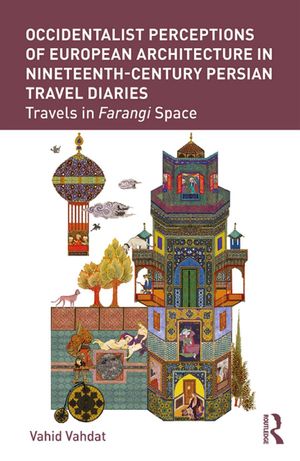
Occidentalist Perceptions of European Architecture in Nineteenth-Century Persian Travel Diaries: Travels in Farangi Space
In the midst of Europe’s nineteenth-century industrial revolution, four men embarked on separate journeys to the wondrous Farangestan – a land of fascinating objects, mysterious technologies, heavenly women, and magical spaces. Determined to learn the secret of Farangestan’s advancements, the travelers kept detailed records of their observations. These diaries mapped an aspirational path to progress for curious Iranian audiences who were eager to change the course of history. Two hundred years later, Travels in Farangi Space unpacks these writings to reveal a challenging new interpretation of Iran’s experience of modernity. This book opens the Persian travelers’ long-forgotten suitcases, and analyzes the descriptions contained within to gain insight into Occidentalist perspectives on modern Europe. By carefully tracing the physical and mental journeys of these travelers, the book paints a picture of European architecture that is nothing like what one would expect.

National Security Intelligence and Ethics
This volume examines the ethical issues that arise as a result of national security intelligence collection and analysis.Powerful new technologies enable the collection, communication, and analysis of national security data on an unprecedented scale. Data collection now plays a central role in intelligence practice, yet this development raises a host of ethical and national security problems, such as: privacy; autonomy; threats to national security and democracy by foreign states; and accountability for liberal democracies. This volume provides a comprehensive set of in-depth ethical analyses of these problems by combining contributions from both ethics scholars and intelligence practitioners. It provides the reader with a practical understanding of relevant operations, the issues that they raise, and analysis of how responses to these issues can be informed by a commitment to liberal democratic values. This combination of perspectives is crucial in providing an informed appreciation of ethical challenges that is also grounded in the realities of the practice of intelligence.This book will be of great interest to all students of intelligence studies, ethics, security studies, foreign policy, and International Relations.
Multimodal Literacy in School Science: Transdisciplinary Perspectives on Theory, Research and Pedagogy
This book establishes a new theoretical and practical framework for multimodal disciplinary literacy (MDL) fused with the subject-specific science pedagogies of senior high school biology, chemistry and physics. It builds a compatible alignment of multiple representation and representation construction approaches to science pedagogy with the social semiotic, systemic functional linguistic-based approaches to explicit teaching of disciplinary literacy. The early part of the book explicates the transdisciplinary negotiated theoretical underpinning of the MDL framework, followed by the research-informed repertoire of learning experiences that are then articulated into a comprehensive framework of options for the planning of classroom work. Practical adoption and adaptation of the framework in biology, chemistry and physics classrooms are detailed in separate chapters. The latter chapters indicate the impact of the collaborative research on teachers’ professional learning and students’ multimodal disciplinary literacy engagement, concluding with proposals for accommodating emerging developments in MDL in an ever-changing digital communication world. The MDL framework is designed to enable teachers to develop all students’ disciplinary literacy competencies. This book will be of interest to researchers, teacher educators and postgraduate students in the field of science education. It will also have appeal to those in literacy education and social semiotics.

Moving Boundaries in Translation Studies
Translation is in motion. Technological developments, digitalisation and globalisation are among the many factors affecting and changing translation and, with it, translation studies. Moving Boundaries in Translation Studies offers a bird’s-eye view of recent developments and discusses their implications for the boundaries of the discipline. With 15 chapters written by leading translation scholars from around the world, the book analyses new translation phenomena, new practices and tools, new forms of organisation, new concepts and names as well as new scholarly approaches and methods. This is key reading for scholars, researchers and advanced students of translation and interpreting studies.
Motivation in Organisations: Searching for a Meaningful Work-Life Balance
Motivation in Organisations: Searching for a Meaningful Work-Life Balance extends the current motivation models in business education to include motives of human behaviour that have been neglected for decades. It debunks some of the myths about human motivation (self-interest as the dominant factor, amorality and non-spirituality) and explains why this approach to teaching business is erroneous and leads to wrong and harmful practices in many organisations. In a very personal and engaging style, the author presents a “map of motivations”, based on a humanistic approach to management. This includes the latest findings of Abraham H. Maslow supported by sound philosophical reflections and modern research. He also presents specific ways of putting the framework into practice, sharing stories from students and professionals of how this framework has helped them better understand their own motivations and look at their daily work in a much more meaningful way. The book is highly relevant to students and researchers in humanistic management, people management, organisational behaviour, business ethics, corporate social responsibility and sustainability. In short, this text will be truly inspiring to anyone who wants to reflect on motivations in organisations and how to achieve a better work-life balance.

Motion Structures: Deployable Structural Assemblies of Mechanisms
Motion structures are simply assemblies of resistant bodies connected by movable joints. Unlike conventional structures, they allow large shape transformations to satisfy practical requirements and they can be used in:
shelters, emergency structures and exhibition stands
aircraft morphing wings
satellite solar panels and space antennas
morphing core materials for composites
medical implants for minimum invasive surgery.
Though traditionally the subject falls within structural engineering, motion structures are more closely related to other mechanisms, and they draw on the principles of kinematic and geometrical analysis in their design. Indeed their design and analysis can be viewed as an extension of the theory of mechanisms, such as rigid origami, and can make effective use of a wealth of mathematical principles.
This book outlines the relevant underlying theory and motion structural concepts, and uses a number of innovative but simple structures as examples.
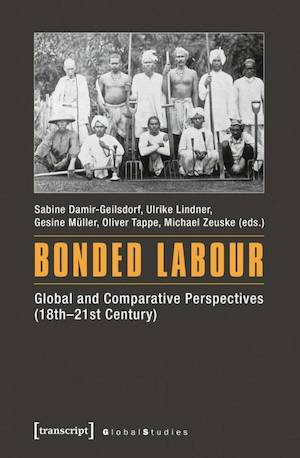
Bonded Labour: Global and Comparative Perspectives (18th-21st Century)
Parallel to the abolition of Atlantic slavery, new forms of indentured labour stilled global capitalisms need for cheap, disposable labour. The famous coolie trade – mainly Asian labourers transferred to French and British islands in the Indian Ocean, Australia, Indonesia, South Africa, the Caribbean, the Americas, as well as to Portuguese colonies in Africa – was one of the largest migration movements in global history. Indentured contract workers are perhaps the most revealing example of bonded labour in the grey area between the poles of chattel slavery and free wage labour. This interdisciplinary volume addresses historically and regionally specific cases of bonded labour relations from the 18th century to sponsorship systems in the Arab Gulf States today.
Modernity and Spirit Worship in India: An Anthropology of the Umwelt
This book investigates the entangled relations between people’s daily worship practices and their umwelt in South India. Focusing on the practices of spirit (būta) worship in the coastal area of Karnataka, it examines the relationship between people and deities.Based on extensive fieldwork, this book links important anthropological theories on personhood, perspectives, transactions, and gift-exchanges together with the Gestaltkreis theory of Viktor von Weizsäcker. First, it examines the relations between būta worship and land tenure, matriliny, and hierarchy in the society. It then explores the reflexive relationship between modern law and current practices based on conventional law, before examining new developments in būta worship with the rise of mega-industries and environmental movements. Furthermore, this book sheds light on the struggles and endeavours of the people who create and recreate their relations with the realm of sacred wildness, as well as the formations and transformations of the umwelt in perpetual social-political transition.
Modernity and Spirit Worship in India will be of interest to academics in the field of anthropology, religious studies and the dynamics of religion, and South Asian Culture and Society.

Minefill 2020-2021: Proceedings of the 13th International Symposium on Mining with Backfill, 25-28 May 2021, Katowice, Poland
The series of International Symposiums on Mining with Backfill explores both the theoretical and practical aspects of the application of mine fill, with many case studies from both underground and open-pit mines. Minefill attendees and the Proceedings book audience include mining practitioners, engineering students, operating and regulatory professionals, consultants, academics, researchers, and interested individuals and groups.
The papers presented at Minefill symposiums regularly offer the novelties and most modern technical solutions in technology, equipment, and research. In that way, the papers submitted for the Minefill Symposia represent the highest quality and level in the conference domain.
For the 2020-2021 edition organizers hope that the papers presented in this publication will also be received with interest by readers around the world, providing inspiration and valuable examples for industry and R&D research.

Mental Health and Social Withdrawal in Contemporary Japan: Beyond the Hikikomori Spectrum
This book examines the phenomenon of social withdrawal in Japan, which ranges from school non-attendance to extreme forms of isolation and confinement, known as hikikomori. Based on extensive original research including interview research with a range of practitioners involved in dealing with the phenomenon, the book outlines how hikikomori expresses itself, how it is treated and dealt with and how it has been perceived and regarded in Japan over time. The author, a clinical psychologist with extensive experience of practice, argues that the phenomenon although socially unacceptable is not homogenous, and can be viewed not as a mental disorder, but as an idiom of distress, a passive and effective way of resisting the many great pressures of Japanese schooling and of Japanese society more widely.
Memories of Utopia: The Revision of Histories and Landscapes in Late Antiquity
These essays examine how various communities remembered and commemorated their shared past through the lens of utopia and its corollary, dystopia, providing a framework for the reinterpretation of rapidly changing religious, cultural, and political realities of the turbulent period from 300 to 750 CE.The common theme of the chapters is the utopian ideals of religious groups, whether these are inscribed on the body, on the landscape, in texts, or on other cultural objects. The volume is the first to apply this conceptual framework to Late Antiquity, when historically significant conflicts arose between the adherents of four major religious identities: Greaco-Roman ‘pagans’, newly dominant Christians; diaspora Jews, who were more or less persecuted, depending on the current regime; and the emerging religion and power of Islam. Late Antiquity was thus a period when dystopian realities competed with memories of a mythical Golden Age, variously conceived according to the religious identity of the group. The contributors come from a range of disciplines, including cultural studies, religious studies, ancient history, and art history, and employ both theoretical and empirical approaches. This volume is unique in the range of evidence it draws upon, both visual and textual, to support the basic argument that utopia in Late Antiquity, whether conceived spiritually, artistically, or politically, was a place of the past but also of the future, even of the afterlife. Memories of Utopia will be of interest to historians, archaeologists, and art historians of the later Roman Empire, and those working on religion in Late Antiquity and Byzantium.
Marketing Management and Communications in the Public Sector
This updated edition of Marketing Management and Communications in the Public Sector provides a thorough overview of the major concepts in public sector marketing and communications, two fields that have continued to grow in importance for modern public administrations. With extended coverage of topics such as social marketing and institutional communication, the authors skilfully build on the solid foundations laid down in the previous edition. Replete with real-world case studies and examples, including new material from the USA, Australia, and Asia, this book gives students a truly international outlook. Additional features include exercises and discussion questions in each chapter and an illustrative extended case study.
This refreshed text is essential reading for postgraduate students on public management degrees, and aspiring or current public managers.
The Making and Circulation of Nordic Models, Ideas and Images
This critical and empirically based volume examines the multiple existing Nordic models, providing analytically innovative attention to the multitude of circulating ideas, images and experiences referred to as “Nordic”. It addresses related paradoxes as well as patterns of circulation, claims about the exceptionality of Nordic models, and the diffusion and impact of Nordic experiences and ideas. Providing original case studies, the book further examines how the Nordic models have been constructed, transformed and circulated in time and in space. It investigates the actors and channels that have been involved in circulating models: journalists and media, bureaucrats and policy-makers, international organizations, national politicians and institutions, scholars, public diplomats and analyses where and why models have travelled. Finally, the book shows that Nordic models, perspectives, or ideas do not always originate in the Nordic region, nor do they always develop as deliberate efforts to promote Nordic interests. This book will be of key interest to Nordic and Scandinavian studies, European studies, and more broadly to history, sociology, political science, marketing, social policy, organizational theory and public management.The Open Access version of this book, available at http://www.taylorfrancis.com, has been made available under a Creative Commons Attribution-Non Commercial-No Derivatives 4.0 license.
Literature and Historiography in the Spanish Golden Age: The Poetics of History
Golden Age departures in historiography and theory of history in some ways prepared the ground for modern historical methods and ideas about historical factuality. At the same time, they fed into the period’s own “aesthetic-historical culture” which amalgamated fact and fiction in ways modern historians would consider counterfactual: a culture where imaginative historical prose, poetry and drama self-consciously rivalled the accounts of royal chroniclers and the dispatches of diplomatic envoys; a culture dominated by a notion of truth in which skilful construction of the argument and exemplarity took precedence over factual accuracy. Literature and Historiography in the Spanish Golden Age: The Poetics of History investigates this grey area backdrop of modern ideas about history, delving into a variety of Golden Age aesthetic-historical works which cannot be satisfactorily described as either works of literature or works of historiography but which belong in between these later strictly separate categories.
The Legitimacy of Modern Democracy: A Study on the Political Thought of Max Weber, Carl Schmitt and Hans Kelsen
By re-examining the political thought of Max Weber, Carl Schmitt and Hans Kelsen, this book offers a reflection on the nature of modern democracy and the question of its legitimacy. Pedro T. Magalhães shows that present-day elitist, populist and pluralist accounts of democracy owe, in diverse and often complicated ways, an intellectual debt to the interwar era, German-speaking, scholarly and political controversies on the problem(s) of modern democracy.A discussion of Weber’s ambivalent diagnosis of modernity and his elitist views on democracy, as they were elaborated especially in the 1910s, sets the groundwork for the study. Against that backdrop, Schmitt’s interwar political thought is interpreted as a form of neo-authoritarian populism, whereas Kelsen evinces robust, though not entirely unproblematic, pluralist consequences. In the conclusion, the author draws on Claude Lefort’s concept of indeterminacy to sketch a potentially more fruitful way than can be gleaned from the interwar German discussions of conceiving the nexus between the elitist, populist and pluralist faces of modern democracy. The Legitimacy of Modern Democracy will be of interest to political theorists, political philosophers, intellectual historians, theoretically oriented political scientists, and legal scholars working in the subfields of constitutional law and legal theory.
Labour, Mobility and Informal Practices in Russia, Central Asia and Eastern Europe: Power, Institutions and Mobile Actors in Transnational Space
This book explores the daily survival strategies of people within the context of failed states, flourishing informal economies, legal uncertainty, increased mobility, and globalization, where many people, who are forced by the circumstances to be innovative and transnational, have found their niches outside formal processes and structures. The book provides a thorough theoretical introduction to the link between labour mobility and informality and comprises convincing case studies from a wide range of post-socialist countries. Overall, it highlights the importance of trust, transnational networks, and digital technologies in settings where the rules governing economic and social activities of mobile workers are often unclear and flexible.

Kierkegaard, Mimesis, and Modernity: A Study of Imitation, Existence, and Affect
This book challenges the widespread view of Kierkegaard’s idiosyncratic and predominantly religious position on mimesis.Taking mimesis as a crucial conceptual point of reference in reading Kierkegaard, this book offers a nuanced understanding of the relation between aesthetics and religion in his thought. Kaftanski shows how Kierkegaard’s dialectical-existential reading of mimesis interlaces aesthetic and religious themes, including the familiar core concepts of imitation, repetition, and admiration as well as the newly arisen notions of affectivity, contagion, and crowd behavior. Kierkegaard’s enduring relevance to the malaises of our own day is firmly established by his classic concern for the meaning of human life informed by reflective meditation on the mimeticorigins of the contemporary age.Kierkegaard, Mimesis, and Modernity will be of interest to scholars and advanced students working on Kierkegaard, Continental philosophy, the history of aesthetics, and critical and religious studies.

The Berlin Reader: A Compendium on Urban Change and Activism
By drawing together widely dispersed yet central writings, the Berlin Reader is an essential resource for everyone interested in urban development in one of the most interesting and important metropolises in Europe. It provides scholars as well as students, journalists and visitors with an overview of the most central discussions on the tremendous changes Berlin experienced since the fall of the wall. It covers a wide range of issues, including inner city renewal, housing and the local economy, gentrification and other urban conflicts. The book breaks ground in two dimensions: first, by offering also non-German speakers an insight into the very controversial debates after reunification, and, second, by highlighting the ambivalent consequences of Berlins urban transformation in the past decades.
Islam and the Trajectory of Globalization: Rational Idealism and the Structure of World History
The book examines the growing tension between social movements that embrace egalitarian and inclusivist views of national and global politics, most notably classical liberalism, and those that advance social hierarchy and national exclusivism, such as neoliberalism, neoconservatism, and national populism. In exploring issues relating to tensions and conflicts around globalization, the book identifies historical patterns of convergence and divergence rooted in the monotheistic traditions, beginning with the ancient Israelites that dominated the Near East during the Axial age, through Islamic civilization, and finally by considering the idealism-realism tensions in modern times. One thing remained constant throughout the various historical stages that preceded our current moment of global convergence: a recurring tension between transcendental idealism and various forms of realism. Transcendental idealism, which prioritize egalitarian and universal values, pushed periodically against the forces of realism that privilege established law and power structure. Equipped with the idealism-realism framework, the book examines the consequences of European realism that justified the imperialistic venture into Africa, the Middle East, and Latin America in the name of liberation and liberalization. The ill-conceived strategy has, ironically, engendered the very dysfunctional societies that produce the waves of immigrants in constant motion from the South to the North, simultaneously as it fostered the social hierarchy that transfer external tensions into identity politics within the countries of the North. The book focuses particularly on the role played historically by Islamic rationalism in translating the monotheistic egalitarian outlook into the institutions of religious pluralism, legislative and legal autonomy, and scientific enterprise at the foundation of modern society. It concludes by shedding light on the significance of the Muslim presence in Western cultures as humanity draws slowly but consistently towards what we may come to recognize as the Global Age.The Open Access version of this book, available at http://www.taylorfrancis.com/books/e/9781003203360, has been made available under a Creative Commons Attribution-Non Commercial-No Derivatives 4.0 license.

Islam and Evolution: Al-Ghazālī and the Modern Evolutionary Paradigm
This book attempts to equip the reader with a holistic and accessible account of Islam and evolution. It guides the reader through the different variables that have played a part in the ongoing dialogue between Muslim creationists and evolutionists. This work views the discussion through the lens of al-Ghazālī (1058-1111), a widely-known and well-respected Islamic intellectual from the medieval period. By understanding al-Ghazālī as an Ash’arite theologian, a particular strand of Sunni theology, his metaphysical and hermeneutic ideas are taken to explore if and how much Neo-Darwinian evolution can be accepted. It is shown that his ideas can be used to reach an alignment between Islam and Neo-Darwinian evolution. This book offers a detailed examination that seeks to offer clarity if not agreement in the midst of an intense intellectual conflict and polarity amongst Muslims. As such, it will be of great interest to scholars of Science and Religion, Theology, Philosophy of Religion, Islamic Studies, and Religious Studies more generally.

Invisible Search and Online Search Engines: The Ubiquity of Search in Everyday Life
Invisible Search and Online Search Engines considers the use of search engines in contemporary everyday life and the challenges this poses for media and information literacy. Looking for mediated information is mostly done online and arbitrated by the various tools and devices that people carry with them on a daily basis. Because of this, search engines have a significant impact on the structure of our lives, and personal and public memories. Haider and Sundin consider what this means for society, whilst also uniting research on information retrieval with research on how people actually look for and encounter information. Search engines are now one of society’s key infrastructures for knowing and becoming informed. While their use is dispersed across myriads of social practices, where they have acquired close to naturalised positions, they are commercially and technically centralised. Arguing that search, searching, and search engines have become so widely used that we have stopped noticing them, Haider and Sundin consider what it means to be so reliant on this all-encompassing and increasingly invisible information infrastructure. Invisible Search and Online Search Engines is the first book to approach search and search engines from a perspective that combines insights from the technical expertise of information science research with a social science and humanities approach. As such, the book should be essential reading for academics, researchers, and students working on and studying information science, library and information science (LIS), media studies, journalism, digital cultures, and educational sciences.

An Introduction to the Passage of Energetic Particles through Matter
Identifying where to access data, extracting a needed subset from available resources, and knowing how to interpret the format in which data are presented can be time-consuming tasks for scientists and engineers.

An Introduction to Particle Physics and the Standard Model
An Introduction to the Standard Model of Particle Physics familiarizes readers with what is considered tested and accepted and in so doing, gives them a grounding in particle physics in general.

Introduction to Gauge Field Theory, Revised Edition
Introduction to Gauge Field Theory provides comprehensive coverage of modern relativistic quantum field theory, emphasizing the details of actual calculations rather than the phenomenology of the applications. Forming a foundation in the subject, the book assumes knowledge of relativistic quantum mechanics, but not of quantum field theory.

International Multiparty Mediation and Conflict Management: Challenges of Cooperation and Coordination
This volume aims to provide a detailed explanation of the effects of cooperation and coordination on international multiparty mediation in conflicts. Contemporary scholarship stresses that the crucial ingredients for a successful multiparty mediation are ‘consistency in interests’ and ‘cooperation and coordination’ between mediators. This book seeks to supplement that understanding by investigating how much the ‘consistency of interests’ and ‘cooperation and coordination’ affect the overall process, and what happens to the mediation process when mediating parties do not share the same idea and interest in finding a common solution. At the same time, it explores the obstacles in achieving coordination and coherence between various mediators in such an environment and how to surmount the problems that multiple mediators face when operating without a ‘common script’ in attempting to mediate a negotiated settlement. The study investigates three distinct mechanisms (both on the systemic and contextual level) that have the potential to deter defection from a (potential) member of the multiparty mediation coalition: geo-political shifts, changes in the conflict dynamics, and mediators’ ability to bargain for a cooperative relationship. As the number of states and international actors that are involved in mediation increases, a careful assessment is necessary not only of their relative institutional strengths and weaknesses, but also of how to promote complementary efforts and how to synchronize the whole process when one actor is transferring the responsibilities for mediation to others. This book will be of much interest to students of mediation, conflict management, war and conflict studies, security studies and IR.

Interactive Peacemaking: A People-Centered Approach
This book examines the theory and practice of interactive peacemaking, centering the role of people in making peace.The book presents the theory and practice of peacemaking as found in contemporary processes globally. By putting people at the center of the analysis, it outlines the possibilities of peacemaking by and for the people whose lives are touched by ongoing conflicts. While considering examples from around the world, this book specifically focuses on peacemaking in the Georgian-South Ossetian context. It tells the stories of individuals on both sides of the conflict, and explores why people choose to make peace, and how they work within their societies to encourage this. This book emphasizes theory built from practice and offers methodological guidance on learning from practice in the conflict resolution field.This book will be of much interest to students and practitioners of peacemaking, conflict resolution, South Caucasus politics and International Relations.
Integrative Framing Analysis: Framing Health through Words and Visuals
Much of framing scholarship focuses either exclusively on the analysis of words or of visuals. This book aims to address this gap by proposing a six-step approach to the analysis of verbal frames, visual frames and the interplay between them—an integrative framing analysis. This approach is then demonstrated through a study investigating the way words and visuals are used to frame people living with HIV/AIDS in various communication contexts: the news, public service announcements and special interest publications. This application of integrative framing analysis reveals differences between verbal frames and visual frames in the same messages, underscoring the importance of looking at these frames together.