
OA eBooks Collection
Expanding Professionalism in Music and Higher Music Education: A Changing Game
This book addresses the need to rethink the concept and enactment of professionalism in music, and how such concepts underpin professional higher music education. There is an urgent imperative to enable the potential of professional musicians in our contemporary societies to be more fully realised, recognising both intense challenges that are currently threatening some traditional music practices, and significant scope for new practices to be imagined in response to deep veins of societal need. Professionalism encompasses the conduct, aims, values, responsibilities and ongoing development of a practising professional in the field. Professional higher music education engages both with providing future professionals with relevant education in particular craft skills, and with nurturing their visions for their work as artists in future societies. The major focus of the book is on performance traditions that have dominated professional higher education, notably western classical music.

Entrepreneurship Education: Scholarly Progress and Future Challenges
The discussion around whether entrepreneurship can be taught is becoming obsolete as the number of entrepreneurship courses, specializations and degrees is rising at an unprecedented rate all over the world and the demand for entrepreneurial education teachers or instructors is constantly growing. The global community of entrepreneurial education proponents is enthusiastic about the possibility of spreading the idea of entrepreneurship, as it is believed to benefit societies and economies in addition to influencing human development on an individual level. The fervour is nurtured by public policies and the development of an enterprising culture in the public discourse. In this discourse, entrepreneurship is treated as a panacea for numerous social and economic problems. This book is a solid reference point for all who are interested in conducting research on entrepreneurial education or engaged in teaching entrepreneurship. It is a compendium of knowledge about entrepreneurial education as a research field, seen from the perspective of the last four decades, its complete contemporary history. It reviews the progress of the field from the outset to the present in terms of its socio-economic context, changes in the academic community, but also its research focus and methodological development. This uniquely comprehensive book is a resource of both knowledge on entrepreneurial education research and inspiration for future studies within the field. This timely and relevant book provides practical insights for educators when developing their teaching practice and will be of interest to entrepreneurship educators and entrepreneurship education researchers.
Engagement in Medical Research Discourse: A Multisemiotic Approach to Dialogic Positioning
This book integrates insights from dialogic theory and systemic functional linguistics (SFL) to extend our understandings of engagement in medical research articles, going beyond notions of the role of verbal dialogue to encompass mathematical and visual semiotics and consider text not just as language but as multisemiosis. The volume begins by outlining the engagement framework and offering a brief overview of historical developments in medical research discourse. This discussion culminates in the introduction of the corpus used for analysis, drawing on original research articles from key medical journals to explore verbal, mathematical, and visual engagement in turn. A subsequent chapter brings these perspectives together to demonstrate intersemiotic engagement across different stages and phases of the medical research article and how such resources work together to construe and maintain the authoritative position commonly associated with medical discourse. The book looks ahead to engagement in other related disciplinary fields and future directions for work on multisemiosis and medical research discourse more generally. This book will be of particular interest to graduate students and researchers in multimodality, critical discourse analysis, applied linguistics, SFL, and science education.
Energy Transition in the Baltic Sea Region: Understanding Stakeholder Engagement and Community Acceptance
This book analyses the potential for active stakeholder engagement in the energy transition in the Baltic Sea Region (BSR) in order to foster clean energy deployment. Public acceptability and bottom-up activities can be critical for enduring outcomes to an energy transition. As a result, it is vital to understand how to unlock the potential for public, community and prosumer participation to facilitate renewable energy deployment and a clean energy transition – and, consequently, to examine the factors influencing social acceptability. Focussing on the diverse BSR, this book draws on expert contributions to consider a range of different topics, including the challenges of social acceptance and its policy implications; strategies to address challenges of acceptability among stakeholders; and community engagement in clean energy production. Overall, the authors examine the practical implications of current policy measures and provide recommendations on how lessons learnt from this ‘energy lab region’ may be applied to other regions. Reflecting an interdisciplinary approach in the social sciences, this book is an essential resource for scholars, students and policymakers researching and working in the areas of renewable energy, energy policy and citizen engagement, and interested in understanding the potential for bottom-up, grassroots activities and social acceptability to expedite the energy transition and reanimate democracies.
Weiterbildung an Hochschulen: Der Beitrag der DGWF zur Förderung wissenschaftlicher Weiterbildung
The anthology offers an examination of the structures, functions and operations of the German Association for University Continuing and Distance Education (Deutsche Gesellschaft für Wissenschaftliche Weiterbildung und Fernstudium e.V. – DGWF). The papers analyse the history of this expert association as well as the thematic priorities of the twelve sections (four work groups and eight national groups). The volume is complemented by an overview of cross-border activities and influential articles on the current status of scientific further education at universities, which is actually a relatively young academic discipline.
Eleventh International Conference on the Bearing Capacity of Roads, Railways and Airfields: Volume 1
Innovations in Road, Railway and Airfield Bearing Capacity – Volume 1 comprises the first part of contributions to the 11th International Conference on Bearing Capacity of Roads, Railways and Airfields (2022). In anticipation of the event, it unveils state-of-the-art information and research on the latest policies, traffic loading measurements, in-situ measurements and condition surveys, functional testing, deflection measurement evaluation, structural performance prediction for pavements and tracks, new construction and rehabilitation design systems, frost affected areas, drainage and environmental effects, reinforcement, traditional and recycled materials, full scale testing and on case histories of road, railways and airfields. This edited work is intended for a global audience of road, railway and airfield engineers, researchers and consultants, as well as building and maintenance companies looking to further upgrade their practices in the field.
Ecological Causal Assessment
Edited by experts at the leading edge of the development of causal assessment methods for more than two decades, Ecological Causal Assessment gives insight and expert guidance on how to identify cause-effect relationships in environmental systems. The book discusses the importance of asking the fundamental question “Why did this effect happen?” before moving on to “How can we fix it?”
The book provides a deeper understanding of different philosophical and analytical approaches, and of cognitive tendencies that can lead to errors. It describes formal processes for causal assessment that are particularly helpful when the situation is complex or contentious. It also describes how to approach the analysis of available data and to optimize collection efforts. The text then details a transparent process that helps others replicate results and can be used to convince skeptics that the true cause has been identified. Several detailed case studies show how to apply the process to streams, watersheds, and a terrestrial wildlife population.
Causal assessment is a challenging, but endlessly fascinating endeavor. Success requires the persistence to figure things out and solid strategies for using the information that you have and getting more of the right kind of information that you need. This book gives you just that: the skills, knowledge, and confidence needed to successfully unravel tough environmental problems and build the knowledge base for effective management solutions.
Read interview about this book with author Sue Norton here:
http://www.freshwater-science.org/Publications/Newsletter-In-The-Drift/ITD–Fall-2015.cfm#itdqna
East Asian Integration: Goods, Services and Investment
The growth of world trade has been stagnant in recent times; trade liberalisation now has been challenged. The recent rise of anti-globalisation calls for a better integration in East Asia. How should East Asia manage its openness? This book provides profound analyses on rules of origins, non-tariff measures, restrictiveness in services and investment. It gives insight into how East Asian countries should shape its trade, investment and industrial policies. This book helps to answer what kind of a better integration it should be, and how East Asia can realise it.
Early Printed Music and Material Culture in Central and Western Europe
This book presents a varied and nuanced analysis of the dynamics of the printing, publication, and trade of music in the sixteenth and early seventeenth centuries across Western and Northern Europe. Chapters consider dimensions of music printing in Britain, the Holy Roman Empire, the Netherlands, France, Spain and Italy, showing how this area of inquiry can engage a wide range of cultural, historical and theoretical issues. From the economic consequences of the international book trade to the history of women music printers, the contributors explore the nuances of the interrelation between the materiality of print music and cultural, aesthetic, religious, legal, gender and economic history. Engaging with the theoretical turns in the humanities towards material culture, mobility studies and digital research, this book offers a wealth of new insights that will be relevant to researchers of early modern music and early print culture alike.
Dilemmas of Energy Transitions in the Global South: Balancing Urgency and Justice
This book explores how, in the wake of the Anthropocene, the growing call for urgent decarbonisation and accelerated energy transitions might have unintended consequences for energy poverty, justice and democracy, especially in the global South. Dilemmas of Energy Transitions in the Global South brings together theoretical and empirical contributions focused on rethinking energy transitions conceptually from and for the global South, and highlights issues of justice and inclusivity. It argues that while urgency is critical for energy transitions in a climate-changed world, we must be wary of conflating goals and processes, and enquire what urgency means for due process. Drawing from a range of authors with expertise spanning environmental justice, design theory, ethics of technology, conflict and gender, it examines case studies from countries including Bolivia, Sri Lanka, India, The Gambia and Lebanon in order to expand our understanding of what energy transitions are, and how just energy transitions can be done in different parts of the world. Overall, driven by a postcolonial and decolonial sensibility, this book brings to the fore new concepts and ideas to help balance the demands of justice and urgency, to flag relevant but often overlooked issues, and to provide new pathways forward. This volume will be of great interest to students and scholars of energy transitions, environmental justice, climate change and developing countries.
Development Discourse and Global History: From colonialism to the sustainable development goals
The manner in which people have been talking and writing about ‘development’ and the rules according to which they have done so have evolved over time.Development Discourse and Global History uses the archaeological and genealogical methods of Michel Foucault to trace the origins of development discourse back to late colonialism and notes the significant discontinuities that led to the establishment of a new discourse and its accompanying industry. This book goes on to describe the contestations, appropriations and transformations of the concept. It shows how some of the trends in development discourse since the crisis of the 1980s – the emphasis on participation and ownership, sustainable development and free markets – are incompatible with the original rules and thus lead to serious contradictions. The Eurocentric, authoritarian and depoliticizing elements in development discourse are uncovered, whilst still recognizing its progressive appropriations. The author concludes by analysing the old and new features of development discourse which can be found in the debate on Sustainable Development Goals and discussing the contribution of discourse analysis to development studies. This book is aimed at researchers and students in development studies, global history and discourse analysis as well as an interdisciplinary audience from international relations, political science, sociology, geography, anthropology, language and literary studies.
Designs for Research, Teaching and Learning: A Framework for Future Education
This book offers a coherent theoretical and multimodal perspective on research, teaching and learning in different non-formal, semi-formal, and formal learning environments. Drawing on examples across a range of different settings, the book provides a conceptual framework for research on learning in different environments. It provides conceptual models around learning design which act as a framework for how to think about contemporary learning, a guideline for how to do research on learning in different sites, and a tool for innovative, collaborative design with other professionals. The book highlights concepts like multimodal knowledge representations; framing and setting; transformation, transduction, and re-design; signs of learning and cultures of recognition in different social contexts. The book supports innovative thinking on how we understand learning, and will appeal to academics, scholars and postgraduate students in the fields of education research and theory, learning sciences, and multimodal and social semiotics. It will also be of interest to school leaders, university provosts and professionals working in education.
Cyber Security Politics: Socio-Technological Transformations and Political Fragmentation
This book examines new and challenging political aspects of cyber security and presents it as an issue defined by socio-technological uncertainty and political fragmentation.Structured along two broad themes and providing empirical examples for how socio-technical changes and political responses interact, the first part of the book looks at the current use of cyber space in conflictual settings, while the second focuses on political responses by state and non-state actors in an environment defined by uncertainties. Within this, it highlights four key debates that encapsulate the complexities and paradoxes of cyber security politics from a Western perspective – how much political influence states can achieve via cyber operations and what context factors condition the (limited) strategic utility of such operations; the role of emerging digital technologies and how the dynamics of the tech innovation process reinforce the fragmentation of the governance space; how states attempt to uphold stability in cyberspace and, more generally, in their strategic relations; and how the shared responsibility of state, economy, and society for cyber security continues to be re-negotiated in an increasingly trans-sectoral and transnational governance space.This book will be of much interest to students of cyber security, global governance, technology studies, and international relations.

Crisis and Coloniality at Europe’s Margins: Creating Exotic Iceland
Crisis and Coloniality at Europe’s Margins: Creating Exotic Iceland provides a fresh look at the current politics of identity in Europe, using a crisis at the margins of Europe to shed light on the continued embeddedness of coloniality in everyday aspirations and identities. Examining Iceland’s response to its collapse into bankruptcy in 2008, the author explores the way in which the country sought to brand itself as an exotic tourist destination. With attention to the nation’s aspirations, rooted in the late 19th century, of belonging as part of Europe, rather than being classified with colonized countries, the book examines the engagement with ideas of otherness across and within Europe, as European discourses continue to be based on racialized ideas of ‘civilized’ people. With its focus on coloniality at a time of crisis, this volume contributes to our understanding of how racism endures in the present and the significance of nationalistic sentiments in a world of precariousness. Anchored in part in personal narrative, this critical analysis of coloniality, racism, whiteness and national identities will appeal to scholars across the social sciences with interests in national identity-making, European politics and race in a world characterised by crisis.
Community Empowerment through Research, Innovation and Open Access: Proceedings of the 3rd International Conference on Humanities and Social Sciences (ICHSS 2020), Malang, Indonesia, 28 October 2020
ICHSS is an international seminar that is held every two years organized by the Research and Community Service Institute of the State University of Malang. The meeting aims to discuss the theoretical and practical developments of Social Sciences and Humanities in Indonesia and other countries with a view to build academic networks by gathering academics from various research institutes and universities.
Community empowerment serves as a trigger to increase community independence and to cope with the challenges resulting from the rapid development of technology. An important aspect of the community empowerment effort is to link the results of innovation research for the benefit of community. The results of research should not only be limited to publications in the academic environment. Open Access to various forms of the existing literature is one of the requirements for innovative research to develop optimally. Therefore, this seminar has also served as a place for field researchers from various geographical areas to socialize, to discuss and to find solutions to current issues in the field of social sciences and humanities, as well as to build cooperation and synergy in creating ideas for mutual collaboration and to create joint research.

Von der Innovation zur Institution: Institutionalisierungsarbeit an Hochschulen am Beispiel der Leitung von Schreibzentren
The author asks about the institutional and personal conditions under which academic writing centres can be established in the long term. As an example, she analyses the situation at universities in the USA, where problems are similar to those in Germany: lack of acceptance, lack of financial provision and unclear expectations. Expert interviews with directors of writing centres serve as the empirical basis. The focal point of the investigation is institutionalisation work at management level that is equally characterised by intentional and accidental actions, successes and failures. The result is a model for institutionalisation work by writing centre directors, as well as recommendations for actions that are transferrable to the establishment of writing centres and other innovative institutions at German universities.

A Christian Education in the Virtues: Character Formation and Human Flourishing
A Christian Education in the Virtues examines the connection between human nature and human flourishing. It draws on ancient and medieval sources to explore the formation of the person based on a Christian anthropology, emphasising the communal nature of the virtuous life and provides a richer approach to the question of contemporary character education. The book argues that the only way to understand and construct our character virtues is to have a clear picture of what is the purpose and meaning of human life. It highlights the importance of engaging with moral issues and makes the case that, for Christian educators, human flourishing is inseparable from God’s active relationship to human beings. The book also explores a teleological approach to character education goals. To educate the whole person in the light of an all-embracing Christian worldview is challenged by secular and liberal ideology and is often seen as irrational to the modern mind. Overall, the text seeks to demonstrate that many aspects of a Neo-Aristotelian-Thomist theoretical underpinning for Christian character education holds out a viable option for Christians. It therefore argues the case for the educational potential of Christian character education.
This important book will be essential reading for academics, researchers and students in the fields of character and virtue education, religious education and the philosophy of education.
China’s Carbon-Energy Policy and Asia’s Energy Transition: Carbon Leakage, Relocation and Halos
This book seeks to examine the impacts associated with China’s carbon-energy policy in Asia and how, coupled with the Belt and Road Initiative, these effects prompt foreign direct investments in coal power and exports of renewable energy technologies.
China shows a co-evolution of carbon-energy policy and energy transitions from coal to renewables. Assessing how the policy intensifies pressures and motivations to Chinese companies, chapters in this edited volume analyse how the policy has changed energy and CO2 emissions in Asia through the lens of carbon leakage, relocation, and halos. Contributors present in-depth studies on China’s investments and exports, and also its impacts on Indonesia, India, Vietnam, and Japan. Using applied computable general equilibrium and scenario input-output analyses, chapters investigate if regional electricity connectivity reduces new coal power investments through efficiency gain. Arguing that China is shifting from the world’s factory to the leading innovator and Asia’s demand centre, it is ultimately demonstrated that China is likely to achieve climate targets whereas Asia to increase CO2 emissions and economic reliance on China.
China’s Carbon-Energy Policy and Asia’s Energy Transition will be of significant interest to students and scholars of energy, environment, and sustainability studies, as well as Chinese studies and economics.
Catholic Peacebuilding and Mining: Integral Peace, Development, and Ecology
This book explores the role of Catholic peacebuilding in addressing the global mining industry. Mining is intimately linked to issues of conflict, human rights, sustainable development, governance, and environmental justice. As an institution of significant scope and scale with a large network of actors at all levels and substantial theoretical and ethical resources, the Catholic Church is well positioned to acknowledge the essential role of mining, while challenging unethical and harmful practices, and promoting integral peace, development, and ecology. Drawing together theology, ethics, and praxis, the volume reflects the diversity of Catholic action on mining and the importance of an integrated approach. It includes contributions by an international and interdisciplinary range of scholars and practitioners. They examine Catholic action on mining in El Salvador, Peru, Colombia, the Democratic Republic of the Congo, and the Philippines. They also address general issues of corporate social responsibility, human rights, development, ecology, and peacebuilding. The book will be of interest to scholars of theology, social ethics, and Catholic studies as well as those specializing in development, ecology, human rights, and peace studies.
Care and the City: Encounters with Urban Studies
Care and the City is a cross-disciplinary collection of chapters examining urban social spaces, in which caring and uncaring practices intersect and shape people’s everyday lives. While asking how care and uncare are embedded in the urban condition, the book focuses on inequalities in caring relations and the ways they are acknowledged, reproduced, and overcome in various spaces, discourses, and practices.This book provides a pathway for urban scholars to start engaging with approaches to conceptualize care in the city through a critical-reflexive analysis of processes of urbanization. It pursues a systematic integration of empirical, methodological, theoretical, and ethical approaches to care in urban studies, while overcoming a crisis-centered reading of care and the related ambivalences in care debates, practices, and spaces. These strands are elaborated via a conceptual framework of care and situated within broader theoretical debates on cities, urbanization, and urban development with detailed case studies from Europe, the Americas, and Asia.By establishing links to various fields of knowledge, this book seeks to systematically introduce debates on care to the interconnecting fields of urban studies, planning theory, and related disciplines for the first time.

Bodily Fluids in Antiquity
From ancient Egypt to Imperial Rome, from Greek medicine to early Christianity, this volume examines how human bodily fluids influenced ideas about gender, sexuality, politics, emotions, and morality, and how those ideas shaped later European thought.Comprising 24 chapters across seven key themes—language, gender, eroticism, nutrition, dissolution, death, and afterlife—this volume investigates bodily fluids in the context of the current sensory turn. It asks fundamental questions about physicality and fluidity: how were bodily fluids categorised and differentiated? How were fluids trapped inside the body perceived, and how did this perception alter when those fluids were externalised? Do ancient approaches complement or challenge our modern sensibilities about bodily fluids? How were religious practices influenced by attitudes towards bodily fluids, and how did religious authorities attempt to regulate or restrict their appearance? Why were some fluids taboo, and others cherished? In what ways were bodily fluids gendered? Offering a range of scholarly approaches and voices, this volume explores how ideas about the body and the fluids it contained and externalised are culturally conditioned and ideologically determined. The analysis encompasses the key geographic centres of the ancient Mediterranean basin, including Greece, Rome, Byzantium, and Egypt. By taking a longue durée perspective across a richly intertwined set of territories, this collection is the first to provide a comprehensive, wide-ranging study of bodily fluids in the ancient world.Bodily Fluids in Antiquity will be of particular interest to academic readers working in the fields of classics and its reception, archaeology, anthropology, and ancient to Early Modern history. It will also appeal to more general readers with an interest in the history of the body and history of medicine.

Between Jews and Heretics: Refiguring Justin Martyr’s Dialogue with Trypho
Justin Martyr’s Dialogue with Trypho is the oldest preserved literary dialogue between a Jew and a Christian and a key text for understanding the development of early Judaism and Christianity. In Between Jews and Heretics, Matthijs den Dulk argues that whereas scholarship has routinely cast this important text in terms of “Christianity vs. Judaism,” its rhetorical aims and discursive strategies are considerably more complex, because Justin is advocating his particular form of Christianity in constant negotiation with rival forms of Christianity. The striking new interpretation proposed in this study explains many of the Dialogue’s puzzling features and sheds new light on key passages. Because the Dialogue is a critical document for the early history of Jews and Christians, this book contributes to a range of important questions, including the emergence of the notion of heresy and the “parting of the ways” between Jews and Christians.
Belonging and Transnational Refugee Settlement: Unsettling the Everyday and the Extraordinary
The image we have of refugees is one of displacement – from their homes, families and countries – and yet, refugee settlement is increasingly becoming an experience of living simultaneously in places both proximate and distant, as people navigate and transcend international borders in numerous and novel ways. At the same time, border regimes remain central in defining the possibilities and constraints of meaningful settlement. This book examines the implications of ‘belonging’ in numerous places as increased mobilities and digital access create new global connectedness in uneven and unexpected ways.Belonging and Transnational Refugee Settlement positions refugee settlement as an ongoing transnational experience and identifies the importance of multiple belongings through several case studies based on original research in Australia and New Zealand, as well as at sites in the US, Canada and the UK. Demonstrating the interplay between everyday and extraordinary experiences and broadening the dominant refugee discourses, this book critiques the notion that meaningful settlement necessarily occurs in ‘local’ places. The author focuses on the extraordinary events of trauma and disasters alongside the everyday lives of refugees undertaking settlement, to provide a conceptual framework that embraces and honours the complexities of working with the ‘trauma story’ and identifies approaches to see beyond it.This book will appeal to those with an interest in migration and diaspora studies, human geography and sociology.
Balancing the Commons in Switzerland: Institutional Transformations and Sustainable Innovations
Balancing the Commons in Switzerland outlines continuity and change in the management of common-pool resources such as pastures and forests in Switzerland.The book focuses on the differences and similarities between local institutions (rules and regulations) and forms of commoners’ organisations (corporations of citizens and corporations) which have managed common property for several centuries and have shaped the cultural landscapes of Switzerland. At the core of the book are five case studies from the German, French and Italian speaking regions of Switzerland. Beginning in the Late Middle Ages and focusing on the transformative periods in the nineteenth and twentieth centuries, it traces the internal and external political, economic and societal changes and examines what impact these changes had on commoners. It goes beyond the work of Robert Netting and Elinor Ostrom, who discussed Swiss commons as a unique case of robustness, by analysing how local commoners reacted to, but also shaped, changes by adapting and transforming common property institutions. Thus, the volume highlights how institutional changes in the management of the commons at the local level are embedded in the public policies of the respective cantons, and the state, which generates a high heterogeneity and an actual laboratory situation. It shows the power relations and very different routes that local collective organisations and their members have followed in order to cope with the loss of value of the commons and the increased workload for maintaining common property management. Providing insightful case studies of commons management, this volume delivers theoretical contributions and lessons to be learned for the commons worldwide.This book will be of great interest to students and scholars of the commons, natural resource management and agricultural development.
Argentina’s Economic Reforms of the 1990s in Contemporary and Historical Perspective
Why has Argentina suffered so much political and economic instability? How could Argentina, once one of the wealthiest countries in the world, failed to meet its potential over decades? What lessons can we take from Argentina’s successes and failures? Argentina’s economy is – irresistibly – fascinating. Argentina’s economic history – its crises and its triumphs cannot be explained in purely economic terms. Argentina’s economic history can only be explained in the context of conflicts of interest, of politics, war and peace, boom and bust. Argentina’s economic history is also intertwined with ideological struggles over the ideal society and the on-going struggle of ideas. The book comprises two distinct components: an economic history of Argentina from the Spanish colonial period to 1990, followed by a narrative by Domingo Cavallo on the last 25 years of reform and counter reform.Domingo Cavallo has been at the centre of Argentina’s economic and political debates for 40 years. He was one of the longest serving cabinet members since the return of democracy in 1983. He is uniquely qualified to help the reader make the connection between historical and current events through all these prisms. His daughter, Sonia Cavallo Runde, is an economist specialized on public policy that currently teaches the politics of development policy. The two Cavallos offer academics and students of economics and finance a long form case study. This book also seeks to offer researchers and policymakers around the world with relevant lessons and insights to similar problems from the Argentine experience.

Area-wide Integrated Pest Management: Development and Field Application
Over 98% of sprayed insecticides and 95% of herbicides reach a destination other than their target species, including non-target species, air, water and soil. The extensive reliance on insecticide use reduces biodiversity, contributes to pollinator decline, destroys habitat, and threatens endangered species. This book offers a more effective application of the Integrated Pest Management (IPM) approach, on an area-wide (AW) or population-wide (AW-IPM) basis, which aims at the management of the total population of a pest, involving a coordinated effort over often larger areas. For major livestock pests, vectors of human diseases and pests of high-value crops with low pest tolerance, there are compelling economic reasons for participating in AW-IPM. This new textbook attempts to address various fundamental components of AW-IPM, e.g. the importance of relevant problem-solving research, the need for planning and essential baseline data collection, the significance of integrating adequate tools for appropriate control strategies, and the value of pilot trials, etc. With chapters authored by 184 experts from more than 31 countries, the book includes many technical advances in the areas of genetics, molecular biology, microbiology, resistance management, and social sciences that facilitate the planning and implementing of area-wide strategies. The book is essential reading for the academic and applied research community as well as national and regional government plant and human/animal health authorities with responsibility for protecting plant and human/animal health.
Studienabbrecher/innen als Zielgruppe der Beratung und Öffentlichkeitsarbeit: Beiträge aus dem Projekt “Queraufstieg Berlin”
Im Bericht zum Projekt “Queraufstieg Berlin” werden drei wesentliche Aspekte für die Implementierung erfolgreicher Beratungsstrategien und -angebote vorgestellt – als Blaupause für andere Hochschulstandorte. Zunächst werden Aufbau und Entwicklung eines Beratungsnetzwerks für Studierende mit Zweifeln und Abbruchsgedanken beschrieben. Dabei werden die bestehenden Angebote für dieses spezielle Beratungsanliegen sichtbar, miteinander vernetzt und weiterentwickelt. Im zweiten Schritt werden Berater:innen informiert und geschult im Umgang mit den spezifischen Fragestellungen zum Studienabbruch und Einstieg in eine alternative Berufsausbildung. Im dritten Teil geht es um die Frühwarnsysteme an Hochschulen, mit denen ein Studienabbruch zum Neuanfang werden kann.
Enhancing Autonomy in Language Education: A Case-Based Approach to Teacher and Learner Development
The enhancement of autonomy in language education relies heavily on teachers’ empowerment and agency as critical intellectuals and reflective practitioners. However, most teacher education programmes are still based on instrumental views of teacher development that undervalue professional experience and expertise. The authors set the ground for alternative practices by proposing and illustrating a case-based approach to language teacher education that values experiential professional learning and expands competences to promote autonomy in school.
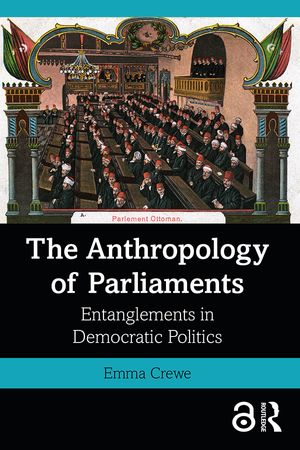
The Anthropology of Parliaments: Entanglements in Democratic Politics
The Anthropology of Parliaments offers a fresh, comparative approach to analysing parliaments and democratic politics, drawing together rare ethnographic work by anthropologists and politics scholars from around the world. Crewe’s insights deepen our understanding of the complexity of political institutions. She reveals how elected politicians navigate relationships by forging alliances and thwarting opponents; how parliamentary buildings are constructed as sites of work, debate and the nation in miniature; and how politicians and officials engage with hierarchies, continuity and change. This book also proposes how to study parliaments through an anthropological lens while in conversation with other disciplines. The dive into ethnographies from across Africa, the Americas, Asia, Europe, the Middle East and the Pacific Region demolishes hackneyed geo-political categories and culminates in a new comparative theory about the contradictions in everyday political work. This important book will be of interest to anyone studying parliaments but especially those in the disciplines of anthropology and sociology; politics, legal and development studies; and international relations.
Andean States and the Resource Curse: Institutional Change in Extractive Economies
This volume explores institutional change and performance in the resource-rich Andean countries during the last resource boom and in the early post-boom years. The latest global commodity boom has profoundly marked the face of the resource-rich Andean region, significantly contributing to economic growth and notable reductions of poverty and income inequality. The boom also constituted a period of important institutional change, with these new institutions sharing the potential of preventing or mitigating the maladies extractive economies tend to suffer from, generally denominated as the “resource curse”. This volume explores these institutional changes in the Andean region to identify the factors that have shaped their emergence and to assess their performance. The interdisciplinary and comparative perspective of the chapters in this book provide fine-grained analyses of different new institutions introduced in the Andean countries and discusses their findings in the light of the resource curse approach. They argue that institutional change and performance depend upon a much larger set of factors than those generally identified by the resource curse literature. Different, domestic and external, economic, political and cultural factors such as ideological positions of decision-makers, international pressure or informal practices have shaped institutional dynamics in the region. Altogether, these findings emphasize the importance of nuanced and contextualized analysis to better understand institutional dynamics in the context of extractive economies. This book will be of great interest to students and scholars of the extractive industries, natural resource management, political economics, Latin American studies and sustainable development.