
OA eBooks Collection
Hesychasm and Art: The Appearance of New Iconographic Trends in Byzantine and Slavic Lands in the 14th and 15th Centuries
“Although many of the iconographic traditions in Byzantine art formed in the early centuries of Christianity, they were not petrified within a time warp. Subtle changes and refinements in Byzantine theology did find reflection in changes to the iconographic and stylistic conventions of Byzantine art. This is a brilliant and innovative book in which Dr Anita Strezova argues that a religious movement called Hesychasm, especially as espoused by the great Athonite monk St Gregory Palamas, had a profound impact on the iconography and style of Byzantine art, including that of the Slav diaspora, of the late Byzantine period. While many have been attracted to speculate on such a connection, none until now has embarked on proving such a nexus. The main stumbling blocks have included the need for a comprehensive knowledge of Byzantine theology; a training in art history, especially iconological, semiotic and formalist methodologies; extensive fieldwork in Macedonia, Bulgaria, Serbia, Greece, Turkey and Russia, and a working knowledge of Greek, Old Church Slavonic, Macedonian, Russian, Serbian, Latin as well as several modern European languages, French, German, Russian and Italian. These are some of the skills which Dr Strezova has brought to her topic.”
Professor Sasha Grishin AM, FAHA Adjunct Professor of Art History School of Literature, Languages and Linguistics The Australian National University
Henry Prinsep’s Empire: Framing a distant colony
Henry Prinsep is known as Western Australia’s first Chief Protector of Aborigines in the colonial government of Sir John Forrest, a period which saw the introduction of oppressive laws that dominated the lives of Aboriginal people for most of the twentieth century. But he was also an artist, horse-trader, member of a prominent East India Company family, and everyday citizen, whose identity was formed during his colonial upbringing in India and England. As a creator of Imperial culture, he supported the great men and women of history while he painted, wrote about and photographed the scenes around him. In terms of naked power he was a middle man, perhaps even a small man. His empire is an intensely personal place, a vast network of family and friends from every quarter of the British imperial world, engaged in the common tasks of making a home and a career, while framing new identities, new imaginings and new relationships with each other, indigenous peoples and fellow colonists. This book traces Henry Prinsep’s life from India to Western Australia and shows how these texts and images illuminate not only Prinsep the man, but the affectionate bonds that endured despite the geographic bounds of empire, and the historical, social, geographic and economic origins of Aboriginal and colonial relationships which are important to this day.
Health of People, Places and Planet: Reflections based on Tony McMichael’s four decades of contribution to epidemiological understanding
This book has three main goals. The first is to celebrate the work of a great public health figure, the late A.J. (Tony) McMichael (1942–2014). The second is to position contemporary public health issues in an interdisciplinary context and in ways that highlight the interdependency between the environment, human institutions and behaviours; a broad approach championed by Tony. The third is to encourage emerging and future public health leaders to advocate for policies and cultural change to sustain and improve human health, from a foundation of objective scholarship. The book’s foreword and 38 chapters were written by people who were inspired by Tony; many of whom worked with him at some point in the last 40 years. Its structure reflects five major public health domains, each of which Tony made major contributions to in an extremely productive academic life: occupational health and safety; environmental and social epidemiology; nutrition and food systems; climate change and health; and ecosystem change and infectious disease. The final section, ‘Transformation’, is dedicated to Tony’s desire for public health scientists to propose adaptive and mitigating solutions to the problems they were observing. Each section contains at least one key publication involving Tony. There is also a selection of artworks from an exhibition which formed part of the conference held to honour Tony at The Australian National University in 2012. This conference formed the first part of Tony’s festschrift, completed by this book.
Globalisation and Governance in the Pacific Islands: State, Society and Governance in Melanesia
The Pacific Islands are feeling the effects of globalisation. Free trade in sugar and garments is threatening two of Fiji’s key industries. At the same time other opportunities are emerging. Labour migration is growing in importance, and Pacific governments are calling for more access to Australia’s labour market. Fiji has joined Samoa, Tonga, Tuvalu and Kiribati as a remittance economy, with thousands of its citizens working overseas. Meantime, Papua New Guinea and Solomon Islands grapple with an older kind of globalisation in which overseas companies exploit mineral and forest resources.
The Pacific Islands confront unique problems of governance in this era of globalisation. The modern, democratic state often fits awkwardly with traditional ways of doing politics in that part of the world. Just as often, politicians in the Pacific exploit tradition or invent it to serve modern political purposes.
The contributors to this volume examine Pacific globalisation and governance from a wide range of perspectives. They come from Papua New Guinea, Solomon Islands, Hawai’i, the Federated States of Micronesia, Samoa, Fiji, New Zealand and Jamaica as well as Australia.
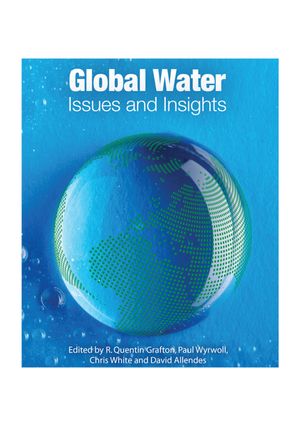
Global Water: Issues and Insights
This book brings together some of the world’s leading water researchers with an especially written collection of chapters on: water economics; transboundary water; water and development; water and energy; and water concepts.
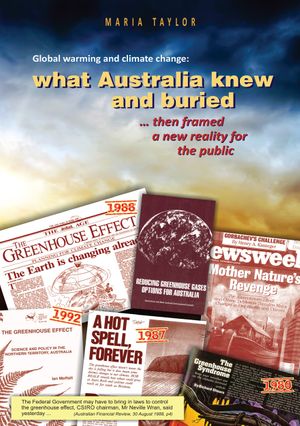
Global Warming and Climate Change: What Australia knew and buried…then framed a new reality for the public
1988: coming to grips with a terrifying global experiment
The Toronto conference statement made it clear that climate change would affect everyone. It called greenhouse gas atmospheric pollution an ‘uncontrolled, globally pervasive experiment whose ultimate consequences could be second only to nuclear war’. World governments were urged to swiftly develop emission reduction targets (The changing atmosphere: implications for global security, 1988).
Relevant to both Australian and overseas audiences, here is the untold story of how Australia buried its knowledge on climate change science and response options during the 1990s — going from clarity to confusion and doubt after arguably leading the world in citizen understanding and a political will to act in the late 1980s. ‘What happened and why’ is a fascinating exploration drawing on the public record of how a society revised its good understanding on a critical issue affecting every citizen. It happened through political and media communication, regardless of international scientific assessments that have remained consistent in ascribing causes and risks since 1990. How could this happen? The author examines the major influences, with lessons for the present, on how the story was reframed. Key have been values and beliefs, including economic beliefs, that trumped the science, the ability of changing political leaders and the mass media to set the story for the public, as well as the role of scientists’ own communication over time and the use and misuse of uncertainty.
Bundesbericht Wissenschaftlicher Nachwuchs 2017: Statistische Daten und Forschungsbefunde zu Promovierenden und Promovierten in Deutschland
This report provides the reader with empirical findings on junior researchers in Germany. The reconciliation of family and an academic career constitutes the central issue of the report. Other topics are work and employment conditions, qualification conditions during the doctoral phase, as well as career paths and perspectives, particularly during the post doctoral phase. Topics such as mobility behaviour and contributions to the research, teaching, and transfer of junior scientists as well as the educational returns of a doctoral degree are also addressed. The report is primarily based on data from official statistics and surveys conducted on a regular basis. At the same time, the paper examines the collected data with greater emphasis on the comparability and classification of the findings. In doing so, the report provides universities, research institutes, interest groups, funding agencies, and decision makers at federal and state level with essential knowledge on the topic.
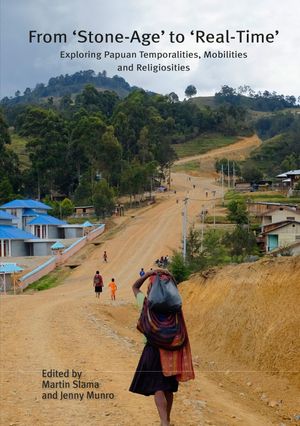
From ‘Stone-Age’ to ‘Real-Time’: Exploring Papuan Temporalities, Mobilities and Religiosities
There are probably no other people on earth to whom the image of the ‘stone-age’ is so persistently attached than the inhabitants of the island of New Guinea, which is divided into independent Papua New Guinea and the western part of the island, known today as Papua and West Papua. From ‘Stone-Age’ to ‘Real-Time’ examines the forms of agency, frictions and anxieties the current moment generates in West Papua, where the persistent ‘stone-age’ image meets the practices and ideologies of the ‘real-time’ – a popular expression referring to immediate digital communication. The volume is thus essentially occupied with discourses of time and space and how they inform questions of hierarchy and possibilities for equality. Papuans are increasingly mobile, and seeking to rework inherited ideas, institutions and technologies, while also coming up against palpable limits on what can be imagined or achieved, secured or defended. This volume investigates some of these trajectories for the cultural logics and social or political structures that shape them. The chapters are highly ethnographic, based on in-depth research conducted in diverse spaces within and beyond Papua. These contributions explore topics ranging from hip hop to HIV/ AIDS to historicity, filling much-needed conceptual and ethnographic lacunae in the study of West Papua.
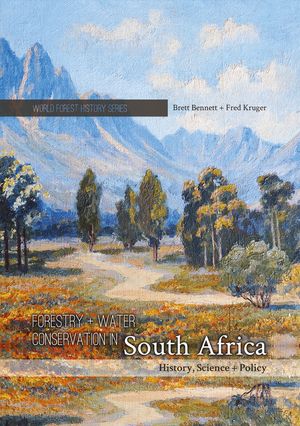
Forestry and Water Conservation in South Africa: History, Science and Policy
This innovative interdisciplinary study focuses on the history, science, and policy of tree planting and water conservation in South Africa. South Africa’s forestry sector has sat—often controversially—at the crossroads of policy and scientific debates regarding water conservation, economic development, and biodiversity protection. Bennett and Kruger show how debates about the hydrological impact of exotic tree planting in South Africa shaped the development of modern scientific ideas and state policies relating to timber plantations, water conservation, invasive species control, and biodiversity management within South Africa as well as elsewhere in the world. Forestry and Water Conservation in South Africa shows how scientific research on the impact of exotic and native vegetation led to the development of a comprehensive national policy for conserving water, producing timber, and protecting indigenous species from invasive alien plants. Policies and laws relating to forests and water began to change in the late 1980s and early 1990s as a result of political and administrative changes within South Africa. This book suggests that the country’s contemporary policies towards timber plantations, guided by the National Water Act of 1998, need to be reconsidered in light of the authors’ findings. Bennett and Kruger also call for more interdisciplinary research and greater emphasis on integrated policies and management plans for forestry, invasive alien plants, water conservation, and biodiversity preservation.
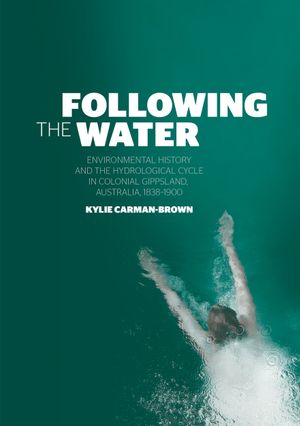
Following the Water: Environmental History and the Hydrological Cycle in Colonial Gippsland, Australia, 1838–1900
Water reflects culture. This book is a detailed analysis of hydrological change in Australia’s largest inland waterway in Australia, the Gippsland Lakes in Victoria, in the first 70 years of white settlement. Following air, water is our primal need. Unlike many histories, this book looks at the entire hydrological cycle in one place, rather than focusing on one bit. Deftly weaving threads from history, hydrology and psychology into one, Following the Water explores not just what settlers did to the waterscape, but probes their motivation for doing so. By combining unlikely elements together such as swamp drainage, water proofing techniques and temperance lobbying, the book reveals a web of perceptions about how water ‘should be’. With this laid clear, we can ask how different we are from our colonial forebears.

Fiji: a Place Called Home
Few people have been in the unique position of being able to observe and record the dramatic changes that have taken place in the islands of Fiji over the past 80 years than fourth-generation citizen, Daryl Tarte. He writes emotively, in great detail, about his personal experience of growing up on a remote island during the colonial era, when races were segregated, and white people lived an elite existence.
Following independence, he has been personally involved with many of the key economic, political and social activities that have evolved and enabled the nation to progress during the 20th century. These include the sugar industry, tourism, commerce and industry, religion, the media, women and of course, the coups.
His observations into the complexities of leadership in these areas of national development are fascinating and perceptive. Much of the story is told through the eyes of the many people of all races with whom he has interacted.
Fiji is made up of over 300 unique islands. Tarte has been to many of them, and in a final chapter he gives an insightful commentary of how different they all are.
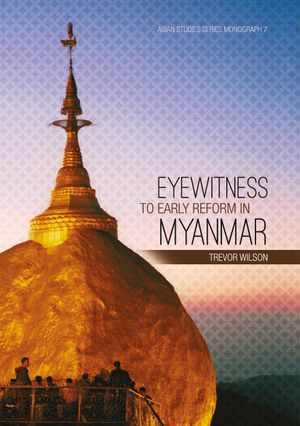
Eyewitness to Early Reform in Myanmar
By 2000, a ruthless military regime had ruled Myanmar for more than a decade, polarising opinion inside and outside Burma/Myanmar — with Western countries locked into non-UN sanctions and Asian countries and the rest of the world locked into unenthusiastic cooperation with Myanmar. While the United Nations and its agencies faced numerous obstacles as they sought to encourage national reconciliation in Myanmar, conditions in Myanmar were slowly starting to change. With a reform faction in charge, the military regime itself after 1999 slowly began experimenting with modest changes, before committing in 2008 to transfer power via a constitutional referendum and national elections, both of which it effectively controlled. This book provides the first eyewitness account of the early reform experiments.
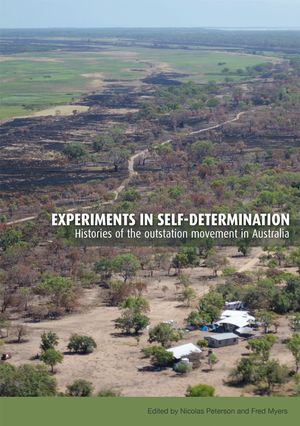
Experiments in self-determination: Histories of the outstation movement in Australia
Outstations, which dramatically increased in numbers in the 1970s, are small, decentralised and relatively permanent communities of kin established by Aboriginal people on land that has social, cultural or economic significance to them. In 2015 they yet again came under attack, this time as an expensive lifestyle choice that can no longer be supported by state governments. Yet outstations are the original, and most striking, manifestation of remote-area Aboriginal people’s aspirations for self-determination, and of the life projects by which they seek, and have sought, autonomy in deciding the meaning of their life independently of projects promoted by the state and market. They are not simply projects of isolation from outside influences, as they have sometimes been characterised, but attempts by people to take control of the course of their lives. In the sometimes acrimonious debates about outstations, the lived experiences, motivations and histories of existing communities are missing. For this reason, we invited a number of anthropological witnesses to the early period in which outstations gained a purchase in remote Australia to provide accounts of what these communities were like, and what their residents’ aspirations and experiences were. Our hope is that these closer-to-the-ground accounts provide insight into, and understanding of, what Indigenous aspirations were in the establishment and organisation of these communities.

Divine Domesticities: Christian Paradoxes in Asia and the Pacific
Divine Domesticities: Christian Paradoxes in Asia and the Pacific fills a huge lacuna in the scholarly literature on missionaries in Asia/Pacific and is transnational history at its finest.

Diversity in Leadership: Australian women, past and present
While leadership is an over-used term today, how it is defined for women and the contexts in which it emerges remains elusive. Moreover, women are exhorted to exercise leadership, but occupying leadership positions has its challenges. Issues of access, acceptable behaviour and the development of skills to be successful leaders are just some of them.
Diversity in Leadership: Australian women, past and present provides a new understanding of the historical and contemporary aspects of Indigenous and non-Indigenous women’s leadership in a range of local, national and international contexts. It brings interdisciplinary expertise to the topic from leading scholars in a range of fields and diverse backgrounds. The aims of the essays in the collection document the extent and diverse nature of women’s social and political leadership across various pursuits and endeavours within democratic political structures.

A Dissident Liberal: The Political Writings of Peter Baume
In the ‘broad church’ of the Australian Liberal Party, rarely has there been a maverick so unrelenting in his commitment to personal principles as Senator Peter Baume. Over a parliamentary career spanning 17 years, three ministerial portfolios and five party leaders, Baume was increasingly pitted against his own party room. In A Dissident Liberal: The Political Writings of Peter Baume, we learn of personal threats, crises, constitutional confrontation and the tension between conservatism and classical liberalism—and between ideology and toeing the party line. This collection of personal observations, speeches and commentaries on contentious policy issues presents a valuable resource for students of Australian political history.
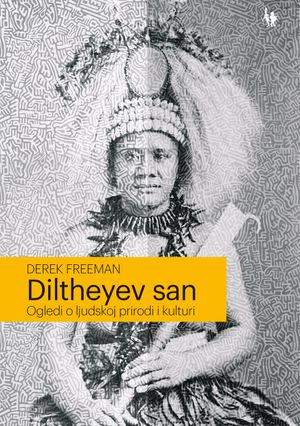
Dilthey’s Dream (Croatian version): Essays on human nature and culture
With great eloquence, Derek Freeman takes the reader on an intellectual journey through the complexities of philosophical anthropology. Even while the controversial Nature–Nurture debate raged, Freeman contended that the crucial fact that humans had the capacity to make choices was ‘both intrinsic to our biology and basic to the very formation of cultures’. Thus the scene was set for his widely publicised criticism of Margaret Mead’s book Coming of Age in Samoa. Publishing her research in 1926, Mead concluded that all human behaviour was the result of social conditioning. Freeman refuted this assumption in 1983, urging closer interactions between the biological sciences and cultural studies to bridge the ever-widening chasm threatening all studies of humankind.
Dilthey’s Dream is an engagingly powerful set of essays depicting the depth of one man’s thinking on issues, which consumed a lifetime.

Bildung in Deutschland 2016: Ein indikatorengestützter Bericht mit einer Analyse zu Bildung und Migration
“In the long-term observation of the German education system, the authors proceeded to analyse the known indicators of the study. A key topic is the influence of migration experiences on educational biography.
Every two years, the report delivers a survey of the German education system and examines framework conditions, such as costs and requirements, educational institutions like nurseries and schools, vocational training and university education, further education at an adult age and educational effects and returns.”

Building Europe: A History of European Unification
Relying on internal sources, Wilfried Loth analyses the birth and subsequent development of the European Union, from the launch of the Council of Europe and the Schuman Declaration until the Euro crisis and the contested European presidential election of Jean-Claude Juncker. This book shines a light on the crises of the European integration, such as the failure of the European Defence Community, De Gaulle`s empty chair policy, or the rejection of the European Constitution in France and the Netherlands, but also highlights the indubitable successes that are the Franco-German reconciliation, the establishment of the European common market, and the establishment of an expanding common currency. What this study accomplishes, for the first time, is to illuminate the driving forces behind the European integration process and how it changed European politics and society.
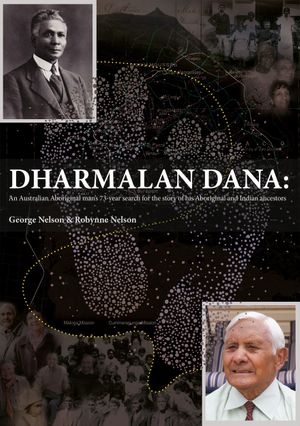
Dharmalan Dana: An Australian Aboriginal man’s 73-year search for the story of his Aboriginal and Indian ancestors
A Yorta Yorta man’s seventy-three-year search for the story of his Aboriginal and Indian ancestors including his Indian Grampa who, as a real mystery man, came to Yorta Yorta country in Australia, from Mauritius, in 1881 and went on to leave an incredible legacy for Aboriginal Australia. This story is written through George Nelson’s eyes, life and experiences, from the time of his earliest memory, to his marriage to his sweetheart Brenda, through to his journey to Mauritius at the age of seventy-three, to the production of this wonderful story in the present.

Developing Asian Bondmarkets
The absence of vibrant bondmarkets in East Asia was a significant contributor to the 1997–98 financial crisis. Ever since, the development of local bondmarkets has been a major objective of financial reforms in many East Asian economies. This effort has been frustrated by the inability to reach a consensus on whether Asian bondmarkets are truly needed in East Asia, whether they can be made viable in the competitive environment of the global economy, how they should be created and what role intergovernmental cooperation should play in their definition and creation. Developing Asian Bondmarkets helps build this consensus, proposing how to develop robust and efficient bondmarkets in East Asia. This book, the first of its kind, comes from the Finance Forum of the Pacific Economic Cooperation Council.

Degei’s Descendants: Spirits, Place and People in Pre-Cession Fiji
Dr Parke’s monograph examines how Fijians, especially in western areas of Fiji, currently understand and explain the origins and development of the social and political divisions of late pre-colonial traditional Fijian society. It assesses the reasoning, consistency and, where possible, the historical accuracy of such understandings. The oral history research which forms the backbone of the study was conducted in either standard Fijian or one or other of the western Fijian dialects with which Dr Parke was familiar. The period on which the monograph concentrates is the two centuries or so immediately prior to the Deed of Cession on 10 October 1874. A number of the major chiefs of Fiji had offered to cede Fiji to Queen Victoria; and after the offer had been accepted, Fiji became a British Crown Colony on that day. The volume will be of interest to all archaeologists, anthropologists and historians with an interest in Fiji. It will also be of wider interest to Pacific Studies scholars and those of British colonial history as well as historians with a wider interest in indigenous traditional histories and their role in governance today.

Deepening Reform for China’s Long-term Growth and Development (Chinese version): 深化改革与中国经济长期发展
本书分为五个部分,共21篇文章。第一部分讨论了决 定经济增长速度的巨大力量。这些基本力量的相互作用, 决定着中国是否能够继续向前发展,并最终跨入发达经济 体行列。第二部分讨论了中国国内和全球正在盛行的环境 保护优先观念如何对经济发展某些方面产生重要影响。本 书的第三部分详细论述了金融领域的改革。它是贯彻经济 增长新模式的必备条件,具有效果直接、情况复杂、风险 较大的特点。在论述了金融领域改革后,本书第四部分重 点关注了要素市场,即土地市场、劳动力市场和外国直接 投资的作用。本书的第五部分共五篇文章,对决定生产力 增长的重要因素进行了考察。

Deepening Reform for China’s Long-term Growth and Development
The Chinese economy has entered a new phase of development in which sources of growth are not so much dependent upon pure increases in labour, investment and credit expansion, but from productivity improvement, structural changes, technological progress and the benefits from improvement of the social security and welfare improvement. When market functions are fully established to become a main channel for allocating resources, the entrepreneurship will flourish engaging in more innovative activities, workers will move more freely and have more incentives to improve their skills, firms will become more productive through market entry and exit, the economic structure will become more balanced because of the improved resource allocation, and in the end, growth will become more spontaneous and sustainable. In this sense, reforms could deliver ‘dividend’ by raising China’s potential economic growth rates. For China to confront all the challenges it faces at present, the reforms undertaken now have to be deep, comprehensive and far-reaching in order to succeed in paving the way for China to complete the task of transformation in the long-term. There is no better alternative than deepening the market-oriented reform in advancing the course of China’s modernisation for future development and prosperity and lifting China to the status of a developed economy in the next two decades. The recent China update books have covered the topic of reform from different angles and this new book is another attempt to address this important issue.
Customary Land Tenure & Registration in Australia and Papua New Guinea: Anthropological Perspectives
The main theme of this volume is a discussion of the ways in which legal mechanisms, such as the Land Groups Incorporation Act (1974) in PNG, and the Native Title Act (1993) in Australia, do not, as they purport, serve merely to identify and register already-existing customary indigenous landowning groups in these countries. Because the legislation is an integral part of the way in which indigenous people are defined and managed in relation to the State, it serves to elicit particular responses in landowner organisation and self-identification on the part of indigenous people. These pieces of legislation actively contour the progressive evolution of landowner social, territorial and political organisation at all levels in these nation states. The contributors to this volume provide in-depth anthropological case studies of social structural and cultural transformations engendered by the confrontation between states, developers and indigenous communities over rights to customarily owned land.

The Curious Country
By definition scientists are an inquisitive lot. But what are the scientific curiosities and concerns on the minds of Australians? What worries them, baffles them, and sets their curiosity meter to 10 out of 10? To find out, the Office of the Chief Scientist (OCS) took the nation’s intellectual temperature, surveying 1186 Australians: men and women aged 18 to 65, from all education levels and locations around Australia. The results frame this book: a collection of essays covering the diverse areas of science Australians are curious about. Edited by eminent science writer Leigh Dayton and including a foreword from Australia’s Chief Scientist, Ian Chubb. The collection covers a range of issues, including food and farming technology, environmental upheaval, health, fuel and energy technology and space exploration.

Culture and Sustainable Development in the Pacific
Throughout the South Pacific, notions of ‘culture’ and ‘development’ are very much alive—in political debate, the media, sermons, and endless discussions amongst villagers and the urban élites, even in policy reports.
Often the terms are counterposed, and development along with ‘economic rationality’, ‘good governance’ and ‘progress’ is set against culture or ‘custom’, ‘tradition’ and ‘identity’. The decay of custom and impoverishment of culture are often seen as wrought by development, while failures of development are haunted by the notion that they are due, somehow, to the darker, irrational influences of culture.
The problem is to resolve the contradictions between them so as to achieve the greater good—access to material goods, welfare and amenities, ‘modern life’—without the sacrifice of the ‘traditional’ values and institutions that provide material security and sustain diverse social identities.
Resolution is sought in this book by a number of leading writers from the South Pacific including Langi Kavaliku, Epeli Hau’ofa, Marshall Sahlins, Malama Meleisea, Joeli Veitayaki, and Tarcisius Tara Kabutaulaka. The volume is brought together for UNESCO by Antony Hooper, Professor Emeritus at the University of Auckland. UNESCO experts include Richard Engelhardt, Langi Kavaliku, Russell Marshall, Malama Meleisea, Edna Tait and Mali Voi.
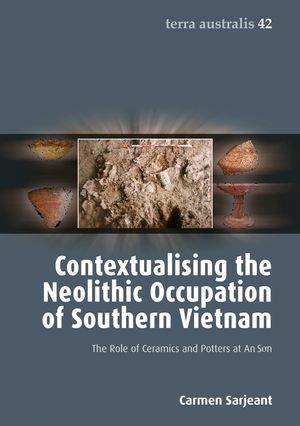
Contextualising the Neolithic Occupation of Southern Vietnam: The Role of Ceramics and Potters at An Son
Excavated in 2009, An Son, Long An Province, southern Vietnam has been dated to the second millennium BC, with evidence for neolithic occupation and burials. Very little is known about the neolithic period in southern Vietnam, and the routes and chronology for the appearance of cultivation, domestic animals, and ceramic and lithic technologies associated with sedentary settlements in mainland Southeast Asia are still debated. The ways in which the ceramic material culture at An Son conforms to the wider neolithic expression observed in Southeast Asia is investigated, and local and regional innovations are identified. The An Son ceramic assemblage is discussed in great detail to characterise the neolithic occupation, while considering the nature of craft production, manufacturing methods and the transference of traditions.
Contextualising the neolithic in southern Vietnam is conducted through a comparative study of material culture between An Son and the sites of Bến Ðò, Bình Đa, Cù Lao Rùa, Cái Vạn, Cầu Sắt, Đa Kai, Đình Ông, Lộc Giang, Rạch Lá, Rạch Núi and Suối Linh, all in southern Vietnam. Another analysis is presented to contextualise An Son in the wider neolithic landscape of mainland Southeast Asia, between An Son and Ban Non Wat, early Ban Lum Khao, early Ban Chiang, early Non Nok Tha, Khok Charoen, Tha Kae, Khok Phanom Di, Nong Nor (phase 1), Samrong Sen, Laang Spean, Krek, Bàu Tró, Mán Bạc and Xóm Rền. The aspects of material culture at An Son that appear to have ancestral links are considered in this research as well as local interaction spheres.
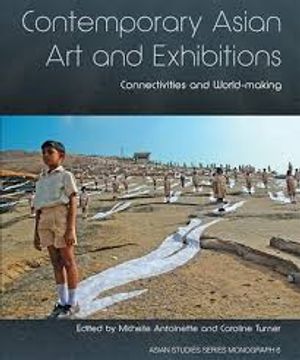
Contemporary Asian Art and Exhibitions: Connectivities and World-making
This volume draws together essays by leading art experts observing the dramatic developments in Asian art and exhibitions in the last two decades. The authors explore new regional and global connections and new ways of understanding contemporary Asian art in the twenty-first century.
The essays coalesce around four key themes: world-making; intra-Asian regional connections; art’s affective capacity in cross-cultural engagement; and Australia’s cultural connections with Asia. In exploring these themes, the essays adopt a diversity of approaches and encompass art history, art theory, visual culture and museum studies, as well as curatorial and artistic practice.
With introductory and concluding essays by editors Michelle Antoinette and Caroline Turner this volume features contributions from key writers on the region and on contemporary art: Patrick D Flores, John Clark, Chaitanya Sambrani, Pat Hoffie, Charles Merewether, Marsha Meskimmon, Francis Maravillas, Oscar Ho, Alison Carroll and Jacqueline Lo.
Richly illustrated with artworks by leading contemporary Asian artists, Contemporary Asian Art and Exhibitions: Connectivities and World-making will be essential reading for those interested in recent developments in contemporary Asian art, including students and scholars of art history, Asian studies, museum studies, visual and cultural studies.
Bildung auf einen Blick 2017: OECD-Indikatoren
The focus of the study is the performance of the education systems in the 35 OECD countries, and some non-member states such as Costa Rica and Lithuania. A system of indicators developed by the OECD allows a comparison of the level and conditions of education in the participating countries. The main aspects of the study are participation in the education system, educational expenses, operational data in the education system and which results are achieved. The educational status quo within the participating countries is visualised in more than 180 figures and tables. The current edition analyses for the first time success rates at the secondary level and admission criteria for the tertiary level. A new chapter addresses the educational policy goal of the 2030 agenda.