
OA eBooks Collection
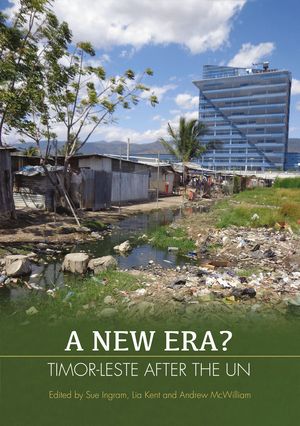
A New Era?: Timor-Leste after the UN
Timor-Leste has made impressive progress since its historic achievement of independence in 2002. From the instability that blighted its early years, the fledgling democratic country has achieved strong economic growth and a gradual reinstatement of essential social services. A decade on in 2012, Presidential and Parliamentary elections produced smooth political transitions and the extended UN peacekeeping presence in the country came to an end. But significant challenges remain. This book, a product of the inaugural Timor-Leste Update held at The Australian National University in 2013 to mark the end of Timor-Leste’s first decade as a new nation, brings together a vibrant collection of papers from leading and emerging scholars and policy analysts. Collectively, the chapters provide a set of critical reflections on recent political, economic and social developments in Timor-Leste. The volume also looks to the future, highlighting a range of transitions, prospects and undoubted challenges facing the nation over the next 5–10 years. Key themes that inform the collection include nation-building in the shadow of history, trends in economic development, stability and social cohesion, and citizenship, democracy and social inclusion. The book is an indispensable guide to contemporary Timor-Leste.
New Accountabilities, New Challenges
This important and challenging volume of essays draws on insights from leading academics and public servants from Australia, New Zealand, the United Kingdom, Canada and elsewhere. It provides an excellent series of critiques of both the systemic accountabilities and the policy processes of government by drawing on meticulously researched, topical and real-world case studies of governance. Its contribution to the understanding of the applied processes of government in this way is exemplary. Topics covered include: restoring trust in government, parliamentary scrutiny of the APS, administrative law and FOI, budgetary reforms, implementation issues, competition policy, indigenous administration, collaboration with the NGO sector, educational reforms and the changes to the Auditor- General’s mandate.
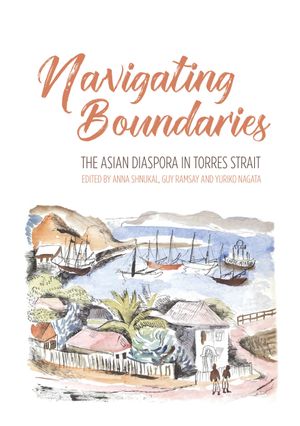
Navigating Boundaries: The Asian diaspora in Torres Strait
Navigating Boundaries belongs to a new generation of Asian–Australian historical studies. The essays presented here draw on an extensive, widely dispersed body of information, including much unpublished material, in order to narrate stories of the Asian diaspora communities of Torres Strait, north Queensland. Early chapters give an overview of Torres Strait Islander/Asian/European interaction, documenting the experiences of people from the five major Asian communities in the Torres Strait: Chinese, Filipino, Indonesian, Japanese and Sri Lankan. Later chapters inspect the early authorities of Torres Strait, including the former Resident Magistrate and the Protector of Aboriginals. Other chapters examine the contributions to Torres Strait culture made by Asian communities—from ethnic identity, clothing and cuisine, to religion, funeral and burial practices, and with a strong focus on the rich musical culture of Torres Strait Islanders. In the final chapter of the book, a variety of local voices narrate stories of Torres Strait people of Asian ancestry, providing a deeply personal insight into the Asian experience in Torres Strait.
Drei Phasen: Die Debatte zur Qualitätsentwicklung in der Lehrer_innenbildung
The study analyses the quality development of teaching staff at schools. It looks at all three phases of training: Study, probation and further training. The expert’s report therefore gives a comprehensive overview of the structure of further training for teachers in the Federal Republic of Germany’s federal education system.
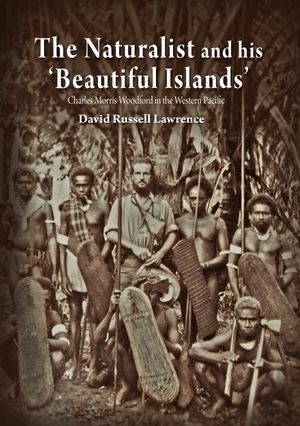
The Naturalist and his ‘Beautiful Islands’: Charles Morris Woodford in the Western Pacific
‘I know no place where firm and paternal government would sooner produce beneficial results then in the Solomons … Here is an object worthy indeed the devotion of one’s life’.
Charles Morris Woodford devoted his working life to pursuing this dream, becoming the first British Resident Commissioner in 1897 and remaining in office until 1915, establishing the colonial state almost singlehandedly. His career in the Pacific extended beyond the Solomon Islands. He worked briefly for the Western Pacific High Commission in Fiji, was a temporary consul in Samoa, and travelled as a Government Agent on a small labour vessel returning indentured workers to the Gilbert Islands.
As an independent naturalist he made three successful expeditions to the islands, and even climbed Mt Popomanaseu, the highest mountain in Guadalcanal. However, his natural history collection of over 20,000 specimens, held by the British Museum of Natural History, has not been comprehensively examined. The British Solomon Islands Protectorate was established in order to control the Pacific Labour Trade and to counter possible expansion by French and German colonialists. It remaining an impoverished, largely neglected protectorate in the Western Pacific whose economic importance was large-scale copra production, with its copra considered the second-worst in the world.
This book is a study of Woodford, the man, and what drove his desire to establish a colonial protectorate in the Solomon Islands. In doing so, it also addresses ongoing issues: not so much why the independent state broke down, but how imperfectly it was put together in the first place.
Name, Shame and Blame: Criminalising Consensual Sex in Papua New Guinea
Papua New Guinea is one of the many former British Commonwealth colonies which maintain the criminalisation of the sexual activities of two groups, despite the fact that the sex takes place between consenting adults in private: sellers of sex and males who have sex with males. The English common law system was imposed on the colonies with little regard for the social regulation and belief systems of the colonised, and in most instances, was retained and developed post-Independence, regardless of the infringements of human rights involved.
Now the HIV pandemic has thrown a spotlight, not altogether welcome, on the sexual activities of these two groups. In Papua New Guinea, a growing body of behavioural research has focused on such matters as individual sexual partnering, condom use and awareness of HIV. My work, however, has a different purpose. I chose the terms in the title to highlight a nexus which I believe exists between the criminal law and negative attitudes of society. At an international level, the argument has been put that decriminalising sex work and sodomy will facilitate HIV epidemic management, reducing the stigma and discrimination these groups encounter and making them easier to reach. I undertook my research therefore with the aim of gaining deeper understanding of the effects the current situation of criminalisation might have on the social lives of these criminalised people today, in the country generally and in Port Moresby the capital in particular, and whether these effects might provide evidence to support the argument for law reform.
The Muse as I Hear Her
This volume, The Muse as I Hear Her, has been compiled at the urging of ANU Emeritus Faculty to honour Giles Pickford, an admired colleague of long standing. Giles began his appointment in the ANU Public Affairs Division on the 21st of November 1988 and retired on the 8th of May 1998. At that time, a group of colleagues had formed an association that was to become the ANU Emeritus Faculty. From 1998 to the end of 2012, Giles was Secretary to the Emeritus Faculty. He served the Emeritus Faculty for a longer period than he was officially employed at ANU, and continued in the role of Corresponding Secretary until health intervened at the age of 73.
The Emeritus Faculty wanted to honour Giles for his good fellowship and for the many services he rendered to the Faculty by highlighting one of Giles’ special interests: his close involvement in the ANU Poets’ Lunch.
This volume is a token of recognition from friends and colleagues to Giles Pickford for his multiple contributions to the life of the University and its community.
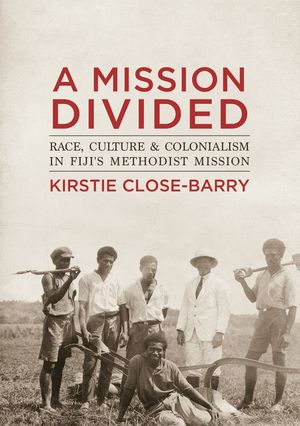
A Mission Divided: Race, Culture and Colonialism in Fiji’s Methodist Mission
This book provides insight into the long process of decolonisation within the Methodist Overseas Missions of Australasia, a colonial institution that operated in the British colony of Fiji. The mission was a site of work for Europeans, Fijians and Indo-Fijians, but each community operated separately, as the mission was divided along ethnic lines in 1901. This book outlines the colonial concepts of race and culture, as well as antagonism over land and labour, that were used to justify this separation. Recounting the stories told by the mission’s leadership, including missionaries and ministers, to its grassroots membership, this book draws on archival and ethnographic research to reveal the emergence of ethno-nationalisms in Fiji, the legacies of which are still being managed in the post-colonial state today. ‘Analysing in part the story of her own ancestors, Kirstie Barry develops a fascinating account of the relationship between Christian proselytization and Pacific nationalism, showing how missionaries reinforced racial divisions between Fijian and Indo-Fijian even as they deplored them. Negotiating the intersections between evangelisation, anthropology and colonial governance, this is a book with resonance well beyond its Fijian setting.’ – Professor Alan Lester, University of Sussex
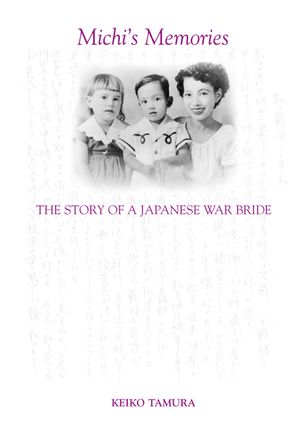
Michi’s Memories: The Story of a Japanese War Bride
This book tells the story of Michi, one of 650 Japanese war brides who arrived in Australia in the early 1950s. The women met Australian servicemen in post-war Japan and decided to migrate to Australia as wives and fiancées to start a new life. In 1953, when Michi reached Sydney Harbour by boat with her two Japanese-born children, she knew only one person in Australia: her husband. She did not know any English so she quickly learned her first English phrase, “I like Australia”, in the car on the way from the harbour to meet her Australian family. In the last fifty years, she brought up seven children while the family moved from one part of Australia to another. Now, in her eighties, she leads a peaceful life in Adelaide, but remains active in many ways. Her voice is full of life and she looks and sounds much younger than her age.
Measuring and Promoting Wellbeing: How Important is Economic Growth?
Australia continues to be at the forefront of international work on measuring and promoting wellbeing, Ian Castles being a significant contributor over the last forty years as an official and academic. This book combines a selection of Castles’ important work with contemporary research from a range of contributors.
The material is in four parts:
1. The role of economics in defining and promoting wellbeing
2. Measuring real income and wellbeing
3. Measuring inequality
4. Climate change and the limits to growth.
The issues canvassed are both long-standing and current. Does economic growth contribute to wellbeing? How different is income to wellbeing? How do we measure societal wellbeing and take its distribution into account? The book will be of value to all those looking to informed debate on global challenges such as reducing poverty, sustaining the environment and advancing the quality of life, including politicians, commentators, officials and academics.
Maudu’: A Union with God
This volume offers a fascinating case study of the Sayyid community of Cikoang in South Sulawesi – in particular, an examination of the role of the descendants of Sayyid Jalaluddin al-‘Aidid, a Hadhrami merchant-teacher of great authority and charisma who is said to have initially settled in Gowa in the 17th century. It is of particular interest because the migration of Sayydid Jalaluddin occurred well before the major Hadhrami diaspora to Southeast Asia in the mid-19th century. Of particular interest is the way Sayyid Jalaluddin and his descendants became integrated within the Makassar community.
Sayyid Jalaluddin’s legacy to the Cikoang community is the Tarekat Bahr ul-Nur, whose mystic teachings expound the creation of the world from the ‘Nur Muhammad’. A consequence of this teaching is an enormous emphasis on the celebration of Maudu’ (Maulid or the Birth of the Prophet) as expressed in the local assertion: ‘My existence on this earth is for nothing but Maudu’.’ Every year this prompts the Cikoang community to hold one of the most elaborate and colourful Maulid celebrations in Indonesia.
This study was originally submitted as an MA thesis at ANU in 1998, but soon became recognised as an important contribution to Hadhrami studies. Its author, M. Adlin Sila, has since gone on to complete his PhD at ANU, Being Muslim in Bima of Sumbawa, Indonesia: Practice, Politics and Cultural Diversity. This study of Bima and its religious history establishes him as a major researcher on the diverse traditions of Islam in eastern Indonesia.
Managing Under Austerity, Delivering Under Pressure: Performance and Productivity in Public Service
Contemporary public managers find themselves under pressure on many fronts. Coming off a sustained period of growth in their funding and some complacency about their performance, they now face an environment of ferocious competitiveness abroad and austerity at home. Public managers across Australia and New Zealand are finding themselves wrestling with expenditure reduction, a smaller public sector overall, sustained demands for productivity improvement, and the imperative to think differently about the optimal distribution of responsibilities between states, markets and citizens. Given ever-shrinking resources, in terms of staffing, budgets and time, how can public managers and public services become more productive, more outcome-driven and more agile? How can we achieve better alignment between ever-growing citizen expectations and the realities of constrained service provision? What can we learn from the best combination of innovation and austerity already being delivered in other countries and sectors, including harnessing the grounded wisdom of frontline service delivery practitioners? This book focuses on practical ways public managers at home and abroad are dealing with these shared dilemmas. It brings together renowned scholars in the fields of public sector productivity, performance management, ‘frugal innovation’ and budget stringency, with leading international and Australasian practitioners sharing their successes and challenges.
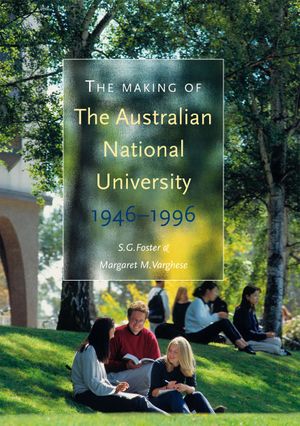
The Making of The Australian National University: 1946-1996
The Australian National University has always been a university with a difference. Conceived in the mid–1940s to serve Australia’s post-war needs for advanced research and postgraduate training, it quickly embraced the ideals and traditions of Oxford and Cambridge. Undergraduate teaching was introduced in 1960, following amalgamation with Canberra University College. The University continued to adapt to changes in Australian society, while retaining much of its unique structure and objectives.
Stephen Foster and Margaret Varghese trace the history of ANU from its wartime origins to its fiftieth anniversary in 1996, featuring many of the prominent Australians who contributed to its making: ‘Nugget’ Coombs, Howard Florey, Mark Oliphant, W.K. Hancock, Douglas Copland, John Crawford, Peter Karmel; and others who stood out in particular fields, such as J.C.Eccles, Arthur Birch, Manning Clark, Russell Mathews, Ernest Titterton, Beryl Rawson, John Mulvaney, John Passmore and Frank Fenner.
The Making of The Australian National University explores many themes in higher education during the last half century, including academic freedom, relations between universities and politicians, recruitment practices, the ‘two cultures’ of science and the humanities, collegial versus managerial structures, equality of opportunity, student politics, academics and architecture and universities in the marketplace.
This is an affectionate and critical account of a remarkable Australian institution; and, more broadly, a fascinating study of how institutions work.
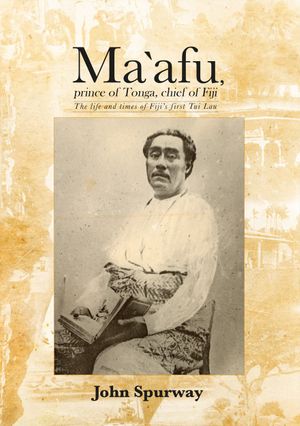
Ma’afu, prince of Tonga, chief of Fiji: The life and times of Fiji’s first Tui Lau
Enele Ma`afu, son of Aleamotu`a, Tu`i Kanokupolu, grew up during a time of unprecedented social and political change in Tonga following the advent of Christianity. Moving to Lau, Fiji, in 1847 when he was about 21, he skilfully exploited kinship links to establish a power base there and in eastern Cakaudrove. His achievements were recognised in 1853 when his cousin King Tupou I appointed Ma`afu as Governor of the Tongans in Fiji. Acting as a putative champion of the lotu, Ma`afu undertook successful military campaigns elsewhere in Fiji and, after adding the Yasayasa Moala and the Exploring Isles to the nascent Lauan state, he was able to establish the Tovata ko Lau, a union of Lau, Cakaudrove and Bua, with himself as head. His power was formally recognised in 1869 when the Lauan chiefs appointed him as Tui Lau, a new title in the polity of Fiji. Ma`afu was now able to challenge Cakobau for the mastery of Fiji. After serving as Viceroy during the farcical planter oligarchy known as the Kingdom of Fiji, Ma`afu underwent a severe humiliation when, in order to maintain his power in Lau, he was forced to accede to the wishes of Fiji’s other great chiefs in offering their islands to Great Britain. He would end his days as Roko Tui Lau, a ‘subordinate administrator’ in the Crown Colony of Fiji, presiding over a province characterised by corruption and maladministration but where the legacy of his earlier innovative land reforms has endured.
Deutscher Weiterbildungsatlas
“The study presents a cartographic overview of the offering of and demand for adult education in Germany.
The authors have developed indicators from a variety of data sources, which allow an extensive and detailed view of the participation in adult education. With a view of the regions as reference frame, trend influences are developed and factors for adult education advantages and disadvantages are made visible.
Some regions show abnormalities in the adult education behaviour. Results of regional case studies show that there are conductive as well as inhibiting factors for adult education opportunities. Here, the differences in adult education behaviour with regards to regionally varying levels and offers of further education become apparent.”
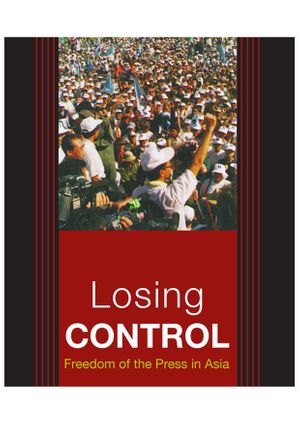
Losing Control: Freedom of the Press in Asia
A free press is not a luxury. A free press is at the absolute core of equitable development’ according to World Bank President James Wolfensohn. A free press is also the key to transparency and good governance and is an indispensable feature of a democracy. So how does Asia rate? In Losing Control, leading journalists analyse the state of play in all the countries of North Asia and Southeast Asia. From the herd journalism of Japan to the Stalinist system of North Korea, Losing Control provides an inside look at journalism and freedom of the press in each country. One conclusion – a combination of new technology and greater democracy is breaking the shackles that once constrained the press in Asia.
‘Brings together Asia’s best and brightest observers of the press.’ Hamish McDonald, Foreign Editor, The Sydney Morning Herald
‘A rare insiders’ view exposing the real dynamics behind social and political change in Asia.’ Evan Williams, Foreign Correspondent, ABC TV
‘A timely and necessary contribution to the debate over the quality of freedom in Asia.’ Geoffrey Barker, The Australian Financial Review
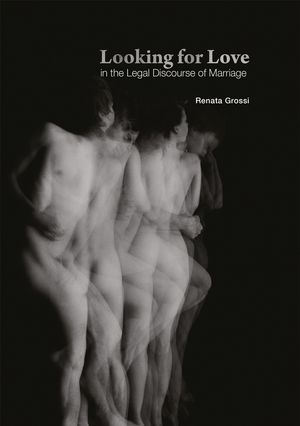
Looking for Love in the Legal Discourse of Marriage
This book examines the (in)visibility of romantic love in the legal discourse surrounding modern Australian marriage. It looks at how romantic love has become a core part of modernity, and a dominant part of the Western marriage discourse, and considers how the ideologies of romantic love are (or are not) replicated in the legal meaning of marriage. This examination raises two key issues. If love has become central to people’s understanding of marriage, then it is important for the legitimacy of law that love is reflected in both the content and application of the law. More fundamentally, it requires us to reconsider how we understand law, and to ask whether it is engaged with emotions, or separate from them. Along the way this book also considers the meaning of love itself in contemporary society, and asks whether love is a radical force capable of breaking down conservative meanings embedded in institutions like marriage, or whether it simply mirrors them. This book will be of interest to everyone working on love, marriage and sexuality in the disciplines of law, sociology and philosophy.
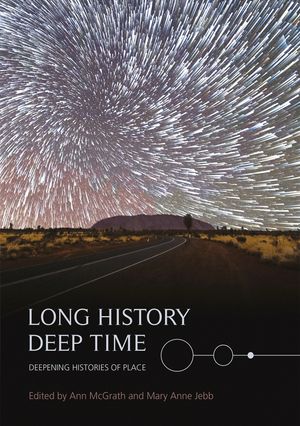
Long History, Deep Time: Deepening Histories of Place
The vast shape-shifting continent of Australia enables us to take a long view of history. We consider ways to cross the great divide between the deep past and the present. Australia’s human past is not a short past, so we need to enlarge the scale and scope of history beyond 1788. In ways not so distant, these deeper times happened in the same places where we walk today. Yet, they were not the same places, having different surfaces, ecologies and peoples. Contributors to this volume show how the earth and its past peoples can wake us up to a sense of place as history – as a site of both change and continuity. This book ignites the possibilities of what the spaces and expanses of history might be. Its authors reflect upon the need for appropriate, feasible timescales for history, pointing out some of the obstacles encountered in earlier efforts to slice human time into thematic categories. Time and history are considered from the perspective of physics, archaeology, literature, western and Indigenous philosophy. Ultimately, this collection argues for imaginative new approaches to collaborative histories of deep time that are better suited to the challenges of the Anthropocene. Contributors to this volume, including many leading figures in their respective disciplines, consider history’s temporality, and ask how history might expand to accommodate a chronology of deep time. Long histories that incorporate humanities, science and Indigenous knowledge may produce deeper meanings of the worlds in which we live.

Life on the Margins: An Archaeological Investigation of Late Holocene Economic Variability, Blue Mud Bay, Northern Australia
The research presented here is primarily concerned with human-environment interactions on the tropical coast of northern Australia during the late Holocene. Based on the suggestion that significant change can occur within short time-frames as a direct result of interactive processes, the archaeological evidence from the Point Blane Peninsula, Blue Mud Bay, is used to address the issue of how much change and variability occurred in hunter-gatherer economic and social structures during the late Holocene in coastal northeastern Arnhem Land. The suggestion proposed here is that processes of environmental and climatic change resulted in changes in resource distribution and abundance, which in turn affected patterns of settlement and resource exploitation strategies, levels of mobility and, potentially, the size of foraging groups on the coast. The question of human behavioural variability over the last 3000 years in Blue Mud Bay has been addressed by examining issues of scale and resolution in archaeological interpretation, specifically the differential chronological and spatial patterning of shell midden and mound sites on the peninsula in conjunction with variability in molluscan resource exploitation. To this end, the biological and ecological characteristics of the dominant molluscan species is considered in detail, in combination with assessing the potential for human impact through predation. Investigating pre-contact coastal foraging behaviour via the archaeological record provides an opportunity for change to recognised in a number of ways. For example, a differential focus on resources, variations in group size and levels of mobility can all be identified. It has also been shown that human-environment interactions are non-linear or progressive, and that human behaviour during the late Holocene was both flexible and dynamic.
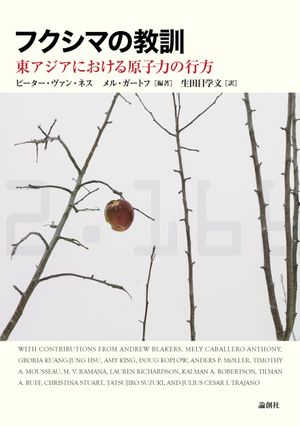
Learning from Fukushima (Japanese version): Nuclear power in East Asia
東アジアの原子力に未来はあるかーー福島の原発事故を受け開催された、原子力エネルギーをめぐる二つの重要な国際会議の成果。ノーベル平和賞ICAN創設者をはじめとする核問題の専門家が内外から参加。各国の原子力政策、原発推進の真のコスト、ポスト原子力の未来等、東アジアにおける原子力の現状と課題を浮き彫りにする。オーストラリア国立大学出版局との共同出版。

Law and Democracy: Contemporary Questions
Law and Democracy: Contemporary Questions provides a fresh understanding of law’s regulation of Australian democracy. The book enriches public law scholarship, deepening and challenging the current conceptions of law’s regulation of popular participation and legal representation. The book raises and addresses a number of contemporary questions about legal institutions, principles and practices:
How should the meaning of ‘the people’ in the Australian Constitution be defined by the High Court of Australia?
How do developing judicial conceptions of democracy define citizenship?
What is the legal right to participate in the political community?
Should political advisors to Ministers be subject to legal accountability mechanisms?
What challenges do applied law schemes pose to notions of responsible government and how can they be best addressed?
How can the study of the ritual of electoral politics in Australia and other common law countries supplement the standard account of democracy?
How might the ritual of the pledge of Australian citizenship limit or enhance democratic participation?
What is the conflict between legal restrictions of freedom of expression and democracy, and the role of social media?
Examining the regulation of democracy, this book scrutinises the assumptions and scope of constitutional democracy and enhances our understanding of the frontiers of accountability and responsible government. In addition, key issues of law, culture and democracy are revealed in their socio-legal context.
The book brings together emerging and established scholars and practitioners with expertise in public law. It will be of interest to those studying law, politics, cultural studies and contemporary history.
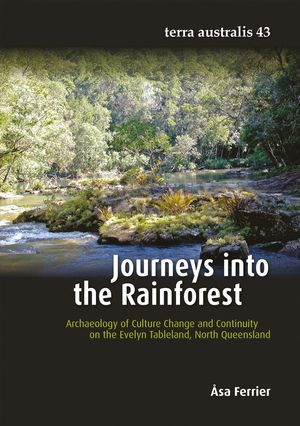
Journeys into the Rainforest: Archaeology of Culture Change and Continuity on the Evelyn Tableland, North Queensland
This monograph presents the results of archaeological research that takes a longitudinal approach to interpreting and understanding Aboriginal–European contact. It focuses on a small but unique area of tropical rainforest in far north Queensland’s Wet Tropics Bioregion, located within the traditional lands of the Jirrbal Aboriginal people on the Evelyn Tableland. The research integrates a diverse range of data sources: archaeological evidence recovered from Aboriginal open sites occupied in the pre- to post-contact periods, historical documents of early ethnographers, settlers and explorers in the region, supplemented with Aboriginal oral history testimony. Analyses of the archaeological evidence excavated from three open sites facilitated the identification of the trajectories of culture change and continuity that this investigation focused on: Aboriginal rainforest material culture and technology, plant subsistence strategies, and rainforest settlement patterns. Analyses of the data sets demonstrate that initial use of the rainforest environment on the Evelyn Tableland occurred during the early Holocene period, with successful adaptation and a change towards more permanent Aboriginal use of the rainforest becoming established in the late Holocene period. European arrival and settlement on traditional Aboriginal land resulted in a period of historical upheaval for the Aboriginal rainforest people. Following an initial period of violent interactions and strong Aboriginal resistance from the rainforest, Jirrbal Aboriginal people continued to adapt and transform their traditional culture to accommodate for the many changes forced upon them throughout the post‑contact period.
Japan’s Failed Revolution: Koizumi and the Politics of Economic Reform
Japan’s Failed Revolution: Koizumi and the Politics of Economic Reform asks why, despite all the high expectations, the Japanese public’s desire for economic reform, and leadership of a majority coalition in a parliamentary democracy, the reformer Prime Minister Koizumi has not achieved the economic reforms expected of him since he surprisingly attained power over a year ago. To unravel this ‘puzzle’, Aurelia George Mulgan eschews the simplicities of both cultural and rational choice explanations and systematically tests the propositions in the comparative literature on ‘failed reform’. The result is one of the best books ever written about contemporary Japanese politics. It explains how, despite British-style parliamentary institutions, Japan’s very ‘un-Westminster’ traditional policymaking process involving the ruling party and the bureaucracy’s structure and linkage has stymied and will probably continue to stymie even a sincere and active Prime Minister’s best reform intentions. This book should be read by all political scientists, journalists, economists, and students interested in contemporary Japan. Ellis S. Krauss Graduate School of International Relations and Pacific Studies University of California, San Diego. The author takes a scalpel to dissect Japan’s dysfunctional political system. She shows with wonderful clarity and depth of knowledge why the Koizumi reforms are not succeeding, and why revolutionary political change is needed as a precondition for economic recovery. The book should be required reading for anyone involved with contemporary Japan. J.A.A. Stockwin University of Oxford.
Inside Austronesian Houses: Perspectives on domestic designs for living
The eight papers in this volume examine the spatial organization of a variety of Austronesian houses and relate the domestic design of these houses to the social and ritual practices of the specific groups who reside within them. The houses considered in this volume range from longhouses in Borneo to the meeting-houses of the Maori of New Zealand and from the magnificent houses of the Minangkabau of Sumatra to the simpler dwellings of the population of Goodenough Island in Papua New Guinea. Together these papers indicate common features of domestic design from island South-East Asia to Melanesia and the Pacific. This volume is a publication of the Research School of Pacific Studies’ Comparative Austronesian Project.
Indigenous Intermediaries: New perspectives on exploration archives
This edited collection understands exploration as a collective effort and experience involving a variety of people in diverse kinds of relationships. It engages with the recent resurgence of interest in the history of exploration by focusing on the various indigenous intermediaries – Jacky Jacky, Bungaree, Moowattin, Tupaia, Mai, Cheealthluc and lesser-known individuals – who were the guides, translators, and hosts that assisted and facilitated European travellers in exploring different parts of the world. These intermediaries are rarely the authors of exploration narratives, or the main focus within exploration archives. Nonetheless the archives of exploration contain imprints of their presence, experience and contributions. The chapters present a range of ways of reading archives to bring them to the fore. The contributors ask new questions of existing materials, suggest new interpretive approaches, and present innovative ways to enhance sources so as to generate new stories.
Das Personal in der Weiterbildung: Arbeits- und Beschäftigungsbedingungen, Qualifikationen, Einstellungen zu Arbeit und Beruf
Who is employed in further education programmes? What are their qualifications? Under which conditions do they work and how satisfied are they with their work? It is the first study to provide representative data on the qualifications, employment situations and working conditions of employees in the adult and further education industry. The data of this two-step personnel survey was collected in 2014. More than 6,000 adult educators from more than 1,800 training institutions participated in the survey. This study serves as a supplement to educational reporting in Germany, which has hitherto rather been focussed on providers, offers and participation. Furthermore, it offers a reliable basis for assessments regarding the professionalisation of adult and further education. Moreover, the collected data may be used for further research.

Indigenous and Minority Placenames: Australian and International Perspectives
This book showcases current research into Indigenous and minority placenames in Australia and internationally. Many of the chapters in this volume originated as papers at a Trends in Toponymy conference hosted by the University of Ballarat in 2007 that featured Australian and international speakers. The chapters in this volume provide insight into the quality of toponymic research that is being undertaken in Australia and in countries such as Canada, Finland, South Africa, New Zealand, and Norway. The research presented here draws on the disciplines of linguistics, geography, history, and anthropology. The book includes meticulous studies of placenames in central NSW and the Upper Hunter region; Gundungurra cave names; western Arnhem Land; Northern Cape York Peninsula and Mount Wheeler in Queensland; saltwater placenames around Mer in the Torres Strait; and the Kaurna in South Australia.
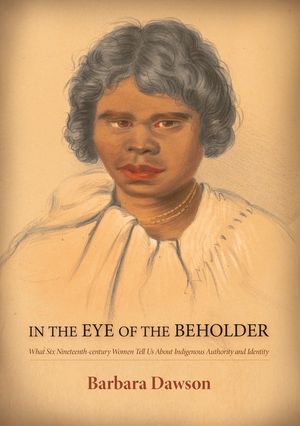
In the Eye of the Beholder: What Six Nineteenth-century Women Tell Us About Indigenous Authority and Identity
This book offers a fresh perspective in the debate on settler perceptions of Indigenous Australians. It draws together a suite of little known colonial women (apart from Eliza Fraser) and investigates their writings for what they reveal about their attitudes to, views on and beliefs about Aboriginal people, as presented in their published works. The way that reader expectations and publishers’ requirements slanted their representations forms part of this analysis.
All six women write of their first-hand experiences on Australian frontiers of settlement. The division into ‘adventurers’ (Eliza Fraser, Eliza Davies and Emily Cowl) and longer-term ‘settlers’ (Katherine Kirkland, Mary McConnel and Rose Scott Cowen) allows interrogation into the differing representations between those with a transitory knowledge of Indigenous people and those who had a close and more permanent relationship with Indigenous women, even encompassing individual friendship. More pertinently, the book strives to reveal the aspects, largely overlooked in colonial narratives, of Indigenous agency, authority and individuality.
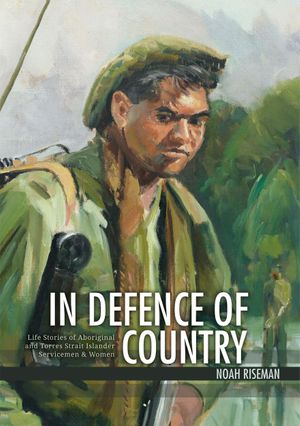
In Defence of Country: Life Stories of Aboriginal and Torres Strait Islander Servicemen and Women
Aboriginal and Torres Strait Islander people have been protecting country since time immemorial. One way they have continued these traditions in recent times is through service in the Australian military, both overseas and within Australia. In Defence of Country presents a selection of life stories of Aboriginal and Torres Strait Islander ex-servicemen and women who served in the Australian Army, Navy and Air Force after World War Two. In their own words, participants discuss a range of issues including why they joined up; racial discrimination; the Stolen Generations; leadership; discipline; family; war and peace; education and skills development; community advocacy; and their hopes for the future of Indigenous Australia. Individually and collectively, the life stories in this book highlight the many contributions that Aboriginal and Torres Strait Islander servicemen and women have made, and continue to make, in defence of country.
Improving Implementation: Organisational Change and Project Management
The business of government is necessarily diverse, changing and of considerable scale. A focus on improving the implementation of government programs and initiatives is important because the community expects the Government to deliver on its policies, as does the Government.
The papers included in this collection address numerous aspects of improving implementation. They were initially presented at the Project Management and Organisational Change conference held in Canberra in February 2006, the first annual research conference organised by ANZSOG in conjunction with the Department of the Prime Minister and Cabinet. This collection represents a comprehensive drawing together of experience and insight from both practitioners and academic researchers, with speakers including top public sector executives from the Australian jurisdictions as well as representatives from the United Kingdom, Canada and New Zealand.